Results by title
235 books match the query 'Books and reading' and 9 start with s

STEP into Storytime
Saroj Nadkarni Ghoting
American Library Association, 2014
[more]
Sacred Stacks
The Higher Purpose of Libraries and LibrarianshipNancy Kalikow Maxwell
American Library Association, 2006
[more]
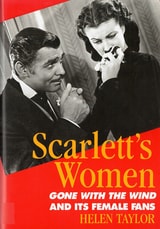
Scarlett's Women
Gone With the Wind and Its Female FansTaylor, Helen
Rutgers University Press, 1989
One of the most successful books ever published and the basis of one of the most popular and highly praised Hollywood films, Gone with the Wind has entered world culture in a way that few other stories have. The book was published in June 1936; the film premiered on December 15, 1939. The book has sold 25 million copies, has been translated into twenty-seven languages, and won the 1936 Pulitzer Prize. The film received eight Oscars and has been called the greatest movie ever made. Everyone has heard of GWTW. Most of us have seen the movie or read the novel. In this entertaining and informative book, Helen Taylor is the first to seek reasons for the film/novel's success among viewers/readers. The author asked GWTW fans to relate their experiences with the works, to explain their fascination with the story, to describe the impact GWTW has had on their lives. The results are astonishing and illuminating. In the United States and England, where the author conducted her research, women have to a remarkable degree claimed the story Margaret Mitchell wrote as their own. They name their children Rhett and Scarlett. They see in the lives of the men and women of GWTW their own lives, their own restlessness, their own aspirations for something better than marriage and motherhood. Helen Taylor not only explains the enduring appeal of the work, but also identifies different kinds of response at particular historical moments (especially World War II) and through the past five decades by women of different classes, races, and generations. The author also looks at the contemporary implications of the work's political conservatism, racism, and--paradoxically--feminism. The result is a book that is sophisticated, accessible, and revealing. Scarlett's Women is a book for eery fan, and for all students of film and popular culture.
[more]
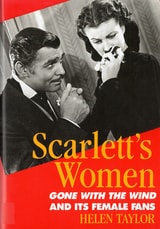
Scarlett's Women
Gone With the Wind and Its Female FansTaylor, Helen
Rutgers University Press, 1969
One of the most successful books ever published and the basis of one of the most popular and highly praised Hollywood films, Gone with the Wind has entered world culture in a way that few other stories have. The book was published in June 1936; the film premiered on December 15, 1939. The book has sold 25 million copies, has been translated into twenty-seven languages, and won the 1936 Pulitzer Prize. The film received eight Oscars and has been called the greatest movie ever made. Everyone has heard of GWTW. Most of us have seen the movie or read the novel. In this entertaining and informative book, Helen Taylor is the first to seek reasons for the film/novel's success among viewers/readers. The author asked GWTW fans to relate their experiences with the works, to explain their fascination with the story, to describe the impact GWTW has had on their lives. The results are astonishing and illuminating. In the United States and England, where the author conducted her research, women have to a remarkable degree claimed the story Margaret Mitchell wrote as their own. They name their children Rhett and Scarlett. They see in the lives of the men and women of GWTW their own lives, their own restlessness, their own aspirations for something better than marriage and motherhood. Helen Taylor not only explains the enduring appeal of the work, but also identifies different kinds of response at particular historical moments (especially World War II) and through the past five decades by women of different classes, races, and generations. The author also looks at the contemporary implications of the work's political conservatism, racism, and--paradoxically--feminism. The result is a book that is sophisticated, accessible, and revealing. Scarlett's Women is a book for eery fan, and for all students of film and popular culture.
[more]
Something Musical Happened at the Library
Rob Reid
American Library Association, 2007
[more]
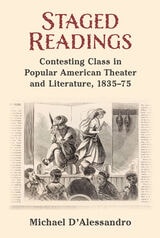
Staged Readings
Contesting Class in Popular American Theater and Literature, 1835-75Michael D’Alessandro
University of Michigan Press, 2022
Staged Readings studies the social consequences of 19th-century America’s two most prevalent leisure forms: theater and popular literature. In the midst of watershed historical developments—including numerous waves of immigration, two financial Panics, increasing wealth disparities, and the Civil War—American theater and literature were developing at unprecedented rates. Playhouses became crowded with new spectators, best-selling novels flew off the shelves, and, all the while, distinct social classes began to emerge. While the middle and upper classes were espousing conservative literary tastes and attending family matinees and operas, laborers were reading dime novels and watching downtown spectacle melodramas like Nymphs of the Red Sea and The Pirate’s Signal or, The Bridge of Death!!! As audiences traveled from the reading parlor to the playhouse (and back again), they accumulated a vital sense of social place in the new nation. In other words, culture made class in 19th-century America.
Based in the historical archive, Staged Readings presents a panoramic display of mid-century leisure and entertainment. It examines best-selling novels, such as Harriet Beecher Stowe’s Uncle Tom’s Cabin and George Lippard’s The Quaker City. But it also analyzes a series of sensational melodramas, parlor theatricals, doomsday speeches, tableaux vivant displays, curiosity museum exhibits, and fake volcano explosions. These oft-overlooked spectacles capitalized on consumers’ previous cultural encounters and directed their social identifications. The book will be particularly appealing to those interested in histories of popular theater, literature and reading, social class, and mass culture.
Based in the historical archive, Staged Readings presents a panoramic display of mid-century leisure and entertainment. It examines best-selling novels, such as Harriet Beecher Stowe’s Uncle Tom’s Cabin and George Lippard’s The Quaker City. But it also analyzes a series of sensational melodramas, parlor theatricals, doomsday speeches, tableaux vivant displays, curiosity museum exhibits, and fake volcano explosions. These oft-overlooked spectacles capitalized on consumers’ previous cultural encounters and directed their social identifications. The book will be particularly appealing to those interested in histories of popular theater, literature and reading, social class, and mass culture.
[more]
Storytimes for Everyone!
Developing Young Children's Language and LiteracySaroj Nadkarni Ghoting
American Library Association, 2013
[more]
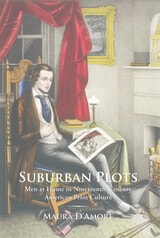
Suburban Plots
Men at Home in Nineteenth-Century American Print CultureMaura D'Amore
University of Massachusetts Press, 2014
In the middle of the nineteenth century, as Americans contended with rapid industrial and technological change, readers relied on periodicals and books for information about their changing world. Within this print culture, a host of writers, editors, architects, and reformers urged men to commute to and from their jobs in the city, which was commonly associated with overcrowding, disease, and expense. Through a range of materials, from pattern books to novels and a variety of periodicals, men were told of the restorative effects on body and soul of the natural environment, found in the emerging suburbs outside cities such as New York, Boston, and Philadelphia. They were assured that the promise of an ideal home, despite its association with women's work, could help to motivate them to engage in the labor and commute that took them away from it each day.
In Suburban Plots, Maura D'Amore explores how Henry David Thoreau, Henry Ward Beecher, Donald Grant Mitchell, Nathaniel Hawthorne, Nathaniel Parker Willis, and others utilized the pen to plot opportunities for a new sort of male agency grounded, literarily and spatially, in a suburbanized domestic landscape. D'Amore uncovers surprising narratives that do not fit easily into standard critical accounts of midcentury home life. Taking men out of work spaces and locating them in the domestic sphere, these writers were involved in a complex process of portraying men struggling to fulfill fantasies outside of their professional lives, in newly emerging communities. These representations established the groundwork for popular conceptions of suburban domestic life that remain today.
In Suburban Plots, Maura D'Amore explores how Henry David Thoreau, Henry Ward Beecher, Donald Grant Mitchell, Nathaniel Hawthorne, Nathaniel Parker Willis, and others utilized the pen to plot opportunities for a new sort of male agency grounded, literarily and spatially, in a suburbanized domestic landscape. D'Amore uncovers surprising narratives that do not fit easily into standard critical accounts of midcentury home life. Taking men out of work spaces and locating them in the domestic sphere, these writers were involved in a complex process of portraying men struggling to fulfill fantasies outside of their professional lives, in newly emerging communities. These representations established the groundwork for popular conceptions of suburban domestic life that remain today.
[more]
Sylvia Plath and the Mythology of Women Readers
Janet Badia
University of Massachusetts Press, 2011
Depicted in popular films, television series, novels, poems, and countless media reports, Sylvia Plath's women readers have become nearly as legendary as Plath herself, in large part because the depictions are seldom kind. If one is to believe the narrative told by literary and popular culture, Plath's primary audience is a body of young, misguided women who uncritically—even pathologically—consume Plath's writing with no awareness of how they harm the author's reputation in the process.
Janet Badia investigates the evolution of this narrative, tracing its origins, exposing the gaps and elisions that have defined it, and identifying it as a bullying mythology whose roots lie in a long history of ungenerous, if not outright misogynistic, rhetoric about women readers that has gathered new energy from the backlash against contemporary feminism.
More than just an exposé of our cultural biases against women readers, Badia's research also reveals how this mythology has shaped the production, reception, and evaluation of Plath's body of writing, affecting everything from the Hughes family's management of Plath's writings to the direction of Plath scholarship today. Badia discusses a wide range of texts and issues whose significance has gone largely unnoticed, including the many book reviews that have been written about Plath's publications; films and television shows that depict young Plath readers; editorials and fan tributes written about Plath; and Ted and (daughter) Frieda Hughes's writings about Plath's estate and audience.
[more]