Results by title
96 books match the query 'Buddhism' and 10 start with s

Sarnath
A Critical History of the Place Where Buddhism BeganFrederick M Asher
J. Paul Getty Trust, The, 2020
Sarnath has long been regarded as the place where the Buddha preached his first sermon and established the Buddhist monastic order. Excavations at Sarnath have yielded the foundations of temples and monastic dwellings, two Buddhist reliquary mounds (stupas), and some of the most important sculptures in the history of Indian art. This volume offers the first critical examination of the historic site.
Frederick M. Asher provides a longue durée (long-term) analysis of Sarnath—including the plunder, excavation, and display of antiquities and the Archaeological Survey of India’s presentation—and considers what lies beyond the fenced-in excavated area. His analytical history of Sarnath’s architectural and sculptural remains contains a significant study of the site’s sculptures, their uneven production, and their global distribution. Asher also examines modern Sarnath, which is a living establishment replete with new temples and monasteries that constitute a Buddhist presence on the outskirts of Varanasi, the most sacred Hindu city.
Seeking Sakyamuni
South Asia in the Formation of Modern Japanese BuddhismRichard M. Jaffe
University of Chicago Press, 2019

Shots in the Dark
Japan, Zen, and the WestShoji Yamada
University of Chicago Press, 2009
In the years after World War II, Westerners and Japanese alike elevated Zen to the quintessence of spirituality in Japan. Pursuing the sources of Zen as a Japanese ideal, Shoji Yamada uncovers the surprising role of two cultural touchstones: Eugen Herrigel’s Zen in the Art of Archery and the Ryoanji dry-landscape rock garden. Yamada shows how both became facile conduits for exporting and importing Japanese culture.
First published in German in 1948 and translated into Japanese in 1956, Herrigel’s book popularized ideas of Zen both in the West and in Japan. Yamada traces the prewar history of Japanese archery, reveals how Herrigel mistakenly came to understand it as a traditional practice, and explains why the Japanese themselves embraced his interpretation as spiritual discipline. Turning to Ryoanji, Yamada argues that this epitome of Zen in fact bears little relation to Buddhism and is best understood in relation to Chinese myth. For much of its modern history, Ryoanji was a weedy, neglected plot; only after its allegorical role in a 1949 Ozu film was it popularly linked to Zen. Westerners have had a part in redefining Ryoanji, but as in the case of archery, Yamada’s interest is primarily in how the Japanese themselves have invested this cultural site with new value through a spurious association with Zen.
Siege of the Spirits
Community and Polity in BangkokMichael Herzfeld
University of Chicago Press, 2016
Herzfeld argues that even though the residents of Pom Mahakan have lost every legal battle the city government has dragged them into, they have won every public relations contest, highlighting their struggle as one against bureaucrats who do not respect the age-old values of Thai/Siamese social and cultural order. Such values include compassion for the poor and an understanding of urban space as deeply embedded in social and ritual relations. In a gripping account of their standoff, Herzfeld—who simultaneously argues for the importance of activism in scholarship—traces the agile political tactics and styles of the community’s leadership, using their struggle to illuminate the larger difficulties, tensions, and unresolved debates that continue to roil Thai society to this day.

Sinister Yogis
David Gordon White
University of Chicago Press, 2009
Since the 1960s, yoga has become a billion-dollar industry in the West, attracting housewives and hipsters, New Agers and the old-aged. But our modern conception of yoga derives much from nineteenth-century European spirituality, and the true story of yoga’s origins in South Asia is far richer, stranger, and more entertaining than most of us realize.
To uncover this history, David Gordon White focuses on yoga’s practitioners. Combing through millennia of South Asia’s vast and diverse literature, he discovers that yogis are usually portrayed as wonder-workers or sorcerers who use their dangerous supernatural abilities—which can include raising the dead, possession, and levitation—to acquire power, wealth, and sexual gratification. As White shows, even those yogis who aren’t downright villainous bear little resemblance to Western assumptions about them. At turns rollicking and sophisticated, Sinister Yogis tears down the image of yogis as detached, contemplative teachers, finally placing them in their proper context.
Sojiji
Discipline, Compassion, and Enlightenment at a Japanese Zen TempleJoshua A. Irizarry
University of Michigan Press, 2022
Based on more than fifteen years of fieldwork, interviews, and archival research, Sōjiji: Discipline, Compassion, and Enlightenment at a Japanese Zen Temple immerses the reader in the lives and experiences of the different groups that comprise Sōjiji's contemporary religious community. Through clear and accessible prose, ethnographically-grounded analysis, and emotionally compelling stories, the reader will explore the rich pastiche of daily life and ritual activity at a major Japanese Zen temple in institutional, historical, and social context through the lived practices of its community of clergy, practitioners, parishioners, and visitors.
Soka Gakkai
Studies in Contemporary ReligionKarel Dobbelaere
Signature Books, 2001
Professor Dobbelaere points to several reasons for its growth. Soka Gakkai emphasizes inner peace rather than rules of behavior or hierarchical allegiance. Sociologists describe it as “trans-modern,” meaning that it blends ancient and contemporary sensitivities such as Buddhist mysticism, science, art and music, a concern for the environment, and social activism.
Initially there was a reliance on aggressive proselyting, later replaced with a more moderate encouragement to share with friends. The movement now engages other faiths in cultural and intellectual exchanges and in pursuit of common ethical objectives. This adaptability and sincere concern for its membership and for society as a whole bode well for its future success.
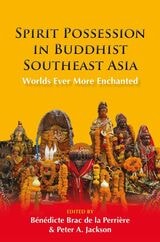
Spirit Possession in Buddhist Southeast Asia
Worlds Ever More EnchantedEdited by Bénédicte Brac de la Perrière and Peter A. Jackson
National University of Singapore Press, 2022
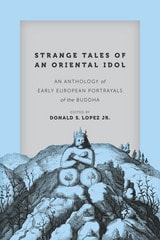
Strange Tales of an Oriental Idol
An Anthology of Early European Portrayals of the BuddhaEdited by Donald S. Lopez Jr.
University of Chicago Press, 2016
Featuring writings by soldiers, adventurers, merchants, missionaries, theologians, and colonial officers, this volume contains a wide range of portraits of the Buddha. The descriptions are rarely flattering, as all manner of reports—some accurate, some inaccurate, and some garbled—came to circulate among European savants and eccentrics, many of whom were famous in their day but are long forgotten in ours. Taken together, these accounts present a fascinating picture, not only of the Buddha as he was understood and misunderstood for centuries, but also of his portrayers.

Subject to Death
Life and Loss in a Buddhist WorldRobert Desjarlais
University of Chicago Press, 2016