178 books match the query 'Buildings' and 6 start with s
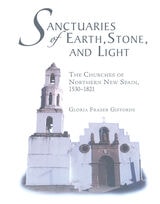
cover of Sanctuaries of Earth, Stone, and Light: The Churches of Northern New Spain, 1530-1821

Sanctuaries of Earth, Stone, and Light

The Churches of Northern New Spain, 1530-1821

Gloria Fraser Giffords

University of Arizona Press, 2007

Over nearly three centuries, Jesuit, Franciscan, and Dominican missionaries built a network of churches throughout the “new world” of New Spain. Since the early twentieth century, scholars have studied the colonial architecture of southern New Spain, but they have largely ignored the architecture of the north. However, as this book clearly demonstrates, the colonial architecture of Northern New Spain—an area that encompasses most of the southwestern United States and much of northern Mexico—is strikingly beautiful and rich with meaning. After more than two decades of research, both in the field and in archives around the world, Gloria Fraser Giffords has authored the definitive book on this architecture.

Giffords has a remarkable eye for detail and for images both grand and diminutive. Because so many of the buildings she examines have been destroyed, she sleuthed through historical records in several countries, and she discovered that the architecture and material culture of northern New Spain reveal the influences of five continents. As she examines objects as large as churches or as small as ornamental ceramic tile she illuminates the sometimes subtle, sometimes striking influences of the religious, social, and artistic traditions of Europe (from the beginning of the Christian era through the nineteenth century), of the Muslim countries ringing the Mediterranean (from the seventh through the fifteenth centuries), and of Northern New Spain’s indigenous peoples (whose art influenced the designs of occupying Europeans).

Sanctuaries of Earth, Stone, and Light is a pathbreaking book, featuring 200 stunning photographs and over 300 illustrations ranging from ceremonial garments to detailed floor plans of the churches.
[more]
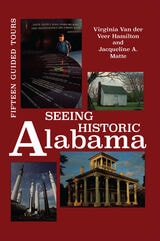
cover of Seeing Historic Alabama: Fifteen Guided Tours

Seeing Historic Alabama

Fifteen Guided Tours

Virginia Van der Veer Hamilton

University of Alabama Press, 1996

Revised and updated. 

A trusted guide to Alabama's historic treasures and cultural landmarks.

Don’t drive anywhere in this state without taking along this useful, handy guide. Originally published in 1982, Professor Hamilton’s much acclaimed Seeing Historic Alabama: Fifteen Guided Tours was enthusiastically received around the state. Reviewers throughout Alabama praised her work, her artist’s eye for landscape and architecture, as well as her “historian’s devotion to fact and motorist’s appreciation for specific directions.” This praise extended beyond the state lines to publications in the greater Southeast, which recommend the volume to readers planning travel to or through Alabama.

Hamilton and Matte's thoroughly revised and updated edition of Seeing Historic Alabama introduces readers to the history of Alabama by way of visits to the buildings and sites where historic events took place, from prehistoric time to the present. Its aim is to appeal to a wide range of readers and travelers—natives and residents of Alabama, students of all ages, newcomers to the state, and tourists. This guide offers tours arranged in geographical segments that can be taken in a few hours, in a day trip, or over the course of several days. A handy guide to keep at ready in the glove compartment for easy reference wherever you travel.
 

[more]
cover of Self-Build Homes: Social Discourse, Experiences and Directions

Self-Build Homes

Social Discourse, Experiences and Directions

Edited by Michaela Benson and Iqbal Hamiduddin

University College London, 2017
This collection on the self-build home movement connects burgeoning research in the United Kingdom with commentary from international figures. Focusing on community, dwelling, and identity, the chapters engender new dialogues on self-building, calling for more recognition of the social dimensions of the process. By investigating the development of structures, the practices that shape them, and the experiences of the residents, these essays offer policy planners tangible perspective on the affordable housing crisis and one potential response. 
[more]
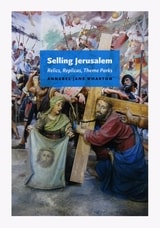
cover of Selling Jerusalem: Relics, Replicas, Theme Parks

Selling Jerusalem

Relics, Replicas, Theme Parks

Annabel Jane Wharton

University of Chicago Press, 2006

Jerusalem currently stands at the center of a violent controversy that threatens the stability of both the Middle East and the world. This volatility, observes Annabel Jane Wharton, is only the most recent manifestation of a centuries-old obsession with the control of the Holy City—military occupation and pilgrimage being two familiar forms of “ownership.” Wharton makes the innovative argument here that the West has also sought to possess Jerusalem by acquiring its representations. 

From relics of the True Cross and Templar replicas of the Holy Sepulchre to Franciscan recreations of the Passion to nineteenth-century mass-produced prints and contemporary theme parks, Wharton describes the evolving forms by which the city has been possessed in the West. She also maps those changing embodiments of the Holy City against shifts in the western market. From the gift-and-barter economy of the early Middle Ages to contemporary globalization, both money and the representations of Jerusalem have become progressively incorporeal, abstract, illusionistic, and virtual. 

Selling Jerusalem offers a penetrating introduction to the explosive combination of piety and capital at work in religious objects and global politics. It is sure to interest students and scholars of art history, economic history, popular culture, religion, and architecture, as well as those who want to better understand Jerusalem’s problematic place in history.
[more]
cover of Sick Building Syndrome and the Problem of Uncertainty: Environmental Politics, Technoscience, and Women Workers

Sick Building Syndrome and the Problem of Uncertainty

Environmental Politics, Technoscience, and Women Workers

M. Murphy

Duke University Press, 2006

Before 1980, sick building syndrome did not exist. By the 1990s, it was among the most commonly investigated occupational health problems in the United States. Afflicted by headaches, rashes, and immune system disorders, office workers—mostly women—protested that their workplaces were filled with toxic hazards; yet federal investigators could detect no chemical cause. This richly detailed history tells the story of how sick building syndrome came into being: how indoor exposures to chemicals wafting from synthetic carpet, ink, adhesive, solvents, and so on became something that relatively privileged Americans worried over, felt, and ultimately sought to do something about. As M. Murphy shows, sick building syndrome provides a window into how environmental politics moved indoors.

Sick building syndrome embodied a politics of uncertainty that continues to characterize contemporary American environmental debates. Murphy explores the production of uncertainty by juxtaposing multiple histories, each of which explains how an expert or lay tradition made chemical exposures perceptible or imperceptible, existent or nonexistent. They show how uncertainty emerged from a complex confluence of feminist activism, office worker protests, ventilation engineering, toxicology, popular epidemiology, corporate science, and ecology. In an illuminating case study, she reflects on EPA scientists’ efforts to have their headquarters recognized as a sick building. Murphy brings all of these histories together in what is not only a thorough account of an environmental health problem but also a much deeper exploration of the relationship between history, materiality, and uncertainty.
[more]
cover of Spirituality in Architectural Education: Twelve Years of the Walton Critic Program at The Catholic University of America

Spirituality in Architectural Education

Twelve Years of the Walton Critic Program at The Catholic University of America

Julio Bermudez

Catholic University of America Press, 2021

How does spirituality enter the education of an architect? Should it? What do we mean by ‘spirituality’ in the first place? Isn’t architectural education a training ground for professional practice and, therefore, technically and secularly oriented? Is there even room to add something as esoteric if not controversial as spirituality to an already packed university curriculum? The humanistic and artistic roots of architecture certainly invite us to consider dimensions well beyond the instrumental, including spirituality. But how would we teach such a thing? And why, if spirituality is indeed relevant to learning architecture, have we heard so little about it? Spirituality in Architectural Education addresses these and many other important philosophical, disciplinary, pedagogic, and practical questions. Grounded on the twelve-year-old Walton Critic Program at the Catholic University of America School of Architecture and Planning, this book offers solid arguments and insightful reflections on the role that “big questions” and spiritual sensibility ought to play in the architectural academy today. Using 11 design studios as stopping grounds, the volume takes the reader into a journey full of meaningful interrogations, pedagogic techniques, challenging realizations, and beautiful designs. Essays from renowned architects Craig W. Hartman, Juhani Pallasmaa, Alberto Campo Baeza, Claudio Silvestrin, Eliana Bórmida, Michael J. Crosbie, Prem Chandavarkar, Rick Joy, Susan Jones, and Daniel Libeskind open new vistas on the impact of spirituality in architectural education and practice. All this work is contextualized within the ongoing discussion of the role of spirituality and religion in higher education at large. The result is an unprecedented volume that starts a long-awaited conversation that will advance architectural schooling. ACSA Distinguished Professor Julio Bermudez, with recognized expertise on spirituality in architecture, will be the guide in this fascinating and contemplative journey.
[more]