Results by title
134 books match the query 'Business' and 8 start with s
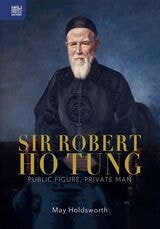
Sir Robert Ho Tung
Public Figure, Private ManMay Holdsworth
Hong Kong University Press, 2022
Sir Robert Ho Tung (1862–1954) is a compelling figure in Hong Kong history. He is regularly portrayed as the colony’s greatest philanthropist and wealthiest man of his day, the first Chinese to live on the Peak, and, at the end of his life, the “Grand Old Man of Hong Kong.” The illegitimate son of a Chinese mother and European father, he was highly sensitive about his mixed heritage, although his success was driven as much by his entrepreneurial talents as by his being Eurasian. This book shows him in all his immense variety—financial wizard, husband and lover, patriarch of a large family, loyal British subject but also, paradoxically, Chinese patriot. China’s president Yuan Shikai awarded him the Order of the Excellent Crop, and King George V knighted him. May Holdsworth’s thoughtful and deftly written account of his life is the first full-length biography in English. Given unique and unprecedented access to family and personal papers, including letters, diaries, notes, and photographs, she offers a nuanced perspective on a public but also a private man. Her book will be a rich resource for historians and readers interested in the men and women who played a key part in the shaping of nineteenth- and early twentieth-century Hong Kong.
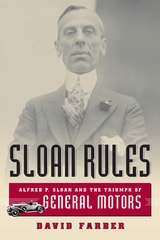
Sloan Rules
Alfred P. Sloan and the Triumph of General MotorsDavid Farber
University of Chicago Press, 2002
Here, for the first time, is a study of both the difficult man and the pathbreaking executive. Sloan Rules reveals the GM genius as not only a driven manager of men, machines, money, and markets but also a passionate and not always wise participant in the great events of his day. Sloan, for example, reviled Franklin Roosevelt and the New Deal; he firmly believed that politicians, government bureaucrats, and union leaders knew next to nothing about the workings of the new consumer economy, and he did his best to stop them from intervening in the private enterprise system. He was instrumental in transforming GM from the country's largest producer of cars into the mainstay of America's "Arsenal of Democracy" during World War II; after the war, he bet GM's future on renewed American prosperity and helped lead the country into a period of economic abundance. Through his business genius, his sometimes myopic social vision, and his vast fortune, Sloan was an architect of the corporate-dominated global society we live in today.
David Farber's story of America's first corporate genius is biography of the highest order, a portrait of an extraordinarily compelling and skillful man who shaped his era and ours.
Social History of Economic Decline
Business, Politics, and Work in TrentonCumbler, John T.
Rutgers University Press, 1989

Staking Her Claim
Life Of Belinda MulrooneyMelanie J. Mayer
Ohio University Press, 1999
In Staking Her Claim, Melanie Mayer and Robert N. DeArmond provide a faithful and comprehensive portrait of this unique character in North American frontier history. Their exhaustive research has resulted in a sweeping saga of determination and will, tempered by disaster and opportunity.
Like any good Horatio Alger hero, Belinda overcame the challenges that confronted her, including poverty, prejudice, a lack of schooling, and the early loss of parents. Her travels took her from her native Ireland as a young girl to a coal town in Pennsylvania to Chicago, San Francisco, and finally, in 1897, to the Yukon.
Staking Her Claim is a testament to the human spirit and to the idea of the frontier. It is a biography of a woman who made her own way in the world and in doing so left an indelible mark.
State-Corporate Crime
Wrongdoing at the Intersection of Business and GovernmentMichalowski, Raymond J
Rutgers University Press, 2006
Despite growing attention to crimes by those in positions of trust, however, violations in business and similar wrongdoing in government are still often treated as fundamentally separate problems. In State-Corporate Crime, Raymond J. Michalowski and Ronald C. Kramer bring together fifteen essays to show that those in positions of political and economic power frequently operate in collaboration, and are often all too willing to sacrifice the well-being of the many for the private profit and political advantage of the few.
Drawing on case studies including the explosion of the space shuttle Challenger, Ford Explorer rollovers, the crash of Valujet flight 592, nuclear weapons production, and war profiteering, the essays bear frank witness to those who have suffered, those who have died, and those who have contributed to the greatest human and environmental devastations of our time. This book is a much needed reminder that the most serious threats to public health, security, and safety are not those petty crimes that appear nightly on local news broadcasts, but rather are those that result from corruption among the wealthiest and most powerful members of society.
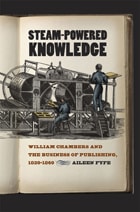
Steam-Powered Knowledge
William Chambers and the Business of Publishing, 1820-1860Aileen Fyfe
University of Chicago Press, 2012
With the overwhelming amount of new information that bombards us each day, it is perhaps difficult to imagine a time when the widespread availability of the printed word was a novelty. In early nineteenth-century Britain, print was not novel—Gutenberg’s printing press had been around for nearly four centuries—but printed matter was still a rare and relatively expensive luxury. All this changed, however, as publishers began employing new technologies to astounding effect, mass-producing instructive and educational books and magazines and revolutionizing how knowledge was disseminated to the general public.
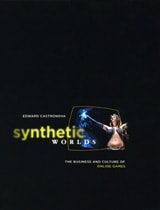
Synthetic Worlds
The Business and Culture of Online GamesEdward Castronova
University of Chicago Press, 2006
In Synthetic Worlds, Edward Castronova offers the first comprehensive look at the online game industry, exploring its implications for business and culture alike. He starts with the players, giving us a revealing look into the everyday lives of the gamers—outlining what they do in their synthetic worlds and why. He then describes the economies inside these worlds to show how they might dramatically affect real world financial systems, from potential disruptions of markets to new business horizons. Ultimately, he explores the long-term social consequences of online games: If players can inhabit worlds that are more alluring and gratifying than reality, then how can the real world ever compete? Will a day ever come when we spend more time in these synthetic worlds than in our own? Or even more startling, will a day ever come when such questions no longer sound alarmist but instead seem obsolete?
With more than ten million active players worldwide—and with Microsoft and Sony pouring hundreds of millions of dollars into video game development—online games have become too big to ignore. Synthetic Worlds spearheads our efforts to come to terms with this virtual reality and its concrete effects.
“Synthetic Worlds is a surprisingly profound book about the social, political, and economic issues arising from the emergence of vast multiplayer games on the Internet. What Castronova has realized is that these games, where players contribute considerable labor in exchange for things they value, are not merely like real economies, they are real economies, displaying inflation, fraud, Chinese sweatshops, and some surprising in-game innovations.”—Tim Harford, Chronicle of Higher Education