Results by title
343 books match the query 'Capitalism' and 22 start with s

Scripted Affects, Branded Selves
Television, Subjectivity, and Capitalism in 1990s JapanGabriella Lukács
Duke University Press, 2010

Seeking the Best Master
State Ownership in the Varieties of CapitalismMiklós Szanyi
Central European University Press, 2020

Sexual Hegemony
Statecraft, Sodomy, and Capital in the Rise of the World SystemChristopher Chitty
Duke University Press, 2020
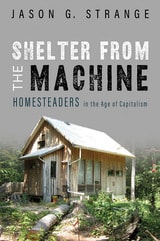
Shelter from the Machine
Homesteaders in the Age of CapitalismJason G. Strange
University of Illinois Press, 2020
Jason Strange shows where homesteaders fit, and don't fit, within contemporary America. Blending history with personal stories, Strange visits pig roasts and bohemian work parties to find people engaged in a lifestyle that offers challenge and fulfillment for those in search of virtues like self-employment, frugality, contact with nature, and escape from the mainstream. He also lays bare the vast differences in education and opportunity that leave some homesteaders dispossessed while charting the tensions that arise when people seek refuge from the ills of modern society—only to find themselves indelibly marked by the system they dreamed of escaping.

Slavoj Zizek
A Critical IntroductionIan Parker
Pluto Press, 2004
'This is not simply the best critical introduction to Zizek – in a much more radical sense, this is the only critical introduction to Zizek. Parker's study is much more than an important contribution to the ongoing debate: it redefines its very terms.' Yannis Stavrakakis, author of 'Lacan and the Political'
'A sharp, clear and radical analysis.' Christian Ingo Lenz Dunker, Professor of Psychoanalytic Theory and Lacanian Psychoanalyst, Sao Paulo, Brazil.
Since the publication of his first book in English in 1989, Slavoj Zizek has quickly become one of the most widely read and contentious intellectuals alive today. With dazzling wit and tremendous creativity he has produced innovative and challenging explorations of Lacan, Hegel and Marx, and used his insights to exhilarating effect in analyses of popular culture.
While Zizek is always engaging, he is also elusive and even contradictory. It can be very hard to finally determine where he stands on a particular issue. Is Zizek Marxist or Post-Marxist? How seriously should we take his recent turn to Christianity?
Slavoj Zizek: A Critical Introduction shows the reader a clear path through the twists and turns of Zizek's writings. Ian Parker takes Zizek's treatment of Hegel, Lacan and Marx in turn and outlines and assesses Zizek's interpretation and extension of these thinkers' theories. While Parker is never hastily dismissive of Zizek's innovations, he remains critical throughout, aware that the energy of Zizek's writing can be bewitching and beguiling as well as engaging and profound.
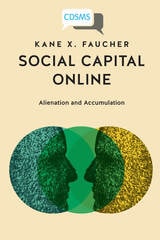
Social Capital Online
Alienation and AccumulationKane X. Faucher
University of Westminster Press, 2018
What is ‘social capital’? The enormous positivity surrounding it conceals the instrumental economic rationality underpinning the notion as corporations silently sell consumer data for profit. Status chasing is just one aspect of a process of transforming qualitative aspects of social interactions into quantifiable metrics for easier processing, prediction, and behavioural shaping.
A work of critical media studies, Social Capital Online examines the idea within the new ‘network spectacle’ of digital capitalism via the ideas of Marx, Veblen, Debord, Baudrillard and Deleuze. Explaining how such phenomena as online narcissism and aggression arise, Faucher offers a new theoretical understanding of how the spectacularisation of online activity perfectly aligns with the value system of neoliberalism and its data worship. Even so, at the centre of all, lie familiar ideas – alienation and accumulation – new conceptions of which he argues are vital for understanding today’s digital society.
Social Reproduction Theory and the Socialist Horizon
Work, Power and Political StrategyAaron Jaffe
Pluto Press, 2020
Socialism, Capitalism and Alternatives
Area Studies and Global TheoriesEdited by Peter J. S. Duncan and Elisabeth Schimpfössl
University College London, 2019
Through analysis of post-Socialist Russia and Central and Eastern Europe, as well as of the United Kingdom, China, and the United States, Socialism, Capitalism and Alternatives confronts the difficulty we face in articulating alternatives to capitalism, socialism, and threatening populist regimes. Beginning with accounts of the impact of capitalism on countries left behind by the planned economies, the book moves on to consider how China has become a beacon of dynamic economic growth, aggressively expanding its global influence. The final section of the book poses alternatives to the ideological dominance of neoliberalism in the West.
Socialism, Capitalism, Transformation
Leszek Balcerowicz
Central European University Press, 1995
Solidarity in Strategy
Making Business Meaningful in American Trade AssociationsLyn Spillman
University of Chicago Press, 2012
Popular conceptions hold that capitalism is driven almost entirely by the pursuit of profit and self-interest. Challenging that assumption, this major new study of American business associations shows how market and non-market relations are actually profoundly entwined at the heart of capitalism.
In Solidarity in Strategy, Lyn Spillman draws on rich documentary archives and a comprehensive data set of more than four thousand trade associations from diverse and obscure corners of commercial life to reveal a busy and often surprising arena of American economic activity. From the Intelligent Transportation Society to the American Gem Trade Association, Spillman explains how business associations are more collegial than cutthroat, and how they make capitalist action meaningful not only by developing shared ideas about collective interests but also by articulating a disinterested solidarity that transcends those interests.
Deeply grounded in both economic and cultural sociology, Solidarity in Strategy provides rich, lively, and often surprising insights into the world of business, and leads us to question some of our most fundamental assumptions about economic life and how cultural context influences economic.
Southern Capitalism
The Political Economy of North Carolina, 1880–1980Philip J. Wood
Duke University Press, 1986

Specters of the Atlantic
Finance Capital, Slavery, and the Philosophy of HistoryIan Baucom
Duke University Press, 2005
Baucom contends that the massacre and the trials that followed it bring to light an Atlantic cycle of capital accumulation based on speculative finance, an economic cycle that has not yet run its course. The extraordinarily abstract nature of today’s finance capital is the late-eighteenth-century system intensified. Yet, as Baucom highlights, since the late 1700s, this rapacious speculative culture has had detractors. He traces the emergence and development of a counter-discourse he calls melancholy realism through abolitionist and human-rights texts, British romantic poetry, Scottish moral philosophy, and the work of late-twentieth-century literary theorists. In revealing how the Zong tragedy resonates within contemporary financial systems and human-rights discourses, Baucom puts forth a deeply compelling, utterly original theory of history: one that insists that an eighteenth-century atrocity is not past but present within the future we now inhabit.

Spectropolis
The Enchantment of Capital in SingaporeJoshua Comaroff
University of Minnesota Press, 2025
How economic transformation and the spirit world collide in hypermodern Singapore
In Singapore, the financial center of Southeast Asia, hyperurbanization and commercial development exist alongside enduring belief in the economic power of ghosts: in their ability to control the flows of money and value and to determine the outcome of investments and wagers. Spectropolis explores the unlikely collusion of these two systems, demonstrating both the productive role of popular beliefs in the modern world and the surprising correlations between “late” capitalism and the workings of the spirit realm.
Detailing the logic and practices of Singapore’s ghost economy—from performing exorcisms on real estate development sites to offering money and commodities to the dead as a hedge against precarious real-world transactions—Joshua Comaroff shows how speculative finance, largely governed by chance and volatility, is understood via its inherently spectral qualities. Through the influence of Chinese Buddhist-Taoist thought, the movement of capital is placed under the sway of cosmology and geomancy, resulting in a built environment that is both technologically advanced and quite literally enchanted.
Based on detailed case studies and years of extensive fieldwork, Spectropolis argues for the power of popular belief systems to theorize contemporary socioeconomic conditions and to give form to collective affect as well as shared aspirations and anxieties. As Comaroff demonstrates, the uniquely all-consuming nature of Singapore’s tightly compressed urban economy is such that it may subsume even that which lies beyond the threshold of life itself.
Retail e-book files for this title are screen-reader friendly with images accompanied by short alt text and/or extended descriptions.
Speculation
Politics, Ideology, EventGlyn Daly
Northwestern University Press, 2019
Speculation: Politics, Ideology, Event develops Hegel’s radical perspective of speculative thought as a way of reclaiming and revitalizing the sense of the future and its possibilities. Engaging with such figures as Alain Badiou, Quentin Meillassoux, Ernesto Laclau, Slavoj Žižek, and Fredric Jameson, Glyn Daly articulates the distinctness of speculative philosophy and draws its implications for new debates in areas of science, politics, capitalism, ideology, ethics, and the event.
In a confrontation with today’s fatalistic milieu, principal emphasis is given to Hegel’s idea of infinity as the intrinsic dimension of negativity within all finitude. Against the modern era’s paradigmatic tendency to externalize social problems in the form of antagonism and Otherness, Daly argues for a renewal of utopian thought based on Hegelian reconciliation and the affirmation of excess as the essence of all being. On these grounds, he advances a new kind of political imagination that in speculative terms centers on uncompromising notions of truth and reason.
Speculative Communities
Living with Uncertainty in a Financialized WorldAris Komporozos-Athanasiou
University of Chicago Press, 2022
In Speculative Communities, Aris Komporozos-Athanasiou examines the ways that speculation has moved beyond financial markets to shape fundamental aspects of our social and political lives. As ordinary people make exceptional decisions, such as the American election of a populist demagogue or the British vote to leave the European Union, they are moving from time-honored and -tested practices of governance, toward the speculative promise of a new, more uncertain future. This book shows how even our methods of building community have shifted to the speculative realm as social media platforms enable and amplify our volatile wagers.
For Komporozos-Athanasiou, “to speculate” means increasingly “to connect,” to endorse the unknown pre-emptively, and often daringly, as a means of social survival. Grappling with the question of how more uncertainty can lead to its full-throated embrace rather than dissent, Speculative Communities shows how finance has become the model for society writ large. As Komporozos-Athanasiou argues, virtual marketplaces, new social media, and dating apps bring finance’s opaque infrastructures into the most intimate realms of our lives, leading to a new type of speculative imagination across economy, culture, and society.

Stealing Shining Rivers
Agrarian Conflict, Market Logic, and Conservation in a Mexican ForestMolly Doane
University of Arizona Press, 2012
What happens to indigenous people when their homelands are declared by well-intentioned outsiders to be precious environmental habitats? In this revelatory book, Molly Doane describes how a rain forest in Mexico’s southern state of Oaxaca was appropriated and redefined by environmentalists who initially wanted to conserve its biodiversity. Her case study approach shows that good intentions are not always enough to produce results that benefit both a habitat and its many different types of inhabitants.
Doane begins by showing how Chimalapas—translated as “shining rivers”—has been “produced” in various ways over time, from a worthless wasteland to a priceless asset. Focusing on a series of environmental projects that operated between 1990 and 2008, she reveals that environmentalists attempted to recast agrarian disputes—which actually stemmed from government-supported corporate incursions into community lands and from unequal land redistribution—as environmental problems.
Doane focuses in particular on the attempt throughout the 1990s to establish a “Campesino Ecological Reserve” in Chimalapas. Supported by major grants from the World Wildlife Foundation (WWF), this effort to foster and merge agrarian and environmental interests was ultimately unsuccessful because it was seen as politically threatening by the state. By 2000, the Mexican government had convinced the WWF to redirect its conservation monies to the state government and its agencies.
The WWF eventually abandoned attempts to establish an “enclosure” nature reserve in the region or to gain community acceptance for conservation. Instead, working from a new market-based model of conservation, the WWF began paying cash to individuals for “environmental services” such as reforestation and environmental monitoring.
Steam City
Railroads, Urban Space, and Corporate Capitalism in Nineteenth-Century BaltimoreDavid Schley
University of Chicago Press, 2020
Steam City tells the story of corporate capitalism starting from the street and moving outward, looking at how the rise of the railroad altered the fabric of everyday life in the United States. The B&O’s founders believed that their new line would remap American economic geography, but no one imagined that the railroad would also dramatically reshape the spaces of its terminal city. As railroad executives wrangled with city officials over their use of urban space, they formulated new ideas about the boundaries between public good and private profit. Ultimately, they reinvented the B&O as a private enterprise, unmoored to its home city. This bold reconception had implications not only for the people of Baltimore, but for the railroad industry as a whole. As David Schley shows here, privatizing the B&O helped set the stage for the rise of the corporation as a major force in the post-Civil War economy.
Steam City examines how the birth and spread of the American railroad—which brought rapid communications, fossil fuels, and new modes of corporate organization to the city—changed how people worked, where they lived, even how they crossed the street. As Schley makes clear, we still live with the consequences of this spatial and economic order today.
Stories of Capitalism
Inside the Role of Financial AnalystsStefan Leins
University of Chicago Press, 2018
Building on recent developments in the social studies of finance, Stories of Capitalism provides the first ethnography of financial analysis. Drawing on two years of fieldwork in a Swiss bank, Stefan Leins argues that financial analysts construct stories of possible economic futures, presenting them as coherent and grounded in expert research and analysis. In so doing, they establish a role for themselves—not necessarily by laying bare empirically verifiable trends but rather by presenting the market as something that makes sense and is worth investing in. Stories of Capitalism is a nuanced look at how banks continue to boost investment—even in unstable markets—and a rare insider’s look into the often opaque financial practices that shape the global economy.
Survival of a Perverse Nation
Morality and Queer Possibility in ArmeniaTamar R. Shirinian
Duke University Press, 2024
Sustainable Capitalism
Essential Work for the AnthropoceneEdited by Inara Scott
University of Utah Press, 2024
Sustainable Capitalism takes on the challenge of sustainability from a uniquely interdisciplinary and diverse perspective, offering both theory and tools for action. Topics range from an analysis of the foundations and definition of capitalism to the specific regulatory mechanisms that may be necessary to rein in its current, unsustainable trajectory. Readers will find nuanced and important analyses of options and potential outcomes that are not available in any other work. This book is essential reading for anyone concerned about the path we are on and how we might improve the lives of people around the globe.
https://www.sustainablecapitalismbook.com/
Sweatshop Capital
Profit, Violence, and Solidarity Movements in the Long Twentieth CenturyBeth Robinson
Duke University Press, 2025
Systems, Institutions, and Values in East and West
Engaging with János Kornai's ScholarshipMiklós Rosta
Central European University Press, 2020
Leading social scientists, empirical analysts, and policy practitioners demonstrate the various ways in which the insights of János Kornai, a renowned early analyst and critic of the command economies of Eastern European communist states, are stirring academic and policy discussions about current challenges. While dissecting the economic theories and practices in the Soviet Bloc, Kornai devised and applied concepts such as soft-budget constraints, rush versus harmonic growth, surplus versus shortage economy, non-Walrasian equilibrium, bureaucratic coordination, and the invisible power of the communist party. These concepts are commonly applied to a variety of issues in the contexts of fundamental transformation. The cases discussed in this volume include the transitional paths of post-communist economies, the pitfalls of East European market-building, economic repercussions of the dissolution of Yugoslavia, and the process of integration in the Eurozone.
In conclusion János Kornai’s thoughts on a variety of research topics as well as the value of democracy are included as he delivered at the conference celebrating his 90th birthday in 2018.