Results by title
282 books match the query 'Caribbean & West Indies' and 18 start with s
Saamaka Dreaming
Richard Price and Sally Price
Duke University Press, 2017
Sab and Autobiography
By Gertrudis Gómez de Avellaneda y Arteaga
University of Texas Press, 1993
Eleven years before Uncle Tom's Cabin fanned the fires of abolition in North America, an aristocratic Cuban woman told an impassioned story of the fatal love of a mulatto slave for his white owner's daughter. So controversial was Sab's theme of miscegenation and its parallel between the powerlessness and enslavement of blacks and the economic and matrimonial subservience of women that the book was not published in Cuba until 1914, seventy-three years after its original 1841 publication in Spain.
Also included in the volume is Avellaneda's Autobiography (1839), whose portrait of an intelligent, flamboyant woman struggling against the restrictions of her era amplifies the novel's exploration of the patriarchal oppression of minorities and women.
San Juan
Memoir of a CityEdgardo Rodriguez Julia; Translated by Peter Grandbois
University of Wisconsin Press, 2007
In the allusive cityscape he recreates, Rodríguez Juliá invokes the ghosts of his childhood, of San Juan's elder literati, and of characters from his own novels. On the most tangible level, the city is a place of cabarets and cockfighting clubs, flâneurs and beach bums, smoke-filled bars and honking automobiles. Poised between a colonial past and a commercial future, the San Juan he portrays feels at times perilously close to the pitfalls of modernization. Tenement houses and fading mansions yield to strip malls and Tastee Freezes; asphalt hems in jacarandas and palm trees. "In Puerto Rico," he muses, "life is not simply cruel, it is also busy erasing our tracks." Through this book—available here in English for the first time—Rodríguez Juliá resists that erasure, thoughtfully etching a palimpsest that preserves images of the city where he grew up and rejoicing in the one where he still lives.
Scarred Landscapes
Place, Trauma, and Memory in Caribbean Latinx ArtStephanie Lewthwaite
University of Arizona Press, 2025
The book combines formal analysis with artist testimony, exhibition histories, and theoretical frameworks from trauma, memory, and archipelagic studies, to offer a multifaceted examination of Caribbean Latinx art. Lewthwaite explores how these artists practice “archipelagic memory,” a generative, decolonial, and coalitional form of memory work that envisions alternative modes of belonging in difference and solidarity with others. By connecting different people, pasts, and places, Caribbean Latinx artists expose the reverberations of trauma while imagining other worlds beyond it.
This work puts Caribbean Latinx artists at the center of debates about the exclusions of dominant memory narratives and contemporary art worlds, highlighting their contributions to a wider decolonial project of remembrance. By revealing the interconnectedness of traumatic histories and the potential for art to foster empathy and justice, Lewthwaite’s work underscores the importance of relational and decolonial thought for imagining a better society.
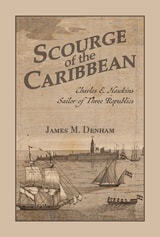
Scourge of the Caribbean
Charles E. Hawkins, Sailor of Three RepublicsJames M. Denham
University of Alabama Press, 2026
Illuminates the early American period in the upper Caribbean
Scourge of the Caribbean explores the mysterious and dramatic life and career of Charles E. Hawkins, a relatively unknown naval figure in early national America. Hawkins’s action-packed life at sea in his brief but accomplished career reveals much about an era when the rules of the maritime world, especially in the Caribbean, were in flux. For the US Navy and its commanders, the Caribbean presented an untold number of ambiguities: revolutionary juntas, privateering, piracy, and deadly disease, all within some of the most beautiful landscapes and waterscapes on earth.
Hawkins, from a well-connected family, took to the sea as a midshipman in the US Navy. Stalled promotion, economic setbacks, and blunted opportunities stymied the young officer, but ambition, combined with varied experiences and maritime pursuits, presented other prospects. At a time when individual agency mattered most, Hawkins stepped outside traditional boundaries of conduct on numerous occasions. Hawkins followed a mentor into the Mexican navy and became the most successful and feared raider of Spanish ships, earning the sobriquet “scourge” because of his raids along Cuba’s northern coast. In 1835, Hawkins joined the Texas independence movement against Mexico. Within the historical narrative are lurid accounts of adultery, affairs of honor, a bloody assassination, and complicated maritime legal battles. Based on prodigious research, this lively tale will appeal to those interested in maritime and early American history and the upper Caribbean in the Age of Sail.
Screening Cuba
Film Criticism as Political Performance during the Cold WarHector Amaya
University of Illinois Press, 2010
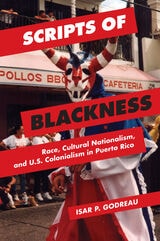
Scripts of Blackness
Race, Cultural Nationalism, and U.S. Colonialism in Puerto RicoIsar P. Godreau
University of Illinois Press, 2015
Based on an ethnographic study of the barrio of San Antón in the city of Ponce, Scripts of Blackness examines institutional and local representations of blackness as developing from a power-laden process that is inherently selective and political, not neutral or natural. Godreau traces the presumed benevolence or triviality of slavery in Puerto Rico, the favoring of a Spanish colonial whiteness (under a hispanophile discourse), and the insistence on a harmonious race mixture as discourses that thrive on a presumed contrast with the United States that also characterize Puerto Rico as morally superior. In so doing, she outlines the debates, social hierarchies, and colonial discourses that inform the racialization of San Antón and its residents as black.
Mining ethnographic materials and anthropological and historical research, Scripts of Blackness provides powerful insights into the critical political, economic, and historical context behind the strategic deployment of blackness, whiteness, and racial mixture.
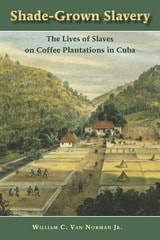
Shade-Grown Slavery
The Lives of Slaves on Coffee Plantations in CubaWilliam C. Van Norman
Vanderbilt University Press, 2013
In this broad, interdisciplinary study, William Van Norman describes how each type of plantation and the amount of manual labor it required directly influenced the nature of slave life in that community. Slaves on coffee plantations lived in a unique context in comparison to that of their fellow slaves on sugar plantations, one that gave them greater flexibility in cultural and artistic creativity. To gain a deeper understanding of plantation slavery in Cuba, Van Norman explores what life and labor was like for coffee slaves and how it was different from what sugar slaves experienced. Shade-Grown Slavery reconstructs their world and in turn deconstructs the picture we now have of Cuba in the late eighteenth and early nineteenth centuries.
Ultimately, Shade-Grown Slavery reveals the lives of enslaved Africans on Cuban coffee plantations and shows how they were able to maintain and transform their cultural traditions in spite of slavery.
Siblings of Soil
Dominicans and Haitians in the Age of RevolutionsCharlton W. Yingling
University of Texas Press, 2022
2023 Honorable Mention, Isis Duarte Book Prize, Haiti/ Dominican Republic section (LASA)
After revolutionary cooperation between Dominican and Haitian majorities produced independence across Hispaniola, Dominican elites crafted negative myths about this era that contributed to anti-Haitianism.
Despite the island’s long-simmering tensions, Dominicans and Haitians once unified Hispaniola. Based on research from over two dozen archives in multiple countries, Siblings of Soil presents the overlooked history of their shared imperial endings and national beginnings from the 1780s to 1822. Haitian revolutionaries both inspired and aided Dominican antislavery and anti-imperial movements. Ultimately, Santo Domingo's independence from Spain came in 1822 through unification with Haiti, as Dominicans embraced citizenship and emancipation. Their collaboration resulted in one of the most unique and inclusive forms of independence in the Americas.
Elite reactions to this era formed anti-Haitian narratives. Racial ideas permeated the revolution, Vodou, Catholicism, secularism, and even Deism. Some Dominicans reinforced Hispanic and Catholic traditions and cast Haitians as violent heretics who had invaded Dominican society, undermining the innovative, multicultural state. Two centuries later, distortions of their shared past of kinship have enabled generations of anti-Haitian policies, assumptions of irreconcilable differences, and human rights abuses.
Silencing the Guns in Haiti
The Promise of Deliberative DemocracyIrwin P. Stotzky
University of Chicago Press, 1997
"A provocative study of the prospects for the rule of law in Haiti."—Marilyn Bowden, Miami Today
"[Stotzky] deepens insights into the contradictory obstacles to democratic governance in Haiti."—Library Journal
"Controversial and stimulating."—Choice
"Lucid and informative. . . . Stotzky gives readers a good foundation for understanding the pressures facing the impoverished but determined Caribbean island."—Islands

Slaves and Slaveholders in Bermuda, 1616-1782
Virginia Bernhard
University of Missouri Press, 1999
Slaves and Slaveholders in Bermuda, 1616-1782, offers a fresh perspective on the complex relationship between racism and slavery in the often overlooked second-oldest English colony in the New World. As the first blacks were brought onto the islands not specifically for slave labor, but for their expertise as pearl divers and cultivators of West Indies plants, Bermuda's racial history began to unfold much differently from that of the Caribbean islands or of the North American mainland.
Bermuda's history records the arrival of the first blacks, the first English law passed to control the behavior of the "Negroes," and the creation of ninety-nine-year indentures for black and Indian servants. When the inevitable reality of slavery took hold in Bermuda, slaveholders realized that they, like their slaves, were not free. Slavery dictated and strained the relationships between whites and blacks, but in this smallest of English colonies it differed from slavery elsewhere because of the uniquely close master-slave relations created by Bermuda's size and maritime economy.
At only twenty-one square miles in area, Bermuda saw slaves and slaveholders working and living closer together than in other societies. The emphasis on maritime pursuits offered slaves a degree of autonomy and a sense of identity unequaled in other English colonies. This groundbreaking history of Bermuda's slavery reveals fewer runaways, less-violent rebellions, and relatively milder punishments for offending slaves.
Bernhard delves into the origins of Bermuda's slavery, its peculiar nature, and its effects on blacks and whites. The study is based on archival research drawn from wills and inventories, laws and court cases, governors' reports and council minutes. Intended as an introduction to both the history of the islands and the rich sources for further research, this book will prove invaluable to scholars of slavery, as well as those interested in historical archaeology, anthropology, maritime history, and colonial history.
Sounds of the Citizens
Dancehall and Community in JamaicaAnne M. Galvin
Vanderbilt University Press, 2014
Galvin highlights the unique alliance between the dancehall industry and community development efforts. As the central role of the state in supporting communities has diminished, the rise of private efforts such as dancehall becomes all the more crucial. The tension, however, between those involved in the industry and those within the neighborhoods is palpable and often dangerous. Amidst all this, individual Jamaicans interact with the dancehall industry and its culture to find their own paths of employment, social identity, and sexual mores.
As Sounds of the Citizens illustrates, the world of entertainment in Jamaica is serious business and uniquely positioned as a powerful force within the community.
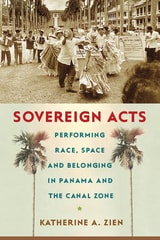
Sovereign Acts
Performing Race, Space, and Belonging in Panama and the Canal ZoneZien, Katherine A.
Rutgers University Press, 2017
Winner of the 2017 Annual Book Prize from the Canadian Association of Latin American and Caribbean Studies (CALACS)
Sovereign Acts explores how artists, activists, and audiences performed and interpreted sovereignty struggles in the Panama Canal Zone, from the Canal Zone’s inception in 1903 to its dissolution in 1999. In popular entertainments and patriotic pageants, opera concerts and national theatre, white U.S. citizens, West Indian laborers, and Panamanian artists and activists used performance as a way to assert their right to the Canal Zone and challenge the Zone’s sovereignty, laying claim to the Zone’s physical space and imagined terrain.
By demonstrating the place of performance in the U.S. Empire’s legal landscape, Katherine A. Zien transforms our understanding of U.S. imperialism and its aftermath in the Panama Canal Zone and the larger U.S.-Caribbean world.
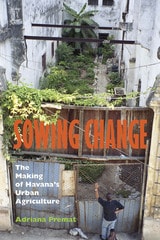
Sowing Change
The Making of Havana's Urban AgricultureAdriana Premat
Vanderbilt University Press, 2012
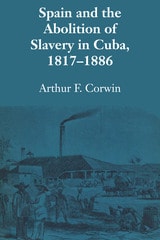
Spain and the Abolition of Slavery in Cuba, 1817–1886
By Arthur F. Corwin
University of Texas Press, 1967
This book explores the abolition of African slavery in Spanish Cuba from 1817 to 1886—from the first Anglo-Spanish agreement to abolish the slave trade until the removal from Cuba of the last vestige of black servitude. Making extensive use of heretofore untapped research sources from the Spanish archives, the author has developed new perspectives on nineteenth-century Spanish policy in Cuba. He skillfully interrelates the problem of slavery with international politics, with Cuban conservative and liberal movements, and with political and economic developments in Spain itself.
Arthur Corwin finds that the study of this problem falls naturally into two phases, the first of which, 1817–1860, traces the gradual reduction of the African traffic to the Spanish Antilles and constitutes, in effect, a study in Anglo-Spanish diplomacy. He gives special attention here to the aggressive nature of British abolitionist diplomacy and the mounting but generally ineffective indignation resulting from Spanish failure to apply sanctions against the traffic, as well as the increasing North American interest in the annexation of Cuba. The first phase has for its principal theme the manner in which for decades Spain feigned compliance with agreements to end the slave trade while actually protecting slaveholding interests as the best means of holding Cuba.
The American Civil War, which destroyed the greatest bulwark of black slavery in the New World, marked the opening of a new phase, 1860–1886. The author strongly emphasizes here such influences as the rise of the Creole reform movement in Cuba and Puerto Rico, which, reading the signs of the times, gave the initial impulse to a Spanish abolitionist movement and contributed to closing the Cuban slave trade in 1866; the liberal revolution of 1868 in Spain and its promise of colonial reforms; the outbreak of the great Creole rebellion in Cuba, 1868–1878, and the abolitionist promises of the rebel chieftains; the threat of American intervention and the abolitionist pressure of American diplomacy; and the protests of the Spanish reactionaries in Spain and Cuba, leading to further procrastination in Madrid. The second phase has as its principal theme the shaping, through all these intertwined factors, of Spain’s first measure of gradual emancipation, the Moret Law of 1870, and all subsequent steps toward abolition.
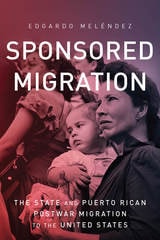
Sponsored Migration
The State and Puerto Rican Postwar Migration to the United StatesEdgardo Meléndez
The Ohio State University Press, 2017
Sponsored Migration places Puerto Rico’s migration policy in its historical context, examining the central role the Puerto Rican government played in encouraging and organizing migration during the postwar period. Meléndez sheds an important new light on the many ways in which the government intervened in the movement of its people: attempting to provide labor to U.S. agriculture, incorporating migrants into places like New York City, seeking to expand the island’s air transportation infrastructure, and even promoting migration in the public school system. One of the first scholars to explore this topic in depth, Meléndez illuminates how migration influenced U.S. and Puerto Rican relations from 1898 onward.
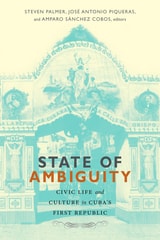
State of Ambiguity
Civic Life and Culture in Cuba's First RepublicSteven Palmer, José Antonio Piqueras, Amparo Sánchez Cobos, eds.
Duke University Press, 2014
Contributors. Imilcy Balboa Navarro, Alejandra Bronfman, Maikel Fariñas Borrego, Reinaldo Funes Monzote, Marial Iglesias Utset, Steven Palmer, José Antonio Piqueras Arenas, Ricardo Quiza Moreno, Amparo Sánchez Cobos, Rebecca J. Scott, Robert Whitney
Surviving Spanish Conquest
Indian Fight, Flight, and Cultural Transformation in Hispaniola and Puerto RicoKaren F. Anderson-Córdova
University of Alabama Press, 2017
In Surviving Spanish Conquest: Indian Fight, Flight, and Cultural Transformation in Hispaniola and Puerto Rico, Karen F. Anderson-Córdova draws on archaeological, historical, and ethnohistorical sources to elucidate the impacts of sixteenth-century Spanish conquest and colonization on indigenous peoples in the Greater Antilles. Moving beyond the conventional narratives of the quick demise of the native populations because of forced labor and the spread of Old World diseases, this book shows the complexity of the initial exchange between the Old and New Worlds and examines the myriad ways the indigenous peoples responded to Spanish colonization.
Focusing on Hispaniola and Puerto Rico, the first Caribbean islands to be conquered and colonized by the Spanish, Anderson-Córdova explains Indian sociocultural transformation within the context of two specific processes, out-migration and in-migration, highlighting how population shifts contributed to the diversification of peoples. For example, as the growing presence of “foreign” Indians from other areas of the Caribbean complicated the variety of responses by Indian groups, her investigation reveals that Indians who were subjected to slavery, or the “encomienda system,” accommodated and absorbed many Spanish customs, yet resumed their own rituals when allowed to return to their villages. Other Indians fled in response to the arrival of the Spanish.
The culmination of years of research, Surviving Spanish Conquest deftly incorporates archaeological investigations at contact sites copious use of archival materials, and anthropological assessments of the contact period in the Caribbean. Ultimately, understanding the processes of Indian-Spanish interaction in the Caribbean enhances comprehension of colonization in many other parts of the world. Anderson-Córdova concludes with a discussion regarding the resurgence of interest in the Taíno people and their culture, especially of individuals who self-identify as Taíno. This volume provides a wealth of insight to historians, anthropologists, archaeologists, and those interested in early cultures in contact.