501 books match the query 'Catholic Church' and 30 start with s
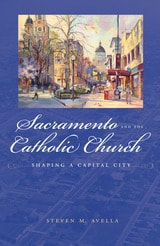
cover of Sacramento and the Catholic Church: Shaping a Capital City

Sacramento and the Catholic Church

Shaping a Capital City

Steven Avella

University of Nevada Press, 2008

This work examines the interplay between the city of Sacramento and the Catholic Church since the 1850s. Avella uses Sacramento as a case study of the role of religious denominations in the development of the American West. In Sacramento, as in other western urban areas, churches brought civility and various cultural amenities, and they helped to create an atmosphere of stability so important to creating a viable urban community. At the same time, churches often had to shape themselves to the secularizing tendencies of western cities while trying to remain faithful to their core values and practices.

Besides the numerous institutions that the Church sponsored, it brought together a wide spectrum of the city’s diverse ethnic populations and offered them several routes to assimilation. Catholic Sacramentans have always played an active role in government and in the city’s economy, and Catholic institutions provided a matrix for the creation of new communities as the city spread into neighboring suburbs. At the same time, the Church was forced to adapt itself to the needs and demands of its various ethnic constituents, particularly the flood of Spanish-speaking newcomers in the late twentieth century.
[more]
cover of Sacred Boundaries: Religious Coexistence and Conflict in Early-Modern France

Sacred Boundaries

Religious Coexistence and Conflict in Early-Modern France

Keith P. Luria

Catholic University of America Press, 2005
Religious rivalry and persecution have bedeviled so many societies that confessional difference often seems an unavoidable source of conflict. Sacred Boundaries challenges this assumption by examining relations between the Catholic majority and Protestant minority in seventeenth-century France as a case study of two religious groups constructing confessional difference and coexistence
[more]
cover of Sacred Divorce: Religion, Therapeutic Culture, and Ending Life Partnerships

Sacred Divorce

Religion, Therapeutic Culture, and Ending Life Partnerships

Jenkins, Kathleen E

Rutgers University Press, 2014

 Even in our world of redefined life partnerships and living arrangements, most marriages begin through sacred ritual connected to a religious tradition. But if marriage rituals affirm deeply held religious and secular values in the presence of clergy, family, and community, where does divorce, which severs so many of these sacred bonds, fit in?  Sociologist Kathleen Jenkins takes up this question in a work that offers both a broad, analytical perspective and a uniquely intimate view of the role of religion in ending marriages.

For more than five years, Jenkins observed religious support groups and workshops for the divorced and interviewed religious practitioners in the midst of divorces, along with clergy members who advised them. Her findings appear here in the form of eloquent and revealing stories about individuals managing emotions in ways that make divorce a meaningful, even sacred process. Clergy from mainline Protestant denominations to Baptist churches, Jewish congregations, Unitarian fellowships, and Catholic parishes talk about the concealed nature of divorce in their congregations.  Sacred Divorce describes their cautious attempts to overcome such barriers, and to assemble meaningful symbols and practices for members by becoming compassionate listeners, delivering careful sermons, refitting existing practices like Catholic annulments and Jewish divorce documents (gets), and constructing new rituals.          

With attention to religious, ethnic, and class variations, covering age groups from early thirties to mid-sixties and separations of only a few months to up to twenty years, Sacred Divorce offers remarkable insight into individual and cultural responses to divorce and the social emotions and spiritual strategies that the clergy and the faithful employ to find meaning in the breach.  At once a sociological document, an ethnographic analysis, and testament of personal experience, Sacred Divorce provides guidance, strategies and answers to readers looking for answers and those looking to heal.
[more]
cover of Sacrifice As Gift

Sacrifice As Gift

Michon M. Matthiesen

Catholic University of America Press, 2012
Sacrifice as Gift is a timely presentation of a forgotten vision of eucharistic sacrifice, one that reconfigures the current philosophical and theological divide between sacrifice and gift.
[more]
cover of Seamus Heaney and the End of Catholic Ireland

Seamus Heaney and the End of Catholic Ireland

Kieran Quinlan

Catholic University of America Press, 2020
Seamus Heaney & the End of Catholic Ireland takes off from the poet’s growing awareness in the new millennium of “something far more important in my mental formation than cultural nationalism or the British presence or any of that stuff—namely, my early religious education.” It then pursues an examination of the full trajectory of Heaney’s religious beliefs as represented in his poetry, prose, and interviews, with a briefer account of the interactive religious histories of the Irish and international contexts in which he lived. Thus, in the 1940s and 50s, Heaney was inducted into the narrow, punitive, but also enabling Catholicism of the era. In the early 1960s he was witness to the lively religious debates from the Anglican Bishop of Woolwich’s Honest to God to the seismic disruptions of Vatican II. When the conflict in Northern Ireland between Catholics and Protestants broke out, Heaney was forced to dig deep for an imaginative understanding of its religious roots. From the 1980s on, Heaney more and more proclaimed his own religious loss while also recognizing the institution’s residual value in an Irish society of rising prosperity, weariness with the atrocities of a partly religion-inspired IRA, and beset by the scandals of sex abuse among the clergy. Kieran Quinlan sees Heaney as an exemplar of this period of major change in Ireland as he engaged the religious issue not only in major writers such as James Joyce, W. B. Yeats, T. S. Eliot, Wallace Stevens, Philip Larkin, and Czeslaw Miłosz, but also in a diverse array of less familiar commentators lay and clerical, creative and academic, believers and unbelievers, Irish and international. Breaking new ground by expanding the scope of Heaney’s religious preoccupations and writing in an accessible, reflective, and sometimes provocative manner, Quinlan’s study places Heaney in his universe, and that universe in turn in its wider intellectual setting.
[more]
cover of Secret Habits: Catholic Literacy Education for Women in the Early Nineteenth Century

Secret Habits

Catholic Literacy Education for Women in the Early Nineteenth Century

Carol Mattingly

Southern Illinois University Press, 2016

Literacy historians have credited the Protestant mandate to read scripture, as well as Protestant schools, for advances in American literacy. This belief, however, has overshadowed other important efforts and led to an incomplete understanding of our literacy history. In Secret Habits: Catholic Literacy Education for Women in the Early Nineteenth Century, Carol Mattingly restores the work of Catholic nuns and sisters to its rightful place in literacy studies.

Mattingly shows that despite widespread fears and opposition, including attacks by vaunted northeastern Protestant pioneers of literacy, Catholic women nonetheless became important educators of women in many areas of America. They founded convents, convent academies, and schools; developed their own curricula and pedagogies; and persisted in their efforts in the face of significant prejudices. The convents faced sharp opposition from Protestant educators, who often played on anti-Catholic fears to gain support for their own schools. Using a performative rhetoric of good works that emphasized civic involvement, Catholic women were able to educate large numbers of women and expand opportunities for literacy instruction.

A needed corrective to studies that have focused solely on efforts by Protestant educators, Mattingly’s work offers new insights into early nineteenth-century women’s literacy, demonstrating that literacy education was more religiously and geographically diverse than previously recognized. 
[more]
cover of Seeing with the Eyes of the Heart: Cultivating a Sacramental Imagination in an Age of Pornography

Seeing with the Eyes of the Heart

Cultivating a Sacramental Imagination in an Age of Pornography

Elizabeth T. Groppe

Catholic University of America Press, 2020
In an era in which the internet has made pornography readily accessible, Seeing with the Eyes of the Heart offers a theological critique of pornography and retrieves from the Christian tradition an alternative visual culture. This visual culture is constituted by both the character of the images we behold and the manner in which we see. Contributors include psychologists William M. Struthers and Jill Manning, who address the neurological effects of pornography and its influences on personal, familial, and social life. Their professional analysis is complemented by the testimony of a young man in recovery from pornography addiction. In an exposition of Christian visual culture, Orthodox iconographer Randi Sider-Rose describes the spiritual discipline of icon writing, Danielle M. Peters, S.T.D., surveys the iconography and art of Marian traditions, and art historian Dianne Phillips elucidates the meaning of divine desire as evident in Catholic visual culture of the late medieval and early modern periods. Catholic theologians Ann W. Astell, Nathanial Peters, Boyd Taylor Coolman, and Nicolas Ogle discuss specific practices and dimensions of the Catholic tradition that can contribute to the cultivation of sacramental vision, and David W. Fagerberg, Kimberly Hope Belcher, Jennifer Newsome Martin, and John C. Cavadini offer reflections on sacramental imagination and the healing of vision. Seeing with the Eyes of the Heart is a work of scholarship composed with pastoral care and concern, and it will be serviceable to both classroom teachers and pastoral ministers. A special feature of the book is an inset of seventy-two full-color plates featuring both classic and contemporary works of Christian iconography and art. The essays and images invite readers to behold in beauty the truth that we are created by the triune God not for sexual objectification but with a sacramental vocation to deification through Christ and the Holy Spirit of love.
[more]
cover of Selected Works

Selected Works

Robert B. Fulgentius

Catholic University of America Press, 1997
This volume gives English readers for the first time an opportunity to study a representative selection of the writings of this early sixth-century author. It also presents Fulgentius's biography, the Life, for the first time in English.
[more]
cover of Sermons

Sermons

Saint Leo the Great

Catholic University of America Press, 1995
It would be practically impossible to understand this monumental transition from the Roman world to Christendom without taking into account the pivotal role played by Leo the Great. In this regard, his sermons provide invaluable data for the social historian. It was Leo--and not the emperor--who went out to confront Attila the Hun. It was Leo who once averted and on another occasion mitigated the ravages of barbarian incursions. As significant as his contribution was to history, Leo had an even greater impact on theology.
[more]
cover of Sex and Virtue: An Introduction to Sexual Ethics (Catholic Moral Thought, Volume 2)

Sex and Virtue

An Introduction to Sexual Ethics (Catholic Moral Thought, Volume 2)

John S. Grabowski

Catholic University of America Press, 2003
This book provides a theological foundation for consideration of the moral dimensions of human sexuality from a Roman Catholic perspective.
[more]
cover of Sexuality and Authority in the Catholic Church

Sexuality and Authority in the Catholic Church

Monica Migliorino Miller

University of Scranton Press, 1995

Monica Migliorino Miller articulates a theology that breaks open the essence of ecclesial authority.  Authority, if it is authority at all, derives from and exists for authentic Christian worship, namely, the Holy Eucharist.
 
If authority is derived from Eucharistic worship, then authority is fundamentally the authority of a covenant.  This book shows that this covenant is spoken according to a primordial sexual language rooted in creation itself.
[more]
cover of Shaping American Catholicism: Maryland and New York, 1805-1915

Shaping American Catholicism

Maryland and New York, 1805-1915

Robert Emmett Curran

Catholic University of America Press, 2012
Distinguished historian Robert Emmett Curran presents an informed and balanced study of the American Catholic Church's experience in its two most important regions in the nineteenth and twentieth centuries
[more]
cover of Shared Mission: Religious Education in the Catholic Tradition, Revised Edition

Shared Mission

Religious Education in the Catholic Tradition, Revised Edition

Leonardo Franchi

Catholic University of America Press, 2023
This book is a contribution to scholarship in the field of religious education. Its aim is simple: to offer a critical perspective on the nature of religious education in the light of contemporary developments in Catholic thinking in catechesis and wider thinking in education. The issues raised in the book will provide ample material for fruitful dialogue and constructive debate in the world of Catholic education. Part One revolves around four historical contexts selected specifically to illuminate contemporary developments in the field. While these historical periods have porous boundaries, they offer a working structure in support of the core claims of the book. Part Two explores the complex genealogy of the relationship between catechesis and Religious Education. Key thematic frames of reference within which the relevant Magisterial documents and associated academic literature are set out and explored chronologically thus allowing for some cross-referencing across the themes: unsurprisingly the range of the issues for debate resists a neat packaging within specific time-frames but does provide a helpful working structure. Part Three proposes that a Spirituality of Communion should underpin the Church’s work in catechesis, education and Religious Education. Shared Mission seems to be a satisfactory articulation of the necessary dialogic relationship between both fields and offers a suitable space for both distinction and reciprocity. The revised edition contains an appendix on the Global Compact on Education.
[more]
cover of Sin in the Sixties

Sin in the Sixties

Maria C. Morrow

Catholic University of America Press, 2016
Confession reached its peak attendance in the early 1950s, but by the end of the Second Vatican Council, the popularity of the sacrament plummeted. While this decline is often noted by historians, theologians, priests, and laity alike - all eager to provide possible explanations - little attention has been paid to another dramatic shift. Coincident with the decreasing popularity of the sacrament of penance in the United States were changes to non-sacramental penitential practices, including Lenten fasting, Ember Days, and the year-round Friday meat abstinence. American Catholics - sometimes derisively called Fisheaters - had assiduously observed Friday abstinence, regardless of ethnicity or geographic location.
[more]
cover of Sisters for Justice: Small Acts in the Transformation of Apartheid South Africa

Sisters for Justice

Small Acts in the Transformation of Apartheid South Africa

Catherine Higgs

University of Wisconsin Press, 2025

Sisters for Justice explores the activism of a select number of Catholic religious sisters in South Africa, beginning in the 1960s. Catherine Higgs analyzes how these individuals’ seemingly small actions in a variety of spheres helped shift policy and contribute to the dismantling of the apartheid state. As she reveals, they helped provide basic medical services to displaced Africans, opened private convent schools to children of all races despite segregationist laws, advocated for African pension rights, served on justice and peace commissions, and joined protests—all while working within the context of a hierarchical male-led church initially hesitant to criticize a state openly hostile to Catholics.

Based on extensive oral history interviews with white and Black sisters as well as deep archival research, this groundbreaking book reveals a largely untold story, nested within the broader literature of women’s activism in South Africa. The result is a new perspective that expands and intensifies our understanding of a dramatic period during which individual actions, in the aggregate, contributed to social change.
[more]
cover of Slavery and Religious Conversion in Portugal's Indian Empire, 1500-1700

Slavery and Religious Conversion in Portugal's Indian Empire, 1500-1700

Stephanie Hassell

Ohio University Press, 2025

In the sixteenth and seventeenth centuries, enslaved Africans and Asians were part of the larger Portuguese project of building and maintaining a Catholic empire in the Indian Ocean. Both the Church and the Crown influenced the owner-slave relationship across households, the most basic organizational unit of power over the populace. Responsible for their enslaved dependents’ conversion to Catholicism, slaveholders became religious stewards whose spiritual duties toward their slaves helped expand the Christian population. This converted population was part of the imperial security apparatus, which conceptualized enslaved Catholics as loyal allies against neighboring Muslim states. They became members of the broader colonial community in which Catholicism also conveyed rights, enabled agency, and provoked household struggles between owners and slaves. Thus, the making of a Catholic empire was a contested process tied to the complex relationships between enslaved individuals, their enslavers, and the Church. The Portuguese Inquisition was a hybrid ecclesiastical and state institution, and its records detail the Crown’s commitment to the creation of a worldwide Catholic empire. Accordingly, inquisitorial encounters brought conversion, slavery, and empire into one field of vision. The Portuguese Inquisition had only one overseas tribunal, located in Goa, India. While most trial records of the Goa Tribunal were destroyed, author Stephanie Hassell has utilized extant sixteenth- and seventeenth-century cases featuring enslaved defendants and witnesses. Her use of thousands of case summaries provides a broader inquisitorial context by showing how prosecutorial trends reflected the anxieties of the Portuguese imperial state. Parish records, ecclesiastical council records, and municipal council records likewise emphasize the significance of religious conversion.
[more]
cover of Slavery and the Catholic Church in the United States: Historical Studies

Slavery and the Catholic Church in the United States

Historical Studies

David J. Endres

Catholic University of America Press, 2023
The intertwining of U.S. Catholicism and race-based slavery is a painful aspect of the Church’s history. Many scholars have shied away from this uncomfortable topic, but in recent years a cadre of historians have studied Catholics’ varied roles: as enslaved persons, slaveholders, defenders of slavery, and, in a few cases, advocates of abolition and emancipation. This collection of nine essays is divided into three sections: enslaved persons and slaveholders, debating abolition and emancipation, and historians and historiography. The studies, many of which are informed by recent archival discoveries, offer a model for historians seeking to understand the relationship between slavery and the Church, not only topically but in terms of methods, contexts, and resources. They contribute to a broader appreciation of religion’s role in race-based slavery and, in doing so, will assist scholars, teachers, and students in the contemporary discussion involving slavery, racism, and their legacies. Slavery and the Catholic Church in the United States witnesses to the fragility of humanity, which is capable of freedom or slavery, brotherhood or hatred. Yet each chapter offers a ray of hope, suggesting how we might acknowledge and respond to this difficult history.
[more]
cover of Social Justice and Subsidiarity: Luigi Taparelli and the Origins of Modern Catholic Social Thought

Social Justice and Subsidiarity

Luigi Taparelli and the Origins of Modern Catholic Social Thought

Thomas C. Behr

Catholic University of America Press, 2020
Luigi Taparelli, SJ, 1793-1862, in his Theoretical Treatise of Natural Right Based on Fact, 1840-43, presents a neo-Thomistic approach to social, economic, and political sciences grounded in an integral conception of the human person as social animal but also as rational truth seeker. His conceptions of social justice and of subsidiarity are fundamental to modern Catholic social teaching (CST). His work moves away from traditionalist-conservative reaction in favor of an authentically human, moderately liberal, modernity built on the harmony of faith and reason. He zealously deconstructs laissez-faire liberal ideology and its socialist progeny in scores of articles in the Civiltà Cattolica, the journal that he co-founded in 1850. His arguments figure prominently in the Syllabus of Errors (1864) of Pius IX. Though a moderate liberal himself, his reputation as anti-liberal reactionary and defender of Papal temporal sovereignty is the chief reason why Pope Leo XIII later sought to quiet Taparelli’s contribution to the foundations and pillars of modern CST that began with the restoration of Thomistic philosophy in Aeterni Patris (1879), and the “magna carta” of modern Catholic social teaching, Rerum Novarum (1891). Pius XI relies heavily on Taparelli’s concept of subsidiarity in Quadragesimo Anno (1931), and sought to advance interest in Taparelli studies. However, Taparelli’s eclectic philosophical orientation and writing style have been a considerable stumbling block. In this present book, Taparelli’s ideas are evaluated both for their philosophical character but also in their historical context. Taparelli’s theories of the just society and ordered liberty, are as timely nowadays for reasoned political and ethical discourse as ever. The book includes an appendix of translated portions of the Theoretical Treatise of Natural Right Based on Fact that relate to subsidiarity.
[more]
cover of Southern Crucifix, Southern Cross: Catholic-Protestant Relations in the Old South

Southern Crucifix, Southern Cross

Catholic-Protestant Relations in the Old South

Andrew Henry Stern

University of Alabama Press, 2012

Southern Crucifix, Southern Cross examines the complex and often overlooked relationships between Catholics and Protestants in the antebellum South.

In sharp contrast to many long-standing presumptions about mistrust or animosity between these two groups, this study proposes that Catholic and Protestant interactions in the South were characterized more by cooperation than by conflict.
 
Andrew H. M. Stern argues that Catholics worked to integrate themselves into southern society without compromising their religious beliefs and that many Protestants accepted and supported them. Catholic leaders demonstrated the compatibility of Catholicism with American ideals and institutions, and Protestants recognized Catholics as useful citizens, true Americans, and loyal southerners, in particular citing their support for slavery and their hatred of abolitionism.
 
Mutual assistance between the two groups proved most clear in shared public spaces, with Catholics and Protestants participating in each other’s institutions and funding each other’s enterprises. Catholics and Protestants worshipped in each other’s churches, studied in each other’s schools, and recovered or died in each other’s hospitals.
 
In many histories of southern religion, typically thought of as Protestant, Catholicism tends to be absent. Likewise, in studies of American Catholicism, Catholic relationships with Protestants, including southern Protestants, are rarely discussed. Southern Crucifix, Southern Cross is the first book to demonstrate in detail the ways in which many Protestants actively fostered the growth of American Catholicism. Stern complicates the dominant historical view of interreligious animosity and offers an unexpected model of religious pluralism that helped to shape southern culture as we know it today.
 
 
[more]
cover of Spanish Catholicism: An Historical Overview

Spanish Catholicism

An Historical Overview

Stanley G. Payne

University of Wisconsin Press, 1984

“This is the first complete history of Spanish Catholicism in English.  The history of the Spanish church is rich, complex, and controversial, and this enormous undertaking by Stanley Payne is all the more praiseworthy in view of his determination not to limit his study to the church alone, but to investigate the relationship between the Catholic Church and Spanish culture and nationhood in general.”—Isaac Aviv, Mediterranean Historical Review
[more]
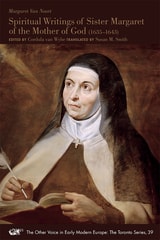
cover of Spiritual Writings of Sister Margaret of the Mother of God (1635-1643)

Spiritual Writings of Sister Margaret of the Mother of God (1635-1643)

Margaret Van Noort

Iter Press, 2015

In 1635, as directed by her confessor so that he might understand “the state of her soul,” Margaret Van Noort, a lay sister of the royal convent of Discalced Carmelite nuns in Brussels, composed her spiritual autobiography. This text was followed by two diaries in 1636 and 1637 recording the workings of her inner life and relation to God, and reflecting the cosmopolitan Catholic tradition of her homeland. Now gathered in this volume, these works illustrate Margaret’s development from a troubled young lay sister into a woman of spiritual experience and authority.
[more]
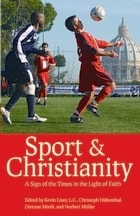
cover of Sport and Christianity: A Sign of the Times in the Light of Faith

Sport and Christianity

A Sign of the Times in the Light of Faith

Kevin Lixey

Catholic University of America Press, 2012
Sport and Christianity explores the connections between these two seemingly disparate phenomena. It reflects on what the fascination for sport reveals about the human person and to what degree sporting activities are compatible with, and can even advance, the church's mission.
[more]
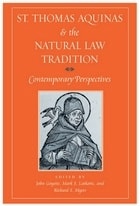
cover of St. Thomas Aquinas and the Natural Law Tradition: Contemporary Perspectives

St. Thomas Aquinas and the Natural Law Tradition

Contemporary Perspectives

John Goyette

Catholic University of America Press, 2004
To explore and evaluate the current revival, this volume brings together many of the foremost scholars on natural law. They examine the relation between Thomistic natural law and the larger philosophical and theological tradition. Furthermore, they assess the contemporary relevance of St. Thomas's natural law doctrine to current legal and political philosophy.
[more]
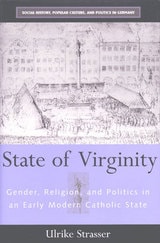
cover of State of Virginity: Gender, Religion, and Politics in an Early Modern Catholic State

State of Virginity

Gender, Religion, and Politics in an Early Modern Catholic State

Ulrike Strasser

University of Michigan Press, 2006

Winner: 2005 Book Award from the Society for the Study of Early Modern Women; Selected by the German Studies Association as one of the top five books of 2004 in early modern history

"A fresh, original study of gender roles and religious ideology in the early modern Catholic state. . . . Using a rich array of archival sources, Strasser explores ways in which an increasingly centralized Bavarian government in Munich inaugurated marriage and convent reforms and a civil religion based on the veneration of the Virgin Mary. Her carefully selected case studies show how church and state collaborated to produce a shared discourse and consistent policies proscribing extramarital sex, and excluding those without property from marriage. "

—Choice

Ulrike Strasser is Associate Professor of History, Affiliate Faculty in Women's Studies, and Core Faculty in Religious Studies at the University of California, Irvine.
[more]
cover of Stimulus Pastorum: A Charge to Pastors

Stimulus Pastorum

A Charge to Pastors

Bartholomew of the Martyrs, O.P.

St. Augustine's Press, 2022
The work of St. Bartholomew of Braga, O.P. (1514–1590) appears here in English for the first time despite its long and enduring influence in ecclesiastical circles. His meditations on the office of pastor have provided critical insight bishops since their initial circulation and have helped form the most famous among them, including Bartholomew's proteges Charles Borromeo. Pope Paul VI ordered a copy of Bartholomew's work to be distributed among the Catholic bishops at the Second Vatican Council. Donald Prudlo's translation situates St. Bartholomew of the Martyrs in his historical context as a lynchpin of Catholic Reform and affirms him as a figurehead of pastoral administration even in our own times. 
[more]
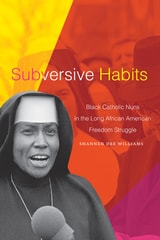
cover of Subversive Habits: Black Catholic Nuns in the Long African American Freedom Struggle

Subversive Habits

Black Catholic Nuns in the Long African American Freedom Struggle

Shannen Dee Williams

Duke University Press, 2022
In Subversive Habits, Shannen Dee Williams provides the first full history of Black Catholic nuns in the United States, hailing them as the forgotten prophets of Catholicism and democracy. Drawing on oral histories and previously sealed Church records, Williams demonstrates how master narratives of women’s religious life and Catholic commitments to racial and gender justice fundamentally change when the lives and experiences of African American nuns are taken seriously. For Black Catholic women and girls, embracing the celibate religious state constituted a radical act of resistance to white supremacy and the sexual terrorism built into chattel slavery and segregation. Williams shows how Black sisters—such as Sister Mary Antona Ebo, who was the only Black member of the inaugural delegation of Catholic sisters to travel to Selma, Alabama, and join the Black voting rights marches of 1965—were pioneering religious leaders, educators, healthcare professionals, desegregation foot soldiers, Black Power activists, and womanist theologians. In the process, Williams calls attention to Catholic women’s religious life as a stronghold of white supremacy and racial segregation—and thus an important battleground in the long African American freedom struggle.
[more]
cover of Such Rich Hour

Such Rich Hour

Cole Swensen

University of Iowa Press, 2001

Covering a variety of subjects—from the plague and the first danse macabre to the development of perspective and recipes for pigments—the poems in Cole Swensen's new collection are set in fifteenth-century France and explore the end of the medieval world and its gradual transition into the Renaissance. The collection is loosely based on the calendar illuminations from the Très Riches Heures, the well-known book of hours, and uses them to explore the ways that the arts—visual and verbal—interact with history, at times prefiguring it, at times shaping it, and at times offering wry commentary or commiseration.
[more]
cover of Summa Theologiae, Prima Pars: Volume 1, The One God, QQ 1-26: With the Commentary of Cardinal Cajetan

Summa Theologiae, Prima Pars

Volume 1, The One God, QQ 1-26: With the Commentary of Cardinal Cajetan

Thomas Aquinas

Catholic University of America Press, 2023
When Leo XII promulgated Aeterni Patris in 1879, he stipulated that the “Leonine,” or official, edition of the Summa should always be printed in conjunction with Cajetan’s Commentary. For five hundred years they were studied together. Generations were trained by reading through the Summa article by article with Cajetan’s commentaries in hand. Early printed editions of the Summa typically included them in a Talmudic arrangement, as marginal text running around each article by Aquinas. This edition imitates that example. Recently, serious thinkers of all denominations – and none – have found new reasons to be interested in St. Thomas. His text is deceptively simple, yet important issues are handled in every article, sometimes below the surface. Cajetan extracts these hidden issues, and explains and elaborates on them with remarkable affinity to modern analytical philosophy. Part of that affinity lies in the use of modal logic, a tool whose importance was overlooked between the Renaissance and the twentieth century. The time is ripe for an analytically-inspired translation of Thomas: hence this volume. Never until now has Cajetan’s Commentary been put into English in its entirety. William Marshner’s translation is consistent with fidelity to the technical force of the original. The translator’s footnotes acknowledge what empirical science has made obsolete in the work of St. Thomas, and also make clear how much today’s science would have saved Thomas useless labor. This volume will, for the first time, make Cajetan’s help available to the modern reader.
[more]
cover of Summa Theologiae, Prima Pars: Volume 2, On the Holy Trinity and Creation in General, QQ 27-74: With the Commentary of Cardinal Cajetan

Summa Theologiae, Prima Pars

Volume 2, On the Holy Trinity and Creation in General, QQ 27-74: With the Commentary of Cardinal Cajetan

Thomas Aquinas

Catholic University of America Press, 2023
When Leo XII promulgated Aeterni Patris in 1879, he stipulated that the “Leonine,” or official, edition of the Summa should always be printed in conjunction with Cajetan’s Commentary. For five hundred years they were studied together. Generations were trained by reading through the Summa article by article with Cajetan’s commentaries in hand. Early printed editions of the Summa typically included them in a Talmudic arrangement, as marginal text running around each article by Aquinas. This edition imitates that example. Recently, serious thinkers of all denominations – and none – have found new reasons to be interested in St. Thomas. His text is deceptively simple, yet important issues are handled in every article, sometimes below the surface. Cajetan extracts these hidden issues, and explains and elaborates on them with remarkable affinity to modern analytical philosophy. Part of that affinity lies in the use of modal logic, a tool whose importance was overlooked between the Renaissance and the twentieth century. The time is ripe for an analytically-inspired translation of Thomas: hence this volume. Never until now has Cajetan’s Commentary been put into English in its entirety. William Marshner’s translation is consistent with fidelity to the technical force of the original. The translator’s footnotes acknowledge what empirical science has made obsolete in the work of St. Thomas, and also make clear how much today’s science would have saved Thomas useless labor. This volume will, for the first time, make Cajetan’s help available to the modern reader.
[more]
cover of Summa Theologiae, Prima Pars: Volume 3, Human Beings and God's Governance of Creation, QQ 75-119: With the Commentary of Cardinal Cajetan

Summa Theologiae, Prima Pars

Volume 3, Human Beings and God's Governance of Creation, QQ 75-119: With the Commentary of Cardinal Cajetan

Thomas Aquinas

Catholic University of America Press, 2023

When Leo XII promulgated Aeterni Patris in 1879, he stipulated that the “Leonine,” or official, edition of the Summa should always be printed in conjunction with Cajetan’s Commentary. For five hundred years they were studied together. Generations were trained by reading through the Summa article by article with Cajetan’s commentaries in hand. Early printed editions of the Summa typically included them in a Talmudic arrangement, as marginal text running around each article by Aquinas. This edition imitates that example. Recently, serious thinkers of all denominations – and none – have found new reasons to be interested in St. Thomas. His text is deceptively simple, yet important issues are handled in every article, sometimes below the surface. Cajetan extracts these hidden issues, and explains and elaborates on them with remarkable affinity to modern analytical philosophy. Part of that affinity lies in the use of modal logic, a tool whose importance was overlooked between the Renaissance and the twentieth century. The time is ripe for an analytically-inspired translation of Thomas: hence this volume. Never until now has Cajetan’s Commentary been put into English in its entirety. William Marshner’s translation is consistent with fidelity to the technical force of the original. The translator’s footnotes acknowledge what empirical science has made obsolete in the work of St. Thomas, and also make clear how much today’s science would have saved Thomas useless labor. This volume will, for the first time, make Cajetan’s help available to the modern reader.
[more]