Results by title
267 books match the query 'Children' and 17 start with s
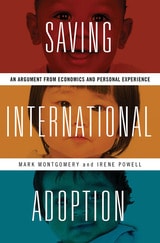
Saving International Adoption
An Argument from Economics and Personal ExperienceMark Montgomery
Vanderbilt University Press, 2018
International adoption is in a state of virtual collapse, rates having fallen by more than half since 2004 and continuing to fall. Yet around the world millions of orphaned and vulnerable children need permanent homes, and thousands of American and European families are eager to take them in. Many government officials, international bureaucrats, and social commentators claim these adoptions are not "in the best interests" of the child. They claim that adoption deprives children of their "birth culture," threatens their racial identities, and even encourages widespread child trafficking. Celebrity adopters are publicly excoriated for stealing children from their birth families.
This book argues that opposition to adoption ostensibly based on the well-being of the child is often a smokescreen for protecting national pride. Concerns about the harm done by transracial adoption are largely inconsistent with empirical evidence. As for trafficking, opponents of international adoption want to shut it down because it is too much like a market for children. But this book offers a radical challenge to this view—that is, what if instead of trying to suppress market forces in international adoption, we embraced them so they could be properly regulated? What if the international system functioned more like open adoption in the United States, where birth and adoptive parents can meet and privately negotiate the exchange of parental rights? This arrangement, the authors argue, could eliminate the abuses that currently haunt international adoption.
The authors challenge the prevailing wisdom with their economic analyses and provocative analogies from other policy realms. Based on their own family's experience with the adoption process, they also write frankly about how that process feels for parents and children.

Saving Sickly Children
The Tuberculosis Preventorium in American Life, 1909-1970Connolly, Cynthia A
Rutgers University Press, 2008
In this book, Cynthia A. Connolly provides a provocative analysis of public health and family welfare through the lens of the tuberculosis preventorium. This unique facility was intended to prevent TB in indigent children from families labeled irresponsible or at risk for developing the disease. Yet, it also held deeply rooted assumptions about class, race, and ethnicity. Connolly goes further to explain how the child-saving themes embedded in the preventorium movement continue to shape children's health care delivery and family policy in the United States.
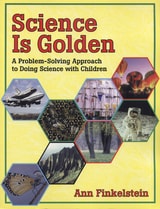
Science is Golden
A Problem-Solving Approach to Doing Science with ChildrenAnn Finkelstein
Michigan State University Press, 2002
The first book of its kind, Science is Golden discusses how to implement an inquiry-based, problem-solving approach to science education (grades K-5). Finkelstein shows parents and teachers how to help students investigate their own scientific questions. Rather than a set of guidelines for science fair projects, this book presents a method for helping students expand their creativity and develop logical thinking while learning science.
Starting with an introduction to the "brains-on method," Science is Golden explains brainstorming, experimental controls, collecting data, and how to streamline children's questions about science so that the questions define an experiment. Students will learn how to: ask good questions; clarify terminology; research, plan, and design experiments and controls; test assumptions; collect and analyze data; present results to others; and collaborate with adults.
Science is Golden is consistent with the National Science Education Standards proposed by the National Academy of Sciences, and the Michigan Essential Goals and Objectives for Science Education (K-12) from the Michigan State Board of Education.

Secret Spaces of Childhood
Elizabeth Goodenough, Editor
University of Michigan Press, 2003

Securing the Future
Investing in Children From Birth to CollegeSheldon Danziger
Russell Sage Foundation, 2000
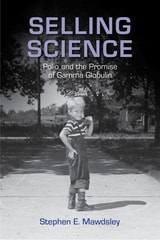
Selling Science
Polio and the Promise of Gamma GlobulinMawdsley, Stephen E
Rutgers University Press, 2016
Drawing on oral history interviews, medical journals, newspapers, meeting minutes, and private institutional records, Selling Science sheds light on the ethics of scientific conduct, and on the power of marketing to shape public opinion about medical experimentation.
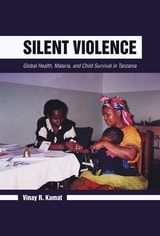
Silent Violence
Global Health, Malaria, and Child Survival in TanzaniaVinay R. Kamat
University of Arizona Press, 2013
Malaria control, according to Kamat, has become increasingly medicalized, a trend that overemphasizes biomedical and pharmaceutical interventions while neglecting the social, political, and economic conditions he maintains are central to Africa’s malaria problem. Kamat offers recent findings on global health governance, neoliberal economic and health policies, and their impact on local communities.
Seeking to link wider social, economic, and political forces to local experiences of sickness and suffering, Kamat analyzes the lived experiences and practices of people most seriously affected by malaria—infants and children. The persistence of childhood malaria is a form of structural violence, he contends, and the resultant social suffering in poor communities is closely tied to social inequalities.
Silent Violence illustrates the evolving nature of local responses to the global discourse on malaria control. It advocates for the close study of disease treatment in poor communities as an integral component of global health funding. This ethnography combines a decade of fieldwork with critical review and a rare anthropological perspective on the limitations of the bureaucratic, technological, institutional, medical, and political practices that currently determine malaria interventions in Africa.
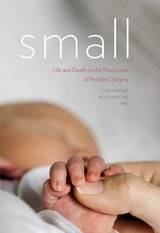
Small
Life and Death on the Front Lines of Pediatric SurgeryCatherine Musemeche
Dartmouth College Press, 2014
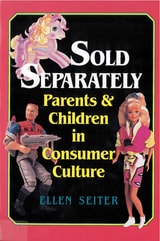
Sold Separately
Children and Parents in Consumer CultureSeiter, Ellen
Rutgers University Press, 1995
"A radical approach to children's TV. . . . Seiter argues cogently that watching Saturday cartoons isn't a passive activity but a tool by which even the very young decode and learn about their culture, and develop creative imagination as well. Bolstered by social, political, developmental, and media research, Seiter ties middle-class aversion to children's TV and mass-market toys to an association with the 'uncontrollable consumerism'––and hence supposed moral failure––of working class members, women, and 'increasingly, children.' . . . Positive guidance for parents uncertain of the role of TV and TV toys in their children's lives."––Kirkus Reviews
"Sold Separately is about television and toys, and the various roles that they play in the lives of children and parents. In particular, Seiter examines toy advertising, both in print media and on television; TV commercials; toy-based video for girls, with an in-depth look at "My Little Pony"; action TV for boys, using "Slimer and the Real Ghostbusters" as her case study; and the stores where toys are sold, both Toys "R" Us and the more upscale shops . . . contains many provocative observations."––Women's Review of Books
"Ellen Seiter has a holiday message for yuppie parents who feel guilty shopping at Toys "R" Us. The mass-produced toys that dominate the chain's shelves need not be the enemy of every right-thinking parent. "Ghostbuster" figurines and "My Little Pony" can share the toy chest with those sensible wooden blocks."––Chronicle of Higher Education
"Emphasizing problems of socioeconomic class, gender, and race stereotyping, this study acknowledges the usual parental complaints about toys like Barbie and G.I. Joe, but insists that they do play an important role in children's culture, especially for working class families. A thought-provoking analysis."––Wilson Library Journal
"In this thought provoking study, Seiter reasonably urges parents and others to put aside their own tastes and to understand that children's consumer culture promotes solidarity and sociability among youngsters."––Publishers Weekly
"An important book for those desiring an overview of the toy industry's impact on consumer culture . . . [it] presents a fair and well-balanced view of the industry."––Kathleen M. Carson, associate editor, Playthings
"A refreshing, thoughtful, and insightful investigation of an enormously important subject––consumer culture for kids. . . . I can't recommend it highly enough."––Janice Radway, Duke University, author of Reading the Romance
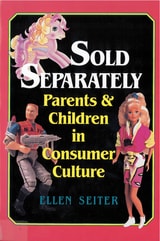
Sold Separately
Children and Parents in Consumer CultureSeiter, Ellen
Rutgers University Press, 1993
"A radical approach to children's TV. . . . Seiter argues cogently that watching Saturday cartoons isn't a passive activity but a tool by which even the very young decode and learn about their culture, and develop creative imagination as well. Bolstered by social, political, developmental, and media research, Seiter ties middle-class aversion to children's TV and mass-market toys to an association with the 'uncontrollable consumerism'––and hence supposed moral failure––of working class members, women, and 'increasingly, children.' . . . Positive guidance for parents uncertain of the role of TV and TV toys in their children's lives."––Kirkus Reviews
"Sold Separately is about television and toys, and the various roles that they play in the lives of children and parents. In particular, Seiter examines toy advertising, both in print media and on television; TV commercials; toy-based video for girls, with an in-depth look at "My Little Pony"; action TV for boys, using "Slimer and the Real Ghostbusters" as her case study; and the stores where toys are sold, both Toys "R" Us and the more upscale shops . . . contains many provocative observations."––Women's Review of Books
"Ellen Seiter has a holiday message for yuppie parents who feel guilty shopping at Toys "R" Us. The mass-produced toys that dominate the chain's shelves need not be the enemy of every right-thinking parent. "Ghostbuster" figurines and "My Little Pony" can share the toy chest with those sensible wooden blocks."––Chronicle of Higher Education
"Emphasizing problems of socioeconomic class, gender, and race stereotyping, this study acknowledges the usual parental complaints about toys like Barbie and G.I. Joe, but insists that they do play an important role in children's culture, especially for working class families. A thought-provoking analysis."––Wilson Library Journal
"In this thought provoking study, Seiter reasonably urges parents and others to put aside their own tastes and to understand that children's consumer culture promotes solidarity and sociability among youngsters."––Publishers Weekly
"An important book for those desiring an overview of the toy industry's impact on consumer culture . . . [it] presents a fair and well-balanced view of the industry."––Kathleen M. Carson, associate editor, Playthings
"A refreshing, thoughtful, and insightful investigation of an enormously important subject––consumer culture for kids. . . . I can't recommend it highly enough."––Janice Radway, Duke University, author of Reading the Romance

Something Musical Happened at the Library
Rob Reid
American Library Association, 2007
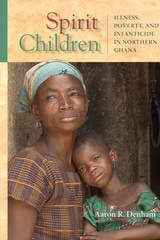
Spirit Children
Illness, Poverty, and Infanticide in Northern GhanaAaron R. Denham
University of Wisconsin Press, 2019
Refusing to generalize or oversimplify, Aaron R. Denham offers an ethnographic study of the spirit child phenomenon in Northern Ghana that considers medical, economic, religious, and political realities. He examines both the motivations of the families and the structural factors that lead to infanticide, framing these within the context of global public health. At the same time, he turns the lens on Western societies and the misunderstandings that prevail in discourse about this controversial practice. Engaging the complexity of the context, local meanings, and moral worlds of those confronting a spirit child, Denham offers visceral accounts of families' life and death decisions.
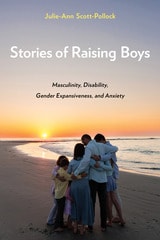
Stories of Raising Boys
Masculinity, Disability, Gender Expansiveness, and AnxietyJulie-Ann Scott-Pollock
Temple University Press, 2026
In her poignant, affecting autoethnography, Stories of Raising Boys, Julie-Ann Scott-Pollock investigates the meaning of disability, gender, race, and privilege in contemporary culture. Scott-Pollock is a white mother living with a physical disability raising four boys—Theo, a three-year-old risktaker; Tony, ten, who lives with seizures; Vinny, eight, who is gender expansive; and five-year-old Nico, who is also gender expansive and experiences anxiety. They live on the southeastern U.S. coast with their father, Evan, and their baby sister, Rosalie.
Through narrative analysis, Scott-Pollock compares and contrasts her circumstances to the ways in which adult interviewees manage the same lived experiences as her sons. She also includes their opinions about masculinity and identity, as well as parenting boys. In doing so, Stories of Raising Boys deepens the cultural complexity of parent–child relationships and expands our collective understanding of how they form and emerge. In addition, Scott-Pollock uses a metaphor of swimming through the ocean near her family’s home to illustrate resisting marginalization while also promoting strong cultural identities, especially in turbulent waters.
Stories of Raising Boys offers an absorbing cultural reflection on the intersectionality of identity, power, and privilege.
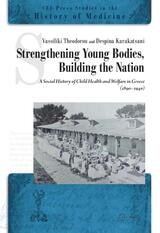
Strengthening Young Bodies, Building the Nation
A Social History of the Child Health and Welfare in Greece (1890–1940)Vassiliki Theodorou
Central European University Press, 2019

Stuttering in Children and Adults
Thirty Years of Research at the University of IowaWendell Johnson, Editor
University of Minnesota Press, 1955
Stuttering in Children and Adults was first published in 1955. Minnesota Archive Editions uses digital technology to make long-unavailable books once again accessible, and are published unaltered from the original University of Minnesota Press editions.
One of the largest groups of handicapped people in the world today is made up of the estimated fifteen million persons who stutter. Their predicament has been one of man's most baffling problems ever since it was first recorded by the ancients, but not until the present century has the mystery of stuttering showed any signs of lifting.
The studies collected in this volume represent a substantial step toward the solving of the mystery. The University of Iowa, a pioneer in research on the causes and treatment of stuttering, has carried on its work for many years. This book presents all previously unpublished papers and dissertations (a total of forty-three) that have resulted from this research program.
Much of the work centers on the onset of stuttering in children and underlies the theory that stuttering begins with the hearer rather than the speaker. Interrelationships between personality and stuttering have been investigated, a search has been made for a possible physical basis for stuttering, conditions affecting severity of stuttering have been studied, and research on therapy has been attempted.
This is an important book for psychologists, educators, social workers, physicians, parents, and others concerned with speech disorders. For those who devote their full effort to the problems discussed—the specialists in speech pathology and therapy—the book is essential.
Succeeding Generations
On the Effects of Investments in ChildrenRobert Haveman
Russell Sage Foundation, 1994
Surviving the ICE Age
Children of Immigrants in New YorkJoanna Dreby
Russell Sage Foundation, 2025
Dreby shows that a restrictive approach to immigration creates problems over time and across generations. These issues occur regardless of one’s citizenship status and go beyond deportations. Despite having pride in their heritage, her interviewees did not talk much about immigration. She refers to this unwillingness—and at times, inability—to speak about immigration as silencing. Silencing in a community or family is often intended to protect children, but this can leave them with little information about their backgrounds and status, leading to fear and anxiety instead. Self-silencing often resulted from traumatic experiences tied to enforcement episodes, which sometimes took the form of memory loss or emotional withholding. Dreby finds that experiences with the immigration system that disrupted relationships in a child’s household arising from family separations, moves, or changing roles in the family had especially long-term effects, causing, at times, ongoing mental health issues. Even the risk of immigration involvement left some young adults feeling vulnerable and undermined their sense of safety and security as U.S. citizens.
Dreby also highlights stories that offer hope. Young adults developed strategies to persevere, and children who grew up in communities and families that openly talked about migration felt empowered and fared much better, especially when they had access to resources, such as adequate food and shelter, mental health services, and community support. Dreby calls for policies and practices to mitigate the harms of restrictive migratory control on children’s wellbeing, such avoiding the arrest of parents in front of children and ensuring that U.S. citizen children’s interests are considered in immigration court without their direct involvement.
Surviving the ICE Age details the generational harms caused by U.S. immigration policy and offers suggestions for a better way forward.