496 books match the query 'Christian Theology' and 24 start with s
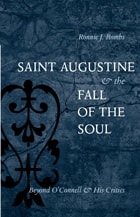
cover of Saint Augustine and the Fall of the Soul: Beyond O'Connell & His Critics

Saint Augustine and the Fall of the Soul

Beyond O'Connell & His Critics

Ronnie J. Rombs 

Catholic University of America Press, 2006
Saint Augustine and the Fall of the Soul: Beyond O'Connell and His Critics provides first a critical examination of O'Connell's theses in a readable summary of his work that spanned over thirty years.
[more]
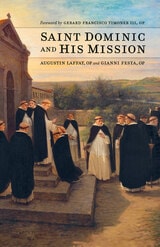
cover of Saint Dominic and His Mission

Saint Dominic and His Mission

Augustin Laffay

Catholic University of America Press, 2025
Saint Dominic had dedicated himself to a life of prayer and study as a canon regular at the Cathedral of Osma, Spain in 1197. When on a diplomatic mission through southern France, Dominic and his bishop, Diego, encountered the Cathar heresy. The Spaniards were filled with compassion and sought to counter this heresy by preaching and the example of their holy life. In the ensuing years, and with ecclesiastical approval, Dominic would gather around him a group of men, living a common life in evangelical poverty and dedicated to preaching for the salvation of souls, these were the first members of the Order of Preachers, commonly known as Dominicans. In Saint Dominic and His Mission, two of Saint Dominic’s spiritual sons present a portrait of this Preacher of Grace using extensive research from the archives of the Order to present Dominic and his brethren in their historical context. The first section comprises two parts: a biographical sketch and an evaluation of hagiographic and historical accounts of the life of St. Dominic. It is said that St. Dominic’s gift to the Church is not extensive writings, but a way of life. The second section describes aspects of this distinctly evangelical form life including study and preaching, fraternal life, choral office and the rosary, democratic government, and living in the heart of the Church. In the third section, the authors enlist the help of art historians who present multiple pieces of artwork, ancient and modern, to better know and understand this Doctor of Truth. The final section is a chronology of the life of St. Dominic based on the work of the renowned English Dominic Simon Tugwell, OP. Readers will find that Saint Dominic, whose life and preaching was centered on the Word Incarnate, is a perfect friend and guide to us today as we experience a revival in reverence for the Eucharist and the Sacred Heart of Jesus.
[more]
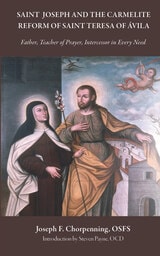
cover of Saint Joseph and the Carmelite Reform of Saint Teresa of Avila: Father, Teacher of Prayer, Intercessor in Every Need

Saint Joseph and the Carmelite Reform of Saint Teresa of Avila

Father, Teacher of Prayer, Intercessor in Every Need

Joseph F. Chorpenning, OSFS

Catholic University of America Press, 2024
It is a commonplace in devotional literature, historical scholarship, and papal writings that Saint Teresa of Ávila played a key role in the development of veneration of Saint Joseph. Saint Joseph and the Carmelite Reform of Saint Teresa of Ávila unpacks this commonplace by recovering the often-overlooked back story to Teresa’s story, namely, the extraordinarily rich liturgical cult of Saint Joseph in the Ancient Order of Carmel which fully flowered in the Teresian Carmel and beyond, to the universal Church. This volume charts a narrative arc from the liturgical cult of Saint Joseph in the Carmelite Order of Ancient Observance; to Saint Joseph’s vital formative presence in Saint Teresa’s life and reformed Carmel as father, teacher of prayer, and intercessor in every need; to the Carmelite family as a whole giving liturgical expression to its privileged relationship with Saint Joseph by the establishment of the Feast of the Patronage of Saint Joseph; to this feast becoming widespread outside Carmel and ultimately extended to the Universal Church (1847); and, finally, to Saint Joseph’s proclamation as Patron of the Universal Church (1870). An epilogue considers the absence of Joseph’s title “Patron of the Universal Church” in the post-Vatican II liturgical calendar and books, while the papal magisterium has consistently insisted that this patronage is ever necessary for the Church as not only a protection against all dangers, but also an impetus for its mission of evangelization and re-evangelization. An appendix reprints the letter, “Saint Joseph, Patron of Carmel,” jointly issued by the Prior General of the Order of Carmelites of the Ancient Observance and the Superior General of the Order of Discalced Carmelites, to mark the 150th anniversary of the proclamation of Saint Joseph as Patron of the Universal Church.
[more]
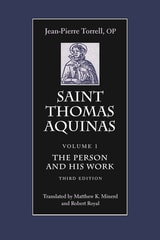
cover of Saint Thomas Aquinas: The Person and His Work

Saint Thomas Aquinas

The Person and His Work

Jean-Pierre Torrell, OP

Catholic University of America Press, 2022
The presentation of the life and work of any great thinker is a formidable task, even for a renowned scholar. This is all the more the case when such a historical figure is a saint and mystic, such as Friar Thomas Aquinas. In this volume, Fr. Jean-Pierre Torrell, OP, masterfully takes up the strenuous task of presenting such a biography, providing readers with a detailed, scholarly, and profound account of the thirteenth-century theologian whose works have not ceased to draw the attention of both friend and foe! In this volume, Fr. Torrell, an internationally renowned expert on St. Thomas, speaks to neophytes and experts alike: for those new to Thomas’s works, he paints an engaging human portrait of Friar Thomas in his historical context; for specialists, he provides a rigorous scholarly account of contemporary research concerning Thomas’s life and work. This new edition of Fr. Torrell’s widely-lauded text involved significant revision, expansion, and bibliographical updates in light of the latest scholarship. The Catholic University of America Press is pleased to present such an eminent specialist’s mature synthesis concerning Friar Thomas Aquinas.
[more]
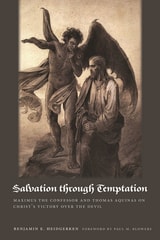
cover of Salvation through Temptation: Maximus the Confessor and Thomas Aquinas on Christ's Victory over the Devil

Salvation through Temptation

Maximus the Confessor and Thomas Aquinas on Christ's Victory over the Devil

Benjamin E. Heidgerken

Catholic University of America Press, 2021
Salvation through Temptation describes the development of predominant Greek and Latin Christian conceptions of temptation and of the work of Christ to heal and restore humankind in the context of that temptation, focusing on Maximus the Confessor and Thomas Aquinas as well-developed examples of Greek and Latin thought on these matters. Maximus and Thomas represent two trajectories concerning the woundedness of human emotionality in the wake of the primordial human sin. Heidgerken argues that Maximus stands in essential continuity with earlier Greek ascetic theology, which conceives of the weakness of fallen humankind in demonological categories, so that the Pauline law of sin is bound to external demonic agents that act upon the human mind through thoughts, desires, and sensory impressions. For Thomas, on the other hand, this wound consists primarily of an internal disordering of the faculties that results from the withdrawal of original grace: concupiscence or the fomes peccati. Yet even in this framework, the devil plays a significant role in Thomas’s account of postlapsarian temptation. On the basis of these differing frameworks for human temptation, Heidgerken demonstrates the centrality of Christ’s exemplarity in the Greek account and the centrality of Christ’s moral perfections in the Latin account. As a consequence of these emphases, the Greek tradition of Maximus places distinct limits on the ability of human emotionality (even that of Christ) to be perfected in this life, whereas Thomas’s approach allows Christ to completely embody a perfected form of human emotionality in his earthly life. Reciprocally, Thomas’s account of Christ’s moral perfections and virtue places distinct limits on his affirmation of Christ’s experience of postlapsarian temptation, whereas Maximus’s account allows for Christ to experience interior forms of temptation that more closely mirror the concrete moral experiences and circumstances of fallen human beings. Salvation through Temptation recommends a retrieval of early ascetic theology and demonology as the best contemporary systematic and ecumenically-viable approach to Christ’s temptation and victory over the devil.
[more]
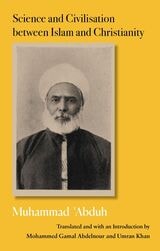
cover of Science and Civilisation between Islam and Christianity

Science and Civilisation between Islam and Christianity

Muhammad Abduh

Gingko, 2025

A translation of a seminal work by Muhammad Abduh.

This book is a translation of Muhammad Abduh’s Al-Islam wa-l-Nasraniyya maa al-Ilm wa-l-Madaniyya (Science and Civilization between Islam and Christianity). Abduh was an Egyptian jurist, religious scholar, theologian, and reformer of Al-Azhar—Egypt’s oldest university and a renowned seat of Islamic learning—who died in 1905. His impact on modern Islam cannot be overstated. In fact, much of modern Muslim thought has, in one way or another, been a reaction to his ideas. Although he is the subject of numerous English studies, only one treatise of his has been translated into English: Risalat al-tawhid (Theology of Unity) by Ishaq Masaad and Kenneth Cragg, in 1966.

Far too little attention has been paid to the treatise translated here and its impact on the Islamic theology of Christianity. This first English translation fills a serious gap in the genre of Islam and Christian-Muslim relations.
 
[more]
cover of Science and the Bible: Evidence-Based Christian Belief

Science and the Bible

Evidence-Based Christian Belief

Ted Burge

Templeton Press, 2005

Does scientific evidence give credence to religious belief? Ted Burge, a highly respected physicist in the United Kingdom, draws on his background in the fields of science and theology to address the issue.

The book begins with an analysis of evidence found in the text of the Bible in different translations, proceeds to an examination of interpretations of the Old and New Testaments, and then looks at evidence from the sciences, including archeological findings, geological mappings, and carbon-dating, alongside data from the arts, hymns, literature, and historians' testimonies.

Evidence is presented on:

•Physical, geological, and biological evolution, and their relation to the Genesis story of creation
•Original sin, the origin of death, and the immortality of the soul, as described in Babylonian and other stories, including the Flood and the Tower of Babel
•The Resurrection and Ascension of Jesus, Incarnation and Atonement
•Free will and the nature of love
•Miracles as described in the Bible
•The evolution of belief
•Meditation and prayer as a "conscious interchange of thoughts with God"

Knowledge of science is knowledge of God's creation and often helps to identify some of the things we can say about God, the author points out.
 

[more]
cover of Select Orations

Select Orations

Martha Gregory of Nazianzus

Catholic University of America Press, 2003
No description available
[more]
cover of Selected Prose Works: Commentary on Genesis, Commentary on Exodus, Homily on Our Lord, Letter to Publius

Selected Prose Works

Commentary on Genesis, Commentary on Exodus, Homily on Our Lord, Letter to Publius

Saint Ephrem the Syrian

Catholic University of America Press, 1994
This volume presents for the first time in the Fathers of the Church series the work of an early Christian writer who did not write in either Greek or Latin. It offers new English translations of selected prose works by St. Ephrem the Syrian (c. A.D. 309-373).
[more]
cover of Selected Works

Selected Works

Robert B. Fulgentius

Catholic University of America Press, 1997
This volume gives English readers for the first time an opportunity to study a representative selection of the writings of this early sixth-century author. It also presents Fulgentius's biography, the Life, for the first time in English.
[more]
cover of Seven Exegetical Works

Seven Exegetical Works

Saint Ambrose

Catholic University of America Press, 1970
No description available
[more]
cover of Songs for the Fast and Pascha

Songs for the Fast and Pascha

Blake St. Ephrem the Syrian

Catholic University of America Press, 2022
Among the writers of the Syriac Christian tradition, none is as renowned as St. Ephrem of Nisibis (ca. 307–373), known to much of the later Christian world simply as “the Syrian.” The great majority of Ephrem’s works are poetry, with the madrāšē (“teaching songs”) especially prominent. This volume presents English translations of four complete madrāšē cycles of Ephrem: On the Fast, On the Unleavened Bread, On the Crucifixion, and On the Resurrection. These collections include some of the most liturgically oriented songs in Ephrem’s corpus, and, as such, provide a window into the celebration of Lent and Easter in the Syriac-speaking churches of northern Mesopotamia in the fourth century. Even more significantly, they represent some of the oldest surviving poetry composed for these liturgical seasons in the entire Christian tradition. Not only are the liturgical occasions of the springtime months a source of colorful imagery in these texts, but Ephrem also employs traditional motifs of warm weather, spring rainstorms, and revived vegetation, which likely reflect Hellenistic literary influences. Like all of Ephrem’s poetry, these songs express early Christian theology in language that is symbolic, terse, and vibrant. They are rich with biblical allusions and references, especially to the Exodus and Passion narratives. They also reveal a contested religious environment in which Ephrem strove to promote the Christian Pascha and Christian interpretations of Scripture over and against those of Jewish communities in the region, thus maintaining firm boundaries around the identity and practices of the churches.
[more]
cover of Spenser, Milton, and the Redemption of the Epic Hero

Spenser, Milton, and the Redemption of the Epic Hero

Christopher Bond

University of Delaware Press, 2011
This book studies the interplay of theology and poetics in the three great epics of early-modern England: the Faerie Queene, Paradise Lost, and Paradise Regained. Bond examines the relationship between the poems’ primary heroes, Arthur and the Son, who are godlike, virtuous, and powerful, and the secondary heroes, Redcrosse and Adam, who are human, fallible, and weak. He looks back at the development of this pattern of dual heroism in classical, Medieval, and Italian Renaissance literature, investigates the ways in which Spenser and Milton adapted the model, and demonstrates how the Jesus of Paradise Regained can be seen as the culmination of this tradition. Challenging the opposition between “Calvinist,” “allegorical” Spenser and “Arminian,” “dramatic” Milton, this book offers a new account of their doctrinal and literary affinities within the European epic tradition. Arguing that Spenser influenced Milton in fundamental ways, Bond establishes a firmer structural and thematic link between the two authors, and shows how they transformed a strongly antifeminist genre by the addition of a crucial, although at times ambivalent, heroine. He also proposes solutions to some of the most difficult and controversial theological cruxes posed by these poems, in particular Spenser’s attitude to free will and Milton’s to the Trinity. By providing a deeper understanding of the religious agendas of these epics, this book encourages a rapprochement between scholarly approaches that are too narrowly concerned with either theology or poetics.
[more]
cover of Spiraling Into God: Bonaventure on Grace, Hierarchy , and Holiness

Spiraling Into God

Bonaventure on Grace, Hierarchy , and Holiness

Katherine Wrisley Shelby

Catholic University of America Press, 2023
Spiraling into God: Bonaventure on Grace, Hierarchy, and Holiness offers a systematic account of the Seraphic Doctor’s doctrine of grace across his speculative-academic, mystical, hagiographical, and pastoral texts. It does so by arguing that an account of this kind can only be provided by also attending to his theology of hierarchy, a methodology derived from Bonaventure’s claim in the Major Legend of St. Francis that Francis of Assisi was a “vir hierarchicus,” or hierarchical man. As the book explores in great depth, this appellation relies upon Bonaventure’s reading of a Victorine Dionysian interpreter by the name of Thomas Gallus, whose “angelic anthropology”—or notion of the hierarchical soul—becomes a crucial component within the Seraphic Doctor’s teaching on grace as he interprets the sanctity of St. Francis. Throughout the course of his career, Bonvaenture will define sanctifying grace as a created “inflowing” (influentia) that “hierarchizes” human beings by purifying, illuminating, and perfecting them from within, thus causing them to become a similitude of the Trinity. This book explains what this means and why it matters. Most existing scholarship on this subject in Bonaventure’s thought interprets it as a subtopic with respect to other themes—for example, with respect to his Christology or his Trinitarian theology—rather than taking the time to understand his doctrine of grace in its own right. Alternatively, scholarly treatments of his doctrine of grace will treat it at length, but will only examine the topic as it appears in his more speculative-academic texts—most especially his Commentary on the Sentences or his famous Itinerarium Mentis in Deum—without bringing these into conversation with his pastoral works, sermon literature, or hagiographical texts. This book provides the first unified treatment of Bonaventure’s doctrine of grace across all these different genres of his known corpus, and in so doing, fills a massive lacuna in both Bonaventurean scholarship and in the field of medieval historical theology.
[more]
cover of Spirit, Structure, and Flesh: Gender and Power in Yoruba African Instituted Churches

Spirit, Structure, and Flesh

Gender and Power in Yoruba African Instituted Churches

Deidre Helen Crumbley

University of Wisconsin Press, 2008
Although popularized in Africa by Western missionaries, the Christian faith as practiced by Africans has acquired unique traits over time. Some of the most radical reinterpretations of Christianity are offered by those churches known as “AICs” (variously, African Initiated, African Instituted, or African Independent Churches)—new denominations founded by Africans skeptical of dogma offered by mainstream churches with roots in European empires. As these churches spread throughout the African diaspora, they have brought with them distinct practices relating to gender. Such practices range from the expectation that women avoid holy objects and sites during menstruation to the maintenance of church structures in which both men and women may be ordained and assigned the same duties and responsibilities.
            How does having a female body affect one’s experience of indigenized Christianity in Africa? Spirit, Structure, and Flesh addresses this question by exploring the ways ritual, symbol, and dogma circumscribe, constrain, and liberate women in AICs. Through detailed description of worship and doctrine, as well as careful analyses of church history and organizational processes, Deidre Helen Crumbley explores gendered experiences of faith and power in three Nigerian indigenous AICs, demonstrating the roles of women in the day-to-day life of these churches.
[more]
cover of Stimulus Pastorum: A Charge to Pastors

Stimulus Pastorum

A Charge to Pastors

Bartholomew of the Martyrs, O.P.

St. Augustine's Press, 2022
The work of St. Bartholomew of Braga, O.P. (1514–1590) appears here in English for the first time despite its long and enduring influence in ecclesiastical circles. His meditations on the office of pastor have provided critical insight bishops since their initial circulation and have helped form the most famous among them, including Bartholomew's proteges Charles Borromeo. Pope Paul VI ordered a copy of Bartholomew's work to be distributed among the Catholic bishops at the Second Vatican Council. Donald Prudlo's translation situates St. Bartholomew of the Martyrs in his historical context as a lynchpin of Catholic Reform and affirms him as a figurehead of pastoral administration even in our own times. 
[more]
cover of Storm of Words: Science, Religion, and Evolution in the Civil War Era

Storm of Words

Science, Religion, and Evolution in the Civil War Era

Monte Harrell Hampton

University of Alabama Press, 2014

A study of the ways that southern Presbyterians in the wake of the Civil War contended with a host of cultural and theological questions

Southern Presbyterian theologians enjoyed a prominent position in antebellum southern culture. Respected for both their erudition and elite constituency, these theologians identified the southern society as representing a divine, Biblically ordained order. Beginning in the 1840s, however, this facile identification became more difficult to maintain, colliding first with antislavery polemics, then with Confederate defeat and reconstruction, and later with women’s rights, philosophical empiricism, literary criticisms of the Bible, and that most salient symbol of modernity, natural science.

As Monte Harrell Hampton shows in Storm of Words, modern science seemed most explicitly to express the rationalistic spirit of the age and threaten the Protestant conviction that science was the faithful “handmaid” of theology. Southern Presbyterians disposed of some of these threats with ease. Contemporary geology, however, posed thornier problems. Ambivalence over how to respond to geology led to the establishment in 1859 of the Perkins Professorship of Natural Science in Connexion with Revealed Religion at the seminary in Columbia, South Carolina. Installing scientist-theologian James Woodrow in this position, southern Presbyterians expected him to defend their positions.

Within twenty-five years, however, their anointed expert held that evolution did not contradict scripture. Indeed, he declared that it was in fact God’s method of creating. The resulting debate was the first extended evolution controversy in American history. It drove a wedge between those tolerant of new exegetical and scientific developments and the majority who opposed such openness. Hampton argues that Woodrow believed he was shoring up the alliance between science and scripture—that a circumscribed form of evolution did no violence to scriptural infallibility. The traditionalists’ view, however, remained interwoven with their identity as defenders of the Lost Cause and guardians of southern culture.

The ensuing debate triggered Woodrow’s dismissal. It also capped a modernity crisis experienced by an influential group of southern intellectuals who were grappling with the nature of knowledge, both scientific and religious, and its relationship to culture—a culture attempting to define itself in the shadow of the Civil War and Reconstruction.
[more]
cover of Stromateis, Books 1–3

Stromateis, Books 1–3

Catholic University of America Press, 1991
Books One to Three of the Stromateis establish Clement's fundamental theology--a harmony of faith and knowledge that places Greek philosophy at the service of faith, which is, to Clement, more important than knowledge.
[more]
cover of Summa Theologiae, Prima Pars: Volume 1, The One God, QQ 1-26: With the Commentary of Cardinal Cajetan

Summa Theologiae, Prima Pars

Volume 1, The One God, QQ 1-26: With the Commentary of Cardinal Cajetan

Thomas Aquinas

Catholic University of America Press, 2023
When Leo XII promulgated Aeterni Patris in 1879, he stipulated that the “Leonine,” or official, edition of the Summa should always be printed in conjunction with Cajetan’s Commentary. For five hundred years they were studied together. Generations were trained by reading through the Summa article by article with Cajetan’s commentaries in hand. Early printed editions of the Summa typically included them in a Talmudic arrangement, as marginal text running around each article by Aquinas. This edition imitates that example. Recently, serious thinkers of all denominations – and none – have found new reasons to be interested in St. Thomas. His text is deceptively simple, yet important issues are handled in every article, sometimes below the surface. Cajetan extracts these hidden issues, and explains and elaborates on them with remarkable affinity to modern analytical philosophy. Part of that affinity lies in the use of modal logic, a tool whose importance was overlooked between the Renaissance and the twentieth century. The time is ripe for an analytically-inspired translation of Thomas: hence this volume. Never until now has Cajetan’s Commentary been put into English in its entirety. William Marshner’s translation is consistent with fidelity to the technical force of the original. The translator’s footnotes acknowledge what empirical science has made obsolete in the work of St. Thomas, and also make clear how much today’s science would have saved Thomas useless labor. This volume will, for the first time, make Cajetan’s help available to the modern reader.
[more]
cover of Summa Theologiae, Prima Pars: Volume 2, On the Holy Trinity and Creation in General, QQ 27-74: With the Commentary of Cardinal Cajetan

Summa Theologiae, Prima Pars

Volume 2, On the Holy Trinity and Creation in General, QQ 27-74: With the Commentary of Cardinal Cajetan

Thomas Aquinas

Catholic University of America Press, 2023
When Leo XII promulgated Aeterni Patris in 1879, he stipulated that the “Leonine,” or official, edition of the Summa should always be printed in conjunction with Cajetan’s Commentary. For five hundred years they were studied together. Generations were trained by reading through the Summa article by article with Cajetan’s commentaries in hand. Early printed editions of the Summa typically included them in a Talmudic arrangement, as marginal text running around each article by Aquinas. This edition imitates that example. Recently, serious thinkers of all denominations – and none – have found new reasons to be interested in St. Thomas. His text is deceptively simple, yet important issues are handled in every article, sometimes below the surface. Cajetan extracts these hidden issues, and explains and elaborates on them with remarkable affinity to modern analytical philosophy. Part of that affinity lies in the use of modal logic, a tool whose importance was overlooked between the Renaissance and the twentieth century. The time is ripe for an analytically-inspired translation of Thomas: hence this volume. Never until now has Cajetan’s Commentary been put into English in its entirety. William Marshner’s translation is consistent with fidelity to the technical force of the original. The translator’s footnotes acknowledge what empirical science has made obsolete in the work of St. Thomas, and also make clear how much today’s science would have saved Thomas useless labor. This volume will, for the first time, make Cajetan’s help available to the modern reader.
[more]
cover of Summa Theologiae, Prima Pars: Volume 3, Human Beings and God's Governance of Creation, QQ 75-119: With the Commentary of Cardinal Cajetan

Summa Theologiae, Prima Pars

Volume 3, Human Beings and God's Governance of Creation, QQ 75-119: With the Commentary of Cardinal Cajetan

Thomas Aquinas

Catholic University of America Press, 2023
When Leo XII promulgated Aeterni Patris in 1879, he stipulated that the “Leonine,” or official, edition of the Summa should always be printed in conjunction with Cajetan’s Commentary. For five hundred years they were studied together. Generations were trained by reading through the Summa article by article with Cajetan’s commentaries in hand. Early printed editions of the Summa typically included them in a Talmudic arrangement, as marginal text running around each article by Aquinas. This edition imitates that example. Recently, serious thinkers of all denominations – and none – have found new reasons to be interested in St. Thomas. His text is deceptively simple, yet important issues are handled in every article, sometimes below the surface. Cajetan extracts these hidden issues, and explains and elaborates on them with remarkable affinity to modern analytical philosophy. Part of that affinity lies in the use of modal logic, a tool whose importance was overlooked between the Renaissance and the twentieth century. The time is ripe for an analytically-inspired translation of Thomas: hence this volume. Never until now has Cajetan’s Commentary been put into English in its entirety. William Marshner’s translation is consistent with fidelity to the technical force of the original. The translator’s footnotes acknowledge what empirical science has made obsolete in the work of St. Thomas, and also make clear how much today’s science would have saved Thomas useless labor. This volume will, for the first time, make Cajetan’s help available to the modern reader.
[more]
cover of Systematic Theology, Volume 1

Systematic Theology, Volume 1

Paul Tillich

University of Chicago Press, 1951

This is the first part of Paul Tillich's three-volume Systematic Theology, one of the most profound statements of the Christian message ever composed and the summation and definitive presentation of the theology of the most influential and creative American theologian of the twentieth century.

In this path-breaking volume Tillich presents the basic method and statement of his system—his famous "correlation" of man's deepest questions with theological answers. Here the focus is on the concepts of being and reason. Tillich shows how the quest for revelation is integral to reason itself. In the same way a description of the inner tensions of being leads to the recognition that the quest for God is implied in finite being.

Here also Tillich defines his thought in relation to philosophy and the Bible and sets forth his famous doctrine of God as the "Ground of Being." Thus God is understood not as a being existing beside other beings, but as being-itself or the power of being in everything. God cannot be made into an object; religious knowledge is, therefore, necessarily symbolic.
[more]
cover of Systematic Theology, Volume 2

Systematic Theology, Volume 2

Paul Tillich

University of Chicago Press, 1957
In this volume, the second of his three-volume reinterpretation of Christian theology, Paul Tillich comes to grips with the central idea of his system—the doctrine of the Christ. Man's predicament is described as the state of "estrangement" from himself, from his world, and from the divine ground of his self and his world. This situation drives man to the quest for a new state of things, in which reconciliation and reunion conquer estrangement. This is the quest for the Christ.
[more]
cover of Systematic Theology, Volume 3

Systematic Theology, Volume 3

Paul Tillich

University of Chicago Press, 1963

In this volume, the third and last of his Systematic Theology, Paul Tillich sets forth his ideas of the meaning of human life, the doctrine of the Spirit and the church, the trinitarian symbols, the relation of history to the Kingdom of God, and the eschatological symbols. He handles this subject matter with powerful conceptual ability and intellectual grace.

The problem of life is ambiguity. Every process of life has its contrast within itself, thus driving man to the quest for unambiguous life or life under the impact of the Spritual Presence. The Spritual Presence conquers the negativities of religion, culture, and morality, and the symbols anticipating Eternal Life present the answer to the problem of life.
[more]