Results by title
53 books match the query 'Christianity and other religions' and 2 start with s
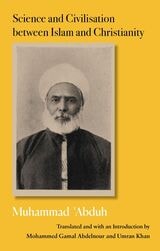
Science and Civilisation between Islam and Christianity
Muhammad Abduh
Gingko, 2025
This book is a translation of Muhammad Abduh’s Al-Islam wa-l-Nasraniyya maa al-Ilm wa-l-Madaniyya (Science and Civilization between Islam and Christianity). Abduh was an Egyptian jurist, religious scholar, theologian, and reformer of Al-Azhar—Egypt’s oldest university and a renowned seat of Islamic learning—who died in 1905. His impact on modern Islam cannot be overstated. In fact, much of modern Muslim thought has, in one way or another, been a reaction to his ideas. Although he is the subject of numerous English studies, only one treatise of his has been translated into English: Risalat al-tawhid (Theology of Unity) by Ishaq Masaad and Kenneth Cragg, in 1966.
Far too little attention has been paid to the treatise translated here and its impact on the Islamic theology of Christianity. This first English translation fills a serious gap in the genre of Islam and Christian-Muslim relations.
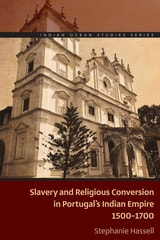
Slavery and Religious Conversion in Portugal's Indian Empire, 1500-1700
Stephanie Hassell
Ohio University Press, 2025
In the sixteenth and seventeenth centuries, enslaved Africans and Asians were part of the larger Portuguese project of building and maintaining a Catholic empire in the Indian Ocean. Both the Church and the Crown influenced the owner-slave relationship across households, the most basic organizational unit of power over the populace. Responsible for their enslaved dependents’ conversion to Catholicism, slaveholders became religious stewards whose spiritual duties toward their slaves helped expand the Christian population. This converted population was part of the imperial security apparatus, which conceptualized enslaved Catholics as loyal allies against neighboring Muslim states. They became members of the broader colonial community in which Catholicism also conveyed rights, enabled agency, and provoked household struggles between owners and slaves. Thus, the making of a Catholic empire was a contested process tied to the complex relationships between enslaved individuals, their enslavers, and the Church. The Portuguese Inquisition was a hybrid ecclesiastical and state institution, and its records detail the Crown’s commitment to the creation of a worldwide Catholic empire. Accordingly, inquisitorial encounters brought conversion, slavery, and empire into one field of vision. The Portuguese Inquisition had only one overseas tribunal, located in Goa, India. While most trial records of the Goa Tribunal were destroyed, author Stephanie Hassell has utilized extant sixteenth- and seventeenth-century cases featuring enslaved defendants and witnesses. Her use of thousands of case summaries provides a broader inquisitorial context by showing how prosecutorial trends reflected the anxieties of the Portuguese imperial state. Parish records, ecclesiastical council records, and municipal council records likewise emphasize the significance of religious conversion.