Results by title
718 books match the query 'Civil rights' and 43 start with s
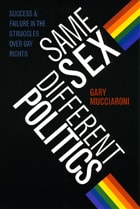
Same Sex, Different Politics
Success and Failure in the Struggles over Gay RightsGary Mucciaroni
University of Chicago Press, 2008
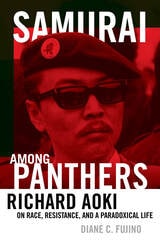
Samurai among Panthers
Richard Aoki on Race, Resistance, and a Paradoxical LifeDiane C. Fujino
University of Minnesota Press, 2012
An iconic figure of the Asian American movement, Richard Aoki (1938–2009) was also, as the most prominent non-Black member of the Black Panther Party, a key architect of Afro-Asian solidarity in the 1960s and ’70s. His life story exposes the personal side of political activism as it illuminates the history of ethnic nationalism and radical internationalism in America.
A reflection of this interconnection, Samurai among Panthers weaves together two narratives: Aoki’s dramatic first-person chronicle and an interpretive history by a leading scholar of the Asian American movement, Diane C. Fujino. Aoki’s candid account of himself takes us from his early years in Japanese American internment camps to his political education on the streets of Oakland, to his emergence in the Black Panther Party. As his story unfolds, we see how his parents’ separation inside the camps and his father’s illegal activities shaped the development of Aoki’s politics. Fujino situates his life within the context of twentieth-century history—World War II, the Cold War, and the protests of the 1960s. She demonstrates how activism is both an accidental and an intentional endeavor and how a militant activist practice can also promote participatory democracy and social service.
The result of these parallel voices and analysis in Samurai among Panthers is a complex—and sometimes contradictory—portrait of a singularly extraordinary activist and an expansion and deepening of our understanding of the history he lived.
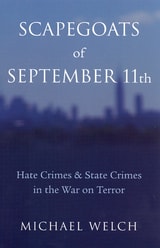
Scapegoats of September 11th
Hate Crimes & State Crimes in the War on TerrorWelch, Michael
Rutgers University Press, 2006
The altered American landscape, however, includes more than security measures and ID cards. The country's desperate quest for security is visible in many less obvious, yet more insidious ways. In Scapegoats of September 11th, criminologist Michael Welch argues that the "war on terror" is a political charade that delivers illusory comfort, stokes fear, and produces scapegoats used as emotional relief. Regrettably, much of the outrage that resulted from 9/11 has been targeted at those not involved in the attacks on the Pentagon or the Twin Towers. As this book explains, those people have become the scapegoats of September 11th. Welch takes on the uneasy task of sorting out the various manifestations of displaced aggression, most notably the hate crimes and state crimes that have become embarrassing hallmarks both at home and abroad.
Drawing on topics such as ethnic profiling, the Abu Ghraib scandal, Guantanamo Bay, and the controversial Patriot Act, Welch looks at the significance of knowledge, language, and emotion in a post-9/11 world. In the face of popular and political cheerleading in the war on terror, this book presents a careful and sober assessment, reminding us that sound counterterrorism policies must rise above, rather than participate in, the propagation of bigotry and victimization.
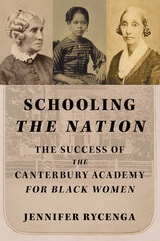
Schooling the Nation
The Success of the Canterbury Academy for Black WomenJennifer Rycenga
University of Illinois Press, 2025
Jennifer Rycenga recovers a pioneering example of antiracism and Black-white cooperation. At once an inspirational and cautionary tale, Canterbury Academy succeeded thanks to far-reaching networks, alliances, and activism that placed it within Black, women’s, and abolitionist history. Rycenga focuses on the people like Sarah Harris, the Academy’s first Black student; Maria Davis, Crandall’s Black housekeeper and her early connection to the embryonic abolitionist movement; and Crandall herself. Telling their stories, she highlights the agency of Black and white women within the currents, and as a force changing those currents, in nineteenth-century America.
Insightful and provocative, Schooling the Nation tells the forgotten story of remarkable women and a collaboration across racial and gender lines.

Second Life
A West Bank MemoirJanet Gunn
University of Minnesota Press, 1995
Second Wounds
Victims’ Rights and the Media in the U.S.Carrie A. Rentschler
Duke University Press, 2011
Secret Power
WikiLeaks and Its EnemiesStefania Maurizi
Pluto Press, 2022
*Winner of the European Award for Investigative And Judicial Journalism 2021*
*Winner of the Premio Alessandro Leogrande Award for Investigative Journalism 2022*
*Winner of the Premio Angelo Vassallo Award 2022*
'I want to live in a society where secret power is accountable to the law and to public opinion for its atrocities, where it is the war criminals who go to jail, not those who have the conscience and courage to expose them.'
It is 2008, and Stefania Maurizi, an investigative journalist with a growing interest in cryptography, starts looking into the little-known organisation WikiLeaks. Through hushed meetings, encrypted files and explosive documents, what she discovers sets her on a life-long journey that takes her deep into the realm of secret power.
Working closely with WikiLeaks' founder Julian Assange and his organisation for her newspaper, Maurizi has spent over a decade investigating state criminality protected by thick layers of secrecy, while also embarking on a solitary trench warfare to unearth the facts underpinning the cruel persecution of Assange and WikiLeaks.
With complex and disturbing insights, Maurizi’s tireless journalism exposes atrocities, the shameful treatment of Chelsea Manning and Edward Snowden, on up to the present persecution of WikiLeaks: a terrifying web of impunity and cover-ups.
At the heart of the book is the brutality of secret power and the unbearable price paid by Julian Assange, WikiLeaks and truthtellers.
Securing Constitutional Democracy
The Case of AutonomyJames E. Fleming
University of Chicago Press, 2006
In this book, James Fleming responds to these controversies by arguing that the right to privacy or autonomy should be grounded in a theory of securing constitutional democracy. His framework seeks to secure the basic liberties that are preconditions for deliberative democracy—to allow citizens to deliberate about the institutions and policies of their government—as well as deliberative autonomy—to enable citizens to deliberate about the conduct of their own lives. Together, Fleming shows, these two preconditions can afford everyone the status of free and equal citizenship in our morally pluralistic constitutional democracy.

Security V. Liberty
Conflicts Between National Security and Civil Liberties in American HistoryDaniel Farber
Russell Sage Foundation, 2008

Selma and the Liuzzo Murder Trials
The First Modern Civil Rights ConvictionsJames P. Turner
University of Michigan Press, 2018
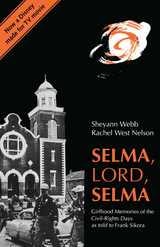
Selma, Lord, Selma
Girlhood Memories of the Civil Rights DaysSheyann Webb
University of Alabama Press, 1997
Witness the Civil Rights Movement through the eyes of two children.
Sheyann Webb was eight years old and Rachel West was nine when Dr. Martin Luther King Jr. arrived in Selma, Alabama, on January 2, 1965. He came to organize non-violent demonstrations against discriminatory voting laws. Selma, Lord, Selma is their firsthand account of the events from that turbulent winter of 1965--events that changed not only the lives of these two little girls but the lives of all Alabamians and all Americans. From 1975 to 1979, award-winning journalist Frank Sikora conducted interviews with Webb and West, weaving their recollections into this luminous story of fear and courage, struggle and redemption that readers will discover is Selma, Lord, Selma.

Selma
A Bicentennial HistoryAlston Fitts III
University of Alabama Press, 2017
Exploring the people, politics, and events that shaped Selma from 1815 through the twentieth century.
In 1989, Alston Fitts published a brief history of the city of Selma, Alabama, from its founding through the aftermath of the civil rights movement. Selma: A Bicentennial History is a greatly revised and expanded version of Fitts’s history of the city, replete with a wealth of new, never-before-published illustrations, which further develops a number of significant events, corrects critical errors, and, most importantly, incorporates many new stories and materials that document Selma’s establishment, growth, and development.
Comprehensive, thoroughly researched, and nonpartisan, Fitts’s pleasantly accessible history addresses every major issue, movement, and trend from the city’s settlement in 1815 to the end of the twentieth century. Its commerce, institutions, governance, as well as its evolving racial, religious, and class composition are all treated with candor and depth. Selma’s transformative role within the state and the nation is fully explored, and most notable is a nuanced and complex discussion of race relations from the rise of the civil rights era to modern times.
Historians, scholars, and Alabamians will find great use for this updated and fully developed exploration of Selma’s rich, complex, and significant history.
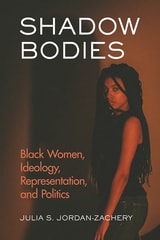
Shadow Bodies
Black Women, Ideology, Representation, and PoliticsJordan-Zachery, Julia S.
Rutgers University Press, 2018
Grounded in Black feminist thought, Julia S. Jordan-Zachery looks at the functioning of scripts ascribed to Black women’s bodies in the framing of HIV/AIDS, domestic abuse, and mental illness and how such functioning renders some bodies invisible in Black politics in general and Black women’s politics specifically.
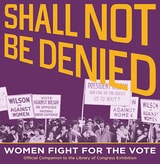
Shall Not Be Denied
Women Fight for the VoteLibrary of Library of Congress
Rutgers University Press, 2019
Official Companion to the Library of Congress Exhibition.
The campaign for women’s suffrage—considered the largest reform movement in American history—lasted more than seven decades. The struggle was not for the fainthearted. For years, determined women organized, lobbied, paraded, petitioned, lectured, picketed, and faced imprisonment in pursuit of the right to vote. Drawing from the Library’s extensive collections of photographs, personal papers, and the organizational records of such figures as Susan B. Anthony, Elizabeth Cady Stanton, Mary Church Terrell, Carrie Chapman Catt, the National Woman’s Party, and the National American Woman Suffrage Association, Shall Not Be Denied traces the movement leading to the women’s rights convention at Seneca Falls, the contributions of suffragists who worked to persuade women that they deserved the same rights as men, the divergent political strategies and internal divisions they overcame, the push for a federal women’s suffrage amendment, and the legacy of the movement.
A companion to the exhibition staged by the Library of Congress, which opened on June 4, 2019—the 100th anniversary of the US Senate’s passage of the suffrage amendment that would become the 19th amendment—Shall Not Be Denied: Women Fight for the Vote is part of the national commemoration of the 100th anniversary of women’s suffrage.
Published by Rutgers University Press in association with the Library of Congress.

Showdown in Desire
The Black Panthers Take a Stand in New OrleansOrissa Arend
University of Arkansas Press, 2009
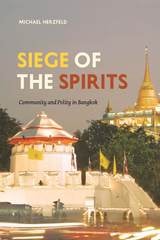
Siege of the Spirits
Community and Polity in BangkokMichael Herzfeld
University of Chicago Press, 2016
Herzfeld argues that even though the residents of Pom Mahakan have lost every legal battle the city government has dragged them into, they have won every public relations contest, highlighting their struggle as one against bureaucrats who do not respect the age-old values of Thai/Siamese social and cultural order. Such values include compassion for the poor and an understanding of urban space as deeply embedded in social and ritual relations. In a gripping account of their standoff, Herzfeld—who simultaneously argues for the importance of activism in scholarship—traces the agile political tactics and styles of the community’s leadership, using their struggle to illuminate the larger difficulties, tensions, and unresolved debates that continue to roil Thai society to this day.

Silent Cells
The Secret Drugging of Captive AmericaAnthony Ryan Hatch
University of Minnesota Press, 2019
A critical investigation into the use of psychotropic drugs to pacify and control inmates and other captives in the vast U.S. prison, military, and welfare systems
For at least four decades, U.S. prisons and jails have aggressively turned to psychotropic drugs—antidepressants, antipsychotics, sedatives, and tranquilizers—to silence inmates, whether or not they have been diagnosed with mental illnesses. In Silent Cells, Anthony Ryan Hatch demonstrates that the pervasive use of psychotropic drugs has not only defined and enabled mass incarceration but has also become central to other forms of captivity, including foster homes, military and immigrant detention centers, and nursing homes.
Silent Cells shows how, in shockingly large numbers, federal, state, and local governments and government-authorized private agencies pacify people with drugs, uncovering patterns of institutional violence that threaten basic human and civil rights. Drawing on publicly available records, Hatch unearths the coercive ways that psychotropics serve to manufacture compliance and docility, practices hidden behind layers of state secrecy, medical complicity, and corporate profiteering.
Psychotropics, Hatch shows, are integral to “technocorrectional” policies devised to minimize public costs and increase the private profitability of mass captivity while guaranteeing public safety and national security. This broad indictment of psychotropics is therefore animated by a radical counterfactual question: would incarceration on the scale practiced in the United States even be possible without psychotropics?
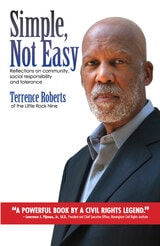
Simple Not Easy
Reflections on community social responsibility and toleranceTerrence Roberts
Parkhurst Brothers, Inc., 2010
HE MADE HISTORY. HE TELLS THE TRUTHS HE KNOWS.
LEAD TITLE/Our National Conversation Series
----Margot Stern Strom, Executive Director, Facing History and Ourselves, Inc.
"Terrence Roberts challenges all of us to make the world more inclusive by adjusting our 'mental maps.' He reminds us that we will not achieve that long-sought beloved community until we recognize the value of each individual-until we affirm each other. Simple, NotEasy is one trailblazer's mingling of history and contemporary mattersto engage a new conversations on community, social responsibility and tolerance. A powerful book by a civil rights legend."
--- Lawrence J. Pijeaux, Jr., Ed.D.,
Sins Of The Parents
Politics Of National Apologies In The U.S.Brian A. Weiner
Temple University Press, 2005
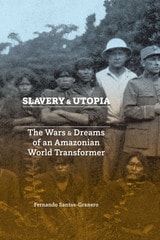
Slavery and Utopia
The Wars and Dreams of an Amazonian World TransformerBy Fernando Santos-Granero,
University of Texas Press, 2018
In the first half of the twentieth century, a charismatic Peruvian Amazonian indigenous chief, José Carlos Amaringo Chico, played a key role in leading his people, the Ashaninka, through the chaos generated by the collapse of the rubber economy in 1910 and the subsequent pressures of colonists, missionaries, and government officials to assimilate them into the national society. Slavery and Utopia reconstructs the life and political trajectory of this leader whom the people called Tasorentsi, the name the Ashaninka give to the world-transforming gods and divine emissaries that come to this earth to aid the Ashaninka in times of crisis.
Fernando Santos-Granero follows Tasorentsi’s transformations as he evolved from being a debt-peon and quasi-slave to being a slave raider; inspirer of an Ashaninka movement against white-mestizo rubber extractors and slave traffickers; paramount chief of a multiethnic, anti-colonial, and anti-slavery uprising; and enthusiastic preacher of an indigenized version of Seventh-Day Adventist doctrine, whose world-transforming message and personal influence extended well beyond Peru’s frontiers. Drawing on an immense body of original materials ranging from archival documents and oral histories to musical recordings and visual works, Santos-Granero presents an in-depth analysis of chief Tasorentsi’s political discourse and actions. He demonstrates that, despite Tasorentsi’s constant self-reinventions, the chief never forsook his millenarian beliefs, anti-slavery discourse, or efforts to liberate his people from white-mestizo oppression. Slavery and Utopia thus convincingly refutes those who claim that the Ashaninka proclivity to messianism is an anthropological invention.
Social Justice
Theories, Issues, and Movements (Revised and Expanded Edition)Loretta Capeheart
Rutgers University Press, 2020
Theories of social justice are presented in an accessible fashion to encourage engagement of students, activists, and scholars with these important lines of inquiry. Issues are analyzed utilizing various theories for furthering engagement in possibilities. Struggles for justice -- from legal cases to on the ground movements -- are presented for historical context and to inform the way forward.

Social and Political Philosophy
Peter A. French, Theodore E. Uehling Jr., and Howard K. Wettstein, Editors
University of Minnesota Press, 1982
Social and Political Philosophy was first published in 1982. Minnesota Archive Editions uses digital technology to make long-unavailable books once again accessible, and are published unaltered from the original University of Minnesota Press editions.
Sociology on Film
Postwar Hollywood's Prestige CommodityCagle, Chris
Rutgers University Press, 2016
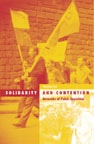
Solidarity And Contention
Networks Of Polish OppositionMaryjane Osa
University of Minnesota Press, 2003
Offers an innovative model for understanding how social movements occur in repressive societies
After a series of failed attempts at mobilizing society, Poland’s opposition sprang to surprising—and newly effective—life with the formation of the Solidarity trade union in 1980. If not for those past failures, this book suggests, Solidarity might never have succeeded. Solidarity and Contention deftly reconstructs the networks of protest in Communist Poland to show how waves of dissent during the 1950s, 1960s, and 1970s left an organizational residue that both instructed and enabled Solidarity and, ultimately, the Polish revolution.
Using newly available documentary sources, Maryjane Osa establishes links between activists during three waves of protest: 1954 to 1959, 1966 to 1970, and 1976 to 1980. She shows how political challengers, applying lessons drawn from past failures, developed an ideological formula to de-emphasize divisive issues and promote symbolic concerns, thus facilitating coalition building. Solidarity was therefore able to take advantage of a large opposition network already well in place before the founding of the union. An important case study in itself, the book also answers one of the most intriguing questions in social movement research: how can movements emerge in authoritarian states—where media are state controlled, the rights of assembly and speech are restricted, and the risks of collective action are high?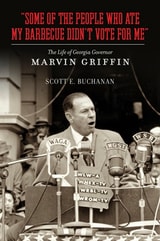
Some of the People Who Ate My Barbecue Didn't Vote for Me
The Life of Georgia Governor Marvin GriffinScott E. Buchanan
Vanderbilt University Press, 2011
.
In "Some of the People Who Ate My Barbecue Didn't Vote for Me," Scott Buchanan portrays Marvin Griffin as a Yellow Dog Democrat struggling against inevitable change. Griffin was viewed by many as a charismatic voice of resistance in the Georgia and the South in the wake of Brown v. Board of Education. He combined a staunch segregationist approach with economically progressive policies, assisting in Georgia's transformation from an agrarian economy to a more industrialized one.
Ironically, it was these efforts and the larger shift in politics that doomed Griffin's career, ensuring his administration would last only one term. In many ways, Griffin stands as a clear dividing line between the Old South and the New.
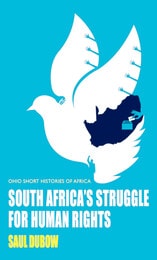
South Africa’s Struggle for Human Rights
Saul Dubow
Ohio University Press, 2012
The human rights movement in South Africa’s transition to a postapartheid democracy has been widely celebrated as a triumph for global human rights. It was a key aspect of the political transition, often referred to as a miracle, which brought majority rule and democracy to South Africa. The country’s new constitution, its Truth and Reconciliation Commission, and the moral authority of Nelson Mandela stand as exemplary proof of this achievement. Yet, less than a generation after the achievement of freedom, the status of human rights and constitutionalism in South Africa is uncertain. In government the ANC has displayed an inconsistent attitude to the protection, and advancement, of hard-won freedoms and rights, and it is not at all clear that a broader civic and political consciousness of the importance of rights is rooting itself more widely in popular culture.
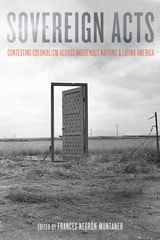
Sovereign Acts
Contesting Colonialism Across Indigenous Nations and Latinx AmericaEdited by Frances Negrón-Muntaner
University of Arizona Press, 2017
Editor Frances Negrón-Muntaner and the contributors to Sovereign Acts engage in a debate around these questions with surprising results. Moving the idea of sovereignty beyond the narrow confines of the nation-state, beyond the concept of a power that one either has or lacks, this paradigm-shifting work examines the multiple ways that Indigenous nations and U.S. territorial peoples act as sovereign and the possible limits of such sovereign acts within the current globalized context. A valuable contribution to the debate around indigenous and other conceptions of sovereignty, Sovereign Acts goes further than legal frameworks to investigate the relationships among sovereignty, gender, sexuality, representation, and the body.
From activist style and choreography to the politics of recognition, the scholars and artists featured in this unique volume map out how people disrupt modern notions of sovereignty, attempt to redefine what being sovereign means, or seek alternative political vocabularies. Sovereignty is not only, after all, a kingdom and a crown.
CONTRIBUTORS
Michael Lujan Bevacqua
Glen Coulthard
Jennifer Nez Denetdale
Adriana María Garriga-López
Jessica A. F. Harkins
Brian Klopotek
Davianna Pomaika‘i McGregor
Frances Negrón-Muntaner
Yasmin Ramírez
Mark Rifkin
Madeline Román
Stephanie Nohelani Teves
Fa‘anofo Lisaclaire Uperesa
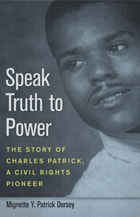
Speak Truth to Power
The Story of Charles Patrick, a Civil Rights PioneerMignette Y. Patrick Dorsey
University of Alabama Press, 2010
"Patrick did not intend to become a civil rights pioneer, but a minor dispute over a parking spot led to his arrest, beating while in custody, and eventual legal tribulations. His daughter's account of his ordeal is well researched, beautifully narrated, and extremely informative." —Journal of Southern History
On December 11, 1954, Charles Patrick drove to downtown Birmingham to buy a Boy Scout uniform for his son. Christmas traffic around the downtown department stores was heavy, and Patrick circled unsuccessfully until at last a streetside spot opened up and he began to pull in. As he did so, he was cut off by a woman who ordered him out of the way, as she was the wife of a city police officer. Patrick pulled away, remarking, "Ma’am, he doesn’t own the streets of Birmingham."
Normal low-level urban hassle? Not in 1954 Birmingham, when the woman was white and Patrick black. The woman reported to her husband that a black man had sassed her, and Patrick was summarily arrested, charged with disorderly conduct, and placed in a cell where he was beaten by the husband and another police officer.
Usually that would have been the end of it, but Patrick was not the sort of man to meekly endure an injustice. He found an attorney, went to court to fight the charges, and brought his assailants to justice--as whites, blacks, politicians and the press offered public support.
This book tells the story of Patrick’s quest for justice in segregated Alabama on the eve of the civil rights movement and represents a telling instance of the growing determination of African Americans to be treated fairly, part of the broadening and deepening stream of resolve that led to the widespread activism of the civil rights movement.

Speaking for the Dying
Life-and-Death Decisions in Intensive CareSusan P. Shapiro
University of Chicago Press, 2019
Speaking for the Dying tells their story, drawing on daily observations over more than two years in two intensive care units in a diverse urban hospital. From bedsides, hallways, and conference rooms, you will hear, in their own words, how physicians really talk to families and how they respond. You will see how decision makers are selected, the interventions they weigh in on, the information they seek and evaluate, the values and memories they draw on, the criteria they weigh, the outcomes they choose, the conflicts they become embroiled in, and the challenges they face. Observations also provide insight into why some decision makers authorize one aggressive intervention after the next while others do not—even on behalf of patients with similar problems and prospects. And they expose the limited role of advance directives in structuring the process decision makers follow or the outcomes that result.
Research has consistently found that choosing life or death for another is one of the most difficult decisions anyone can face, sometimes haunting families for decades. This book shines a bright light on a role few of us will escape and offers steps that patients and loved ones, health care providers, lawyers, and policymakers could undertake before it is too late.
Spear of the Nation
Umkhonto weSizwe: South Africa’s Liberation Army, 1960s–1990sJanet Cherry
Ohio University Press, 2011
Umkhonto weSizwe, Spear of the Nation, was arguably the last of the great liberation armies of the twentieth century—but it never got to “march triumphant into Pretoria.” MK—as it was known—was the armed wing of the African National Congress, South Africa’s liberation movement, that challenged the South African apartheid government. A small group of revolutionaries committed to the seizure of power, MK discovered its principal members engaged in negotiated settlement with the enemy and was disbanded soon after.
The history of MK is one of paradox and contradiction, of successes and failures. In this short study, which draws widely on the personal experiences of—and commentary by—MK soldiers, Janet Cherry offers a new and nuanced account of the Spear of the Nation. She presents in broad outline the various stages of MK’s thirty-year history, considers the difficult strategic and moral problems the revolutionary army faced, and argues that its operations are likely to be remembered as a just war conducted with considerable restraint.

Spectacles of Reform
Theater and Activism in Nineteenth-Century AmericaAmy E. Hughes
University of Michigan Press, 2014
In the nineteenth century, long before film and television arrived to electrify audiences with explosions, car chases, and narrow escapes, it was America's theaters that offered audiences such thrills, with "sensation scenes" of speeding trains, burning buildings, and endangered bodies, often in melodramas extolling the virtues of temperance, abolition, and women's suffrage. In Spectacles of Reform , Amy E. Hughes scrutinizes these peculiar intersections of spectacle and reform, revealing that spectacle plays a crucial role in American activism. By examining how theater producers and political groups harnessed its power and appeal, Hughes suggests that spectacle was—and remains—central to the dramaturgy of reform.
Engaging evidence from lithographs to children's books to typography catalogs, Hughes traces the cultural history of three famous sensation scenes—the drunkard suffering from the delirium tremens, the fugitive slave escaping over a river, and the victim tied to the railroad tracks—assessing how they conveyed, allayed, and denied concerns about the rights and responsibilities of citizenship. These images also appeared in printed propaganda, suggesting that the coup de théâtre was an essential part of American reform culture. Additionally, Hughes argues that today's producers and advertisers continue to exploit the affective dynamism of spectacle, reaching an even broader audience through film, television, and the Internet.
To be attuned to the dynamics of spectacle, Hughes argues, is to understand how we see. Consequently, Spectacles of Reform will interest not only theater historians, but also scholars and students of political, literary, and visual culture who are curious about how U.S. citizens saw themselves and their world during a pivotal period in American history.
Speech Rights in America
The First Amendment, Democracy, and the MediaLaura Stein
University of Illinois Press, 2005
The First Amendment is the principle guarantor of speech rights in the United States. But the Supreme Court's interpretations of it often privilege the interests of media owners over those of the broader citizenry.
Laura Stein argues that such rulings alienate citizens from their rights, corrupt the essential workings of democracy, and prevent the First Amendment from performing its critical role as a protector of free speech. Drawing on the best of the liberal democratic tradition, Stein demonstrates that there is a significant gap between First Amendment law and the speech rights necessary to democratic communication, and proposes an alternative set of principles to guide future judicial, legislative, and cultural policy on old and new media.
Sport and the Law
Historical and Cultural IntersectionsSamuel O. Regalado
University of Arkansas Press, 2014
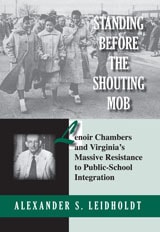
Standing Before the Shouting Mob
Lenoir Chambers and Virginia's Massive Resistance to Public School IntegrationAlex Leidholdt
University of Alabama Press, 2007
A southern journalist campaigns for racial understanding during the
struggle over school desegregation in Virginia.
In 1958 the nation's attention was focused on Norfolk,
Virginia, where nearly ten thousand students were locked out of their schools.
Rather than comply with the desegregation mandate of Brown v. Board
of Education, Governor J. Lindsay Almond, supported by the powerful
political machine of Senator Harry F. Byrd, Sr., had closed Norfolk's white
secondary schools.
Massive resistance to integration transformed Norfolk
into a civil rights arena. Although the process by which Norfolk's schools
were integrated was far from orderly, the transition was characterized
by debate, political maneuvering, and judicial action--not violence. Lenoir
Chambers, editor of the Norfolk Virginian-Pilot, conducted a five-year
editorial campaign supporting the peaceful implementation of the Court's
order. The Pilot was Virginia's only white newspaper to take this
position. Chambers was later awarded a Pulitzer Prize for his editorials.
Utilizing a wide range of primary and secondary sources,
Standing before the Shouting Mob examines Chambers's campaign, explores
the influences that shaped his racial views, and places him within the
context of southern journalism. The book also provides a detailed analysis
of Virginia's massive resistance and Norfolk's school closing.
State of Segregation
America’s Freedom Rights Struggles as Told by AlabamaMark J. Tenhundfeld
University of Alabama Press, 2026
A revealing legal journey through Alabama’s civil rights battles, exposing systemic discrimination and the enduring fight for justice via landmark Supreme Court cases
State of Segregation: America’s Freedom Rights Struggles, as Told by Alabama by Mark J. Tenhundfeld offers a compelling exploration of Alabama’s civil rights and civil liberties history through the lens of thirty-two pivotal US Supreme Court cases. Each case, rooted in Alabama’s social and legal conflicts, reveals the persistent struggle to fulfill the Constitution’s promises of equal protection and due process. From early twentieth-century challenges to the Alabama Constitution of 1901 to contemporary battles over gerrymandering, Tenhundfeld traces how discrimination was embedded in the state’s institutions—and how it was contested.
State of Segregation uniquely blends legal analysis, historical narrative, and social commentary to expose the deep-rooted systems of racial, gender, and class-based discrimination in Alabama. Tenhundfeld argues that while discrimination is the most defining feature of Alabama’s past, it remains the most difficult to confront. By illuminating the legal strategies used to uphold and dismantle injustice, State of Segregation contributes to the broader understanding of how historical inequities continue to shape modern society.
Accessible to general readers and scholars alike, this work stands apart by combining Alabama history, civil rights struggles, and Supreme Court jurisprudence into a single, powerful narrative. It offers both cautionary tales about the fragility of freedom and enduring lessons for today’s social justice advocates.

Strong Inside
Perry Wallace and the Collision of Race and Sports in the SouthAndrew Maraniss
Vanderbilt University Press, 2024
2015 RFK Book Awards Special Recognition
2015 Lillian Smith Book Award
2015 AAUP Books Committee "Outstanding" Title
When Strong Inside was first published ten years ago, no one could have predicted the impact the book would have on Vanderbilt University, Nashville, and communities across the nation. What began as a biography of Perry Wallace—the first African American basketball player in the Southeastern Conference (SEC)—became a catalyst for meaningful change and reconciliation between Wallace and the city that had rejected him. In this tenth-anniversary edition, scholars of race and sports Louis Moore and Derrick E. White provide a new foreword that places the story in the context of the study of sports and society, and author Andrew Maraniss adds a concluding chapter filling readers in on how events unfolded between Strong Inside’s publication in 2014 and Perry Wallace’s death in 2017 and exploring Wallace’s continuing legacy.
Wallace entered kindergarten the year that Brown v. Board of Education upended “separate but equal.” As a twelve-year-old, he sneaked downtown to watch the sit-ins at Nashville’s lunch counters. A week after Martin Luther King Jr.’s “I Have a Dream” speech, Wallace entered high school, and later saw the passage of the Civil Rights and Voting Rights acts. On March 19, 1966, his Pearl High School basketball team won Tennessee’s first integrated state tournament—the same day Adolph Rupp’s all-white Kentucky Wildcats lost to the all-Black Texas Western Miners in an iconic NCAA title game.
The world seemed to be opening up at just the right time, and when Vanderbilt recruited him, Wallace courageously accepted the assignment to desegregate the SEC. His experiences on campus and in the hostile gymnasiums of the Deep South turned out to be nothing like he ever imagined.

Strong Inside
Perry Wallace and the Collision of Race and Sports in the SouthAndrew Maraniss
Vanderbilt University Press, 2014
2015 RFK Book Awards Special Recognition
2015 Lillian Smith Book Award
2015 AAUP Books Committee "Outstanding" Title
Based on more than eighty interviews, this fast-paced, richly detailed biography of Perry Wallace, the first African American basketball player in the SEC, digs deep beneath the surface to reveal a more complicated and profound story of sports pioneering than we've come to expect from the genre. Perry Wallace's unusually insightful and honest introspection reveals his inner thoughts throughout his journey.
Wallace entered kindergarten the year that Brown v. Board of Education upended "separate but equal." As a 12-year-old, he sneaked downtown to watch the sit-ins at Nashville's lunch counters. A week after Martin Luther King Jr.'s "I Have a Dream" speech, Wallace entered high school, and later saw the passage of the Civil Rights and Voting Rights acts. On March 16, 1966, his Pearl High School basketball team won Tennessee's first integrated state tournament--the same day Adolph Rupp's all-white Kentucky Wildcats lost to the all-black Texas Western Miners in an iconic NCAA title game.
The world seemed to be opening up at just the right time, and when Vanderbilt recruited him, Wallace courageously accepted the assignment to desegregate the SEC. His experiences on campus and in the hostile gymnasiums of the Deep South turned out to be nothing like he ever imagined.
On campus, he encountered the leading civil rights figures of the day, including Stokely Carmichael, Martin Luther King Jr., Fannie Lou Hamer, and Robert Kennedy--and he led Vanderbilt's small group of black students to a meeting with the university chancellor to push for better treatment.
On the basketball court, he experienced an Ole Miss boycott and the rabid hate of the Mississippi State fans in Starkville. Following his freshman year, the NCAA instituted "the Lew Alcindor rule," which deprived Wallace of his signature move, the slam dunk.
Despite this attempt to limit the influence of a rising tide of black stars, the final basket of Wallace's college career was a cathartic and defiant dunk, and the story Wallace told to the Vanderbilt Human Relations Committee and later The Tennessean was not the simple story of a triumphant trailblazer that many people wanted to hear. Yes, he had gone from hearing racial epithets when he appeared in his dormitory to being voted as the university's most popular student, but, at the risk of being labeled "ungrateful," he spoke truth to power in describing the daily slights and abuses he had overcome and what Martin Luther King had called "the agonizing loneliness of a pioneer."
Stuck in Place
Urban Neighborhoods and the End of Progress toward Racial EqualityPatrick Sharkey
University of Chicago Press, 2013
In the 1960s, many believed that the civil rights movement’s successes would foster a new era of racial equality in America. Four decades later, the degree of racial inequality has barely changed. To understand what went wrong, Patrick Sharkey argues that we have to understand what has happened to African American communities over the last several decades. In Stuck in Place, Sharkey describes how political decisions and social policies have led to severe disinvestment from black neighborhoods, persistent segregation, declining economic opportunities, and a growing link between African American communities and the criminal justice system.
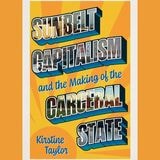
Sunbelt Capitalism and the Making of the Carceral State
Kirstine Taylor
University of Chicago Press, 2025
The story of how the American South became the most incarcerated region in the world’s most incarcerated nation.
Sunbelt Capitalism and the Making of the Carceral State examines the evolution of southern criminal punishment from Jim Crow to the dawn of mass incarceration, charting this definitive era of carceral transformation and expansion in the southern United States. The demise of the county chain gang, the professionalization of police, and the construction of large-scale prisons were among the sweeping changes that forever altered the southern landscape and bolstered the region’s capacity to punish. What prompted this southern revolution in criminal punishment?
Kirstine Taylor argues that the crisis in the cotton fields and the arrival of Sunbelt capitalism in the south’s rising metropolises prompted lawmakers to build expansive, modern criminal punishment systems in response to Brown v. Board of Education and the Black freedom movements of the 1960s and ‘70s. Taking us inside industry-hunting expeditions, school desegregation battles, the sit-in movement, prisoners’ labor unions, and policy commissions, Taylor tells the story of how a modernizing south became the most incarcerated region in the globe’s most incarcerated nation.
Sunbelt Capitalism and the Making of the Carceral State
Kirstine Taylor
University of Chicago Press, 2025
This is an auto-narrated audiobook version of this book.
The story of how the American South became the most incarcerated region in the world’s most incarcerated nation.
Sunbelt Capitalism and the Making of the Carceral State examines the evolution of southern criminal punishment from Jim Crow to the dawn of mass incarceration, charting this definitive era of carceral transformation and expansion in the southern United States. The demise of the county chain gang, the professionalization of police, and the construction of large-scale prisons were among the sweeping changes that forever altered the southern landscape and bolstered the region’s capacity to punish. What prompted this southern revolution in criminal punishment?
Kirstine Taylor argues that the crisis in the cotton fields and the arrival of Sunbelt capitalism in the south’s rising metropolises prompted lawmakers to build expansive, modern criminal punishment systems in response to Brown v. Board of Education and the Black freedom movements of the 1960s and ‘70s. Taking us inside industry-hunting expeditions, school desegregation battles, the sit-in movement, prisoners’ labor unions, and policy commissions, Taylor tells the story of how a modernizing south became the most incarcerated region in the globe’s most incarcerated nation.
Survival Pending Revolution
The History of the Black Panther PartyPaul Alkebulan
University of Alabama Press, 2007
Suspect Communities
Anti-Muslim Racism and the Domestic War on TerrorNicole Nguyen
University of Minnesota Press, 2019
The first major qualitative study of “countering violent extremism” in key U.S. cities
Suspect Communities is a powerful reassessment of the U.S. government’s “countering violent extremism” (CVE) program that has arisen in major cities across the United States since 2011. Drawing on an interpretive qualitative study, it examines how the concept behind CVEaimed at combating homegrown terrorism by engaging Muslim community members, teachers, and religious leaders in monitoring and reporting on young peoplehas been operationalized through the everyday work of CVE actors, from high-level national security workers to local community members, with significant penalties for the communities themselves.
Nicole Nguyen argues that studying CVE provides insight into how the drive to bring liberal reforms to contemporary security regimes through “community-driven” and “ideologically ecumenical” programming has in fact further institutionalized anti-Muslim racism in the United States. She forcefully contends that the U.S. security state has designed CVE to legitimize and shore up support for the very institutions that historically have criminalized, demonized, and dehumanized communities of color, while appearing to learn from and attenuate past practices of coercive policing, racial profiling, and political exclusion.
By undertaking this analysis, Suspect Communities offers a vital window into the inner workings of the U.S. security state and the devastating impact of CVE on local communities.
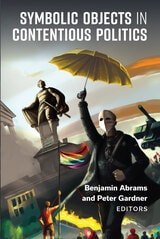
Symbolic Objects in Contentious Politics
Benjamin Abrams and Peter Gardner, Editors
University of Michigan Press, 2023
When we observe protest marches, striking workers on picket lines, and insurgent movements in the world today, a litany of objects routinely fill our field of vision. Some such objects are ubiquitous the world over, like flags, banners, and placards. Others are situationally unique: Who could have anticipated the historical importance of a flower placed in the barrel of a gun, a flaming torch, a sea of umbrellas, a motorist’s yellow vest, a feather headdress, an AK-47, or a knitted pink hat? This book explores the “stuff” at the heart of protests, revolutions, civil wars, and other contentious political events, with particular focus on those objects that have or acquire symbolic importance. In the context of “contentious politics” (disruptive political episodes where people try to change societies without going through institutions), certain objects can divide and unite social groups, tell stories, make declarations, spark controversy, and even trigger violent upheavals.
This book draws together scholars from a variety of fields to discuss symbolic objects in contentious politics: their meanings, uses, functions, and social responses. In bringing these phenomena together, this book offers a serious, distinctive, and cohesive theoretical contribution that draws upon diverse scholarly work in order to form the building blocks for future inquiry in the field. The aim is not merely to “close the gap” in the literature, but to create space in the field for further and more fruitful inquiry.