Results by title
440 books match the query 'Colonialism & Post-Colonialism' and 32 start with s

Sabra and Shatila
September 1982Bayan Nuwayhed Al-Hout
Pluto Press, 2004
The book covers the history of the Sabra and Shatila massacre, which took place over three bloody days in the Lebanese capital Beirut. It was committed against Palestinian refugees by Lebanese militias, aided and supervised by the Israeli Army, which had encircled the district.
Now available for the first time in English, this classic book is the most comprehensive, authoritative account of what happened and who was responsible. The author, Bayan Nuwayhed al-Hout, was a Professor at the Lebanese University at the time. Driven by the horror of what occurred, she interviewed survivors and set up an oral history project immediately after the massacre to preserve testimonies. This book is the result.
Following a general introduction, the first part contains interviews mainly with victims' families. The second part analyses statistical data and attempts to determine the number of victims. The conclusion, 'Who Was Responsible?', sheds light on the various parties responsible.
Over five-hundred pages long, illustrated with photographs and maps, unrivalled in detail and scope, this book is a courageous attempt to make sense of what happened and an important political document in its own right.
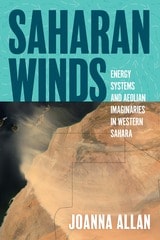
Saharan Winds
Energy Systems and Aeolian Imaginaries in Western SaharaAllan, Joanna
West Virginia University Press, 2024
Winner, ASLE-UKI Critical Book Prize, 2025
Finalist, Ecocritical Book Award, 2025, Association for the Study of Literature and Environment (ASLE)
Longlisted, Bread and Roses Award for Radical Publishing, 2025
Saharan Winds contributes to a fairer energy horizon by illuminating the role of imaginaries--how we understand energy sources such as wind and the meanings we attach to wind--in determining the wider politics, whether oppressive or just, associated with energy systems. This book turns to various cultures and communities across different time periods in one space, Western Sahara, to explore how wind imaginaries affect the development, management, and promotion of windfarms; the distribution of energy that windfarms produce; and, vitally, the type of politics mediated by all these elements combined. Highlighting the wind-fueled oppression of colonial energy systems, the book shows the potential offered by nomadic, Indigenous wind imaginaries for contributing to a fairer energy future.
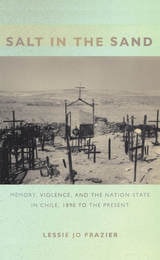
Salt in the Sand
Memory, Violence, and the Nation-State in Chile, 1890 to the PresentLessie Jo Frazier
Duke University Press, 2007
Analyzing multiple memories of state violence, Frazier innovatively shapes social and cultural theory to interpret a range of sources, including local and national government archives, personal papers, popular literature and music, interviews, architectural and ceremonial commemorations, and her ethnographic observations of civic associations, women's and environmental groups, and human rights organizations. A masterful integration of extensive empirical research with sophisticated theoretical analysis, Salt in the Sand is a significant contribution to interdisciplinary scholarship on human rights, democratization, state formation, and national trauma and reconciliation.
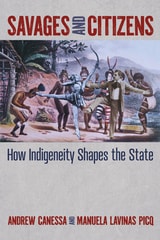
Savages and Citizens
How Indigeneity Shapes the StateAndrew Canessa and Manuela Lavinas Picq; Foreword by Jeff Ganohalidoh Corntassel
University of Arizona Press, 2024
Delving into European political philosophy, comparative politics, and contemporary international law, the book shows how the concept of indigeneity has shaped the development of the modern state. The exclusion of Indigenous people was not a collateral byproduct; it was a political project in its own right. The book argues that indigeneity is a political identity relational to modern nation-states and that Indigenous politics, although marking the boundary of the state, are co-constitutive of colonial processes of state-making. In showing how indigeneity is central to how the international system of states operates, the book forefronts Indigenous peoples as political actors to reject essentializing views that reduce them to cultural “survivors” rooted in the past.
With insights drawn from diverse global contexts and empirical research from Bolivia and Ecuador, this work advocates for the relevance of Indigenous studies within political science and argues for an ethnography of sovereignty in anthropology. Savages and Citizens makes a compelling case for the centrality of Indigenous perspectives to understand the modern state from political theory to international studies.
Secure the Base
Making Africa Visible in the GlobeNgugi wa Thiong’o
Seagull Books, 2016
Ngũgĩ's fiction has been met with wide acclaim, but his nonfiction work, while equally brilliant, is more difficult to find. Secure the Base changes this by bringing together for the first time essays spanning nearly three decades. Originating as disparate lectures and texts, this complete volume will remind readers anew of Ngũgĩ's power and importance. Written in a personal and accessible style, the book covers a range of issues, including the role of the intellectual, the place of Asia in Africa, labor and political struggles in an era of rampant capitalism, and the legacies of slavery and prospects for peace. At a time when Africa looms large in our discussions of globalization, Secure the Base is mandatory reading.

Seeing Like a Citizen
Decolonization, Development, and the Making of Kenya, 1945–1980Kara Moskowitz
Ohio University Press, 2019
In Seeing Like a Citizen, Kara Moskowitz approaches Kenya’s late colonial and early postcolonial eras as a single period of political, economic, and social transition. In focusing on rural Kenyans—the vast majority of the populace and the main targets of development interventions—as they actively sought access to aid, she offers new insights into the texture of political life in decolonizing Kenya and the early postcolonial world.
Using multisited archival sources and oral histories focused on the western Rift Valley, Seeing Like a Citizen makes three fundamental contributions to our understanding of African and Kenyan history. First, it challenges the widely accepted idea of the gatekeeper state, revealing that state control remained limited and that the postcolonial state was an internally varied and often dissonant institution. Second, it transforms our understanding of postcolonial citizenship, showing that its balance of rights and duties was neither claimed nor imposed, but negotiated and differentiated. Third, it reorients Kenyan historiography away from central Kenya and elite postcolonial politics. The result is a powerful investigation of experiences of independence, of the meaning and form of development, and of how global political practices were composed and recomposed on the ground in local settings.
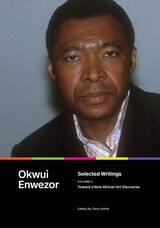
Selected Writings, Volume 1
Toward a New African Art DiscourseOkwui Enwezor. Edited by Terry Smith.
Duke University Press, 2025
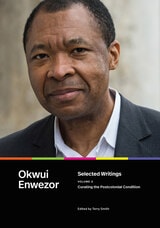
Selected Writings, Volume 2
Curating the Postcolonial Condition, Volume 2Okwui Enwezor. Edited by Terry Smith.
Duke University Press, 2025
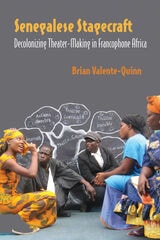
Senegalese Stagecraft
Decolonizing Theater-Making in Francophone AfricaBrian Valente-Quinn
Northwestern University Press, 2021
Through a study of the innovative work of Senegalese theater-makers from the 1930s onward, Senegalese Stagecraft explores a wide range of historical contexts and themes, including French colonial education, cultural Pan‑Africanism, West African Sufism, uses of television and mass media, and popular theater and activism. Using a multidisciplinary approach that includes field, archival, and literary methods, Valente‑Quinn offers a fresh look at performance cultures of West Africa and the Global South in a book that will interest students and scholars in African, Francophone, and performance studies.
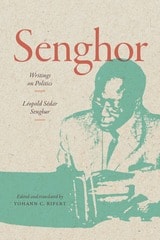
Senghor
Writings on PoliticsLéopold Sédar Senghor. Edited and translated by Yohann C. Ripert
Duke University Press, 2025
Settler Colonialism is the Disaster
A Critique of New Orleans After Hurricane Katrina and During the COVID-19 PandemicCassandra Shepard
University of Illinois Press, 2026
Settler Garrison
Debt Imperialism, Militarism, and Transpacific ImaginariesJodi Kim
Duke University Press, 2022
Settler Imperialism
Alaska Natives and the Myth of the Last FrontierJess Arnett
University of Minnesota Press, 2026
How Alaska redefined US colonialism through Indigenous resistance and legal innovation
Long treated as the symbolic “last frontier,” Alaska was, in fact, the United States’s first experiment in overseas empire. Settler Imperialism reveals these concepts as fictitious stories promoted by government officials and offers a sweeping history of Alaska Native legal and political struggle in the face of a colonial structure that defied the norms of US expansion. Examining Alaska as both a settler and imperial space, Jess Arnett challenges familiar narratives of American growth, sovereignty, and law.
Following the 1867 Treaty of Cession when the United States purchased Alaska from Russia, the federal government refused to sign treaties with Alaska Natives, excluded them from the Bureau of Indian Affairs, and denied the region designation as Indian Country. These departures from standard Indian policy created legal ambiguity that enabled new opportunities for land dispossession and resource extraction by state and corporate interests. Focusing on history from the late nineteenth century through the 1971 Alaska Native Claims Settlement Act, Arnett uncovers how the Tlingit, Haida, Tsimshian, and other Indigenous nations navigated and contested Alaska’s peculiar legal terrain. Members of these communities forcefully petitioned for US citizenship, mobilized Indigenous legal orders, and engaged selective federal Indian law to assert land rights and political authority.
By placing Alaska at the center of US colonial history, Settler Imperialism turns a critical lens on the evolution of America. To understand US expansion, race, and legal formation, Alaska must be seen not as the last frontier but as a proving ground for empire.
Retail e-book files for this title are screen-reader friendly with images accompanied by short alt text and/or extended descriptions.
Silenced Resistance
Women, Dictatorships, and Genderwashing in Western Sahara and Equatorial GuineaJoanna Allan
University of Wisconsin Press, 2021
Slavery and the Invention of Dutch Art
Caroline Fowler
Duke University Press, 2025
Smoldering Ashes
Cuzco and the Creation of Republican Peru, 1780-1840Charles F. Walker
Duke University Press, 1999
Peru’s Indian majority and non-Indian elite were both opposed to Spanish rule, and both groups participated in uprisings during the late colonial period. But, at the same time, seething tensions between the two groups were evident, and non-Indians feared a mass uprising. As Walker shows, this internal conflict shaped the many struggles to come, including the Tupac Amaru uprising and other Indian-based rebellions, the long War of Independence, the caudillo civil wars, and the Peru-Bolivian Confederation. Smoldering Ashes not only reinterprets these conflicts but also examines the debates that took place—in the courts, in the press, in taverns, and even during public festivities—over the place of Indians in the republic. In clear and elegant prose, Walker explores why the fate of the indigenous population, despite its participation in decades of anticolonial battles, was little improved by republican rule, as Indians were denied citizenship in the new nation—an unhappy legacy with which Peru still grapples.
Informed by the notion of political culture and grounded in Walker’s archival research and knowledge of Peruvian and Latin American history, Smoldering Ashes will be essential reading for experts in Andean history, as well as scholars and students in the fields of nationalism, peasant and Native American studies, colonialism and postcolonialism, and state formation.

Social History and African Environments
William Beinart
Ohio University Press, 2003
The explosion of interest in African environmental history has stimulated research and writing on a wide range of issues facing many African nations.
This collection represents some of the finest studies to date. The general topics include African environmental ideas and practices; colonial science, the state and African responses; and settlers and Africans' culture and nature. The contributors are Emmanuel Kreike, Karen Middleton, Innocent Pikirayi, Terence Ranger, JoAnn McGregor, Helen Tilley, Grace Garswell, John McCracken, Ingrid Yngstrom, David Bunn, Sandra Swart, Robert J. Gordon, and Jane Carruthers.
Sociology and Empire
The Imperial Entanglements of a DisciplineGeorge Steinmetz, ed.
Duke University Press, 2013
The collection has a threefold agenda: to trace an intellectual history of sociology as it pertains to empire; to offer empirical studies based around colonies and empires, both past and present; and to provide a theoretical basis for future sociological analyses that may take empire more fully into account. In the 1940s, the British Colonial Office began employing sociologists in its African colonies. In Nazi Germany, sociologists played a leading role in organizing the occupation of Eastern Europe. In the United States, sociology contributed to modernization theory, which served as an informal blueprint for the postwar American empire. This comprehensive anthology critiques sociology's disciplinary engagement with colonialism in varied settings while also highlighting the lasting contributions that sociologists have made to the theory and history of imperialism.
Contributors. Albert Bergesen, Ou-Byung Chae, Andy Clarno, Raewyn Connell, Ilya Gerasimov, Julian Go, Daniel Goh, Chandan Gowda, Krishan Kumar, Fuyuki Kurasawa, Michael Mann, Marina Mogilner, Besnik Pula, Anne Raffin, Emmanuelle Saada, Marco Santoro, Kim Scheppele, George Steinmetz, Alexander Semyonov, Andrew Zimmerman
Soldier's Paradise
Militarism in Africa after EmpireSamuel Fury Childs Daly
Duke University Press, 2024
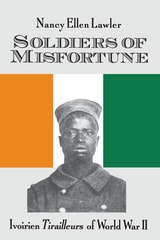
Soldiers Of Misfortune
lvoirien Tirailleurs of World War IINancy Ellen Lawler
Ohio University Press, 1992
This is a study of the African veterans of a European war. It is a story of men from the Cote d‘Ivoire, many of whom had seldom traveled more than a few miles from their villages, who served France as tirailleurs (riflemen) during World War II.
Thousands of them took part in the doomed attempt to hold back the armies of the Third Relch in 1940; many were to spend the rest of the war as prisoners in Germany or Occupied France.
Others more fortunate came under the authority of Vichy France, and were deployed in the Defense of the “Motherland” and its overseas possessions against the threat posed by the Allies. By 1943, the tirailleur regiments had passed into the service of de Gaulle’s free French and under Allied command, played a significant role in the liberation of Europe.
In describing these complex events, Dr. Lawler draws upon archives in both France and the Cote d’Ivoire. She also carried out an extensive series of interviews with Ivoirien veterans principally, but not exclusively, from the Korhogo region. The vividness of their testimony gives this study a special character. They talk freely not only of their wartime exploits, but also of their experiences after repatriation.
Lawler allows them to speak for themselves. They express their hatred of forced labor and military conscription, which were features of the colonial system, yet at the same time reveal a pride in having come to the defense of France. They describe their role in the nationalist struggle, as foot soldiers of Felix Houphouet-Boigny, but also convey their sense of having become a lost generation. They recognize that their experiences as French soldiers had become sadly irrelevant in a new nation in quest of its history.
Soldiers, Airmen, Spies, and Whisperers
The Gold Coast in World War IINancy Ellen Lawler
Ohio University Press, 2002

South-South
The Architecture of Non-Alignment and CooperationEdited by Amit Srivastava, Vladimir Kulic, and Peter Scriver
National University of Singapore Press, 2027
Recovers the untold history of how the Global South cooperated to construct its own modernity.
During the era of decolonization, architecture began to travel along unprecedented paths. Newly independent nations in the Global South did not only build within their own borders; they built with one another, exchanging designs, experts, materials, and entire construction technologies across Africa, Asia, and Latin America. Exchanges operated through a range of formal frameworks, from the Non-Aligned Movement to the Afro-Asian Housing Organization, but also through a dense weave of professional and personal networks, connecting Bandung and Cairo to Kampala, Colombo, and Havana.
South-South considers architecture as a form of “worldmaking,” by which postcolonial nations imagined and materialized alternatives to both colonial legacies and Cold War binaries. Organized around the lenses of staging, cooperation, and mobilities, the contributions attend as much to lofty solidarities as to pragmatic necessities and persistent Northern dependencies, all of which shaped architecture on the ground. The result reframes modern architectural history, not as a story of influence flowing south, but of lateral exchange among so-called peripheries, an unfinished project whose stakes have only grown as the Global South reasserts itself today.
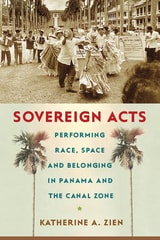
Sovereign Acts
Performing Race, Space, and Belonging in Panama and the Canal ZoneZien, Katherine A.
Rutgers University Press, 2017
Winner of the 2017 Annual Book Prize from the Canadian Association of Latin American and Caribbean Studies (CALACS)
Sovereign Acts explores how artists, activists, and audiences performed and interpreted sovereignty struggles in the Panama Canal Zone, from the Canal Zone’s inception in 1903 to its dissolution in 1999. In popular entertainments and patriotic pageants, opera concerts and national theatre, white U.S. citizens, West Indian laborers, and Panamanian artists and activists used performance as a way to assert their right to the Canal Zone and challenge the Zone’s sovereignty, laying claim to the Zone’s physical space and imagined terrain.
By demonstrating the place of performance in the U.S. Empire’s legal landscape, Katherine A. Zien transforms our understanding of U.S. imperialism and its aftermath in the Panama Canal Zone and the larger U.S.-Caribbean world.
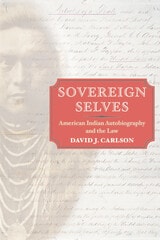
Sovereign Selves
American Indian Autobiography and the LawDavid J. Carlson
University of Illinois Press, 2005
Carlson argues that by drawing on the conventions of early colonial treaty-making, nineteenth- and early twentieth-century Indian autobiographers sought to adapt and redefine the terms of Indian law as a way to assert specific property-based and civil rights. Focusing primarily on the autobiographical careers of two major writers (William Apess and Charles Eastman), Sovereign Selves traces the way that their sustained engagement with colonial legal institutions gradually enabled them to produce a new rhetoric of "Indianness."

Spain
The Rise of the First World PowerJohn Fraser Ramsey with a Foreword by James D. Mixson
University of Alabama Press, 2026
Before Britain. Before America. There was Spain.
In Spain: The Rise of the First World Power, John Fraser Ramsey traces the evolution of Spain from a battleground of Romans, Visigoths, Moors, and Christians to the most formidable empire of its age. Not merely a chronicle of kings, battles, and dynasties, the book reveals how institutions, beliefs, ambitions, and accidents combined to propel a stubborn and quarrelsome people onto history’s center stage.
In his memorable, avuncular style, Ramsey shows how nations are a mix of virtues and flaws, complicated human communities held together by ingenuity, conviction, and occasional luck. His Spain is not populated solely by monarchs in brocade and generals on horseback. Merchants, clerics, adventurers, bureaucrats, and visionaries all take their places in the procession, forming the untidy pageant from which great powers invariably emerge. The effect is less a lecture than a guided expedition through the machinery of history.
This reissue of Ramsey's longest work arrives at an opportune hour. Amid fissiparous debates about identity, borders, religion, and power, Ramsey supplies the rarer commodity of perspective. Readers interested in Spanish history, European civilization, empire, exploration, military affairs, political institutions, religious history, and cultural exchange will find a rich larder of insight. It is especially suited to those who suspect that the past is more instructive than the slogans with which moderns so industriously replace it.
Speaking of Indigenous Politics
Conversations with Activists, Scholars, and Tribal LeadersJ. Kehaulani Kauanui
University of Minnesota Press, 2018
“A lesson in how to practice recognizing the fundamental truth that every inch of the Americas is Indigenous territory” —Robert Warrior, from the Foreword
Many people learn about Indigenous politics only through the most controversial and confrontational news: the Standing Rock Sioux Tribe’s efforts to block the Dakota Access Pipeline, for instance, or the battle to protect Bears Ears National Monument in Utah, a site sacred to Native peoples. But most Indigenous activism remains unseen in the mainstream—and so, of course, does its significance. J. Kēhaulani Kauanui set out to change that with her radio program Indigenous Politics. Issue by issue, she interviewed people who talked candidly and in an engaging way about how settler colonialism depends on erasing Native peoples and about how Native peoples can and do resist. Collected here, these conversations speak with clear and compelling voices about a range of Indigenous politics that shape everyday life.
Land desecration, treaty rights, political status, cultural revitalization: these are among the themes taken up by a broad cross-section of interviewees from across the United States and from Canada, Mexico, Chile, Bolivia, Peru, Australia, and New Zealand. Some speak from the thick of political action, some from a historical perspective, others from the reaches of Indigenous culture near and far. Writers, like Comanche Paul Chaat Smith, author of Everything You Know about Indians Is Wrong, expand on their work—about gaming and sovereignty, for example, or protecting Native graves, the reclamation of land, or the erasure of Indian identity. These conversations both inform and engage at a moment when their messages could not be more urgent.
Contributors: Jessie Little Doe Baird (Mashpee Wampanoag), Omar Barghouti, Lisa Brooks (Abenaki), Kathleen A. Brown-Pérez (Brothertown Indian Nation), Margaret “Marge” Bruchac (Abenaki), Jessica Cattelino, David Cornsilk (Cherokee Nation), Sarah Deer (Muskogee Creek Nation), Philip J. Deloria (Dakota), Tonya Gonnella Frichner (Onondaga Nation), Hone Harawira (Ngapuhi Nui Tonu), Suzan Shown Harjo (Cheyenne and Hodulgee Muscogee), Rashid Khalidi, Winona LaDuke (White Earth Ojibwe), Maria LaHood, James Luna (Luiseño), Aileen Moreton-Robinson (Quandamooka), Chief Mutáwi Mutáhash (Many Hearts) Marilynn “Lynn” Malerba (Mohegan), Steven Newcomb (Shawnee/Lenape), Jean M. O’Brien (White Earth Ojibwe), Jonathan Kamakawiwo‘ole Osorio (Kanaka Maoli), Steven Salaita, Paul Chaat Smith (Comanche), Circe Sturm (Mississippi Choctaw descendant), Margo Taméz (Lipan Apache), Chief Richard Velky (Schaghticoke), Patrick Wolfe.
Squatters and the Roots of Mau Mau, 1905–1963
Tabitha Kanogo
Ohio University Press, 1987
This is a study of the genesis, evolution, adaptation and subordination of the Kikuyu squatter labourers, who comprised the majority of resident labourers on settler plantations and estates in the Rift Valley Province of the White Highlands. The story of the squatter presence in the White Highlands is essentially the story of the conflicts and contradictions that existed between two agrarian systems, the settler plantation economy and the squatter peasant option. Initially, the latter developed into a viable but much resented sub-system which operated within and, to some extent, in competition with settler agriculture. This study is largely concerned with the dynamics of the squatter presence in the White Highlands and with the initiative, self-assertion and resilience with which they faced their subordinate position as labourers. In their response to the machinations of the colonial system, the squatters were neither passive nor malleable but, on the contrary, actively resisted coercion and subordination as they struggled to carve out a living for themselves and their families….
It is a firm conviction of this study that Kikuyu squatters played a crucial role in the initial build-up of the events that led to the outbreak of the Mau Mau war.
—from the introduction
Staging Growth
Modernization, Development, and the Global Cold WarDavid C. Engerman
University of Massachusetts Press, 2003
Beginning in the 1950s, the theory of modernization emerged as the dominant paradigm of economic, social, and political development within the American foreign policy establishment. Purporting to explain the stages through which all nations pass on the road to industrial modernity, it provided a rationale for a broad range of cultural and political projects aimed at fostering Third World growth while simultaneously combating communism.
But modernization theory was more than simply an expression of Cold War ideology. As the essays in this volume show, the ideal of modernization proliferated throughout the postcolonial world and across ideological lines in places as diverse as East Asia, Southern Africa, and South Asia. Indeed, it was embraced by all who shared the American enthusiasm for the increased production and higher standards of living promised by industrialization—enemies and allies alike.
Situating modernization theory historically, Staging Growth avoids conventional chronologies and categories of analysis, particularly the traditional focus on conflicts between major powers. The contributors employ a variety of approaches—from economic and intellectual history to cultural criticism and biography—to shed fresh light on the global forces that shaped the Cold War and its legacies. Most of the pieces are comparative, exploring how different countries and cultures have grappled with the implications of modern development. At the same time, all of the essays address similar fundamental questions. Is modernization the same thing as Westernization? Is the idea of modernization universally valid? Do countries follow similar trajectories as they undertake development? Does modernization bring about globalization?
In addition to the editors and Akira Iriye, contributors include Michael Adas, Laura Belmonte, Gregg Andrew Brazinsky, Christina Klein, J. Victor Koschmann, and Michael R. Mahoney.
Staging the World
Chinese Nationalism at the Turn of the Twentieth CenturyRebecca E. Karl
Duke University Press, 2002
The emergence of Chinese nationalism during this period is often portrayed as following from China’s position vis-à-vis Japan and the West. Karl has mined the archives of the late Qing period to discern the foci of Chinese intellectuals from 1895 to 1911 to assert that even though the China/Japan/West triangle was crucial, it alone is an incomplete—and therefore flawed—model of the development of nationalism in China. Although the perceptions and concerns of these thinkers form the basis of Staging the World, Karl begins by examining a 1904 Shanghai production of an opera about a fictional partition of Poland and its modern reincarnation as an ethno-nation. By focusing on the type of dialogue this opera generated in China, Karl elucidates concepts such as race, colonization, globalization, and history. From there, she discusses how Chinese conceptions of nationalism were affected by the “discovery” of Hawai’i as a center of the Pacific, the Philippine revolution against the United States, and the relationship between nationality and ethnicity made apparent by the Boer War in South Africa.
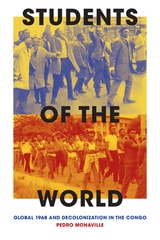
Students of the World
Global 1968 and Decolonization in the CongoPedro Monaville
Duke University Press, 2022
Subversions of the American Century
Filipino Literature in Spanish and the Transpacific Transformation of the United StatesAdam Lifshey
University of Michigan Press, 2016
Suspended Waters
Eliana Hernandez-Pachon
Diaphanes, 2026
From the Colombia National Poetry Prize winner, Eliana Hernández-Pachón, comes a poetic essay that asks: what does it mean to possess, to preserve, to let go?
Suspended Waters is a poetic essay that connects four objects made of plant fibers: a death raft woven from reeds that has come ashore in the wrong place, a gold Muisca raft that evokes the legend of El Dorado, Amazonian flutes made of palm that can only be seen by men, and a sheet of paper used for museum records.
Exploring how these objects sustain different worlds through a text pulsing with the life of more-than-human beings and voices both solo and Choral, Colombian writer Eliana Hernández-Pachón evokes worlds of ritual, sanctity, and abundance.