Results by title
162 books match the query 'Comparative Politics' and 12 start with s
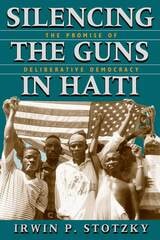
Silencing the Guns in Haiti
The Promise of Deliberative DemocracyIrwin P. Stotzky
University of Chicago Press, 1997
"A provocative study of the prospects for the rule of law in Haiti."—Marilyn Bowden, Miami Today
"[Stotzky] deepens insights into the contradictory obstacles to democratic governance in Haiti."—Library Journal
"Controversial and stimulating."—Choice
"Lucid and informative. . . . Stotzky gives readers a good foundation for understanding the pressures facing the impoverished but determined Caribbean island."—Islands

Smoldering Ashes
Cuzco and the Creation of Republican Peru, 1780-1840Charles F. Walker
Duke University Press, 1999
Peru’s Indian majority and non-Indian elite were both opposed to Spanish rule, and both groups participated in uprisings during the late colonial period. But, at the same time, seething tensions between the two groups were evident, and non-Indians feared a mass uprising. As Walker shows, this internal conflict shaped the many struggles to come, including the Tupac Amaru uprising and other Indian-based rebellions, the long War of Independence, the caudillo civil wars, and the Peru-Bolivian Confederation. Smoldering Ashes not only reinterprets these conflicts but also examines the debates that took place—in the courts, in the press, in taverns, and even during public festivities—over the place of Indians in the republic. In clear and elegant prose, Walker explores why the fate of the indigenous population, despite its participation in decades of anticolonial battles, was little improved by republican rule, as Indians were denied citizenship in the new nation—an unhappy legacy with which Peru still grapples.
Informed by the notion of political culture and grounded in Walker’s archival research and knowledge of Peruvian and Latin American history, Smoldering Ashes will be essential reading for experts in Andean history, as well as scholars and students in the fields of nationalism, peasant and Native American studies, colonialism and postcolonialism, and state formation.
Social Security Programs and Retirement around the World
Micro-EstimationEdited by Jonathan Gruber and David A. Wise
University of Chicago Press, 2003
In this volume, the authors turn to a country-by-country analysis of retirement behavior based on micro-data. The result of research compiled by teams in twelve countries, the volume shows an almost uniform correlation between levels of social security incentives and retirement behavior in each country. The estimates also show that the effect is strikingly uniform in countries with very different cultural histories, labor market institutions, and other social characteristics.
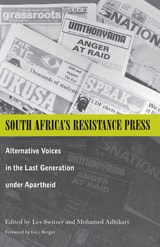
South Africa’s Resistance Press
Alternative Voices in the Last Generation under ApartheidLes Switzer
Ohio University Press, 2000

South-South Solidarity and the Latin American Left
Jessica Stites Mor
University of Wisconsin Press, 2024
Jessica Stites Mor looks at four in-depth case studies: the use of legal reform to accomplish the goals of solidarity embedded in Mexico's revolutionary constitution, visual and print media circulated by Cuba and its influence on the agenda of the Afro-Asian block at the United Nations, organizing on behalf of Palestinian nationalism in reshaping Argentina's socialist left, and the role of Latin American Catholic activists in challenging the South African apartheid state. These examples serve as a much-needed road map to navigate our current political climate and show us how solidarity movements might approach future struggles.

State Formation and Democracy in Latin America, 1810-1900
Fernando López-Alves
Duke University Press, 2000
Breaking with the traditional economic analysis of South American development, López-Alves argues that civil-military relations lay at the core of state building. By comparing three countries in particular—Uruguay, Colombia, and Argentina—during an intense phase of state and regime formation, he shows how war and the collective action of the rural poor contributed to the construction of central armies, the rise of new social classes, and the emergence of civilian organizations. He also examines characteristics unique to each country’s war-formed culture and discusses how coalitions were built during this period. Examples from Paraguay and Venezuela and references to state formation in Europe, the United States, Asia, and the Middle East add to the complexity and richness of the study’s comparative analysis.
Drawing on a vast bibliography of both primary and secondary sources, López-Alves goes beyond providing insights into the particular development of Latin American countries and introduces a comprehensive theory of state formation applicable to other regions. This book will interest Latin Americanists, historians, political scientists, and sociologists studying state formation.
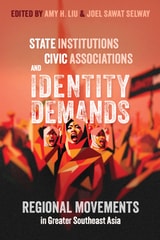
State Institutions, Civic Associations, and Identity Demands
Regional Movements in Greater Southeast AsiaAmy H. Liu and Joel Sawat Selway, Editors
University of Michigan Press, 2024
State Institutions, Civic Associations, and Identity Demands examines over a dozen regions, comparing and contrasting successful cases to abandoned, unsuccessful, or dormant cases. The cases range from successful secession (East Timor, Singapore) and ongoing secessionist movements (Southern Philippines), to internally divided regional movements (Kachin State), low-level regionalist stirrings (Lanna, Taiwan), and local but not regional mobilization of identity (Bali, Minahasan), all the way to failed movements (Bataks, South Maluku) and regions that remain politically inert (East and North Malaysia, Northeast Thailand). While each chapter is written by a country expert, the contributions rely on a range of methods, from comparative historical analysis, to ethnography, field interviews, and data from public opinion surveys. Together, they contribute important new knowledge on little-known cases that nevertheless illuminate the history of regions and ethnic groups in Southeast Asia. Although focused on Southeast Asia, the book identifies the factors that can explain why movements emerge and successfully develop and concludes with a chapter by Henry Hale that illustrates how this can be applied globally.

State-building
A Comparative Study of Ukraine, Lithuania, Belarus, and RussiaVerena Fritz
Central European University Press, 2007
Statesmanship and Party Government
A Study of Burke and BolingbrokeHarvey C. Mansfield
University of Chicago Press, 1965
Mansfield points out that while parties have always existed, the party government that we know today is possible only because parties are now considered respectable. In Burke’s day, however, they were thought by detractors to be a cancer in a free polity. Even many supporters of the parties viewed them as a dangerous instrument, only to be used cautiously by statesmen in dire times. Burke, however, was an early champion of the party system in Britain and made his arguments with a clear-eyed realism. In Statesmanship and Party Government, Mansfield provides a skillful evaluation of Burke’s writings and sheds light present-day party politics through a profound understanding of the historical background of the their inception.
Strengthening Peace in Post-Civil War States
Transforming Spoilers into StakeholdersEdited by Matthew Hoddie and Caroline A. Hartzell
University of Chicago Press, 2010
Among the more frequent and most devastating of conflicts, civil wars—from Yugoslavia to Congo—frequently reignite and even spill over into the international sphere. Given the inherent fragility of civil war peace agreements, innovative approaches must be taken to ensure the successful resolution of these conflicts. Strengthening Peace in Post–Civil War States provides both analytical frameworks and a series of critical case studies demonstrating the effectiveness of a range of strategies for keeping the peace.
Coeditors Matthew Hoddie and Caroline A. Hartzell here contend that lasting peace relies on aligning the self-interest of individuals and communities with the society-wide goal of ending war; if citizens and groups have a stake in peace, they will seek to maintain and defend it. The rest of the contributors explore two complementary approaches toward achieving this goal: restructuring domestic institutions and soft intervention. Some essays examine the first tactic, which involves reforming governments that failed to prevent war, while others discuss the second, an umbrella term for a number of non-military strategies for outside actors to assist in keeping the peace.

Sustainable Capitalism
Essential Work for the AnthropoceneEdited by Inara Scott
University of Utah Press, 2024
Sustainable Capitalism takes on the challenge of sustainability from a uniquely interdisciplinary and diverse perspective, offering both theory and tools for action. Topics range from an analysis of the foundations and definition of capitalism to the specific regulatory mechanisms that may be necessary to rein in its current, unsustainable trajectory. Readers will find nuanced and important analyses of options and potential outcomes that are not available in any other work. This book is essential reading for anyone concerned about the path we are on and how we might improve the lives of people around the globe.
https://www.sustainablecapitalismbook.com/
System and Succession
The Social Bases of Political Elite RecruitmentBy John D. Nagle
University of Texas Press, 1977
System and Succession provides a comparative analysis of the social composition of national political leadership in the United States, Russia, Germany, and Mexico. These systems were chosen as case studies because their forms of government are representative of many others, because they are conveniently suited for comparison, and because they have high internal control over their own means of recruitment. Drawing on a mass of data and an extensive bibliography, Nagle's comprehensive study exhibits a mastery of the intricacies of these four quite divergent political systems. Complete time-series data covering several generations of elite recruitment provide the basis for a new methodological approach to comparative elite analysis.
The author investigates, among other issues, elite displacements associated with revolution, economic crises, and postwar peace and prosperity. Especially important differences along class and generational lines are found in the elite displacements associated with the revolutions in Germany (1918), Russia (1917–1921), and Mexico (1910–1920). The American case serves as a nonrevolutionary control case. The overriding theoretical issue throughout System and Succession is the debate among Marxists, radical democrats, and pluralists over the importance of elite social composition for equitable representation of social or class interests. Nagle develops a convincing argument supporting the Marxist thesis that the importance of class in elite recruitment is a defining characteristic of the political system.
System and Succession will be of particular interest to scholars in comparative politics. Political scientists in other areas, as well as historians and sociologists interested in the four countries examined, will also find this book provocative.