Results by title
341 books match the query 'Cooking' and 18 start with s
SEASONING
A Poet’s Year, with Seasonal RecipesDavid Young
The Ohio State University Press, 1999
Set in northeastern Ohio, where the author has lived and worked for close to forty years, Seasoning demonstrates that an “unremarkable” place—no grand scenery, no special claims to beauty—can be the perfect setting in which to learn about animals, plants, food, geology, history, weather, and time. Coming to terms with place and time, and connecting them, the author suggests, may be our true task in life.
Among the many distinctive features of this lovely book are the recipes, arranged seasonally and revealing Young’s preference for natural foods prepared with care.

Sam and the Incredible African and American Food Fight
Shannon Gibney
University of Minnesota Press, 2023
Six-year-old Sam, with his Liberian dad and African American mom, finds a way to bring everyone in his cross-cultural family together at the dinner table
Rice and okra soup: Sam’s auntie from Liberia made it, and it’s Dad’s favorite. Mom, homegrown in Minnesota, made spaghetti and meatballs. And Sam? He’s just hungry, but no matter what he chooses to eat, someone will be disappointed. Caught in the middle of his family’s African and American food fight, Sam gets a little help from his grumbling stomach—and readers of this seriously funny book by Shannon Gibney get a peek at cultures colliding in a family kitchen that work out in a very delicious way. Charly Palmer’s vibrant and captivating illustrations make this gentle lesson in getting along a bright and colorful visual feast as well.
Cassava leaf torbogee or homemade sausage pizza? Sam’s family recipes bring Sam and the Incredible African and American Food Fight to an apt and happy ending—and readers can decide which dinner is best. But, really, why not both?
Scandinavian Cooking
Beatrice Ojakangas
University of Minnesota Press, 2003
Traditional Scandinavian home cooking—now in paperback!
Beatrice Ojakangas brings to life the cuisines and customs of Norway, Sweden, Finland, and Denmark, countries that share borders and bounty. Danes lead with smørrebrød (an open-faced sandwich), which may be topped with cheese, green pepper, and sliced fresh strawberries. Finns specialize in earthy, chewy whole grain bread. Norwegians have wonderfully fresh fish and seafood, and the Swedes gave the world smörgåsbord!
Ojakangas offers us true Scandinavian home cooking that features the best of what is in season. Scandinavian Cooking provides traditional menus for different occasions and seasons—from a Farmhouse Brunch with Buttered Potato Soup to an Old-Fashioned Christmas Smörgåsbord with Dip-in-the-Kettle Soup and Norwegian Cream Pudding, to a sumptuous Midsummer’s Day Buffet with Salmon-in-a-Crust and Fruit-Juice Glögg. A good Scandinavian cook has a flair for color, texture, shape, and simplicity in creating the food that these menus show off to perfection. Beatrice Ojakangas describes her experiences gathering recipes at the tables of friends on her visits to Scandinavia and the beautifully crafted tools and tableware that will help to make the Scandinavian dishes you prepare authentic.
Scandinavian Feasts
Celebrating Traditions throughout the YearBeatrice Ojakangas
University of Minnesota Press, 2001
The definitive word on sumptuous Scandinavian cooking, now in paperback!
Drawing upon her rich knowledge of Scandinavian cuisine and culture, expert chef and veteran writer Beatrice Ojakangas presents a multitude of delicious yet remarkably simple recipes in this cookbook classic, available in paperback for the first time. Scandinavian Feasts features the cuisine of Denmark, Norway, Sweden, and Finland, and it includes menus made up of a bounty of appetizers, drinks, smorgasbord, meats, fish, soups, vegetables, desserts, and breads. Easily as engaging as the dishes themselves, each recipe comes with an introduction that explains the cultural importance of the feast and details its seasonal significance.
During the long, dark Scandinavian winter, the meals tend to be hearty and substantial. In Sweden and western Finland, a traditional Thursday lunch consists of pea soup and pancakes. A typical winter dinner might include Danish crackling roast pork with sugar-browned potatoes topped off with an irresistible ice cream cake. Christmastime gatherings, in particular, are often a chance to celebrate with a cup of hot glogg or Swedish punch. When the winter is finally over, the seemingly endless summer days are savored along with the fresh fruits and vegetables that are hard to find after the short growing season. During the white nights of Sweden and Norway, it is customary to serve a midnight supper after a concert or the theater, while a special occasion such as a baptism or anniversary might call for a feast of dill-stuffed whole salmon followed by kransekake, a beautiful towering ring cake of ground almonds.No matter what your level of expertise as a cook, the recipes are easy to use. The ingredients are commonly found in most grocery stores. Scandinavian Feasts is sure to delight enthusiasts of Scandinavian culture and lovers of fine food everywhere.Beatrice Ojakangas is the author of two dozen cookbooks, including The Great Scandinavian Baking Book (1999), also published by the University of Minnesota Press. Her articles have been published in Bon Appétit, Gourmet, Cooking Light, Cuisine, and Redbook, and she has appeared on television’s Baking with Julia Child and Martha Stewart’s Living. She lives in Duluth, Minnesota.
Seasons of Plenty
Amana Communal CookingEmilie Hoppe
University of Iowa Press, 2008
Seasons of Plenty provides colorful descriptions, folk stories, appealing photgraphs and illustrations, excerpts from journals and ledgers, recipes for good food like savory dumpling soup, mashed potatoes with browned bread crumbs, Sauerbraten, and feather light apple fritters.
Seaweeds
Edible, Available, and SustainableOle G. Mouritsen
University of Chicago Press, 2013
Sex on the Kitchen Table
The Romance of Plants and Your FoodNorman C. Ellstrand
University of Chicago Press, 2018
In Sex on the Kitchen Table, Norman C. Ellstrand takes us on a vegetable-laced tour of this entire sexual adventure. Starting with the love apple (otherwise known as the tomato) as a platform for understanding the kaleidoscopic ways that plants can engage in sex, successive chapters explore the sex lives of a range of food crops, including bananas, avocados, and beets, finally ending with genetically engineered squash—a controversial, virus-resistant vegetable created by a process that involves the most ancient form of sex. Peppered throughout are original illustrations and delicious recipes, from sweet and savory tomato pudding to banana puffed pancakes, avocado toast (of course), and both transgenic and non-GMO tacos.
An eye-opening medley of serious science, culinary delights, and humor, Sex on the Kitchen Table offers new insight into fornicating flowers, salacious squash, and what we owe to them. So as we sit down to dine and ready for that first bite, let us say a special grace for our vegetal vittles: let’s thank sex for getting them to our kitchen table.
Six Women Who Shaped What Americans Eat
Food Choice in an Age of AbundanceMichelle Mart, Foreword by Mark D. Hersey
University of Alabama Press, 2025
How six groundbreaking women redefined American food—what we eat, how we eat it, and why it matters.
From wartime nutrition science to modern food activism, Six Women Who Shaped What Americans Eat examines the pivotal roles six women played in rewriting the rules of American cuisine. Michelle Mart offers a rich and accessible narrative that connects dietary trends, food marketing, and public health movements to the voices of the women who helped drive them.
Part one highlights Hazel Stiebeling’s development of dietary guidelines and RDAs, Poppy Cannon’s promotion of processed foods for convenience and gourmet meals, and Julia Child’s introduction of French cuisine with an emphasis on fresh ingredients and culinary techniques. Part two shifts the focus to women who challenged the food system itself: Frances Moore Lappé’s advocacy for vegetarianism and sustainable practices, Marion Nestle’s exposure of food corporations’ manipulative practices, and Alice Waters’s emphasis on locally sourced, organic ingredients and sustainable food systems. Thoughtful and timely, this book explores how culture, politics, and personal vision collided in the kitchens and campaigns of six food pioneers—leaving a lasting imprint on what America eats today.

Small Altars
Justin Gardiner
Tupelo Press, 2024
In Small Altars, Justin Gardiner delves into the world of comic books and superheroes as a means for coming to terms with the many struggles of his brother’s life, as well as his untimely death, offering a lyric and honest portrayal of the tolls of mental illness, the redemptive powers of art and familial love, and the complex workings of grief.
Smart Casual
The Transformation of Gourmet Restaurant Style in AmericaAlison Pearlman
University of Chicago Press, 2013

Smothered and Covered
Waffle House and the Southern ImaginaryTy Matejowsky
University of Alabama Press, 2023
A critical meditation of the iconic 24-7 roadside chain and its place in the southern imaginary
Waffle House has long been touted as an icon of the American South. The restaurant’s consistent foregrounding as a resonant symbol of regional character proves relevant for understanding much about the people, events, and foodways shaping the sociopolitical contours of today’s Bible Belt. Whether approached as a comedic punchline on the Internet, television, and other popular media or elevated as a genuine touchstone of messy American modernity, Waffle House, its employees, and everyday clientele do much to transcend such one-dimensional characterizations, earning distinction in ways that regularly go unsung.
Smothered and Covered: Waffle House and the Southern Imaginary is the first book to socioculturally assess the chain within the field of contemporary food studies. In this groundbreaking work, Ty Matejowsky argues that Waffle House’s often beleaguered public persona is informed by various complexities and contradictions. Critically unpacking the iconic eatery from a less reductive perspective offers readers a more realistic and nuanced portrait of Waffle House, shedding light on how it both reflects and influences a prevailing southern imaginary—an amorphous and sometimes conflicting collection of images, ideas, attitudes, practices, linguistic accents, histories, and fantasies that frames understandings about a vibrant if also paradoxical geographic region.
Matejowsky discusses Waffle House’s roots in established southern foodways and traces the chain’s development from a lunch-counter restaurant that emerged across the South. He also considers Waffle House’s place in American and southern popular culture, highlighting its myriad depictions in music, television, film, fiction, stand-up comedy, and sports. Altogether, Matejowsky deftly and persuasively demonstrates how Waffle House serves as a microcosm of today’s South with all the accolades and criticisms this distinction entails.
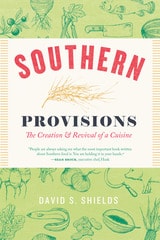
Southern Provisions
The Creation and Revival of a CuisineDavid S. Shields
University of Chicago Press, 2015
Shields’s turf is the southern Lowcountry, from the peanut patches of Wilmington, North Carolina to the sugarcane fields of the Georgia Sea Islands and the citrus groves of Amelia Island, Florida. He takes us on a historical excursion to this region, drawing connections among plants, farms, growers, seed brokers, vendors, cooks, and consumers over time. Shields begins by looking at how professional chefs during the nineteenth century set standards of taste that elevated southern cooking to the level of cuisine. He then turns to the role of food markets in creating demand for ingredients and enabling conversation between producers and preparers. Next, his focus shifts to the field, showing how the key ingredients—rice, sugarcane, sorghum, benne, cottonseed, peanuts, and citrus—emerged and went on to play a significant role in commerce and consumption. Shields concludes with a look at the challenges of reclaiming both farming and cooking traditions.
From Carolina Gold rice to white flint corn, the ingredients of authentic southern cooking are returning to fields and dinner plates, and with Shields as our guide, we can satisfy our hunger both for the most flavorful regional dishes and their history.
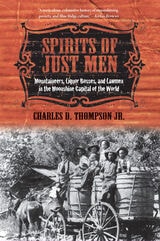
Spirits of Just Men
Mountaineers, Liquor Bosses, and Lawmen in the Moonshine Capital of the WorldCharles D. Thompson, Jr.
University of Illinois Press, 2011

Stirring It Up with Molly Ivins
A Memoir with RecipesBy Ellen Sweets
University of Texas Press, 2011
You probably knew Molly Ivins as an unabashed civil libertarian who used her rapier wit and good ole Texas horse sense to excoriate political figures she deemed unworthy of our trust and respect. But did you also know that Molly was one helluva cook? And we're not just talking chili and chicken-fried steak, either. Molly Ivins honed her culinary skills on visits to France—often returning with perfected techniques for saumon en papillote or delectable clafouti aux cerises. Friends who had the privilege of sharing Molly's table got not only a heaping helping of her insights into the political shenanigans of the day, but also a mouth-watering meal, prepared from scratch with the finest ingredients and assembled with the same meticulous attention to detail that Molly devoted to skewering a political recalcitrant.
In Stirring It Up with Molly Ivins, her longtime friend, fellow reporter, and frequent sous-chef Ellen Sweets takes us into the kitchen with Molly and introduces us to the private woman behind the public figure. She serves up her own and others' favorite stories about Ivins as she recalls the fabulous meals they shared, complete with recipes for thirty-five of Molly's signature dishes. These stories reveal a woman who was even more fascinating and complex than the "professional Texan" she enjoyed playing in public. Friends who ate with Molly knew a cultured woman who was a fluent French speaker, voracious reader, rugged outdoors aficionado, music lover, loyal and loving friend, and surrogate mom to many of her friends' children, as well as to her super-spoiled poodle. They also came to revere the courageous woman who refused to let cancer stop her from doing what she wanted, when she wanted. This is the Molly you'll be delighted to meet in Stirring It Up with Molly Ivins.

Stirring the Pot
A History of African CuisineJames C. McCann
Ohio University Press, 2009
Africa’s art of cooking is a key part of its history. All too often Africa is associated with famine, but in Stirring the Pot, James C. McCann describes how the ingredients, the practices, and the varied tastes of African cuisine comprise a body of historically gendered knowledge practiced and perfected in households across diverse human and ecological landscape. McCann reveals how tastes and culinary practices are integral to the understanding of history and more generally to the new literature on food as social history.
Stirring the Pot offers a chronology of African cuisine beginning in the sixteenth century and continuing from Africa’s original edible endowments to its globalization. McCann traces cooks’ use of new crops, spices, and tastes, including New World imports like maize, hot peppers, cassava, potatoes, tomatoes, and peanuts, as well as plantain, sugarcane, spices, Asian rice, and other ingredients from the Indian Ocean world. He analyzes recipes, not as fixed ahistorical documents,but as lively and living records of historical change in women’s knowledge and farmers’ experiments. A final chapter describes in sensuous detail the direct connections of African cooking to New Orleans jambalaya, Cuban rice and beans, and the cooking of African Americans’ “soul food.”
Stirring the Pot breaks new ground and makes clear the relationship between food and the culture, history, and national identity of Africans.
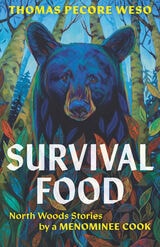
Survival Food
North Woods Stories by a Menominee CookThomas Pecore Weso
Wisconsin Historical Society Press, 2023
In these coming-of-age tales set on the Menominee Indian Reservation of the 1980s and 1990s, Thomas Pecore Weso explores the interrelated nature of meals and memories. As he puts it, “I cannot separate foods from the moments in my life when I first tasted them.” Weso’s stories recall the foods that influenced his youth in northern Wisconsin: subsistence meals from hunted, fished, and gathered sources; the culinary traditions of the German, Polish, and Swedish settler descendants in the area; and the commodity foods distributed by the government—like canned pork, dried beans, and powdered eggs—that made up the bulk of his family’s pantry. His mom called this “survival food.”
These stories from the author’s teen and tween years—some serious, some laugh-out-loud funny—will take readers from Catholic schoolyards to Native foot trails to North Woods bowling alleys, while providing Weso’s perspective on the political currents of the era. The book also contains dozens of recipes, from turtle soup and gray squirrel stew to twice-baked cheesy potatoes. This follow-up to Weso’s Good Seeds: A Menominee Indian Food Memoir is a hybrid of modern foodways, Indigenous history, and creative nonfiction from a singular storyteller.
2024 Wisconsin Library Association Outstanding Achievement Award
2024 PEN Oakland Josephine Miles Award for Excellence
Silver winner of the 2023 Midwest Book Award for Cookbooks/Crafts/Hobbies
Thomas Pecore Weso’s Survival Food was selected by the Wisconsin Center for the Book as the Wisconsin entry in the “Great Reads from Great Places” program of the Library of Congress.
“This book is not only about survival food, but about the singular beauty, creativity, and fortitude that comes out of that survival.”
—Chef Sean Sherman, author, The Sioux Chef’s Indigenous Kitchen
“Survival Food is interesting because it’s one part cookbook, three parts memoir, one part history, and one part multidisciplinary exploration of its setting, northern Wisconsin."
—James Norton, The Cookbook Test
“Nothing brings people together like good food and good stories. There’s an abundance of both in Thomas Pecore Weso’s latest memoir. As Weso attests, food can bring back happy, loving memories of times that were far from happy. Even a tray of funeral sandwiches brings a kind of comfort. This is a wonderful, honest portrait of northeastern Wisconsin, enlightening even to those of us who call this area home.”
—Jared Santek, Founder & Artistic Director, Write On Door County
“Survival Food provides ample nourishment for the mind and body. . . . The stories, told with humor and affection, are complemented by recipes ranging from mouth-watering instructions for cooking wild asparagus to ever-so-interesting advice for preparing bear stew.”
—Lucille Lang Day, author of Birds of San Pancho and Other Poems of Place and coeditor of Red Indian Road West: Native American Poetry from California
“His grandmother cooked according to Native traditions; his mother, ‘a nontraditional college student during my teens,’ resorted to instant meals. His grandfather was town constable and days spent with him brought Weso to the meatloaf, sausage and sauerkraut of German and Polish neighbors. Uncle Buddy’s flash car brings buckwheat pancakes to Weso’s mind, and he lived for a time near Cheese Box Curve—so called after a truck hauling dairy products overturned. Weso includes a few recipes, but mostly, Survival Food is an entertaining look back at life in Wisconsin’s rural north.”
—David Luhrssen, Shepherd Express
“Survival Food: North Woods Stories by a Menominee Cook by Thomas Pecore Weso is a posthumous sequel to his celebrated collection of family stories, Good Seeds: A Menominee Food Memoir. . . . Rich with captivating tales that include driving a convertible on logging roads, agreeing on terms before throwing eggs at passing cars, and his grandmother’s brief stay in a jailhouse she’d later purchase, Weso’s entries offer readers catharsis—demonstrating how to laugh, boast, debate, eat, mourn, and heal.”
—Ryan Winn, College of Menominee Nation, Tribal College Journal
Survival Food
North Woods Stories by a Menominee CookThomas Pecore Weso
Wisconsin Historical Society Press, 2025
In these coming-of-age tales set on the Menominee Indian Reservation of the 1980s and 1990s, Thomas Pecore Weso explores the interrelated nature of meals and memories. As he puts it, “I cannot separate foods from the moments in my life when I first tasted them.” Weso’s stories recall the foods that influenced his youth in northern Wisconsin: subsistence meals from hunted, fished, and gathered sources; the culinary traditions of the German, Polish, and Swedish settler descendants in the area; and the commodity foods distributed by the government—like canned pork, dried beans, and powdered eggs—that made up the bulk of his family’s pantry. His mom called this “survival food.”
These stories from the author’s teen and tween years—some serious, some laugh-out-loud funny—will take readers from Catholic schoolyards to Native foot trails to North Woods bowling alleys, while providing Weso’s perspective on the political currents of the era. The book also contains dozens of recipes, from turtle soup and gray squirrel stew to twice-baked cheesy potatoes. This follow-up to Weso’s Good Seeds: A Menominee Indian Food Memoir is a hybrid of modern foodways, Indigenous history, and creative nonfiction from a singular storyteller.
2024 Wisconsin Library Association Outstanding Achievement Award
2024 PEN Oakland Josephine Miles Award for Excellence
Silver winner of the 2023 Midwest Book Award for Cookbooks/Crafts/Hobbies
Thomas Pecore Weso’s Survival Food was selected by the Wisconsin Center for the Book as the Wisconsin entry in the “Great Reads from Great Places” program of the Library of Congress.
“This book is not only about survival food, but about the singular beauty, creativity, and fortitude that comes out of that survival.”
—Chef Sean Sherman, author, The Sioux Chef’s Indigenous Kitchen
“Survival Food is interesting because it’s one part cookbook, three parts memoir, one part history, and one part multidisciplinary exploration of its setting, northern Wisconsin."
—James Norton, The Cookbook Test
“Nothing brings people together like good food and good stories. There’s an abundance of both in Thomas Pecore Weso’s latest memoir. As Weso attests, food can bring back happy, loving memories of times that were far from happy. Even a tray of funeral sandwiches brings a kind of comfort. This is a wonderful, honest portrait of northeastern Wisconsin, enlightening even to those of us who call this area home.”
—Jared Santek, Founder & Artistic Director, Write On Door County
“Survival Food provides ample nourishment for the mind and body. . . . The stories, told with humor and affection, are complemented by recipes ranging from mouth-watering instructions for cooking wild asparagus to ever-so-interesting advice for preparing bear stew.”
—Lucille Lang Day, author of Birds of San Pancho and Other Poems of Place and coeditor of Red Indian Road West: Native American Poetry from California
“His grandmother cooked according to Native traditions; his mother, ‘a nontraditional college student during my teens,’ resorted to instant meals. His grandfather was town constable and days spent with him brought Weso to the meatloaf, sausage and sauerkraut of German and Polish neighbors. Uncle Buddy’s flash car brings buckwheat pancakes to Weso’s mind, and he lived for a time near Cheese Box Curve—so called after a truck hauling dairy products overturned. Weso includes a few recipes, but mostly, Survival Food is an entertaining look back at life in Wisconsin’s rural north.”
—David Luhrssen, Shepherd Express
“Survival Food: North Woods Stories by a Menominee Cook by Thomas Pecore Weso is a posthumous sequel to his celebrated collection of family stories, Good Seeds: A Menominee Food Memoir. . . . Rich with captivating tales that include driving a convertible on logging roads, agreeing on terms before throwing eggs at passing cars, and his grandmother’s brief stay in a jailhouse she’d later purchase, Weso’s entries offer readers catharsis—demonstrating how to laugh, boast, debate, eat, mourn, and heal.”
—Ryan Winn, College of Menominee Nation, Tribal College Journal

Sweet Greeks
First-Generation Immigrant Confectioners in the HeartlandAnn Flesor Beck
University of Illinois Press, 2020
Ann Flesor Beck's charming personal account recreates the atmosphere of her grandfather's candy kitchen with its odors of chocolate and popcorn and the comings-and-goings of family members. "The Store" represented success while anchoring the business district of Gus's chosen home. It also embodied the Midwest émigré experience of chain migration, immigrant networking, resistance and outright threats by local townspeople, food-related entrepreneurship, and tensions over whether later generations would take over the business.
An engaging blend of family memoir and Midwest history, Sweet Greeks tells how Greeks became candy makers to the nation, one shop at a time.