Results by title
60 books match the query 'Corrupt practices' and 7 start with s
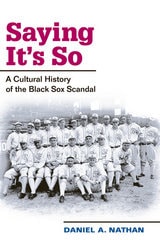
Saying It's So
A Cultural History of the Black Sox ScandalDaniel A. Nathan
University of Illinois Press, 2002

Secret Manoeuvres in the Dark
Corporate and Police Spying on ActivistsEveline Lubbers
Pluto Press, 2012
The exposure of undercover policeman Mark Kennedy in the eco-activist movement revealed how the state monitors and undermines political activism. This book shows the other grave threat to our political freedoms - undercover activities by corporations.
Secret Manoeuvres in the Dark documents how corporations are halting legitimate action and investigation by activists. Using exclusive access to previously confidential sources, Eveline Lubbers shows how companies such as Nestlé, Shell and McDonalds use covert methods to evade accountability. She argues that corporate intelligence gathering has shifted from being reactive to pro-active, with important implications for democracy itself.
Secret Manoeuvres in the Dark will be vital reading for activists, investigative and citizen journalists, and all who care about freedom and democracy in the 21st century.
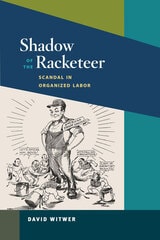
Shadow of the Racketeer
Scandal in Organized LaborDavid Witwer
University of Illinois Press, 2008
From a behind-the-scenes perspective, David Witwer describes how Pegler and his publisher, the politically powerful Roy W. Howard, shaped the news coverage of this scandal in ways that obscured the corrupt ties between employers and the mob while emphasizing the perceived menace of union leaders empowered by New Deal legislation that had legitimized organized labor. Pegler, Howard, and the rest of the mainstream press pointedly ignored evidence of the active role that business leaders took in the corruption, which badly tarnished the newly reborn labor movement.
Because he was more concerned with pursuing political gains for the conservative movement, Pegler's investigative journalism did little to reform union governance or organized crime's influence on labor unions. The union corruption scandal only undercut the labor movement. Pegler's continuing campaign against labor corruption framed the issue in ways that set the stage for postwar political defeats, culminating with the 1947 Taft-Hartley Act, which greatly limited the power of labor unions in the United States.
Demonstrating clearly and convincingly how journalism is wielded as a political weapon, Witwer studies a broad range of forces at play in the labor union scandal and its impact, including the influence of the press, organized crime, political corruption, and businessmen following their own economic imperatives.
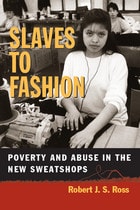
Slaves to Fashion
Poverty and Abuse in the New SweatshopsRobert J. S. Ross
University of Michigan Press, 2004
---Tom Hayden
"Slaves to Fashion is a remarkable achievement, several books in one: a gripping history of sweatshops, explaining their decline, fall, and return; a study of how the media portray them; an analysis of the fortunes of the current anti-sweatshop movement; an anatomy of the global traffic in apparel, in particular the South-South competition that sends wages and working conditions plummeting toward the bottom; and not least, a passionate declaration of faith that humanity can find a way to get its work done without sweatshops. This is engaged sociology at its most stimulating."
---Todd Gitlin
". . . unflinchingly portrays the reemergence of the sweatshop in our dog-eat-dog economy."
---Los Angeles Times
Just as Barbara Ehrenreich's Nickel and Dimed uncovered the plight of the working poor in America, Robert J. S. Ross's Slaves to Fashion exposes the dark side of the apparel industry and its exploited workers at home and abroad. It's both a lesson in American business history and a warning about one of the most important issues facing the global capital economy-the reappearance of the sweatshop.
Vividly detailing the decline and tragic rebirth of sweatshop conditions in the American apparel industry of the twentieth century, Ross explains the new sweatshops as a product of unregulated global capitalism and associated deregulation, union erosion, and exploitation of undocumented workers. Using historical material and economic and social data, the author shows that after a brief thirty-five years of fair practices, the U.S. apparel business has once again sunk to shameful abuse and exploitation.
Refreshingly jargon-free but documented in depth, Slaves to Fashion is the only work to estimate the size of the sweatshop problem and to systematically show its impact on apparel workers' wages. It is also unique in its analysis of the budgets and personnel used in enforcing the Fair Labor Standards Act.
Anyone who is concerned about this urgent social and economic topic and wants to go beyond the headlines should read this important and timely contribution to the rising debate on low-wage factory labor.

Special Admission
How College Sports Recruitment Favors White Suburban AthletesKirsten Hextrum
Rutgers University Press, 2021
Special Admission contradicts the national belief that college sports provide upward mobility opportunities. Kirsten Hextrum documents how white middle-class youth become overrepresented on college teams. Her institutional ethnography of one elite athletic and academic institution includes over 100 hours of interviews with college rowers and track & field athletes. She charts the historic and contemporary relationships between colleges, athletics, and white middle-class communities that ensure white suburban youth are advantaged in special athletic admissions. Suburban youth start ahead in college admissions because athletic merit—the competencies desired by university recruiters—requires access to vast familial, communal, and economic resources, all of which are concentrated in their neighborhoods. Their advantages increase as youth, parents, and coaches strategically invest in and engineer novel opportunities to maintain their race and class status. Thus, college sports allow white, middle-class athletes to accelerate their racial and economic advantages through admission to elite universities.
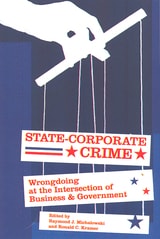
State-Corporate Crime
Wrongdoing at the Intersection of Business and GovernmentMichalowski, Raymond J
Rutgers University Press, 2006
Despite growing attention to crimes by those in positions of trust, however, violations in business and similar wrongdoing in government are still often treated as fundamentally separate problems. In State-Corporate Crime, Raymond J. Michalowski and Ronald C. Kramer bring together fifteen essays to show that those in positions of political and economic power frequently operate in collaboration, and are often all too willing to sacrifice the well-being of the many for the private profit and political advantage of the few.
Drawing on case studies including the explosion of the space shuttle Challenger, Ford Explorer rollovers, the crash of Valujet flight 592, nuclear weapons production, and war profiteering, the essays bear frank witness to those who have suffered, those who have died, and those who have contributed to the greatest human and environmental devastations of our time. This book is a much needed reminder that the most serious threats to public health, security, and safety are not those petty crimes that appear nightly on local news broadcasts, but rather are those that result from corruption among the wealthiest and most powerful members of society.
Surviving Mexico
Resistance and Resilience among Journalists in the Twenty-first CenturyBy Celeste González de Bustamante and Jeannine E. Relly
University of Texas Press, 2021
Mott KTA Journalism and Mass Communication Research Award, Kappa Tau Alpha
Tankard Book Award, Association for Education in Journalism and Mass Communication (AEJMC)
Knudson Latin America Prize, Association for Education in Journalism and Mass Communication (AEJMC)
Since 2000, more than 150 journalists have been killed in Mexico. Today the country is one of the most dangerous in the world in which to be a reporter. In Surviving Mexico, Celeste González de Bustamante and Jeannine E. Relly examine the networks of political power, business interests, and organized crime that threaten and attack Mexican journalists, who forge ahead despite the risks.
Amid the crackdown on drug cartels, overall violence in Mexico has increased, and journalists covering the conflict have grown more vulnerable. But it is not just criminal groups that want reporters out of the way. Government forces also attack journalists in order to shield corrupt authorities and the very criminals they are supposed to be fighting. Meanwhile some news organizations, enriched by their ties to corrupt government officials and criminal groups, fail to support their employees. In some cases, journalists must wait for a “green light” to publish not from their editors but from organized crime groups. Despite seemingly insurmountable constraints, journalists have turned to one another and to their communities to resist pressures and create their own networks of resilience. Drawing on a decade of rigorous research in Mexico, González de Bustamante and Relly explain how journalists have become their own activists and how they hold those in power accountable.