Results by title
160 books match the query 'Cross-cultural studies' and 14 start with s

Sacred Darkness
A Global Perspective on the Ritual Use of CavesHolley Moyes
University Press of Colorado, 2014
Covering the ritual use of caves in Europe, Asia, Australia, Africa, Mesoamerica, and the US Southwest and Eastern woodlands, this book brings together case studies by prominent scholars whose research spans from the Paleolithic period to the present day. These contributions demonstrate that cave sites are as fruitful as surface contexts in promoting the understanding of both ancient and modern religious beliefs and practices.
This state-of-the-art survey of ritual cave use will be one of the most valuable resources for understanding the role of caves in studies of religion, sacred landscape, or cosmology and a must-read for any archaeologist interested in caves.
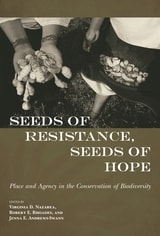
Seeds of Resistance, Seeds of Hope
Place and Agency in the Conservation of BiodiversityEdited by Virginia D. Nazarea, Robert E. Rhoades, and Jenna E. Andrews-Swann
University of Arizona Press, 2013
This broad collection brings to the table a bag full of tools from anthropology, sociology, genetics, plant breeding, education, advocacy, and social activism. By design, multiple voices are included. They cross or straddle disciplinary, generational, national, and political borders. Contributors demonstrate the importance of cultural memory in the persistence of traditional or heirloom crops, as well as the agency exhibited by displaced and persecuted peoples in place-making and reconstructing nostalgic landscapes (including gardens from their homelands). Contributions explore local initiatives to save native and older seeds, the use of modern technologies to conserve heirloom plants, the bioconservation efforts of indigenous people, and how genetically modified organisms (GMOs) have been successfully combated. Together they explore the conservation of biodiversity at different scales, from different perspectives, and with different theoretical and methodological approaches. Collectively, they demonstrate that there is reason for hope.
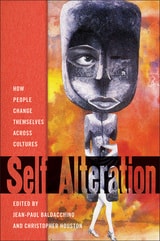
Self-Alteration
How People Change Themselves across CulturesJean-Paul Baldacchino
Rutgers University Press, 2024

Sex, Sexuality, and the Anthropologist
Edited by Fran Markowitz and Michael Ashkenazi
University of Illinois Press, 1999
Sex, Sexuality, and the Anthropologist recounts the real-life experiences of anthropologists who are forced to acknowledge that their hosts in the field view them as gendered beings in a social context, not as asexual, objective observers. Far from controlling the research environment and defining the terms of interviewer-informant relationships, these researchers find they must engage in a process of negotiating their position—including their sexual position—within the communities they study.
Ranging from public baths in Austria to lesbian bars in Taiwan and from Mexico to Nigeria to Finland to Japan, Sex, Sexuality, and the Anthropologist raises critical questions about ethnographers' reflexivity, subjectivity, and detachment, confronting the challenge of a holistic approach to the anthropological enterprise.

Sexology and Translation
Cultural and Scientific Encounters across the Modern WorldHeike Bauer
Temple University Press, 2015
Sexology and Translation is the first study of the contemporaneous emergence of sexology in Europe, Asia, and the Middle East. Heike Bauer and her contributors—historians, literary and cultural critics, and translation scholars—address the intersections between sexuality and modernity in a range of contexts during the period from the 1880s to the 1930s.
From feminist sexualities in modern Japan to Magnus Hirschfeld’s affective sexology, this book offers compelling new insights into how sexual ideas were formed in different contexts via a complex process of cultural negotiation. By focusing on issues of translation—the dynamic process by which ideas are produced and transmitted—the essays in Sexology and Translation provide an important corrective to the pervasive idea that sexuality is a “Western” construct that was transmitted around the world.
This volume deepens understanding of how the intersections between national and transnational contexts, between science and culture, and between discourse and experience, shaped modern sexuality.

Social Security Programs and Retirement around the World
The Capacity to Work at Older AgesEdited by David A. Wise
University of Chicago Press, 2017
Social Security Programs and Retirement around the World
The Effects of Reforms on Retirement BehaviorEdited by Axel Börsch-Supan and Courtney C. Coile
University of Chicago Press, 2025
A global analysis of the effects of social security reforms on the retirement incentives and labor force trends of older workers.
Employment among older men and women has increased dramatically in recent years, reversing a downward trend in the closing decades of the twentieth century. Social Security Programs and Retirement around the World examines how changing retirement incentives have reshaped labor force participation trends among older workers. The chapters feature country-specific analyses for Belgium, Canada, Denmark, France, Germany, Italy, Japan, Netherlands, Spain, Sweden, the United Kingdom, and the United States. They find that while there is significant heterogeneity across countries, the reforms of recent decades have generally reduced the implicit tax on work at older ages. These changes correlate positively with labor force participation. The studies exploit the variation in the timing and extent of reforms of retirement incentives and employ microeconometric methods to investigate whether this correlation reflects a causal relationship. Policy changes appear to have contributed to rising labor force activity, but other factors like the role of women in the labor force, improved health, and changes in private pensions likely also play important roles.

Sound Changes
Improvisation and Transcultural DifferenceDaniel Fischlin and Eric Porter, Editors
University of Michigan Press, 2021
Sound Changes responds to a need in improvisation studies for more work that addresses the diversity of global improvisatory practices and argues that by beginning to understand the particular, material experiences of sonic realities that are different from our own, we can address the host of other factors that are imparted or sublimated in performance. These factors range from the intimate affect associated with a particular performer’s capacity to generate a distinctive “voicing,” or the addition of an unexpected sonic intervention only possible with one particular configuration of players in a specific space and time. Through a series of case studies drawn from Africa, Asia, the Americas, and Oceania, Sound Changes offers readers an introduction to a range of musical expressions across the globe in which improvisation plays a key role and the book demonstrates that improvisation is a vital site for the production of emergent social relationships and meanings. As it does this work, Sound Changes situates the increasingly transcultural dimensions of improvised music in relation to emergent networks and technologies, changing patterns of migration and immigration, shifts in the political economy of music, and other social, cultural, and economic factors.
Improvisation studies is a recently developed, but growing, interdisciplinary field of study. The discipline—which has only truly come into focus in the early part of the twenty-first century—has been building a lexicon of key terms and developing assumptions about core practices. Yet, the full breadth of improvisatory practices has remained a vexed, if not impossibly ambitious, subject of study. This volume offers a step forward in the movement away from critical tendencies that tend to homogenize and reduce practices and vocabularies in the name of the familiar.
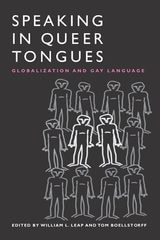
Speaking in Queer Tongues
GLOBALIZATION AND GAY LANGUAGEEdited by William L. Leap and Tom Boellstorff
University of Illinois Press, 2003
Western constructions of gay culture are now circulating widely beyond the boundaries of Western nations due to influences as diverse as Internet communication, global dissemination of entertainment and other media, increased travel and tourism, migration, displacement, and transnational citizenship. The authority claimed by these constructions, and by the linguistic codes embedded in them, is causing them to have a profound impact on public and private expressions of homosexuality in locations as diverse as sub-Saharan Africa, New Zealand, Indonesia and Israel.
Examining a wide range of global cultures, Speaking in Queer Tongues presents essays on topics that include old versus new sexual vocabularies, the rhetoric of gay-oriented magazines and news media, verbal and nonverbalized sexual imagery in poetry and popular culture, and the linguistic consequences of the globalized gay rights movement.
Sport and Neoliberalism
Politics, Consumption, and CultureDavid L. Andrews
Temple University Press, 2012
Offering new approaches to thinking about sports and political ideologies, Sport and Neoliberalism explores the structures, formations, and mechanics of neoliberalism. The editors and contributors to this original and timely volume examine the intersection of sport as a national pastime and also an engine for urban policy—e.g., stadium building—as well as a powerful force for influencing our understanding of the relationship between culture, politics, and identity.
Sport and Neoliberalism examines the ways the neoliberal project creates priorities for civic society and how, in effect, it turns many aspects of sport into a vehicle of public governance. From the relationship between sport and the neo-liberal state, through the environmental dimensions of neo-liberal sport, to the political biopolitics of obesity, the essays in this volume explore the ways in which the “logics” of neoliberalism are manifest as powerful public pedagogies through the realm of popular culture.
Contributors include: Michael Atkinson, Ted Butryn, C. L. Cole, Norman Denzin, Grant Farred, Jessica Francombe, Caroline Fusco, Michael D. Giardina, Mick Green, Leslie Heywood, Samantha King, Lisa McDermott, Mary G. McDonald, Toby Miller, Mark Montgomery, Joshua I. Newman, Jay Scherer, Kimberly S. Schimmel, and Brian Wilson
In the series Sporting, edited by Amy Bass
Staging Growth
Modernization, Development, and the Global Cold WarDavid C. Engerman
University of Massachusetts Press, 2003
Beginning in the 1950s, the theory of modernization emerged as the dominant paradigm of economic, social, and political development within the American foreign policy establishment. Purporting to explain the stages through which all nations pass on the road to industrial modernity, it provided a rationale for a broad range of cultural and political projects aimed at fostering Third World growth while simultaneously combating communism.
But modernization theory was more than simply an expression of Cold War ideology. As the essays in this volume show, the ideal of modernization proliferated throughout the postcolonial world and across ideological lines in places as diverse as East Asia, Southern Africa, and South Asia. Indeed, it was embraced by all who shared the American enthusiasm for the increased production and higher standards of living promised by industrialization—enemies and allies alike.
Situating modernization theory historically, Staging Growth avoids conventional chronologies and categories of analysis, particularly the traditional focus on conflicts between major powers. The contributors employ a variety of approaches—from economic and intellectual history to cultural criticism and biography—to shed fresh light on the global forces that shaped the Cold War and its legacies. Most of the pieces are comparative, exploring how different countries and cultures have grappled with the implications of modern development. At the same time, all of the essays address similar fundamental questions. Is modernization the same thing as Westernization? Is the idea of modernization universally valid? Do countries follow similar trajectories as they undertake development? Does modernization bring about globalization?
In addition to the editors and Akira Iriye, contributors include Michael Adas, Laura Belmonte, Gregg Andrew Brazinsky, Christina Klein, J. Victor Koschmann, and Michael R. Mahoney.

Stature, Living Standards, and Economic Development
Essays in Anthropometric HistoryEdited by John Komlos
University of Chicago Press, 1994
Analyzing the differences in physical stature by social group, gender, age, provenance, and date and place of birth, these essays illuminate urban and rural differences in well-being, explore the effects of market integration on previously agricultural societies, contrast the experiences of several segments of society, and explain the proximate causes of downturns and upswings in well-being. Particularly intriguing is the researchers' conclusion that the environment of the New World during this period was far more propitious than that of Europe, based on data showing that European aristocrats were in worse health than even the poorest members of American society.
Stepping Forward
Black Women in Africa and the AmericasCatherine Higgs
Ohio University Press, 2002
A unique and important study, Stepping Forward examines the experiences of nineteenth- and twentieth-century black women in Africa and African diaspora communities from a variety of perspectives in a number of different settings.
This wide-ranging collection designed for classroom use explores the broad themes that have shaped black women’s goals, options, and responses: religion, education, political activism, migration, and cultural transformation. Essays by leading scholars in the field examine the lives of black women in the United States and the Caribbean Basin; in the white settler societies of Kenya, Zimbabwe, and South Africa; and in the black settler societies of Liberia and Sierra Leone.
Among the contributors to this volume are historians, political scientists, and scholars of literature, music, and law. What emerges from their work is an image of black women’s agency, self-reliance, and resiliency. Despite cultural differences and geographical variations, black women have provided foundations on which black communities have not only survived, but also thrived. Stepping Forward is a valuable addition to our understanding of women’s roles in these diverse communities.

Successful Aging as a Contemporary Obsession
Global PerspectivesLamb, Sarah
Rutgers University Press, 2017
The contributors to Successful Aging as a Contemporary Obsession explore how the successful aging movement is playing out across five continents. Their chapters investigate a variety of people, including Catholic nuns in the United States; Hindu ashram dwellers; older American women seeking plastic surgery; aging African-American lesbians and gay men in the District of Columbia; Chicago home health care workers and their aging clients; Mexican men foregoing Viagra; dementia and Alzheimer sufferers in the United States and Brazil; and aging policies in Denmark, Poland, India, China, Japan, and Uganda. This book offers a fresh look at a major cultural and public health movement of our time, questioning what has become for many a taken-for-granted goal—aging in a way that almost denies aging itself.