Results by title
436 books match the query 'Disability' and 35 start with s
Schooling Without Labels
Parents, Educators, and Inclusive EducationDouglas Biklen
Temple University Press, 1992
Douglas Biklen closely examines the experiences of six families in which children with disabilities are full participants in family life in order to understand how people who have been labeled disabled might become full participants in the other areas of society as well. He focuses on the contradictions between what some families have achieved, what they want for their children, and what society and its social policies allow. He demonstrates how the principles of inclusion that govern the lives of these families can be extended to education, community life, and other social institutions.
The parents who tell their stories here have actively sought inclusion of their children in regular schools and community settings; several have children with severe or multiple disabilities. In discussing issues such as normalization, acceptance, complete schooling, circles of friends, and community integration, these parents describe the challenge and necessity of their children's "leading regular lives."
In the series Health, Society, and Policy, edited by Sheryl Ruzek and Irving Kenneth Zola.

Schooling and Disability
Edited by Douglas P. Biklen, Dianne L. Ferguson, and Alison Ford
University of Chicago Press, 1989
See It Feelingly
Classic Novels, Autistic Readers, and the Schooling of a No-Good English ProfessorRalph James Savarese
Duke University Press, 2018
Since the 1940s researchers have been repeating claims about autistic people's limited ability to understand language, to partake in imaginative play, and to generate the complex theory of mind necessary to appreciate literature. In See It Feelingly Ralph James Savarese, an English professor whose son is one of the first nonspeaking autistics to graduate from college, challenges this view.
Discussing fictional works over a period of years with readers from across the autism spectrum, Savarese was stunned by the readers' ability to expand his understanding of texts he knew intimately. Their startling insights emerged not only from the way their different bodies and brains lined up with a story but also from their experiences of stigma and exclusion.
For Mukhopadhyay Moby-Dick is an allegory of revenge against autism, the frantic quest for a cure. The white whale represents the autist's baffling, because wordless, immersion in the sensory. Computer programmer and cyberpunk author Dora Raymaker skewers the empathetic failings of the bounty hunters in Philip K. Dick's Do Androids Dream of Electric Sheep? Autistics, some studies suggest, offer instruction in embracing the nonhuman. Encountering a short story about a lonely marine biologist in Antarctica, Temple Grandin remembers her past with an uncharacteristic emotional intensity, and she reminds the reader of the myriad ways in which people can relate to fiction. Why must there be a norm?
Mixing memoir with current research in autism and cognitive literary studies, Savarese celebrates how literature springs to life through the contrasting responses of unique individuals, while helping people both on and off the spectrum to engage more richly with the world.
Seeds of Disquiet
Cheryl Heppner
Gallaudet University Press, 1992
In her autobiography Seeds of Disquiet, Cheryl Heppner writes of experiencing severe hearing loss twice. Spinal meningitis caused a profound loss of hearing when she was six, and for the next 18 years she worked hard to live the life of a “normal” hearing person. Through exhaustive work in speech therapy and speechreading, she excelled in school and college, performing Herculean feats without the assistance of trained interpreters or notetakers.
Then, when she was 25, two strokes left her completely deaf. For the next 20 years she worked to recreate her life through sign language and the Deaf community. The process stunned her by revealing how much she had missed before. Initially embittered, Cheryl Heppner later went on to use her astonishing energy as an advocate for deaf and hard of hearing people.
Seeds of Disquiet celebrates her accomplishments, the most significant of which, perhaps, was her reconciliation with her loved ones from her former life with her new outlook.

Sensing Precarity
Viral Listening in Medicalized WorldsAilsa Lipscombe
University of Michigan Press, 2027
Sensing Precarity tunes into the sonic ramifications of the COVID-19 pandemic to reveal how moments of crisis are commonly framed as moments of rupture. Combining traditional ethnography with media analysis, creative writing, and poetry, Sensing Precarity reveals how what Ailsa Lipscombe calls “the medicalization of the everyday” is a long-standing phenomenon, one acutely experienced by disabled and chronically ill communities. Lipscombe asks: how do the sights, sounds, behaviors, expectations, and interpretive lenses of medical environments (and activities) inflect or infect everyday spaces and activities? The study argues that during crises, encounters with precarity—real, potential, and imagined—instigate widespread engagement with notions of embodiment and relationality, and that in this context, bodies are understood as both being at risk and posing risks for others.
Sensory Futures
Deafness and Cochlear Implant Infrastructures in IndiaMichele Ilana Friedner
University of Minnesota Press, 2022
What happens when cochlear implants, heralded as the first successful bionic technologies, make their way around the globe and are provided by both states and growing private markets? As Sensory Futures follows these implants from development to domestication and their unequal distribution in India, Michele Ilana Friedner explores biotechnical intervention in the realm of disability and its implications for state politics in the Global South.
A signing and speaking deaf bilateral cochlear implant user, Friedner weaves personal reflections into this fine-grained ethnography of everyday negotiations, activist aspirations, and the space of the family. She places sensory anthropology in conversation with disability studies to analyze how normative sensoria are cultivated and the pursuit of listening and speaking capability is enacted. She argues that the conditions of potentiality that have emerged through cochlear implantation have, in fact, resulted in ever narrower understandings of future life possibilities. Rejecting sensory hierarchies that privilege audition, Friedner calls for multisensory, multimodal, and multipersonal ways of relating to the world.
Sensory Futures explores deaf people’s desires to create habitable worlds and grapple with what their futures might look like, in India and beyond, amid a surge in both biotechnical interventions and disability rights activism. With implications for a broad range of disability experiences, this sensitive, in-depth research focuses on the specific experiences of deaf people, both children and adults, and the structural, political, and social possibilities offered by both biotechnological and social “cures.”
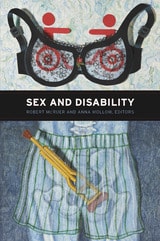
Sex and Disability
Robert McRuer and Anna Mollow, eds.
Duke University Press, 2012
Contributors. Chris Bell, Michael Davidson, Lennard J. Davis, Michel Desjardins, Lezlie Frye, Rachael Groner, Kristen Harmon, Michelle Jarman, Alison Kafer, Riva Lehrer, Nicole Markotić, Robert McRuer, Anna Mollow, Rachel O’Connell, Russell Shuttleworth, David Serlin, Tobin Siebers, Abby L. Wilkerson
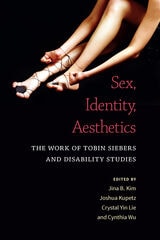
Sex, Identity, Aesthetics
The Work of Tobin Siebers and Disability StudiesJina B. Kim, Joshua Kupetz, Crystal Yin Lie, and Cynthia Wu, Editors
University of Michigan Press, 2021
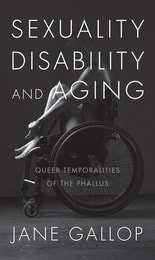
Sexuality, Disability, and Aging
Queer Temporalities of the PhallusJane Gallop
Duke University Press, 2019
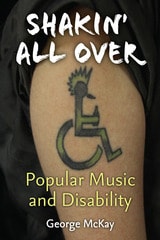
Shakin' All Over
Popular Music and DisabilityGeorge McKay
University of Michigan Press, 2013
Given the explosion in recent years of scholarship exploring the ways in which disability is manifested and performed in numerous cultural spaces, it’s surprising that until now there has never been a single monograph study covering the important intersection of popular music and disability. George McKay’s Shakin’ All Over is a cross-disciplinary examination of the ways in which popular music performers have addressed disability: in their songs, in their live performances, and in various media presentations.
By looking closely into the work of artists such as Johnny Rotten, Neil Young, Johnnie Ray, Ian Dury, Teddy Pendergrass, Curtis Mayfield, and Joni Mitchell, McKay investigates such questions as how popular music works to obscure and accommodate the presence of people with disabilities in its cultural practice. He also examines how popular musicians have articulated the experiences of disability (or sought to pass), or have used their cultural arena for disability advocacy purposes.
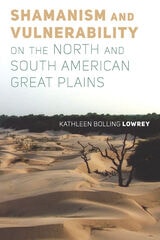
Shamanism and Vulnerability on the North and South American Great Plains
Kathleen Bolling Lowrey
University Press of Colorado, 2020
The book reveals the various ways in which anthropologists, historians, folklorists, and other writers have often misrepresented indigenous shamanism and revitalization movements by unconsciously projecting ideologies and assumptions derived from modern ‘contract societies’ onto ethnographic and historical realities. Lowrey also provides alternative ways of understanding indigenous American communities and their long histories of interethnic relations with expanding colonial and national states in the Americas. A creative historical and ethnographical reevaluation of the last few decades of scholarship on shamanism, disability, and dependence, Shamanism and Vulnerability on the North and South American Great Plains will be of interest to scholars of North and South American anthropology, indigenous history, American studies, and feminism.
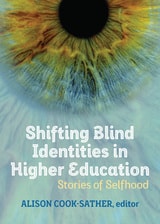
Shifting Blind Identities in Higher Education
Stories of SelfhoodEdited by Alison Cook-Sather
Lever Press, 2026
Shifting Blind Identities in Higher Education features accounts of how blindness and low vision intersect with other dimensions of identity for both students and faculty in higher education. Contributors from a range of institutional contexts illuminate “common but not comparable” experiences, as well as importantly different ones, and explore different intersections of identity while navigating higher education spaces. Each chapter addresses these questions: What is the relationship between seeing and selfhood? What choices do students and faculty make about how they experience and represent the intersections of their vision condition and other dimensions of their identity? What do authors wish others to understand, consider, let go of, and/or embrace regarding their experiences of navigating higher education with blindness or low vision?
Writing in their own unique voices, each author shares details of their lived experiences; analyses of how those are shaped by institutions, social norms, and individuals; and offers action steps for how everyone can make higher education more welcoming to and supportive of not only those with blindness or low vision but also those with a wide diversity of identities and experiences. Shifting Blind Identities in Higher Education inspires both insight and action into cultivating a more accessible and inclusive space in higher education.
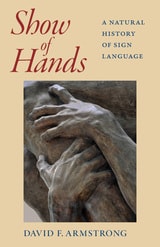
Show of Hands
A Natural History of Sign LanguageDavid F. Armstrong
Gallaudet University Press, 2011
Most scholarly speculation on the origin of human language has centered around speech. However, the growing understanding of sign languages on human development has transformed the debate on language evolution. David F. Armstrong’s new book Show of Hands: A Natural History of Sign Language casts a wide net in history and geography to explain how these visible languages have enriched human culture in general and how their study has expanded knowledge of the human condition.
Armstrong addresses the major theories of language evolution, including Noam Chomsky’s thesis of an innate human “organ” for language and Steven Pinker’s contention that there is language and not-language without any gradations between gesture and language. This engrossing survey proceeds with William C. Stokoe’s revival of the early anthropological cognitive-linguistic model of gradual development through the iconicity of sign languages. Armstrong ranges far to reveal the nature of sign languages, from the anatomy of early human ancestors to telling passages by Shakespeare, Dickens, and Pound, to the astute observations of Socrates, Lucretius, and Abbé de l’Epée on sign communication among deaf people. Show of Hands illustrates the remarkable development of sign languages in isolated Bedouin communities and among Australian indigenous peoples. It also explores the ubiquitous benefits of “Deaf Gain” and visual communication as they dovetail with the Internet and its mushrooming potential for the future.
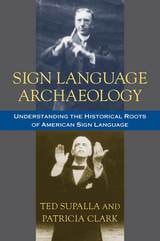
Sign Language Archaeology
Understanding the Historical Roots of American Sign LanguageTed Supalla
Gallaudet University Press, 2014
By tracing the writings of selected individuals, this study reconstructs the historical context for early ASL grammar. It describes the language used in each century and how it changed, and focuses on the rediscovery of the literary legacy of the Deaf American voice. Sign Language Archaeology reveals the contrast between folk etymology and scientific etymology and allows readers to see ASL in terms of historical linguistics.
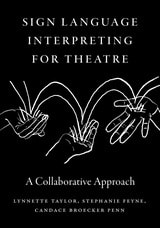
Sign Language Interpreting for Theatre
A Collaborative ApproachLynnette Taylor
Gallaudet University Press, 2025
Written by three veteran interpreters with deep roots in the Deaf community and the performing arts, Sign Language Interpreting for Theatre is the first of its kind: a comprehensive guide to the art of sign language interpreting for the theatre as a collaborative practice. Drawing from their years of experience of interpreting On- and Off-Broadway and blending the theoretical with the practical, Lynnette Taylor, Stephanie Feyne, and Candace Broecker Penn provide guiding principles, best practices, processes, and strategies for creating dynamic, collaborative, culturally grounded sign language translations for theatre performances. Written in an engaging, conversational style, chapters include in-depth discussion of both theory and practice, providing techniques for translation and stagecraft along with practical insights for issues such as interpreting team attributes, character depiction, working with scripts, song translations, interpreting for young audiences, and interpreting virtual and recorded performances. With its emphasis upon dialogic interpretation, shared responsibility, and alliances, this guide is an indispensable resource for interpreters, educators, and theatre professionals.

Signed Language Interpreting in Brazil
Ronice Müller de Quadros
Gallaudet University Press, 2012
The ninth volume in the Studies in Interpretation series offers six succinct chapters on the state of signed language interpreting by Brazil by editors Ronice Müller de Quadros, Earl Fleetwood, Melanie Metzger and ten Brazilian researchers. The first chapter advocates for the affiliation of Brazilian Sign Language (Libras) interpretation research with the field of Translation Studies to generate greater academic power empowerment of Libras. The second chapter outlines how Brazilian sign language interpreters construct a position in discourse. Chapter 3 explores the possibility that bimodal, bilingual interpreters—hearing children of deaf adults—face unique cognitive tasks compared to unimodal bilingual interpreters.
Chapter 4 describes how the systematic expansion and documentation of new academic and technical terms in Brazilian Sign Language, in which fingerspelling is uncommon, resulted in the development of an online glossary. The fifth chapter details the challenges of Libras interpreters in high schools. Chapter 6 concludes this revealing collection with findings on whether gender traits influence the act of interpretation of Brazilian Sign Language.
Signed Languages
Discoveries from International ResearchValerie Dively
Gallaudet University Press, 2001
Signed Languages: Discoveries from International Research collects the thirteen freshest, most innovative papers presented at the sixth Theoretical Issues in Sign Language Research conference in 1998, the largest of its kind ever convened. Presented together in this timely compendium, the research reflects the current trend toward focusing on international signed languages that previously have been ignored, including those of Sweden, Israel, Venezuela, and northern Nigeria.
The anthology is divided into six sections: Phonology, Morphology and Syntax, Psycholinguistics, Language Acquisition, Sociolinguistics, and Poetics. In Part One, articulatory constraints and the sign language of the Netherlands are addressed. In Part Two, researchers tackle noun classifiers, nonhanded signs, and verb classes in the signed languages of Sweden, the United States, and Israel respectively. Part Three offers the study, "Functional Consequences of Modality: Spatial Coding in Working Memory for Signs."
Language acquisition is analyzed in both adult learners and deaf children in Part Four. Part Five reports on the relationship between language and society around the world, focusing particularly on the signed languages of Venezuela and northern Nigeria. Part Six considers the techniques employed in British Sign Language poetry and ASL poetry.
Signifying Bodies
Disability in Contemporary Life WritingG. Thomas Couser
University of Michigan Press, 2010
"Thomas Couser's Signifying Bodies comes at a crucial moment when debates about physician assisted suicide, genetic engineering, and neo-natal screening are raising the question of what constitutes a 'life worth living' for persons with disabilities. Couser's work engages these debates by exploring the extensive number of personal narratives by or about persons with disabilities. As Couser brilliantly demonstrates through synoptic readings, these works challenge the 'preferred rhetorics' by which such narratives are usually written (triumphalist, gothic, nostalgic) while making visible the variegated nature of embodied life."
---Michael Davidson, University of California, San Diego
"Signifying Bodies shows us that life writing about disability is . . . everywhere. . . . From obituary to documentary film to ethnography to literary memoir to the law, the book casts a wide net, detailing how various written and filmed responses to disability both enact and resist conventional narrative patterns. [This] not only broadens our idea about where to look for life writing, but also demonstrates how thoroughly stereotypes about disability mediate our social and artistic languages---even when an author has (so-called) the best intentions."
---Susannah B. Mintz, Skidmore College
Memoirs have enjoyed great popularity in recent years, experiencing significant sales, prominent reviews, and diverse readerships. Signifying Bodies shows that at the heart of the memoir phenomenon is our fascination with writing that focuses on what it means to live in, or be, an anomalous body---in other words, what it means to be disabled. Previous literary accounts of the disabled body have often portrayed it as a stable entity possibly signifying moral deviance or divine disfavor, but contemporary writers with disabilities are defining themselves and depicting their bodies in new ways. Using the insights of disability studies and source material ranging from the Old and New Testaments to the works of authors like Lucy Grealy and Simi Linton and including contemporary films such as Million Dollar Baby, G. Thomas Couser sheds light on a broader cultural phenomenon, exploring topics such as the ethical issues involved in disability memoirs, the rhetorical patterns they frequently employ, and the complex relationship between disability narrative and disability law.
G. Thomas Couser is Professor of English at Hofstra University.
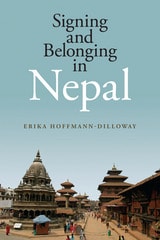
Signing and Belonging in Nepal
Erika Hoffmann-Dilloway
Gallaudet University Press, 2016
In this book, Erika Hoffmann-Dilloway presents an accessible examination of deafness in Nepal. As a linguistic anthropologist, she describes the emergence of Nepali Sign Language and deaf sociality in the social and historical context of Nepal during the last decades before the Hindu Kingdom became a secular republic. She then shows how the adoption of an ethno-linguistic model interacted with the ritual pollution model, or the prior notion that deafness results from bad karma. Her focus is on the impact of these competing and co-existing understandings of deafness on three groups: signers who adopted deafness as an ethnic identity, homesigners whose ability to adopt that identity is hindered by their difficulties in acquiring Nepali Sign Language, and hearing Nepalis who interact with Deaf signers. Comparing these contexts demonstrates that both the ethno-linguistic model and the ritual pollution model, its seeming foil, draw on the same basic premise: that both persons and larger social formations are mutually constituted through interaction. Signing and Belonging in Nepal is an ethnography that studies a rich and unique Deaf culture while also contributing to larger discussions about social reproduction and social change.
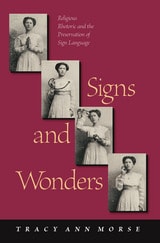
Signs and Wonders
Religious Rhetoric and the Preservation of Sign LanguageTracy Ann Morse
Gallaudet University Press, 2014
In Chapter One, Morse analyzes Thomas Hopkins Gallaudet’s use of religious references in his 1817 maiden address at the first American school for deaf students. She examines his and other speeches as examples of the intersection of education for deaf Americans and Protestant missionary efforts to convert them. In the second chapter, she presents the different religious perspectives of the two deaf education camps: Manualists argued that sign language was a gift from God, while Oralists viewed hand gestures as animal-like, indicative of lower evolutionary development.
Chapter Three explores the religious rhetoric in churches, sanctuaries where sign language flourished and deaf members formed relationships. In the fourth chapter, Morse shows how Deaf activist George Veditz signed using religious themes in his political films. She also comments on the impact of the bilingual staging of Big River: The Adventures of Huckleberry Finn, which began to change the hearing world’s opinion about the Deaf community. Morse concludes with speculation on the shifting terrain for deaf people due to technological innovations that might supplant religious rhetoric as a tool to support the Deaf community.
Silent Life and Silent Language
The Inner Life of a Mute in an Institution for the DeafKate M. Farlow
Gallaudet University Press, 2018
Kate M. Farlow wrote this book with the goal of giving hearing parents hope that their deaf children would be able to lead happy and productive lives. She sought to raise awareness of the benefits of deaf schools and was an early advocate for the use of American Sign Language and of bilingual education. The Christian influence on the school and on the author is strongly present in her writing and reflects an important component of deaf education at the time. Descriptions of specific signs, games, ASL story nights, and other aspects of the signing community during the 1870s will be of interest to modern students and researchers in linguistics, deaf education, Deaf studies, and Deaf history. Farlow’s work reveals a sophisticated, early understanding of the importance of access to language, education, and community for deaf individuals.
Social Constructions of Deafness
Examining Deaf Languacultures in EducationThomas P. Horejes
Gallaudet University Press, 2012
Thomas P. Horejes’s new book focuses on revealing critical knowledge that addresses certain social justice issues, including deafness, language, culture, and deaf education. He conveys this information through discourses about his own experiences being deaf and through his research in which he “stresses the contingency of the social” in educational institutions.
In Social Constructions of Deafness: Examining Deaf Languacultures in Education, Horejes contends that schools as social institutions play powerful and exacting roles in the creation and maintenance of social constructions such as language and culture for deaf children. He subscribes to Michael Agar’s concept of “languaculture,” defined as the inextricable relationship between language and culture in which a specific language will shape and influence culture. His approach employs other anthropological terminology as he connects his personal experience as a deaf student (emic) to academic research on deafness (etic) to bring understanding to the multidimensional aspects of his own negotiated identities.
Horejes extends his inquiry through his analysis of two kindergarten classes for deaf students, one orally oriented and the other conducted using sing language. His findings are sobering evidence of the myriad challenges educators face in defining appropriate academic, linguistic, and cultural pedagogy for deaf children in schools and other social institutions.
Sociolinguistic Pathways in Sign Languages
Studies in Honor of Ceil LucasJoseph C. Hill
Gallaudet University Press, 2026
Sociolinguistics in Deaf Communities
Ceil Lucas
Gallaudet University Press, 1995
The first volume in the new Sociolinguistics in Deaf Communities series presents a rich collection of essays showcasing the breadth and depth of this exciting discipline. Topics of inquiry in the premiere volume include fingerspelling in Langue des Signes Quebecoise (LSQ) in Quebec, Canada; language used by a Navajo family with deaf children; language policy, classroom practice, and multiculturalism in deaf education; aspects of American Sign Language (ASL) discourse and of Filipino Sign Language discourse; and the nature and role of rhetorical language in Deaf social movements.
Among the noted contributors are Dominique Machabee, Arlene Blumenthal-Kelly, Jeffrey Davis, Melanie Metzger, Samuel Supalla, Barbara Gerner de Garcia, Liza B. Martinez, Kathy Jankowski, and also Ceil Lucas. Sociolinguistics in Deaf Communities affords an invaluable opportunity to assess up-to-date information on sign language linguistics worldwide and its impact on policy and planning in education, interaction with spoken languages, interpreting, and the issues of empowerment.
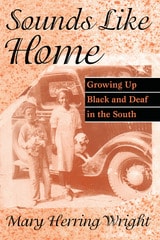
Sounds Like Home
Growing Up Black and Deaf in the SouthMary Herring Wright
Gallaudet University Press, 1999
New edition available: Sounds Like Home: Growing Up Black and Deaf in the South, 20th Anniversary Edition, ISBN 978-1-944838-58-4
Features a new introduction by scholars Joseph Hill and Carolyn McCaskill
Mary Herring Wright’s memoir adds an important dimension to the current literature in that it is a story by and about an African American deaf child. The author recounts her experiences growing up as a deaf person in Iron Mine, North Carolina, from the 1920s through the 1940s. Her story is unique and historically significant because it provides valuable descriptive information about the faculty and staff of the North Carolina school for Black deaf and blind students from the perspective of a student as well as a student teacher. In addition, this engrossing narrative contains details about the curriculum, which included a week-long Black History celebration where students learned about important Blacks such as Madame Walker, Paul Laurence Dunbar, and George Washington Carver. It also describes the physical facilities as well as the changes in those facilities over the years. In addition, Sounds Like Home occurs over a period of time that covers two major events in American history, the Depression and World War II.
Wright’s account is one of enduring faith, perseverance, and optimism. Her keen observations will serve as a source of inspiration for others who are challenged in their own ways by life’s obstacles.
Sounds Like Home
Growing Up Black and Deaf in the SouthMary Herring Wright
Gallaudet University Press, 2019
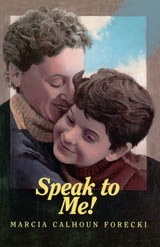
Speak to Me!
Marcia Forecki
Gallaudet University Press, 1985
Marcia Calhoun Forecki has written an engrossing, personal account of her life with Charlie, an adorable, active, deaf seven-year-old. Speak to Me! is the story of an ordinary hearing person confronted with an overwhelming reality—the fact that her son is deaf. Forecki’s struggle as a single parent to care for her child, to find the “right” schools, and to establish communication with her son will strike a familiar chord in all hearing parents of deaf children. All readers, parents or not, will be touched by the mixture of pathos and humor in this well-written account.
Stigma Stories
Rhetoric, Lived Experience, and Chronic IllnessMolly Margaret Kessler
The Ohio State University Press, 2022
Engaging interdisciplinary conversations from the rhetoric of health and medicine, disability studies, narrative medicine, and sociology, Kessler takes an innovative look at how stigma functions on individual, interpersonal, and societal levels. In doing so, Kessler reveals how stories and lived experiences have much to teach us not only about how stigma functions but also about how it can be dismantled.
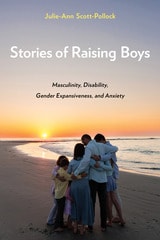
Stories of Raising Boys
Masculinity, Disability, Gender Expansiveness, and AnxietyJulie-Ann Scott-Pollock
Temple University Press, 2026
In her poignant, affecting autoethnography, Stories of Raising Boys, Julie-Ann Scott-Pollock investigates the meaning of disability, gender, race, and privilege in contemporary culture. Scott-Pollock is a white mother living with a physical disability raising four boys—Theo, a three-year-old risktaker; Tony, ten, who lives with seizures; Vinny, eight, who is gender expansive; and five-year-old Nico, who is also gender expansive and experiences anxiety. They live on the southeastern U.S. coast with their father, Evan, and their baby sister, Rosalie.
Through narrative analysis, Scott-Pollock compares and contrasts her circumstances to the ways in which adult interviewees manage the same lived experiences as her sons. She also includes their opinions about masculinity and identity, as well as parenting boys. In doing so, Stories of Raising Boys deepens the cultural complexity of parent–child relationships and expands our collective understanding of how they form and emerge. In addition, Scott-Pollock uses a metaphor of swimming through the ocean near her family’s home to illustrate resisting marginalization while also promoting strong cultural identities, especially in turbulent waters.
Stories of Raising Boys offers an absorbing cultural reflection on the intersectionality of identity, power, and privilege.
Storytelling and Conversation
Discourse in Deaf CommunitiesElizabeth A. Winston
Gallaudet University Press, 1999
In this intriguing book, renowned sociolinguistics experts explore the importance of discourse analysis, a process that examines patterns of language to understand how users build cooperative understanding in dialogues. It presents discourse analyses of sign languages native to Bali, Italy, England, and the United States.
Studies of internal context review the use of space in ASL to discuss space, how space in BSL is used to “package” complex narrative tasks, how signers choose linguistic tools to structure storytelling, and how affect, emphasis, and comment are added in text telephone conversations. Inquiries into external contexts observe the integration of deaf people and sign language into language communities in Bali, and the language mixing that occurs between deaf parents and their hearing children.
Both external and internal contexts are viewed together, first in an examination of applying internal ASL text styles to teaching written English to Deaf students and then in a consideration of the language choices of interpreters who must shift footing to manage the “interpreter’s paradox.” Storytelling and Conversation casts new light on discourse analysis, which will make it a welcome addition to the sociolinguistics canon.
Stumbling Blocks Before the Blind
Medieval Constructions of a DisabilityEdward Wheatley
University of Michigan Press, 2010
"Bold, deeply learned, and important, offering a provocative thesis that is worked out through legal and archival materials and in subtle and original readings of literary texts. Absolutely new in content and significantly innovative in methodology and argument, Stumbling Blocks Before the Blind offers a cultural geography of medieval blindness that invites us to be more discriminating about how we think of geographies of disability today."
---Christopher Baswell, Columbia University
"A challenging, interesting, and timely book that is also very well written . . . Wheatley has researched and brought together a leitmotiv that I never would have guessed was so pervasive, so intriguing, so worthy of a book."
---Jody Enders, University of California, Santa Barbara
Stumbling Blocks Before the Blind presents the first comprehensive exploration of a disability in the Middle Ages, drawing on the literature, history, art history, and religious discourse of England and France. It relates current theories of disability to the cultural and institutional constructions of blindness in the eleventh through fifteenth centuries, examining the surprising differences in the treatment of blind people and the responses to blindness in these two countries. The book shows that pernicious attitudes about blindness were partially offset by innovations and ameliorations---social; literary; and, to an extent, medical---that began to foster a fuller understanding and acceptance of blindness.
A number of practices and institutions in France, both positive and negative---blinding as punishment, the foundation of hospices for the blind, and some medical treatment---resulted in not only attitudes that commodified human sight but also inhumane satire against the blind in French literature, both secular and religious. Anglo-Saxon and later medieval England differed markedly in all three of these areas, and the less prominent position of blind people in society resulted in noticeably fewer cruel representations in literature.
This book will interest students of literature, history, art history, and religion because it will provide clear contexts for considering any medieval artifact relating to blindness---a literary text, a historical document, a theological treatise, or a work of art. For some readers, the book will serve as an introduction to the field of disability studies, an area of increasing interest both within and outside of the academy.
Edward Wheatley is Surtz Professor of Medieval Literature at Loyola University, Chicago.
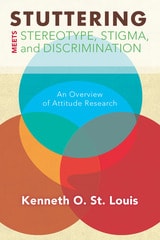
Stuttering Meets Sterotype, Stigma, and Discrimination
An Overview of Attitude ResearchKenneth O. St. Louis
West Virginia University Press, 2015
Stuttering Meets Stereotype, Stigma, and Discrimination: An Overview of Attitude Research is the only reference work to date devoted entirely to the topic of stuttering attitudes. It features comprehensive review chapters by St. Louis, Boyle and Blood, Gabel, Langevin, and Abdalla; an annotated bibliography by Hughes; and experimental studies by other seasoned and new researchers. The book leads the reader through a maze of research efforts, emerging with a clear understanding of the important issues involved and ideas of where to go next. Importantly, the evidence base for stuttering attitude research extends beyond research in this fluency disorder to such areas as mental illness, obesity, and race. Thus, although of interest primarily to those who work, interact, or otherwise deal with stuttering, the book has potential for increasing understanding, ameliorating negative attitudes, and informing research on any of a host of other stigmatized conditions.
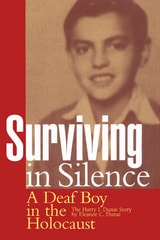
Surviving in Silence
A Deaf Boy in the Holocaust, The Harry I. Dunai StoryEleanor C. Dunai
Gallaudet University Press, 2002
Izrael Zachariah Deutsch was born on March 15, 1934, in Komjata, Czechoslovakia. The second youngest child, Izrael lived a bucolic existence with nine brothers and sisters on a farm, differing from them only in that he was deaf. When he was six, his mother took him to Budapest, Hungary, and enrolled him in a Jewish school for deaf children, where he thrived. Soon, however, the Nazi regime in Germany and the Arrow Cross fascists in Hungary destroyed Izrael’s world forever.
Izrael realized that by being both Jewish and deaf, he faced a double threat of being exported to the gas chambers in Poland. But at every lethal junction, he found a way to survive, first by buying and reselling pastries for extra money that later saved his life in the Budapest ghetto. Still, Izrael was close to death from starvation when he was liberated by Russian soldiers on January 18, 1945.
Izrael survived the war only to learn that his parents and two brothers had been murdered by the Nazis. The rest of his brothers and sisters scattered to distant parts of the world. Forced to remain in Budapest, Izrael finished school and became an accomplished machinist. He avoided any part in the Hungarian uprising in 1956 so that he could secure a visa to leave for Sweden. From Sweden he traveled throughout Europe and Israel, using an amazing network of Holocaust survivors, relatives, and deaf friends to ease his journey. He finally settled in Los Angeles, where he married a deaf Jewish woman he had met years before. Along the way, he changed his name from Izrael Deutsch to Harry Dunai.

Sustaining Air
The Life of Larry EignerJennifer Bartlett
University of Alabama Press, 2023
The biography of a poet seminal to postwar American poetry
The poet Larry Eigner (1927–1996) was a key figure in New American poetry, which grew out of the Black Mountain School and San Francisco Renaissance, and a major influence on the Language poets. Eigner also had cerebral palsy as the result of an accident at birth. It is fortuitous that the poet lived his life in two locations vibrant in both poetics and disability activism. Except for brief periods attending camp and school, he lived with his parents in Swampscott, Massachusetts, until the age of 51. Later, he moved to Berkeley, California, at the height of the disability rights movement. In the 1950s, Eigner attended Camp Jened, which later became famous in the film Crip Camp.
Bartlett’s biography covers every significant phase of Eigner’s life: his childhood and young adulthood when he began typing poems with one finger on the manual typewriter that was a bar mitzvah gift; his first publications and the maturation of his poetic interests through correspondence with poets of the era; and after his move to Berkeley, the ever-expanding circle of friends, poets, caretakers, and collaborators he established there. The result is a deeply insightful account of an utterly distinctive voice whose influence widens and deepens with each new generation that encounters him.

Sweet Bells Jangled
Laura Redden Searing, A Deaf Poet RestoredJudy Yaeger Jones
Gallaudet University Press, 2003
Laura Redden Searing (1839-1923) defied critics of the time by establishing herself as a successful poet, a poet who was deaf. She began writing verse at the Missouri School for the Deaf in 1858, and, under the pseudonym Howard Glyndon, soon found herself catapulted into national prominence by her patriotic Civil War poems. Abraham Lincoln himself bought her books, the most critically acclaimed being Idylls of Battle and Poems of the Rebellion, published in 1864. Her poem “Belle Missouri” became the song of the Missouri Volunteers, and she was sent by the St. Louis Republican newspaper to Washington as a war correspondent.
Despite her success, detractors decried her poetry simply because she was deaf, asking how she could know anything of rhyme, rhythm, or musical composition. She quieted them with the simple elegance of her words and the sophistication of her allegorical themes. Readers can enjoy her work again in this volume, which features more than 70 of her finest poems. They also will learn her feelings about the constraints imposed on 19th-century women in her epic narrative of misunderstanding and lost love “Sweet Bells Jangled:”
Out of sight of the heated land
Over the breezy sea;
Into the reach of the solemn mist
Quietly drifted we.
Her restoration will be an event welcomed by poetry aficionados everywhere.