Results by title
577 books match the query 'Earth Sciences' and 30 start with s
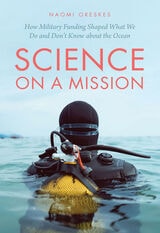
Science on a Mission
How Military Funding Shaped What We Do and Don’t Know about the OceanNaomi Oreskes
University of Chicago Press, 2021
What difference does it make who pays for science?
Some might say none. If scientists seek to discover fundamental truths about the world, and they do so in an objective manner using well-established methods, then how could it matter who’s footing the bill? History, however, suggests otherwise. In science, as elsewhere, money is power. Tracing the recent history of oceanography, Naomi Oreskes discloses dramatic changes in American ocean science since the Cold War, uncovering how and why it changed. Much of it has to do with who pays.
After World War II, the US military turned to a new, uncharted theater of warfare: the deep sea. The earth sciences—particularly physical oceanography and marine geophysics—became essential to the US Navy, which poured unprecedented money and logistical support into their study. Science on a Mission brings to light how this influx of military funding was both enabling and constricting: it resulted in the creation of important domains of knowledge but also significant, lasting, and consequential domains of ignorance.
As Oreskes delves into the role of patronage in the history of science, what emerges is a vivid portrait of how naval oversight transformed what we know about the sea. It is a detailed, sweeping history that illuminates the ways funding shapes the subject, scope, and tenor of scientific work, and it raises profound questions about the purpose and character of American science. What difference does it make who pays? The short answer is: a lot.
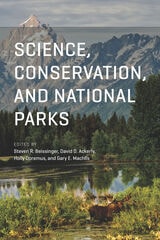
Science, Conservation, and National Parks
Edited by Steven R. Beissinger, David D. Ackerly, Holly Doremus, and Gary E. Machlis
University of Chicago Press, 2016
Examining the major challenges of parks and protected areas throughout the world, contributors provide answers to a number of key conservation questions, such as: How should stewardship address climate change, urban encroachment and pollution, and invasive species? How can society, especially youth, become more engaged with nature and parks, and are there models to guide interactions between parks and their neighbors? What are appropriate conservation objectives for parks in the Anthropocene? Charting a course for the parks of the next century, Science, Conservation, and National Parks is certain not only to catalyze the continued evolution of US park conservation policy, but also to be an inspiration for parks, conservation, and management worldwide.
Sea Level
A HistoryWilko Graf von Hardenberg
University of Chicago Press, 2024
News reports warn of rising sea levels spurred by climate change. Waters inch ever higher, disrupting delicate ecosystems and threatening island and coastal communities. The baseline for these measurements—sea level—may seem unremarkable, a long-familiar zero point for altitude. But as Wilko Graf von Hardenberg reveals, the history of defining and measuring sea level is intertwined with national ambitions, commercial concerns, and shifting relationships between people and the ocean.
Sea Level provides a detailed and innovative account of how mean sea level was first defined, how it became the prime reference point for surveying and cartography, and how it emerged as a powerful mark of humanity’s impact on the earth. With Hardenberg as our guide, we traverse the muddy spaces of Venice and Amsterdam, the coasts of the Baltic Sea, the Panama and Suez canals, and the Himalayan foothills. Born out of Enlightenment studies of physics and quantification, sea level became key to state-sponsored public works, colonial expansion, Cold War development of satellite technologies, and recognizing the climate crisis. Mean sea level, Hardenberg reveals, is not a natural occurrence—it has always been contingent, the product of people, places, politics, and evolving technologies. As global warming transforms the globe, Hardenberg reminds us that a holistic understanding of the ocean and its changes requires a multiplicity of reference points.
A fascinating story that revises our assumptions about land and ocean alike, Sea Level calls for a more nuanced understanding of this baseline, one that allows for new methods and interpretations as we navigate an era of unstable seas.
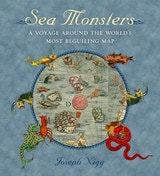
Sea Monsters
A Voyage around the World's Most Beguiling MapJoseph Nigg
University of Chicago Press, 2013
Nearly two meters wide in total, the map’s nine wood-block panels comprise the largest and first realistic portrayal of Northern Europe. But in addition to these important geographic elements, Magnus’s map goes beyond cartography to scenes both domestic and mystic. Close to shore, Magnus shows humans interacting with common sea life—boats struggling to stay afloat, merchants trading, children swimming, and fisherman pulling lines. But from the offshore deeps rise some of the most magical and terrifying sea creatures imaginable at the time or thereafter—like sea swine, whales as large as islands, and the Kraken. In this book, Nigg provides a thorough tour of the map’s cartographic details, as well as a colorful look at its unusual pictorial and imaginative elements. He draws on Magnus’s own text to further describe and illuminate the inventive scenes and to flesh out the stories of the monsters.
Sea Monsters is a stunning tour of a world that still holds many secrets for us land dwellers, who will forever be fascinated by reports of giant squid and the real-life creatures of the deep that have proven to be as bizarre and otherworldly as we have imagined for centuries. It is a gorgeous guide for enthusiasts of maps, monsters, and the mythic.
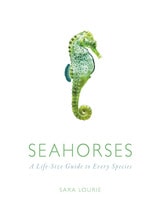
Seahorses
A Life-Size Guide to Every SpeciesSara A. Lourie
University of Chicago Press, 2016
Seahorses celebrates the remarkable variety of seahorse species as well as their exquisiteness. 57 species, including seadragons and pipefish, are presented in lush, life-size photographs alongside descriptive drawings, and each entry includes detailed and up-to-date information on natural history and conservation. Sara Lourie, a foremost expert on seahorse taxonomy, presents captivating stories of species that range from less than an inch to over a foot in height, while highlighting recent discoveries and ecological concerns. Accessibly written, but comprehensive in scope, this book will be a stunning and invaluable reference on seahorse evolution, biology, habitat, and behavior.
Masters of camouflage and rarely seen, seahorses continue to be a fascinating subject of active research. This visually rich and informative book is certain to become the authoritative guide to these charming and unusual wonders of the sea, beloved at aquariums the world over.
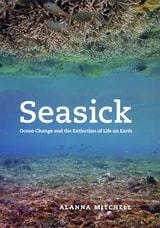
Seasick
Ocean Change and the Extinction of Life on EarthAlanna Mitchell
University of Chicago Press, 2009
We have long lorded over the ocean. But only recently have we become aware of the myriad life-forms beneath its waves. We now know that this delicate ecosystem is our life-support system; it regulates the earth’s temperatures and climate and comprises 99 percent of living space on earth. So when we change the chemistry of the whole ocean system, as we are now, life as we know it is threatened.
In Seasick, veteran science journalist Alanna Mitchell dives beneath the surface of the world’s oceans to give readers a sense of how this watery realm can be managed and preserved, and with it life on earth. Each chapter features a different group of researchers who introduce readers to the importance of ocean currents, the building of coral structures, or the effects of acidification. With Mitchell at the helm, readers submerge 3,000 feet to gather sea sponges that may contribute to cancer care, see firsthand the lava lamp–like dead zone covering 17,000 square kilometers in the Gulf of Mexico, and witness the simultaneous spawning of corals under a full moon in Panama.
The first book to look at the planetary environmental crisis through the lens of the global ocean, Seasick takes the reader on an emotional journey through a hidden realm of the planet and urges conservation and reverence for the fount from which all life on earth sprang.
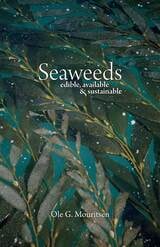
Seaweeds
Edible, Available, and SustainableOle G. Mouritsen
University of Chicago Press, 2013

Secret Science
Spanish Cosmography and the New WorldMaría M. Portuondo
University of Chicago Press, 2009
The discovery of the New World raised many questions for early modern scientists: What did these lands contain? Where did they lie in relation to Europe? Who lived there, and what were their inhabitants like? Imperial expansion necessitated changes in the way scientific knowledge was gathered, and Spanish cosmographers in particular were charged with turning their observations of the New World into a body of knowledge that could be used for governing the largest empire the world had ever known.
As María M. Portuondo here shows, this cosmographic knowledge had considerable strategic, defensive, and monetary value that royal scientists were charged with safeguarding from foreign and internal enemies. Cosmography was thus a secret science, but despite the limited dissemination of this body of knowledge, royal cosmographers applied alternative epistemologies and new methodologies that changed the discipline, and, in the process, how Europeans understood the natural world.
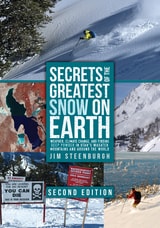
Secrets of the Greatest Snow on Earth, Second Edition
Weather, Climate Change, and Finding Deep Powder in Utah's Wasatch Mountains and Around the WorldJim Steenburgh
Utah State University Press, 2023
Utah has long claimed to have the greatest snow on Earth—the state itself has even trademarked the phrase. In Secrets of the Greatest Snow on Earth, Jim Steenburgh investigates Wasatch weather, exposing the myths, explaining the reality, and revealing how and why Utah’s powder lives up to its reputation. Steenburgh also examines ski and snowboard regions beyond Utah, providing a meteorological guide to mountain weather and snow climates around the world.
Chapters explore mountain weather, avalanches and snow safety, historical accounts of weather events and snow conditions, and the basics of climate and weather forecasting. In this second edition, Steenburgh explains what creates the best snow for skiing and snowboarding using accurate and accessible language and 150 color photographs and illustrations, making Secrets of the Greatest Snow on Earth a helpful tool for planning vacations and staying safe during mountain adventures.
This edition is updated with two new chapters covering microclimates and climate change in greater depth. Steenburgh addresses the declining snowpack and the future of snow across the western United States, as well as the declining snow and ice in several regions of the world—the European Alps in particular. Snowriders, weather enthusiasts, meteorologists, students of snow science, and anyone who dreams of deep powder and bluebird skies will want to get their gloves on this new edition of Secrets of the Greatest Snow on Earth.
Praise for the first edition:
“Everything you always wanted to know about how snow forms and how to follow forecasts so you see
how much an”d where is in the book. It’s a must-have for any fan of snow, sure to get you excited about
winter, and give you a bevy of conversation topics for the chairlift ride.”
—Utah Adventure Journal
“For backcountry enthusiasts that find themselves infatuated with weather patterns, snow-water
equivalents, microclimates, and Utah, this book is a dream come true.”
—The Backcountry Skiing Blog
“Steenburgh shares a career’s worth of knowledge in this book. His love of both snow science and skiing
is obvious, and he adds humor and personality to the scientific discussion.”
—First Tracks!! Online Skiing Magazine
“When it comes to snow, the details—both small- and large-scale—do matter. If we all observed our
surroundings with as much curiosity and enthusiasm as Steenburgh, the world could be a much better-
tended place.”
—American Scientist
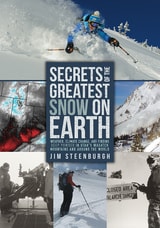
Secrets of the Greatest Snow on Earth
Weather, Climate Change, and Finding Deep Powder in Utah's Wasatch Mountains and around the WorldJim Steenburgh
Utah State University Press, 2014
Chapters explore mountain weather, avalanches and snow safety, historical accounts of weather events and snow conditions, and the basics of climate and weather forecasting. Steenburgh explains what creates the best snow for skiing and snowboarding in accurate and accessible language and illustrates his points with 150 color photographs, making Secrets of the Greatest Snow on Earth a helpful tool for planning vacations and staying safe during mountain adventures. Snowriders, weather enthusiasts, meteorologists, students of snow science, and anyone who dreams of deep powder and bluebird skies will want to get their gloves on Secrets of the Greatest Snow on Earth.
Watch Book Trailer!(Special thanks to Ski Utah)

Seeking Asylum
Human Smuggling and Bureaucracy at the BorderAlison Mountz
University of Minnesota Press, 2010

Severe Storms and Society
Seeking Resilience and Understanding Human Behavior in Meteorology, the Weather Enterprise, and PublicsJack R. Friedman, Daphne S. LaDue, Laura Myers, and Melissa J. Lamkin
American Meteorological Society, 2021

Sex, Drugs, and Sea Slime
The Oceans' Oddest Creatures and Why They MatterEllen Prager
University of Chicago Press, 2011
When viewed from a quiet beach, the ocean, with its rolling waves and vast expanse, can seem calm, even serene. But hidden beneath the sea’s waves are a staggering abundance and variety of active creatures, engaged in the never-ending struggles of life—to reproduce, to eat, and to avoid being eaten.
With Sex, Drugs, and Sea Slime, marine scientist Ellen Prager takes us deep into the sea to introduce an astonishing cast of fascinating and bizarre creatures that make the salty depths their home. From the tiny but voracious arrow worms whose rapacious ways may lead to death by overeating, to the lobsters that battle rivals or seduce mates with their urine, to the sea’s masters of disguise, the octopuses, Prager not only brings to life the ocean’s strange creatures, but also reveals the ways they interact as predators, prey, or potential mates. And while these animals make for some jaw-dropping stories—witness the sea cucumber, which ejects its own intestines to confuse predators, or the hagfish that ties itself into a knot to keep from suffocating in its own slime—there’s far more to Prager’s account than her ever-entertaining anecdotes: again and again, she illustrates the crucial connections between life in the ocean and humankind, in everything from our food supply to our economy, and in drug discovery, biomedical research, and popular culture.
Written with a diver’s love of the ocean, a novelist’s skill at storytelling, and a scientist’s deep knowledge, Sex, Drugs, and Sea Slime enchants as it educates, enthralling us with the wealth of life in the sea—and reminding us of the need to protect it.
Shakespearean Territories
Stuart Elden
University of Chicago Press, 2018
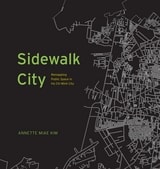
Sidewalk City
Remapping Public Space in Ho Chi Minh CityAnnette Miae Kim
University of Chicago Press, 2015
With Sidewalk City, Annette Miae Kim provides the first multidisciplinary case study of sidewalks in a distinctive geographical area. She focuses on Ho Chi Minh City, Vietnam, a rapidly growing and evolving city that throughout its history, her multicultural residents have built up alternative legitimacies and norms about how the sidewalk should be used. Based on fieldwork over 15 years, Kim developed methods of spatial ethnography to overcome habitual seeing, and recorded both the spatial patterns and the social relations of how the city’s vibrant sidewalk life is practiced.
In Sidewalk City, she transforms this data into an imaginative array of maps, progressing through a primer of critical cartography, to unveil new insights about the importance and potential of this quotidian public space. This richly illustrated and fascinating study of Ho Chi Minh City’s sidewalks shows us that it is possible to have an aesthetic sidewalk life that is inclusive of multiple publics’ aspirations and livelihoods, particularly those of migrant vendors.
Signs in America's Auto Age
Signatures of Landscape and PlaceJohn A. & Keith A. Jakle & Sculle
University of Iowa Press, 2004
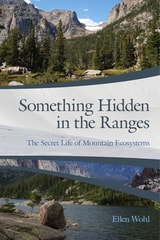
Something Hidden in the Ranges
The Secret Life of Mountain EcosystemsEllen Wohl
Oregon State University Press, 2021
Geologist Ellen Wohl has spent three decades investigating the streams and forests near her home in Colorado. In writing that is free from jargon and easy to understand, she tells the intricate story of how streams provide energy to adjacent forests, how lake sediments record the history of wind-blown pollutants, and how hidden networks of fungi keeps forests healthy. She guides readers through forests at both lower and higher elevations, revealing how trees rely on microbes in the soil, in the forest canopy, and even within individual pine needles to obtain the food they need. Other chapters focus on subalpine lakes, mountain streams, beaver meadows, and alpine tundra.
While scientists, students, and scholars will benefit from Wohl’s intimate knowledge of mountain ecosystems, Something Hidden in the Ranges is written for anyone interested in natural or environmental history. It will change the way readers perceive and think about natural landscapes.
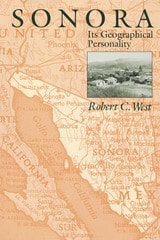
Sonora
Its Geographical PersonalityBy Robert C. West
University of Texas Press, 1993
A land where some streams ran with gold. A landscape nearly empty of inhabitants in the wake of Apache raids from the north. And a former desert transformed by irrigation into vast fields of wheat and cotton. This was and is the state of Sonora in northwest Mexico.
In this cultural historical geography, Robert C. West explores the dual geographic "personality" of this part of Mexico's northern frontier. Utilizing the idea of "old" and "new" landscapes, he describes two Sonoras—to the east, a semiarid to subhumid mountainous region that reached its peak of development in the colonial era and still lives largely in its colonial past; and, to the west, a desert region that in the twentieth century has become a major agricultural producer and the modern center of economic and cultural activity.
After a description of the physical and biotic aspects of Sonora, West describes the aboriginal farming cultures that inhabited eastern Sonora before the Spanish conquest. Following the conquest, he traces the spread of Jesuit missions and Spanish mining and ranching communities into this land where gold, silver, and copper ores were easily extracted by surface mining. He charts the decline of eastern Sonora with the coming of Apache and Seri raids during the eighteenth and nineteenth centuries. And he shows how western Sonora has become one of Mexico's most powerful political and economic entities in the twentieth century.
For geographers, historians, anthropologists, and economists, as well as travelers to Sonora and its coastal resorts, this lively and interesting book will be important reading.

Sourcebook on the Environment
A Guide to the LiteratureKenneth A. Hammond, George Macinko, and Wilma B. Fairchild
University of Chicago Press, 1978
Beginning with an introduction to various philosophies and perspectives, the Sourcebook examines major elements of the environment and selected case studies of human alteration of our surroundings. The essential references in each field are carefully presented, and directions are given for examining more advanced and specialized works. Appendixes on selected periodicals, the latest relevant federal legislation, and environmental organizations point to further areas of investigation. To maintain its value in this volatile area, this indispensable work will be periodically revised and updated.
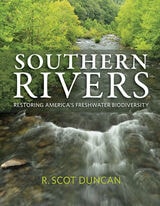
Southern Rivers
Restoring America's Freshwater BiodiversityR. Scot Duncan
University of Alabama Press, 2024
Explores the Southeast’s imperiled river systems and solutions for preserving them in the face of habitat loss, climate change, and extinction
Southern Rivers, by award-winning nature writer and biologist R. Scot Duncan, is a thoroughly crafted exploration of the perilous state of the Southeast’s rivers and the urgent need to safeguard their vitality. The region’s rivers are the epicenter of North American freshwater biodiversity and are the top global hotspot for important aquatic animals including mussels, turtles, snails, crayfish, and fish, many of which have made important contributions to southern life and culture.
Centuries of commercial development have impaired the region’s river systems, sacrificing biodiversity and compromising the rivers’ ability to provide resources essential to human life: drinking water, waste disposal, irrigation, navigation, recreation, power production, and more. Now, increased heat and drought caused by climate change are lowering water levels. As such threats increase, it may seem necessary to choose between nature conservation and human needs, but Duncan persuasively demonstrates that this is a false choice. Conservation enhances human life.
In the same engaging voice of an expert friend that won over thousands of readers of his earlier book, Southern Wonder: Alabama’s Surprising Biodiversity, Duncan explains the task of managing southeastern rivers and how river water quality affects the daily lives of the millions who hold these historic waterways dear. He shows how managing rivers wisely can meet the needs of biodiversity and humanity both. With Americans increasingly anxious about the onset of climate change and the accelerating extinction crisis, Southern Rivers illuminates actionable solutions.

Soviet Intelligence Plans for the British Isles
John M. Davies and Alexander J. Kent
Bodleian Library Publishing, 0
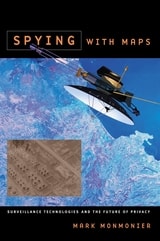
Spying with Maps
Surveillance Technologies and the Future of PrivacyMark Monmonier
University of Chicago Press, 2002
Despite our apprehension about surveillance technology, Spying with Maps is not a jeremiad, crammed with dire warnings about eyes in the sky and invasive tracking. Monmonier's approach encompasses both skepticism and the acknowledgment that geospatial technology brings with it unprecedented benefits to governments, institutions, and individuals, especially in an era of asymmetric warfare and bioterrorism. Monmonier frames his explanations of what this new technology is and how it works with the question of whether locational privacy is a fundamental right. Does the right to be left alone include not letting Big Brother (or a legion of Little Brothers) know where we are or where we've been? What sacrifices must we make for homeland security and open government?
With his usual wit and clarity, Monmonier offers readers an engaging, even-handed introduction to the dark side of the new technology that surrounds us—from traffic cameras and weather satellites to personal GPS devices and wireless communications.
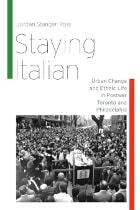
Staying Italian
Urban Change and Ethnic Life in Postwar Toronto and PhiladelphiaJordan Stanger-Ross
University of Chicago Press, 2009
Despite their twin positions as two of North America’s most iconic Italian neighborhoods, South Philly and Toronto’s Little Italy have functioned in dramatically different ways since World War II. Inviting readers into the churches, homes, and businesses at the heart of these communities, Staying Italian reveals that daily experience in each enclave created two distinct, yet still Italian, ethnicities.
As Philadelphia struggled with deindustrialization, Jordan Stanger-Ross shows, Italian ethnicity in South Philly remained closely linked with preserving turf and marking boundaries. Toronto’s thriving Little Italy, on the other hand, drew Italians together from across the wider region. These distinctive ethnic enclaves, Stanger-Ross argues, were shaped by each city’s response to suburbanization, segregation, and economic restructuring. By situating malleable ethnic bonds in the context of political economy and racial dynamics, he offers a fresh perspective on the potential of local environments to shape individual identities and social experience.
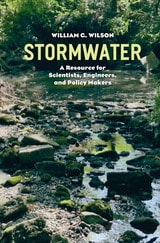
Stormwater
A Resource for Scientists, Engineers, and Policy MakersWilliam G. Wilson
University of Chicago Press, 2016
As Wilson shows, rivers of runoff flowing from manmade surfaces—such as roads, sidewalks, and industrial sites—carry a glut of sediments and pollutants. Unlike soil, pavement does not filter or biodegrade these contaminants. Oil, pesticides, road salts, metals, automobile chemicals, and bacteria all pour into stormwater systems. Often this runoff discharges directly into waterways, uncontrolled and untreated, damaging valuable ecosystems. Detailing the harm that can be caused by this urban runoff, Wilson also outlines methods of control, from restored watersheds to green roofs and rain gardens, and, in so doing, gives hope in the face of an omnipresent threat. Illustrated throughout, Stormwater will be an essential resource for urban planners and scientists, policy makers, citizen activists, and environmental educators in the stormy decades to come.
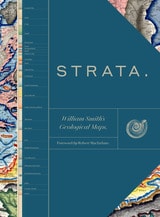
Strata
William Smith’s Geological MapsEdited by the Oxford University Museum of Natural History
University of Chicago Press, 2020
This sumptuous volume begins with an introduction by Douglas Palmer that places Smith’s work in the context of earlier, concurrent, and subsequent ideas regarding the structure and natural processes of the earth, geographical mapping, and biostratigraphical theories. The book is then organized into four parts, each beginning with four sheets from Smith’s hand-colored, 1815 strata map, accompanied by related geological cross-sections and county maps, and followed by fossil illustrations by Smith contemporary James Sowerby, all organized by strata. Essays between each section explore the aims of Smith’s work and its application in the fields of mining, agriculture, cartography and hydrology. Strata concludes with reflections on Smith’s later years as an itinerant geologist and surveyor, plagiarism by a rival, receipt of the first Wollaston Medal in recognition of his achievements, and the influence of his geological mapping and biostratigraphical theories on the sciences—all of which culminated in the establishment of the modern geological timescale.
Featuring a foreword by Robert Macfarlane, Strata is a glorious testament to the lasting geological and illustrative genius of William Smith, a collection as colossal and awe-inspiring as the layers of the Earth themselves.
Stratigraphic Paleobiology
Understanding the Distribution of Fossil Taxa in Time and SpaceMark E. Patzkowsky and Steven M. Holland
University of Chicago Press, 2012
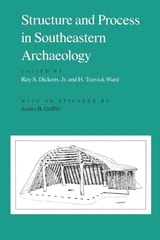
Structure and Process in Southeastern Archaeology
Edited by Roy Dickens Jr and H. Trawick Ward
University of Alabama Press, 1985
A Dan Josselyn Memorial Publication
Within the general structure-and-process theme of this compendium, the authors have focused on either intrasite problems (those dealing with the formation and structure of a site, type of site, or type of feature) or intersite problems (those dealing with behavioral organization and process as developed from comparative site data). These papers, from a broad range of specialists, present a comprehensive study of southeastern archaeology.
Structure and Process in Southeastern Archaeology is a foundational work that reshapes how scholars understand the cultural and social dynamics of prehistoric communities in the Southeastern United States. Roy S. Dickens, Jr. and H. Trawick Ward bring together decades of fieldwork, theoretical insight, and regional expertise to explore how ancient societies organized themselves, interacted, and evolved over time. Rather than focusing solely on artifacts or isolated site reports, this volume emphasizes the broader patterns—both structural and processual—that define the archaeological record of the Southeast.
Through a careful synthesis of settlement data, material culture, and environmental context, the authors reveal how social organization, political structures, and cultural practices were deeply embedded in the landscape. Their approach integrates processual archaeology with a nuanced understanding of regional variation, offering readers a dynamic view of how prehistoric communities adapted to changing conditions and interacted across space and time.
This book is particularly valuable for archaeologists, anthropologists, and historians seeking to move beyond descriptive accounts toward more interpretive frameworks. It provides a model for analyzing archaeological data in ways that illuminate the lived experiences of ancient peoples, making it a vital resource for both academic research and classroom instruction. The authors’ clear writing and thoughtful analysis make complex ideas accessible without sacrificing scholarly rigor.
Whether you're studying Mississippian chiefdoms, Woodland period settlements, or the broader cultural landscapes of the American South, Structure and Process in Southeastern Archaeology offers essential tools for understanding the past. It stands as a testament to the importance of theory-driven, context-rich archaeological interpretation.
Subterranean Matters
Cooperative Mining and Resource Nationalism in Plurinational BoliviaAndrea Marston
Duke University Press, 2024
Surroundings
A History of Environments and EnvironmentalismsEtienne S. Benson
University of Chicago Press, 2020
Through a series of richly contextualized case studies, Benson shows us how and why particular groups of people—from naturalists in Napoleonic France in the 1790s to global climate change activists today—adopted the concept of environment and adapted it to their specific needs and challenges. Bold and deeply researched, Surroundings challenges much of what we think we know about what an environment is, why we should care about it, and how we can protect it.
Synoptic-Dynamic Meteorology Lab Manual
Visual Exercises to Complement Midlatitude Synoptic MeteorologyGary Lackmann, Brian E. Mapes, and Kevin R. Tyle
American Meteorological Society, 2017
One of the greatest challenges facing atmospheric science instructors is helping students link theoretical and mathematical concepts to the real atmosphere. The past decade has been characterized by remarkable advances in meteorological observation, computing techniques, and data-visualization technology. However, the benefit of these advances can only be fully realized with the introduction of a systematic, applied approach to meteorological education that allows well-established theoretical concepts to be used with modernized observational and numerical datasets.
This lab manual is a tool designed just for this purpose; it links theoretical concepts with groundbreaking visualization to elucidate concepts taught in the companion textbook by Gary Lackmann, Midlatitude Synoptic Meteorology, the most current text available on modern weather forecasting techniques. When used in concert with Lackmann’s book and its companion CD of lecture slides, this lab manual will guide students in using contemporary observational and visualization techniques to provide in-depth understanding of fundamental concepts and serve as a catalyst for student-led innovation and application. With topics considered in an order that reinforces and builds upon new knowledge in meteorological observation and analysis, these materials will help students to deepen their understanding of synoptic-dynamic meteorology, synoptically-driven mesoscale phenomena, numerical weather prediction, ensemble prediction, and more, and put this understanding into practice.