Results by title
108 books match the query 'Effect of human beings on' and 9 start with s
Savage Ecology
War and Geopolitics at the End of the WorldJairus Victor Grove
Duke University Press, 2019
Saving Our Sturgeon
Protecting Wisconsin's Ancient FishRebecca Hogue Wojahn
Wisconsin Historical Society Press, 2025
The story of a fascinating fish and the forward-thinking people who saved them in Wisconsin
For millennia, sturgeon swam the waterways of Wisconsin. Before the 1800s, an estimated eleven million sturgeon lived in Lake Michigan alone. Menominee and Ojibwe people depended on the fish for food and harvested them sustainably. But in the early 1900s, the lake sturgeon was near extinction. Saving Our Sturgeon tells the remarkable story of lake sturgeon in Wisconsin, the conservation efforts to save the species, and what is being done to keep the population healthy and thriving today.
Readers will learn about the natural history of the lake sturgeon—its anatomy, behavior, and habitat—and the factors that threatened its survival, from overharvesting to the building of dams that prevented sturgeon from reaching spawning areas. The book, written for young readers aged eleven and up, explains how government agencies, conservationists, and citizen groups worked together to save the sturgeon population in Wisconsin.
Saving Our Sturgeon includes a chapter about the Menominee Nation’s work to revitalize cultural traditions focused on the sturgeon and restore access to the fish on their reservation. The book also highlights how young people can get involved with sturgeon conservation efforts.
A great resource for classroom use, Saving Our Sturgeon contains maps, photos, and diagrams, plus a glossary of terms, a timeline of events, a Who’s Who list of individuals and groups featured in the book, and a bibliography that highlights kid-friendly sources to learn more. Young readers will learn basic facts about sturgeon biology, what it means for a species to be threatened or endangered, and how scientists use data to support repopulation. This inspiring book shares a conservation success story about one remarkable (and plenty peculiar) species of fish and shows young readers how they, too, can help protect these incredible creatures.
Ages 11 - 14; Grade level 6 - 9; Lexile® measure 1060L
Seasick
Ocean Change and the Extinction of Life on EarthAlanna Mitchell
University of Chicago Press, 2009
We have long lorded over the ocean. But only recently have we become aware of the myriad life-forms beneath its waves. We now know that this delicate ecosystem is our life-support system; it regulates the earth’s temperatures and climate and comprises 99 percent of living space on earth. So when we change the chemistry of the whole ocean system, as we are now, life as we know it is threatened.
In Seasick, veteran science journalist Alanna Mitchell dives beneath the surface of the world’s oceans to give readers a sense of how this watery realm can be managed and preserved, and with it life on earth. Each chapter features a different group of researchers who introduce readers to the importance of ocean currents, the building of coral structures, or the effects of acidification. With Mitchell at the helm, readers submerge 3,000 feet to gather sea sponges that may contribute to cancer care, see firsthand the lava lamp–like dead zone covering 17,000 square kilometers in the Gulf of Mexico, and witness the simultaneous spawning of corals under a full moon in Panama.
The first book to look at the planetary environmental crisis through the lens of the global ocean, Seasick takes the reader on an emotional journey through a hidden realm of the planet and urges conservation and reverence for the fount from which all life on earth sprang.
Serengeti III
Human Impacts on Ecosystem DynamicsEdited by A. R. E. Sinclair, Craig Packer, Simon A. R. Mduma, and John M. Fryxel
University of Chicago Press, 2008
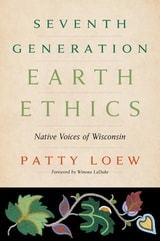
Seventh Generation Earth Ethics
Native Voices of WisconsinPatty Loew
Wisconsin Historical Society Press, 2025
Indigenous perspectives on sustainability, culture, and community
In this collection of twelve biographies, one from each of the Native nations in Wisconsin, author Patty Loew (Bad River Ojibwe) introduces readers to prominent figures in Native sustainability—people whose life’s work reflects the traditional ecological knowledge and cultural values of their people.
Born out of Loew’s thirty years as a journalist and historian, Seventh Generation Earth Ethics highlights individuals who helped to sustain and nurture their nations.
Walter Bresette, Red Cliff Ojibwe, community activist
Hilary Waukau, Menominee, environmental warrior
Frances Van Zile, Mole Lake (Sokaogon) Ojibwe, keeper of the water
James Schlender, Lac Courte Oreilles Ojibwe, treaty rights guardian
Jose Rose, Bad River Ojibwe, elder, environmentalist, and scholar
Dorothy Davids, Stockbridge-Munsee Community Band of Mohican Indians, educator
William Gollnick, Oneida, culture keeper
Thomas St. Germaine, Lac du Flambeau Ojibwe, attorney
Truman Lowe, Ho-Chunk, organic sculpture artist
Jenny and Mary Thunder, Forest County Potawatomi, medicine women
Wanda McFaggen, St. Croix Ojibwe, Tribal Historic Preservationist
Caroline Andler, Brothertown Indian Nation, genealogist
The indigenous people whose lives are depicted in Seventh Generation Earth Ethics understood the cultural gravity that kept their people rooted to their ancestral lands and acted in ways that ensured the growth and success of future generations.

Showing Off
The Geltung HypothesisBy Philip L. Wagner
University of Texas Press, 1996
Hardly a place exists on earth that has not been shaped in some way by human beings. Every day we modify and even sweep away natural landscapes as we build places to live and work. But why we react and interact as social beings intent on exercising ecological dominance poses an endlessly compelling puzzle for everyone from novelists to geographers.
In Showing Off, distinguished geographer Philip L. Wagner offers a persuasive hypothesis. Drawing on a lifetime of inquiry, travel, and teaching, he asserts that the strive for Geltung—personal standing, recognition, acceptance, esteem, and influence—shapes all of our interactions and defines the unique social character of human beings.
Wagner applies the Geltung hypothesis to a wide range of human activities from falling in love and spreading gossip to buying goods and making war. His examples demonstrate how communication and display—"showing off"—impel geographic change, as they reveal how and why people with the most Geltung tend to occupy the most desirable places.
This broad vision draws insights from many fields. A major contribution to cultural geography, the book also sheds new light on individual psychology and psychopathology and suggests new themes for cognitive science and even philosophy. Sure to stir lively debate in many circles, it will be provocative reading for everyone fascinated by the continuum between people and places.

Sick Planet
Corporate Food and MedicineStan Cox
Pluto Press, 2008
Neoliberals often point to improvements in public health and nutrition as examples of globalisation's success, but this book argues that the corporate food and medicine industries are destroying environments and ruining living conditions across the world.
Scientist Stan Cox expertly draws out the strong link between Western big business and environmental destruction. This is a shocking account of the huge damage that drug manufacturers and large food corporations are inflicting on the health of people and crops worldwide. Companies discussed include Wal-Mart, GlaxoSmithKline, Tyson Foods and Monsanto. On issues ranging from the poisoning of water supplies in South Asia to natural gas depletion and how it threatens global food supplies, Cox shows how the demand for profits is always put above the public interest.
While individual efforts to "shop for a better world" and conserve energy are laudable, Cox explains that they need to be accompanied by an economic system that is grounded in ecological sustainability if we are to find a cure for our Sick Planet.
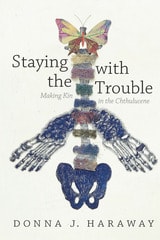
Staying with the Trouble
Making Kin in the ChthuluceneDonna J. Haraway
Duke University Press, 2016
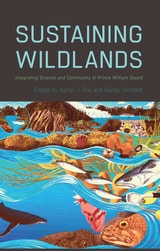
Sustaining Wildlands
Integrating Science and Community in Prince William SoundEdited by Aaron J. Poe and Randy Gimblett
University of Arizona Press, 2017
Nearly three decades later, changes in recreation use run counter to what was initially expected. Instead of avoiding Prince William Sound, tourists and visitors flock there. Economic revitalization efforts have resulted in increased wilderness access as new commercial enterprises offer nature tourism in remote bays and fjords. This increased visitation has caused concerns that the wilderness may again be threatened—not by oil but rather by the very humans seeking those wilderness experiences.
In Sustaining Wildlands, scientists and managers, along with local community residents, address what has come to be a central paradox in public lands management: the need to accommodate increasing human use while reducing the environmental impact of those activities. This volume draws on diverse efforts and perspectives to dissect this paradox, offering an alternative approach where human use is central to sustaining wildlands and recovering a damaged ecosystem like Prince William Sound.
Contributors:
Brad A. Andres, Chris Beck, Nancy Bird, Dale J. Blahna, Harold Blehm, Sara Boario, Bridget A. Brown, Courtney Brown, Greg Brown, Milo Burcham, Kristin Carpenter, Ted Cooney, Patience Andersen Faulkner, Maryann Smith Fidel, Jessica B. Fraver, Jennifer Gessert, Randy Gimblett, Michael I. Goldstein, Samantha Greenwood, Lynn Highland, Marybeth Holleman, Shay Howlin, Tanya Iden, Robert M. Itami, Lisa Jaeger, Laura A. Kennedy, Spencer Lace, Nancy Lethcoe, Kate McLaughlin, Rosa H. Meehan, Christopher Monz, Karen A. Murphy, Lisa Oakley, Aaron J. Poe, Chandra B. Poe, Karin Preston, Jeremy Robida, Clare M. Ryan, Gerry Sanger, Bill Sherwonit, Lowell H. Suring, Paul Twardock, Sarah Warnock, and Sadie Youngstrom