Results by title
16 books match the query 'Culinary'
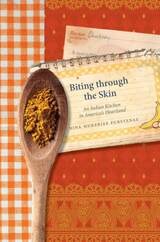
Biting through the Skin
An Indian Kitchen in America's HeartlandNina Mukerjee Furstenau
University of Iowa Press, 2013
As a girl and a young woman, Nina traveled to her ancestral India as well as to college and to Peace Corps service in Tunisia. Through her journeys and her marriage to an American man whose grandparents hailed from Germany and Sweden, she learned that her family was not alone in being a small pocket of culture sheltered from the larger world. Biting through the Skin shows how we maintain our differences as well as how we come together through what and how we cook and eat. In mourning the partial loss of her heritage, the author finds that, ultimately, heritage always finds other ways of coming to meet us. In effect, it can be reduced to a 4 x 6-inch recipe card, something that can fit into a shirt pocket. It’s on just such tiny details of life that belonging rests.
In this book, the author shares her shirt-pocket recipes and a great deal more, inviting readers to join her on her journey toward herself and toward a vital sense of food as culture and the mortar of community.
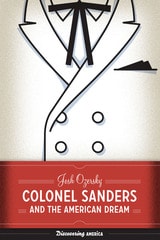
Colonel Sanders and the American Dream
By Josh Ozersky
University of Texas Press, 2012
From Aunt Jemima and Uncle Ben to the Jolly Green Giant and Ronald McDonald, corporate icons sell billions of dollars’ worth of products. But only one of them was ever a real person—Colonel Sanders of Kentucky Fried Chicken/KFC. From a 1930s roadside café in Corbin, Kentucky, Harland Sanders launched a fried chicken business that now circles the globe, serving “finger lickin’ good” chicken to more than twelve million people every day. But to get there, he had to give up control of his company and even his own image, becoming a mere symbol to people today who don’t know that Colonel Sanders was a very real human being. This book tells his story—the story of a dirt-poor striver with unlimited ambition who personified the American Dream.
Acclaimed cultural historian Josh Ozersky defines the American Dream as being able to transcend your roots and create yourself as you see fit. Harland Sanders did exactly that. Forced at age ten to go to work to help support his widowed mother and sisters, he failed at job after job until he went into business for himself as a gas station/café/motel owner and finally achieved a comfortable, middle-class life. But then the interstate bypassed his business and, at sixty-five, Sanders went broke again. Packing his car with a pressure cooker and his secret blend of eleven herbs and spices, he began peddling the recipe for “Colonel Sanders’ Kentucky Fried Chicken” to small-town diners in exchange for a nickel for each chicken they sold. Ozersky traces the rise of Kentucky Fried Chicken from this unlikely beginning, telling the dramatic story of Sanders’ self-transformation into “The Colonel,” his truculent relationship with KFC management as their often-disregarded goodwill ambassador, and his equally turbulent afterlife as the world’s most recognizable commercial icon.
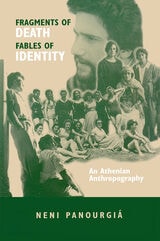
Fragments of Death, Fables of Identity
An Athenian AnthropographyEleni Panourgia
University of Wisconsin Press, 1996
The death of her grandfather sets Neni Panourgiá and her readers on a path through the rituals of mourning and memory in modern urban Greece. Blending emotional richness and intellectual rigor, the anthropologist returns home in this exploration of kinship and identity within her own family and native city of Athens. What emerges is not only a new anthropological view of contemporary Greek culture, but also a reflective consideration of the self and subject.
Following men and women grappling with questions of mortality, Panourgiá moves through the streets and neighborhoods of Athens, seaside resorts and pistachio groves, the corridors and rooms of the Cancer Institute, wakes in apartments and observances in cemeteries. She mingles popular culture, venerable traditions, and contemporary theory as she considers how individuals define their identity as Athenians, as members of a family, as subjects of a polity, in sickness and in health, in death or in mourning. Memory is their guide as it negotiates their relationships with a personal, collective, and cultural past—and the memory of many deaths challenges and reaffirms, deconstructs and reconstructs who they are.
As intellectually ambitious as it is moving, Fragments of Death, Fables of Identity reconfigures the subject and object of anthropological study and recasts the line where experience ends and analysis begins.
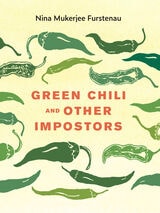
Green Chili and Other Impostors
Furstenau, Nina Mukerjee
University of Iowa Press, 2021
Food history is a world heritage story that has all the drama of a tense thriller or maybe a mystery. Whose food is it? Who gets to tell its tale? Respect for food history might tame the accusations of appropriation, but what is at stake as food traditions and biodiversity ebb away is the great, and not always good, story of us.
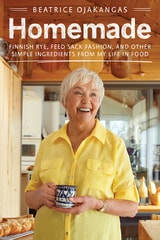
Homemade
Finnish Rye, Feed Sack Fashion, and Other Simple Ingredients from My Life in FoodBeatrice Ojakangas
University of Minnesota Press, 2018
Beatrice Ojakangas, the oldest of ten children, came by it naturally—the cooking but also the pluck and perseverance that she's served up with her renowned Scandinavian dishes over the years. In the wake of the Moose Lake fires and famine of 1918, Ojakangas tells us in this delightful memoir-cum-cookbook, her grandfather sent for a Finnish mail-order bride—and got one who’d trained as a chef.
Ojakangas’s stories, are, unsurprisingly, steeped in food lore: tales of cardamom and rye, baking salt cake at the age of five on a wood-burning stove, growing up on venison, making egg rolls for Chun King, and sending off a Pillsbury Bake Off–winning recipe without ever making it. And from here, how those early roots flourished through hard work and dedication to a successful (but never easy) career in food writing and a much wider world, from working for pizza roll king Jeno Paulucci to researching food traditions in Finland and appearing with Julia Child and Martha Stewart—all without ever leaving behind the lessons learned on the farm. As she says, “first you have to start with good ingredients and a good idea.”
Chock-full of recipes, anecdotes, and a kind humor that bring to vivid life the Finnish culture of northern Minnesota as well as the wider culinary world, Homemade delivers the savory and the sweet in equal measures and casts a warm light on a rich slice of the country’s cooking heritage.
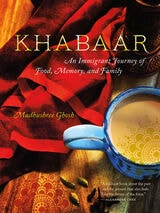
Khabaar
An Immigrant Journey of Food, Memory, and FamilyMadhushree Ghosh
University of Iowa Press, 2022
Khabaar is a food memoir and personal narrative that braids the global journeys of South Asian food through immigration, migration, and indenture. Focusing on chefs, home cooks, and food stall owners, the book questions what it means to belong and what does belonging in a new place look like in the foods carried over from the old country? These questions are integral to the author’s own immigrant journey to America as a daughter of Indian refugees (from what’s now Bangladesh to India during the 1947 Partition of India); as a woman of color in science; as a woman who left an abusive marriage; and as a woman who keeps her parents’ memory alive through her Bengali food.
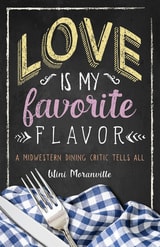
Love Is My Favorite Flavor
A Midwestern Dining Critic Tells AllWini Moranville
University of Iowa Press, 2024
Amidst the vast changes that have occurred over the years, Love Is My Favorite Flavor underscores the timelessness of what it is we seek when we entrust restaurateurs with our hard-earned money and our hard-won leisure time. Dining out may have changed dramatically since the 1970s, but the joys of being in the hands of people who care deeply about our time at their tables have not.
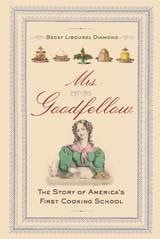
Mrs. Goodfellow
The Story of America's First Cooking SchoolBecky Libourel Diamond
Westholme Publishing, 2012
Recovering the Life and Influence of the “Mother of American Cooking,” the Woman Who Changed the Way We Learn How to Prepare Meals
In Philadelphia during the first decades of the nineteenth century, a widow, Mrs. Elizabeth Goodfellow, ran a popular bakery and sweet shop. In addition to catering to Philadelphia’s wealthy families and a reputation of having the finest desserts and sweet dishes in the young country, her business stood out from every other establishment in another way: she ran a small school to learn the art of cooking, the first of its kind in America. Despite her fame—references to her cooking as a benchmark abound in the literature of the period—we know very little about who she was. Since she did not keep a journal and never published any of her recipes, we have to rely on her students, most notably Eliza Leslie, who fortunately recorded many of Goodfellow’s creations and techniques. Goodfellow is known to have made the first lemon meringue pie and for popularizing regional foods, such as Indian (corn) meal. Her students also recall that Mrs. Goodfellow stressed using simple wholesome ingredients that were locally grown, presaging modern culinary fashion.
By assembling the many parts of this puzzle from old recipe books, advertisements, letters, diaries, genealogical records, and other primary sources, researcher and writer Becky Diamond has been able to provide a more complete portrait of this influential figure in cooking history. Mrs. Goodfellow: The Story of America’s First Cooking School begins with what we know about Elizabeth Goodfellow—where she was born, her husbands, her children, where her shop was located. We then travel back in time to discover the kinds of foods that would have been available to Goodfellow and how she may have used them. The book next turns to the rise of both commercial eating establishements and books of recipes. From here, the author explains the rapid expansion of cooking schools, such as the New York Cooking Academy and the Boston Cooking School, made famous through its association with Fannie Farmer, and ends with a discussion of the role of celebrity chefs. Thoroughly researched and including a range of authentic recipes, Mrs. Goodfellow is a delicious exploration of the life and legacy of one of America’s most influential cooks.

Oktoberfest in Brazil
Domestic Tourism, Sensescapes, and German Brazilian IdentityAudrey Ricke
University of Alabama Press, 2023
An immersive ethnography uncovering how sensory experience, tourism, and heritage performance shape German Brazilian identity across local, national, and transnational landscapes.
Oktoberfest in Brazil: Domestic Tourism, Sensescapes, and German Brazilian Identity is one of the first ethnographies to analyze the tourism industry based on German cultural heritage in southern Brazil. Southern Brazil’s booming domestic tourism industry draws more than 500,000 people to events such as the Oktoberfest in Blumenau. Ricke investigates domestic tourism as sensescapes, focusing on the multiple and layered meanings associated with tourism’s sensory experiences and interactions. The author also introduces the “economy of aesthetics” as a new framework to capture how the sensescapes associated with domestic tourism are intertwined in the negotiation of ethnic, national, and transnational identities. These sensescapes also intersect with discourses on class and race, which are examined as well.
Oktoberfest in Brazil leads readers on a tour through German Brazilian home gardens, folk dance performances, and the largest Oktoberfest in Brazil. These sensory-rich spaces of interaction provide access to different perspectives and types of identity negotiation at multiple levels from the local to the transnational. Ricke illustrates how the emotions and sensory experiences of these sensescapes associated with German cultural heritage function as a means for German Brazilians to negotiate senses of belonging as Brazilians as well as their ethnic and transnational identities.
This book also provides historical and contemporary insights into the politics of citizenship associated with cultural heritage. As politics become more polarized, the need to analyze different ways of communicating through sensory experiences increases. The unique contribution of the economy of aesthetics framework is its ability to capture the influential power of sensory experience in the negotiation of identity and senses of belonging and citizenship more broadly. It provides new insights into how and why some sensory experiences within domestic tourism foster belonging and identity while other experiences reinforce social distinctions and national divisions.
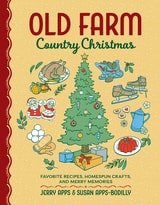
Old Farm Country Christmas
Favorite Recipes, Homespun Crafts, and Merry MemoriesJerry Apps
Wisconsin Historical Society Press, 2026
A festive and nostalgic celebration of family Christmas recipes and traditions.
From the beloved father–daughter team behind the bestseller Old Farm Country Cookbook comes a heartwarming celebration of Christmases past—when the first snowfall signaled the start of the season, neighbors gathered close, and simple joys lit up the long Midwestern winter.
In Old Farm Country Christmas, Jerry Apps and Susan Apps-Bodilly invite readers inside the farmhouse kitchens, one-room schoolhouses, rural churches, and snow-packed fields of Wisconsin, sharing Christmas stories from the Great Depression and World War II through the 1960s. Drawing on vivid family memories, interviews, and historical research, the authors recreate a time when holiday magic was handmade, heartfelt, and shared generously.
Readers will savor more than 80 cherished Apps family recipes, from First Snow Peppermint Butter Cookies and Lucia Buns to Spiced Cider, Krumkake, Seven Layer Bars, Cheesy Potatoes and Ham, and other festive favorites for every gathering. Paired with these culinary classics are twelve simple, old-fashioned craft projects—think paper chains, evergreen garlands, applesauce ornaments, and cozy sock snow people—along with seven timeless activities perfect for wintry afternoons with friends and family.
With 50 vintage photographs and illustrations, this heartfelt collection captures the laughter of school Christmas programs, the excitement of long-hoped-for gifts, the aroma of butter and spices drifting from the oven, and the deep meaning of the traditions that knit rural communities together.
More than a book, Old Farm Country Christmas is an invitation to slow down and rediscover the warmth, wonder, and shared traditions that make the season shine.
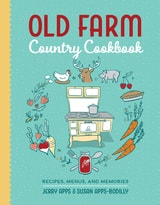
Old Farm Country Cookbook
Recipes, Menus, and MemoriesJerry Apps
Wisconsin Historical Society Press, 2017
Inspired by the dishes made by his mother, Eleanor, and featuring recipes found in her well-worn recipe box, Jerry and his daughter, Susan, take us on a culinary tour of life on the farm during the Depression and World War II. Seasoned with personal stories, menus, and family photos, Old Farm Country Cookbook recalls a time when electricity had not yet found its way to the farm, when making sauerkraut was a family endeavor, and when homemade ice cream tasted better than anything you could buy at the store.
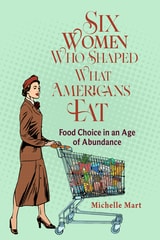
Six Women Who Shaped What Americans Eat
Food Choice in an Age of AbundanceMichelle Mart, Foreword by Mark D. Hersey
University of Alabama Press, 2025
How six groundbreaking women redefined American food—what we eat, how we eat it, and why it matters.
From wartime nutrition science to modern food activism, Six Women Who Shaped What Americans Eat examines the pivotal roles six women played in rewriting the rules of American cuisine. Michelle Mart offers a rich and accessible narrative that connects dietary trends, food marketing, and public health movements to the voices of the women who helped drive them.
Part one highlights Hazel Stiebeling’s development of dietary guidelines and RDAs, Poppy Cannon’s promotion of processed foods for convenience and gourmet meals, and Julia Child’s introduction of French cuisine with an emphasis on fresh ingredients and culinary techniques. Part two shifts the focus to women who challenged the food system itself: Frances Moore Lappé’s advocacy for vegetarianism and sustainable practices, Marion Nestle’s exposure of food corporations’ manipulative practices, and Alice Waters’s emphasis on locally sourced, organic ingredients and sustainable food systems. Thoughtful and timely, this book explores how culture, politics, and personal vision collided in the kitchens and campaigns of six food pioneers—leaving a lasting imprint on what America eats today.
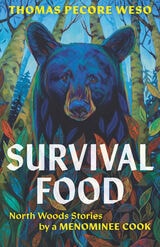
Survival Food
North Woods Stories by a Menominee CookThomas Pecore Weso
Wisconsin Historical Society Press, 2023
In these coming-of-age tales set on the Menominee Indian Reservation of the 1980s and 1990s, Thomas Pecore Weso explores the interrelated nature of meals and memories. As he puts it, “I cannot separate foods from the moments in my life when I first tasted them.” Weso’s stories recall the foods that influenced his youth in northern Wisconsin: subsistence meals from hunted, fished, and gathered sources; the culinary traditions of the German, Polish, and Swedish settler descendants in the area; and the commodity foods distributed by the government—like canned pork, dried beans, and powdered eggs—that made up the bulk of his family’s pantry. His mom called this “survival food.”
These stories from the author’s teen and tween years—some serious, some laugh-out-loud funny—will take readers from Catholic schoolyards to Native foot trails to North Woods bowling alleys, while providing Weso’s perspective on the political currents of the era. The book also contains dozens of recipes, from turtle soup and gray squirrel stew to twice-baked cheesy potatoes. This follow-up to Weso’s Good Seeds: A Menominee Indian Food Memoir is a hybrid of modern foodways, Indigenous history, and creative nonfiction from a singular storyteller.
2024 Wisconsin Library Association Outstanding Achievement Award
2024 PEN Oakland Josephine Miles Award for Excellence
Silver winner of the 2023 Midwest Book Award for Cookbooks/Crafts/Hobbies
Thomas Pecore Weso’s Survival Food was selected by the Wisconsin Center for the Book as the Wisconsin entry in the “Great Reads from Great Places” program of the Library of Congress.
“This book is not only about survival food, but about the singular beauty, creativity, and fortitude that comes out of that survival.”
—Chef Sean Sherman, author, The Sioux Chef’s Indigenous Kitchen
“Survival Food is interesting because it’s one part cookbook, three parts memoir, one part history, and one part multidisciplinary exploration of its setting, northern Wisconsin."
—James Norton, The Cookbook Test
“Nothing brings people together like good food and good stories. There’s an abundance of both in Thomas Pecore Weso’s latest memoir. As Weso attests, food can bring back happy, loving memories of times that were far from happy. Even a tray of funeral sandwiches brings a kind of comfort. This is a wonderful, honest portrait of northeastern Wisconsin, enlightening even to those of us who call this area home.”
—Jared Santek, Founder & Artistic Director, Write On Door County
“Survival Food provides ample nourishment for the mind and body. . . . The stories, told with humor and affection, are complemented by recipes ranging from mouth-watering instructions for cooking wild asparagus to ever-so-interesting advice for preparing bear stew.”
—Lucille Lang Day, author of Birds of San Pancho and Other Poems of Place and coeditor of Red Indian Road West: Native American Poetry from California
“His grandmother cooked according to Native traditions; his mother, ‘a nontraditional college student during my teens,’ resorted to instant meals. His grandfather was town constable and days spent with him brought Weso to the meatloaf, sausage and sauerkraut of German and Polish neighbors. Uncle Buddy’s flash car brings buckwheat pancakes to Weso’s mind, and he lived for a time near Cheese Box Curve—so called after a truck hauling dairy products overturned. Weso includes a few recipes, but mostly, Survival Food is an entertaining look back at life in Wisconsin’s rural north.”
—David Luhrssen, Shepherd Express
“Survival Food: North Woods Stories by a Menominee Cook by Thomas Pecore Weso is a posthumous sequel to his celebrated collection of family stories, Good Seeds: A Menominee Food Memoir. . . . Rich with captivating tales that include driving a convertible on logging roads, agreeing on terms before throwing eggs at passing cars, and his grandmother’s brief stay in a jailhouse she’d later purchase, Weso’s entries offer readers catharsis—demonstrating how to laugh, boast, debate, eat, mourn, and heal.”
—Ryan Winn, College of Menominee Nation, Tribal College Journal
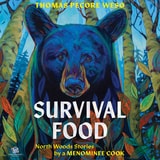
Survival Food
North Woods Stories by a Menominee CookThomas Pecore Weso
Wisconsin Historical Society Press, 2025
In these coming-of-age tales set on the Menominee Indian Reservation of the 1980s and 1990s, Thomas Pecore Weso explores the interrelated nature of meals and memories. As he puts it, “I cannot separate foods from the moments in my life when I first tasted them.” Weso’s stories recall the foods that influenced his youth in northern Wisconsin: subsistence meals from hunted, fished, and gathered sources; the culinary traditions of the German, Polish, and Swedish settler descendants in the area; and the commodity foods distributed by the government—like canned pork, dried beans, and powdered eggs—that made up the bulk of his family’s pantry. His mom called this “survival food.”
These stories from the author’s teen and tween years—some serious, some laugh-out-loud funny—will take readers from Catholic schoolyards to Native foot trails to North Woods bowling alleys, while providing Weso’s perspective on the political currents of the era. The book also contains dozens of recipes, from turtle soup and gray squirrel stew to twice-baked cheesy potatoes. This follow-up to Weso’s Good Seeds: A Menominee Indian Food Memoir is a hybrid of modern foodways, Indigenous history, and creative nonfiction from a singular storyteller.
2024 Wisconsin Library Association Outstanding Achievement Award
2024 PEN Oakland Josephine Miles Award for Excellence
Silver winner of the 2023 Midwest Book Award for Cookbooks/Crafts/Hobbies
Thomas Pecore Weso’s Survival Food was selected by the Wisconsin Center for the Book as the Wisconsin entry in the “Great Reads from Great Places” program of the Library of Congress.
“This book is not only about survival food, but about the singular beauty, creativity, and fortitude that comes out of that survival.”
—Chef Sean Sherman, author, The Sioux Chef’s Indigenous Kitchen
“Survival Food is interesting because it’s one part cookbook, three parts memoir, one part history, and one part multidisciplinary exploration of its setting, northern Wisconsin."
—James Norton, The Cookbook Test
“Nothing brings people together like good food and good stories. There’s an abundance of both in Thomas Pecore Weso’s latest memoir. As Weso attests, food can bring back happy, loving memories of times that were far from happy. Even a tray of funeral sandwiches brings a kind of comfort. This is a wonderful, honest portrait of northeastern Wisconsin, enlightening even to those of us who call this area home.”
—Jared Santek, Founder & Artistic Director, Write On Door County
“Survival Food provides ample nourishment for the mind and body. . . . The stories, told with humor and affection, are complemented by recipes ranging from mouth-watering instructions for cooking wild asparagus to ever-so-interesting advice for preparing bear stew.”
—Lucille Lang Day, author of Birds of San Pancho and Other Poems of Place and coeditor of Red Indian Road West: Native American Poetry from California
“His grandmother cooked according to Native traditions; his mother, ‘a nontraditional college student during my teens,’ resorted to instant meals. His grandfather was town constable and days spent with him brought Weso to the meatloaf, sausage and sauerkraut of German and Polish neighbors. Uncle Buddy’s flash car brings buckwheat pancakes to Weso’s mind, and he lived for a time near Cheese Box Curve—so called after a truck hauling dairy products overturned. Weso includes a few recipes, but mostly, Survival Food is an entertaining look back at life in Wisconsin’s rural north.”
—David Luhrssen, Shepherd Express
“Survival Food: North Woods Stories by a Menominee Cook by Thomas Pecore Weso is a posthumous sequel to his celebrated collection of family stories, Good Seeds: A Menominee Food Memoir. . . . Rich with captivating tales that include driving a convertible on logging roads, agreeing on terms before throwing eggs at passing cars, and his grandmother’s brief stay in a jailhouse she’d later purchase, Weso’s entries offer readers catharsis—demonstrating how to laugh, boast, debate, eat, mourn, and heal.”
—Ryan Winn, College of Menominee Nation, Tribal College Journal
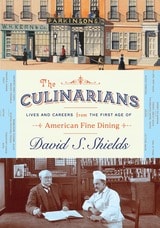
The Culinarians
Lives and Careers from the First Age of American Fine DiningDavid S. Shields
University of Chicago Press, 2017
This fascinating culinarian is John Dabney (1821–1900), who was born a slave, but later built an enterprising catering business. Dabney is just one of 175 influential cooks and restaurateurs profiled by David S. Shields in The Culinarians, a beautifully produced encyclopedic history of the rise of professional cooking in America from the early republic to Prohibition.
Shields’s concise biographies include the legendary Julien, founder in 1793 of America’s first restaurant, Boston’s Restorator; and Louis Diat and Oscar of the Waldorf, the men most responsible for keeping the ideal of fine dining alive between the World Wars. Though many of the gastronomic pioneers gathered here are less well known, their diverse influence on American dining should not be overlooked—plus, their stories are truly entertaining. We meet an African American oyster dealer who became the Congressional caterer, and, thus, a powerful broker of political patronage; a French chef who was a culinary savant of vegetables and drove the rise of California cuisine in the 1870s; and a rotund Philadelphia confectioner who prevailed in a culinary contest with a rival in New York by staging what many believed to be the greatest American meal of the nineteenth century. He later grew wealthy selling ice cream to the masses. Shields also introduces us to a French chef who brought haute cuisine to wealthy prospectors and a black restaurateur who hosted a reconciliation dinner for black and white citizens at the close of the Civil War in Charleston.
Altogether, Culinarians is a delightful compendium of charcuterie-makers, pastry-pipers, caterers, railroad chefs, and cooking school matrons—not to mention drunks, temperance converts, and gangsters—who all had a hand in creating the first age of American fine dining and its legacy of conviviality and innovation that continues today.
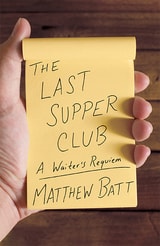
The Last Supper Club
A Waiter's RequiemMatthew Batt
University of Minnesota Press, 2023
A witty and humble tribute to the sometimes profane, sometimes profound world of waiting tables
During a year on sabbatical from his university position, Matthew Batt realized he needed money—fast—and it just so happened that one of the biggest breweries in the Midwest was launching a restaurant and looking to hire. So it was that the forty-something tenured professor found himself waiting tables at a high-end restaurant situated in a Minneapolis brewery. And loving it.
Telling the story of Batt’s early work in restaurants, from a red sauce joint possibly run by the mob to an ill-conceived fusion concept eatery, The Last Supper Club then details his experiences at the fine dining restaurant, a job that continued well past his sabbatical—that lasted, in fact, right up to the restaurant’s sudden and unceremonious closing three years later, shortly after it was named one of the best restaurants in the country by Food & Wine.
Batt’s memoir conveys the challenge—and the satisfaction—of meeting the demands of a frenzied kitchen and an equally expectant crowd. Through training mishaps, disastrous encounters with confused diners, struggles to keep pace with far more experienced coworkers, mandatory memorizations of laundry lists of obscure ingredients, and the stress of balancing responsibilities at home and at work, The Last Supper Club reveals the ups and downs of a waiter’s workday and offers an insightful perspective on what makes a job good, bad, or great. For Batt, this job turns out to be considerably more fun, and possibly more rewarding, than his academic career, and his insider’s view of waiting tables extols the significance of our food and the places where we gather to enjoy it—or serve it.
Told with sharp humor, humility, and a keen sense of what matters, The Last Supper Club is an ode to life in a high-pressure restaurant, the relationships that get you to the night’s close, and finding yourself through—or perhaps because of—the chaos of it all.