Results by title
193 books match the query 'Empire' and 10 start with s
Scripturalizing Revelation
An African American Postcolonial Reading of EmpireLynne St. Clair Darden
SBL Press, 2015
A fresh contribution to the growing body of New Testament scholarship on empire, both ancient and modern
Darden’s reading of Revelation examines John the Seer’s rhetorical strategy, in general, and imperial cult imagery in chapters 4 and 5, in particular, through the lens of an African American scripturalization supplemented by postcolonial theory. The scripturalization proposes that John the Seer’s signifyin(g) on empire demonstrated that he was well aware of the oppressive nature of Roman imperialism on the lives of provincial Asian Christians. Yet, ironically, John reinscribed imperial processes and practices. Darden argues that African American biblical scholarship must now attend adequately to these complex cultural negotiations lest it find itself inadvertently feeding the imperial beast.
Features:
- Relates the potential for African American cooption by the U.S. Empire to the cooption by the Roman Empire both thematized and performed in Revelation
- Book-length study on postcolonial African American biblical hermeneutics
- A reading supplemented by postcolonial theory that better addresses the hybridity of African American identity
Shadows of Empire
Colonial Discourse and Javanese TalesLaurie J. Sears
Duke University Press, 1996
Though Javanese shadow theater (wayang) has existed for hundreds of years, our knowledge of its history, performance practice, and role in Javanese society only begins with Dutch documentation and interpretation in the nineteenth century. Analyzing the Mahabharata and Ramayana tales in relation to court poetry, Islamic faith, Dutch scholarship, and nationalist journals, Sears shows how the shadow theater as we know it today must be understood as a hybrid of Javanese and Dutch ideas and interests, inseparable from a particular colonial moment. In doing so, she contributes to a re–envisioning of European histories that acknowledges the influence of Asian, African, and New World cultures on European thought—and to a rewriting of colonial and postcolonial Javanese histories that questions the boundaries and content of history and story, myth and allegory, colonialism and culture.
Shakespeare's Rome
Republic and EmpirePaul A. Cantor
University of Chicago Press, 2017
In Shakespeare’s Rome, Cantor examines the political settings of Shakespeare’s Roman plays, Coriolanus and Antony and Cleopatra, with references as well to Julius Caesar. Cantor shows that Shakespeare presents a convincing portrait of Rome in different eras of its history, contrasting the austere republic of Coriolanus, with its narrow horizons and martial virtues, and the cosmopolitan empire of Antony and Cleopatra, with its “immortal longings” and sophistication bordering on decadence.
Sociology and Empire
The Imperial Entanglements of a DisciplineGeorge Steinmetz, ed.
Duke University Press, 2013
The collection has a threefold agenda: to trace an intellectual history of sociology as it pertains to empire; to offer empirical studies based around colonies and empires, both past and present; and to provide a theoretical basis for future sociological analyses that may take empire more fully into account. In the 1940s, the British Colonial Office began employing sociologists in its African colonies. In Nazi Germany, sociologists played a leading role in organizing the occupation of Eastern Europe. In the United States, sociology contributed to modernization theory, which served as an informal blueprint for the postwar American empire. This comprehensive anthology critiques sociology's disciplinary engagement with colonialism in varied settings while also highlighting the lasting contributions that sociologists have made to the theory and history of imperialism.
Contributors. Albert Bergesen, Ou-Byung Chae, Andy Clarno, Raewyn Connell, Ilya Gerasimov, Julian Go, Daniel Goh, Chandan Gowda, Krishan Kumar, Fuyuki Kurasawa, Michael Mann, Marina Mogilner, Besnik Pula, Anne Raffin, Emmanuelle Saada, Marco Santoro, Kim Scheppele, George Steinmetz, Alexander Semyonov, Andrew Zimmerman
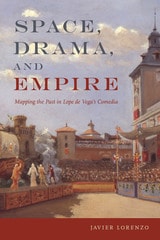
Space, Drama, and Empire
Mapping the Past in Lope de Vega's ComediaJavier Lorenzo
Bucknell University Press, 2023
Spanish and Empire
Nelsy Echavez-Solano
Vanderbilt University Press, 2007
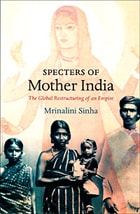
Specters of Mother India
The Global Restructuring of an EmpireMrinalini Sinha
Duke University Press, 2006
Sinha provides a rich historical narrative of the controversy surrounding Mother India, from the book’s publication through the passage in India of the Child Marriage Restraint Act in the closing months of 1929. She traces the unexpected trajectory of the controversy as critics acknowledged many of the book’s facts only to overturn its central premise. Where Mayo located blame for India’s social backwardness within the beliefs and practices of Hinduism, the critics laid it at the feet of the colonial state, which they charged with impeding necessary social reforms. As Sinha shows, the controversy became a catalyst for some far-reaching changes, including a reconfiguration of the relationship between the political and social spheres in colonial India and the coalescence of a collective identity for women.
St. Louis and Empire
250 Years of Imperial Quest and Urban CrisisHenry W. Berger
Southern Illinois University Press, 2015
Berger uses a biographical approach to explore the individuals and institutions that played a leading role in St. Louis’s expansionist reach. He shows how St. Louis business leaders, entrepreneurs, politicians, and investors—often driven by personal and ideological motives, as well as the potential betterment of the city and its people—looked to the west, southwest, Latin America, Europe, Asia, and the Pacific to form economic or political partnerships. Among the people and companies Berger profiles are Thomas Hart Benton, who envisioned a western democratic capitalist empire hosted by St. Louis; cotton exporters James Paramore and William Senter, who were involved in empire building in the southwest and Mexico; St. Louis oil tycoon and railroad investor Henry Clay Pierce, who became deeply involved in political intrigue and intervention in Mexican affairs; entrepreneur and politician David R. Francis, who promoted personal and St. Louis interests in Russia; and McDonnell-Douglas and its founder, James S. McDonnell Jr., who were part of the transformation of St. Louis’s political economy during the Cold War.
Many of these attempted imperial activities failed, but even when they succeeded, Berger explains, the economy and the people of St. Louis did not usually benefit. The vision of a democratic capitalist empire embraced by its exponents proved to be both an illusion and a contradiction. By shifting the focus of foreign relations history from the traditional confines of nation-state conduct to city and regional behavior, this innovative study highlights the domestic foundations and content of foreign policy, opening new avenues for study in the field of foreign relations.
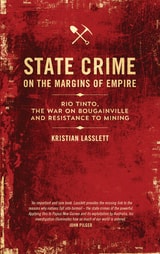
State Crime on the Margins of Empire
Rio Tinto, the War on Bougainville and Resistance to MiningKristian Lasslett
Pluto Press, 2014
This book offers a pioneering window into the elusive workings of state-corporate crime within the mining industry. It follows a campaign of resistance organised by indigenous activists on the island of Bougainville, who struggled to close a Rio Tinto owned copper mine, and investigates the subsequent state-corporate response, which led to the shocking loss of some 10,000 lives.
Drawing on internal records and interviews with senior officials, Kristian Lasslett examines how an articulation of capitalist growth mediated through patrimonial politics, imperial state-power, large-scale mining, and clan-based, rural society, prompted an ostensibly ‘responsible’ corporate citizen, and liberal state actors, to organise a counterinsurgency campaign punctuated with gross human rights abuses.
State Crime on the Margins of Empire represents a unique intervention rooted in a classical Marxist tradition that challenges positivist streams of criminological scholarship, in order to illuminate with greater detail the historical forces faced by communities in the global south caught in the increasingly violent dynamics of the extractive industries.

Sylvia Pankhurst
Suffragette, Socialist and Scourge of EmpireKatherine Connelly
Pluto Press, 2013
From militant suffragette at the beginning of the twentieth century to campaigner against colonialism in Africa after the Second World War, Sylvia Pankhurst dedicated her life to fighting oppression and injustice.
In this vivid biography Katherine Connelly examines Pankhurst’s role at the forefront of significant developments in the history of radical politics. She guides us through Pankhurst's construction of a suffragette militancy which put working-class women at the heart of the struggle, her championing of the Bolshevik Revolution and her clandestine attempts to sabotage the actions of the British state, as well as her early identification of the dangers of Fascism.
The book explores the dilemmas, debates and often painful personal consequences faced by Pankhurst which were played out in her art, writings and activism. It argues that far from being an advocate of disparate causes, Pankhurst’s campaigns were united by an essential continuity which hold vital lessons for achieving social change. This lively and accessible biography presents Pankhurst as a courageous and inspiring campaigner, of huge relevance to those engaged in social movements today.