Results by title
733 books match the query 'Environmental Conservation & Protection' and 48 start with s

Sagebrush Collaboration
How Harney County Defeated the Takeover of the Malheur Wildlife RefugePeter Walker
Oregon State University Press, 2018
Every American is co-owner of the most magnificent estate in the world—federal public forests, grazing lands, monuments, national parks, wildlife refuges, and other public places. The writer Wallace Stegner famously referred to public lands as “America’s best idea,” but there have always been some who oppose the idea for ideological reasons, or because they have a vested economic interest. In the current decade, federal public lands have been under physical threat as never before, with armed standoffs and takeovers that the US government has proved stunningly unsuccessful at prosecuting in federal courts.
One such incident was the takeover of the Malheur National Wildlife Refuge in Harney County, Oregon, in 2016. Armed militants seized the headquarters of the refuge for forty-one days and occupied the community for three months. Militants threatened and harassed local residents, pledging to “give back” the land to unnamed “rightful owners” in their effort to enact a fringe interpretation of the US Constitution.
Drawing on more than two years of intensive fieldwork, Sagebrush Collaboration shows that the militants failed in their objectives because the sensible and hardworking citizens of Harney County had invested decades in collaboratively solving the very problems that the militia used to justify their anti–federal government revolution.
In Sagebrush Collaboration, Peter Walker offers the first book-length study of why the 2016 takeover of the Malheur National Wildlife Refuge failed. His nuanced and deeply researched account provides the full context for the takeover, including the response from local and federal officials and the grassroots community resistance. It will be essential reading for years to come for anyone who wants to understand the ongoing battle over the future of America’s public lands.
Saints, Sinners, and Sovereign Citizens
The Endless War over the West's Public LandsJohn L. Smith
University of Nevada Press, 2026
The grazing rights battle between Nevada rancher Cliven Bundy and the federal government, resulting in a tense, armed standoff between Bundy’s supporters and federal law enforcement officers, garnered international media attention in 2014. Saints, Sinners, and Sovereign Citizens places the Bundy conflict into the larger context of the Sagebrush Rebellion and the long struggle over the use of federal public lands in the American West.
Author John L. Smith skillfully captures the drama of the Bundy legal tangle amid the current political climate. Although no shots were fired during the standoff itself, just weeks later self-proclaimed Bundy supporters murdered two Las Vegas police officers and a civilian. In Eastern Oregon, other Bundy supporters occupied the federal offices of the Malheur National Wildlife Refuge, and one of them died in a hail of bullets.
While examining the complex history of federal public land policies, Smith exposes both sides of this story. He shows that there are passionate true believers on opposite sides of the insurrection, along with government agents and politicians in Washington complicit in efforts to control public lands for their wealthy allies and campaign contributors. With the promise of billions of dollars in natural resource profits and vast tracts of environmentally sensitive lands hanging in the balance, the West’s latest range war is the most important in the nation’s history. This masterful exposé raises serious questions about the fate of America’s public lands and the vehement arguments that are framing the debate from all sides.
Salmon, People, and Place
A Biologist's Search for Salmon RecoveryJim Lichatowich
Oregon State University Press, 2013
In Salmon, People, and Place, acclaimed fisheries biologist Jim Lichatowich eloquently exposes the misconceptions underlying salmon management and recovery programs that have fueled the catastrophic decline in Northwest salmon populations for more than a century. These programs will continue to fail, he suggests, so long as they regard salmon as products and ignore their essential relationship with their habitat.
But Lichatowich offers hope. In Salmon, People, and Place he presents a concrete plan for salmon recovery, one based on the myriad lessons learned from past mistakes. What is needed to successfully restore salmon, Lichatowich states, is an acute commitment to healing the relationships among salmon, people, and place.
A significant contribution to the literature on Pacific salmon, Salmon, People, and Place: A Biologist’s Search for Salmon Recovery is an essential read for anyone concerned about the fate of this Pacific Northwest icon.
Salt Marshes
A Natural and Unnatural HistoryWeis, Judith S
Rutgers University Press, 2009
Now championed as critical habitats for plants, animals, and people because of the environmental service and protection they provide, these ecological wonders were once considered unproductive wastelands, home solely to mosquitoes and toxic waste, and mistreated for centuries by the human population. Exploring the fascinating biodiversity of these boggy wetlands, Salt Marshes offers readers a wealth of essential information about a variety of plants, fish, and animals, the importance of these habitats, consequences of human neglect and thoughtless development, and insight into how these wetlands recover.
Judith S. Weis and Carol A. Butler shed ample light on the human impact, including chapters on physical and biological alterations, pollution, and remediation and recovery programs. In addition to a national and global perspective, the authors place special emphasis on coastal wetlands in the Atlantic and Gulf regions, as well as the San Francisco Bay Area, calling attention to their historical and economic legacies.
Written in clear, easy-to-read language, Salt Marshes proves that the battles for preservation and conservation must continue, because threats to salt marshes ebb and flow like the water that runs through them.
Same River Twice
The Politics of Dam Removal and River RestorationPeter Brewitt
Oregon State University Press, 2019
How did this happen? Same River Twice answers this question by telling the stories of three major Northwestern dam removals – the politics, people, hopes, and fears that shaped three rivers and their communities. Brewitt begins each story with the dam’s construction, shows how its critics gained power, details the conflicts and controversies of removal, and explores the aftermath as the river re-established itself.
Each dam removal offers a unique case study. On the Elwha and Rogue Rivers, dam removal was a multi-decade political brawl; on the Sandy River it was swift and amicable. A key controversy in every case was the loss of the recreational lake created by the dam. Local communities loved their lakes and felt that they were natural, public spaces rather than industrial creations. They fought dam removal with passion and ingenuity. To be successful, dam removal advocates had to learn to weld together mega-coalitions that embraced most interest groups and moved forward together.
While the dams profiled here are all in the Pacific Northwest, dam removal is a national and international phenomenon, and Brewitt’s findings apply everywhere. Written for both a scholarly and a general audience, Same River Twice presents invaluable case studies for scholars of environmental politics, wildlife and public land professionals, environmental activists, and anyone interested in the intersection of politics, public policy, and dam removal.
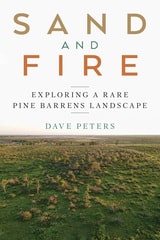
Sand and Fire
Exploring a Rare Pine Barrens LandscapeDave Peters
Wisconsin Historical Society Press, 2023
While many people are familiar with the federally protected St. Croix and Namekagon Rivers of northwestern Wisconsin, few know about the Namekagon Barrens, a rare pine barrens landscape within a few miles of their confluence. A tiny remnant of the millions of barrens acres that once covered the region, the Namekagon Barrens Wildlife Area lies in the heart of the state’s Northwest Sands, a band of pine and oak stretching from Bayfield on Lake Superior to St. Croix Falls on the Wisconsin–Minnesota border. Unfathomable amounts of glacial sand and repeated fires over thousands of years shaped a land of scrub oak and jack pine, blueberries and sweet fern, creating an ideal habitat for wolves and sharp-tailed grouse.
Just as compelling is the land’s rich human history, from Paleo-Indian hunters to Ojibwe berry pickers, loggers to early road builders, and immigrants whose farming efforts failed to the wildlife habitat specialists who manage it today. The book, told in memoir style and featuring color photographs by the author, sets the land’s unusual natural history as the backdrop for a multilayered story about the impact of people on this vulnerable landscape.
Silver winner of the 2023 Midwest Book Award for History
"Peters invites his readers on a journey across time and space, to the glacial formation of the Namekagon Barrens into the present. . . . The book is replete with beautiful photographs, useful maps, and a number of other images that seem to appear on nearly every other page. This book should appeal to a wide public readership while at the same time being a useful primer for academics and researchers."
—Hayden L. Nelson, Environmental History

Saving Animals
Multispecies Ecologies of Rescue and CareElan Abrell
University of Minnesota Press, 2021
A fascinating and unprecedented ethnography of animal sanctuaries in the United States
In the past three decades, animal rights advocates have established everything from elephant sanctuaries in Africa to shelters that rehabilitate animals used in medical testing, to homes for farmed animals, abandoned pets, and entertainment animals that have outlived their “usefulness.” Saving Animals is the first major ethnography to focus on the ethical issues animating the establishment of such places, where animals who have been mistreated or destined for slaughter are allowed to live out their lives simply being animals.
Based on fieldwork at animal rescue facilities across the United States, Elan Abrell asks what “saving,” “caring for,” and “sanctuary” actually mean. He considers sanctuaries as laboratories where caregivers conceive and implement new models of caring for and relating to animals. He explores the ethical decision making around sanctuary efforts to unmake property-based human–animal relations by creating spaces in which humans interact with animals as autonomous subjects. Saving Animals illustrates how caregivers and animals respond by cocreating new human–animal ecologies adapted to the material and social conditions of the Anthropocene.
Bridging anthropology with animal studies and political philosophy, Saving Animals asks us to imagine less harmful modes of existence in a troubled world where both animals and humans seek sanctuary.
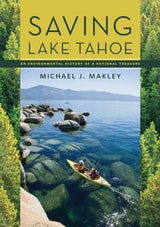
Saving Lake Tahoe
An Environmental History of a National TreasureMichael J. Makley
University of Nevada Press, 2014
Left alone, nature healed itself, and by the 1960s mature forests once again surrounded the lake and its water clarity improved, with visibility more than one hundred feet deep. However, Tahoe’s wonders brought a new kind of threat: millions of annual visitors and incessant development, including ski resorts and casinos. Saving Lake Tahoe looks at the interaction through the years between human activities and Tahoe’s natural ecosystems. It is a dramatic story of ecological disasters and near misses, political successes and failures. Utilizing primary sources and interviews with key figures, Makley provides a meticulously researched account of the battles surrounding the management of the Tahoe basin.
Makley takes the story up to the present, describing the formation and evolution of a new type of governing body, the bistate Tahoe Regional Planning Agency, and groundbreaking efforts to utilize science in establishing policy. He depicts the passionate fights between those who seek to preserve the environment and advocates of individual property rights. Although Tahoe remains unique in its splendor, readers will understand why, with continued pressure for development, reversing environmental deterioration and improving the lake water’s clarity remain elusive goals.
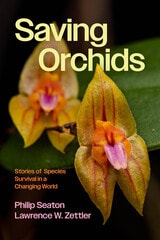
Saving Orchids
Stories of Species Survival in a Changing WorldPhilip Seaton and Lawrence W. Zettler
University of Chicago Press, 2025
A gorgeously illustrated ode to the beauty and significance of orchids—and to those fighting to save these unique plants across the globe.
Until recently, a myriad of lifeforms enriched our lives. In some places, listening to a nighttime chorus of frogs in the neighborhood marsh was an archetypal touchstone of childhood. Children would search for tadpoles, just steps away from native Lady’s Tresses orchids. Year by year, the chorus became quieter. Today, only a few frogs and orchids remain. Is this the world we want our children to inherit? Do we want orchids to slip through our fingers and, eventually, to vanish?
For biologists Philip Seaton and Lawrence W. Zettler, and the intrepid orchid defenders they introduce in this book, the answer is no. Seaton and Zettler have traveled the world over the past three decades, studying orchids—flagship species for plant conservation. Stunningly illustrated, this book is a culmination of stories about the people—young and old alike—dedicated to protecting these remarkable plants from extinction. In the 19th century, collectors removed, shipped, and sold vast numbers of orchids from the wild. Today, scientists strive to reverse this harm—to protect and rebuild remnants of orchids’ original habitats against human disruption, including climate change. Seaton and Zettler reveal these plants’ bizarre pollination partners, risky liaisons with fungi, and adaptation to human domestication to show that learning orchids’ scientific secrets—and finding human helpers—is key to these plants’ survival.
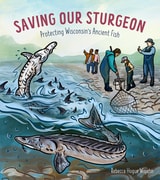
Saving Our Sturgeon
Protecting Wisconsin's Ancient FishRebecca Hogue Wojahn
Wisconsin Historical Society Press, 2025
The story of a fascinating fish and the forward-thinking people who saved them in Wisconsin
For millennia, sturgeon swam the waterways of Wisconsin. Before the 1800s, an estimated eleven million sturgeon lived in Lake Michigan alone. Menominee and Ojibwe people depended on the fish for food and harvested them sustainably. But in the early 1900s, the lake sturgeon was near extinction. Saving Our Sturgeon tells the remarkable story of lake sturgeon in Wisconsin, the conservation efforts to save the species, and what is being done to keep the population healthy and thriving today.
Readers will learn about the natural history of the lake sturgeon—its anatomy, behavior, and habitat—and the factors that threatened its survival, from overharvesting to the building of dams that prevented sturgeon from reaching spawning areas. The book, written for young readers aged eleven and up, explains how government agencies, conservationists, and citizen groups worked together to save the sturgeon population in Wisconsin.
Saving Our Sturgeon includes a chapter about the Menominee Nation’s work to revitalize cultural traditions focused on the sturgeon and restore access to the fish on their reservation. The book also highlights how young people can get involved with sturgeon conservation efforts.
A great resource for classroom use, Saving Our Sturgeon contains maps, photos, and diagrams, plus a glossary of terms, a timeline of events, a Who’s Who list of individuals and groups featured in the book, and a bibliography that highlights kid-friendly sources to learn more. Young readers will learn basic facts about sturgeon biology, what it means for a species to be threatened or endangered, and how scientists use data to support repopulation. This inspiring book shares a conservation success story about one remarkable (and plenty peculiar) species of fish and shows young readers how they, too, can help protect these incredible creatures.
Ages 11 - 14; Grade level 6 - 9; Lexile® measure 1060L
Saving Seeds, Preserving Taste
Heirloom Seed Savers in AppalachiaBill Best
Ohio University Press, 2013
The Brown Goose, the White Case Knife, Ora’s Speckled Bean, Radiator Charlie’s Mortgage Lifter—these are just a few of the heirloom fruits and vegetables you’ll encounter in Bill Best’s remarkable history of seed saving and the people who preserve both unique flavors and the Appalachian culture associated with them. As one of the people at the forefront of seed saving and trading for over fifty years, Best has helped preserve numerous varieties of beans, tomatoes, corn, squashes, and other fruits and vegetables, along with the family stories and experiences that are a fundamental part of this world. While corporate agriculture privileges a few flavorless but hardy varieties of daily vegetables, seed savers have worked tirelessly to preserve genetic diversity and the flavors rooted in the Southern Appalachian Mountains—referred to by plant scientists as one of the vegetative wonders of the world.
Saving Seeds, Preserving Taste will introduce readers to the cultural traditions associated with seed saving, as well as the remarkable people who have used grafting practices and hand-by-hand trading to keep alive varieties that would otherwise have been lost. As local efforts to preserve heirloom seeds have become part of a growing national food movement, Appalachian seed savers play a crucial role in providing alternatives to large-scale agriculture and corporate food culture. Part flavor guide, part people’s history, Saving Seeds, Preserving Taste will introduce you to a world you’ve never known—or perhaps remind you of one you remember well from your childhood.
Saving Wyoming's Hoback
The Grassroots Movement that Stopped Natural Gas DevelopmentFlorence R. Shepard and Susan L. Marsh
University of Utah Press, 2016
Winner of the Wallace Stegner Prize in Environmental Humanities
In late 2012, more than one hundred people gathered to hear a long-awaited announcement: the Trust for Public Land had succeeded in preventing natural gas development in the remote Hoback Basin of Wyoming. This landmark agreement—purchasing leases from Plains Exploration Company—would not have come to pass without the extraordinary will and expertise of local citizens. Unchallenged, the proposed natural gas development in the national forest near the hamlet of Bondurant, Wyoming, would have brought roads, pipelines, water and air pollution, and a complete change in the character of the landscape and its communities.
Saving Wyoming's Hoback tells the story of the Hoback and Noble Basins in northwestern Wyoming and of the citizens who worked together to protect the land that they loved. Retired schoolteachers, mine workers, big game hunting outfitters, and other stakeholders brought together their knowledge of the area to achieve a single goal: to prevent the industrialization of the wild country that was their home. While some disagreed about specifics, their work as individuals and as coalitions is an inspiring example of how determined citizens can make a difference.
Saving the Big Sky
A Chronicle of Land Conservation in MontanaBruce A. Bugbee
Oregon State University Press, 2025
Winner of the 2026 Western Writers of America Spur Award for Best Western Contemporary Nonfiction
Winner of the 2025 Nature and the Environment National Outdoor Book Award
“The essential purpose of Saving the Big Sky is to inspire the reader to help conserve even more of Montana,” write Bruce Bugbee, Robert Kiesling, and John Wright in this compelling study of how six million acres of biodiverse land were conserved in Montana over the past fifty years. Indigenous and non-Indigenous knowledge about land stewardship has evolved and since the 1970s tribes, nonprofit organizations, land trusts, and government agencies have conserved land in many creative ways. Beautifully illustrated with more than ninety color photographs and thirty detailed maps, Saving the Big Sky showcases land conservation achievements across eight regions of the state: the Rocky Mountain Front, the Blackfoot Valley, the Greater Yellowstone, the Missoula Region, the Helena Region, Northwest Montana, the Flathead Indian Reservation, and the American Prairie.
Land protection is shown to work best when large, intact, connected landscapes can be conserved, rather than small, fragmented, isolated parcels. Conservationists have found that landowners in Montana more widely accept conservation easements and other voluntary, financially compensating tools that respect private property rights. The brilliant images and striking before-and-after maps featured here celebrate the ranches, farms, wildlife habitats, and scenic open spaces that are forever safeguarded.
In documenting conservation accomplishments and suggesting what more can be done, Saving the Big Sky invites readers to participate in conserving Montana—or whatever cherished landscape they call home.
Saving the Gray Whale
People, Politics, and Conservation in Baja CaliforniaSerge Dedina
University of Arizona Press, 2000
More than a study of conservation politics, Dedina's book puts a human face on wildlife conservation. The author lived for two years with residents of Baja communities to understand their attitudes about wildlife conservation and Mexican politics, and he accompanied many in daily activities to show the extent to which the local economy depends on whalewatching. "It is ironic," observes Dedina, "that residents of some of the most isolated fishing villages in North America are helping to redefine our relationship with wild animals. Americans and Europeans brought the gray whale population to the brink of extinction. The inhabitants of San Ignacio Lagoon and Magdalena Bay are helping us to celebrate the whales' survival." By showing us how these animals have helped shape the lifeways of the people with whom they share the lagoons, Saving the Gray Whale demonstrates that gray whales represent both a destructive past and a future with hope.
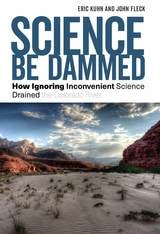
Science Be Dammed
How Ignoring Inconvenient Science Drained the Colorado RiverEric Kuhn and John Fleck
University of Arizona Press, 2019
Arguing that the science of the early twentieth century can shed new light on the mistakes at the heart of the over-allocation of the Colorado River, authors Eric Kuhn and John Fleck delve into rarely reported early studies, showing that scientists warned as early as the 1920s that there was not enough water for the farms and cities boosters wanted to build. Contrary to a common myth that the authors of the Colorado River Compact did the best they could with limited information, Kuhn and Fleck show that development boosters selectively chose the information needed to support their dreams, ignoring inconvenient science that suggested a more cautious approach.
Today water managers are struggling to come to terms with the mistakes of the past. Focused on both science and policy, Kuhn and Fleck unravel the tangled web that has constructed the current crisis. With key decisions being made now, including negotiations for rules governing how the Colorado River water will be used after 2026, Science Be Dammed offers a clear-eyed path forward by looking back.
Understanding how mistakes were made is crucial to understanding our contemporary problems. Science Be Dammed offers important lessons in the age of climate change about the necessity of seeking out the best science to support the decisions we make.
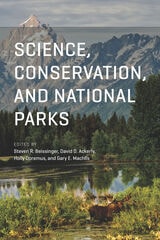
Science, Conservation, and National Parks
Edited by Steven R. Beissinger, David D. Ackerly, Holly Doremus, and Gary E. Machlis
University of Chicago Press, 2016
Examining the major challenges of parks and protected areas throughout the world, contributors provide answers to a number of key conservation questions, such as: How should stewardship address climate change, urban encroachment and pollution, and invasive species? How can society, especially youth, become more engaged with nature and parks, and are there models to guide interactions between parks and their neighbors? What are appropriate conservation objectives for parks in the Anthropocene? Charting a course for the parks of the next century, Science, Conservation, and National Parks is certain not only to catalyze the continued evolution of US park conservation policy, but also to be an inspiration for parks, conservation, and management worldwide.
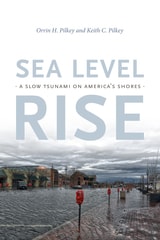
Sea Level Rise
A Slow Tsunami on America's ShoresOrrin H. Pilkey and Keith C. Pilkey
Duke University Press, 2019
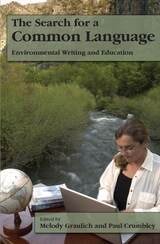
Search for a Common Language
Environmental Writing and Educationedited by Melody Graulich & Paul Crumbley
Utah State University Press, 2005

Seeds of Power
Environmental Injustice and Genetically Modified Soybeans in ArgentinaAmalia Leguizamón
Duke University Press, 2020

Seeing Nature
Exploring 34 Parks and Preserves in Philadelphia and the Surrounding Delaware ValleyAnne Sarah Bekker and Edward Sibley Barnard
Temple University Press, 2026
Seeing Nature is a guide to natural wonders found in 34 parks and preserves within Philadelphia and the Delaware Valley. Readers are introduced to a variety of habitats, which host an incredible diversity of animals, plants, and fungi. Beautifully illustrated with more than 1,500 captioned color photographs, this informative guide describes over 1,000 species, from grassland birds to carnivorous plants. Suggested routes and maps for each walk guide the way at each site. More in-depth looks at many special features within these places are offered through photographic spreads that illustrate:
- the ancient trees of Carpenter’s Woods
- the charismatic wading and marsh birds of John Heinz National Wildlife Refuge
- the life of the vernal pools and wetlands of Five Mile Woods
- the dragonflies and damselflies of Piney Hollow Preservation Area
- the new life after a fire at Tom’s Pond in Wharton State Forest
- the riot of colorful mushrooms of Franklin Parker Preserve
- the forest wildflowers of Manderfield Preserve
- and much, much more.
New and seasoned naturalists alike will be inspired to explore and get involved in conserving the special places this region has to offer. Information about the ecology and conservation history of each park and preserve is also included.
Self-Devouring Growth
A Planetary Parable as Told from Southern AfricaJulie Livingston
Duke University Press, 2019
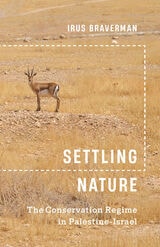
Settling Nature
The Conservation Regime in Palestine-IsraelIrus Braverman
University of Minnesota Press, 2023
A study of Palestine-Israel through the unexpected lens of nature conservation
Settling Nature documents the widespread ecological warfare practiced by the state of Israel. Recruited to the front lines are fallow deer, gazelles, wild asses, griffon vultures, pine trees, and cows—on the Israeli side—against goats, camels, olive trees, hybrid goldfinches, and akkoub—which are affiliated with the Palestinian side. These nonhuman soldiers are all the more effective because nature camouflages their tactical deployment as such.
Drawing on more than seventy interviews with Israel’s nature officials and on observations of their work, this book examines the careful orchestration of this animated warfare by Israel’s nature administration on both sides of the Green Line. Alongside its powerful protection of wildlife biodiversity, the territorial reach of Israel’s nature protection is remarkable: to date, nearly 25 percent of the country’s total land mass is assigned as a park or a reserve. Settling Nature argues that the administration of nature advances the Zionist project of Jewish settlement and the corresponding dispossession of non-Jews from this space.
Seventh Generation Earth Ethics
Native Voices of WisconsinPatty Loew
Wisconsin Historical Society Press, 2025
Indigenous perspectives on sustainability, culture, and community
In this collection of twelve biographies, one from each of the Native nations in Wisconsin, author Patty Loew (Bad River Ojibwe) introduces readers to prominent figures in Native sustainability—people whose life’s work reflects the traditional ecological knowledge and cultural values of their people.
Born out of Loew’s thirty years as a journalist and historian, Seventh Generation Earth Ethics highlights individuals who helped to sustain and nurture their nations.
Walter Bresette, Red Cliff Ojibwe, community activist
Hilary Waukau, Menominee, environmental warrior
Frances Van Zile, Mole Lake (Sokaogon) Ojibwe, keeper of the water
James Schlender, Lac Courte Oreilles Ojibwe, treaty rights guardian
Jose Rose, Bad River Ojibwe, elder, environmentalist, and scholar
Dorothy Davids, Stockbridge-Munsee Community Band of Mohican Indians, educator
William Gollnick, Oneida, culture keeper
Thomas St. Germaine, Lac du Flambeau Ojibwe, attorney
Truman Lowe, Ho-Chunk, organic sculpture artist
Jenny and Mary Thunder, Forest County Potawatomi, medicine women
Wanda McFaggen, St. Croix Ojibwe, Tribal Historic Preservationist
Caroline Andler, Brothertown Indian Nation, genealogist
The indigenous people whose lives are depicted in Seventh Generation Earth Ethics understood the cultural gravity that kept their people rooted to their ancestral lands and acted in ways that ensured the growth and success of future generations.
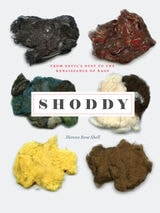
Shoddy
From Devil’s Dust to the Renaissance of RagsHanna Rose Shell
University of Chicago Press, 2020
In Shoddy: From Devil’s Dust to the Renaissance of Rags, Hanna Rose Shell takes readers on a journey to discover shoddy, from Haiti to the “shoddy towns” of West Yorkshire in England, to the United States, back in time to the British cholera epidemics and the American Civil War, and into agricultural fields, textile labs, and rag-shredding factories. Shell’s narrative is both literary and historical, drawing on an extraordinary range of sources, from court cases to military uniforms, mattress labels to medical textbooks, political cartoons to high art. Shoddy moves between genres, bringing richly drawn characters and unexpected objects to life. Along the way, shoddy becomes equally an evocative object and a portal into another world.
Almost since the time it first appeared, shoddy was both ubiquitous and controversial. In part because it was often so hard to detect, it was inherently suspicious. Public health experts worried about sanitation and disease—how could old clothes be disinfected? As well, the idea of wearing someone else’s old clothes so close to your own skin was discomforting in and of itself. Could you sleep peacefully knowing that your mattress was very likely to be stuffed with dead soldiers’ overcoats? The use of the term “virgin” wool, the idea of virginity in relation to clothes, in fact emerged as an effort by the wool industry to counter shoddy’s appeal: to make shoddy seem shoddy. Over time, shoddy would capture a host of personal, ethical, commercial, and societal failings. And yet, there was always, within shoddy, the alluring concept of regeneration, of what we today think of as conscious clothing, eco-fashion, sustainable textiles.
Shell exposes an interwoven tale of industrial espionage, political infighting, scientific inquiry, ethnic prejudices, and war profiteering. Discarded clothes may make many journeys over the course of several lifetimes. Not only in your garments, but under your rug, in your mattress pads, piano blankets, in the peculiar confetti-like stuffing in your mailing envelopes, even in the insulation in your walls. Though it began with wool, over the past century the shredding “devil” has turned to synthetics from nylon stockings to Kevlar. Shoddy is likely connected to something you are wearing right now. After reading, you will never use the word shoddy or think about your clothes, the environment, sustainability, or the intermingled world around you the same way again.

Simple Things Won't Save the Earth
By J. Robert Hunter
University of Texas Press, 1997
We drive cars with "Save the Whales" bumper stickers, buy aerosol sprays that advertise "no chlorofluorocarbons," and wear T-shirts made from organically grown cotton. All of these "earth friendly" choices and products convince us that we are "thinking globally, acting locally" and saving the planet. But are we really?
In this provocative book, J. Robert Hunter asserts that using catchy slogans and symbols to sell the public on environmental conservation is ineffective, misleading, and even dangerous. Debunking the Fifty Simple Things You Can Do to Save the Earth approach, Hunter shows that there are no simple solutions to major environmental problems such as species extinction, ozone depletion, global warming, pollution, and non-renewable resource consumption.
The use of slogans and symbols, Hunter argues, simply gives the public a false sense that "someone" is solving the environmental crisis—while it remains as serious now as when the environmental movement began. Writing in plain yet passionate prose for general readers, he here opens a national debate on what is really required to preserve the earth as a habitat for the human species.
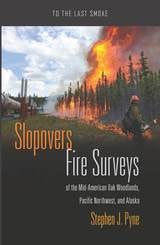
Slopovers
Fire Surveys of the Mid-American Oak Woodlands, Pacific Northwest, and AlaskaStephen J. Pyne
University of Arizona Press, 2019
The Mid-American oak woodlands were the scene of vigorous settlement in the late eighteenth and early nineteenth centuries and thus the scene of changing fire practices. The debate over the origin of the prairies—by climate or fire—foreshadowed the more recent debate about fire in oak and hickory hardwoods. In both cases, today’s thinking points to the critical role of fire.
The Pacific Northwest was the great pivot between laissez-faire logging and state-sponsored conservation and the fires that would accompany each. Then fire faded as an environmental issue. But it has returned over the past decade like an avenging angel, forcing the region to again consider the defining dialectic between axe and flame.
And Alaska—Alaska is different, as everyone says. It came late to wildland fire protection, then managed an extraordinary transfiguration into the most successful American region to restore something like the historic fire regime. But Alaska is also a petrostate, and climate change may be making it the vanguard of what the Anthropocene will mean for American fire overall.
Slopovers collates surveys of these three regions into the national narrative. With a unique mixture of journalism, history, and literary imagination, renowned fire expert Stephen J. Pyne shows how culture and nature, fire from nature and fire from people, interact to shape our world with three case studies in public policy and the challenging questions they pose about the future we will share with fire.
So Great Was the Slaughter
Market Hunters, Sportsmen, and Wildlife Conservation in ArkansasBuckley T. Foster
University of Alabama Press, 2025
Winner of the 2026 J.G. Ragsdale Book Award
So Great Was the Slaughter reveals the untold story of Arkansas conservation pioneers who saved the state’s game and fish populations. As Arkansas entered the twentieth century, the national demand for meat combined with the ability to ship millions of animals to hungry cities like New Orleans, Memphis, and Chicago had driven many species, including bison and passenger pigeons, to extinction in Arkansas. Many others, including deer, bear, turkey, quail, and fish, were in danger of disappearing.
In response, an unlikely coalition of Arkansas sportsmen, hunters, and conservationists created a vision for conservation legislation, game laws, and the establishment of fish hatcheries and wildlife refuges. With support from influential outsiders like E. A. McIlhenny and the United States Biological Survey, they waged a long battle against entrenched political and commercial interests.
Buckley Foster’s meticulous research reveals how these pioneers fought to save the state’s wildlife resources from destruction and laid the foundations for sustainable, modern wildlife management in Arkansas. So Great Was the Slaughter will fascinate hunters, conservationists, historians, and those interested in the history of wildlife conservation and conflicts between market hunters and sportsmen in the United States and the American South.

Solar Adobe
Energy, Ecology, and Earthen ArchitectureAlbert Narath
University of Minnesota Press, 2024
How a centuries-old architectural tradition reemerged as a potential solution to the political and environmental crises of the 1970s
Against the backdrop of a global energy crisis, a widespread movement embracing the use of raw earth materials for building construction emerged in the 1970s. Solar Adobe examines this new wave of architectural experimentation taking place in the United States, detailing how an ancient tradition became a point of convergence for issues of environmentalism, architecture, technology, and Indigenous resistance.
Utilized for centuries by the Pueblo people of the American Southwest and by Spanish colonialists, adobe construction found renewed interest as various groups contended with the troubled legacies of modern architecture and an increasingly urgent need for sustainable design practices. In this period of critical experimentation, design networks that included architects, historians, counterculture communities, government weapons labs, and Indigenous activists all looked to adobe as a means to address pressing environmental and political issues.
Albert Narath charts the unique capacities of adobe construction across a wide range of contexts, consistently troubling simple distinctions between traditional and modern technologies, high design and vernacular architecture. Drawing insightful parallels between architecture, environmentalism, and movements for Indigenous sovereignty, Solar Adobe stresses the importance of considering the history of the built environment in conjunction with architecture’s larger impact on the natural world.
Solvable
How We Healed the Earth, and How We Can Do It AgainSusan Solomon
University of Chicago Press, 2024
We solved planet-threatening problems before, Susan Solomon argues, and we can do it again. Solomon knows firsthand what those solutions entail. She first gained international fame as the leader of an expedition to Antarctica in 1986, making discoveries that were key to healing the damaged ozone layer. She saw a path—from scientific and public awareness to political engagement, international agreement, industry involvement, and effective action. Solomon, an atmospheric scientist and award-winning author, connects this career-defining triumph to the inside stories of other past environmental victories—against ozone depletion, smog, pesticides, and lead—to extract the essential elements of what makes change possible.
The path to success begins when an environmental problem becomes both personal and perceptible to the general public. Lawmakers, diplomats, industries, and international agencies respond to popular momentum, and effective change takes place in tandem with consumer pressure when legislation and regulation yield practical solutions. Healing the planet is a long game won not by fear and panic but by the union of public, political, and regulatory pressure.
Solvable is a book for anyone who has ever despaired about the climate crisis. As Solomon reminds us, doom and gloom get us nowhere, and idealism will only take us so far. The heroes in these stories range from angry mothers to gang members turned social activists, to upset Long Island birdwatchers to iconoclastic scientists (often women) to brilliant legislative craftsmen. Solomon’s authoritative point of view is an inspiration, a reality check, a road map, and a much-needed dose of realism. The problems facing our planet are Solvable. Solomon shows us how.
Sonoran Desert Journeys
Ecology and Evolution of Its Iconic SpeciesTheodore H. Fleming
University of Arizona Press, 2022
In Sonoran Desert Journeys ecologist Theodore H. Fleming discusses two remarkable journeys. First, Fleming offers a brief history of our intellectual and technical journey over the past three centuries to understand the evolution of life on Earth. Next, he applies those techniques on a journey of discovery about the evolution and natural history of some of the Sonoran Desert’s most iconic animals and plants. Fleming details the daily lives of a variety of reptiles, birds, mammals, and plants, describing their basic natural and evolutionary histories and addressing intriguing issues associated with their lifestyles and how they cope with a changing climate. Finally, Fleming discusses the complexity of Sonoran Desert conservation.
This book explores the evolution and natural history of iconic animals and plants of the northern Sonoran Desert through the eyes of a curious naturalist and provides a model of how we can coexist with the unique species that call this area home.
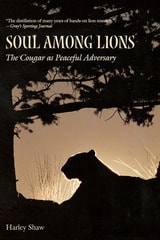
Soul among Lions
The Cougar as Peaceful AdversaryHarley Shaw
University of Arizona Press, 2000
Skilled predators prized by hunters and cursed by ranchers, mountain lions are the wild soul of the American West. Now a wildlife biologist brings you nose to nose with the elusive cougar. Harley Shaw shares dramatic stories culled from his years of studying mountain lions, separating fact from myth regarding their habits while raising serious questions about mankind's relationship with this commanding creature.
"Most of us move into the country because we love wildlife," writes Shaw. "But none of us will tolerate having our pets or children eaten. . . . When lion/human encounters occur, the lion (or bear, or wolf) always ultimately loses."
Soul among Lions offers us a chance to consider the true meaning of that loss.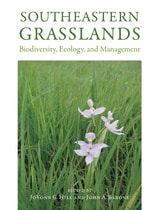
Southeastern Grasslands
Biodiversity, Ecology, and ManagementJoVonn G. Hill and John A. Barone, eds.
University of Alabama Press, 2019
Today the southeastern United States is a largely rural, forested, and agricultural landscape interspersed with urban areas of development. However, two centuries ago it contained hundreds of thousands of acres of natural grasslands that stretched from Florida to Texas. Now more than 99 percent of these prairies, glades, and savannas have been plowed up or paved over, lost to agriculture, urban growth, and cattle ranching. The few remaining grassland sites are complex ecosystems, home to hundreds of distinct plant and animal species, and worthy of study.
Southeastern Grasslands: Biodiversity, Ecology, and Management brings together the latest research on southeastern prairie systems and species, provides a complete picture of an increasingly rare biome, and offers solutions to many conservation biology queries. Editors JoVonn G. Hill and John A. Barone have gathered renowned experts in their fields from across the region who address questions related to the diversity, ecology, and management of southeastern grasslands, along with discussions of how to restore sites that have been damaged by human activity.
Over the last twenty years, both researchers and the public have become more interested in the grasslands of the Southeast. This volume builds on the growing knowledge base of these remarkable ecosystems with the goal of increasing appreciation for them and stimulating further study of their biota and ecology. Topics such as the historical distribution of grasslands in the South, the plants and animals that inhabit them, as well as assessments of several techniques used in their conservation and management are covered in-depth. Written with a broad audience in mind, this book will serve as a valuable introduction and reference for nature enthusiasts, scientists, and land managers.
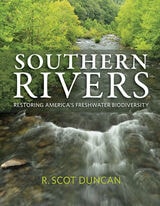
Southern Rivers
Restoring America's Freshwater BiodiversityR. Scot Duncan
University of Alabama Press, 2024
Explores the Southeast’s imperiled river systems and solutions for preserving them in the face of habitat loss, climate change, and extinction
Southern Rivers, by award-winning nature writer and biologist R. Scot Duncan, is a thoroughly crafted exploration of the perilous state of the Southeast’s rivers and the urgent need to safeguard their vitality. The region’s rivers are the epicenter of North American freshwater biodiversity and are the top global hotspot for important aquatic animals including mussels, turtles, snails, crayfish, and fish, many of which have made important contributions to southern life and culture.
Centuries of commercial development have impaired the region’s river systems, sacrificing biodiversity and compromising the rivers’ ability to provide resources essential to human life: drinking water, waste disposal, irrigation, navigation, recreation, power production, and more. Now, increased heat and drought caused by climate change are lowering water levels. As such threats increase, it may seem necessary to choose between nature conservation and human needs, but Duncan persuasively demonstrates that this is a false choice. Conservation enhances human life.
In the same engaging voice of an expert friend that won over thousands of readers of his earlier book, Southern Wonder: Alabama’s Surprising Biodiversity, Duncan explains the task of managing southeastern rivers and how river water quality affects the daily lives of the millions who hold these historic waterways dear. He shows how managing rivers wisely can meet the needs of biodiversity and humanity both. With Americans increasingly anxious about the onset of climate change and the accelerating extinction crisis, Southern Rivers illuminates actionable solutions.
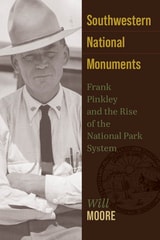
Southwestern National Monuments
Frank Pinkley and the Rise of the National Park SystemWill Moore
University of Utah Press, 2025
This volume uncovers the little-known legacy of Frank Pinkley, the first superintendent of the Southwestern National Monuments (SWNM)—a unique National Park Service unit established in 1923. Pinkley’s leadership and innovative approach helped protect and develop thirty diverse monuments, ranging from Montezuma Castle to White Sands, linked by miles of rough roads and united by their historical, archaeological, and natural significance.
Drawing on archived SWNM Monthly Reports, Will Moore reconstructs the stories behind these monuments and their contributions to the nascent national park system. From the pioneering all-Navajo Mobile Unit of the Civilian Conservation Corps to visionary work in visitor education, Pinkley and his team helped to set a course for the protection of American landscapes. Southwestern National Monuments is essential reading for anyone passionate about America's natural heritage and national parks.

Spaceship in the Desert
Energy, Climate Change, and Urban Design in Abu DhabiGökçe Günel
Duke University Press, 2019
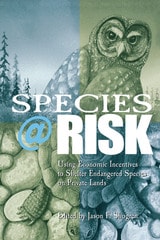
Species at Risk
Using Economic Incentives to Shelter Endangered Species on Private LandsEdited by Jason F. Shogren
University of Texas Press, 2005
Protecting endangered species of animals and plants is a goal that almost everyone supports in principle—but in practice private landowners have often opposed the regulations of the Endangered Species Act, which, they argue, unfairly limits their right to profit from their property. To encourage private landowners to cooperate voluntarily in species conservation and to mitigate the economic burden of doing so, the government and nonprofit land trusts have created a number of incentive programs, including conservation easements, leases, habitat banking, habitat conservation planning, safe harbors, candidate conservation agreements, and the "no surprise" policy.
In this book, lawyers, economists, political scientists, historians, and zoologists come together to assess the challenges and opportunities for using economic incentives as compensation for protecting species at risk on private property. They examine current programs to see how well they are working and also offer ideas for how these programs could be more successful. Their ultimate goal is to better understand how economic incentive schemes can be made both more cost-effective and more socially acceptable, while respecting a wide range of views regarding opportunity costs, legal standing, biological effectiveness, moral appropriateness, and social context.
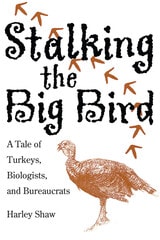
Stalking the Big Bird
A Tale of Turkeys, Biologists, and BureaucratsHarley Shaw
University of Arizona Press, 2004
State and federal wildlife agencies have for some sixty years functioned under the belief that increased knowledge produced by research improves our ability to manage wildlife. Shaw suggests that the more we know about a species, the more difficult clear decisions may often become. He offers shrewd observations on the difficulties of interpreting and implementing research results in the face of pressures exerted by government bureaucracies, non-governmental organizations, and politically powerful loggers, ranchers, land developers, and environmentalists. He also shows that management of even a common game bird may be beyond the capabilities of responsible resource management agencies. Through stories about his own experiences studying Merriam's wild turkey—anecdotes about the foibles of field work and the bureaucratic boondoggles of wildlife management—Shaw reveals some of the complexities involved in wildlife research.
Drawing on a lifetime of work and reflection, his book shows that sound research and effective management of this animal—and, by extension, others—are severely hampered by political agendas, social misunderstandings, inappropriate research, and above all, human indifference. As entertaining as it is informative, Stalking the Big Bird will be of interest to environmentalists, hunters, and resource managers—or anyone confused by the practices of modern wildlife conservation. It will help both professionals and lay readers understand our relationship with one wild subspecies, and in the process get a better handle on the true goals in managing the wild.
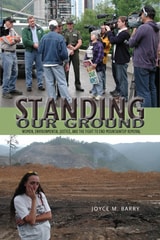
Standing Our Ground
Women, Environmental Justice, and the Fight to End Mountaintop RemovalJoyce M. Barry
Ohio University Press, 2012
Standing Our Ground: Women, Environmental Justice, and the Fight to End Mountaintop Removal examines women’s efforts to end mountaintop removal coal mining in West Virginia. Mountaintop removal coal mining, which involves demolishing the tops of hills and mountains to provide access to coal seams, is one of the most significant environmental threats in Appalachia, where it is most commonly practiced.
The Appalachian women featured in Barry’s book have firsthand experience with the negative impacts of Big Coal in West Virginia. Through their work in organizations such as the Coal River Mountain Watch and the Ohio Valley Environmental Coalition, they fight to save their mountain communities by promoting the development of alternative energy resources. Barry’s engaging and original work reveals how women’s tireless organizing efforts have made mountaintop removal a global political and environmental issue and laid the groundwork for a robust environmental justice movement in central Appalachia.
Standing between Life and Extinction
Ethics and Ecology of Conserving Aquatic Species in North American DesertsEdited by David L. Propst, Jack E. Williams, Kevin R. Bestgen, and Christopher W. Hoagstrom
University of Chicago Press, 2020
A precursor to this book, Battle Against Extinction, laid out the scope of the problem and related conservation activities through the late 1980s. Since then, many nascent conservation programs have matured, and researchers have developed new technologies, improved and refined methods, and greatly expanded our knowledge of the myriad influences on the ecology and dynamics of these species. Standing between Life and Extinction brings the story up to date. While the future for some species is more secure than thirty years ago, others are less fortunate. Calling attention not only to iconic species like the razorback sucker, Gila trout, and Devils Hole pupfish, but also to other fishes and obscure and fascinating invertebrates inhabiting intermittent aquatic habitats, this book explores the scientific, social, and political challenges of preserving these aquatic species and their habitats amid an increasingly charged political discourse and in desert regions characterized by a growing human population and rapidly changing climate.

Star Lake Saloon and Housekeeping Cottages
A NovelSara Rath
University of Wisconsin Press, 2006
When Hannah unexpectedly inherits her uncle's rundown resort, she must head to the northwoods to close up and sell the business. But the only interested buyer is Ingold, an international mining company, and Hannah finds herself reluctantly operating the resort while trapped in the midst of a treacherous dispute between Ingold and Uncle Hal's activist friends.
From safeguarding the wilderness to pursuing elusive new love interests, Hannah has plenty to engage her imagination at Star Lake. A new aspect of her personality emerges, one that is surprisingly courageous and compassionate. Throughout this humorous, elegantly plotted adventure with its appealing characters and lyrical depictions of nature, Hannah encounters the inevitability of change—in herself and in the nostalgic landscape of the deep North.
Status and Conservation of Midwestern Amphibians
Michael J. Lannoo
University of Iowa Press, 1998
In 1990 an international group of biologists, meeting to discuss rumors of declines in the number of amphibians, discovered that amphibian disappearances once thought to be a local problem were not—the problem was global. And, even more disturbing, amphibians were disappearing not just from areas settled by humans but from regions of the world once believed to be pristine. Under the mantle of the Declining Amphibian Populations Task Force, this timely book addresses three fundamental questions for the midwestern United States: are amphibians declining; if so, why; and, if so, what can be done to halt these losses?
In the Midwest—defined here as Missouri, Iowa, Illinois, Indiana, Ohio, Minnesota, Wisconsin, and Michigan—there can be no doubt that the number of salamanders and frogs has declined with Euro-American settlement and the conversion to an agriculturally dominated landscape. Habitat loss and landscape fragmentation have been major factors in this decline, as have aquacultural uses of natural wetlands. Bullfrog introductions have eliminated populations of native amphibians, and collecting for the biological supply trade has reduced the number of individuals within many populations. The goal of the forty-two essays in this well-documented, well-illustrated book is to put between two covers all we know now about the status of midwestern amphibians. By doing this, the editor has created a readily accessible historical record for future studies.
Organized into sections covering landscape patterns and biogeography, species status, regional and state status, diseases and toxins, conservation, and monitoring and applications, this landmark volume will serve as the foundation for amphibian conservation in the Midwest.
Stepping Twice Into the River
Following Dakota WatersRobert King
University Press of Colorado, 2005
Blending travel narrative and poetic reflection, Stepping Twice Into the River takes readers on a journey through time, revealing both stability and change and offering prairie wisdom. An affectionate and shrewd observer, King illuminates the ordinary from the perspectives of history, science, and literature. In the hands of this gifted thinker and writer, local facts yield universal metaphor.
Stitching the West Back Together
Conservation of Working LandscapesEdited by Susan Charnley, Thomas E. Sheridan, and Gary P. Nabhan
University of Chicago Press, 2014
Featuring contributions from an impressive array of scientists, conservationists, scholars, ranchers, and foresters, Stitching the West Back Together explores that expanded, inclusive vision of environmentalism as it delves into the history and evolution of Western land use policy and of the working landscapes themselves. Chapters include detailed case studies of efforts to promote both environmental and economic sustainability, with lessons learned; descriptions of emerging institutional frameworks for conserving Western working landscapes; and implications for best practices and policies crucial to the future of the West’s working forests and rangelands. As economic and demographic forces threaten these lands with fragmentation and destruction, this book encourages a hopeful balance between production and conservation on the large, interconnected landscapes required for maintaining cultural and biological diversity over the longterm.
Sustainability for the Forgotten
Gary E. Machlis
University of Utah Press, 2024
Sustainability for the Forgotten is an incendiary book that confronts the history, policies, and practices of sustainability. It interrogates the usefulness of current sustainability approaches for the poorest of the poor, the chronic underclass, victims of natural disasters, refugees, the oppressed, and asks, how can we do better? With examples that range from the coffeelands of El Salvador to the coal country of American Appalachia, from the streets of Detroit to refugee camps in Greece and the upscale metro centers of the affluent, sustainability is examined with a critical eye and with an emphasis on insuring that the forgotten are heard.
At once well-researched and passionate, wide-ranging and sharply focused, Sustainability for the Forgotten is unlike any other book on the sustainability movement. Written with a distinctive voice that is reasoned, unflinching, and often poetic, the book challenges the sustainability movement to follow "a just and necessary path." The result is a provocative statement on the future of sustainability and a call to action that is ultimately hopeful.
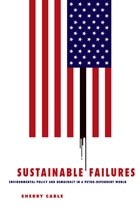
Sustainable Failures
Environmental Policy and Democracy in a Petro-dependent WorldSherry Cable
Temple University Press, 2012
Environmental policies fail in conspicuous and egregious ways to sustain the natural resource base and protect citizens from production-generated risky exposures. In her engaging study, Sustainable Failures, Sherry Cable asks, why does environmental policy seem to be a contributing cause rather than a partial solution to environmental problems?
Melding a biophysical science perspective of environmental processes with sociological insights into human behavior, Cable examines the people, policies, and issues of petrochemical dependence and broader environment questions. She insists that our present policies around the manufacture and use of petroleum products violate rudimentary ecological principles—and do so in complicated ways.
Sustainable Failures is a blistering wake-up call to what is at stake not only regarding the failure of policy outcomes and grievous natural resource depletion and pollution, but also concerning democracy and ecological survival, and eventually, potentially, the existence of our species.
Sustainable Values, Sustainable Change
A Guide to Environmental Decision MakingBryan G. Norton
University of Chicago Press, 2015
While economists, philosophers, and ecologists argue about what in nature is valuable, and why, Norton here offers an action-oriented, pragmatic response to the disconnect between public and academic discourse around sustainability. Looking to the arenas in which decisions are made—and the problems that are driving these decisions—Norton reveals that the path to sustainability cannot be guided by fixed, utopian objectives projected into the future; sustainability will instead be achieved through experimentation, incremental learning, and adaptive management. Drawing inspiration from Aldo Leopold’s famed metaphor of “thinking like a mountain” for a spatially explicit, pluralistic approach to evaluating environmental change, Norton replaces theory-dependent definitions with a new decision-making process guided by deliberation and negotiation across science and philosophy, encompassing all stakeholders and activists and seeking to protect as many values as possible. Looking across scales to today’s global problems, Norton urges us to learn to think like a planet.
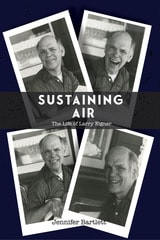
Sustaining Air
The Life of Larry EignerJennifer Bartlett
University of Alabama Press, 2023
The biography of a poet seminal to postwar American poetry
The poet Larry Eigner (1927–1996) was a key figure in New American poetry, which grew out of the Black Mountain School and San Francisco Renaissance, and a major influence on the Language poets. Eigner also had cerebral palsy as the result of an accident at birth. It is fortuitous that the poet lived his life in two locations vibrant in both poetics and disability activism. Except for brief periods attending camp and school, he lived with his parents in Swampscott, Massachusetts, until the age of 51. Later, he moved to Berkeley, California, at the height of the disability rights movement. In the 1950s, Eigner attended Camp Jened, which later became famous in the film Crip Camp.
Bartlett’s biography covers every significant phase of Eigner’s life: his childhood and young adulthood when he began typing poems with one finger on the manual typewriter that was a bar mitzvah gift; his first publications and the maturation of his poetic interests through correspondence with poets of the era; and after his move to Berkeley, the ever-expanding circle of friends, poets, caretakers, and collaborators he established there. The result is a deeply insightful account of an utterly distinctive voice whose influence widens and deepens with each new generation that encounters him.

Swamplife
People, Gators, and Mangroves Entangled in the EvergladesLaura A. Ogden
University of Minnesota Press, 2010
Today, the many visions of the Everglades—protectionist, ecological, commercial, historical—have become a tangled web of contradictory practices and politics for conservation and for development. Yet within this entanglement, the place of people remains highly ambivalent. It is the role of people in the Everglades that interests Ogden, as she seeks to reclaim the landscape’s long history as a place of human activity and, in doing so, discover what it means to be human through changing relations with other animals and plant life.
Ogden tells this story through the lives of poor rural whites, gladesmen, epitomized in tales of the Everglades’ most famous outlaws, the Ashley Gang. With such legends and lore on one side, and outsized efforts at drainage and development on the other, Swamplife strikes a rare balance, offering a unique insight into the hidden life of the Everglades—and into how an appreciation of oppositional culture and social class operates in our understanding of wilderness in the United States.