Results by title
434 books match the query 'Ethics & Moral Philosophy' and 20 start with s
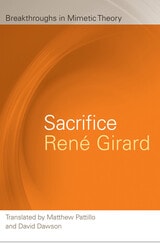
Sacrifice
René Girard
Michigan State University Press, 2011
In Sacrifice, René Girard interrogates the Brahmanas of Vedic India, exploring coincidences with mimetic theory that are too numerous and striking to be accidental. Even that which appears to be dissimilar fails to contradict mimetic theory, but instead corresponds to the minimum of illusion without which sacrifice becomes impossible.
The Bible reveals collective violence, similar to that which generates sacrifice everywhere, but instead of making victims guilty, the Bible and the Gospels reveal the persecutors of a single victim. Instead of elaborating myths, they tell the truth absolutely contrary to the archaic sense. Once exposed, the single victim mechanism can no longer function as the model for would-be sacrificers.
Recognizing that the Vedic tradition also converges on a revelation that discredits sacrifice, mimetic theory locates within sacrifice itself a paradoxical power of quiet reflection that leads, in the long run, to the eclipse of this institution which is violent but nevertheless fundamental to the development of human culture. Far from unduly privileging the Western tradition and awarding it a monopoly on the knowledge and repudiation of blood sacrifice, mimetic analysis recognizes comparable, but never truly identical, traits in the Vedic tradition.

Saints and Postmodernism
Revisioning Moral PhilosophyEdith Wyschogrod
University of Chicago Press, 1990
"A 'must' for readers interested in the borderlands between philosophy, hagiography, and ethics."—Mark I. Wallace, Religious Studies Review

Scheler’s Critique of Kant’s Ethics
Philip Blosser
Ohio University Press, 1995
“My interest in [Max] Scheler’s critique of Kant runs back nearly a decade…. The more I read of Scheler, the more I began to see the value of a project dealing with his critique of Kant in Der Formalismus in der Ethik und die Materiale Wetethik, which would possess the virtue of focusing in a single project three important strands of philosophical interest: phenomenology, Kantianism, and ethics….
“The study is divided into six chapters and two appendices. Each of the chapters constituting the body of the work contains a brief analysis of the Kantian position or discussion of the basic questions at issue in it, an exposition of Scheler’s critique of the Kantian position and its presuppositions, and a detailed appraisal of Scheler’s critique.”—from the introduction by the author
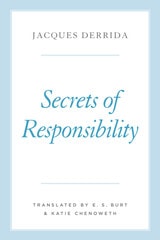
Secrets of Responsibility
Jacques Derrida
University of Chicago Press, 2027
Jacques Derrida on the problem of secrecy, the first in a ten-seminar series on questions of responsibility.
Delivered at the École des hautes études en sciences sociales in Paris during the 1991–92 academic year, Secrets of Responsibility is the first of ten seminars given by Jacques Derrida under the umbrella “Questions of Responsibility,” a cycle that includes Hospitality, Perjury and Pardon, Death Penalty, and The Beast and the Sovereign—each also published by the University of Chicago Press.
In this seminar, Derrida asks a basic question—what is a secret?—which he then explores across scientific, technical, social, political, and religious domains. Over twelve sessions, we are treated to analyses of industrial, state, military, professional, and religious secrets as well as secret societies and secret police. Derrida also tackles secrecy in literary fiction (especially in Melville, James, Poe, and Baudelaire) and philosophical texts (including Freud, Kant, Heidegger, Kierkegaard, Patočka, Nietzsche, Levinas, and others). The result is a set of profound and surprising insights delivered as only Derrida can.
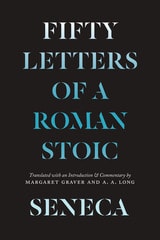
Seneca
Fifty Letters of a Roman StoicLucius Annaeus Seneca
University of Chicago Press, 2021
“There is only one course of action that can make you happy. . . . rejoice in what is yours. What is it that is yours? Yourself; the best part of you.”
In the year 62, citing health issues, the Roman philosopher Seneca withdrew from public service and devoted his time to writing. His letters from this period offer a window onto his experience as a landowner, a traveler, and a man coping with the onset of old age. They share his ideas on everything from the treatment of enslaved people to the perils of seafaring, and they provide lucid explanations for many key points of Stoic philosophy.
This selection of fifty letters brings out the essentials of Seneca’s thought, with much that speaks directly to the modern reader. Above all, they explore the inner life of the individual who proceeds through philosophical inquiry from a state of emotional turmoil to true friendship, self-determination, and personal excellence.
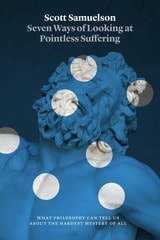
Seven Ways of Looking at Pointless Suffering
What Philosophy Can Tell Us about the Hardest Mystery of AllScott Samuelson
University of Chicago Press, 2018
It’s right there in the Book of Job: “Man is born unto trouble as the sparks fly upward.” Suffering is an inescapable part of the human condition—which leads to a question that has proved just as inescapable throughout the centuries: Why? Why do we suffer? Why do people die young? Is there any point to our pain, physical or emotional? Do horrors like hurricanes have meaning?
In Seven Ways of Looking at Pointless Suffering, Scott Samuelson tackles that hardest question of all. To do so, he travels through the history of philosophy and religion, but he also attends closely to the real world we live in. While always taking the question of suffering seriously, Samuelson is just as likely to draw lessons from Bugs Bunny as from Confucius, from his time teaching philosophy to prisoners as from Hannah Arendt’s attempts to come to terms with the Holocaust. He guides us through the arguments people have offered to answer this fundamental question, explores the many ways that we have tried to minimize or eliminate suffering, and examines people’s attempts to find ways to live with pointless suffering. Ultimately, Samuelson shows, to be fully human means to acknowledge a mysterious paradox: we must simultaneously accept suffering and oppose it. And understanding that is itself a step towards acceptance.
Wholly accessible, and thoroughly thought-provoking, Seven Ways of Looking at Pointless Suffering is a masterpiece of philosophy, returning the field to its roots—helping us see new ways to understand, explain, and live in our world, fully alive to both its light and its darkness.

Shadows of Ethics
Criticism and the Just SocietyGeoffrey Galt Harpham
Duke University Press, 1999
Ethics, he claims, has been seen by its most powerful theorists as a discourse of “shadows,” a characteristic disturbance of thought in the presence of the other, a source of doubts rather than certainty. At the same time, however, ethics includes an element of violence, even blindness and “fundamentalism,” a crushing drive to clarity and resolution. Contemporary thinkers, Harpham argues, have been unwilling to accept this account of ethics and the obligations it would impose, and have, as a consequence, cultivated social and intellectual marginality as the only site of virtue, the only position in which critical intelligence is at home. They have, he contends, failed to “imagine the center,” to take up the true intellectual and worldly challenge of ethics.
Tracking these issues and energies in debates about enlightenment, the politics of the aesthetic, the nature of rationality, and the worldly contexts of theory, Harpham demonstrates in compelling detail the ubiquity and true difficulty of ethics. Shadows of Ethics also revives a neglected genre, the intellectual portrait, with extended meditations on Jacques Derrida, Martha Nussbaum, Fredric Jameson, Geoffrey Hartman, and Noam Chomsky.
The book will interest literary critics, philosophers, cultural critics, and all those interested in the ethical character of intellectual work.

Sharing Responsibility
Larry May
University of Chicago Press, 1992
Simulating Good and Evil
The Morality and Politics of VideogamesMarcus Schulzke
Rutgers University Press, 2020
Sin
A Thomistic PsychologySteven J. Jensen
Catholic University of America Press, 2018
Sister Species
Women, Animals and Social JusticeEdited by Lisa A. Kemmerer
University of Illinois Press, 2011
Skepticism
Aryeh Botwinick
Temple University Press, 1990
Aryeh Botwinick argues for the recovery of a radical democratic tradition that emphasizes the role of individual participation in the development and control of social and political institutions. Such involvement implies philosophical skepticism—the assumption that the truth about what is the best course of action cannot be known with certainty and that, therefore, every person’s opinion has an equal claim to be considered. The crucial stumbling block to reappropriating this radical egalitarian tradition is the supposed unviability of a consistent skepticism. In an effort to chart a new course of philosophical inquiry into political matters, Botwinick grapples with the formulation of a consistent version of skepticism, claiming that it provides "a continually renewing impetus for the expansion of political participation."
Twentieth-century philosophers have, for the most part, opted for some version of mitigated skepticism, which, the author argues, "has blinded them to the radical political implications of skepticism." Underscoring a pattern of convergence between Anglo-American and Continental philosophy, Botwinick proposes a number of strategies to rehabilitate the rationality of participatory democratic political institutions by articulating an acceptable version of consistent skepticism.
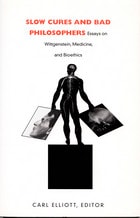
Slow Cures and Bad Philosophers
Essays on Wittgenstein, Medicine, and BioethicsCarl Elliott, ed.
Duke University Press, 2001
As Elliott explains in his introduction, Wittgenstein’s philosophy runs against the grain of most contemporary bioethics scholarship, which all too often ignores the context in which moral problems are situated and pays little attention to narrative, ethnography, and clinical case studies in rendering bioethical judgments. Such anonymous, impersonal, rule-writing directives in which health care workers are advised how to behave is what this volume intends to counteract. Instead, contributors stress the value of focusing on the concrete particulars of moral problems and write in the spirit of Wittgenstein’s belief that philosophy should be useful. Specific topics include the concept of “good dying,” the nature of clinical decision making, the treatment of neurologically damaged patients, the moral treatment of animals, and the challenges of moral particularism.
Inspired by a philosopher who deplored “professional philosophy,” this work brings some startling insights and clarifications to contemporary ethical problems posed by the realities of modern medicine.
Contributors. Larry Churchill, David DeGrazia, Cora Diamond, James Edwards, Carl Elliott, Grant Gillett, Paul Johnston, Margaret Olivia Little, James Lindemann Nelson, Knut Erik Tranoy
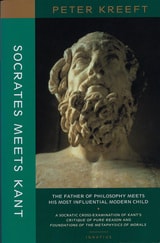
Socrates Meets Kant
The Father of Philosophy Meets His Most Influential Modern ChildPeter Kreeft
St. Augustine's Press, 2009
Kreeft’s Socrates reflects what the historical philosopher would likely have made of Kant’s ideas, while also recognizing the greatness, genius, and insightfulness of Kant. The result is a helpful, highly readable, even amusing book. Kant’s philosopher of knowing truly is a “Copernican revolution in philosophy,” as he himself dubbed it. His ethics intended to set out the rational grounds for morality. Did he achieve his goals? What would Socrates say about the matter?

Sound Sentiment
Peter Kivy
Temple University Press, 1989
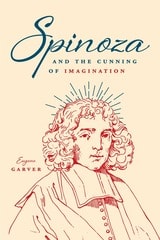
Spinoza and the Cunning of Imagination
Eugene Garver
University of Chicago Press, 2018
Spinoza initially presents imagination as an inadequate and confused way of thinking, always inferior to ideas that adequately represent things as they are. It would seem to follow that one ought to purge the mind of imaginative ideas and replace them with rational ideas as soon as possible, but as Garver shows, the Ethics don’t allow for this ultimate ethical act until one has cultivated a powerful imagination. This is, for Garver, “the cunning of imagination.” The simple plot of progress becomes, because of the imagination, a complex journey full of reversals and discoveries. For Garver, the “cunning” of the imagination resides in our ability to use imagination to rise above it.
Sport and Moral Conflict
A Conventionalist TheoryWilliam J.Morgan
Temple University Press, 2020
What is the purpose of sport, and how are ethical conceptions of sport shaped by the answers to this question? In Sport and Moral Conflict, William Morgan investigates, examining sport as a moral crucible that puts athletes in competitive, emotionally charged situations where fairness and equality are contested alongside accomplishment.
Morgan looks at the modern Olympics—from 1906 Athens to 1924 Paris, when the Games reached international prestige — in order to highlight the debate about athletic excellence and the amateur-professional divide. Whereas the Americans emphasized winning, the Europeans valued a love of the game. Morgan argues that the existing moral theories of sport—formalism and broad internalism (aka interpretivism), which rely on rules and general principles—fall short when confronted with such a dispute as the transition from amateur to professional sport. As such, he develops a theory of conventionalism, in which the norms at work in athletic communities determine how players should ethically acquit themselves. Presenting his case for an ethical theory of sport, Morgan provides insights regarding the moral controversies and crises that persist today.
Sport, Play, and Ethical Reflection
Randolph Feezell
University of Illinois Press, 2006
Feezell builds on these conclusions, addressing important ethical issues, arguing that sportsmanship should be seen as a kind of Aristotelian mean between the extremes of over- and under-investment in sport. Chapters on cheating, running up the score, and character building stress sport as a rule-governed, tradition-bound practice with standards of excellence and goods internal to the practice. With clear writing and numerous illuminating examples, Feezell demonstrates deep insight into both of his subjects.

Studies in Philosophy for Children
Harry Stottlemeier's Discoveryedited by Ann Margaret Sharp and Ronald F. Reed
Temple University Press, 1991
Harry Stottlemeier's Discovery, created by Matthew Lipman in 1969, is now a widely used and highly successful tool for teaching philosophy to children. As the original novel of the Philosophy for Children program, its goal is to present major ideas in the history of philosophy, nurturing children's ability to think for themselves. At present, it is taught in 5,000 schools in the United States and has been translated into eighteen languages worldwide. This collection of essays reflects upon the development, refinement, and maturation of Philosophy for Children and on its relationship to the tradition of philosophy itself.
The contributors are philosophers themselves who have taught from Lipman's novels or conducted workshops instructing elementary school teachers on how most effectively to utilize the program in their classrooms. Teaching Harry raises philosophical issues concerning such concepts as authority, morality, religion, justice, truth, knowledge, beauty, and goodness. Gracing each article with personal experience, the authors recount their own struggles against the claims of philosophers and psychologists who have previously underestimated children's moral capability because of their lack of political and social experience.

Suspect Citizens
Women, Virtue, and Vice in Backlash PoliticsJocelyn Boryczka
Temple University Press, 2012
What drives the cycle of backlashes against women’s ongoing struggle for equality, freedom, and inclusion in American politics? In her innovative and provocative book, Suspect Citizens, Jocelyn Boryczka presents a feminist conceptual history that shows how American politics have largely defined women in terms of their reproductive and socializing functions. This framework not only denies women full citizenship, but also devalues the active political engagement of all citizens who place each other and their government under suspicion.
Developing the gendered dynamics of virtue and vice, Boryczka exposes the paradox of how women are perceived as both virtuous moral guardians and vice-ridden suspect citizens capable of jeopardizing the entire nation’s exceptional future. She uses wide-ranging examples from the Puritans and contemporary debates over sex education to S&M lesbian feminists and the ethics of care to show how to move beyond virtue and vice to a democratic feminist ethics.
Suspect Citizens advances a politics of collective responsibility and belonging.