Results by title
338 books match the query 'Ethnology' and 17 start with s
Saints Observed
Studies of Mormon Village Life, 1850-2005Howard M. Bahr
University of Utah Press, 2014
Secrecy and Insurgency
Socialities and Knowledge Practices in GuatemalaSilvia Posocco
University of Alabama Press, 2014
Drawing on a broad field of contemporary theory, Silvia Posocco’s Secrecy and Insurgency presents a vivid ethnographic account of secrecy as both sociality and a set of knowledge practices. Informed by multi-sited anthropological fieldwork among displaced communities with experiences of militancy in the guerrilla organization Fuerzas Armadas Rebeldes, the book traces the contours of dispersed and intermittent guerrilla social relations, unraveling the gendered dimensions of guerrilla socialities and subjectivities in a local context marked by violence and rapid social change.
The chapters chart shifting regimes of governance in the northern departamento of Petén; the inception of violence and insurgency; guerrilla practices of naming and secret relations; moral orders based on sameness and sharing; and forms of relatedness, embodiment, and subjectivity among the combatants. The volume develops new critical idioms for grappling with partiality, perspective, and incompleteness in ethnography and contributes to new thinking on the anthropology of Guatemala.
Secrecy and Insurgency will be of interest to social and cultural anthropologists, human geographers, and scholars in Latin American studies, human rights, women’s studies, and gender studies.
Self+Culture+Writing
Autoethnography for/as Writing StudiesRebecca Jackson
Utah State University Press, 2021
Interest in autoethnography is growing among writing studies scholars, who see clear connections to well-known disciplinary conversations about personal narrative, as well as to the narrative turn in general and social justice efforts in particular. Contributions by authors from diverse backgrounds and institutional settings are organized into three parts: a section of writing studies autoethnographies, a section on how to teach autoethnography, and a section on how ideas about autoethnography in writing studies are evolving.
Self+Culture+Writing discusses the use of autoethnography in the writing classroom as both a research method and a legitimate way of knowing, providing examples of the genre and theoretical discussions that highlight the usefulness and limitations of these methods.
Contributors: Leslie Akst, Melissa Atienza, Ross Atkinson, Alison Cardinal, Sue Doe, Will Duffy, John Gagnon, Elena Garcia, Guadalupe Garcia, Caleb Gonzalez, Lilly Halboth, Rebecca Hallman Martini, Kirsten Higgins, Shereen Inayatulla, Aliyah Jones, Autumn Laws, Soyeon Lee, Louis M. Maraj, Kira Marshall-McKelvey, Jennifer Owen, Tiffany Rainey, Marcie Sims, Amanda Sladek, Trixie Smith, Anthony Warnke

Sensual Relations
Engaging the Senses in Culture and Social TheoryDavid Howes
University of Michigan Press, 2003
David Howes is Professor of Anthropology, Concordia University, Montreal, Quebec.

Sex, Sexuality, and the Anthropologist
Edited by Fran Markowitz and Michael Ashkenazi
University of Illinois Press, 1999
Sex, Sexuality, and the Anthropologist recounts the real-life experiences of anthropologists who are forced to acknowledge that their hosts in the field view them as gendered beings in a social context, not as asexual, objective observers. Far from controlling the research environment and defining the terms of interviewer-informant relationships, these researchers find they must engage in a process of negotiating their position—including their sexual position—within the communities they study.
Ranging from public baths in Austria to lesbian bars in Taiwan and from Mexico to Nigeria to Finland to Japan, Sex, Sexuality, and the Anthropologist raises critical questions about ethnographers' reflexivity, subjectivity, and detachment, confronting the challenge of a holistic approach to the anthropological enterprise.
Sex, Skulls, and Citizens
Gender and Racial Science in Argentina (1860-1910)Ashley Elizabeth Kerr
Vanderbilt University Press, 2020
PROSE Awards Subject Category Finalist—Biological Anthropology, Ancient History, and Archaeology, 2021
Best Nineteenth-Century Book Award, Latin American Studies Association Nineteenth-Century Section, 2021
Analyzing a wide variety of late-nineteenth-century sources, Sex, Skulls, and Citizens argues that Argentine scientific projects of the era were not just racial encounters, but were also conditioned by sexual relationships in all their messy, physical reality.
The writers studied here (an eclectic group of scientists, anthropologists, and novelists, including Estanislao Zeballos, Lucio and Eduarda Mansilla, Ramón Lista, and Florence Dixie) reflect on Indigenous sexual practices, analyze the advisability and effects of interracial sex, and use the language of desire to narrate encounters with Indigenous peoples as they try to scientifically pinpoint Argentina's racial identity and future potential.
Kerr's reach extends into history of science, literary studies, and history of anthropology, illuminating a scholarly time and place in which the lines betwixt were much blurrier, if they existed at all.
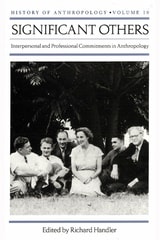
Significant Others
Interpersonal and Professional Commitments in AnthropologyEdited by Richard Handler
University of Wisconsin Press, 2004

Sites of Desire/Economies of Pleasure
Sexualities in Asia and the PacificEdited by Lenore Manderson and Margaret Jolly
University of Chicago Press, 1997
A unique and important contribution to the study of sexuality, this book also suggests that the history of sexuality in the West was shaped by myths of the legendary Orient and the exotic "Other."
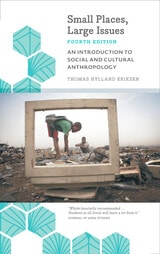
Small Places, Large Issues
An Introduction to Social and Cultural AnthropologyThomas Hylland Eriksen
Pluto Press, 2015

Social Life in Northwest Alaska
The Structure of Inupiaq Eskimo NationsErnest Burch Jr.
University of Alaska Press, 2006
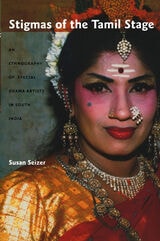
Stigmas of the Tamil Stage
An Ethnography of Special Drama Artists in South IndiaSusan Seizer
Duke University Press, 2005
Special Drama is looked down upon by the middle- and upper-classes as too popular, too vulgar, and too “mixed.” The artists are stigmatized: people insult them in public and landlords refuse to rent to them. Stigma falls most heavily, however, on actresses, who are marked as “public women” by their participation in Special Drama. As Susan Seizer’s sensitive study shows, one of the primary ways the performers deal with such stigma is through humor and linguistic play. Their comedic performances in particular directly address questions of class, culture, and gender deviations—the very issues that so stigmatize them. Seizer draws on extensive interviews with performers, sponsors, audience members, and drama agents as well as on careful readings of live Special Drama performances in considering the complexities of performers’ lives both on stage and off.
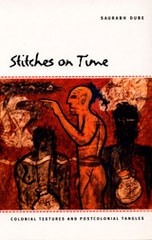
Stitches on Time
Colonial Textures and Postcolonial TanglesSaurabh Dube
Duke University Press, 2004
Dube provides incisive accounts of the interactions between North American evangelical missionaries and Christian converts of central India, and between colonial legal systems and Indian popular laws. He reflects on the difficulties of history writing by considering the production and reception of recent Hindu nationalist histories. Assessing the work of the South Asian Subaltern Studies Collective, he offers substantial critical readings of major writings by Ranajit Guha, Dipesh Chakrabarty, Partha Chatterjee, and others. Dube develops the concept and practice of a “history without warranty” as a means of rigorously rethinking categories such as modernity, colonialism, the West, the postcolonial, and the nation.
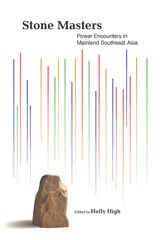
Stone Masters
Power Encounters in Mainland Southeast AsiaEdited by Holly High
National University of Singapore Press, 2022
Stones and stone masters are an important focus of animist religious practice in Southeast Asia. Recent studies on animism see animist rituals not as a mere metaphor for community or shared values, but as a way of forming and maintaining relationships with occult presences. This book features city pillars, statues, megaliths, termite mounds, mountains, rocks found in forests, and stones that have been moved to shrines, as well as the territorial cults which can form around them. The contributors extend and deepen the recent literature on animism to form a new analytical perspective on these cults across mainland Southeast Asia. Not just a collection of exemplary ethnographies, Stone Masters is also a deeply comparative volume that develops its ideas through a meshwork of regional entanglements, parallels, and differences, before entering into a dialogue with debates on power, mastery, and the social theory of animism globally.

Stories Find You, Places Know
Yup'ik Narratives of a Sentient WorldHolly Cusack-McVeigh
University of Utah Press, 2017
For the Yup’ik people, places are also social actors that react to human actions and emotions. Stories tell how people learn about each other through encounters on the land, and thereby places also learn about people. Places comment on human behavior through the land's responses to specific actions. Stories variously reveal ideas about human associations and relationships between humans and nonhuman beings. Pointing to a systematic correlation between places and narrative elements that has not been previously explored, this volume makes a unique contribution to the literature on place.
Winner of the Brian McConnell Book Award from the International Society for Contemporary Legend Research.
Storytelling Globalization from the Chaco and Beyond
Mario Blaser
Duke University Press, 2010
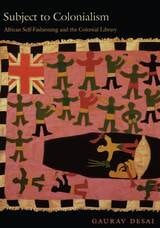
Subject to Colonialism
African Self-Fashioning and the Colonial LibraryGaurav Desai
Duke University Press, 2001
Presenting colonialism not as a singular, monolithic structure but rather as a practice frought with contradictions and tensions, Desai works to historicize the foundation of postcolonialism by decentering both canonical texts and privileged categories of analysis such as race, capitalism, empire, and nation. To achieve this, he focuses on texts that construct or reform—rather than merely reflect—colonialism, placing explicit emphasis on processes, performances, and the practices of everyday life. Reading these texts not merely for the content of their assertions but also for how they were created and received, Desai looks at works such as Jomo Kenyatta’s ethnography of the Gikuyu and Akiga Sai’s history of the Tiv and makes a particular plea for the canonical recuperation of African women’s writing.
Scholars in African history, literature, and philosophy, postcolonial studies, literary criticism, and anthropology will welcome publication of this book.
Supplement to the Handbook of Middle American Indians, Volume 6
EthnologyVictoria Reifler Bricker, general editor; John D. Monaghan, volume editor, with the assistance of Barbara W. Edmonson
University of Texas Press, 2000
In 1981, UT Press began to issue supplemental volumes to the classic sixteen-volume work, Handbook of Middle American Indians. These supplements are intended to update scholarship in various areas and to cover topics of current interest. Supplements devoted to Archaeology, Linguistics, Literatures, Ethnohistory, and Epigraphy have appeared to date.
In this Ethnology supplement, anthropologists who have carried out long-term fieldwork among indigenous people review the ethnographic literature in the various regions of Middle America and discuss the theoretical and methodological orientations that have framed the work of areal scholars over the last several decades. They examine how research agendas have developed in relationship to broader interests in the field and the ways in which the anthropology of the region has responded to the sociopolitical and economic policies of Mexico and Guatemala. Most importantly, they focus on the changing conditions of life of the indigenous peoples of Mesoamerica. This volume thus offers a comprehensive picture of both the indigenous populations and developments in the anthropology of the region over the last thirty years.