Results by title
38 books match the query 'Crossing'
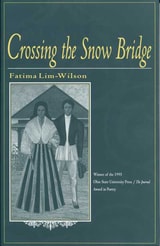
CROSSING THE SNOW BRIDGE
Fatima Lim-Wilson
The Ohio State University Press, 1995
An inhabitant of this country for five years, Lim-Wilson’s legal status is that of “resident alien,” a disturbing but apt description given the clash of cultures the immigrant encounters daily. Although she still dreams in her native Tagalog, Lim-Wilson writes in her borrowed language, and it is through attempting to understand the cleaving of her own tongue that she works to redefine her place and that of other immigrants here.
How can memories of green mangoes, miniature fish, and the landscape of seven thousand islands fit in with, let alone contribute to, a North American cultural identity? Yet a great part of that cultural identity is built upon the immigrant experience. In telling stories of the Philippines and of the United States, these poems build a metaphorical bridge over which we can cross between cultures.
Crossing the Aisle
How Bipartisanship Brought Tennessee to the Twenty-First Century and Could Save AmericaKeel Hunt
Vanderbilt University Press, 2018
The Tennessee story, as the Pulitzer Prize–winning author Jon Meacham observes in his foreword to this book, offers striking examples of bipartisan cooperation on many policy fronts—and a mode of governing that provides lessons for America in this frustrating era of partisan stalemate.
For more on Crossing the Aisle and author Keel Hunt, visit KeelHunt.com.
Crossing the Aisle
How Bipartisanship Brought Tennessee to the Twenty-First Century and Could Save AmericaKeel Hunt
Vanderbilt University Press, 2018
The Tennessee story, as the Pulitzer Prize–winning author Jon Meacham observes in his foreword to this book, offers striking examples of bipartisan cooperation on many policy fronts—and a mode of governing that provides lessons for America in this frustrating era of partisan stalemate.
For more on Crossing the Aisle and author Keel Hunt, visit KeelHunt.com.
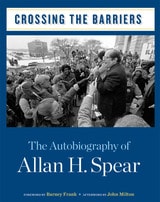
Crossing the Barriers
The Autobiography of Allan H. SpearAllan H. Spear
University of Minnesota Press, 2010
Spear's memoirs are fascinating and moving: in early chapters on his childhood and college years, he writes with great introspection about his growing self-awareness of being gay. Later he writes about his development as an intellectual, particularly as a white man fighting to win legitimacy for the study of African-American history and culture. During his time at the University of Minnesota, Spear became deeply involved with the Minnesota Democratic-Farmer-Labor Party (DFL) and the antiwar movement. At the same time, Spear became increasingly active in the emerging gay rights movement and began the process of coming out to his friends and colleagues.
After a failed run for the Minnesota House in 1968, Spear was elected to the Minnesota Senate in 1972 and served as Senate president from 1993-2000. In 1993, he was instrumental in the passage of the Minnesota Human Rights Act, which protected LGBT people from discrimination in housing, education, and employment-an achievement he considered one of the finest of his career. A skilled parliamentarian, he remained a progressive leader in the legislature until his retirement in 2000.
Spear passed away on October 11, 2008, leaving his memoir slightly incomplete. A stirring afterword by John Milton completes the story of Spear's life, chronicling the recognition of his accomplishments as a politician and activist during his final years.

Crossing the Blue Willow Bridge
A Journey to My Daughter's Birthplace in ChinaNancy McCabe
University of Missouri Press, 2011
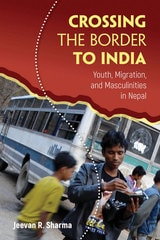
Crossing the Border to India
Youth, Migration, and Masculinities in NepalJeevan R. Sharma
Temple University Press, 2018
Given the limited economic opportunities in rural Nepal, the desire of young men of all income and education levels, castes and ethnicities to migrate has never been higher. Crossing the Border to India provides an ethnography of male labor migration from the western hills of Nepal to Indian cities. Jeevan Sharma shows how a migrant’s livelihood and gender, as well as structural violence impacts his perceptions, experiences, and aspirations.
Based on long-term fieldwork, Sharma captures the actual experiences of crossing the border. He shows that Nepali migration to India does not just allow young men from poorer backgrounds to “save there and eat here,” but also offers a strategy to escape the more regimented social order of the village. Additionally, migrants may benefit from the opportunities offered by the “open-border” between India and Nepal to attain independence and experience a distant world. However, Nepali migrants are subjected to high levels of ill treatment. Thus, while the idea of freedom remains extremely important in Nepali men’s migration decisions, their actual experience is often met with unfreedom and suffering.
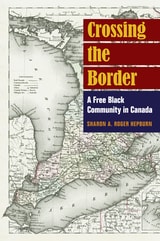
Crossing the Border
A Free Black Community in CanadaSharon A. Roger Hepburn
University of Illinois Press, 2007
How formerly enslaved people found freedom and built community in Ontario
In 1849, the Reverend William King and fifteen once-enslaved people he had inherited founded the Canadian settlement of Buxton on Ontario land set aside for sale to Blacks. Though initially opposed by some neighboring whites, Buxton grew into a 700-person agricultural community that supported three schools, four churches, a hotel, a lumber mill, and a post office.
Sharon A. Roger Hepburn tells the story of the settlers from Buxton’s founding of through its first decades of existence. Buxton welcomed Black men, woman, and children from all backgrounds to live in a rural setting that offered benefits of urban life like social contact and collective security. Hepburn’s focus on social history takes readers inside the lives of the people who built Buxton and the hundreds of settlers drawn to the community by the chance to shape new lives in a country that had long represented freedom from enslavement.
Crossing the Border
Research from the Mexican Migration ProjectJorge Durand
Russell Sage Foundation, 2004
Crossing the Borders
New Methods and Techniques in the Study of Archaeological Materials from the CaribbeanEdited by Corinne L. Hofman, Menno Hoogland, and Annelou L. van Gijn
University of Alabama Press, 2008
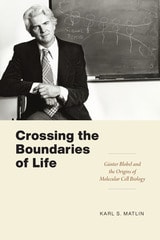
Crossing the Boundaries of Life
Günter Blobel and the Origins of Molecular Cell BiologyKarl S. Matlin
University of Chicago Press, 2022
The difficulty of reconciling chemical mechanisms with the functions of whole living systems has plagued biologists since the development of cell theory in the nineteenth century. As Karl S. Matlin argues in Crossing the Boundaries of Life, it is no coincidence that this longstanding knot of scientific inquiry was loosened most meaningfully by the work of a cell biologist, the Nobel laureate Günter Blobel. In 1975, using an experimental setup that did not contain any cells at all, Blobel was able to target newly made proteins to cell membrane vesicles, enabling him to theorize how proteins in the cell distribute spatially, an idea he called the signal hypothesis. Over the next twenty years, Blobel and other scientists were able to dissect this mechanism into its precise molecular details. For elaborating his signal concept into a process he termed membrane topogenesis—the idea that each protein in the cell is synthesized with an "address" that directs the protein to its correct destination within the cell—Blobel was awarded the Nobel Prize in Physiology or Medicine in 1999.
Matlin argues that Blobel’s investigative strategy and its subsequent application addressed a fundamental unresolved dilemma that had bedeviled biology from its very beginning—the relationship between structure and function—allowing biology to achieve mechanistic molecular explanations of biological phenomena. Crossing the Boundaries of Life thus uses Blobel’s research and life story to shed light on the importance of cell biology for twentieth-century science, illustrating how it propelled the development of adjacent disciplines like biochemistry and molecular biology.
Crossing the Class and Color Lines
From Public Housing to White SuburbiaLeonard S. Rubinowitz and James E. Rosenbaum
University of Chicago Press, 2000
"This book's history of Chicago public housing should be required reading for anyone interested in social policy in the United States."—Jens Ludwig, Social Service Review
"[The authors'] work is rightly cited as one of the important precedents in the field. . . . This is a remarkable, unassailable accomplishment and this book is an important record of their scholarly contribution."—John M. Goering, Ethnic and Racial Studies
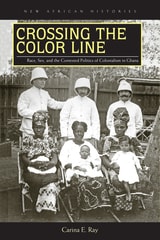
Crossing the Color Line
Race, Sex, and the Contested Politics of Colonialism in GhanaCarina E. Ray
Ohio University Press, 2015
Winner of the 2017 Aidoo-Snyder Book Prize
Winner of the 2016 American Historical Association’s Wesley-Logan Prize in African diaspora
Finalist for the 2016 Fage and Oliver Prize from the African Studies Association of the UK
Interracial sex mattered to the British colonial state in West Africa. In Crossing the Color Line, Carina E. Ray goes beyond this fact to reveal how Ghanaians shaped and defined these powerfully charged relations. The interplay between African and European perspectives and practices, argues Ray, transformed these relationships into key sites for consolidating colonial rule and for contesting its hierarchies of power. With rigorous methodology and innovative analyses, Ray brings Ghana and Britain into a single analytic frame to show how intimate relations between black men and white women in the metropole became deeply entangled with those between black women and white men in the colony in ways that were profoundly consequential.
Based on rich archival evidence and original interviews, the book moves across different registers, shifting from the micropolitics of individual disciplinary cases brought against colonial officers who “kept” local women to transatlantic networks of family, empire, and anticolonial resistance. In this way, Ray cuts to the heart of how interracial sex became a source of colonial anxiety and nationalist agitation during the first half of the twentieth century.
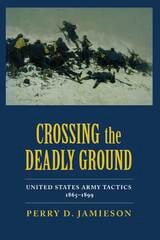
Crossing the Deadly Ground
United States Army Tactics, 1865–1899Perry D. Jamieson
University of Alabama Press, 2004
Attempts to answer difficult questions about battle tactics employed by the United States Army
Weapons improved rapidly after the Civil War, raising difficult questions about the battle tactics employed by the United States Army. The most fundamental problem was the dominance of the tactical defensive, when defenders protected by fieldworks could deliver deadly fire from rifles and artillery against attackers advancing in close-ordered lines. The vulnerability of these offensive forces as they crossed the so-called "deadly ground" in front of defensive positions was even greater with the improvement of armaments after the Civil War.
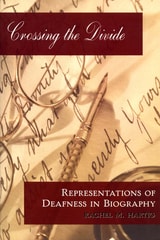
Crossing the Divide
Representations of Deafness in BiographyRachel M. Hartig
Gallaudet University Press, 2006
This remarkable volume examines the process by which three deaf, French biographers from the 19th and 20th centuries attempted to cross the cultural divide between deaf and hearing worlds through their work. The very different approach taken by each writer sheds light on determining at what point an individual’s assimilation into society endanger his or her sense of personal identity.
Author Hartig begins by assessing the publications of Jean-Ferdinand Berthier (1803-1886). Berthier wrote about Auguste Bébian, Abbé de l’Epée, and Abbé Sicard, all of whom taught at the National Institute for the Deaf in Paris. Although Berthier presented compelling portraits of their entire lives, he paid special attention to their political and social activism, his main interest.
Yvonne Pitrois (1880-1937) pursued her particular interest in the lives of deaf-blind people. Her biography of Helen Keller focused on her subject’s destiny in conjunction with her unique relationship with Anne Sullivan. Corinne Rocheleau-Rouleau (1881-1963) recounted the historical circumstances that led French-Canadian pioneer women to leave France. The true value of her work resides in her portraits of these pioneer women: maternal women, warriors, religious women, with an emphasis on their lives and the choices they made.
Crossing the Divide reveals clearly the passion these biographers shared for narrating the lives of those they viewed as heroes of an emerging French deaf community. All three used the genre of biography not only as a means of external exploration but also as a way to plumb their innermost selves and to resolve ambivalence about their own deafness.
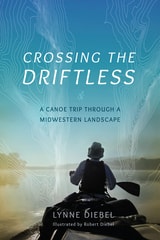
Crossing the Driftless
A Canoe Trip through a Midwestern LandscapeLynne Diebel
University of Wisconsin Press, 2015
Crossing the Driftless is both a traveler’s tale and an exploration of this dramatic environment, following the streams of geologic and human history. Lynne Diebel and her husband, Bob, crossed the Driftless Area by canoe, journeying 359 river miles (and six Mississippi River locks and five portages) from Faribault, Minnesota, where her family has a summer home on Cedar Lake, to their Wisconsin home in Stoughton, one block from the Yahara River. Traveling by river and portage, they paddled downstream on the Cannon and Mississippi rivers and upstream on the Wisconsin River, in the tradition of voyageurs. Lynne tells the story of their trip, but also the stories of the rivers they canoed and the many tributaries whose confluences they passed.
Finalist, Travel, Foreword Reviews IndieFab Book of the Year Awards
Honorable mention, Nonfiction book, Council for Wisconsin Writers
Winner, Recreation/Sports/Travel, Midwest Book Awards
Best books for public & secondary school libraries from university presses, American Library Association
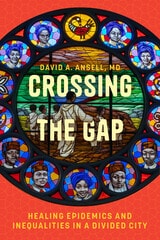
Crossing the Gap
Healing Epidemics and Inequalities in a Divided CityDavid A. Ansell, MD
University of Chicago Press, 2026
A doctor, a disinvested neighborhood, and a radical experiment to close America’s death gap.
Two girls are born in the same Chicago hospital. Their neighborhoods—just seven train stops apart—will shape their futures and help determine how long they live. One will celebrate her eighty-fifth birthday. The other will die before sixty-five.
This is the death gap: lives lost too soon. Crossing the Gap asks how a city with world-class hospitals can tolerate an epidemic of premature death—and tells the story of the people fighting to end it.
In his landmark book The Death Gap, physician and health equity leader David A. Ansell exposed how structural racism and poverty shorten lives. He moves beyond diagnosis in Crossing the Gap to explore what happens when a major medical center joins forces with pastors, community organizers, residents, and young leaders on Chicago’s West Side to redefine what a hospital owes its neighbors. Part medical memoir and part urban chronicle, Crossing the Gap follows groundbreaking initiatives such as West Side United and the Sankofa Wellness Village as they confront decades of disinvestment and work to build healthier communities.
Through stories of collaboration, courage, conflict, and community leadership, Ansell shows how neighborhood voices, rigorous data, and moral imagination can transform health systems from bystanders into partners for change—not just in one city but throughout the nation.
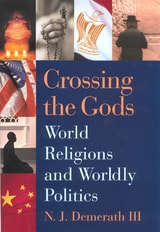
Crossing the Gods
World Religions and Worldly PoliticsDemerath, Jay
Rutgers University Press, 2003
Eminent sociologist of religion Jay Demerath traveled to Brazil, China, Egypt, Guatemala, India, Indonesia, Israel, Japan, Northern Ireland, Pakistan, Poland, Sweden, Turkey, and Thailand to explore the history and current relationship of religion, politics, and the state in each country. In the first part of this wide-ranging book, he asks, What are the basic fault lines along which current tensions and conflicts have formed? What are the trajectories of change from past to present, and how do they help predict the future?
In the book’s second part the author returns home to focus on the United States the only nation founded specifically on the principle of a separation between religion and state and examines the extent to which this principle actually holds and the consequences when it does not. Highlighting such issues as culture wars, violence, globalization, and the fluidity of individual religious identity, Demerath exposes the provincialism and fallacies underlying many of our views of religion and politics worldwide.
Finally, Demerath examines America’s status as the world’s most religious nation. He places that claim within a comparative context and argues that our country is not “more religious” but “differently religious.” He argues that it represents a unique combination of congregational religion, religious pluralism, and civil religion. But the United States also illustrates the universal tendency for the sacred to give way to the secular and for the secular to generate new forms of the sacred.
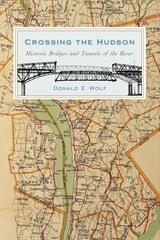
Crossing the Hudson
Historic Bridges and Tunnels of the RiverWolf, Donald
Rutgers University Press, 2010
Crossing the Hudson continues this story soon after the end of the war, in 1805, when the first bridge was completed. Donald E. Wolf simultaneously tracks the founding of the towns and villages along the water's edge and the development of technologies such as steam and internal combustion that demanded new ways to cross the river. As a result, innovative engineering was created to provide for these resources.
From hybrid, timber arch, and truss bridges on stone piers to long-span suspension and cantilevered bridges, railroad tunnels, and improvements in iron and steel technology, the construction feats that cross the Hudson represent technical elegance and physical beauty. Crossing the Hudson reveals their often multileveled stories--a history of where, why, when, and how these structures were built; the social, political, and commercial forces that influenced decisions to erect them; the personalities of the planners and builders; the unique connection between a builder and his bridge; and the design and construction techniques that turned mythical goals into structures of utility and beauty.
Crossing the Ladder of the Sun
Laura Apol
Michigan State University Press, 2004
In her new collection of poetry, Crossing the Ladder of Sun, Laura Apol explores the ordinary moments of life—watching her daughter, picking blueberries, sharing confidences with friends, arriving and leaving, and driving, always driving—and transforms them into the extraordinary. This book is rich with the lyrical found in what is considered the mundane as it portrays the multiple roles of a woman’s life—mother, daughter, lover, ex-wife, friend. Apol’s highly personal poems reflect a caring and compassion that transcends loneliness and heartache.
Crossing the Line
Racial Passing in Twentieth-Century U.S. Literature and CultureGayle Wald
Duke University Press, 2000
Wald begins her reading of twentieth-century passing narratives by analyzing works by African American writers James Weldon Johnson, Jessie Fauset, and Nella Larsen, showing how they use the “passing plot” to explore the negotiation of identity, agency, and freedom within the context of their protagonists' restricted choices. She then examines the 1946 autobiography Really the Blues, which details the transformation of Milton Mesirow, middle-class son of Russian-Jewish immigrants, into Mezz Mezzrow, jazz musician and self-described “voluntary Negro.” Turning to the 1949 films Pinky and Lost Boundaries, which imagine African American citizenship within class-specific protocols of race and gender, she interrogates the complicated representation of racial passing in a visual medium. Her investigation of “post-passing” testimonials in postwar African American magazines, which strove to foster black consumerism while constructing “positive” images of black achievement and affluence in the postwar years, focuses on neglected texts within the archives of black popular culture. Finally, after a look at liberal contradictions of John Howard Griffin’s 1961 auto-ethnography Black Like Me, Wald concludes with an epilogue that considers the idea of passing in the context of the recent discourse of “color blindness.”
Wald’s analysis of the moral, political, and theoretical dimensions of racial passing makes Crossing the Line important reading as we approach the twenty-first century. Her engaging and dynamic book will be of particular interest to scholars of American studies, African American studies, cultural studies, and literary criticism.
Crossing the Postmodern Divide
Albert Borgmann
University of Chicago Press, 1993
"[This] thoughtful book is the first remotely realistic map out of the post modern labyrinth."—Joseph Coates, The Chicago Tribune
"Rather astoundingly large-minded vision of the nature of humanity, civilization and science."—Kirkus Reviews
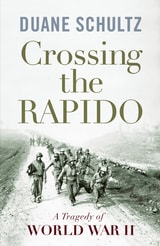
Crossing the Rapido
A Tragedy of World War IIDuane Schultz
Westholme Publishing, 2010
The True Story of an Impossible Mission During the Liberation of Italy
"World War II history writing at its best.” —Dallas Morning News
“Schultz convey stories of individual courage and fear. He presents the Rapido crossing as part of an experience that changed lives utterly.” —Publishers Weekly
“Well written, superbly documented and containing many helpful illustrations and maps, this fine book will appeal to military history enthusiasts of all ages.” —Read@MPL (Milwaukee Public Library)
“Duane Schultz has written another powerful account of the Second World War.” —Daily News, Iron Mountain, Michigan
“A fast-paced, dramatic account of World War II combat.”—Global War StudiesThe Rapido River was the last natural barrier between General Mark W. Clark’s Fifth U.S. Army and Rome. Ignoring intelligence reports that the Germans had significant forces protecting the opposite side of the river, Clark ordered the 36th Division to make a nighttime crossing on January 20, 1944. The division, already coming through some of the heaviest fighting in Italy, knew they could not succeed: they had to cross a fast-flowing river at night in bitter cold and face one of the strongest, most formidable German defensive lines in Europe, full of minefields, veteran troops, and withering artillery and mortar fire. Once in the water, men in full field gear were borne away by the current or vanished in massive explosions. The few who managed to reach the other side found themselves pinned down unable to move. Soldiers died by the hundreds, yet the stunned survivors who fell back to the launch site were ordered to attack again, this time in daylight. Of the 4,000 men who attempted the crossing, more than half did not return. General Clark never accepted blame for ordering the assault despite the numerous warnings he received from both British and American commanders. Although they were decimated, the division went on to lead a key surprise attack that opened Rome to Allied forces, and ultimately fought in France, where they had the distinction of capturing Hermann Goering and Field Marshal Gerd von Rundstedt.
In Crossing the Rapido: A Tragedy of World War II, Duane Schultz follows the action at the ground level using survivors’ interviews and army documents to tell the story of one division’s sacrifice in war. In doing so, he demonstrates that the American soldier will face the greatest odds without protest, but expects those in command to share any failure or success.“Those of us who were present will always remember the men of the 36th, climbing silently in the night behind the enemy, armed with little but their American competence and a personal faith in their quiet, retiring general who had never let them down. If Generals Alexander and Clark received the key to the city of Rome, it was General Walker who turned the key and handed it to them.” —Eric Sevareid, reporting from Italy during World War II
“I have never seen so many dead as on that day.” —John Huston, Academy Award winning director during his wartime filming of The Battle of San Pietro
Crossing the Rift
Resources, Settlements Patterns and Interaction in the Wadi ArabahP. Bienkwoski
Council for British Research in the Levant, 2006
Crossing the River
Shalom Eilati
University of Alabama Press, 2009
A child’s journey through war, memory, and survival—told with haunting clarity and poetic grace.
Crossing the River is a personal memoir—and more. Against the backdrop of Lithuania’s occupation—first by the Red Army, next by the Germans, and then again by the Russians—it is a story reflected through the prism of a sharp-eyed young child, Shalom Eilati. His story starts in the occupied Kovno Ghetto and ends with his flight across the Soviet border, through Poland and Germany and finally, his arrival in Palestine.
The adult survivor, while recalling the terrorized child that he was and how he then perceived the adult world, also takes stock of his present life. Throughout the memoir, Eilati attempts to reconcile his present life as a husband, father, scientist, and writer, with the images, feelings, and thoughts from the past that have left an indelible mark on his life and that continue to haunt him.
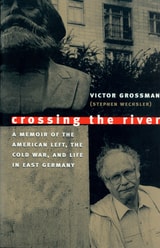
Crossing the River
A Memoir of the American Left, the Cold War, and Life in East GermanyVictor Grossman
University of Massachusetts Press, 2003
What could possibly impel a relatively privileged twenty-four-year-old American-serving in the U.S. Army in Germany in 1952 to swim across the Danube River to what was then referred to as the Soviet Zone? How are we to understand his decision to forsake the land of his birth and build a new life in the still young German Democratic Republic? These are the questions at the core of this memoir by Victor Grossman, who was born Stephen Wechsler but changed his name after defecting to the GDR.
A child of the Depression, Grossman witnessed firsthand the dislocations wrought by the collapse of the U.S. economy during the 1930s. Widespread unemployment and poverty, CIO sit-down strikes, and the fight to save Republican Spain from fascism-all made an indelible impression as he grew up in an environment that nurtured a commitment to left-wing causes. He continued his involvement with communist activities as a student at Harvard in the late 1940s and after graduation, when he took jobs in two factories in Buffalo, New York, and tried to organize their workers.
Fleeing McCarthyite America and potential prosecution, Grossman worked in the GDR with other Western defectors and eventually became, as he notes, the “only person in the world to attend Harvard and Karl Marx universities.” Later, he was able to establish himself as a freelance journalist, lecturer, and author. Traveling throughout East Germany, he evaluated the failures as well as the successes of the GDR's “socialist experiment.” He also recorded his experiences, observations, and judgments of life in East Berlin after reunification, which failed to bring about the post-Communist paradise so many had expected.
Written with humor as well as candor, Crossing the River provides a rare look at the Cold War from the other side of the ideological divide.
Mark Solomon, a distinguished historian of the American left, provides a historical afterword that places Grossman's experiences in a larger Cold War context.
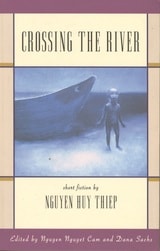
Crossing the River
Short Fiction by Nguyen Huy ThiepNguyen Huy Thiep
Northwestern University Press, 2002
Crossing the River presents a wide range of Nguyen Huy Thiep's short fiction, both realistic stories in contemporary settings and retellings of folk myths that serve as contemporary parables. When Thiep's stories first appeared in the 1980s, they set off a chain of debate, not only within intellectual and political circles, but also within the society at large. Typically, the struggles of his characters were about survival, not survival in the context of war or revolution, but survival in the context of the emotional and psychological strength it takes to live within the harsh confines of post-war Vietnamese society. Thiep captured the emotional quality of Vietnamese life in a way no other author had done, and his importance can be recognized today by his enormous influence on younger writers.
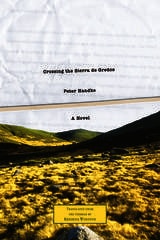
Crossing the Sierra de Gredos
A NovelPeter Handke
Northwestern University Press, 2009
On the outskirts of a European riverport city lives a powerful woman banker, a public figure admired and hated in equal measure, who has decided to turn from the worlds of high finance and modern life to embark on a quest. Having commissioned a famous writer to undertake her "authentic" biography, she journeys through the Spanish Sierra de Gredos and the region of La Mancha to meet him. As she travels by all-terrain vehicle, bus, and finally on foot, the nameless protagonist encounters five way stations that become the stuff of her biography and the biography of the modern world, a world in which genuine images and unmediated experiences have been exploited and falsified by commercialization and the voracious mass media.
In this visionary novel, Peter Handke offers descriptions of objects, relationships, and events that teach readers a renewed way of seeing; he creates a wealth of images to replace those lost to convention and conformity. Crossing the Sierra de Gredos is, as well, a very human book of yearning and the ancient search for love, peopled with memorable characters (from multiple historical periods) and imbued with Handke’s inimitable ability to portray universal, innerworldly adventures that blend past, future, present, and dreamtime.

Crossing the Street in Hanoi
Teaching and Learning About VietnamCarol Wilder
Intellect Books, 2013
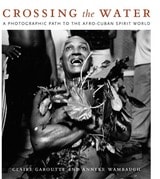
Crossing the Water
A Photographic Path to the Afro-Cuban Spirit WorldClaire Garoutte and Anneke Wambaugh
Duke University Press, 2007
A book of more than 150 striking photographs in both black and white and color, Crossing the Water includes images of elaborate Santería altars and Palo spirit cauldrons, as well as of Santiago and his religious “family” engaged in ritual practices: the feeding of the spirits, spirit possession, and private and collective healing ceremonies. As the charismatic head of a large religious community, Santiago helps his godchildren and others who consult him to cope with physical illness, emotional crises, contentious relationships, legal problems, and the hardships born of day-to-day survival in contemporary Cuba. He draws on the distinct yet intertwined traditions of Santería, Palo Monte, and Espiritismo to foster healing of both mind and body—the three religions form a coherent theological whole for him.
Santiago eventually became Garoutte’s and Wambaugh’s spiritual godfather, and Crossing the Water is informed by their experiences as initiates of Santería and Palo Monte. Their text provides nuanced, clear explanations of the objects and practices depicted in the images. Describing the powerful intensity of human-spirit interactions, and evoking the sights, smells, sounds, and choreography of ritual practice, Crossing the Water takes readers deep inside the intimate world of Afro-Cuban spirituality.
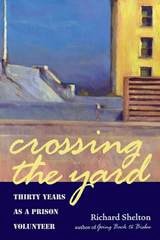
Crossing the Yard
Thirty Years as a Prison VolunteerRichard Shelton
University of Arizona Press, 2007
Richard Shelton was a young English professor in 1970 when a convict named Charles Schmid—a serial killer dubbed the “Pied Piper of Tucson” in national magazines—shared his brooding verse. But for Shelton, the novelty of meeting a death-row monster became a thirty-year commitment to helping prisoners express themselves. Shelton began organizing creative writing workshops behind bars, and in this gritty memoir he offers up a chronicle of reaching out to forgotten men and women—and of creativity blossoming in a repressive environment. He tells of published students such as Paul Ashley, Greg Forker, Ken Lamberton, and Jimmy Santiago Baca who have made names for themselves through their writing instead of their crimes. Shelton also recounts the bittersweet triumph of seeing work published by men who later met with agonizing deaths, and the despair of seeing the creative strides of inmates broken by politically motivated transfers to private prisons. And his memoir bristles with hard-edged experiences, ranging from inside knowledge of prison breaks to a workshop conducted while a riot raged outside a barricaded door. Reflecting on his decision to tutor Schmid, Shelton sees that the choice “has led me through bloody tragedies and terrible disappointments to a better understanding of what it means to be human.”
Crossing the Yard is a rare story of professional fulfillment—and a testament to the transformative power of writing.
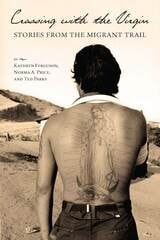
Crossing with the Virgin
Stories from the Migrant TrailKathryn Ferguson, Norma A. Price, and Ted Parks
University of Arizona Press, 2010
Crossing With the Virgin collects stories heard from migrants about these treacherous treks—firsthand accounts told to volunteers for the Samaritans, a humanitarian group that seeks to prevent such unnecessary deaths by providing these travelers with medical aid, water, and food. Other books have dealt with border crossing; this is the first to share stories of immigrant suffering at its worst told by migrants encountered on desert trails.
The Samaritans write about their encounters to show what takes place on a daily basis along the border: confrontations with Border Patrol agents at checkpoints reminiscent of wartime; children who die in their parents’ desperate bid to reunite families; migrants terrorized by bandits; and hovering ghost-like above nearly every crossing, the ever-present threat of death.
These thirty-nine stories are about the migrants, but they also tell how each individual author became involved with this work. As such, they offer not only a window into the migrants’ plight but also a look at the challenges faced by volunteers in sometimes compromising situations—and at their own humanizing process.
Crossing With the Virgin raises important questions about underlying assumptions and basic operations of border enforcement, helping readers see past political positions to view migrants as human beings. It will touch your heart as surely as it reassures you that there are people who still care about their fellow man.
Crossing
A MemoirDeirdre Nansen McCloskey
University of Chicago Press, 1999
Crossing
A Transgender MemoirDeirdre Nansen McCloskey
University of Chicago Press, 2019
“I visited womanhood and stayed. It was not for the pleasures, though I discovered many I had not imagined, and many pains too. But calculating pleasures and pains was not the point. The point was who I am.”
Once a golden boy of conservative economics and a child of 1950s privilege, Deirdre McCloskey (formerly Donald) had wanted to change genders from the age of eleven. But it was a different time, one hostile to any sort of straying from the path—against gays, socialists, women with professions, men without hats, and so on—and certainly against gender transition. Finally, in 1995, at the age of fifty-three, it was time for McCloskey to cross the gender line.
Crossing is the story of McCloskey’s dramatic and poignant transformation from Donald to Dee to Deirdre. She chronicles the physical procedures and emotional evolution required and the legal and cultural roadblocks she faced in her journey to womanhood. By turns searing and humorous, this is the unflinching, unforgettable story of her transformation—what she lost, what she gained, and the women who lifted her up along the way.
Fannie Barrier Williams
Crossing the Borders of Region and RaceWanda A. Hendricks
University of Illinois Press, 2014
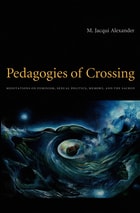
Pedagogies of Crossing
Meditations on Feminism, Sexual Politics, Memory, and the SacredM. Jacqui Alexander
Duke University Press, 2005
In these meditations, Alexander deftly unites large, often contradictory, historical processes across time and space. She focuses on the criminalization of queer communities in both the United States and the Caribbean in ways that prompt us to rethink how modernity invents its own traditions; she juxtaposes the political organizing and consciousness of women workers in global factories in Mexico, the Caribbean, and Canada with the pressing need for those in the academic factory to teach for social justice; she reflects on the limits and failures of liberal pluralism; and she presents original and compelling arguments that show how and why transgenerational memory is an indispensable spiritual practice within differently constituted women-of-color communities as it operates as a powerful antidote to oppression. In this multifaceted, visionary book, Alexander maps the terrain of alternative histories and offers new forms of knowledge with which to mold alternative futures.
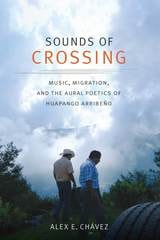
Sounds of Crossing
Music, Migration, and the Aural Poetics of Huapango ArribeñoAlex E. Chávez
Duke University Press, 2017
The Performances of Sacred Spaces
Crossing, Breathing, ResistingEdited by Silvia Battista
Intellect Books, 2021
The questions investigated are: what is a sacred place? Is a place inherently sacred or does it become sacred? Is it a paradigm, a real location, an imaginary place, a projected condition, a charged setting, an enhanced perception? What kind of practices and processes allow the emergence of a sacred place in human perception? And what is its function in contemporary societies?
In exploring these questions and more, Silvia Battista challenges the conventional understanding of sacred places in contemporary contexts and sparks lively new debate on the roles of religiosity and spirituality.

Trajectories
Crossing the Map of PoetryCarolyne Wright
University of Michigan Press, 2027
In Trajectories, poet, translator, human rights advocate, and world traveler Carolyne Wright maps her poetic path in the crossing of cultural, linguistic, and national boundaries. From her origins in Seattle and the Pacific Northwest through Latin America (Chile, Brazil) and South Asia (India, Bangladesh) through languages spoken in these regions (Spanish, Portuguese, and Bengali), Wright recalls and relives the poetic trajectory as well as the seeming tangents that one poet’s relatively uncommon life has taken. She pays tribute to poetic mentors of the “Northwest School,” to Bengali and Chilean women poets, to the poetry and music of Brazil, and to poets such as Elizabeth Bishop, Ted Hughes, and Sylvia Plath.
Throughout her essays and interviews and across a wide range of literary interests, Wright explores connections between family and national history, intersections of personal and public spheres, and the poetics of the era in which she moves. She connects lyricism to social engagement, witnessing contemporary and historical issues while remaining committed to the heightened, musical language of lyric poetry. Both personal and political, a compelling story and a work of criticism, Trajectories seeks essential insights into poetry as a path of discovery across the cartography of the human heart. Wright offers these experiences and insights as a map for readers who wish to share the journey.