Results by title
316 books match the query 'Ethnomusicology' and 40 start with s

Salsa Consciente
Politics, Poetics, and Latinidad in the Meta-BarrioAndrés Espinoza Agurto
Michigan State University Press, 2021
SamulNori
Contemporary Korean Drumming and the Rebirth of Itinerant Performance CultureNathan Hesselink
University of Chicago Press, 2012

Sardinian Chronicles
Bernard Lortat-Jacob
University of Chicago Press, 1995
Through his sensitive portraits of music makers and their families, Lortat-Jacob overcomes some of the epistemological and methodological dilemmas facing his field today, while also giving the general reader a sense of the multiple and idiosyncratic ways that music is involved in everyday life. With a foreword by Michel Leiris and a compact disc containing samples of the music being discussed, this book constitutes a breakthrough in ethnomusicology that will also interest many in Mediterranean studies and European anthropology.
Saying Something
Jazz Improvisation and InteractionIngrid Monson
University of Chicago Press, 1997
This fresh look at the neglected rhythm section in jazz ensembles shows that the improvisational interplay among drums, bass, and piano is just as innovative, complex, and spontaneous as the solo. Ingrid Monson juxtaposes musicians' talk and musical examples to ask how musicians go about "saying something" through music in a way that articulates identity, politics, and race. Through interviews with Jaki Byard, Richard Davis, Sir Roland Hanna, Billy Higgins, Cecil McBee, and others, she develops a perspective on jazz improvisation that has "interactiveness" at its core, in the creation of music through improvisational interaction, in the shaping of social communities and networks through music, and in the development of cultural meanings and ideologies that inform the interpretation of jazz in twentieth-century American cultural life.
Replete with original musical transcriptions, this broad view of jazz improvisation and its emotional and cultural power will have a wide audience among jazz fans, ethnomusicologists, and anthropologists.

Sensing Precarity
Viral Listening in Medicalized WorldsAilsa Lipscombe
University of Michigan Press, 2027
Sensing Precarity tunes into the sonic ramifications of the COVID-19 pandemic to reveal how moments of crisis are commonly framed as moments of rupture. Combining traditional ethnography with media analysis, creative writing, and poetry, Sensing Precarity reveals how what Ailsa Lipscombe calls “the medicalization of the everyday” is a long-standing phenomenon, one acutely experienced by disabled and chronically ill communities. Lipscombe asks: how do the sights, sounds, behaviors, expectations, and interpretive lenses of medical environments (and activities) inflect or infect everyday spaces and activities? The study argues that during crises, encounters with precarity—real, potential, and imagined—instigate widespread engagement with notions of embodiment and relationality, and that in this context, bodies are understood as both being at risk and posing risks for others.
Shaping Society through Dance
Mestizo Ritual Performance in the Peruvian AndesZoila S. Mendoza
University of Chicago Press, 2000
In this fluid world, she argues, racial and ethnic identities are shaped more by notions of what is decent, elegant, and modern rather than by skin color or status. As the different troupes vie for the townspeople's recognition as the most "authentic" group, these notions are challenged and reworked. A fascinating look at a rich tradition, this innovative work is also a compelling example of the critical anthropology of performance.
Signs of the Spirit
Music and the Experience of Meaning in Ndau Ceremonial LifeTony Perman
University of Illinois Press, 2020
Perman's encounters with the spirits, the mediums who bring them back, and the accompanying rituals form the heart of his ethnographic account of how the Ndau experience ceremonial musicking. As Perman witnessed other ceremonies, he discovered that music and dancing shape the emotional lives of Ndau individuals by inviting them to experience life's milestones or cope with its misfortunes as a group. Signs of the Spirit explores the historical, spiritual, and social roots of ceremonial action and details how that action influences the Ndau's collective approach to their future. The result is a vivid ethnomusicological journey that delves into the immediacy of musical experience and the forces that transform ceremonial performance into emotions and community.
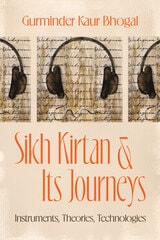
Sikh Kirtan and Its Journeys
Instruments, Theories, TechnologiesGurminder Kaur Bhogal
University of Chicago Press, 2025
Kirtan—the sung expression of sacred verses—spans the Indian subcontinent, but it plays a unique role in the Sikh faith. In Sikh Kirtan and ItsJourneys, musicologist Gurminder Kaur Bhogal introduces the devotional tradition of kirtan, examining it alongside the writings of holy figures, the Sikh Gurus and Bhagats, and its practice among musicians. The long-established tradition of kirtan originated in a canon of instruments and songs, each of which produces a singular spiritual and worldly effect when kirtan is sung. However, the realities of colonization and migration have necessitated changes to these canonical practices. Bhogal offers a deep exploration of the traditions that gave rise to kirtan and a robust portrait of the many transformations kirtan has undergone, particularly in the wide-ranging Sikh diaspora, dedicating special attention to marginal kirtan players such as women and innovators developing digital techniques and styles. A practicing kirtaniya, Bhogal has spent her life studying and performing this music, steeped in the histories and controversies her book describes.
Through a rigorous explanation of the traditions and evolutions of kirtan, Bhogal ultimately shows that kirtan is fluid, multi-faceted, and ever-changing because it reflects the shifting spiritual needs and musical tastes of devotees and practitioners across the world. Moreover, wherever kirtan is offered and received, it heightens corporeal vibrations between practitioners and devotees to motivate a sense of social purpose, social responsibility, and selfless service.
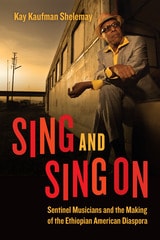
Sing and Sing On
Sentinel Musicians and the Making of the Ethiopian American DiasporaKay Kaufman Shelemay
University of Chicago Press, 2022
Sing and Sing On is the first study of the forced migration of musicians out of the Horn of Africa dating from the 1974 Ethiopian revolution, a political event that overthrew one of the world’s oldest monarchies and installed a brutal military regime. Musicians were among the first to depart the region, their lives shattered by revolutionary violence, curfews, and civil war. Reconstructing the memories of forced migration, Sing and Sing On traces the challenges musicians faced amidst revolutionary violence and the critical role they played in building communities abroad.
Drawing on the recollections of dozens of musicians, Sing and Sing On details personal, cultural, and economic hardships experienced by musicians who have resettled in new locales abroad. Kay Kaufman Shelemay highlights their many artistic and social initiatives and the ways they have offered inspiration and leadership within and beyond a rapidly growing Ethiopian American diaspora. While musicians held this role as sentinels in Ethiopian culture long before the revolution began, it has taken on new meanings and contours in the Ethiopian diaspora. The book details the ongoing creativity of these musicians while exploring the attraction of return to their Ethiopian homeland over the course of decades abroad. Ultimately, Shelemay shows that musicians are uniquely positioned to serve this sentinel role as both guardians and challengers of cultural heritage.

Singers Die Twice
A Journey to the Land of DhrupadPeter Pannke
Seagull Books, 2013

Singing Paths
The Nomadic Sensibility of Mongolian Urtyn duuSunmin Yoon
University of Illinois Press, 2027
Enlightening and evocative, Singing Paths offers an eyewitness look at a rarely explored musical tradition.
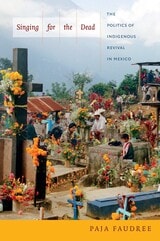
Singing for the Dead
The Politics of Indigenous Revival in MexicoPaja Faudree
Duke University Press, 2013
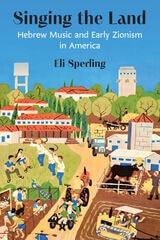
Singing the Land
Hebrew Music and Early Zionism in AmericaEli Sperling
University of Michigan Press, 2024
Exploring the history, events, contexts, and tensions that comprised what may be termed the ‘Zionization’ of American Jewry during the first half of the twentieth century, Eli Sperling analyzes primary sources within the historical contexts of Zionist national development and American Jewish life. Singing the Land offers insights into how and why musical frameworks were central to catalyzing American Jewry’s support of the Zionist cause by the 1940s, parallel to firm commitments to their American locale and national identities. The proliferation of this widespread American Jewish-Zionist embrace was achieved through a variety of educational, religious, economic, and political efforts, and Hebrew music was a thread consistent among them all.
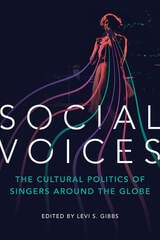
Social Voices
The Cultural Politics of Singers around the GlobeEdited by Levi S. Gibbs
University of Illinois Press, 2023
Around the world and across time, singers and their songs stand at the crossroads of differing politics and perspectives. Levi S. Gibbs edits a collection built around the idea of listening as a political act that produces meaning. Contributors explore a wide range of issues by examining artists like Romani icon Esma Redžepova, Indian legend Lata Mangeshkar, and pop superstar Teresa Teng. Topics include gendered performances and the negotiation of race and class identities; the class-related contradictions exposed by the divide between highbrow and pop culture; links between narratives of overcoming struggle and the distinction between privileged and marginalized identities; singers’ ability to adapt to shifting notions of history, borders, gender, and memory in order to connect with listeners; how the meanings we read into a singer’s life and art build on one another; and technology’s ability to challenge our ideas about what constitutes music.
Cutting-edge and original, Social Voices reveals how singers and their songs equip us to process social change and divergent opinions.
Contributors: Christina D. Abreu, Michael K. Bourdaghs, Kwame Dawes, Nancy Guy, Ruth Hellier, John Lie, Treva B. Lindsey, Eric Lott, Katherine Meizel, Carol A. Muller, Natalie Sarrazin, Anthony Seeger, Carol Silverman, Andrew Simon, Jeff Todd Titon, and Elijah Wald
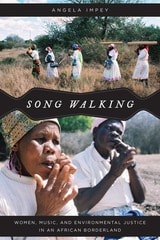
Song Walking
Women, Music, and Environmental Justice in an African BorderlandAngela Impey
University of Chicago Press, 2018
This book links ethnomusicological research to larger themes of international development, environmental conservation, gender, and local economic access to resources. By demonstrating that development processes are essentially cultural processes and revealing how music fits within this frame, Song Walking testifies to the affective, spatial, and economic dimensions of place, while contributing to a more inclusive and culturally apposite alignment between land and environmental policies and local needs and practices.
Songprints
The Musical Experience of Five Shoshone WomenJudith Vander
University of Illinois Press, 1988
Perspectives on the twentieth-century lives of Shoshone women musicians
The musical lives of Native American women have experienced a century of cultural change and constancy. Judith Vander takes readers to the Shoshone of Wyoming's Wind River Reservation to meet five generations of Shoshone women. Vander’s conversations with Emily, Angelina, Alberta, Helene, and Lenore capture their distinct personalities as they share their thoughts, feelings, and attitudes toward their music.
Vander transcribes and analyzes seventy-five songs that the women sing. Each woman possesses a unique songprint—a repertoire distinctive to her culture, age, and personality. As Vander shows, the context of Shoshone social and religious ceremonies offers insights into the rise of the Native American Church, the emergence and popularity of the contemporary powwow, and the changing, enlarging role of women. In addition, two eyewitnesses accounts of Ghost Dance songs and performances elaborate on the function and meaning of the Ghost Dance among the Wind River Shoshones.
2nd Place from the Pauline Alderman Prize for New Scholarship on Women in Music from the International Congress on Women in Music. Winner of an ASCAP Deems Taylor Award, 1989.
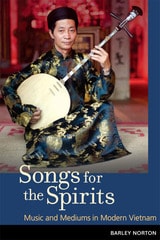
Songs for the Spirits
Music and Mediums in Modern VietnamBarley Norton
University of Illinois Press, 2008

Songs of Power and Prayer in the Columbia Plateau
The Jesuit, the Medicine Man, and the Indian Hymn SingerChad S. Hamill
Oregon State University Press, 2012
In Chad Hamill’s narrative, a Jesuit and his two Indian “grandfathers”—one a medicine man, the other a hymn singer—engage in a collective search for the sacred. The priest becomes a student of the medicine man. The medicine man becomes a Catholic. The Indian hymn singer brings indigenous songs to the Catholic mass. Using song as a thread, these men weave together two worlds previously at odds, realizing a promise born two centuries earlier within the prophecies of Circling Raven and Shining Shirt.
Songs of Power and Prayer reveals how song can bridge worlds: between the individual and Spirit, the Jesuits and the Indians. Whether sung in an indigenous ceremony or adapted for Catholic Indian services, song abides as a force that strengthens Native identity and acts as a conduit for power and prayer.
A First Peoples: New Directions in Indigenous Studies book
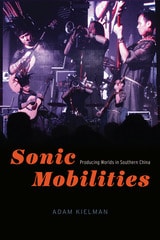
Sonic Mobilities
Producing Worlds in Southern ChinaAdam Kielman
University of Chicago Press, 2022
Guangzhou is a large Chinese city like many others. With a booming economy and abundant job opportunities, it has become a magnet for rural citizens seeking better job prospects as well as global corporations hoping to gain a foothold in one of the world’s largest economies. This openness and energy have led to a thriving popular music scene that is every bit the equal of Beijing’s. But the musical culture of Guangzhou expresses the city’s unique cosmopolitanism. A port city that once played a key role in China’s maritime Silk Road, Guangzhou has long been an international hub. Now, new migrants to the city are incorporating diverse Chinese folk traditions into the musical tapestry.
In Sonic Mobilities, ethnomusicologist Adam Kielman takes a deep dive into Guangzhou's music scene through two bands, Wanju Chuanzhang (Toy Captain) and Mabang (Caravan), that express ties to their rural homelands and small-town roots while forging new cosmopolitan musical connections. These bands make music that captures the intersection of the global and local that has come to define Guangzhou, for example by writing songs with a popular Jamaican reggae beat and lyrics in their distinct regional dialects mostly incomprehensible to their audiences. These bands create a sound both instantly recognizable and totally foreign, international and hyper-local. This juxtaposition, Kielman argues, is an apt expression of the demographic, geographic, and political shifts underway in Guangzhou and across the country. Bridging ethnomusicology, popular music studies, cultural geography, and media studies, Kielman examines the cultural dimensions of shifts in conceptualizations of self, space, publics, and state in a rapidly transforming the People’s Republic of China.
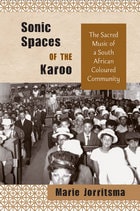
Sonic Spaces of the Karoo
The Sacred Music of a South African Coloured CommunityMarie Jorritsma
Temple University Press, 2011
Sonic Spaces of the Karoo is a pioneering study of the sacred music of three coloured (the apartheid designation for people "not white or native") people's church congregations in the rural town of Graaff-Reinet, South Africa. Jorritsma's fieldwork involves an investigation of the choruses, choir music, and hymns of the Karoo region to present a history of the people's traditional, religious, and cultural identity in song. This music is examined as part of a living archive preserved by the community in the face of a legacy of slavery and colonial as well as apartheid oppression.
Jorritsma's findings counteract a lingering stereotype that coloured music is inferior to European or African music and that coloured people should not or do not have a cultural identity. Sonic Spaces of the Karoo seeks to eradicate that bias and articulate a more legitimate place for these people in the contemporary landscape of South Africa.
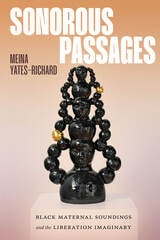
Sonorous Passages
Black Maternal Soundings and the Liberation ImaginaryMeina Yates-Richard
Duke University Press, 2026
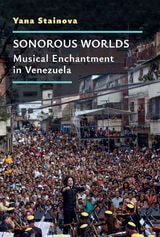
Sonorous Worlds
Musical Enchantment in VenezuelaYana Stainova
University of Michigan Press, 2021
Sonorous Worlds is an ethnography of the young Venezuelan musicians who participate in El Sistema, many of whom live in urban barrios and face everyday gang violence, state repression, social exclusion, and forced migration in response to sociopolitical crisis. This book looks at how these young people engage with what the author calls “enchantment,” that is, how through musical practices they create worlds that escape, rupture, and critique dominant structures of power. Stainova’s focus on artistic practice and enchantment allows her to theorize the successes and failures of political projects through the lens of everyday transformations in people’s lives.

Sound Alignments
Popular Music in Asia's Cold WarsMichael K. Bourdaghs, Paola Iovene, and Kaley Mason, editors
Duke University Press, 2021
Contributors. Marié Abe, Michael K. Bourdaghs, Paola Iovene, Nisha Kommattam, Jennifer Lindsay, Kaley Mason, Anna Schultz, Hyunjoon Shin, C. J. W.-L. Wee, Hon-Lun (Helan) Yang, Christine R. Yano, Qian Zhang
Sound Figures of Modernity
German Music and PhilosophyEdited by Jost Hermand and Gerhard Richter
University of Wisconsin Press, 2006
The rich conceptual and experiential relays between music and philosophy—echoes of what Theodor W. Adorno once called Klangfiguren, or "sound figures"—resonate with heightened intensity during the period of modernity that extends from early German Idealism to the Critical Theory of the Frankfurt School. This volume traces the political, historical, and philosophical trajectories of a specifically German tradition in which thinkers take recourse to music, both as an aesthetic practice and as the object of their speculative work.
The contributors examine the texts of such highly influential writers and thinkers as Schelling, Schopenhauer, Nietzsche, Bloch, Mann, Adorno, and Lukács in relation to individual composers including Beethoven, Wagner, Schönberg, and Eisler. Their explorations of the complexities that arise in conceptualizing music as a mode of representation and philosophy as a mode of aesthetic practice thematize the ways in which the fields of music and philosophy are altered when either attempts to express itself in terms defined by the other.
Contributors: Albrecht Betz, Lydia Goehr, Beatrice Hanssen, Jost Hermand, David Farrell Krell, Ludger Lütkehaus, Margaret Moore, Rebekah Pryor Paré, Gerhard Richter, Hans Rudolf Vaget, Samuel Weber
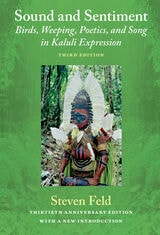
Sound and Sentiment
Birds, Weeping, Poetics, and Song in Kaluli Expression, 3rd edition with a new introduction by the authorSteven Feld
Duke University Press, 2012

Sounding Dissent
Rebel Songs, Resistance, and Irish RepublicanismStephen R. Millar
University of Michigan Press, 2020
Sounding Dissent draws on three years of sustained fieldwork within Belfast's rebel music scene, in-depth interviews with republican musicians, contemporary audiences, and former paramilitaries, as well as diverse historical and archival material, including songbooks, prison records, and newspaper articles, to understand the history of political violence in Ireland.The book examines the potential of rebel songs to memorialize a pantheon of republican martyrs, and demonstrates how musical performance and political song not only articulate experiences and memories of oppression and violence, but also play a central role in the reproduction of conflict and exclusion in times of peace.
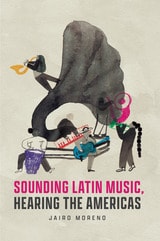
Sounding Latin Music, Hearing the Americas
Jairo Moreno
University of Chicago Press, 2023
Many in the United States believe Latin American musicians make “Latin music”—which carries with it a whole host of assumptions, definitions, and contradictions. In their own countries, these expatriate musicians might generate immense national pride or trigger suspicions of “national betrayals.” The making, sounding, and hearing of “Latin music” brings into being the complex array of concepts that constitute “Latin Americanism”—its fissures and paradoxes, but also its universal aspirations. Taking as its center musicians from or with declared roots in Latin America, Jairo Moreno presents us with an innovative analysis of how and why music emerges as a necessary but insufficient shorthand for defining and understanding Latin American, Latinx, and American experiences of modernity.
This close look at the growth of music-making by Latin American and Spanish-speaking musicians in the United States at the turn of the twenty-first century reveals diverging understandings of music’s social and political possibilities for participation and belonging. Through the stories of musicians—Rubén Blades, Shakira, Arturo O’Farrill and the Afro-Latin Jazz Orchestra, and Miguel Zenón—Sounding Latin Music, Hearing the Americas traces how artists use music to produce worlds and senses of the world at the ever-transforming conjunction of Latin America and the United States.
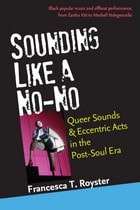
Sounding Like a No-No
Queer Sounds and Eccentric Acts in the Post-Soul EraFrancesca T. Royster
University of Michigan Press, 2012
Sounding Like a No-No traces a rebellious spirit in post–civil rights black music by focusing on a range of offbeat, eccentric, queer, or slippery performances by leading musicians influenced by the cultural changes brought about by the civil rights, black nationalist, feminist, and LGBTQ movements, who through reinvention created a repertoire of performances that have left a lasting mark on popular music. The book's innovative readings of performers including Michael Jackson, Grace Jones, Stevie Wonder, Eartha Kitt, and Meshell Ndegeocello demonstrate how embodied sound and performance became a means for creativity, transgression, and social critique, a way to reclaim imaginative and corporeal freedom from the social death of slavery and its legacy of racism, to engender new sexualities and desires, to escape the sometimes constrictive codes of respectability and uplift from within the black community, and to make space for new futures for their listeners. The book's perspective on music as a form of black corporeality and identity, creativity, and political engagement will appeal to those in African American studies, popular music studies, queer theory, and black performance studies; general readers will welcome its engaging, accessible, and sometimes playful writing style, including elements of memoir.
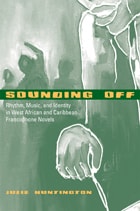
Sounding Off
Rhythm, Music, and Identity in West African and Caribbean Francophone NovelsJulie Huntington
Temple University Press, 2009
Huntington’s analysis shows how these writers and others challenge the aesthetic and political conventions that privilege written texts over orality and invite readers-listeners to participate in critical dialogues—to sound off, as it were, in local and global communities.
Sounding Salsa
Performing Latin Music in New York CityChristopher Washburne
Temple University Press, 2008
Sounding the Center
History and Aesthetics in Thai Buddhist PerformanceDeborah Wong
University of Chicago Press, 2001
Drawing on her extensive fieldwork, Wong lays out the ritual in detail: the way it is enacted, the foods and objects involved, and the people who perform it, emphasizing the way the performers themselves discuss and construct aspects of the ceremony.
Sounds of Crossing
Music, Migration, and the Aural Poetics of Huapango ArribeñoAlex E. Chávez
Duke University Press, 2017

Sounds of Vacation
Political Economies of Caribbean TourismJocelyne Guilbault and Timothy Rommen, editors
Duke University Press, 2019
Contributors. Jerome Camal, Steven Feld, Francio Guadeloupe, Jocelyne Guilbault, Jordi Halfman, Susan Harewood, Percy C. Hintzen, Timothy Rommen
Sounds of the Underground
A Cultural, Political and Aesthetic Mapping of Underground and Fringe MusicStephen Graham
University of Michigan Press, 2016

Speech and Song at the Margins of Global Health
Zulu Tradition, HIV Stigma, and AIDS Activism in South AfricaSteven P. Black
Rutgers University Press, 2019
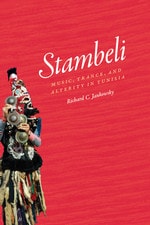
Stambeli
Music, Trance, and Alterity in TunisiaRichard C. Jankowsky
University of Chicago Press, 2010
Part ethnography, part history of the complex relationship between Tunisia’s Arab and sub-Saharan populations, Stambeli will be welcomed by scholars and students of ethnomusicology, anthropology, African studies, and religion.

Storytelling in Siberia
The Olonkho Epic in a Changing WorldRobin P. Harris
University of Illinois Press, 2017
Drawing on her ten years of living in the Russian North, Robin P. Harris documents how the Sakha have used the Masterpiece program to revive olonkho and strengthen their cultural identity. Harris’s personal relationships with and primary research among Sakha people provide vivid insights into understanding olonkho and the attenuation, revitalization, transformation, and sustainability of the Sakha’s cultural reemergence. Interdisciplinary in scope, Storytelling in Siberia considers the nature of folklore alongside ethnomusicology, anthropology, comparative literature, and cultural studies to shed light on how marginalized peoples are revitalizing their own intangible cultural heritage.
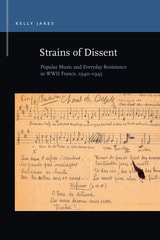
Strains of Dissent
Popular Music and Everyday Resistance in WWII France, 1940 - 1945Kelly Jakes
Michigan State University Press, 2019
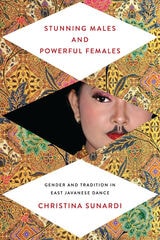
Stunning Males and Powerful Females
Gender and Tradition in East Javanese DanceChristina Sunardi
University of Illinois Press, 2015
Christina Sunardi ventures into the regency of Malang in east Java to study and perform with dancers. Through formal interviews and casual conversation, Sunardi learns about their lives and art. Her work shows how performers continually transform dance traditions to negotiate, and renegotiate, the boundaries of gender and sex--sometimes reinforcing lines of demarcation, sometimes transgressing them, and sometimes doing both simultaneously. But Sunardi's investigation moves beyond performance. It expands notions of the spiritual power associated with female bodies and feminine behavior, and the ways women, men, and waria (males who dress and live as female) access the magnetic power of femaleness.
A journey into understudied regions and ideas, Stunning Males and Powerful Females reveals how performances seemingly fixed by tradition are instead dynamic environments for cultural negotiation and change surrounding questions of sex and gender.
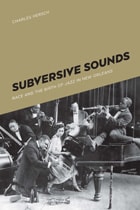
Subversive Sounds
Race and the Birth of Jazz in New OrleansCharles B. Hersch
University of Chicago Press, 2008
Subversive Sounds probes New Orleans’s history, uncovering a web of racial interconnections and animosities that was instrumental to the creation of a vital American art form—jazz. Drawing on oral histories, police reports, newspaper accounts, and vintage recordings, Charles Hersch brings to vivid life the neighborhoods and nightspots where jazz was born.
This volume shows how musicians such as Jelly Roll Morton, Nick La Rocca, and Louis Armstrong negotiated New Orleans’s complex racial rules to pursue their craft and how, in order to widen their audiences, they became fluent in a variety of musical traditions from diverse ethnic sources. These encounters with other music and races subverted their own racial identities and changed the way they played—a musical miscegenation that, in the shadow of Jim Crow, undermined the pursuit of racial purity and indelibly transformed American culture.
“More than timely . . . Hersch orchestrates voices of musicians on both sides of the racial divide in underscoring how porous the music made the boundaries of race and class.”—New Orleans Times-Picayune