Results by title
3745 books match the query 'Europe' and 247 start with s

SENATES
BICAMERALISM IN THE CONTEMPORARY WORLDEdited by Samuel C. Patterson & Anthony Mughan
The Ohio State University Press, 1999
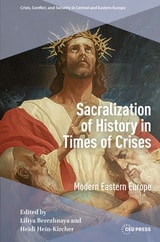
Sacralization of History in Times of Crises
Modern Eastern EuropeLiliya Berezhnaya
Central European University Press, 2026
The contributors seek to identify the political, societal and religious actors promoting the sacralization of history. They consider which networks promote sacralized visions of history and who is excluded from the sacralized community of national belonging. They also explore which historical topics seem best suited for the sacralization of history and question what happens to the rituals, objects, or spaces, formerly regarded as sacral: are they profaned, neglected, or re-inscribed by new national histories, and is there a religious language of national history? These are the major questions of this book.
Sacred Boundaries
Religious Coexistence and Conflict in Early-Modern FranceKeith P. Luria
Catholic University of America Press, 2005
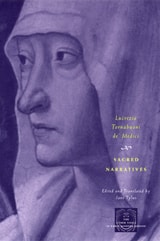
Sacred Narratives
Lucrezia Tornabuoni de' Medici
University of Chicago Press, 2001
This is the first major collection in any language of her extensive body of religious poems. Ranging from gentle lyrics on the Nativity to moving dialogues between a crucified Christ and the weeping sinner who kneels before him, the nine laudi (poems of praise) included here are among the few such poems known to have been written by a woman. Tornabuoni's five storie sacre, narrative poems based on the lives of biblical figures-three of whom, Judith, Susanna, and Esther, are Old Testament heroines-are virtually unique in their range and expressiveness. Together with Jane Tylus's substantial introduction, these poems offer us both a fascinating portrait of a highly educated and creative woman and a lively sense of cultural and social life in Renaissance Florence.
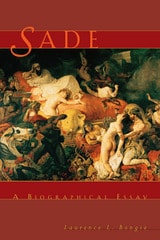
Sade
A Biographical EssayLaurence L. Bongie
University of Chicago Press, 1998
"A valuable correction to the perception of Sade as a profound thinker, a great writer, and a martyr to liberty. Drawing on original archival work, Bongie tries to illuminate Sade's childhood and his relationship with his parents. . . . Fluent and well-informed."—Library Journal
"Mr. Bongie . . . has written an investigation focusing on one aspect of Sade's character and development, his heretofore neglected relationship with his aristocratic mother. . . . A profitable selection."—Richard Bernstein, New York Times
"A welcome corrective. Bongie's book . . . aims to deflate the exalted claims made about the marquis by demonstrating that he was a monstrous character."—Scott Stossel, Boston Phoenix Literary Supplement
Saharan Jews and the Fate of French Algeria
Sarah Abrevaya Stein
University of Chicago Press, 2014
Drawing on materials from thirty archives across six countries, Stein tells the story of colonial imposition on a desert community that had lived and traveled in the Sahara for centuries. She paints an intriguing historical picture—of an ancient community, trans-Saharan commerce, desert labor camps during World War II, anthropologist spies, battles over oil, and the struggle for Algerian sovereignty. Writing colonialism and decolonization into Jewish history and Jews into the French Saharan one, Saharan Jews and the Fate of French Algeria is a fascinating exploration not of Jewish exceptionalism but of colonial power and its religious and cultural differentiations, which have indelibly shaped the modern world.
Saint-Simon and the Court of Louis XIV
Emmanuel Le Roy Ladurie
University of Chicago Press, 2001
Saint-Simon and the Court of Louis XIV, expertly translated by Arthur Goldhammer, is a historical essay about court life, built with the wide range of tools Ladurie so expertly employs: ethnography, history, literary criticism, and historiography. Ladurie recreates a world in which man is most definitely born unequal, a world circumscribed entirely by purity of bloodline, which nonetheless directly preceded the birth of democratic thought and political action. Locked into a virtual caste system, courtiers formed within their ranks cabals, factions, and groups bonded by common ideological principles in order to survive the political order of the court. Thus Saint-Simon and the Court of Louis XIV is not only about Saint-Simon's place in this constellation but also the constellation itself and how understanding it forces us to a reevaluation of political life in France during the Old Regime.
Including a biographical sketch of Saint-Simon and more than 30 illustrations of court life and its members, Saint-Simon and the Court of Louis XIV will delight those interested in French history as well as instruct those interested in political history.
Sainted Women of the Dark Ages
Jo Ann McNamara, John E. Halborg, and Gordon Whatley, eds.
Duke University Press, 1992
Three of these holy women were queens who turned to religion only after a period of intense worldly activity. Others were members of the Carolingian family, deeply implicated in the political ambitions of their male relatives. Some were partners in the great Irish missions to the pagan countryside and others worked for the physical salvation of the poor. From the peril and suffering of their lives they shaped themselves as paragons of power and achievement. Beloved by their sisters and communities for their spiritual gifts, they ultimately brought forth a new model of sanctity.
These biographies are unusually authentic. At least two were written by women who knew their subjects, while others reflect the direct testimony of sisters within the cloister walls. Each biography is accompanied by an introduction and notes that clarify its historical context. This volume will be an excellent source for students and scholars of women's studies and early medieval social, religious, and political history.
Saints and Society
The Two Worlds of Western Christendom, 1000-1700Donald Weinstein and Rudolph M. Bell
University of Chicago Press, 1986
Saints of the Christianization Age of Central Europe
Tenth to Eleventh CenturiesCristian Gaspar
Central European University Press, 2012
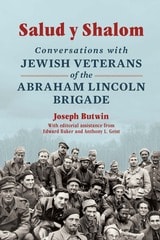
Salud y Shalom
Conversations with Jewish Veterans of the Abraham Lincoln BrigadeJoseph Butwin
University of Illinois Press, 2025
Joseph Butwin’s oral history presents conversations with ten Jewish veterans of the ALB. Recorded from 1992–94 in the wake of European communism’s collapse, the interviews explore the milieus that formed the volunteers. Immigrants established the secular Yiddish-speaking socialism that became a part of many Jewish American communities. Their children, reacting to economic depression and the rise of fascism, enlisted in the ALB. Butwin follows their stories from their youthful motives and choices through their lives as Jews and leftists, and records the reckonings that took place as they reflected on their past.
Insightful and revealing, Salud y Shalom explores the forces of identity and history that led young Jewish leftists to fight fascism.
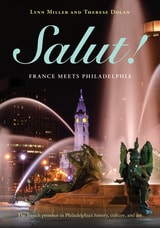
Salut!
France Meets PhiladelphiaLynn Miller and Therese Dolan
Temple University Press, 2021
One highly visible example of French influence on the city of Philadelphia is the Benjamin Franklin Parkway, modeled on the Champs-Élysées. In Salut!, Lynn Miller and Therese Dolan trace the fruitful, three-centuries-long relationship between the City of Brotherly Love and France. This detailed volume illustrates the effect of Huguenots settling in Philadelphia and 18-year-old William Penn visiting Paris, all the way up through more recent cultural offerings that have helped make the city the distinctive urban center it is today.
Salut! provides a magnifique history of Philadelphia seen through a particular cultural lens. The authors chronicle the French influence during colonial and revolutionary times. They highlight the contributions of nineteenth-century French philanthropists, such as Stephen Girard and the Dupont family. And they showcase the city’s vibrant visual arts community featuring works from the Philadelphia Museum of Art, the Rodin Museum, the Barnes Foundation, and the Joan of Arc sculpture, as well as studies of artists Thomas Eakins, Mary Cassatt, and Henry Ossawa Tanner. There is also a profile of renowned Le Bec-Fin chef Georges Perrier, who made Philadelphia a renowned culinary destination in the twentieth century.
With lavish illustrations and enthusiastic text, Salut!celebrates a potpourri of all things French in the Philadelphia region.
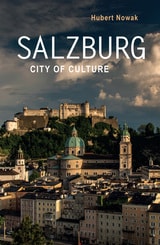
Salzburg
City of CultureHubert Nowak
Haus Publishing, 2020
Situated in the shadow of the Eastern Alps, Salzburg is known for its majestic baroque architecture, music, cathedrals, and gardens. The city grew in power and wealth as the seat of prince-bishops, found international fame as the birthplace of the beloved composer Mozart, and expanded to become a global destination for travel as a festival city. With all its stunning sights and rich history, Salzburg has become Austria’s second most visited city, drawing visitors from around the world.
Hubert Nowak sets out to reveal the lesser-known side of Salzburg, a small town with international renown. Leaving the famed festival district, he plunges into the narrow façade-lined streets of the old quarter, creating one of the most extensive accounts of the city published in English. Through the stories of those who visited and lived in the city over the centuries, he gives the reader a fresh perspective and gives the old city new life.
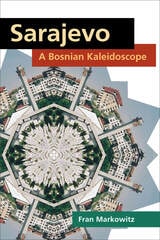
Sarajevo
A Bosnian KaleidoscopeFran Markowitz
University of Illinois Press, 2010
This fascinating urban anthropological analysis of Sarajevo and its cultural complexities examines contemporary issues of social divisiveness, pluralism, and intergroup dynamics in the context of national identity and state formation. Rather than seeing Bosnia-Herzegovina as a volatile postsocialist society, the book presents its capital city as a vibrant yet wounded center of multicultural diversity, where citizens live in mutual recognition of difference while asserting a lifestyle that transcends boundaries of ethnicity and religion. It further illuminates how Sarajevans negotiate group identity in the tumultuous context of history, authoritarian rule, and interactions with the built environment and one another.
As she navigates the city, Fran Markowitz shares narratives of local citizenry played out against the larger dramas of nation and state building. She shows how Sarajevans' national identities have been forged in the crucible of power, culture, language, and politics. Sarajevo: A Bosnian Kaleidoscope acknowledges this Central European city's dramatic survival from the ravages of civil war as it advances into the present-day global arena.

Sardinian Chronicles
Bernard Lortat-Jacob
University of Chicago Press, 1995
Through his sensitive portraits of music makers and their families, Lortat-Jacob overcomes some of the epistemological and methodological dilemmas facing his field today, while also giving the general reader a sense of the multiple and idiosyncratic ways that music is involved in everyday life. With a foreword by Michel Leiris and a compact disc containing samples of the music being discussed, this book constitutes a breakthrough in ethnomusicology that will also interest many in Mediterranean studies and European anthropology.
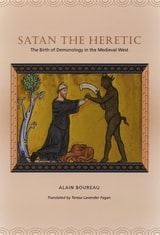
Satan the Heretic
The Birth of Demonology in the Medieval WestAlain Boureau
University of Chicago Press, 2006
Depicting this new demonology, Satan the Heretic considers the period between the mid-thirteenth and mid-fourteenth centuries when demons, in the eyes of Church authorities, suddenly burst forth, more real and more terrifying than ever before in the history of Christianity. Boureau argues that the rise in this obsession with demons occurs at the crossroads of the rise of sovereignties and of the individual, a rise that, tellingly, also coincides with the emergence of the modern legal system in the European West.
Teeming with original insights and lively anecdotes, Satan the Heretic is a significant contribution to the history of Christian demonology from one of the most original minds in the field of medieval studies today.
Satan's Rhetoric
A Study of Renaissance DemonologyArmando Maggi
University of Chicago Press, 2001
With this probing new contribution to the study of Christianity, Armando Maggi examines this dialogue, exploring how evil spirits interacted with mankind during the early modern period. Reading innumerable treatises on demonology written during the Renaissance, including Thesaurus exorcismorum, the most important record of early modern exorcisms, Maggi finds repeated attempts to define the language exchanged between the fallen progeny of Adam, and the most notorious fallen angel of them all, Satan. Using points of departure taken from de Certeau and Lacan, Maggi shows that Satan articulates his language first and foremost in the mind. More than speaking, the devil tries to make human beings understand his language and speak it themselves. Through sodomites, infidels, and witches, then, the devil is able to infect humanity as it appropriates his seductive rhetoric.
Satiric Advice on Women and Marriage
From Plautus to ChaucerWarren S. Smith, Editor
University of Michigan Press, 2005
Advice on sex and marriage in the literature of antiquity and the middle ages typically stressed the negative: from stereotypes of nagging wives and cheating husbands to nightmarish visions of women empowered through marriage. Satiric Advice on Women and Marriage brings together the leading scholars of this fascinating body of literature. Their essays examine a variety of ancient and early medieval writers' cautionary and often eccentric marital satire beginning with Plautus in the third century B.C.E. through Chaucer (the only non-Latin author studied). The volume demonstrates the continuity in the Latin tradition which taps into the fear of marriage and intimacy shared by ancient ascetics (Lucretius), satirists (Juvenal), comic novelists (Apuleius), and by subsequent Christian writers starting with Tertullian and Jerome, who freely used these ancient sources for their own purposes, including propaganda for recruiting a celibate clergy and the promotion of detachment and asceticism as Christian ideals.
Warren S. Smith is Professor of Classical Languages at the University of New Mexico.
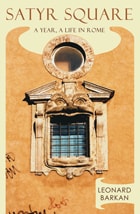
Satyr Square
A Year, a Life in RomeLeonard Barkan
Northwestern University Press, 2008
Part memoir, part literary criticism, part culinary and aesthetic travelogue, this loving reflection is a poignant, funny narrative about an American professor spending a year in Rome. A scarred veteran of academic culture wars retreating to a cradle of culture, Barkan is at first hungry, lonely, and uncertain of his intellectual mission. But soon he is appointed unofficial mascot of an eccentric community of gastronomes, becomes virtually bilingual, and falls in love. As the year progresses, he finds his voice as a writer, loses his lover, and definitively returns to America with heart, mind, and body. His memoir is the celebration of a life lived in the uncanny spaces where art and real people intersect.
Barkan’s reminiscence is not just about the Renaissance and ancient statuary, or Shakespeare and Mozart, Charles Bukowski and Paul de Man, eggplant antipasto and Brunello di Montalcino, foot fetishism and sulfur baths. At the heart of the narrative—beneath that beguiling surface of irony, humor, and misdirection—is a man of genuine ardor, struggling with what it means to be a homosexual and a Jew, trying to rediscover or reinvent his own intellectual passions. Hilarious, erudite, and lusciously rendered, Satyr Square gives us the whole of a life made up from fragments of Italy, art, food, and longing.
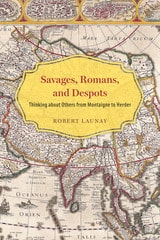
Savages, Romans, and Despots
Thinking about Others from Montaigne to HerderRobert Launay
University of Chicago Press, 2018
Beginning with Mandeville and Montaigne, and working through Montesquieu, Diderot, Gibbon, Herder, and others, Launay traces how Europeans both admired and disdained unfamiliar societies in their attempts to work through the inner conflicts of their own social worlds. Some of these writers drew caricatures of “savages,” “Oriental despots,” and “ancient” Greeks and Romans. Others earnestly attempted to understand them. But, throughout this history, comparative thinking opened a space for critical reflection. At its worst, such space could give rise to a sense of European superiority. At its best, however, it could prompt awareness of the value of other ways of being in the world. Launay’s masterful survey of some of the Western tradition’s finest minds offers a keen exploration of the genesis of the notion of “civilization,” as well as an engaging portrait of the promises and perils of cross-cultural comparison.
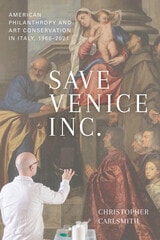
Save Venice Inc.
American Philanthropy and Art Conservation in Italy, 1966-2021Christopher Carlsmith
University of Massachusetts Press, 2022
In 1966, the most destructive flood in the history of Venice temporarily submerged the city and threatened its extraordinary art and architecture. Among the organizations that mobilized to protect this fragile heritage was Save Venice Inc. Founded in Boston and now headquartered in New York City, this nonprofit has become the largest and most active committee dedicated to preserving the artistic legacy of Venice.
Christopher Carlsmith tells the fascinating story of Save Venice Inc., from its origins to its fiftieth anniversary. It continues to provide an influential model for philanthropy in the cultural sector, raising substantial funds to conserve and restore paintings, sculptures, books, mosaics, and entire buildings at risk from human and environmental impacts. Employing extensive archival research, oral interviews, and newspaper accounts, Save Venice Inc. explores a range of topics, including leadership, conservation projects, fundraising, and educational outreach. Using a range of methodologies from cultural history and art history, Carlsmith traces the achievements and challenges faced by this and other historic preservation organizations and by this unique city on the sea.
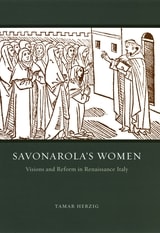
Savonarola's Women
Visions and Reform in Renaissance ItalyTamar Herzig
University of Chicago Press, 2007
In their quest to stay true to their leader’s teachings, Savonarola’s female followers faced hostile superiors within their orders, local political pressures, and the deep-rooted misogynistic assumptions of the Church establishment. This unprecedented volume demonstrates how reform circles throughout the Italian peninsula each tailored Savonarola’s life and works to their particular communities’ regionally specific needs. Savonarola’s Women is an important reconstruction of women’s influence on one of the most important and controversial religious movements in premodern Europe.

Scandalous Practices
Homosexuality, Male Prostitution, and Sexual Citizenship in Post-Fascist ItalyAlessio Ponzio
Temple University Press, 2027
From the 1940s to the 1970s, homosexual men in Italy began to express themselves authentically after years of silence under Fascist repression. In Scandalous Practices, Alessio Ponzio deftly recounts the socio-cultural shifts that occurred for queer Italians during this period.
In tabloids and other publications, journalists sensationalized same-sex male prostitution, dramatized scandalous homosexual murders, and portrayed homosexuality as devious, dangerous, and threatening to the “new” post-war masculinity. Homosexual Italians responded to this public shaming and these negative stereotypes through resistance. As part of an ongoing struggle for gender and sexual equality, they established networks and created public discussions that engendered pride, rights awareness, and a political commitment to emancipation.
Ponzio meticulously details how Italy as a nation and culture dealt with emerging representation of queer sexuality through a reinvention that fomented self-understanding and self-representations. Instead of marginalizing it, the popular media unintentionally made homosexuality understandable to many who did not know what it was or could not make sense of their own desires. Scandalous Practices illustrates how this new sexual knowledge spread publicly across social classes and fostered the development of positive queer identities and communities.
In the series Sexuality Studies
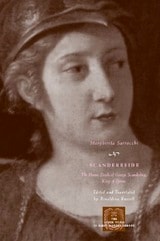
Scanderbeide
The Heroic Deeds of George Scanderbeg, King of EpirusMargherita Sarrocchi
University of Chicago Press, 2006
First published posthumously in 1623, Scanderbeide reemerges here in an adroit English prose translation that maintains the suspense of the original text and gives ample context to its rich cultural implications.

Scandinavia since 1500
Second EditionByron J. Nordstrom
University of Minnesota Press, 2023
An updated edition of the definitive history of Scandinavia over the past five centuries
Despite certain distinctions and differences, the lands of Scandinavia, or Norden—Sweden, Norway, Finland, Iceland, Denmark, and the Faroe Islands—are united by bonds of culture, language, and geography, and by a shared history that comes richly to life in this landmark work. Now in an expanded, updated edition, this authoritative chronicle of five centuries of Scandinavian history incorporates the geopolitical developments and momentous events that have marked the Nordic world in recent decades.
Scandinavia since 1500 situates the region’s political history within the traditional European chronology—in which the long “modern” period is subdivided into the Renaissance, early modern, modern, and contemporary. Within this framework, Byron J. Nordstrom traces the various ways in which economic, social, and cultural ideas and practices have come to Scandinavia from abroad, only to be modified and recast in a uniquely Nordic character. Long-unquestioned national mythologies come under Nordstrom's scrutiny, along with historical blind spots and erasures, as he ranges from canonical figures like Gustavus Adolphus of Sweden and Christian IV of Denmark to the constitutions of the nineteenth and twentieth centuries, the resistance movements in World War II, and the Scandinavian welfare states, literary culture, and modern design. Expanded to include the nature and realities of the increasingly postindustrial economies of the late twentieth and early twenty-first centuries—including environmental concerns, integration with Europe, globalization, and immigration—Scandinavia since 1500 offers a comprehensive yet nuanced portrait of this unique region in all its political, diplomatic, social, economic, and cultural complexity.
Cover alt text: Bold white title and author name across breathtaking snowy landscape of sun-touched cliffs beside a waterway and scattering of homes.

Scenarios for a Future Electricity Supply
Cost-optimised variations on supplying Europe and its neighbours with electricity from renewable energiesGregor Czisch
The Institution of Engineering and Technology, 2011
Scholars, Poets and Radicals
Discovering Forgotten Lives in the Blackwell CollectionRita Ricketts
Bodleian Library Publishing, 2015
School, State, and Society
The Growth of Elementary Schooling in Nineteenth-Century France--A Quantitative AnalysisRaymond Grew and Patrick J. Harrigan
University of Michigan Press, 1992
Science Periodicals in Nineteenth-Century Britain
Constructing Scientific CommunitiesEdited by Gowan Dawson, Bernard Lightman, Sally Shuttleworth, and Jonathan R. Topham
University of Chicago Press, 2020
The essays in this volume set the historical exploration of the scientific and medical periodicals of the era on a new footing, examining their precise function and role in the making of nineteenth-century science and enhancing our vision of the shifting communities and practices of science in the period. This radical rethinking of the scientific journal offers a new approach to the reconfiguration of the sciences in nineteenth-century Britain and sheds instructive light on contemporary debates about the purpose, practices, and price of scientific journals.

Science Policy under Thatcher
Jon Agar
University College London, 2019
Thatcher was a working scientist before she became a professional politician, and she maintained a close watch on science matters as prime minister. Scientific knowledge and advice were important to many urgent issues of the 1980s, from late Cold War questions of defense to emerging environmental problems, such as acid rain and climate change. Drawing on newly released primary sources, Jon Agar explores how Thatcher worked with and occasionally against the structures of scientific advice, as the scientific aspects of such issues were balanced or conflicted with other demands and values. To what extent, for example, was the freedom of the individual scientist to choose research projects balanced against the desire to secure more commercial applications? What was Thatcher’s stance towards European scientific collaboration and commitments? How did cuts in public expenditure affect the publicly funded research and teaching of universities?
In weaving together numerous topics, including AIDS and bioethics, the nuclear industry and strategic defense, Agar adds to the picture we have of Thatcher and her radically Conservative agenda, and argues that the science policy devised under her leadership, not least in relation to industrial strategy, had a prolonged influence on the culture of British science.
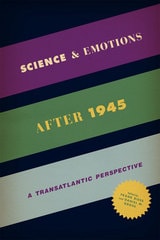
Science and Emotions after 1945
A Transatlantic PerspectiveEdited by Frank Biess and Daniel M. Gross
University of Chicago Press, 2014
In Science and Emotions after 1945, Frank Biess and Daniel M. Gross chronicle the curious resurgence of emotion studies and show that it was fueled by two very different sources: social movements of the 1960s and brain science. A central claim of the book is that the relatively recent neuroscientific study of emotion did not initiate – but instead consolidated – the emotional turn by clearing the ground for multidisciplinary work on the emotions. Science and Emotions after 1945 tells the story of this shift by looking closely at scientific disciplines in which the study of emotions has featured prominently, including medicine, psychiatry, neuroscience, and the social sciences, viewed in each case from a humanities perspective.
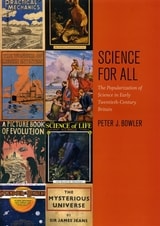
Science for All
The Popularization of Science in Early Twentieth-Century BritainPeter J. Bowler
University of Chicago Press, 2009
Recent scholarship has revealed that pioneering Victorian scientists endeavored through voluminous writing to raise public interest in science and its implications. But it has generally been assumed that once science became a profession around the turn of the century, this new generation of scientists turned its collective back on public outreach. Science for All debunks this apocryphal notion.
Peter J. Bowler surveys the books, serial works, magazines, and newspapers published between 1900 and the outbreak of World War II to show that practicing scientists were very active in writing about their work for a general readership. Science for All argues that the social environment of early twentieth-century Britain created a substantial market for science books and magazines aimed at those who had benefited from better secondary education but could not access higher learning. Scientists found it easy and profitable to write for this audience, Bowler reveals, and because their work was seen as educational, they faced no hostility from their peers. But when admission to colleges and universities became more accessible in the 1960s, this market diminished and professional scientists began to lose interest in writing at the nonspecialist level.
Eagerly anticipated by scholars of scientific engagement throughout the ages, Science for All sheds light on our own era and the continuing tension between science and public understanding.
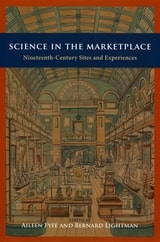
Science in the Marketplace
Nineteenth-Century Sites and ExperiencesEdited by Aileen Fyfe and Bernard Lightman
University of Chicago Press, 2007
Science in the Marketplace reveals this other side of Victorian scientific life by placing the sciences in the wider cultural marketplace, ultimately showing that the creation of new sites and audiences was just as crucial to the growing public interest in science as were the scientists themselves. By focusing attention on the scientific audience, as opposed to the scientific community or self-styled popularizers, Science in the Marketplace ably links larger societal changes—in literacy, in industrial technologies, and in leisure—to the evolution of “popular science.”
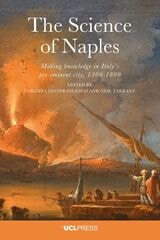
Science of Naples
Making Knowledge in Italy's Pre-Eminent City, 1500–1800Edited by Lorenza Gianfrancesco and Neil Tarrant
University College London, 2024
Long neglected in the history of Renaissance and early modern Europe, in recent years scholars have revised the received understanding of the political and economic significance of the city of Naples and its rich artistic, musical, and political culture. Its importance in the history of science, however, has remained relatively unknown. The Science of Naples provides the first dedicated study of Neapolitan scientific culture in the English language. Drawing on contributions from leading experts in the field, this volume presents a series of studies that demonstrate Neapolitans’ manifold contributions to European scientific culture in the early modern period and considers the importance of the city, its institutions, and its surrounding territories for the production of new knowledge.
Individual chapters demonstrate the extent to which Neapolitan scholars and academies contributed to debates within the Republic of Letters that continued until deep into the nineteenth century, and how studies of Neapolitan natural disasters yielded unique insights that contributed to the development of fields such as medicine and volcanology. Taken together, these studies resituate the city of Naples as an integral part of a scientific culture that has increasingly globalized and present a rich and engaging portrait of the individuals who lived, worked, and made scientific knowledge there.
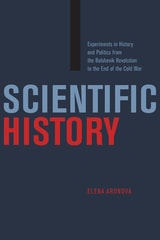
Scientific History
Experiments in History and Politics from the Bolshevik Revolution to the End of the Cold WarElena Aronova
University of Chicago Press, 2021
The book explores the intertwined trajectories of six intellectuals and the larger programs they set in motion: Henri Berr (1863–1954), Nikolai Bukharin (1888–1938), Lucien Febvre (1878–1956), Nikolai Vavilov (1887–1943), Julian Huxley (1887–1975), and John Desmond Bernal (1901–1971). Though they held different political views, spoke different languages, and pursued different goals, these thinkers are representative of a larger motley crew who joined the techniques, approaches, and values of science with the writing of history, and who created powerful institutions and networks to support their projects.
In tracing these submerged stories, Aronova reveals encounters that profoundly shaped our knowledge of the past, reminding us that it is often the forgotten parts of history that are the most revealing.

Scotland and America in the Age of Paine
Ronald Lyndsey Crawford
Aberdeen University Press, 2022
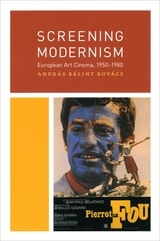
Screening Modernism
European Art Cinema, 1950-1980András Bálint Kovács
University of Chicago Press, 2007
Spanning from the 1950s to the 1970s, András Bálint Kovács’s encyclopedic work argues that cinematic modernism was not a unified movement with a handful of styles and themes but rather a stunning range of variations on the core principles of modern art. Illustrating how the concepts of modernism and the avant-garde variously manifest themselves in film, Kovács begins by tracing the emergence of art cinema as a historical category. He then explains the main formal characteristics of modern styles and forms as well as their intellectual foundation. Finally, drawing on modernist theory and philosophy along the way, he provides an innovative history of the evolution of modern European art cinema.
Exploring not only modernism’s origins but also its stylistic, thematic, and cultural avatars, Screening Modernism ultimately lays out creative new ways to think about the historical periods that comprise this golden age of film.

Screening the Transition
Spanish Cinema and the Challenges of DemocracyFederico Bonaddio
Intellect Books, 2026
A timely study of Spanish cinema during the country’s transition to democracy, including how popular and auteur films grappled with the authoritarian past.
Screening the Transition examines how Spanish cinema produced in the years immediately following Francisco Franco’s death articulated—through its narratives and characterizations—the social and cultural challenges encountered during the country’s transition to democracy. These films reflect emergent post-dictatorship realities, including increased openness toward sexuality and nudity; the erosion of traditional family structures; persistent attachments to, and reckonings with, the Francoist past; the development of political plurality and expanded freedom of expression; and various forms of marginalization, whether economic or based on gender and sexuality. In doing so, the analysis conceptualizes Spain’s transition not solely in political terms, as is commonly the case, but as a profoundly personal and affective process.
Federico Bonaddio demonstrates the limitations of cinema in this period, which at times revealed an inability to transcend deep-seated prejudices and forms of reticence cultivated over nearly four decades of authoritarian rule. These limitations surface in the prurient treatment of female nudity and sexual violence; in the deployment of comedy to belittle or trivialize democratic change; in a preference for metaphor and allegory over direct political engagement; and in the restricted investigative ambitions of historical dramas.
Considering both popular and auteur cinema, the book is primarily concerned with how filmmaking registered the difficulties of consigning the dictatorship fully to the past, despite the so-called pact of forgetting promoted by political elites to facilitate national reconciliation.
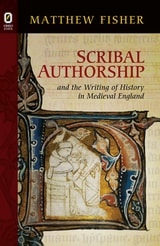
Scribal Authorship and the Writing of History in Medieval England
Matthew Fisher
The Ohio State University Press, 2012
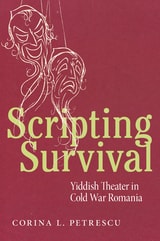
Scripting Survival
Yiddish Theater in Cold War RomaniaCorina L. Petrescu
Rutgers University Press, 2027
In Cold War Romania, the Jewish State Theater in Bucharest (TES) was a site for high-stakes cultural negotiations. While the state used the theater to consolidate Yiddish stagecraft into a tool for state propaganda, a more nuanced story unfolded behind the scenes: TES was also a vehicle for preserving and advancing Yiddish culture within the confines of a socialist state. This book focuses on five commemorative volumes published between 1956 and 1976 by editors who were Shoah survivors—individuals uniquely torn between their passion for Yiddish culture and the communist ideal. By analyzing these volumes, the study reveals the hidden ideological tensions and cultural ambitions embedded within the theater’s operations and provides a rare window into the struggle to maintain a distinctive Jewish identity while navigating the rigid political realities of the time. It is a compelling look at the editorial strategies used to safeguard a vanishing heritage.
Sea Drift
Rafting Adventures in the Wake of Kon-TikiCapelotti, P. J
Rutgers University Press, 2001
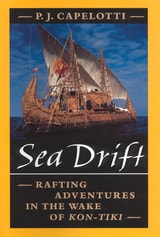
It was the original Survivor series, only without the omnipresent cameras, paramedics, and faux tribal rituals. Between the spring of 1947 and the summer of the year 2000, more than forty expeditions sought to drift across the oceans of the world on rafts made from straw, from bamboo, and from the same kinds of wood that children use to make model airplanes. These audacious raft voyages began with the legendary Kon-Tiki expedition, under the leadership of the renowned Norwegian explorer Thor Heyerdahl. The Kon-Tiki balsa wood raft drifted more than four thousand miles from Peru to Polynesia, and remained afloat months after experts predicted it would sink to the bottom of the Pacific. Heyerdahl’s radical thesis of a prehistoric world where ancient mariners drifted between continents on ocean currents electrified the postwar world. His Kon-Tiki: Across the Pacific by Raft sold twenty million copies in sixty-five languages.
Sea Drift is the first and only book to document all of the transoceanic raft expeditions that were organized and carried out in the half century after Kon-Tiki. But it is much more than a simple history of exploration. Readers learn of the Mormon who drifted to Hawaii to prove that wise men from Israel had colonized America, and the Frenchman who squeezed fresh water from the entrails of fish as he drifted alone across the Atlantic in a rubber boat. Then there was the anthropologist who put five men and six women on a raft to see who would make love to whom first.
Spanning more than fifty years and recounting more than forty expeditions, Sea Drift is a riveting chronicle of human daring, endurance, and folly.
Sea Monsters
A Voyage around the World's Most Beguiling MapJoseph Nigg
University of Chicago Press, 2013
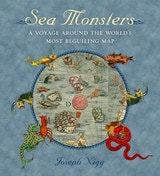
Nearly two meters wide in total, the map’s nine wood-block panels comprise the largest and first realistic portrayal of Northern Europe. But in addition to these important geographic elements, Magnus’s map goes beyond cartography to scenes both domestic and mystic. Close to shore, Magnus shows humans interacting with common sea life—boats struggling to stay afloat, merchants trading, children swimming, and fisherman pulling lines. But from the offshore deeps rise some of the most magical and terrifying sea creatures imaginable at the time or thereafter—like sea swine, whales as large as islands, and the Kraken. In this book, Nigg provides a thorough tour of the map’s cartographic details, as well as a colorful look at its unusual pictorial and imaginative elements. He draws on Magnus’s own text to further describe and illuminate the inventive scenes and to flesh out the stories of the monsters.
Sea Monsters is a stunning tour of a world that still holds many secrets for us land dwellers, who will forever be fascinated by reports of giant squid and the real-life creatures of the deep that have proven to be as bizarre and otherworldly as we have imagined for centuries. It is a gorgeous guide for enthusiasts of maps, monsters, and the mythic.
Sealed in Parchment
Rereadings of Knighthood in the Illuminated Manuscripts of Chretien de TroyesSandra Hindman
University of Chicago Press, 1994
Second World, Second Sex
Socialist Women's Activism and Global Solidarity during the Cold WarKristen Ghodsee
Duke University Press, 2019
Secret Science
Spanish Cosmography and the New WorldMaría M. Portuondo
University of Chicago Press, 2009
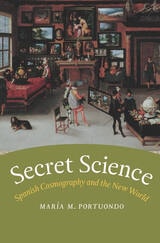
The discovery of the New World raised many questions for early modern scientists: What did these lands contain? Where did they lie in relation to Europe? Who lived there, and what were their inhabitants like? Imperial expansion necessitated changes in the way scientific knowledge was gathered, and Spanish cosmographers in particular were charged with turning their observations of the New World into a body of knowledge that could be used for governing the largest empire the world had ever known.
As María M. Portuondo here shows, this cosmographic knowledge had considerable strategic, defensive, and monetary value that royal scientists were charged with safeguarding from foreign and internal enemies. Cosmography was thus a secret science, but despite the limited dissemination of this body of knowledge, royal cosmographers applied alternative epistemologies and new methodologies that changed the discipline, and, in the process, how Europeans understood the natural world.
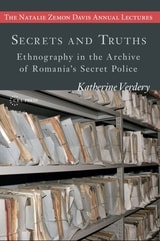
Secrets and Truths
Ethnography in the Archive of Romania's Secret PoliceKatherine Verdery
Central European University Press, 2014
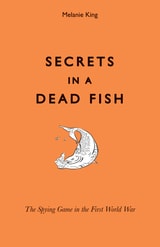
Secrets in a Dead Fish
The Spying Game in the First World WarMelanie King
Bodleian Library Publishing, 2014
Throughout World War I, spymasters and their networks of secret agents developed many clever—and sometimes comical—methods of covert communication. Stacks of bread in a bakery window, puffs of smoke from a chimney, and even woolen pullovers were all used to pass on secret messages that were decipherable only to the well-trained eye. Drawing on the memoirs of eight spies, Melanie King divulges these and other tricks of the trade while sharing details from their astonishing stories. Among her informants are British intelligence officers working undercover in Germany and France, including a former Metropolitan police officer who once hunted Jack the Ripper; a German secret service officer codenamed “Agricola;” an American newspaperman; and an Austrian agent who disguised himself during his career as everything from a Jewish peddler to a Russian officer.
A fascinating compendium of clever and long-forgotten ruses—interspersed with the stories of the spies themselves—Secrets in a Dead Fish sheds new light on the shadowy world of Great War espionage.
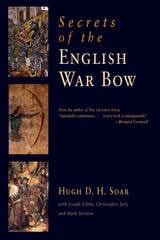
Secrets of the English War Bow
Hugh D. H. Soar
Westholme Publishing, 2010
A Complete Recreation of the Deadliest Medieval Arm
Dominating medieval battlefields for more than two centuries but requiring long and arduous practice to command, the English war bow and its battle shaft are the symbols of the rise of British power in Europe. Despite being crafted for hundreds of years and wielded by generations of archers, no example of the war bow—the military version of the longbow—exists, outside of a single broken limb. Now for the first time, expert craftsmen use all available evidence including applied archaeology to unlock the secrets of the English war bow. Historian Hugh D. H. Soar is joined by Mark Stretton, master blacksmith, and Joseph Gibbs, bowyer, in order to demonstrate how a war bow and its associated arrow heads and shafts may have been constructed and used. In addition to showing the complete manufacture of a bow from tree selection to stringing and how specialized arrowheads were forged and attached to shafts, Secrets of the English War Bowprovides information on the actual performance of the war bow, including the bow's effectiveness against various materials and, for the first time, its use against moving targets, since bows were often drawn against mounted soldiers. Armed with this new information, Soar provides an analysis of both successes and failures of the war bow in several important battles. Illustrated in color and black and white, Secrets of the English War Bowprovides an invaluable service for those interested in medieval military history, archery, and technology.

Secular Morality and International Security
American and British Decisions about WarMaria Fanis
University of Michigan Press, 2011
“[Fanis] demonstrates an impressive ability to travel nimbly between abstract theoretical concepts and a messy reality. In each one of the case study chapters, her analysis is rich, thoughtful, and imaginative.”
—Ido Oren, University of Florida

Secular Power Europe and Islam
Identity and Foreign PolicySarah Wolff
University of Michigan Press, 2021
Secular Power Europe and Islam argues that secularism is not the central principle of international relations but should be considered as one belief system that influences international politics. Through an exploration of Europe’s secular identity, an identity that is seen erroneously as normative, author Sarah Wolff shows how Islam confronts the EU’s existential anxieties about its security and its secular identity. Islam disrupts Eurocentric assumptions about democracy and revolution and human rights. Through three case studies, Wolff encourages the reader to unpack secularism as a bedrock principle of IR and diplomacy. This book argues that the EU’s interest and diplomacy activities in relation to religion, and to Islam specifically, is shaped by the insistence on a European secular identity, which should be reconsidered in areas of religion and foreign policy.