Results by title
95 books match the query 'Fall' and 7 start with s
Saint Augustine and the Fall of the Soul
Beyond O'Connell & His CriticsRonnie J. Rombs
Catholic University of America Press, 2006
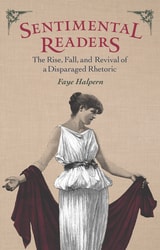
Sentimental Readers
The Rise, Fall, and Revival of a Disparaged RhetoricFaye Halpern
University of Iowa Press, 2013
Halpern examines these novels with a fresh eye by positioning sentimentality as a rhetorical strategy on the part of these novels’ (mostly) female authors, who used it to answer a question that plagued the male-dominated world of nineteenth-century American rhetoric and oratory: how could listeners be sure an eloquent speaker wasn’t unscrupulously persuading them of an untruth? The authors of sentimental novels managed to solve this problem even as the professional male rhetoricians and orators could not, because sentimental rhetoric, filled with tears and other physical cues of earnestness, ensured that an audience could trust the heroes and heroines of these novels. However, as a wider range of authors began wielding sentimental rhetoric later in the nineteenth century, readers found themselves less and less convinced by this strategy.
In her final discussion, Halpern steps beyond a purely historical analysis to interrogate contemporary rhetoric and reading practices among literature professors and their students, particularly first-year students new to the “close reading” method advocated and taught in most college English classrooms. Doing so allows her to investigate how sentimental novels are understood today by both groups and how these contemporary reading strategies compare to those of Americans more than a century ago. Clearly, sentimental novels still have something to teach us about how and why we read.
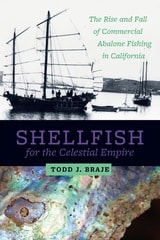
Shellfish for the Celestial Empire
The Rise and Fall of Commercial Abalone Fishing in CaliforniaTodd J. Braje
University of Utah Press, 2016
In the 1800s, when California was captivated by gold fever, a small group of Chinese immigrants recognized the fortune to be made from the untapped resources along the state’s coast, particularly from harvesting the black abalone of southern and Baja California. These immigrants, with skills from humble beginnings in a traditional Chinese fishing province, founded California’s commercial abalone industry, and led its growth and expansion for several decades. By the turn of the twentieth century, however, their successful livelihood was stolen from them through targeted legislation of the U.S. and California governments.
Today, the physical evidence of historical Chinese abalone fishing on the mainland has been erased by development. On California’s Channel Islands, however, remnants of temporary abalone collecting and processing camps lie scattered along the coastlines. These sites hold a treasure trove of information, stories, lifeways, and history. Braje has excavated many of these sites and uses them to explore the history of Chinese abalone fishing, presenting a microcosm of the broader history of Chinese immigrants in America—their struggles, their successes, the institutionalized racism they faced, and the unique ways in which they helped to shape the identity of the United States.
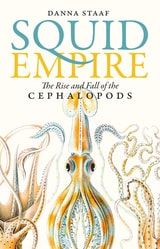
Squid Empire
The Rise and Fall of the CephalopodsDanna Staaf
University Press of New England, 2017
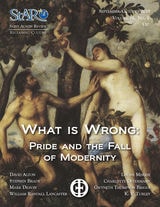
St. Austin Review, What is Wrong
Pride and the Fall of Modernity, September/October 2019, Vol. 19, No. 5Joseph Pearce
St. Augustine's Press, 2019

Stagg's University
The Rise, Decline, and Fall of Big-Time Football at ChicagoRobin Lester
University of Illinois Press, 1995
The legendary University of Chicago football program had an unusual beginning, a dazzling middle, and an inglorious conclusion. Its architect: Amos Alonzo Stagg, the most creative and entrepreneurial college coach of his time. A former all-American gridiron star at Yale, Stagg joined an elite academic institution that boasted intellectual notables like John Dewey, Thorstein Veblen, and Albert Michelson. Within fifteen years, the fame of Stagg's football program had eclipsed even Michelson's renown as the first American citizen to win a Nobel Prize.
Robin Lester follows the commercial trail blazed by Stagg and University President William Rainey Harper and the subsequent transformation of college football into a mass entertainment industry that changed campuses and captured the national imagination. Fascinating and detailed, Stagg's Universityreveals how the University of Chicago's football industry prefigured today's billion-dollar sport juggernaut and details the life and leadership of one of its foundational personages.
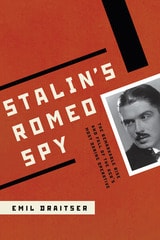
Stalin's Romeo Spy
The Remarkable Rise and Fall of the KGB's Most Daring OperativeEmil Draitser
Northwestern University Press, 2010