Results by title
234 books match the query 'Families' and 17 start with s
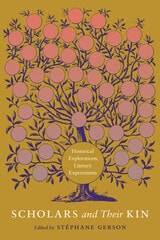
Scholars and Their Kin
Historical Explorations, Literary ExperimentsEdited by Stéphane Gerson
University of Chicago Press, 2025
Historians have often been discouraged from writing about their relatives, subjects who are deemed too close for objective analysis. But new work by scholars interested in their own families raises fascinating questions about subjectivity—and how historians might put it to use. It also invites historians to abandon traditional aspects of academic writing and draw, instead, on literary forms more equipped to highlight the relationships between scholar and material, feeling and reason.
Scholars and Their Kin embraces diverse approaches to such writing, bringing into the open the personal, professional, and historiographic complexities that ensue when scholars write intimate yet self-aware histories about their families. The first book devoted to this genre, which editor Stéphane Gerson terms “personal family history,” this anthology features ten essays and an afterword by scholars working in this vein. The contributors—varied in their disciplines, themes, and nationalities—reflect on their motivations and methodological choices, the politics of family history, and the institutional constraints they have sometimes faced. Making full use of the creative possibilities of voice and form, they expand the literary ambitions of personal family history, provide readers with narrative models, and address questions of shame, responsibility, love, gendered and racial violence, family archives, as well as the tall tales, myths, misrepresentations, memories, and omissions that suffuse family lives. Scholars and Their Kin will interest historians, scholars in other disciplines, and readers interested in family histories that open broader worlds.
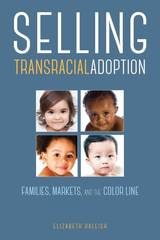
Selling Transracial Adoption
Families, Markets, and the Color LineElizabeth Raleigh
Temple University Press, 2017
While focused on serving children and families, the adoption industry must also generate sufficient revenue to cover an agency’s operating costs. With its fee-for-service model, Elizabeth Raleigh asks, How does private adoption operate as a marketplace? Her eye-opening book, Selling Transracial Adoption, provides a fine-grained analysis of the business decisions in the adoption industry and what it teaches us about notions of kinship and race.
Adoption providers, Raleigh declares, are often tasked with pitching the idea of transracial adoption to their mostly white clientele. But not all children are equally “desirable,” and transracial adoption—a market calculation—is hardly colorblind. Selling Transracial Adoption explicitly focuses on adoption providers andemploys candid interviews with adoption workers, social workers, attorneys, and counselors, as well as observations from adoption conferences and information sessions, toillustrate how agencies institute a racial hierarchy—especially when the supply of young and healthy infants is on the decline. Ultimately, Raleigh discovers that the racialized practices in private adoption serve as a powerful reflection of race in America.
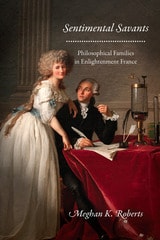
Sentimental Savants
Philosophical Families in Enlightenment FranceMeghan K. Roberts
University of Chicago Press, 2016
Sentimental Savants is the first book to explore the place of the family among the savants of the French Enlightenment, a group that openly embraced their families and domestic lives, even going so far as to test out their ideas—from education to inoculation—on their own children. Meghan K. Roberts delves into the lives and work of such major figures as Denis Diderot, Émilie Du Châtelet, the Marquis de Condorcet, Antoine Lavoisier, and Jérôme Lalande to paint a striking portrait of how sentiment and reason interacted in the eighteenth century to produce not only new kinds of knowledge but new kinds of families as well.
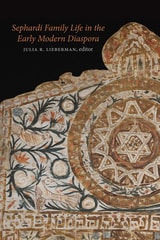
Sephardi Family Life in the Early Modern Diaspora
Edited by Julia R. Lieberman
Brandeis University Press, 2010

Sex in Middlesex
Popular Mores in a Massachusetts County, 1649-1699Roger Thompson
University of Massachusetts Press, 1986
Drawing on an extraordinary wealth of court records from Middlesex County of the Colony and Province of Massachusetts Bay, Sex in Middlesex offers a richly revisionist account of social and moral life in seventeenth-century New England. Social historian Roger Thompson brings to life the forgotten men and women of colonial Massachusetts to challenge some of the most entrenched assumptions about Puritan society. Examining cases of fornication, adultery, breach of promise, premarital pregnancy, and sexual deviance recorded between 1649 and 1699, Thompson argues that the Puritan social system was far less rigid, and the relations between the sexes far less coercively regulated, than the dominant historiographical tradition, shaped by scholars such as Perry Miller and Lawrence Stone, has suggested.
Rather than a community defined by patriarchal tyranny and punitive moral control, Thompson discovers in the Middlesex records a society characterized by a striking degree of tolerance, mutual regard, and practical common sense, animated by a genuinely popular Puritan piety. The goal of the courts was not punishment and exclusion, but confession, reform, and the reintegration of offenders into the community. Structured with methodological rigor and written with narrative verve, Sex in Middlesex is at once a work of quantitative social history and a gallery of vivid individual portraits.

Sexual Bargaining
Power Politics in the American MarriageJohn Scanzoni
University of Chicago Press, 1982
In this updated edition of his fundamental study of modern marriage, John Scanzoni challenges the widespread assumption that marriage is a dying institution. By analyzing the "reward seeking" which generates conflicts between males and females, he shows that marriage indeed has a future but that its form will continue to change as sex-role equality emerges both within and outside of marriage.
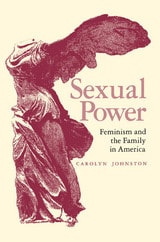
Sexual Power
Feminism and the Family in AmericaCarolyn Ross Johnston
University of Alabama Press, 1992
Since the early 1970s, scholars have argued, defined, and refined a wide range of interpretations of American women’s lives. Despite the richness of the recent literature, few interpretations sufficiently credit women’s family and sexual experiences for the emergence of feminism and the construction of pro-family agendas. Thus, Johnston’s approach offers an opportunity to view the history of feminism and the family from a fresh perspective.
Much of the literature on feminism has focused on women’s oppression and victimization, rather than on the power that women historically have exerted. Johnston’s interpretation of American feminism differs from previous works because she argues that the gradual growth of feminist consciousness lies not simply in oppression or feelings of victimization, but paradoxically in a growing sense of the empowerment of women as wives and mothers. She traces how reproduction, sexuality, domesticity, and motherhood have been socially constructed, and examines how feminists and anti-feminists have fought on the terrain of “family” issues.
Johnston explores critical questions concerning American women’s sexual lives. How have women’s empowering experiences in the family shaped feminist consciousness and action? How have feminists confronted family issues? How have women exerted sexual power? How was it contained within the limits of patriarchal society at times, while at other times it fueled the fires of feminist rebellion? How have gender and class issues affected domestic politics and feminism?

Silver Beach
Claire Cox
University of Massachusetts Press, 2021
After the family tragedy, Mara's father took her to the opposite end of the country, where she made a tidy life for herself in western Massachusetts, with a good education, stable job, and loving girlfriend. Her half-sister, Shannon, was left behind with their mother in San Diego. Surviving on disability checks and handouts from family, Shannon can't remember a time when Linda wasn't drunk.
When a heart attack lands Linda in the hospital, Shannon's first impulse is to skip town—to finally escape her mother's orbit and make her sister step up. While Mara gave up on Linda years ago and couldn't have less in common with her sister, an unemployed stoner, it's time for her to stop running from everything that makes her have feelings. This is a novel about the persistent, mystifying ties of family, the extravagant mess of addiction, and what it means to actually live inside your own life.
Social Awakening
Adolescent Behavior as Adulthood ApproachesRobert T. Michael
Russell Sage Foundation, 2001
Social Change and the Family in Taiwan
Arland Thornton and Hui-Sheng Lin
University of Chicago Press, 1994
This interdisciplinary study explores the patterns and causes of change in education, work, income, leisure time, marriage, living arrangements, and interactions among extended kin. Theoretical chapters enunciate a theory of family and social change centered on the life course and modes of social organization. Other chapters look at the shift from arranged marriages toward love matches, as well as changes in dating practices, premarital sex, fertility, and divorce.
Contributions to the book are made by Jui-Shan Chang, Ming-Cheng Chang, Deborah S. Freedman, Ronald Freedman, Thomas E. Fricke, Albert Hermalin, Mei-Lin Lee, Paul K. C. Liu, Hui-Sheng Lin, Te-Hsiung Sun, Arland Thornton, Maxine Weinstein, and Li-Shou Yang.
Soft Patriarchs, New Men
How Christianity Shapes Fathers and HusbandsW. Bradford Wilcox
University of Chicago Press, 2004
According to W. Bradford Wilcox, the divergent family ideologies of evangelical and mainline churches do not translate into large differences in family behavior between evangelical and mainline Protestant men who are married with children. Mainline Protestant men, he contends, are "new men" who take a more egalitarian approach to the division of household labor than their conservative peers and a more involved approach to parenting than men with no religious affiliation. Evangelical Protestant men, meanwhile, are "soft patriarchs"—not as authoritarian as some would expect, and given to being more emotional and dedicated to their wives and children than both their mainline and secular counterparts. Thus, Wilcox argues that religion domesticates men in ways that make them more responsive to the aspirations and needs of their immediate families.
Sons of the Prophet
A PlayStephen Karam
Northwestern University Press, 2012
Finalist, 2012 Pulitzer Prize for Drama
Winner, 2012 New York Drama Critics Circle Award for Best Play
Winner, 2012 Lucille Lortel Award for Outstanding Play
A deeply humorous, unflinching portrait of grief and loss, Sons of the Prophet depicts a Lebanese-American family in rural Pennsylvania beset by an absurd string of tragedies. At the play’s center is Joseph Douaihy, a once-promising world-class runner now sidelined by injury. As Joseph confronts his deteriorating health, he is also forced to face the death of his father, an ailing Uncle, and a desperate boss beset by her own tragedies. Deftly keeping its various storylines in careful balance, Karam’s play confronts, with abundant intelligence and great sympathy for human frailty, the inevitability of loss and the equally inevitable comedy resulting from our attempts to cope with is consequences.

Space
A MemoirJesse Lee Kercheval
University of Wisconsin Press, 2014
Still Connected
Family and Friends in America Since 1970Claude S. Fischer
Russell Sage Foundation, 2011
Still Here, Still Now
Robert Pack
University of Chicago Press, 2008
The first section of the book contains traditional lyrics that celebrate family ties and seek consolations for the passing of personal and evolutionary time. The poems in this group address a named or unnamed auditor in a voice of intimate engagement. Featuring the most narrative selections in the book, the second section consists of fable-like stories, rich with innuendo and implication. The characters in these poems make choices that press against the events and circumstances that challenge and define them. Embodying what Harold Bloom has called Pack’s “courage to surmount suffering,” the poems of the third section are largely devoted to biblical themes and philosophical speculations on the meaning of happiness and the uses of suffering. Here, Pack’s empathy for the human condition as well as his forebodings about the prospect of human survival are on poignant display. The final section of the book turns to Pack's abiding interest in landscape and the ways in which the place one inhabits contains and animates our individual lives.
Ripe with many years, Pack remains a vital presence in American letters. Still Here, Still Now is an affecting and graceful addition to the oeuvre of a poet whose compelling and distinct voice will continue to resonate among his loyal readers.
Storm Still
Peter Handke
Seagull Books, 2018
In Storm Still, Handke’s most recent work, he returns to the land of his birth, the Austrian province of Carinthia. There on the Jaunfeld, the plain at the center of Austria’s Slovenian settlement, the dead and the living of a family meet and talk. Composed as a series of monologues, Storm Still chronicles both the battle of the Slovene minority against Nazism and their love of the land. Presenting a panorama that extends back to the author’s bitter roots in the region, Storm Still blends penetrating prose and poetic drama to explore Handke’s personal history, taking up themes from his earlier books and revisiting some of their characters. In this book, the times of conflict and peace, war and prewar, and even the seasons themselves shift and overlap. And the fate of an orchard comes to stand for the fate of a people.
Succeeding Generations
On the Effects of Investments in ChildrenRobert Haveman
Russell Sage Foundation, 1994