Results by title
527 books match the query 'Feminism & Feminist Theory' and 66 start with s

Saving the Security State
Exceptional Citizens in Twenty-First-Century AmericaInderpal Grewal
Duke University Press, 2017

Scattered Hegemonies
Postmodernity and Transnational Feminist PracticesInderpal Grewal
University of Minnesota Press, 1994

Science and Social Inequality
Feminist and Postcolonial IssuesSandra Harding
University of Illinois Press, 2006
In Science and Social Inequality, Sandra Harding makes the provocative argument that the philosophy and practices of today's Western science, contrary to its Enlightenment mission, work to insure that more science will only worsen existing gaps between the best and worst off around the world. She defends this claim by exposing the ways that hierarchical social formations in modern Western sciences encode antidemocratic principles and practices, particularly in terms of their services to militarism, the impoverishment and alienation of labor, Western expansion, and environmental destruction. The essays in this collection--drawing on feminist, multicultural, and postcolonial studies--propose ways to reconceptualize the sciences in the global social order.
At issue here are not only social justice and environmental issues but also the accuracy and comprehensiveness of our understandings of natural and social worlds. The inadvertent complicity of the sciences with antidemocratic projects obscures natural and social realities and thus blocks the growth of scientific knowledge. Scientists, policy makers, social justice movements and the consumers of scientific products (that is, the rest of us) can work together and separately to improve this situation.
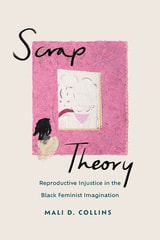
Scrap Theory
Reproductive Injustice in the Black Feminist ImaginationMali D. Collins
The Ohio State University Press, 2025

Scrutinizing Feminist Epistemology
An Examination of Gender in SciencePinnick, Cassandra
Rutgers University Press, 2003
This volume presents the first systematic evaluation of a feminist epistemology of sciences’ power to transform both the practice of science and our society. Unlike existing critiques, this book questions the fundamental feminist suggestion that purging science of alleged male biases will advance the cause of both science and by extension, social justice.
The book is divided into four sections: the strange status of feminist epistemology, testing feminist claims about scientific practice, philosophical and political critiques of feminist epistemology, and future prospects of feminist epistemology. Each of the essays¾most of which are original to this text¾ directly confronts the very idea that there could be a feminist epistemology or philosophy of science. Rather than attempting to deal in detail with all of the philosophical views that fall under the general rubric of feminist epistemology, the contributors focus on positions that provide the most influential perspectives on science. Not all of the authors agree amongst themselves, of course, but each submits feminist theories to careful scrutiny. Scrutinizing Feminist Epistemology provides a timely, well-rounded, and much needed examination of the role of gender in scientific research.

Searching for Feminist Superheroes
Gender, Sexuality, and Race in Marvel ComicsSam Langsdale
University of Texas Press, 2024
How superhero narratives in the margins of the mainstream tell innovative, feminist stories.
It’s no secret that superhero comics and their related media perpetuate a model of a straight, white, male hero at the expense of representing women and other minorities, but other narratives exist. Searching for Feminist Superheroes recognizes that female-led superhero comics, with diverse casts of characters and inclusive storytelling, exist on the margins of the mainstream superhero genre. But rather than focusing on these stories as marginalized, Sam Langsdale’s work on heroes such as Spider-Woman, America Chavez, and Ironheart locates the margins as a site of innovation and productivity, which have enabled the creation of feminist superhero texts.
Employing feminist and intersectional philosophies in an analysis of these comics, Langsdale suggests that feminist superheroes have the potential to contribute to a social imagination that is crucial in working toward a more just world. At a time when US popular culture continues to manifest as a battleground between oppressive and progressive social norms, Searching for Feminist Superheroes demonstrates that a fight for a better world is worthwhile.

Secret Treachery Of Words
Feminism And Modernism In AmericaElizabeth Francis
University of Minnesota Press, 2002

Sentimental Materialism
Gender, Commodity Culture, and Nineteenth-Century American LiteratureLori Merish
Duke University Press, 2000
The phenomenon of female consumption was capitalism’s complement to male production: It created what Merish calls the “Other Protestant Ethic,”a feminine and sentimental counterpart to Max Weber’s ethic of hard work, economic rationality, and self-control. In addition, driven by the culture’s effort to civilize the “cannibalistic” practices of ethnic, class, and national otherness, appropriate female consumerism, marked by taste and refinement, identified certain women and their families as proper citizens of the United States. The public nature of consumption, however, had curiously conflicting effects: While the achievement of cultured material circumstances facilitated women’s civic agency, it also reinforced stereotypes of domestic womanhood.
Sentimental Materialism’s inquiry into middle-class consumption and accompanying ideals of womanhood will appeal to readers in a variety of disciplines, including American studies, cultural studies, feminist theory, and cultural history.

Sex Exposed
Sexuality and the Pornography DebateMcIntosh, Mary
Rutgers University Press, 1993
This provocative collection, by well-known feminists, surveys these arguments, and in particular asks why recent feminist debates about sexuality keep reducing to questions of pornography.

Sex and Scientific Inquiry
Edited by Sandra Harding and Jean F. O'Barr
University of Chicago Press, 1987

Sex in Revolution
Gender, Politics, and Power in Modern MexicoJocelyn Olcott, Mary Kay Vaughan, and Gabriela Cano, eds.
Duke University Press, 2006
Concentrating on episodes and phenomena that occurred between 1915 and 1950, the contributors deftly render experiences ranging from those of a transgendered Zapatista soldier to upright damas católicas and Mexico City’s chicas modernas pilloried by the press and male students. Women refashioned their lives by seeking relief from bad marriages through divorce courts and preparing for new employment opportunities through vocational education. Activists ranging from Catholics to Communists mobilized for political and social rights. Although forced to compromise in the face of fierce opposition, these women made an indelible imprint on postrevolutionary society.
These essays illuminate emerging practices of femininity and masculinity, stressing the formation of subjectivity through civil-society mobilizations, spectatorship and entertainment, and locales such as workplaces, schools, churches, and homes. The volume’s epilogue examines how second-wave feminism catalyzed this revolutionary legacy, sparking widespread, more radically egalitarian rural women’s organizing in the wake of late-twentieth-century democratization campaigns. The conclusion considers the Mexican experience alongside those of other postrevolutionary societies, offering a critical comparative perspective.
Contributors. Ann S. Blum, Kristina A. Boylan, Gabriela Cano, María Teresa Fernández Aceves, Heather Fowler-Salamini, Susan Gauss, Temma Kaplan, Carlos Monsiváis, Jocelyn Olcott, Anne Rubenstein, Patience Schell, Stephanie Smith, Lynn Stephen, Julia Tuñón, Mary Kay Vaughan

Sexual Power
Feminism and the Family in AmericaCarolyn Ross Johnston
University of Alabama Press, 1992
Since the early 1970s, scholars have argued, defined, and refined a wide range of interpretations of American women’s lives. Despite the richness of the recent literature, few interpretations sufficiently credit women’s family and sexual experiences for the emergence of feminism and the construction of pro-family agendas. Thus, Johnston’s approach offers an opportunity to view the history of feminism and the family from a fresh perspective.
Much of the literature on feminism has focused on women’s oppression and victimization, rather than on the power that women historically have exerted. Johnston’s interpretation of American feminism differs from previous works because she argues that the gradual growth of feminist consciousness lies not simply in oppression or feelings of victimization, but paradoxically in a growing sense of the empowerment of women as wives and mothers. She traces how reproduction, sexuality, domesticity, and motherhood have been socially constructed, and examines how feminists and anti-feminists have fought on the terrain of “family” issues.
Johnston explores critical questions concerning American women’s sexual lives. How have women’s empowering experiences in the family shaped feminist consciousness and action? How have feminists confronted family issues? How have women exerted sexual power? How was it contained within the limits of patriarchal society at times, while at other times it fueled the fires of feminist rebellion? How have gender and class issues affected domestic politics and feminism?

Shadow Bodies
Black Women, Ideology, Representation, and PoliticsJordan-Zachery, Julia S.
Rutgers University Press, 2018
Grounded in Black feminist thought, Julia S. Jordan-Zachery looks at the functioning of scripts ascribed to Black women’s bodies in the framing of HIV/AIDS, domestic abuse, and mental illness and how such functioning renders some bodies invisible in Black politics in general and Black women’s politics specifically.

Shadow of My Shadow
Jennifer Doyle
Duke University Press, 2024

Shall Not Be Denied
Women Fight for the VoteLibrary of Library of Congress
Rutgers University Press, 2019
Official Companion to the Library of Congress Exhibition.
The campaign for women’s suffrage—considered the largest reform movement in American history—lasted more than seven decades. The struggle was not for the fainthearted. For years, determined women organized, lobbied, paraded, petitioned, lectured, picketed, and faced imprisonment in pursuit of the right to vote. Drawing from the Library’s extensive collections of photographs, personal papers, and the organizational records of such figures as Susan B. Anthony, Elizabeth Cady Stanton, Mary Church Terrell, Carrie Chapman Catt, the National Woman’s Party, and the National American Woman Suffrage Association, Shall Not Be Denied traces the movement leading to the women’s rights convention at Seneca Falls, the contributions of suffragists who worked to persuade women that they deserved the same rights as men, the divergent political strategies and internal divisions they overcame, the push for a federal women’s suffrage amendment, and the legacy of the movement.
A companion to the exhibition staged by the Library of Congress, which opened on June 4, 2019—the 100th anniversary of the US Senate’s passage of the suffrage amendment that would become the 19th amendment—Shall Not Be Denied: Women Fight for the Vote is part of the national commemoration of the 100th anniversary of women’s suffrage.
Published by Rutgers University Press in association with the Library of Congress.

Shamanism and Vulnerability on the North and South American Great Plains
Kathleen Bolling Lowrey
University Press of Colorado, 2020
The book reveals the various ways in which anthropologists, historians, folklorists, and other writers have often misrepresented indigenous shamanism and revitalization movements by unconsciously projecting ideologies and assumptions derived from modern ‘contract societies’ onto ethnographic and historical realities. Lowrey also provides alternative ways of understanding indigenous American communities and their long histories of interethnic relations with expanding colonial and national states in the Americas. A creative historical and ethnographical reevaluation of the last few decades of scholarship on shamanism, disability, and dependence, Shamanism and Vulnerability on the North and South American Great Plains will be of interest to scholars of North and South American anthropology, indigenous history, American studies, and feminism.

Shamewreck
EssaysPeggy Shinner
The Ohio State University Press, 2027
In Shamewreck, Peggy Shinner interrogates the entanglement of shame and language, casting shame as a moral force, a conscience-beast, an umpire, the fellow who awaits when you come home. She grapples with the nuclear bombing of Bikini Atoll and the emergence, four days later, of the bikini in Paris; the link between property and personhood and what it means to die without possessions; the mutability of language and how shamefaced once meant “modest and bashful,” before morphing into “abashed and ashamed”; how talkative women were thought to be sloppy women, like Eve (loose of mouth and morals ); how occupation once meant “heterosexual intercourse” and now means “military invasion.” Parsing the dark undercurrents of popular culture alongside her own experiences as a queer woman, Shinner exhorts us to abandon willful unseeing and consider the legacies of language. Take a look, she urges, you can buy a new car in twenty-first-century America and for your money get two masters and a slave key. Shamewreck complicates our notions of shame and shamelessness and rescues them from the refuse pile, reclaiming shame as a potent moral adjudicator.

Shapeshifting Subjects
Gloria Anzaldua's Naguala and Border ArteKelli D. Zaytoun
University of Illinois Press, 2022
An original and moving analysis, Shapeshifting Subjects draws on unpublished archival material to apply Anzaldúa's ideas to new areas of thought and action.
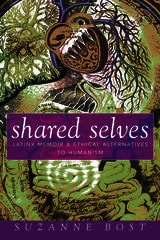
Shared Selves
Latinx Memoir and Ethical Alternatives to HumanismSuzanne Bost
University of Illinois Press, 2019
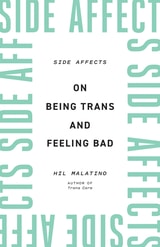
Side Affects
On Being Trans and Feeling BadHil Malatino
University of Minnesota Press, 2022
How the “bad feelings” of trans experience inform trans survival and flourishing
Some days—or weeks, or months, or even years—being trans feels bad. Yet as Hil Malatino points out, there is little space for trans people to think through, let alone speak of, these bad feelings. Negative emotions are suspect because they unsettle narratives of acceptance or reinforce virulently phobic framings of trans as inauthentic and threatening.
In Side Affects, Malatino opens a new conversation about trans experience that acknowledges the reality of feeling fatigue, envy, burnout, numbness, and rage amid the ongoing onslaught of casual and structural transphobia in order to map the intricate emotional terrain of trans survival. Trans structures of feeling are frequently coded as negative on both sides of transition. Before transition, narratives are framed in terms of childhood trauma and being in the “wrong body.” Posttransition, trans individuals—especially trans people of color—are subject to unrelenting transantagonism. Yet trans individuals are discouraged from displaying or admitting to despondency or despair.
By moving these unloved feelings to the center of trans experience, Side Affects proposes an affective trans commons that exists outside political debates about inclusion. Acknowledging such powerful and elided feelings as anger and exhaustion, Malatino contends, is critical to motivating justice-oriented advocacy and organizing—and recalibrating new possibilities for survival and well-being.
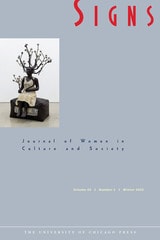
Signs
Journal of Women in Culture and Society, volume 45 number 2 (Winter 2020)The University of Chicago Press
University of Chicago Press Journals, 2020

Signs
Journal of Women in Culture and Society, volume 45 number 3 (Spring 2020)The University of Chicago Press
University of Chicago Press Journals, 2020
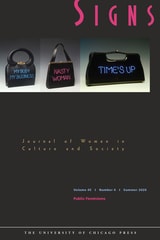
Signs
Journal of Women in Culture and Society, volume 45 number 4 (Summer 2020)The University of Chicago Press
University of Chicago Press Journals, 2020

Signs
Journal of Women in Culture and Society, volume 46 number 1 (Autumn 2020)The University of Chicago Press
University of Chicago Press Journals, 2020

Signs
Journal of Women in Culture and Society, volume 46 number 2 (Winter 2021)The University of Chicago Press
University of Chicago Press Journals, 2021
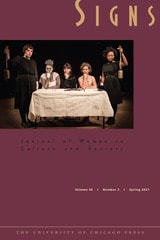
Signs
Journal of Women in Culture and Society, volume 46 number 3 (Spring 2021)The University of Chicago Press
University of Chicago Press Journals, 2021

Signs
Journal of Women in Culture and Society, volume 46 number 4 (Summer 2021)The University of Chicago Press
University of Chicago Press Journals, 2021
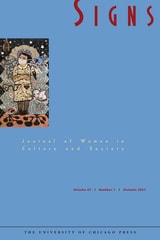
Signs
Journal of Women in Culture and Society, volume 47 number 1 (Autumn 2021)The University of Chicago Press
University of Chicago Press Journals, 2021

Signs
Journal of Women in Culture and Society, volume 47 number 2 (Winter 2022)The University of Chicago Press
University of Chicago Press Journals, 2022
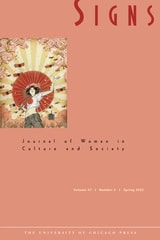
Signs
Journal of Women in Culture and Society, volume 47 number 3 (Spring 2022)The University of Chicago Press
University of Chicago Press Journals, 2022
Signs
Journal of Women in Culture and Society, volume 47 number 4 (Summer 2022)The University of Chicago Press
University of Chicago Press Journals, 2022
Signs
Journal of Women in Culture and Society, volume 48 number 1 (Autumn 2022)The University of Chicago Press
University of Chicago Press Journals, 2022
Signs
Journal of Women in Culture and Society, volume 48 number 2 (Winter 2023)The University of Chicago Press
University of Chicago Press Journals, 2023
Signs
Journal of Women in Culture and Society, volume 48 number 3 (Spring 2023)The University of Chicago Press
University of Chicago Press Journals, 2023

Signs
Journal of Women in Culture and Society, volume 48 number 4 (Summer 2023)The University of Chicago Press
University of Chicago Press Journals, 2023
Signs
Journal of Women in Culture and Society, volume 49 number 1 (Autumn 2023)The University of Chicago Press
University of Chicago Press Journals, 2023

Signs
Journal of Women in Culture and Society, volume 49 number 2 (Winter 2024)The University of Chicago Press
University of Chicago Press Journals, 2024

Signs
Journal of Women in Culture and Society, volume 49 number 3 (Spring 2024)The University of Chicago Press
University of Chicago Press Journals, 2024

Signs
Journal of Women in Culture and Society, volume 49 number 4 (Summer 2024)The University of Chicago Press
University of Chicago Press Journals, 2024
Signs
Journal of Women in Culture and Society, volume 50 number 1 (Autumn 2024)The University of Chicago Press
University of Chicago Press Journals, 2024
Signs
Journal of Women in Culture and Society, volume 50 number 2 (Winter 2025)The University of Chicago Press
University of Chicago Press Journals, 2025

Signs
Journal of Women in Culture and Society, volume 50 number 3 (Spring 2025)The University of Chicago Press
University of Chicago Press Journals, 2025
Signs
Journal of Women in Culture and Society, volume 50 number 4 (Summer 2025)The University of Chicago Press
University of Chicago Press Journals, 2025
Signs
Journal of Women in Culture and Society, volume 51 number 1 (Autumn 2025)The University of Chicago Press
University of Chicago Press Journals, 2025

Signs
Journal of Women in Culture and Society, volume 51 number 2 (Winter 2026)The University of Chicago Press
University of Chicago Press Journals, 2026
Signs
Journal of Women in Culture and Society, volume 51 number 3 (Spring 2026)The University of Chicago Press
University of Chicago Press Journals, 2026

Signs
Journal of Women in Culture and Society, volume 51 number 4 (Summer 2026)The University of Chicago Press
University of Chicago Press Journals, 2026

Simone de Beauvoir’s Political Thinking
Edited by Lori Jo Marso and Patricia Moynagh
University of Illinois Press, 2006
By exploring the life and work of the influential feminist thinker Simone de Beauvoir, this book shows how each of us lives within political and social structures that we can--and must--play a part in transforming. It argues that Beauvoir’s careful examination of her own existence can also be understood as a dynamic method for political thinking.
As the contributors illustrate, Beauvoir's political thinking proceeds from the bottom up, using examples from individual lives as the basis for understanding and transforming our collective existence. For example, she embraced her responsibility as a French citizen as making her complicit in the French war against Algeria. Here, she sees her role as an oppressor. In other contexts, she looks to the lives of individual women, including herself, to understand the dimensions of gender inequality.
This volume’s six tightly connected essays home in on the individual’s relationship to community, and how one’s freedom interacts with the freedom of other people. Here, Beauvoir is read as neither a liberal nor a communitarian. The authors focus on her call for individuals to realize their freedom while remaining consistent with ethical obligations to the community. Beauvoir's account of her own life and the lives of others is interpreted as a method to understand individuals in relations to others, and as within structures of personal, material, and political oppression. Beauvoir's political thinking makes it clear that we cannot avoid political action. To do nothing in the face of oppression denies freedom to everyone, including oneself.

Sister Species
Women, Animals and Social JusticeEdited by Lisa A. Kemmerer
University of Illinois Press, 2011

Sistuhs in the Struggle
An Oral History of Black Arts Movement Theater and PerformanceLa Donna L. Forsgren
Northwestern University Press, 2021
Outstanding Academic Title, CHOICE
The first oral history to fully explore the contributions of black women intellectuals to the Black Arts Movement, Sistuhs in the Struggle reclaims a vital yet under-researched chapter in African American, women’s, and theater history. This groundbreaking study documents how black women theater artists and activists—many of whom worked behind the scenes as directors, designers, producers, stage managers, and artistic directors—disseminated the black aesthetic and emboldened their communities.
Drawing on nearly thirty original interviews with well-known artists such as Ntozake Shange and Sonia Sanchez as well as less-studied figures including distinguished lighting designer Shirley Prendergast, dancer and choreographer Halifu Osumare, and three-time Tony-nominated writer and composer Micki Grant, La Donna L. Forsgren centers black women’s cultural work as a crucial component of civil rights and black power activism. Sistuhs in the Struggle is an essential collection for theater scholars, historians, and students interested in learning how black women’s art and activism both advanced and critiqued the ethos of the Black Arts and Black Power movements.