Results by title

6 books match the query 'FBI'

cover of An Era of Disruption and Violence: The FBI and the Shattering of the Sixties New Left

An Era of Disruption and Violence

The FBI and the Shattering of the Sixties New Left

Aaron J. Leonard

Rutgers University Press, 2027

Throughout the decade of the sixties, the FBI and other elements of the government undertook a massive effort to contain the movement against the American apartheid system and the war in Vietnam. The prime focus of these increasingly repressive efforts was the young radicals of the New Left, residing in the Students for a Democratic Society. Utilizing thousands of pages of unexamined FBI files, voluminous reports from Congress, and the author’s files obtained through Freedom of Information filings, this book will tell the story of the massive repression set loose against SDS, the group’s breakup due to internecine factionalism, and how this was encouraged and amplified at every turn by secret measures deployed by the FBI.
[more]
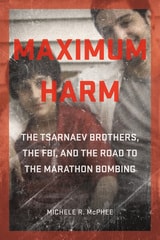
cover of Maximum Harm: The Tsarnaev Brothers, the FBI, and the Road to the Marathon Bombing

Maximum Harm

The Tsarnaev Brothers, the FBI, and the Road to the Marathon Bombing

Michele R. McPhee

University Press of New England, 2017
In Maximum Harm, veteran investigative journalist Michele R. McPhee unravels the complex story behind the public facts of the Boston Marathon bombing. She examines the bombers’ roots in Dagestan and Chechnya, their struggle to assimilate in America, and their growing hatred of the United States—a deepening antagonism that would prompt federal prosecutors to dub Dzhokhar Tsarnaev “America's worst nightmare.” The difficulties faced by the Tsarnaev family of Cambridge, Massachusetts, are part of the public record. Circumstances less widely known are the FBI’s recruitment of the older brother, Tamerlan Tsarnaev, as a “mosque crawler” to inform on radical separatists here and in Chechnya; the tracking down and killing of radical Islamic separatists during the six months he spent in Russia—travel that raised eyebrows, since he was on several terrorist watchlists; the FBI’s botched deals and broken promises with regard to his immigration; and the disenchantment, rage, and growing radicalization of Tamerlan and Dzhokhar, along with their mother, sisters, and Tamerlan’s wife, Katherine. Maximum Harm is also a compelling examination of the Tsarnaev brothers’ movements in the days leading up to the Boston Marathon bombing on April 15, 2013, the subsequent investigation, the Tsarnaevs’ murder of MIT police officer Sean Collier, the high-speed chase and shootout that killed Tamerlan, and the manhunt in which the authorities finally captured Dzhokhar, hiding in a Watertown backyard. McPhee untangles the many threads of circumstance, coincidence, collusion, motive, and opportunity that resulted in the deadliest attack on the city of Boston to date.
[more]
cover of Of G-Men and Eggheads: The FBI and the New York Intellectuals

Of G-Men and Eggheads

The FBI and the New York Intellectuals

John Rodden

University of Illinois Press, 2017

Spy romances of Cold War counterespionage evoke scenes of heroic FBI and CIA agents dedicated to smashing communism and its subversive coterie of intellectual fellow travelers bent on painting the world red.
 
John Rodden cuts this tall tale down to its authentic pint size, refusing to indulge the public relations myth promoted by J. Edgar Hoover's FBI. In Of G-Men and Eggheads, Rodden portrays federal agents’ hilarious obsession with monitoring that ever-present threat to national security, the American literary intellectual. Drawing on government dossiers and archives, Rodden focuses on the onetime members of a radical political sect of ex-Trotskyists (barely numbering a thousand at its height), the so-called New York intellectuals. He describes the nonsensical decades-long pursuit of this group of intellectuals, especially Lionel Trilling, Dwight Macdonald, and Irving Howe. The Keystone Cops style of numerous FBI agents is documented carefully in Rodden's meticulous case studies of how Hoover's men recruited informants to snoop on the "Commies," opened their personal mail, tracked their movements, and reported on their wives and friends.
 
[more]
cover of The FBI and the Catholic Church, 1935-1962

The FBI and the Catholic Church, 1935-1962

Steve Rosswurm

University of Massachusetts Press, 2009

During his long tenure as director of the Federal Bureau of Investigation, J. Edgar Hoover made no secret of his high regard for the Catholic faith. Though himself a Protestant, he shared with Catholicism a set of values and a vision of the world, grounded in certain assumptions about the way things ought to be in a well-ordered society. The Church reciprocated Hoover's admiration, establishing the basis for a working alliance between two powerful and influential American institutions.

Steve Rosswurm explores the history of that relationship from the turbulent 1930s to the 1960s, when growing Catholic opposition to the Vietnam War led Hoover to distance himself from the Church. Drawing on a vast range of sources, including thousands of pages of previously classified FBI files, Rosswurm pursues his investigation along two parallel tracks. First, he looks at the joint war waged by Hoover and the Catholic hierarchy against forces considered threats to their organizations, values, and nation. Second, he examines how each pursued its own institutional interests with the help of the other.

While opposition to communism was a preoccupation of both institutions, it was not the only passion they shared, according to Rosswurm. Even more important, perhaps, was their fervent commitment to upholding traditional gender roles, particularly the prerogatives of patriarchal authority. When women and men carried out their assigned obligations, they believed, society ran smoothly; when they did not, chaos ensued.

Organized topically, The FBI and the Catholic Church, 1935–1962 looks not only at the shared values and interests of the two institutions, but also at the personal relationships between Hoover and his agents and some of the most influential Catholic prelates of the time. Rosswurm discusses the role played by Edward A. Tamm, the FBI's highest-ranking Catholic, in forging the alliance; the story behind Father John Cronin's 1945 report on the dangers of communism; the spying conducted by Father Edward Conway S.J. on behalf of the FBI while treasurer of the National Committee for Atomic Information; and Monsignor Charles Owen Rice's FBI-aided battle against communists within the CIO.
[more]
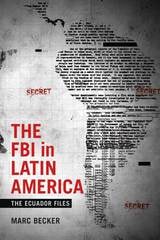
cover of The FBI in Latin America: The Ecuador Files

The FBI in Latin America

The Ecuador Files

Marc Becker

Duke University Press, 2017
During the Second World War, the FDR administration placed the FBI in charge of political surveillance in Latin America. Through a program called the Special Intelligence Service (SIS), 700 agents were assigned to combat Nazi influence in Mexico, Brazil, Chile, and Argentina. The SIS’s mission, however, extended beyond countries with significant German populations or Nazi spy rings. As evidence of the SIS’s overreach, forty-five agents were dispatched to Ecuador, a country without any German espionage networks. Furthermore, by 1943, FBI director J. Edgar Hoover shifted the SIS’s focus from Nazism to communism. Marc Becker interrogates a trove of FBI documents from its Ecuador mission to uncover the history and purpose of the SIS’s intervention in Latin America and for the light they shed on leftist organizing efforts in Latin America. Ultimately, the FBI’s activities reveal the sustained nature of US imperial ambitions in the Americas.
[more]
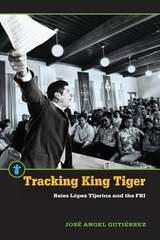
cover of Tracking King Tiger: Reies López Tijerina and the FBI

Tracking King Tiger

Reies López Tijerina and the FBI

José Angel Gutiérrez

Michigan State University Press, 2019

Reies López Tijerina, one of the Four Horsemen of the Chicano Movement, led the land grant struggle by Hispanos in the 1960s to recover the lands granted to their ancestors by Spain and Mexico and then guaranteed by the Treaty of Guadalupe Hidalgo. In his struggle, Tijerina became the target of local and state law enforcement officials in New Mexico and the FBI nationwide. José Angel Gutiérrez meticulously examines thousands of pages of FBI documents, interview transcripts, newspaper reports, and other written accounts on Tijerina and the Alianza Federal de Pueblos Libres, the organization of land grant claimants led by Tijerina in New Mexico. The primary source materials that document the U.S. government’s attempts to destroy Tijerina, his family, and his followers complement the secondary literature on Tijerina and his efforts as the premier leader of the land grant recovery movement. Threaded through the volume are glimpses into the special personal relationship between Tijerina and the author.
[more]