Results by title
279 books match the query 'Film & Video' and 13 start with s
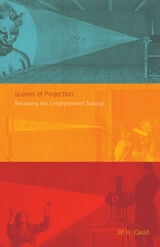
Scenes of Projection
Recasting the Enlightenment SubjectJill H. Casid
University of Minnesota Press, 2015
Theorizing vision and power at the intersections of the histories of psychoanalysis, media, scientific method, and colonization, Scenes of Projection poaches the prized instruments at the heart of the so-called scientific revolution: the projecting telescope, camera obscura, magic lantern, solar microscope, and prism. From the beginnings of what is retrospectively enshrined as the origins of the Enlightenment and in the wake of colonization, the scene of projection has functioned as a contraption for creating a fantasy subject of discarnate vision for the exercise of “reason.”
Jill H. Casid demonstrates across a range of sites that the scene of projection is neither a static diagram of power nor a fixed architecture but rather a pedagogical setup that operates as an influencing machine of persistent training. Thinking with queer and feminist art projects that take up old devices for casting an image to reorient this apparatus of power that produces its subject, Scenes of Projection offers a set of theses on the possibilities for felt embodiment out of the damaged and difficult pasts that haunt our present.
Screen Captures
Film in the Age of EmergencyStephen Lee Naish
Lever Press, 2026
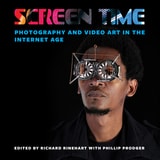
Screen Time
Photography and Video Art in the Internet AgeRichard Rinehart
Bucknell University Press, 2022
Published by Bucknell University Press for the Samek Art Museum.
Distributed worldwide by Rutgers University Press.

Screens
Viewing Media Installation ArtKate Mondloch
University of Minnesota Press, 2010

Sergei Paradjanov
Shadows of Forgotten AncestorsJoshua First
Intellect Books, 2016
This book is the first full-length companion to the film. In addition to a synopsis of the plot and a close analysis of the many levels of symbolism in the film, it offers a history of the film’s legendarily troubled production process (which included Paradjanov challenging a cinematographer to a duel). The book closes with an account of the film’s reception by critics, ordinary viewers, and Soviet officials, and the numerous controversies that have kept it a subject of heated debate for decades. An essential companion to a fascinating, complicated work of cinema art, this book will be invaluable to students, scholars, and regular film buffs alike.
Shaping Global Cultures through Screenwriting
Women Who Write Our WorldsEdited by Rose Ferrell and Rosanne Welch
Intellect Books, 2025
Shaping Global Culture through Screenwriting is a powerful testament to the undeniable impact of an international collection of female screenwriters. Spanning film, television, virtual reality, games, and digital media, these case studies showcase instances when women filmmakers used screenwriting to challenge injustice and give voice to communities around the world.
Divided into sections that seek to overcome global disparities in wealth and power, the book views screenwriting as activism, shifting attitudes, and altering lived experiences. Whether about gender and race or war and colonization, each chapter exposes the deep connections between storytelling and social change. More than just a study of the craft, this book is a celebration of the women writers who use their artistic lens to educate and empower others. Geared toward readers interested in screenwriting, media studies, sociology, women’s studies, and a wide range of humanities subjects, including history and population studies, Shaping Global Culture through Screenwriting brings long-overdue attention to the vital role women take in shaping the global cultural landscape.
Shooting Women
Behind the Camera, Around the WorldHarriet Margolis, Alexis Krasilovsky and Julia Stein
Intellect Books, 2015

Southern Neogothic
Literary and Cinematic Reckonings from the 1970s to the PresentLee Rozelle
University of Alabama Press, 2026
In Southern Neogothic, Lee Rozelle moves beyond familiar debates that have long dominated studies of the American South, proposing a new framework for understanding how contemporary writers, filmmakers, and artists have transformed the genre’s signature tropes to engage pressing cultural, political, and environmental concerns. Rather than revisiting narratives centered on white grievance, Confederate memory, or Lost Cause mythology, Rozelle examines works that expand Southern Gothic’s reach, connecting regional traditions to global audiences and contemporary struggles over identity, power, and belonging. By demonstrating how contemporary artists have reinvented one of America’s most enduring literary modes, Rozelle offers a fresh and timely account of the genre’s continuing cultural relevance.
Spanish Cinema of the New Millennium
And the Winner Is...Thomas G. Deveny
Intellect Books, 2019
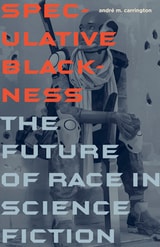
Speculative Blackness
The Future of Race in Science FictionAndré M. Carrington
University of Minnesota Press, 2016
In Speculative Blackness, André M. Carrington analyzes the highly racialized genre of speculative fiction—including science fiction, fantasy, and utopian works, along with their fan cultures—to illustrate the relationship between genre conventions in media and the meanings ascribed to blackness in the popular imagination.
Carrington’s argument about authorship, fandom, and race in a genre that has been both marginalized and celebrated offers a black perspective on iconic works of science fiction. He examines the career of actor Nichelle Nichols, who portrayed the character Uhura in the original Star Trek television series and later became a recruiter for NASA, and the spin-off series Star Trek: Deep Space Nine, set on a space station commanded by a black captain. He recovers a pivotal but overlooked moment in 1950s science fiction fandom in which readers and writers of fanzines confronted issues of race by dealing with a fictitious black fan writer and questioning the relevance of race to his ostensible contributions to the 'zines. Carrington mines the productions of Marvel comics and the black-owned comics publisher Milestone Media, particularly the representations of black sexuality in its flagship title, Icon. He also interrogates online fan fiction about black British women in Buffy the Vampire Slayer and the Harry Potter series.
Throughout this nuanced analysis, Carrington theorizes the relationship between race and genre in cultural production, revealing new understandings of the significance of blackness in twentieth-century American literature and culture.
Stephen King on the Small Screen
Mark Browning
Intellect Books, 2011
In this follow up to Stephen King on the Big Screen, Mark Browning turns his critical eye to the much-neglected subject of the best-selling author’s work in television, examining what it is about King’s fiction that makes it particularly suitable for the small screen.
By focusing on this body of work, from the highly successful The Stand and The Night Flier to the lesser-known TV films Storm of the Century, Rose Red, Kingdom Hospital, and the 2004 remake of Salem’s Lot, Browning is able to articulate how these adaptations work and, in turn, suggest new ways of viewing them. This book is the first written by a film specialist to consider King’s television work in its own right, and it rejects previous attempts to make the films and books fit rigid thematic categories. Browning examines what makes a written or visual text successful at evoking fear on a case-by-case basis, in a highly readable and engaging way. He also considers the relationship between the big and small screen. Why, for instance, are some TV versions more effective than movie adaptations and vice versa? In the process, Stephen King on the Small Screen is able to shed new light on what it is that makes King’s novels so successful and reveal the elements of style and approach that have helped make King one of the world’s best-selling authors.
Studying Unmade, Unseen, and Unreleased Film and Television
Histories, Theories, MethodsJames Fenwick and Kieran Foster
Intellect Books, 2026
Unmade, unseen, and unreleased film and television are a strikingly underexplored aspect of media history, even though significant financial investment and creative labor in these industries are devoted to projects that never reach production or distribution. This groundbreaking collection offers a comprehensive examination of this phenomenon, bringing together interdisciplinary perspectives from film history, gender and sexuality studies, industry studies, archival research, and creative practice.
Each chapter presents a state-of-the-art overview of a key theme, debate, method, or theory, drawing on illuminating case studies from different historical periods and global contexts. Together, the contributions define what it means for a work to remain unmade, unseen, or unreleased, while showcasing innovative research approaches and mapping the scale of unfinished projects in film and television. Serving as both a foundational text for students and a valuable reference for established researchers, the volume’s scope will offer an essential resource for anyone seeking to understand the hidden histories of the screen industries.
Superman
The Movie: The 40th-Anniversary InterviewsGary Bettinson
Intellect Books, 2018
Marking forty years since the film’s release, this book presents original interview transcripts with the cast and crew. It serves as a rare insider account of an acclaimed blockbuster that was steeped in controversy throughout production, from its record-breaking budget to conflicts between the director and producers. With refreshing candor, the interviewees cast light on the daily realities on set, as well as on the film’s release and reception. Beginning with the film’s inception and continuing through its runaway success, this book provides valuable insights into the practical logistics and day-to-day realities of mounting a big-budget production, at a time when high-concept Hollywood blockbusters were only just emerging as a genre.