Results by title
484 books match the query 'Foreign relations' and 24 start with s
Sacred Mandates
Asian International Relations since Chinggis KhanEdited by Timothy Brook, Michael van Walt van Praag, Miek Boltjes
University of Chicago Press, 2018
This book argues that understanding the diversity of past legal orders helps explain the forms of contemporary conflict, as well as the conflicting historical narratives that animate tensions. Rather than proceed sequentially by way of dynasties, the editors identify three “worlds”—Chingssid Mongol, Tibetan Buddhist, and Confucian Sinic—that represent different forms of civilization authority and legal order. This novel framework enables us to escape the modern tendency to view the international system solely as the interaction of independent states, and instead detect the effects of the complicated history at play between and within regions. Contributors from a wide range of disciplines cover a host of topics: the development of international law, sovereignty, state formation, ruler legitimacy, and imperial expansion, as well as the role of spiritual authority on state behavior, the impact of modernization, and the challenges for peace processes. The culmination of five years of collaborative research, Sacred Mandates will be the definitive historical guide to international and intrastate relations in Asia, of interest to policymakers and scholars alike, for years to come.

Sectors of Mutual Benefit in U.S.-Soviet Relations
Nish Jamgotch Jr., editor
Duke University Press, 1985
Without minimizing the enormous dangers of ongoing strategic military competition, the contributors attempt to determine which sectors of U.S.-Soviet relations have yielded the most significant mutual benefits. They raise questions about where U.S. policy has gone wrong, where it has been effective, and how safe we are in forecasting the continuation of those cooperative relationships.
Secular Missionaries
Americans and African Development in the 1960sLarry Grubbs
University of Massachusetts Press, 2010

Secular Power Europe and Islam
Identity and Foreign PolicySarah Wolff
University of Michigan Press, 2021
Secular Power Europe and Islam argues that secularism is not the central principle of international relations but should be considered as one belief system that influences international politics. Through an exploration of Europe’s secular identity, an identity that is seen erroneously as normative, author Sarah Wolff shows how Islam confronts the EU’s existential anxieties about its security and its secular identity. Islam disrupts Eurocentric assumptions about democracy and revolution and human rights. Through three case studies, Wolff encourages the reader to unpack secularism as a bedrock principle of IR and diplomacy. This book argues that the EU’s interest and diplomacy activities in relation to religion, and to Islam specifically, is shaped by the insistence on a European secular identity, which should be reconsidered in areas of religion and foreign policy.

Seeds of Hate
How America's Flawed Middle East Policy Ignited the JihadLawrence Pintak
Pluto Press, 2003
Selling Fear
Counterterrorism, the Media, and Public OpinionBrigitte L. Nacos, Yaeli Bloch-Elkon, Robert Y. Shapiro
University of Chicago Press, 2011
While we’ve long known that the strategies of terrorism rely heavily on media coverage of attacks, Selling Fear is the first detailed look at the role played by media in counterterrorism—and the ways that, in the wake of 9/11, the Bush administration manipulated coverage to maintain a climate of fear.
Drawing on in-depth analysis of counterterrorism in the years after 9/11—including the issuance of terror alerts and the decision to invade Iraq—the authors present a compelling case that the Bush administration hyped fear, while obscuring civil liberties abuses and concrete issues of preparedness. The media, meanwhile, largely abdicated its watchdog role, choosing to amplify the administration’s message while downplaying issues that might have called the administration’s statements and strategies into question. The book extends through Hurricane Katrina, and the more skeptical coverage that followed, then the first year of the Obama administration, when an increasingly partisan political environment presented the media, and the public, with new problems of reporting and interpretation.
Selling Fear is a hard-hitting analysis of the intertwined failures of government and media—and their costs to our nation.
Service Economies
Militarism, Sex Work, and Migrant Labor in South KoreaJin-kyung Lee
University of Minnesota Press, 2010
Making surprising and revelatory connections, Jin-kyung Lee analyzes South Korean military labor in the Vietnam War, domestic female sex workers, South Korean prostitution for U.S. troops, and immigrant/migrant labor from Asia in contemporary South Korea. Foregrounding gender, sexuality, and race, Lee reimagines the South Korean economic "miracle" as a global and regional articulation of industrial, military, and sexual proletarianization.
Lee not only addresses these under-studied labors individually but also integrates and unites them to reveal an alternative narrative of a changing South Korean working class whose heterogeneity is manifested in its objectification. Delving into literary and popular cultural sources as well as sociological work, Lee locates South Korean development in its military and economic interactions with the United States and other Asian nation-states, offering a unique perspective on how these practices have shaped and impacted U.S.-South Korea relations.

Seward's Folly
A New Look at the Alaska PurchaseLee A. Farrow
University of Alaska Press, 2016
This book aims to correct that. Lee Farrow offers here a detailed account of just what the Alaska Purchase was, how it came about, its impact at the time, and more. Farrow shows why both America and Russia had plenty of good reasons to want the sale to occur, including Russia’s desire to let go of an unprofitable, hard-to-manage colony and the belief in the United States that securing Alaska could help the nation gain control of British Columbia and generate closer trade ties with Asia . Farrow also delves into the implications of the deal for foreign policy and international diplomacy far beyond Russia and the United States at a moment when the global balance of power was in question.
A thorough, readable retelling of a story we only think we know, Seward’s Folly will become the standard book on the Alaska Purchase.
Shaping the Future of Power
Knowledge Production and Network-Building in China-Africa RelationsLina Benabdallah
University of Michigan Press, 2020

Sharp and Dangerous Virtues
A NovelMartha Moody
Ohio University Press, 2012
It’s 2047 in Dayton, Ohio. In response to food and water shortages, the U.S. government has developed an enormous, and powerfully successful, agricultural area—the “Heartland Grid”—just north of the city. In the meantime, in the wake of declining American power a multinational force has established itself in Cleveland. Behind these quickly shifting alliances lies a troubling yet tantalizing question: what will the American future look like?
Sharp and Dangerous Virtues is the story of ordinary people caught in situations they had never planned for or even imagined. There are Chad and Sharis, a married couple with two sons, holding out for normal life in their decaying suburb; Tuuro, a black church custodian whose false confession of murder is used for political purposes; Lila, Dayton’s aging, lonely Commissioner of Water, who dreams of being part of the “pure” existence of the Grid residents; and Charles and Diana, idealistic lovers trying desperately to preserve the nature center that has become their refuge.
What will these people do? What choices are left for them, and what choices have been taken away? Whom and what can they trust? Novelist Moody—known for her vivid portrayals of complicated characters and relationships in novels such as Best Friends and Sometimes Mine—weaves together cataclysmic events and the most intimate of human emotions to create a future that seems achingly real. Sharp and Dangerous Virtues will change the way you think and feel.
Singapore's Grand Strategy
Cheng Guan Ang
National University of Singapore Press, 2023
Even small states can have grand strategies. Singapore, despite its poor natural resource endowment, small population, and size, has often been described as punching above its weight in international affairs. Part of this stems from the way Singapore strategically integrates the different diplomatic, political, and defense-oriented tools at its disposal. To explore this, Singapore’s Grand Strategy offers a fresh and useful diplomatic, defense, and security history of Singapore, from its independence in 1965 through today’s period of strategic realignment.
Most previous studies of grand strategy have focused on super- or at least middle powers, but this book presents an important contribution to international relations and strategic studies by showing how the concept can help explain the strategic posture and achievements of small states as well. Moreover, he brings a historian's perspective to a subject usually tackled by political scientists. The result will be useful and important for scholars in these fields.
Southeast Asia After the Cold War
A Contemporary HistoryAng Cheng Guan
National University of Singapore Press, 2019
With Southeast Asia After the Cold War, Ang Cheng Guan offers a complete, analytically informed contemporary history that covers the whole region, tracing developments since 1990 and highlighting change, continuity, and the larger context in which decisions have been made. Crucial as a tool for making sense of the dynamics of the region, this account of Southeast Asia’s international relations will also be of immediate relevance to those in the United States and elsewhere who engage with the region, with its young, dynamic population, and its strategic position at between the Indian Ocean and the Pacific.
Soviet Occupation of Romania, Hungary, and Austria 1944/45–1948/49
László Borhi
Central European University Press, 2015
Soviet-American Relations After the Cold War
Robert Jervis and Seweryn Bialer, eds.
Duke University Press, 1991
Moving beyond the boundaries of traditional studies of international relations, the contributors here focus on such topics as public opinion and the relationship of domestic policy to foreign policy. Other areas of consideration include the Soviet-U.S. relationship and the Third World and East Asia, the role of the United Nations in Soviet and American policy in the 1990s, international environmental protection, and the Soviet opening to nonprovocative defense. A final section concludes with policy choices for the future regarding security strategies and prospects for peace.
Contributors. Seweryn Bialer, Robert Dallek, Charles Gati, Toby Trister Gati, Colin S. Gray, Ole R. Holsti, Robert Jervis, Alexander J. Motyl, John Mueller, Eric A. Nordlinger, George H. Quester, Harold H. Sanders, Glenn E. Schweitzer, Jack Snyder, Donald S. Zagoria, William Zimmerman
Spain and the American Civil War
Wayne H. Bowen
University of Missouri Press, 2011
Spaniards and Nazi Germany
Collaboration in the New OrderWayne H. Bowen
University of Missouri Press, 2000
Using recently declassified documents from Spain and the United States, personal interviews, and unpublished and published Spanish, German, British, and U.S. records, Spaniards and Nazi Germany makes a significant contribution to the understanding of Hispano-German relations during the 1930s and 1940s. This study shows that Naziphiles within the Spanish Falange, Spain's fascist party, made a concerted effort to bring their nation into World War II, and that only the indecisiveness of dictator Francisco Franco and diplomatic mistakes by the Nazis prevented them from succeeding.
Bowen demonstrates that while Spain was neutral in World War II, its policies clearly favored the Axis, at least in the early stages of the war. Franco, who had emerged victorious from the Spanish Civil War in 1939 largely because of support from Adolf Hitler and Benito Mussolini, even carefully considered entering World War II on the side of Nazi Germany.
By the late 1930s, members of the Falange saw World War II as a revolutionary opportunity, a chance to lead Spain into a new age as a partner with Nazi Germany and Fascist Italy at the head of a New Europe of social justice and authoritarian regimes. By the end of 1939, a significant minority of pro- Nazi Spaniards were unhappy that Spain had not entered the war and remade itself to fit better into Hitler's New Order. Bowen argues that support for Nazi Germany in Spain and among Spanish communities throughout Europe was both wide and deep, and that this enthusiasm for the Third Reich and the New Order it promised to bring lasted until the end of the war. Despite statements of neutrality by the Spanish government, the Franco regime was well aware of this collaboration by Spanish citizens as late as 1944-1945 and did little to stop it. Had Hitler been more interested in bringing Spain into his empire, or exploiting the pro-Nazi sentiments of these thousands of Spaniards, he might have replaced Franco with someone more willing to support his interests even as late as 1943.
Spaniards and Nazi Germany presents many possibilities for what might have been a far different outcome of World War II in Europe. It shows that even without the full support of the Spanish or German governments, pro-Nazi Spaniards, even if they did not quite bring Spain into the war, added to the strength of the Third Reich by serving in its armies, working in its factories, and promoting its ideas to other nations.
Sparrow and the Hawk
Costa Rica and the United States during the Rise of Jose FigueresKyle Longley
University of Alabama Press, 1997
Using Costa Rica as a example, Longley carefully examines the development of the successful relationship between a nonindustrialized country and the United States, revealing the complex forces at work in resistance and accommodation.
During World War II and the immediate postwar era, both the United States and Costa Rica experienced dramatic changes. The United States assumed world leadership and the accompanying responsibilities; Costa Rica encountered far-reaching difficulties that culminated in the Civil War of 1948 and the rise to power of José Figueres. Longley examines why the United States supported Figueres and emphasizes the history and role of Costa Ricans, primarily the figueristas, in maintaining good relations in such a difficult era. Figueres implemented economic and political nationalism, which produced domestic and international tensions, and in spite of its rejection of similar policies in Guatemala and Iran, the United States supported Figueres against domestic and foreign threats.

Spirits of the Cold War
Contesting Worldviews in the Classical Age of American Security StrategyNed O'Gorman
Michigan State University Press, 2012
In spring of 1953, newly elected President Eisenhower sat down with his staff to discuss the state of American strategy in the cold war. America, he insisted, needed a new approach to an urgent situation. From this meeting emerged Eisenhower’s teams of “bright young fellows,” charged with developing competing policies, each of which would come to shape global politics. In Spirits of the Cold War, Ned O’Gorman argues that the early Cold War was a crucible not only for contesting political strategies, but also for competing conceptions of America and its place in the world. Drawing on extensive archival research and wide reading in intellectual and rhetorical histories, this comprehensive account shows cold warriors debating “worldviews” in addition to more strictly instrumental tactical aims. Spirits of the Cold War is a rigorous scholarly account of the strategic debate of the early Cold War—a cultural diagnostic of American security discourse and an examination of its origins.
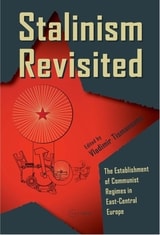
Stalinism Revisited
The Establishment of Communist Regimes in East-Central EuropeVladimir Tismaneanu
Central European University Press, 2010
Deals with the period of takeover and of ‘high Stalinism’ in Eastern Europe (1945–1955). These years are considered to be fundamentally characterized by institutional and ideological transfers based upon the premise of radical transformism and of cultural revolution. Both a balance-sheet and a politico-historical synthesis that reflects the archival and thematic novelties which came about in the field of communism studies after 1989.
Contains contributions analyzing various aspects related these topics for each country of the former Soviet bloc (with the exception of Albania). The essays are based on new archival research, some are reassessments of the author’s previous research and others are critical appraisals of the specific literature published on issues related to the main topic. A path-breaking comparative framework for interpreting the relationship between late Stalinism and the communist takeovers in former Eastern Europe. A bonus for the volume is that it also provides detailed, sectorial analyses for the Romanian case, something that the field paritcularly lacks.

State of Translation
Turkey in Interlingual RelationsEinar Wigen
University of Michigan Press, 2018
International politics often requires two or more languages. The resulting interlingual relations mean translation, either by interpreters who are quite literally in the middle of conversations, or by bilingual statesmen who negotiate internationally in one language and then legitimize domestically in another. Since no two languages are the same, what can be argued in one language may be impossible in another. Political concepts can thus be significantly reformulated in the translation process. State of Translation examines this phenomenon using the case of how 19th-century Ottoman and later Turkish statesmen struggled to reconcile their arguments in external languages (French, then English) with those in their internal language (Ottoman, later Turkish), and in the process further entangled them. Einar Wigen shows how this process structured social relations between the Ottoman state and its interlocutors, both domestically and internationally, and shaped the dynamics of Turkish relations with Europe.
Straight Power Concepts in the Middle East
US Foreign Policy, Israel and World HistoryGregory Harms
Pluto Press, 2010
How did the US become a world power? How did it become involved in the Middle East? What is the history and nature of its 'special relationship' with Israel?
Given the increase in tensions in the Middle East, and the United States' involvement in them, news coverage is in abundance. Yet, the reportage and discussion of American foreign policy is often narrow in scope, offering little background or context. The subject is routinely treated with the vocabulary provided by government officials, presenting best intentions while conceding occasional mistakes and unfortunate incidents. As Gregory Harms demonstrates in Straight Power Concepts, the historical record bears out a different vocabulary and tells a story that sharply contrasts with the common assumptions.
In this brief and accessible account, the reader is guided through the panoramic sweep of world and American history, reviewing how the US became a world power, how the Middle East became 'modern' and how Israel became an American 'strategic asset.' In so doing, the book provides a broad frame of reference, illustrating that recent developments are closer to business-as-usual and nothing resembling the rhetoric commonly used by heads of state, press secretaries, news media, and commentators.
As in his highly successful book The Palestine-Israel Conflict, Harms makes complex subjects accessible to everyone, without sacrificing analytical rigour. This book should be the first port of call for students and anyone seeking clarity and a historical elucidation of current events involving the United States, Israel, and the Middle East.
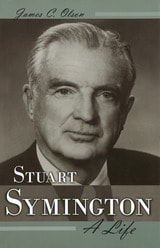
Stuart Symington
A LifeJames C. Olson
University of Missouri Press, 2003
Super Imperialism
The Origin and Fundamentals of U.S. World DominanceMichael Hudson
Pluto Press, 2003
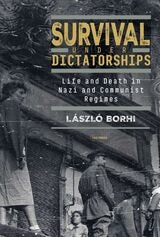
Survival under Dictatorships
Life and Death in Nazi and Communist RegimesLászló Borhi
Central European University Press, 2024
A complex array of individual responses to the abuse of power by the state is represented in this book in three horrific episodes in the history of East-Central Europe. The three events followed each other within a span of about ten years: the deportation and murder of Hungarian Jews in Nazi death and labor camps; the Arrow Cross terrorist rule in Budapest; and finally the Stalinist terror in Hungary and East-Central Europe. Through the prism of survival, László Borhi explores the relationship between the individual and power, attempting to understand the mechanism of oppression and terror produced by arbitrary, unbridled power through the experience of normal people.
Despite the obvious peculiarities of time and place, the Hungarian cases convey universal lessons about the Holocaust, Nazism, and Stalinism. In the author's conception, the National Socialist and Stalinist experiences are linked on several levels. Both regimes defended their visions of the future against social groups whom they saw as implacable enemies of those visions, and who therefore had to be destroyed for sake of social perfection. Furthermore, the social practices of National Socialism were passed on. And although Stalinism was imposed by a foreign power, some of the survival skills for coping with it were rehearsed under the previous hellish experience.