Results by title
124 books match the query 'Health and hygiene' and 18 start with s
Seizing the Means of Reproduction
Entanglements of Feminism, Health, and TechnoscienceM. Murphy
Duke University Press, 2012
Murphy traces the transnational circulation of cheap, do-it-yourself health interventions, highlighting the uneasy links between economic logics, new forms of racialized governance, U.S. imperialism, family planning, and the rise of NGOs. In the twenty-first century, feminist health projects have followed complex and discomforting itineraries. The practices and ideologies of alternative health projects have found their way into World Bank guidelines, state policies, and commodified research. While the particular moment of U.S. feminism in the shadow of Cold War and postcolonialism has passed, its dynamics continue to inform the ways that health is governed and politicized today.
Sensing Health
Bodies, Data, and Digital Health TechnologiesMikki Kressbach
University of Michigan Press, 2024
To capture and analyze digital health experiences, Kressbach develops a method that combines descriptive practices from Film and Media Studies and Phenomenology. After examining the design and feedback structures of digital health platforms and devices, the author uses her own first-person accounts to analyze the impact of the technology on her body, behaviors, and perception of health. Across five chapters focused on different categories of digital health—menstrual trackers, sexual wellness technologies, fitness trackers, meditation and breathing technologies, and posture and running wearables—Sensing Health demonstrates a method of analysis that acknowledges and critiques the biomedical structures of digital health technology while remaining attentive to the lived experiences of users. Through a focus on the intersection of technological design and experience, this method can be used by researchers, scholars, designers, and developers alike.
Shaping the Motherhood of Indigenous Mexico
Vania Smith-Oka
Vanderbilt University Press, 2013
The cash transfer program is Oportunidades, which enrolls more than a fifth of Mexico's population. It expects mothers to become involved in their children's lives at three nodes--health, nutrition, and education. If women do not comply with the standards of modern motherhood, they are dropped from the program and lose the bi-monthly cash payments. Smith-Oka explores the everyday implementation of the program and its unintended consequences.
The mothers are often berated by clinicians for having too many children (Smith-Oka provides background on the history of eugenics and population control in Mexico) and for other examples of their "backward" ways. An entire chapter focuses on the humor indigenous women use to cope with disrespectful comments. Ironically, this form of resistance allows the women to accept the situation that controls their behavior.

Sheer Misery
Soldiers in Battle in WWIIMary Louise Roberts
University of Chicago Press, 2021
Sheer Misery trains a humane and unsparing eye on the corporeal experiences of the soldiers who fought in Belgium, France, and Italy during the last two years of the war. In the horrendously unhygienic and often lethal conditions of the front line, their bodies broke down, stubbornly declaring their needs for warmth, rest, and good nutrition. Feet became too swollen to march, fingers too frozen to pull triggers; stomachs cramped, and diarrhea stained underwear and pants. Turning away from the accounts of high-level military strategy that dominate many WWII chronicles, acclaimed historian Mary Louise Roberts instead relies on diaries and letters to bring to life visceral sense memories like the moans of the “screaming meemies,” the acrid smell of cordite, and the shockingly mundane sight of rotting corpses. As Roberts writes, “For soldiers who fought, the war was above all about their bodies.”
Sickening
Anti-Black Racism and Health Disparities in the United StatesAnne Pollock
University of Minnesota Press, 2021
An event-by-event look at how institutionalized racism harms the health of African Americans in the twenty-first century
A crucial component of anti-Black racism is the unconscionable disparity in health outcomes between Black and white Americans. Sickening examines this institutionalized inequality through dramatic, concrete events from the past two decades, revealing how unequal living conditions and inadequate medical care have become routine.
From the spike in chronic disease after Hurricane Katrina to the lack of protection for Black residents during the Flint water crisis—and even the life-threatening childbirth experience for tennis star Serena Williams—author Anne Pollock takes readers on a journey through the diversity of anti-Black racism operating in healthcare. She goes beneath the surface to deconstruct the structures that make these events possible, including mass incarceration, police brutality, and the hypervisibility of Black athletes’ bodies. Ultimately, Sickening shows what these shocking events reveal about the everyday racialization of health in the United States.
Concluding with a vital examination of racialized healthcare during the COVID pandemic and the Black Lives Matter rebellions of 2020, Sickening cuts through the mind-numbing statistics to vividly portray healthcare inequalities. In a gripping and passionate style, Pollock shows the devastating reality and consequences of systemic racism on the lives and health of Black Americans.

Silent Cells
The Secret Drugging of Captive AmericaAnthony Ryan Hatch
University of Minnesota Press, 2019
A critical investigation into the use of psychotropic drugs to pacify and control inmates and other captives in the vast U.S. prison, military, and welfare systems
For at least four decades, U.S. prisons and jails have aggressively turned to psychotropic drugs—antidepressants, antipsychotics, sedatives, and tranquilizers—to silence inmates, whether or not they have been diagnosed with mental illnesses. In Silent Cells, Anthony Ryan Hatch demonstrates that the pervasive use of psychotropic drugs has not only defined and enabled mass incarceration but has also become central to other forms of captivity, including foster homes, military and immigrant detention centers, and nursing homes.
Silent Cells shows how, in shockingly large numbers, federal, state, and local governments and government-authorized private agencies pacify people with drugs, uncovering patterns of institutional violence that threaten basic human and civil rights. Drawing on publicly available records, Hatch unearths the coercive ways that psychotropics serve to manufacture compliance and docility, practices hidden behind layers of state secrecy, medical complicity, and corporate profiteering.
Psychotropics, Hatch shows, are integral to “technocorrectional” policies devised to minimize public costs and increase the private profitability of mass captivity while guaranteeing public safety and national security. This broad indictment of psychotropics is therefore animated by a radical counterfactual question: would incarceration on the scale practiced in the United States even be possible without psychotropics?

Skin for Skin
Death and Life for Inuit and InnuGerald M. Sider
Duke University Press, 2014

Slavery at Sea
Terror, Sex, and Sickness in the Middle PassageSowande M Mustakeem
University of Illinois Press, 2016
Sowande' Mustakeem's groundbreaking study goes inside the Atlantic slave trade to explore the social conditions and human costs embedded in the world of maritime slavery. Mining ship logs, records and personal documents, Mustakeem teases out the social histories produced between those on traveling ships: slaves, captains, sailors, and surgeons. As she shows, crewmen manufactured captives through enforced dependency, relentless cycles of physical, psychological terror, and pain that led to the the making--and unmaking--of enslaved Africans held and transported onboard slave ships. Mustakeem relates how this process, and related power struggles, played out not just for adult men, but also for women, children, teens, infants, nursing mothers, the elderly, diseased, ailing, and dying. Mustakeem offers provocative new insights into how gender, health, age, illness, and medical treatment intersected with trauma and violence transformed human beings into the world's most commercially sought commodity for over four centuries.
Social Security Programs and Retirement around the World
Historical Trends in Mortality and Health, Employment, and Disability Insurance Participation and ReformsEdited by David A. Wise
University of Chicago Press, 2012
In nearly every industrialized country, large aging populations and increased life expectancy have placed enormous pressure on social security programs—and, until recently, the pressure has been compounded by a trend toward retirement at an earlier age. With a larger fraction of the population receiving benefits, in coming decades social security in many countries may have to be reformed in order to remain financially viable.
This volume offers a cross-country analysis of the effects of disability insurance programs on labor force participation by older workers. Drawing on measures of health that are comparable across countries, the authors explore the extent to which differences in the labor force are determined by disability insurance programs and to what extent disability insurance reforms are prompted by the circumstances of a country’s elderly population.

Social Security Programs and Retirement around the World
The Capacity to Work at Older AgesEdited by David A. Wise
University of Chicago Press, 2017
Sounds of Tohi
Cherokee Health and Well-Being in Southern AppalachiaLisa J. Lefler and Thomas N. Belt
University of Alabama Press, 2022
Dialogue between a medical anthropologist and a Cherokee linguist about health, well-being, and environmental issues
Sounds of Tohi: Cherokee Health and Well-Being in Southern Appalachia is the result of almost two decades of work by medical anthropologist Lisa J. Lefler and Cherokee elder and traditionalist Thomas N. Belt. The narrative consists of a dialogue between them that displays traditional Indigenous knowledge as well as the importance of place for two people from cultures and histories that intersect in the mountains of Southern Appalachia. Together, Lefler and Belt decolonize thinking about health, well-being, and environmental issues through the language and experiences of people whose identity is inextricably linked to the mountains and landscape of western North Carolina.
Lefler and Belt discuss several critical cultural concepts that explain the science of relationships with this world, with the spirit world, and with people. They explore tohi, the Cherokee concept of health, which offers a more pervasive understanding of relationships in life as balanced and moving forward in a good way. They converse about the importance of matrilineality, particularly in light of community healing, the epistemologies of Cherokee cosmography, and decolonizing counseling approaches.
The discussions here offer a different way of approaching the issues that face Americans in this difficult time of division. Lefler and Belt share their urgency to take action against the wholesale exploitation of public lands and the shared environment, to work to perpetuate tribal languages, to preserve the science that can make a difference in how people treat one another, and to create more forums that are inclusive of Native and marginalized voices and that promote respect and appreciation of one another and the protection of sacred places. Throughout, they rely on the preservation of traditional knowledge, or Native science, via Native language to provide insight as to why people should recognize a connection to the land.
Speaking from the Body
Latinas on Health and CultureEdited by Angie Chabram-Dernersesian and Adela de la Torre
University of Arizona Press, 2008
Here are stories of Latinas living with conditions common to many: hypertension, breast cancer, obesity, diabetes, depression, osteoarthritis, rheumatoid arthritis, dementia, Parkinson’s, lupus, and hyper/hypothyroidism. By bringing these narratives out from the shadows of private lives, they demonstrate how such ailments form part of the larger whole of Latina lives that encompasses family, community, the medical profession, and society. They show how personal identity and community intersect to affect the interpretation of illness, compliance with treatment, and the utilization of allopathic medicine, alternative therapies, and traditional healing practices. The book also includes a retrospective analysis of the narratives and a discussion of Latina health issues and policy recommendations.
These Latina cultural narratives illustrate important aspects of the social contexts and real-world family relationships crucial to understanding illness. Speaking from the Body is a trailblazing collection of personal testimonies that integrates professional and personal perspectives and shows that our understanding of health remains incomplete if Latina cultural narratives are not included.

State Healthcare and Yanomami Transformations
A Symmetrical EthnographyJosé Antonio Kelly
University of Arizona Press, 2011
That long-standing dichotomy is challenged in this new ethnography by anthropologist José Kelly. Kelly places the study of culture and cosmology squarely within the context of the modern nation-state and its institutions. He explores Indian-white relations as seen through the operation of a state-run health system among the indigenous Yanomami of southern Venezuela.
With theoretical foundations in the fields of medical and Amazonian anthropology, Kelly sheds light on how Amerindian cosmology shapes concepts of the state at the community level. The result is a symmetrical anthropology that treats white and Amerindian perceptions of each other within a single theoretical framework, thus expanding our understanding of each group and its influences on the other. This book will be valuable to those studying Amazonian peoples, medical anthropology, development studies, and Latin America. Its new takes on theory and methodology make it ideal for classroom use.
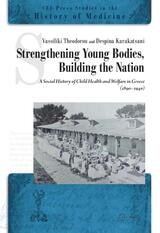
Strengthening Young Bodies, Building the Nation
A Social History of the Child Health and Welfare in Greece (1890–1940)Vassiliki Theodorou
Central European University Press, 2019
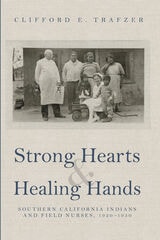
Strong Hearts and Healing Hands
Southern California Indians and Field Nurses, 1920–1950Clifford E. Trafzer
University of Arizona Press, 2021
Over time, field nurses and Native people formed a positive working relationship that resulted in the decline of mortality from infectious diseases. Many Native Americans accepted and used Western medicine to fight pathogens, while also continuing Indigenous medicine ways. Nurses helped control tuberculosis, measles, influenza, pneumonia, and a host of gastrointestinal sicknesses. In partnership with the community, nurses quarantined people with contagious diseases, tested for infections, and tracked patients and contacts. Indians turned to nurses and learned about disease prevention. With strong hearts, Indians eagerly participated in the tuberculosis campaign of 1939–40 to x-ray tribal members living on twenty-nine reservations. Through their cooperative efforts, Indians and health-care providers decreased deaths, cases, and misery among the tribes of Southern California.
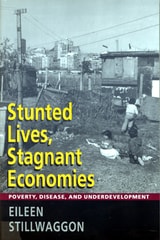
Stunted Lives, Stagnant Economies
Poverty, Disease, and UnderdevelopmentStillwaggon, Eileen
Rutgers University Press, 1998
This is a fascinating, lively, and well-written book. The author has a clear message which she states at the beginning, namely, that health is primarily an economic, not a medical problem, and she follows that to the end.Keith Griffin, University of California, Riverside
Houses made of rags and flattened soda cans, filthy water that breeds disease, counterfeit medicines, no access to decent medical care how can children growing up in such an environment become productive workers contributing to a developing economy?
Stunted Lives, Stagnant Economies describes in vivid detail the living conditions of the poor in developing countries and the diseases and injuries that result from this environment of need. Most of the diseases that affect the poor cholera, summer diarrhea, tuberculosis, lice, worms, leprosy result from the poverty of their environment. Poverty also determines the availability and effectiveness of the medical response. Using Argentina as a case study, Eileen Stillwaggon argues that making good health available to everyone is not a scientific problem but an economic one.
The debt crisis of the 1980s and the subsequent structural adjustment policies adopted by most developing countries exacerbated the problems faced by the poor. What kind of future can a nation build when the health of the majority of the population its workforceÑis at risk or compromised because social services have been reduced? Without adequate health care and social services, people cannot live up to their potential, and the spiral of poverty continues. But there are ways to fight this cycle of poverty.
Sugar and Tension
Diabetes and Gender in Modern IndiaWeaver, Lesley Jo
Rutgers University Press, 2019
Sweetness in the Blood
Race, Risk, and Type 2 DiabetesJames Doucet-Battle
University of Minnesota Press, 2021
A bold new indictment of the racialization of science
Decades of data cannot be ignored: African American adults are far more likely to develop Type 2 diabetes than white adults. But has science gone so far in racializing diabetes as to undermine the search for solutions? In a rousing indictment of the idea that notions of biological race should drive scientific inquiry, Sweetness in the Blood provides an ethnographic picture of biotechnology’s framings of Type 2 diabetes risk and race and, importantly, offers a critical examination of the assumptions behind the recruitment of African American and African-descent populations for Type 2 diabetes research.
James Doucet-Battle begins with a historical overview of how diabetes has been researched and framed racially over the past century, chronicling one company’s efforts to recruit African Americans to test their new diabetes risk-score algorithm with the aim of increasing the clinical and market value of the firm’s technology. He considers African American reticence about participation in biomedical research and examines race and health disparities in light of advances in genomic sequencing technology. Doucet-Battle concludes by emphasizing that genomic research into sub-Saharan ancestry in fact underlines the importance of analyzing gender before attempting to understand the notion of race. No disease reveals this more than Type 2 diabetes.
Sweetness in the Blood challenges the notion that the best approach to understanding, managing, and curing Type 2 diabetes is through the lens of race. It also transforms how we think about sugar, filling a neglected gap between the sugar- and molasses-sweetened past of the enslaved African laborer and the high-fructose corn syrup- and corporate-fed body of the contemporary consumer-laborer.