Results by title
123 books match the query 'Human Sexuality' and 21 start with s

Sadomasochism in Everyday Life
The Dynamics of Power and PowerlessnessChancer, Lynn S.
Rutgers University Press, 1992
Lynn Chancer advances the provocative thesis that sadomasochism is far more prevalent in contemporary societies like the United States than we realize. According to Chancer, sexual sadomasochism is only the best-known manifestation of what is actually a much more broadly based social phenomenon. Moving from personal relationships to school, the workplace, and other interactions, Chancer uses a variety of examples that are linked by a recurrent pattern of behavior. She goes beyond the predominantly individualistic and psychological explanations generally associated with sadomasochism (including those popularized in the "how to" literature of the recent Women Who Love Too Much genre) toward a more sociological interpretation. Chancer suggests that the structure of societies organized along male-dominated and capitalistic lines reflects and perpetuates a sadomasochistic social psychology, creating a culture steeped in everyday experiences of dominance and subordination.
In the first part of the book, Chancer discusses the prevalence of sadomasochistic cultural imagery in contemporary America and examines sadomasochism through several perspectives. She develops a set of definitional traits both through existential analysis of an instance of S/M sex and by incorporating a number of Hegelian and psychoanalytic concepts. In the second part of the book, she places sadomasochism in a broader context by exploring whether and how it appears in the workplace and how it relates to gender and race.

Scandalous Practices
Homosexuality, Male Prostitution, and Sexual Citizenship in Post-Fascist ItalyAlessio Ponzio
Temple University Press, 2027
From the 1940s to the 1970s, homosexual men in Italy began to express themselves authentically after years of silence under Fascist repression. In Scandalous Practices, Alessio Ponzio deftly recounts the socio-cultural shifts that occurred for queer Italians during this period.
In tabloids and other publications, journalists sensationalized same-sex male prostitution, dramatized scandalous homosexual murders, and portrayed homosexuality as devious, dangerous, and threatening to the “new” post-war masculinity. Homosexual Italians responded to this public shaming and these negative stereotypes through resistance. As part of an ongoing struggle for gender and sexual equality, they established networks and created public discussions that engendered pride, rights awareness, and a political commitment to emancipation.
Ponzio meticulously details how Italy as a nation and culture dealt with emerging representation of queer sexuality through a reinvention that fomented self-understanding and self-representations. Instead of marginalizing it, the popular media unintentionally made homosexuality understandable to many who did not know what it was or could not make sense of their own desires. Scandalous Practices illustrates how this new sexual knowledge spread publicly across social classes and fostered the development of positive queer identities and communities.
In the series Sexuality Studies

See Me Naked
Black Women Defining Pleasure in the Interwar EraTara T. Green
Rutgers University Press, 2022

Sex between Body and Mind
Psychoanalysis and Sexology in the German-speaking World, 1890s-1930sKatie Sutton
University of Michigan Press, 2019
This is the first book to closely examine vital encounters among this era’s German-speaking researchers across their emerging professional and disciplinary boundaries. Although psychoanalysis was often considered part of a broader “sexual science,” sexologists increasingly distanced themselves from its mysterious concepts and clinical methods. Instead, they turned to more pragmatic, interventionist therapies—in particular, to the burgeoning field of hormone research, which they saw as crucial to establishing their own professional relevance. As sexology and psychoanalysis diverged, heated debates arose around concerns such as the sexual life of the child, the origins and treatment of homosexuality and transgender phenomena, and female frigidity. This new story of the emergence of two separate approaches to the study of sex demonstrates that the distinctions between them were always part of a dialogic and competitive process. It fundamentally revises our understanding of the production of modern sexual subjects.
Sex in Development
Science, Sexuality, and Morality in Global PerspectiveVincanne Adams and Stacy Leigh Pigg, eds.
Duke University Press, 2005
Sex in Development combines the cultural analysis of sexuality, critiques of global development, and science and technology studies. Whether considering the resistance encountered by representatives of an American pharmaceutical company attempting to teach Russian doctors a “value free” way to offer patients birth control or the tension between Tibetan Buddhist ideas of fertility and the modernization schemes of the Chinese government, these essays show that attempts to make sex a universal moral object to be managed and controlled leave a host of moral ambiguities in their wake as they are engaged, resisted, and reinvented in different ways throughout the world.
Contributors. Vincanne Adams, Leslie Butt, Lawrence Cohen, Heather Dell, Vinh-Kim Nguyen, Shanti Parikh, Heather Paxson, Stacy Leigh Pigg, Michele Rivkin-Fish

Sex in the Middle East and North Africa
L. L. Wynn
Vanderbilt University Press, 2022
The book is organized into three sections: Single and Dating, Engaged and Married, and It's Complicated. The allusion to categories of relationship status on social media is at once a nod to the compulsion to categorize, recognition of the many ways that categorization is rarely straightforward, and acknowledgment that much of the intimate lives described by the contributors is mediated by online technologies.

Sex, Love, and Health in America
Private Choices and Public PoliciesEdited by Edward O. Laumann and Robert T. Michael
University of Chicago Press, 2000
Sixteen researchers have contributed essays to this collection that explore controversial topics, including teenage sexuality, sexual contact between children and adults, abortion, the role of cohabitation in the sexual satisfaction of couples, and how sexual behavior has changed in response to AIDS, as well as a widely heralded examination of circumcision, reported in the New York Times, which discusses the effects of the procedure on disease transmission and the preference for certain sexual practices. In its analysis, policy recommendations, and revelations about private practices, Sex, Love, and Health in America will, like the earlier volume, have a major role in shaping the discussion about American sexual behavior.

Sex, Society, and the Making of Pornography
The Pornographic Object of KnowledgeJeffrey Escoffier
Rutgers University Press, 2021
Sexology Uncensored
The Documents of Sexual ScienceEdited by Lucy Bland and Laura Doan
University of Chicago Press, 1998
Offering readers access to the primary materials on which contemporary sexology is founded, Sexology Uncensored is an invaluable record for all those interested in how we have come to think about sex and sexuality over the last hundred years.
Sexology in Culture and its companion Sexology Uncensored will interest all those concerned with understanding modern sexual discourse in its historical context.
Sexology in Culture
Labelling Bodies and DesiresEdited by Lucy Bland and Laura Doan
University of Chicago Press, 1998
Lucy Bland and Laura Doan have brought together leading historians of sex, cultural and literary critics, and scholars in gay, lesbian, and queer studies, to reassess current debates on sexology in light of its history. They address issues such as the relation of "sexual science" to the law, government policy, journalism, eugenics programs, marriage and sex manuals, and literary representation. They also map out new readings of transsexuality and bisexuality, and the centrality of race within sexology.
Sexology in Culture and its companion Sexology Uncensored will interest all those concerned with understanding modern sexual discourse in its historical context.

Sexual Identity and Faith
Helping Clients Find CongruenceMark A. Yarhouse
Templeton Press, 2019
Christians who struggle with a conflict between their sexual and religious identities have few therapeutic options available to them. ‘Sexual orientation change efforts’ (SOCE) have rightly fallen out of favor and are no longer practiced by most clinicians. At the same time, the common approach of gay affirmative therapy (GAT) can at times present challenges and may not be a good fit when clients hold to conventional religious beliefs and values.
An alternative to these methods is Sexual Identity Therapy (SIT)—an approach that aims to provide individuals with a safe therapeutic space to explore the tension between their sexuality and their faith. Working within the SIT framework, clients are able to resolve their inner conflict to their personal satisfaction and to freely choose a coherent identity that enables them to move forward in life.
SIT has several stages, each designed to enable the client to make meaning out of his or her same-sex sexuality. At no point in the process is the client encouraged to choose one sexual identity over another. The ultimate goal of SIT is congruence. Congruence is achieved when a person freely adopts an identity and lives it out in ways that are in keeping with his or her beliefs and values. The SIT model is brought to life throughout the book with the help of case studies drawn from the author’s 20 years of experience.
Written for both Christian and non-religious clinicians, Sexual Identity and Faith is an informed, respectful, and nuanced guide to help people navigate the difficult conflict between who they are sexually and what they believe religiously.

Sexual Nature/Sexual Culture
Edited by Paul R. Abramson and Steven D. Pinkerton
University of Chicago Press, 1995
Using as its center the idea that sexual pleasure is the primary motivational force behind human sexuality and that reproduction is simply a byproduct of the pleasurability of sex, this book examines sexuality at the individual, societal, and cultural levels. Beginning with a look at the evolution of sexuality in humans and other primates, the essays in the first section examine the sexual ingenuity of primates, the dominant theories of sexual behavior, the differences in male and female sexual interest and behavior, and the role of physical attractiveness in mate selection. The focus then shifts to biological approaches to sexuality, especially the genetic and hormonal origins of sexual orientation, gender, and pleasure.
The essays go on to look at the role of pleasure in different cultures. Included are essays on love among the tribespeople of the Brazilian rain forest and the regulation of adolescent sexuality in India. Finally, several contributors look at the methodological issues in the study of human sexuality, paying particular attention to the problems with research that relies on people's memories of their sexual experiences.
The contributors are Angela Pattatucci, Dean Hamer, David Greenberg, Frans de Waal, Mary McDonald Pavelka, Kim Wallen, Donald Symons, Heino Meyer-Bahlburg, Jean D. Wilson, Donald Tuzin, Lawrence Cohen, Thomas Gregor, Lenore Manderson, Robert C. Bailey, Alice Schlegel, Edward H. Kaplan, Richard Berk, Paul R. Abramson, Paul Okami, and Stephen D. Pinkerton.
Spanning the chasm of the nature versus nurture debate, Sexual Nature/Sexual Culture is a look at human sexuality as a complex interaction of genetic potentials and cultural influences. This book will be of interest to a wide range of readers—from scholars and students in psychology, anthropology, sociology, and history to clinicians, researchers, and others seeking to understand the many dimensions of sexuality.
"If we ever expect to solve the sexually based problems that modern societies face, we must encourage investigations of human sexual behavior. Moreover, those investigations should employ a broad range of disciplines—looking at sex from all angles, which is precisely what Sexual Nature, Sexual Culture does."—Mike May, American Scientist
"...This timely and relevant book reminds us that we cannot rely on simple solutions to complex problems. It represents a transdiciplinary approach integrating knowledge from diverse fields and provides the reader with a challenging and rewarding experience. Especially for those who are involved in teaching human sexuality to medical students and other health care professionals, this book is highly recommended."—Gerald Wiviortt, M.D., Journal of Nervous and Mental Disease
"In short, this volume contains much to stimulate, inform, and amuse, in varying proportions. What more can one ask?"—Pierre L. van den Berghe, Journal of the History of Sexuality
"...the book succeeds in bring together some of the sharpest thinkers in the field of human sexuality, and goes a long way toward clarifying the diverse perspectives that currently exist."—David M. Buss and Todd K. Shackelford, Quarterly Review of Biology
Sexuality across the Life Course
Edited by Alice S. Rossi
University of Chicago Press, 1994
In this wide-reaching volume, distinguished sociologist Alice S. Rossi addresses these questions and others through fourteen diverse essays on sexual behavior, covering adolescence through old age and studying such groups as singles, married couples, and homosexuals. This extensive study also explores the effects of chronic disease and medication on sexual functioning, recent developments in psychotherapy for sexual problems, and sexual abuse of children, incest, and rape.
"The interdisciplinary nature of the project has resulted in a text that is accessible to anyone with a behavioral science background. Well written, well edited, and well received by this reviewer."—Joan C. Chrisler, Journal of Sex & Marital Therapy
"This is a book that needs to be on the bookshelf of any AIDS researcher."—AIDS Book Review Journal

Sexuation
SIC 3Renata Salecl, ed.
Duke University Press, 2000
In this volume, contributors discuss a third way of thinking about sexual identity and sexual difference—a direction opened by Jacques Lacan. For Lacan, what we all recognize as sexual difference is first and foremost representative of a certain fundamental deadlock inherent in the symbolic order, that is, in language and in the entire realm of culture conceived as a symbol system structured on the model of language. For him, the logical matrix of this deadlock is provided by his own formulas of sexuation. The essays collected here elaborate on different aspects of this deadlock of sexual difference. While some examine the role of semblances in the relation between the sexes or consider sexual identity not as anatomy but still involving an impasse of the real, others discuss the difference between sexuation and identification, the role of symbolic prohibition in the process of the subject’s sexual formation, or the changed role of the father in contemporary society and the impact of this change on sexual difference. Other essays address such topics as the role of beating in sexual fantasies and jouissance in feminine jealousy.
Contributors. Alain Badiou, Elizabeth Bronfen, Darian Leader, Jacques Alain Miller, Genevieve Morel, Renata Salecl, Eric L. Santner, Colette Soler, Paul Verhaeghe, Slavoj Žižek, Alenka Zupancic

Sinners and Citizens
Bestiality and Homosexuality in Sweden, 1880-1950Jens Rydström
University of Chicago Press, 2003
Based on medical journals, psychiatric reports, and court records from the period, as well as testimonies from men in diaries, letters, and interviews, Sinners and Citizens reveals that bestiality was once a dreaded crime in Sweden. But in time, mention of the practice disappeared completely from legal and medical debates. This, Rydström contends, is because models of penetrative sodomy shifted from bestiality to homosexuality as Sweden transformed from a rural society into a more urban one. As the nation's economy and culture became less identified with the countryside, so too did its idea of deviant sexual behavior.
Sites of Desire/Economies of Pleasure
Sexualities in Asia and the PacificEdited by Lenore Manderson and Margaret Jolly
University of Chicago Press, 1997
A unique and important contribution to the study of sexuality, this book also suggests that the history of sexuality in the West was shaped by myths of the legendary Orient and the exotic "Other."

Smut
Erotic Reality/Obscene IdeologyMurray S. Davis
University of Chicago Press, 1983
Smut investigates sex in a way that differes from nearly all previous books on the subject. Drawing on a wide variety of literary forms, including the work of novelists, poets, and even comedians–resources ranging from the most sublime theologians to the most profane pornographers–Murray S. Davis goes beyond those who regard sex merely as a biological instinct or animal behavior. He recaptures sex for the social sciences by reemphasizing the aspects of it that are unique to human beings in all their rich perplexity.
In part one, Davis employs a phenomenlogical approach to examine the differrence between sexual arousal and ordinary experience: sexual arousal, he argues, alters a person's experience of the world, resulting in an "erotic reality" that contratsts strikingly to our everyday reality; different perceptions of time, space, human bodies, and other social types occur in each realm. Davis describes in detail the movement from everyday into erotic reality from the first subtle castings-off to the shocking post-orgasmic return.
In part two the author employs a structuralist approach to determine why some people find this alternation between realities "dirty." He begins with a meditation on the similarity between sex and dirt and then asks, "How must somone view the world for him to find sex dirty?" Normal sex can be disliked, Davis concludes, only if it violates a certain conception of the individual; perverted sex can be despised only if it further violates certain conceptions of social relations and social organization. Davis ends part two with a "periodic table of perversions" that systematically summarizes the fundamental social elements out of which those who find sex dirty construct their world.
Finally, in part three Davis considers other conceptual grids affected by the alternation between everyday and erotic realities: the "pornographic," which concieves of the individual, social relations, and social organizations as deserving to disrupted by sex; and the "naturalistic," which concieves of them in a way that cannot be disrupted by sex. Throughout history these ideologies have contested for control over Western society, and, in his conlusion, Davis ofers a prognosis for the future of sex based on these historical ideological cycles.

Sodomy's Solicitations
A Right to QueernessJoseph J. Fischel
Temple University Press, 2025
The political stories narrated in Sodomy’s Solicitations are undoubtedly stories of racism, sexism, homophobia, and transphobia, but they are also stories of other political problems—and political possibilities. Fischel indicts U.S. sex offender regulatory regimes as state-sponsored sexual violence; offers a qualified defense for sexual expression in public; and argues that animal sexual abuse laws, with their exemptions for industrial agricultural practices, authorize the suffering they were enacted to deter. He also makes the case that laws criminalizing the exchange of sex for money are unconstitutional, and proposes that the best way to protect trans and queer children might just be to enfranchise them.
Sodomy’s Solicitations champions a right to queerness across rather than within identity formations—a right to relatively unpoliced gender, sexual, and intimate pluralism.
In the series Sexuality Studies
Stepchildren of Nature
Krafft-Ebing, Psychiatry, and the Making of Sexual IdentityHarry Oosterhuis
University of Chicago Press, 2000
But in this powerful new cultural history Harry Oosterhuis invites us to reconsider the quality and extent of Krafft-Ebing's influence. Revisiting the case studies on which Krafft-Ebing based his findings, and thus drawing on the voices of his patients and informants, Oosterhuis finds that Krafft-Ebing was not the harsh judge of perversions that we think he was. He argues that Krafft-Ebing had a deep appreciation of the psyche, and that his work reveals an attempt to separate sexual deviancies from ideas of immorality. In the tradition of Freud, then, Krafft-Ebing should stand not as a villain, but as a contributor to more modern notions of sexual identity.
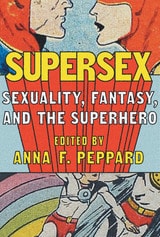
Supersex
Sexuality, Fantasy, and the SuperheroEdited by Anna F. Peppard
University of Texas Press, 2020
2021 Comic Studies Society Prize for Edited Collection
From Superman and Batman to the X-Men and Young Avengers, Supersex interrogates the relationship between heroism and sexuality, shedding new light on our fantasies of both.
From Superman, created in 1938, to the transmedia DC and Marvel universes of today, superheroes have always been sexy. And their sexiness has always been controversial, inspiring censorship and moral panic. Yet though it has inspired jokes and innuendos, accusations of moral depravity, and sporadic academic discourse, the topic of superhero sexuality is like superhero sexuality itself—seemingly obvious yet conspicuously absent. Supersex: Sexuality, Fantasy, and the Superhero is the first scholarly book specifically devoted to unpacking the superhero genre’s complicated relationship with sexuality.
Exploring sexual themes and imagery within mainstream comic books, television shows, and films as well as independent and explicitly pornographic productions catering to various orientations and kinks, Supersex offers a fresh—and lascivious—perspective on the superhero genre’s historical and contemporary popularity. Across fourteen essays touching on Superman, Batman, the X-Men, and many others, Anna F. Peppard and her contributors present superhero sexuality as both dangerously exciting and excitingly dangerous, encapsulating the superhero genre’s worst impulses and its most productively rebellious ones. Supersex argues that sex is at the heart of our fascination with superheroes, even—and sometimes especially—when the capes and tights stay on.
Swinging Single
Representing Sexuality in the 1960sHilary Radner
University of Minnesota Press, 1999