Results by title
456 books match the query 'India' and 32 start with s
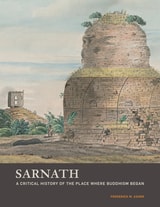
Sarnath
A Critical History of the Place Where Buddhism BeganFrederick M Asher
J. Paul Getty Trust, The, 2020
Sarnath has long been regarded as the place where the Buddha preached his first sermon and established the Buddhist monastic order. Excavations at Sarnath have yielded the foundations of temples and monastic dwellings, two Buddhist reliquary mounds (stupas), and some of the most important sculptures in the history of Indian art. This volume offers the first critical examination of the historic site.
Frederick M. Asher provides a longue durée (long-term) analysis of Sarnath—including the plunder, excavation, and display of antiquities and the Archaeological Survey of India’s presentation—and considers what lies beyond the fenced-in excavated area. His analytical history of Sarnath’s architectural and sculptural remains contains a significant study of the site’s sculptures, their uneven production, and their global distribution. Asher also examines modern Sarnath, which is a living establishment replete with new temples and monasteries that constitute a Buddhist presence on the outskirts of Varanasi, the most sacred Hindu city.
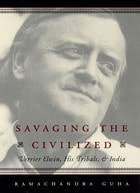
Savaging the Civilized
Verrier Elwin, His Tribals, and IndiaRamachandra Guha
University of Chicago Press, 1999
Described by his contemporaries as a cross between Albert Schweitzer and Paul Gauguin, Elwin was a man of contradictions, at times taking on the role of evangelist, social worker, political activist, poet, government worker, and more. He rubbed elbows with the elite of both Britain and India, yet found himself equally at home among the impoverished and destitute. Intensely political, the Oxford-trained scholar tirelessly defended the rights of the indigenous and, despite the deep religious influences of St. Francis and Mahatma Gandhi on his early career, staunchly opposed Hindu and Christian puritans in the debate over the future of India's tribals. Although he was ordained as an Anglican priest, Elwin was married twice to tribal women and enthusiastically (and publicly) extolled the tribals' practice of free sex. Later, as prime minister Nehru's friend and advisor in independent India, his compelling defense of tribal hedonism made him at once hugely influential, extremely controversial, and the polemical focal point of heated discussions on tribal policy and economic development.
Savaging the Civilized is both biography and history, an exploration through Elwin's life of some of the great debates of the twentieth century: the future of development, cultural assimilation versus cultural difference, the political practice of postcolonial as opposed to colonial governments, and the moral practice of writers and intellectuals.
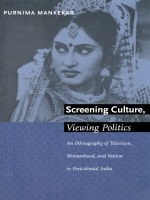
Screening Culture, Viewing Politics
An Ethnography of Television, Womanhood, and Nation in Postcolonial IndiaPurnima Mankekar
Duke University Press, 1999
Mankekar examines both “entertainment” narratives and advertisements designed to convey particular ideas about the nation. Organizing her study around the recurring themes in these shows—Indian womanhood, family, community, constructions of historical memory, development, integration, and sometimes violence—Mankekar dissects both the messages televised and her New Delhi subjects’ perceptions of and reactions to these messages. In the process, her ethnographic analysis reveals the texture of these women’s daily lives, social relationships, and everyday practices. Throughout her study, Mankekar remains attentive to the tumultuous historical and political context in the midst of which these programs’ integrationalist messages are transmitted, to the cultural diversity of the viewership, and to her own role as ethnographer. In an enlightening epilogue she describes the effect of satellite television and transnational programming to India in the 1990s.
Through its ethnographic and theoretical richness, Screening Culture, Viewing Politics forces a reexamination of the relationship between mass media, social life, and identity and nation formation in non-Western contexts. As such, it represents a major contribution to a number of fields, including media and communication studies, feminist studies, anthropology, South Asian studies, and cultural studies.

Selected Papers, Volume 7
The Non-Radial Oscillations of Stars in General Relativity and Other WritingsS. Chandrasekhar
University of Chicago Press, 1997
world through the eyes of one of the twentieth century's most brilliant
and sensitive scientists. Conceived by Chandrasekhar as a supplement to
his Selected Papers, this volume begins with eight papers he
wrote with Valeria Ferrari on the non-radial oscillations of stars. It
then explores some of the themes addressed in Truth and Beauty,
with meditations on the aesthetics of science and the world it examines.
Highlights include: "The Series Paintings of Claude Monet and the
Landscape of General Relativity," "The Perception of Beauty and the
Pursuit of Science," "On Reading Newton's Principia at Age Past
Eighty," and personal recollections of Indira Gandhi, Jawaharlal Nehru,
and others.
Selected Papers, Volume 7 paints a picture of Chandra's universe,
filled with stars and galaxies, but with space for poetics, paintings,
and politics.
The late S. Chandrasekhar was best known for his discovery of the upper
limit to the mass of a white dwarf star, for which he received the Nobel
Prize in Physics in 1983. He was the author of many books, including
The Mathematical Theory of Black Holes and, most recently,
Newton's Principia for the Common Reader.
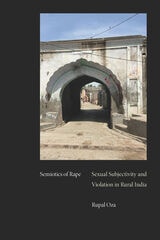
Semiotics of Rape
Sexual Subjectivity and Violation in Rural IndiaRupal Oza
Duke University Press, 2023
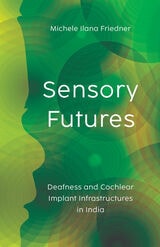
Sensory Futures
Deafness and Cochlear Implant Infrastructures in IndiaMichele Ilana Friedner
University of Minnesota Press, 2022
What happens when cochlear implants, heralded as the first successful bionic technologies, make their way around the globe and are provided by both states and growing private markets? As Sensory Futures follows these implants from development to domestication and their unequal distribution in India, Michele Ilana Friedner explores biotechnical intervention in the realm of disability and its implications for state politics in the Global South.
A signing and speaking deaf bilateral cochlear implant user, Friedner weaves personal reflections into this fine-grained ethnography of everyday negotiations, activist aspirations, and the space of the family. She places sensory anthropology in conversation with disability studies to analyze how normative sensoria are cultivated and the pursuit of listening and speaking capability is enacted. She argues that the conditions of potentiality that have emerged through cochlear implantation have, in fact, resulted in ever narrower understandings of future life possibilities. Rejecting sensory hierarchies that privilege audition, Friedner calls for multisensory, multimodal, and multipersonal ways of relating to the world.
Sensory Futures explores deaf people’s desires to create habitable worlds and grapple with what their futures might look like, in India and beyond, amid a surge in both biotechnical interventions and disability rights activism. With implications for a broad range of disability experiences, this sensitive, in-depth research focuses on the specific experiences of deaf people, both children and adults, and the structural, political, and social possibilities offered by both biotechnological and social “cures.”
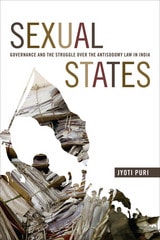
Sexual States
Governance and the Struggle over the Antisodomy Law in IndiaJyoti Puri
Duke University Press, 2016
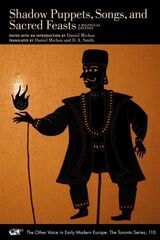
Shadow Puppets, Songs, and Sacred Feasts
Celebrations of the Indo-Portuguese Nuns in the Eighteenth-Century Real Convento de Santa Mónica, Goa, India. A Bilingual EditionEdited by Daniel Michon
Iter Press, 2025
The Entrada de Bonifrate para Festa dos Reis, a shadow puppet play for the feast of the Kings, and the Cartepaço da Muzica, a songbook for the feast of St. John, showcase the imaginative minds of the nuns at the Indo-Portuguese Real Convento de Santa Mónica, Goa, India. Composed for private convent audiences, these texts blend Portuguese and Spanish baroque elements with local Goan traditions. The uncensored verses celebrate convent life, critique local social norms, and affirm the nuns’ community identity, exhibiting the Mónicas’ musical talents and literary sensibilities.
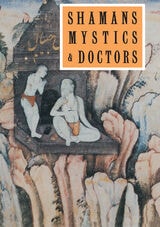
Shamans, Mystics and Doctors
A Psychological Inquiry into India and its Healing TraditionsSudhir Kakar
University of Chicago Press, 1990
"With extraordinary sympathy, open-mindedness, and insight Sudhir Kakar has drawn from both his Eastern and Western backgrounds to show how the gulf that divides native healer from Western psychiatrist can be spanned."—Rosemary Dinnage, New York Review of Books
"Each chapter describes the geographical and cultural context within which the healers work, their unique approach to healing mental illness, and . . . the philosophical and religious underpinnings of their theories compared with psychoanalytical theory."—Choice

Shoveling Smoke
Advertising and Globalization in Contemporary IndiaWilliam Mazzarella
Duke University Press, 2003
An examination of the complex cultural politics of mass consumerism in a globalized marketplace, Shoveling Smoke is a pathbreaking and detailed ethnography of the contemporary Indian advertising industry. It is also a critical and innovative intervention into current theoretical debates on the intersection of consumerist globalization, aesthetic politics, and visual culture. William Mazzarella traces the rise in India during the 1980s of mass consumption as a self-consciously sensuous challenge to the austerities of state-led developmentalism. He shows how the decisive opening of Indian markets to foreign brands in the 1990s refigured established models of the relationship between the local and the global and, ironically, turned advertising professionals into custodians of cultural integrity.

Singers Die Twice
A Journey to the Land of DhrupadPeter Pannke
Seagull Books, 2013
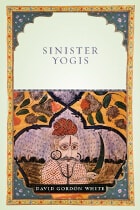
Sinister Yogis
David Gordon White
University of Chicago Press, 2009
Since the 1960s, yoga has become a billion-dollar industry in the West, attracting housewives and hipsters, New Agers and the old-aged. But our modern conception of yoga derives much from nineteenth-century European spirituality, and the true story of yoga’s origins in South Asia is far richer, stranger, and more entertaining than most of us realize.
To uncover this history, David Gordon White focuses on yoga’s practitioners. Combing through millennia of South Asia’s vast and diverse literature, he discovers that yogis are usually portrayed as wonder-workers or sorcerers who use their dangerous supernatural abilities—which can include raising the dead, possession, and levitation—to acquire power, wealth, and sexual gratification. As White shows, even those yogis who aren’t downright villainous bear little resemblance to Western assumptions about them. At turns rollicking and sophisticated, Sinister Yogis tears down the image of yogis as detached, contemplative teachers, finally placing them in their proper context.
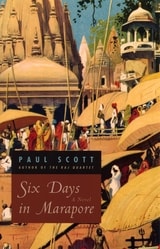
Six Days in Marapore
A NovelPaul Scott
University of Chicago Press, 1953
In this swiftly paced and lyrical novel about British expatriates at the time of Indian independence, Paul Scott grapples with the themes of race, possession, and history that dominate all four novels of his masterpiece, The Raj Quartet, especially The Jewel in the Crown. As always, Scott fills his book with vivid characters: the seductive, bigoted war widow; the sophisticated, wily Hindu politician; and the athletic young American who only gradually begins to understand the legacy of pain and hatred veiling the woman he has come to rescue. Set against the backdrop of a nation in violent transition—a climate of exhilaration and shifting loyalties—Six Days in Marapore unfolds amidst the possibility of reconciliation, freedom, and healing.
Slandering the Sacred
Blasphemy Law and Religious Affect in Colonial IndiaJ. Barton Scott
University of Chicago Press, 2023
Why is religion today so often associated with giving and taking offense? To answer this question, Slandering the Sacred invites us to consider how colonial infrastructures shaped our globalized world. Through the origin and afterlives of a 1927 British imperial law (Section 295A of the Indian Penal Code), J. Barton Scott weaves a globe-trotting narrative about secularism, empire, insult, and outrage. Decentering white martyrs to free thought, his story calls for new histories of blasphemy that return these thinkers to their imperial context, dismantle the cultural boundaries of the West, and transgress the borders between the secular and the sacred as well as the public and the private.
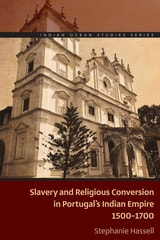
Slavery and Religious Conversion in Portugal's Indian Empire, 1500-1700
Stephanie Hassell
Ohio University Press, 2025
In the sixteenth and seventeenth centuries, enslaved Africans and Asians were part of the larger Portuguese project of building and maintaining a Catholic empire in the Indian Ocean. Both the Church and the Crown influenced the owner-slave relationship across households, the most basic organizational unit of power over the populace. Responsible for their enslaved dependents’ conversion to Catholicism, slaveholders became religious stewards whose spiritual duties toward their slaves helped expand the Christian population. This converted population was part of the imperial security apparatus, which conceptualized enslaved Catholics as loyal allies against neighboring Muslim states. They became members of the broader colonial community in which Catholicism also conveyed rights, enabled agency, and provoked household struggles between owners and slaves. Thus, the making of a Catholic empire was a contested process tied to the complex relationships between enslaved individuals, their enslavers, and the Church. The Portuguese Inquisition was a hybrid ecclesiastical and state institution, and its records detail the Crown’s commitment to the creation of a worldwide Catholic empire. Accordingly, inquisitorial encounters brought conversion, slavery, and empire into one field of vision. The Portuguese Inquisition had only one overseas tribunal, located in Goa, India. While most trial records of the Goa Tribunal were destroyed, author Stephanie Hassell has utilized extant sixteenth- and seventeenth-century cases featuring enslaved defendants and witnesses. Her use of thousands of case summaries provides a broader inquisitorial context by showing how prosecutorial trends reflected the anxieties of the Portuguese imperial state. Parish records, ecclesiastical council records, and municipal council records likewise emphasize the significance of religious conversion.
Social Media in South India
Shriram Venkatraman
University College London, 2017

Social Mobility in Kerala
Modernity and Identity in ConflictFilippo Osella and Caroline Osella
Pluto Press, 2000
Southern Insurgency
The Coming of the Global Working ClassImmanuel Ness
Pluto Press, 2015
The product of extensive firsthand field research, Southern Insurgency paints a picture of the new industrial proletariat in the Global South—a group that lives a precarious, frightening existence yet at the same time offers hope for new approaches to solidarity and the anti-capitalist struggle.
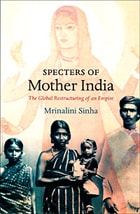
Specters of Mother India
The Global Restructuring of an EmpireMrinalini Sinha
Duke University Press, 2006
Sinha provides a rich historical narrative of the controversy surrounding Mother India, from the book’s publication through the passage in India of the Child Marriage Restraint Act in the closing months of 1929. She traces the unexpected trajectory of the controversy as critics acknowledged many of the book’s facts only to overturn its central premise. Where Mayo located blame for India’s social backwardness within the beliefs and practices of Hinduism, the critics laid it at the feet of the colonial state, which they charged with impeding necessary social reforms. As Sinha shows, the controversy became a catalyst for some far-reaching changes, including a reconfiguration of the relationship between the political and social spheres in colonial India and the coalescence of a collective identity for women.
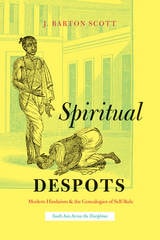
Spiritual Despots
Modern Hinduism and the Genealogies of Self-RuleJ. Barton Scott
University of Chicago Press, 2016
Through this alternative genealogy of the self-ruling subject, Spiritual Despots demonstrates that Hindu reform movements cannot be understood solely within the precolonial tradition, but rather need to be read alongside other movements of their period. The book’s focus moves fluidly between Britain and India—engaging thinkers such as James Mill, Keshub Chunder Sen, Max Weber, Karsandas Mulji, Helena Blavatsky, M. K. Gandhi, and others—to show how colonial Hinduism shaped major modern discourses about the self. Throughout, Scott sheds much-needed light how the rhetoric of priestcraft and practices of worldly asceticism played a crucial role in creating a new moral and political order for twentieth-century India and demonstrates the importance of viewing the emergence of secularism through the colonial encounter.

Spring, Heat, Rains
A South Indian DiaryDavid Shulman
University of Chicago Press, 2008
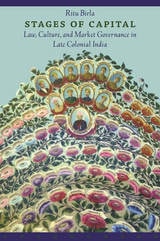
Stages of Capital
Law, Culture, and Market Governance in Late Colonial IndiaRitu Birla
Duke University Press, 2009
Birla reveals how the categories of public and private infiltrated colonial commercial law, establishing distinct worlds for economic and cultural practice. This bifurcation was especially apparent in legal dilemmas concerning indigenous or “vernacular” capitalists, crucial engines of credit and production that operated through networks of extended kinship. Focusing on the story of the Marwaris, a powerful business group renowned as a key sector of India’s capitalist class, Birla demonstrates how colonial law governed vernacular capitalists as rarefied cultural actors, so rendering them illegitimate as economic agents. Birla’s innovative attention to the negotiations between vernacular and colonial systems of valuation illustrates how kinship-based commercial groups asserted their legitimacy by challenging and inhabiting the public/private mapping. Highlighting the cultural politics of market governance, Stages of Capital is an unprecedented history of colonial commercial law, its legal fictions, and the formation of the modern economic subject in India.
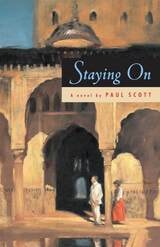
Staying On
A NovelPaul Scott
University of Chicago Press, 1977
"Staying On far transcends the events of its central action. . . . [The work] should help win for Scott . . . the reputation he deserves—as one of the best novelists to emerge from Britain's silver age."—Robert Towers, Newsweek
"Scott's vision is both precise and painterly. Like an engraver cross-hatching in the illusion of fullness, he selects nuances that will make his characters take on depth and poignancy."—Jean G. Zorn, New York Times Book Review
"A graceful comic coda to the earlier song of India. . . . No one writing knows or can evoke an Anglo-Indian setting better than Scott."—Paul Gray, Time
"Staying On provides a sort of postscript to [Scott's] deservedly acclaimed The Raj Quartet. . . . He has, as it were, summoned up the Raj's ghost in Staying On. . . . It is the story of the living death, in retirement, and the final end of a walk-on character from the quartet. . . . Scott has completed the task of covering in the form of a fictional narrative the events leading up to India's partition and the achievement of independence in 1947. It is, on any showing, a creditable achievement."—Malcolm Muggeridge, New York Times Book Review
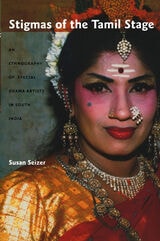
Stigmas of the Tamil Stage
An Ethnography of Special Drama Artists in South IndiaSusan Seizer
Duke University Press, 2005
Special Drama is looked down upon by the middle- and upper-classes as too popular, too vulgar, and too “mixed.” The artists are stigmatized: people insult them in public and landlords refuse to rent to them. Stigma falls most heavily, however, on actresses, who are marked as “public women” by their participation in Special Drama. As Susan Seizer’s sensitive study shows, one of the primary ways the performers deal with such stigma is through humor and linguistic play. Their comedic performances in particular directly address questions of class, culture, and gender deviations—the very issues that so stigmatize them. Seizer draws on extensive interviews with performers, sponsors, audience members, and drama agents as well as on careful readings of live Special Drama performances in considering the complexities of performers’ lives both on stage and off.
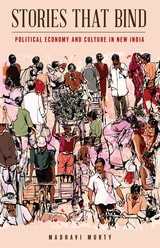
Stories That Bind
Political Economy and Culture in New IndiaMadhavi Murty
Rutgers University Press, 2022
Moving between mediascapes to create an archive of popular culture, Murty advances our understanding of political economy through material that is often seen as inconsequential, namely the popular cultural story. These stories stoke our desires (e.g. for wealth), scaffold our instincts (e.g. for a strong leadership) and shape our values.
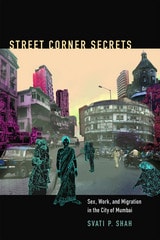
Street Corner Secrets
Sex, Work, and Migration in the City of MumbaiSvati P. Shah
Duke University Press, 2014
Subaltern Studies Reader, 1986-1995
Ranajit Guha
University of Minnesota Press, 1997
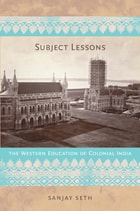
Subject Lessons
The Western Education of Colonial IndiaSanjay Seth
Duke University Press, 2007
Drawing on history, political science, anthropology, and philosophy, Seth interprets the debates and controversies that came to surround western education. Central among these were concerns that Indian students were acquiring western education by rote memorization—and were therefore not acquiring “true knowledge”—and that western education had plunged Indian students into a moral crisis, leaving them torn between modern, western knowledge and traditional Indian beliefs. Seth argues that these concerns, voiced by the British as well as by nationalists, reflected the anxiety that western education was failing to produce the modern subjects it presupposed. This failure suggested that western knowledge was not the universal epistemology it was thought to be. Turning to the production of collective identities, Seth illuminates the nationalists’ position vis-à-vis western education—which they both sought and criticized—through analyses of discussions about the education of Muslims and women.
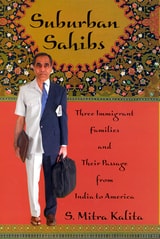
Suburban Sahibs
Kalita, S. Mitra
Rutgers University Press, 2003
In this updated edition, journalist S. Mitra Kalita shows that although the reception from long-time residents has not been entirely welcoming, Indians have come to achieve economic success and their desire for political and social parity continues to grow stronger. She traces the evolution of the suburb from a destination for new arrivals to a launching pad for them.
In the late nineteenth century, tourists descended upon Edison to gawk at its Christmas lights displays. Today, thousands of Indians from all over the United States arrive in the same bedroom community to celebrate their own festivals of lights and colors. Suburban Sahibs attempts to answer the question of how and why they arrived, and offers a window into what America has become: a nation of suburbs as well as a nation of immigrants.
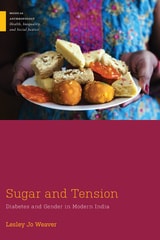
Sugar and Tension
Diabetes and Gender in Modern IndiaWeaver, Lesley Jo
Rutgers University Press, 2019
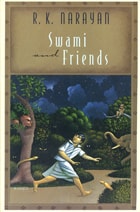
Swami and Friends
R. K. Narayan
University of Chicago Press, 1980
Offering rare insight into the complexities of Indian middle-class society, R. K. Narayan traces life in the fictional town of Malgudi. The Dark Room is a searching look at a difficult marriage and a woman who eventually rebels against the demands of being a good and obedient wife. In Mr. Sampath, a newspaper man tries to keep his paper afloat in the face of social and economic changes sweeping India. Narayan writes of youth and young adulthood in the semiautobiographical Swami and Friends and The Bachelor of Arts. Although the ordinary tensions of maturing are heightened by the particular circumstances of pre-partition India, Narayan provides a universal vision of childhood, early love and grief.
"The experience of reading one of his novels is . . . comparable to one's first reaction to the great Russian novels: the fresh realization of the common humanity of all peoples, underlain by a simultaneous sense of strangeness—like one's own reflection seen in a green twilight."—Margaret Parton, New York Herald Tribune
"The novels of R.K. Narayan are the best I have read in any language for a long time. . . . His work gives the conviction that it is possible to capture in English, a language not born of India, the distinctive characteristics of Indian family life."—Amit Roy, Daily Telegraph
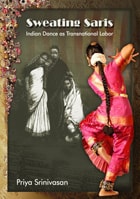
Sweating Saris
Indian Dance as Transnational LaborPriya Srinivasan
Temple University Press, 2011
A groundbreaking book that seeks to understand dance as labor, Sweating Saris examines dancers not just as aesthetic bodies but as transnational migrant workers and wage earners who negotiate citizenship and gender issues.
Srinivasan merges ethnography, history, critical race theory, performance and post-colonial studies among other disciplines to investigate the embodied experience of Indian dance. The dancers’ sweat stained and soaked saris, the aching limbs are emblematic of global circulations of labor, bodies, capital, and industrial goods. Thus the sweating sari of the dancer stands in for her unrecognized labor.
Srinivasan shifts away from the usual emphasis on Indian women dancers as culture bearers of the Indian nation. She asks us to reframe the movements of late nineteenth century transnational Nautch Indian dancers to the foremother of modern dance Ruth St. Denis in the early twentieth century to contemporary teenage dancers in Southern California, proposing a transformative theory of dance, gendered-labor, and citizenship that is far-reaching.