Results by title
944 books match the query 'Indians of North America' and 70 start with s
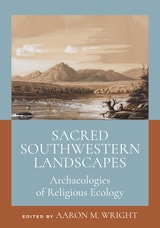
Sacred Southwestern Landscapes
Archaeologies of Religious EcologyEdited by Aaron M. Wright
University of Utah Press, 2024
Hailing from various academic and cultural backgrounds, contributors invoke a range of theoretical currents and methodological practices to examine how these relationships developed and evolved. Nearly all the places, people, and paradigms at play in contemporary southwestern scholarship find room among these pages, from the Sonoran and Chihuahuan Deserts to the Colorado Plateau; from diverse cultures, including Ancestral Pueblo, Mogollon, Hohokam, Pataya, Trincheras, Navajo (Diné), and Nuevomexicano; and from theoretical frameworks drawing upon phenomenology, materiality, bundling, and semiotics. This collective engagement showcases how religious ecologies can be studied from multiple perspectives and through sundry lines of evidence, leaving readers with appreciation and reverence for the rich and robust sacredness in southwestern landscapes.
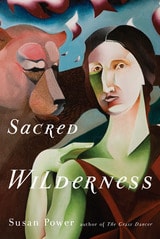
Sacred Wilderness
Susan Power
Michigan State University Press, 2014
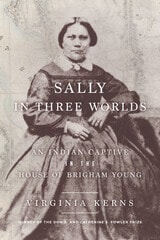
Sally in Three Worlds
An Indian Captive in the House of Brigham YoungVirginia Kerns
University of Utah Press, 2021
In this remarkable and deeply felt book, Virginia Kerns uncovers the singular and forgotten life of a young Indian woman who was captured in 1847 in what was then Mexican territory. Sold to a settler, a son-in-law of Brigham Young, the woman spent the next thirty years as a servant to Young’s family. Sally, as they called her, lived in the shadows, largely unseen. She was later remembered as a “wild” woman made “tame” who happily shed her past to enter a new and better life in civilization.
Drawing from a broad range of primary sources, Kerns retrieves Sally from obscurity and reconstructs her complex life before, during, and after captivity. This true story from the American past resonates deeply in the current moment, attentive as it is to killing epidemics and racial injustices. In telling Sally’s story, Kerns presents a new narrative of the American West.
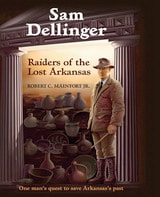
Sam Dellinger
Raiders of the Lost ArkansasRobert C. Mainfort
University of Arkansas Press, 2008

Sandal and the Cave, The
The Indians of OregonLuther Cressman
Oregon State University Press, 2005
Luther Cressman's 1938 discovery of a 9,000-year-old sandal in Fort Rock Cave revolutionized accepted theories of western prehistory. The recovery of the woven sagebrush-bark sandal, found buried under a layer of volcanic ash from the eruption of Mount Mazama, established a human presence in the Oregon Country much earlier than previously thought.
Through six decades of scientific investigation, Cressman worked to uncover the history of the first Oregonians. In The Sandal and the Cave, he offers a brief, lucid introduction to the prehistory of Oregon Indians. Cressman describes their diverse cultures, highlighting similarities and differences between the peoples of various regions: the Oregon Coast, the Klamath Highland, the Northern Great Basin, and the Columbia Plateau.
In a new introduction to Cressman's classic work, Dennis Jenkins provides a short biographical profile of the "father of Oregon archaeology" and discusses the importance of Cressman's excavation results and interpretations. Jenkins also offers a concise summary of recent archaeological research in the Northern Great Basin, bringing readers the most up-to-date information about the oldest known sites in Oregon.

Savage Frontier Volume I
Rangers, Riflemen, and Indian Wars in Texas, 1835-1837Stephen L. Moore
University of North Texas Press, 2002
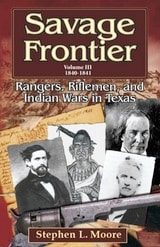
Savage Frontier Volume III
Rangers, Riflemen, and Indian Wars in Texas, 1840-1841Stephen L. Moore
University of North Texas Press, 2007
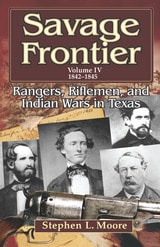
Savage Frontier Volume IV
Rangers, Riflemen, and Indian Wars in Texas, 1842-1845Stephen L. Moore
University of North Texas Press, 2002
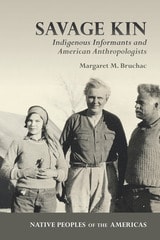
Savage Kin
Indigenous Informants and American AnthropologistsMargaret M. Bruchac
University of Arizona Press, 2018
This book reconceptualizes the intimate details of encounters with Native interlocutors who by turns inspired, facilitated, and resisted the anthropological enterprise. Like other texts focused on this era, Savage Kin features some of the elite white men credited with salvaging material that might otherwise have been lost. Unlike other texts, this book highlights the intellectual contributions and cultural strategies of unsung Indigenous informants without whom this research could never have taken place.
These bicultural partnerships transgressed social divides and blurred the roles of anthropologist/informant, relative/stranger, and collector/collected. Yet these stories were obscured by collecting practices that separated people from objects, objects from communities, and communities from stories. Bruchac’s decolonizing efforts include “reverse ethnography”—painstakingly tracking seemingly unidentifiable objects, misconstrued social relations, unpublished correspondence, and unattributed field notes—to recover this evidence. Those early encounters generated foundational knowledges that still affect Indigenous communities today.
Savage Kin also contains unexpected narratives of human and other-than-human encounters—brilliant discoveries, lessons from ancestral spirits, prophetic warnings, powerful gifts, and personal tragedies—that will move Native and non-Native readers alike.
Scarlet and Black, Volume Three
Making Black Lives Matter at Rutgers, 1945-2020Miya Carey
Rutgers University Press, 2021
Scarlet and Black, Volume Two
Constructing Race and Gender at Rutgers, 1865-1945Kendra Boyd
Rutgers University Press, 2020
To learn more about the work of the Committee on Enslaved and Disenfranchised Population in Rutgers History, visit the project's website at http://scarletandblack.rutgers.edu
Scarlet and Black
Slavery and Dispossession in Rutgers HistoryFuentes, Marisa J
Rutgers University Press, 2016
Scarlet and Black documents the history of Rutgers’s connection to slavery, which was neither casual nor accidental—nor unusual. Like most early American colleges, Rutgers depended on slaves to build its campuses and serve its students and faculty; it depended on the sale of black people to fund its very existence. Men like John Henry Livingston, (Rutgers president from 1810–1824), the Reverend Philip Milledoler, (president of Rutgers from 1824–1840), Henry Rutgers, (trustee after whom the college is named), and Theodore Frelinghuysen, (Rutgers’s seventh president), were among the most ardent anti-abolitionists in the mid-Atlantic.
Scarlet and black are the colors Rutgers University uses to represent itself to the nation and world. They are the colors the athletes compete in, the graduates and administrators wear on celebratory occasions, and the colors that distinguish Rutgers from every other university in the United States. This book, however, uses these colors to signify something else: the blood that was spilled on the banks of the Raritan River by those dispossessed of their land and the bodies that labored unpaid and in bondage so that Rutgers could be built and sustained. The contributors to this volume offer this history as a usable one—not to tear down or weaken this very renowned, robust, and growing institution—but to strengthen it and help direct its course for the future.
The work of the Committee on Enslaved and Disenfranchised Population in Rutgers History.
Visit the project's website at http://scarletandblack.rutgers.edu
Scenes from the High Desert
JULIAN STEWARD'S LIFE AND THEORYVirginia Kerns
University of Illinois Press, 2002
Schoolcraft's Ojibwa Lodge Stories
Life on the Lake Superior FrontierPhilip P. Mason
Michigan State University Press, 1997

Scouting with the Buffalo Soldiers
John P. Langellier
University of North Texas Press, 2020
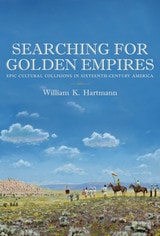
Searching for Golden Empires
Epic Cultural Collisions in Sixteenth-Century AmericaWilliam K. Hartmann
University of Arizona Press, 2014
Recounting eyewitness experiences that the Spaniards recorded in letters and memoirs, Hartmann describes ancient lifeways from Mexico to the western United States; Aztec accounts of the conquest; discussions between Aztec priests and Spanish priests about the nature of the universe; Cortés’s lifelong relationship with his famous Native mistress, Malinche (not to mention the mysterious fate of his wife); lost explorers who wandered from Florida to Arizona; and Marcos de Niza’s controversial reports of the “Seven Cities of Cíbola.”
Searching for Golden Empires describes how, even after the conquest of Mexico, Cortés remained a “wildcat” competitor with Coronado in a race to see who could find the “next golden empire,” believed to lie in the north. It is an exciting history of the shared story of the United States and Mexico, unveiling episodes both tragic and uplifting.
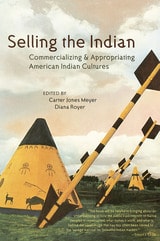
Selling the Indian
Commercializing and Appropriating American Indian CulturesCarter Jones Meyer
University of Arizona Press, 2001
For more than a hundred years, outsiders enamored of the perceived strengths of American Indian cultures have appropriated and distorted elements of them for their own purposes—more often than not ignoring the impact of the process on the Indians themselves. This book contains eight original contributions that consider the selling of American Indian culture and how it affects the Native community. It goes beyond studies of “white shamanism” to focus on commercial ventures, challenging readers to reconsider how Indian cultures have been commercialized in the twentieth century.
Some selections examine how Indians have been displayed to the public, beginning with a “living exhibit” of Cocopa Indians at the 1904 Louisiana Purchase Exposition and extending to contemporary stagings of Indian culture for tourists at Tillicum Village near Seattle. Other chapters range from the Cherokees to Puebloan peoples to Indians of Chiapas, Mexico, in an examination of the roles of both Indians and non-Indian reformers in marketing Native arts and crafts.
These articles show that the commercialization and appropriation of American Indian cultures have been persistent practices of American society over the last century and constitute a form of cultural imperialism that could contribute to the destruction of American Indian culture and identity. They offer a means toward understanding this complex process and provide a new window on Indian-white interactions.
CONTENTS
Part I: Staging the Indian
1. The “Shy” Cocopa Go to the Fair, Nancy J. Parezo and John W. Troutman
2. Command Performances: Staging Native Americans at Tillicum Village, Katie N. Johnson and Tamara Underiner
3. Savage Desires: The Gendered Construction of the American Indian in Popular Media, S. Elizabeth Bird
4. “Beyond Feathers and Beads”: Interlocking Narratives in the Music and Dance of Tokeya Inajin (Kevin Locke), Pauline Tuttle
Part II: Marketing the Indian
5. “The Idea of Help”: White Women Reformers and the Commercialization of Native American Women’s Arts, Erik Trump
6. Saving the Pueblos: Commercialism and Indian Reform in the 1920s, Carter Jones Meyer
7. Marketing Traditions: Cherokee Basketry and Tourist Economies, Sarah H. Hill
8. Crafts, Tourism, and Traditional Life in Chiapas, Mexico: A Tale Related by a Pillowcase, Chris Goertzen
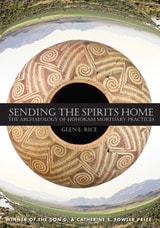
Sending the Spirits Home
The Archaeology of Hohokam Mortuary PracticesGlen E. Rice
University of Utah Press, 2015
This data-rich monograph provides new and stimulating perspectives on the Hohokam people and their mortuary practices. It breaks new ground by using the knowledge of descendent peoples to generate archaeologically testable hypotheses; demonstrating the need for mortuary analyses conducted at a regional scale; and synthesizing of the interaction of beliefs, ideology, social organization, and ecology in determining Hohokam mortuary practices. Various chapters discuss body treatment, mortuary furniture and goods, mortuary architecture, and cemeteries, and numerous figures help document the variability of Hohokam practices.
The study synthesizes data from various excavations, applied archaeology, and cultural resource management projects. With its review of past research and ethnographic accounts along with line drawings of mortuary features and artifacts, Sending the Spirits Home provides tools for the adoption of standardized protocols needed to facilitate cross-project comparisons on which future regional syntheses can be based. Although written for archaeologists, the book does not require a specialist’s knowledge to appreciate its insights into these early people of the Southwest.
Settler City Limits
Indigenous Resurgence and Colonial Violence in the Urban Prairie WestHeather Dorries
Michigan State University Press, 2019
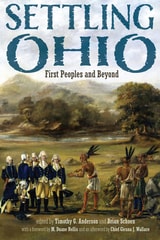
Settling Ohio
First Peoples and BeyondTimothy G. Anderson and Brian Schoen
Ohio University Press, 2023
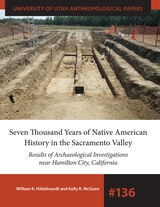
Seven Thousand Years of Native American History in the Sacramento Valley
Results of Archaeological Investigations near Hamilton City, CaliforniaWilliam R. Hildebrandt and Kelly R. McGuire
University of Utah Press, 2022
The other three sites date between 4000 and 300 years ago and reflect increasing human population density, technological innovation, and the rise of sedentism and territoriality. This historical sequence culminated in findings from a 400- to 300-year-old house complex probably occupied by the Mechoopda Indian Tribe, who collaborated with the authors throughout the project.
Seventh Generation Earth Ethics
Native Voices of WisconsinPatty Loew
Wisconsin Historical Society Press, 2025
Indigenous perspectives on sustainability, culture, and community
In this collection of twelve biographies, one from each of the Native nations in Wisconsin, author Patty Loew (Bad River Ojibwe) introduces readers to prominent figures in Native sustainability—people whose life’s work reflects the traditional ecological knowledge and cultural values of their people.
Born out of Loew’s thirty years as a journalist and historian, Seventh Generation Earth Ethics highlights individuals who helped to sustain and nurture their nations.
Walter Bresette, Red Cliff Ojibwe, community activist
Hilary Waukau, Menominee, environmental warrior
Frances Van Zile, Mole Lake (Sokaogon) Ojibwe, keeper of the water
James Schlender, Lac Courte Oreilles Ojibwe, treaty rights guardian
Jose Rose, Bad River Ojibwe, elder, environmentalist, and scholar
Dorothy Davids, Stockbridge-Munsee Community Band of Mohican Indians, educator
William Gollnick, Oneida, culture keeper
Thomas St. Germaine, Lac du Flambeau Ojibwe, attorney
Truman Lowe, Ho-Chunk, organic sculpture artist
Jenny and Mary Thunder, Forest County Potawatomi, medicine women
Wanda McFaggen, St. Croix Ojibwe, Tribal Historic Preservationist
Caroline Andler, Brothertown Indian Nation, genealogist
The indigenous people whose lives are depicted in Seventh Generation Earth Ethics understood the cultural gravity that kept their people rooted to their ancestral lands and acted in ways that ensured the growth and success of future generations.
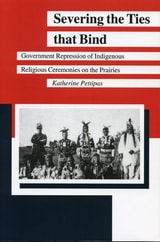
Severing the Ties that Bind
Government Repression of Indigenous Religious Ceremonies on the PrairiesKatherine Pettipas
University of Manitoba Press, 1994
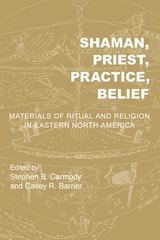
Shaman, Priest, Practice, Belief
Materials of Ritual and Religion in Eastern North AmericaEdited by Stephen B. Carmody and Casey R. Barrier
University of Alabama Press, 2020
Archaeologists today are interpreting Native American religion and ritual in the distant past in more sophisticated ways, considering new understandings of the ways that Native Americans themselves experienced them. Shaman, Priest, Practice, Belief: Materials of Ritual and Religion in Eastern North America broadly considers Native American religion and ritual in eastern North America and focuses on practices that altered and used a vast array of material items as well as how physical spaces were shaped by religious practices.
Unbound to a single theoretical perspective of religion, contributors approach ritual and religion in diverse ways. Importantly, they focus on how people in the past practiced religion by altering and using a vast array of material items, from smoking pipes, ceremonial vessels, carved figurines, and iconographic images, to sacred bundles, hallucinogenic plants, revered animals, and ritual architecture. Contributors also show how physical spaces were shaped by religious practice, and how rock art, monuments, soils and special substances, and even land- and cityscapes were part of the active material worlds of religious agents.
Case studies, arranged chronologically, cover time periods ranging from the Paleoindian period (13,000–7900 BC) to the late Mississippian and into the protohistoric/contact periods. The geographical scope is much of the greater southeastern and southern Midwestern culture areas of the Eastern Woodlands, from the Central and Lower Mississippi River Valleys to the Ohio Hopewell region, and from the greater Ohio River Valley down through the Deep South and across to the Carolinas.
Contributors
Sarah E. Baires / Melissa R. Baltus / Casey R. Barrier / James F. Bates / Sierra M. Bow / James A. Brown / Stephen B. Carmody / Meagan E. Dennison / Aaron Deter-Wolf / David H. Dye / Bretton T. Giles / Cameron Gokee / Kandace D. Hollenbach / Thomas A. Jennings / Megan C. Kassabaum / John E. Kelly / Ashley A. Peles / Tanya M. Peres / Charlotte D. Pevny / Connie M. Randall / Jan F. Simek / Ashley M. Smallwood / Renee B. Walker / Alice P. Wright
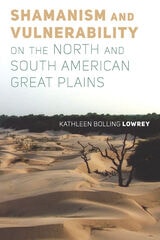
Shamanism and Vulnerability on the North and South American Great Plains
Kathleen Bolling Lowrey
University Press of Colorado, 2020
The book reveals the various ways in which anthropologists, historians, folklorists, and other writers have often misrepresented indigenous shamanism and revitalization movements by unconsciously projecting ideologies and assumptions derived from modern ‘contract societies’ onto ethnographic and historical realities. Lowrey also provides alternative ways of understanding indigenous American communities and their long histories of interethnic relations with expanding colonial and national states in the Americas. A creative historical and ethnographical reevaluation of the last few decades of scholarship on shamanism, disability, and dependence, Shamanism and Vulnerability on the North and South American Great Plains will be of interest to scholars of North and South American anthropology, indigenous history, American studies, and feminism.
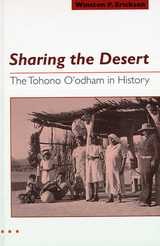
Sharing the Desert
The Tohono O'odham in HistoryWinston P. Erickson
University of Arizona Press, 1994
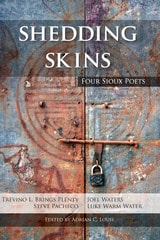
Shedding Skins
Four Sioux PoetsAdrian C. Louis
Michigan State University Press, 2008
Here's the myth: Native Americans are people of great spiritual depth, in touch with the rhythms of the earth, rhythms that they celebrate through drumming and dancing. They love the great outdoors and are completely in tune with the natural world. They can predict the weather by glancing at the sky, or hearing a crow cry, or somehow. Who knows exactly how? The point of the myth is that Indians are, well, special. Different from white people, but in a good way.
The four young male Native American poets whose work is brought together in this startling collection would probably raise high their middle fingers in salute to this myth. These guys and "guys" they are—don't buy into the myth. Their poems aren't about hunting and fishing or bonding with animal spirits. Their poems are about urban decay and homelessness, about loneliness and despair, about Payday Loans and 40-ounce beers, about getting enough to eat and too much to drink. And there is nothing romantic about their poetry, either. It is written in the vernacular of mean streets: often raw and coarse and vulgar, just like the lives it describes. Sure, they write about life on the reservation. However, for the Indians in their poems, life on the reservation is a lot like life in the city, but without the traffic. These poets are sick to death of the myth. You can feel it in their poems.
These poets are bound by a common attitude as well as a common heritage. All four—Joel Waters, Steve Pacheco, Luke Warm Water, and Trevino L. Brings Plenty—are Sioux, and all four identify themselves as "Skins" (as in "Redskins"). In their poems, they grapple with their heritage, wrestling with what it means to be a Sioux and a Skin today. It's a fight to the finish.
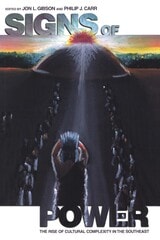
Signs of Power
The Rise of Cultural Complexity in the SoutheastEdited by Jon L. Gibson and Philip J. Carr
University of Alabama Press, 2004
Traces the sources of power and large-scale organization of prehistoric peoples among Archaic societies.
By focusing on the first instances of mound building, pottery making, fancy polished stone and bone, as well as specialized chipped stone, artifacts, and their widespread exchange, this book explores the sources of power and organization among Archaic societies. It investigates the origins of these technologies and their effects on long-term (evolutionary) and short-term (historical) change.
The characteristics of first origins in social complexity belong to 5,000- to 6,000-year-old Archaic groups who inhabited the southeastern United States. In Signs of Power, regional specialists identify the conditions, causes, and consequences that define organization and social complexity in societies. Often termed "big mound power," these considerations include the role of demography, kinship, and ecology in sociocultural change; the meaning of geometry and design in sacred groupings; the degree of advancement in stone tool technologies; and differentials in shell ring sizes that reflect social inequality.

Silent Victims
Hate Crimes Against Native AmericansBarbara Perry
University of Arizona Press, 2008
Silent Victims is a unique contribution to the literature on hate crime. Because most extant literature treats hate crimes—even racial violence—rather generically, this work breaks new ground with its findings. For this book, Perry interviewed nearly 300 Native Americans and gathered additional data in three geographic areas: the Four Corners region of the U.S. Southwest, the Great Lakes, and the Northern Plains. In all of these locales, she found that bias-related crime oppresses and segregates Native Americans.
Perry is well aware of the history of colonization in North America and its attendant racial violence. She argues that the legacy of violence today can be traced directly to the genocidal practices of early settlers, and she adds valuable insights into the ways in which “Indians” have been constructed as the Other by the prevailing culture. Perry’s interviews with Native Americans recount instances of appalling treatment, often at the hands of law enforcement officials. In her conclusion, Perry draws from her research and interviews to suggest ways in which Native Americans can be empowered to defend themselves against all forms of racist victimization.

Sins of the Shovel
Looting, Murder, and the Evolution of American ArchaeologyRachel Morgan
University of Chicago Press, 2023
American archaeology was forever scarred by an 1893 business proposition between cowboy-turned-excavator Richard Wetherill and socialites-turned-antiquarians Fred and Talbot Hyde. Wetherill had stumbled upon Mesa Verde’s spectacular cliff dwellings and started selling artifacts, but with the Hydes’ money behind him, well—there’s no telling what they might discover. Thus begins the Hyde Exploring Expedition, a nine-year venture into Utah’s Grand Gulch and New Mexico’s Chaco Canyon that—coupled with other less-restrained looters—so devastates Indigenous cultural sites across the American Southwest that Congress passes first-of-their-kind regulations to stop the carnage. As the money dries up, tensions rise, and a once-profitable enterprise disintegrates, setting the stage for a tragic murder.
Sins of the Shovel is a story of adventure and business gone wrong and how archaeologists today grapple with this complex heritage. Through the story of the Hyde Exploring Expedition, practicing archaeologist Rachel Morgan uncovers the uncomfortable links between commodity culture, contemporary ethics, and the broader political forces that perpetuate destructive behavior today. The result is an unsparing and even-handed assessment of American archaeology’s sins, past and present, and how the field is working toward atonement.
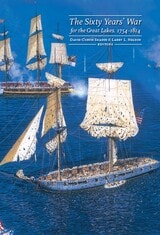
Sixty Years' War for the Great Lakes, 1754-1814
David Curtis Skaggs
Michigan State University Press, 2001
The Sixty Years' War for the Great Lakes contains twenty essays concerning not only military and naval operations, but also the political, economic, social, and cultural interactions of individuals and groups during the struggle to control the great freshwater lakes and rivers between the Ohio Valley and the Canadian Shield. Contributing scholars represent a wide variety of disciplines and institutional affiliations from the United States, Canada, and Great Britain.
Collectively, these important essays delineate the common thread, weaving together the series of wars for the North American heartland that stretched from 1754 to 1814. The war for the Great Lakes was not merely a sideshow in a broader, worldwide struggle for empire, independence, self-determination, and territory. Rather, it was a single war, a regional conflict waged to establish hegemony within the area, forcing interactions that divided the Great Lakes nationally and ethnically for the two centuries that followed.
Skins
A NovelAdrian C. Louis
University of Nevada Press, 2022
It’s the early 1990s and Rudy Yellow Shirt and his brother, Mogie, are living on the Pine Ridge Reservation in South Dakota, home of the legendary Oglala Sioux warrior Crazy Horse. Both Vietnam veterans, the men struggle with daily life on the rez. Rudy, a criminal investigator with the Pine Ridge Public Safety Department, must frequently arrest his neighbors and friends, including his brother, who has become a rez wino.
But when Rudy falls and hits his head on a rock while pursuing a suspected murderer, Iktome the trickster enters his brain. Iktome restores Rudy’s youthful sexual vigor—long-lost to years of taking high blood pressure pills—and ignites his desire for political revenge via an alter ego, the “Avenging Warrior.” As the Avenging Warrior, Rudy takes direct action to punish local criminals. In a violent act, he torches the local liquor store, nearly burning Mogie alive while he is hiding on the store’s roof, plotting to steal booze. Although the brothers reconcile before Mogie dies, he leaves the Avenging Warrior with one final mission: go to Mount Rushmore and blow the nose off George Washington’s face.
Louis’s critically acclaimed novel was made into a movie in 2002, directed by Chris Eyre.
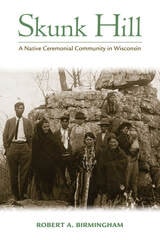
Skunk Hill
A Native Ceremonial Community in WisconsinRobert A. Birmingham
Wisconsin Historical Society Press, 2015
In Skunk Hill, archeologist Robert A. Birmingham traces the largely unknown story of this community, detailing the role it played in preserving Native culture through a harsh period of US Indian policy from the 1880s to 1930s. The story’s central focus is the Drum Dance, also known as the Dream Dance or Big Drum, a pan-tribal cultural revitalization movement that swept the Upper Midwest during the Great Suppression, emphasizing Native values and rejecting the vices of the white world. Though the community disbanded by the 1930s, the site, now on the National Register of Historic
Places with two dance circles still visible on the grounds, stands as testimony to the efforts of its members to resist cultural assimilation.
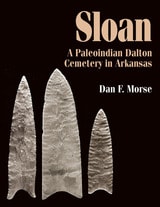
Sloan
A Paleoindian Dalton Cemetery in ArkansasDan Morse
University of Arkansas Press, 1997
New in Paper!
Excavated in 1974, the Sloan site in northeast Arkansas is the earliest recognized cemetery in the New World, containing the graves of a small group of Native Americans who died over ten thousand years ago. Although no skeletons were found in the acidic soil, the number, size, and quality of its artifacts attest to the presence of a far more complicated and sophisticated culture than had previously been thought to exist during the Dalton period.
Bringing together the work of thirteen eminent scholars, Dan F. Morse describes and assesses the assemblage of points, adzes, scrapers, abraders, and other stone artifacts as an indicator of the territorial stability of late Pleistocene peoples. The tools show that hunter-gatherer-fisher populations lived in small, semipermanent villages, hunted and butchered white-tailed deer, processed and ate vegetables, and made dugout canoes. And they buried their dead in cemeteries, a practice previously associated only with the rise of horticultural societies. Many of the tools are unused, suggesting ritual interments and a well-developed system of trade with groups in rockier areas.
Including an overview of the Dalton period in the southeastern United States and a discussion of the region’s geologic and vegetal prehistory—and newly supported by extensive high-quality image galleries now available at the website of the Arkansas Archeological Survey (see inside cover)—this comprehensive study of the Sloan artifacts provides a multifaceted assessment of a site rich in information about the technology of a single prehistoric society.
Social Adaptation to Food Stress
A Prehistoric Southwestern ExamplePaul E. Minnis
University of Chicago Press, 1985
Minnis proposes that, faced with the threat of food shortages, nonstratified societies survive by employing a series of responses that are increasingly effective but also are increasingly costly and demand increasingly larger cooperative efforts. The model Minnis develops allows him to infer, from evidence of such factors as population size, resource productivity, and climate change, the occurrence of food crises in the past. Using the Classic Mimbres society as a test case, he summarizes the regional archeological sequence and analyzes the effects of environmental fluctuations on economic and social organization. He concludes that the responses of the Mimbres people to their burgeoning population were inadequate to prevent the collapse of the society in the late twelfth century.
In its illumination of the general issue of responses to food shortages, Social Adaptation to Food Stress will interest not only archeologists but also those concerned with current food shortages in the Third World. Cultural ecologists and human geographers will be able to derive a wealth of ideas, methods, and data from Minnis's work.
Social Violence in the Prehispanic American Southwest
Edited by Deborah L. Nichols and Patricia L. Crown
University of Arizona Press, 2008
CONTENTS
1. Introduction
Patricia Crown and Deborah Nichols
2. Dismembering the Trope: Imagining Cannibalism in the Ancient Pueblo World
Randall H. McGuire and Ruth Van Dyke
3. An Outbreak of Violence and Raiding in the Central Mesa Verde Region in the 12th Century AD
Brian R. Billman
4. Chaco Horrificus?
Wendy Bustard
5. Inscribed in the Body, Written in Bones: The Consequences of Social Violence at La Plata
Debra L. Martin, Nancy Akins, Bradley Crenshaw, and Pamela K. Stone
6. Veneration or Violence: A Study of Variations in Patterns of Human Bone Modification at La Quemada
Ventura R. Pérez, Ben A. Nelson, and Debra L. Martin
7. Witches, Practice, and the Context of Pueblo Cannibalism
William H. Walker
8. Explanation vs. Sensation: The Discourse of Cannibalism at Awat’ovi
Peter Whiteley
9. Devouring Ourselves
George J. Armelagos
References Cited
About the Contributors
Index
Soldier-Artist of the Great Reconnaissance
John C. Tidball and the 35th Parallel Pacific Railroad SurveyEugene C. Tidball
University of Arizona Press, 2004
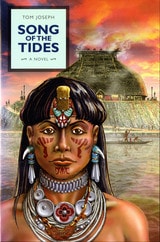
Song of Tides
Tom Joseph
University of Alabama Press, 2008

Songprints
The Musical Experience of Five Shoshone WomenJudith Vander
University of Illinois Press, 1988
Perspectives on the twentieth-century lives of Shoshone women musicians
The musical lives of Native American women have experienced a century of cultural change and constancy. Judith Vander takes readers to the Shoshone of Wyoming's Wind River Reservation to meet five generations of Shoshone women. Vander’s conversations with Emily, Angelina, Alberta, Helene, and Lenore capture their distinct personalities as they share their thoughts, feelings, and attitudes toward their music.
Vander transcribes and analyzes seventy-five songs that the women sing. Each woman possesses a unique songprint—a repertoire distinctive to her culture, age, and personality. As Vander shows, the context of Shoshone social and religious ceremonies offers insights into the rise of the Native American Church, the emergence and popularity of the contemporary powwow, and the changing, enlarging role of women. In addition, two eyewitnesses accounts of Ghost Dance songs and performances elaborate on the function and meaning of the Ghost Dance among the Wind River Shoshones.
2nd Place from the Pauline Alderman Prize for New Scholarship on Women in Music from the International Congress on Women in Music. Winner of an ASCAP Deems Taylor Award, 1989.
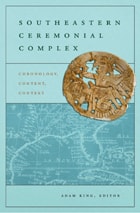
Southeastern Ceremonial Complex
Chronology, Content, ContestEdited by Adam King
University of Alabama Press, 2007
A timely, comprehensive reevaluation of the Southeastern Ceremonial Complex.
One of the most venerable concepts in Southeastern archaeology is that of the Southern Cult. The idea has its roots in the intensely productive decade (archaeologically) of the 1930s and is fundamentally tied to yet another venerable concept—Mississippian culture. The last comprehensive study of the melding of these two concepts into the term Southeastern Ceremonial Complex (SECC) is more than two decades old, yet our understanding of the objects, themes, and artistic styles associated with the SECC have changed a great deal. New primary data have come to light that bear directly on the complex, requiring a thorough reanalysis of both concepts and dating. Recent publications have ignited many debates about the dating and the nature of the SECC.
This work presents new data and new ideas on the temporal and social contexts, artistic styles, and symbolic themes included in the complex. It also demonstrates that engraved shell gorgets, along with other SECC materials, were
produced before A.D. 1400.
Southeastern Indians Life Portraits
A Catalogue of Pictures 1564-1860Emma Lila Fundaburk
University of Alabama Press, 1958
This pictorial classic is a valuable ethnological record of southeastern Indians that also showcases the work of early photographers and artists.
A collection of over 350 photographs, paintings, drawings,and woodcuts, Life Portraits offers us an important visual representation of southeastern Indians—at work, at play, in rituals, and in death—when they first encountered Europeans.
Studied by historians and archaeologists, as well as museum exhibit designers and costumers, these illustrations provide a wealth of information on native dress and jewelry, house construction, agricultural techniques, warfare, and other aspects of American Indian life. Among the tribes illustrated are Natchez, Choctaw, Creek, Chickasaw, Cherokee, Seminole, Chitimacha, Timucua, Powhatan, Tuscarora, Caddo, Yuchi, and Shawnee.
A special section of the book quotes historic narratives and comments on the life and work of the artists, lithographers, photographers, and engravers who made the originals. Included among these are Jacques le Moyne, John White, Theodore De Bry, Francis Parsons, Joshua Reynolds, John Trumball, George Catlin, John Mix Stanley, Thomas McKenney, and Samuel Waugh.
Life Portraits has been a classic title in southeastern archaeology and a staple of bookstores and museum shops around the country since its original publication in 1958. Because the carefully identified illustrations were secured from a wide variety of sources, including the British Museum, the Charleston Museum, the New York Public Library, and the Oklahoma Historical Society, this volume represents the most comprehensiveand widely available record of Indian images. Designed for Americana collections, it will appeal to general readers as well as professional historians and archaeologists.
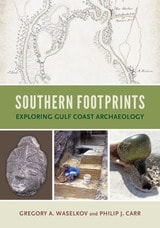
Southern Footprints
Exploring Gulf Coast ArchaeologyGregory A. Waselkov and Philip J. Carr
University of Alabama Press, 2024
Unearthing the Gulf Coast’s past—one footprint at a time.
Southern Footprints celebrates more than fifty years of archaeological research along the Gulf Coast by the University of South Alabama and the Center for Archaeological Studies. Archaeologists Gregory A. Waselkov and Philip J. Carr, the former and current directors of the center, present the “greatest hits” that have transformed knowledge of human history on the Alabama and Mississippi Gulf Coast from the Ice Age until recently. Each archaeological site, from surface collections to premiere archaeological preserves, such as Old Mobile and Holy Ground, offers clues to the past.
The chapters in this collection are arranged chronologically and survey the history and archaeology of a wide range of significant sites, including the Gulf Shores canoe canal, Bottle Creek Mounds, Old Mobile, Fort Mims, Spanish Fort, Spring Hill College, and Mobile River Bridge.
Waselkov and Carr take care to acknowledge in these stories populations who have been historically underdocumented, now recognizing the contributions of Native Americans and African Americans that have been uncovered through archaeology. The authors reveal the dire impacts of climate change, environmental disasters, development, and neglect—and convey their urgency to protect these areas of shared history—as a result of the meticulous excavation, analysis, and preservation of artifacts from these sites. Color photographs showcase the archaeology as it unfolds, often with the help of dedicated volunteers. Southern Footprints will serve as an indispensable reference on the rich Gulf Coast heritage for all to appreciate.
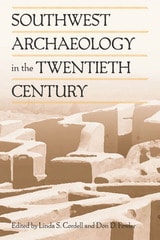
Southwest Archaeology in the Twentieth Century
Linda S Cordell
University of Utah Press, 2011
With contributions from well-known archaeologists, Southwest Archaeology in the Twentieth Century reviews the histories of major archaeological topics of the region during the twentieth century, with particular attention to the vast changes in southwestern archaeology during the later decades of the century. Included are the huge influence of field schools, the rise of cultural resource management (CRM), the uses and abuses of ethnographic analogy, the intellectual contexts of archaeology in Mexico, and current debates on agriculture, sedentism, and political complexity.
By looking back at the previous century of study, this book provides an authoritative retrospective of intellectual trends as well as a synthesis of current themes in the arena of the American Southwest.
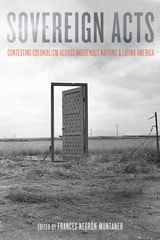
Sovereign Acts
Contesting Colonialism Across Indigenous Nations and Latinx AmericaEdited by Frances Negrón-Muntaner
University of Arizona Press, 2017
Editor Frances Negrón-Muntaner and the contributors to Sovereign Acts engage in a debate around these questions with surprising results. Moving the idea of sovereignty beyond the narrow confines of the nation-state, beyond the concept of a power that one either has or lacks, this paradigm-shifting work examines the multiple ways that Indigenous nations and U.S. territorial peoples act as sovereign and the possible limits of such sovereign acts within the current globalized context. A valuable contribution to the debate around indigenous and other conceptions of sovereignty, Sovereign Acts goes further than legal frameworks to investigate the relationships among sovereignty, gender, sexuality, representation, and the body.
From activist style and choreography to the politics of recognition, the scholars and artists featured in this unique volume map out how people disrupt modern notions of sovereignty, attempt to redefine what being sovereign means, or seek alternative political vocabularies. Sovereignty is not only, after all, a kingdom and a crown.
CONTRIBUTORS
Michael Lujan Bevacqua
Glen Coulthard
Jennifer Nez Denetdale
Adriana María Garriga-López
Jessica A. F. Harkins
Brian Klopotek
Davianna Pomaika‘i McGregor
Frances Negrón-Muntaner
Yasmin Ramírez
Mark Rifkin
Madeline Román
Stephanie Nohelani Teves
Fa‘anofo Lisaclaire Uperesa

Sovereign Erotics
A Collection of Two-Spirit LiteratureEdited by Qwo-Li Driskill, Daniel Heath Justice, Deborah Miranda, and Lisa Tatonetti
University of Arizona Press, 2011
This landmark collection strives to reflect the complexity of identities within Native Gay, Lesbian, Bisexual, Transgender, Queer, and Two-Spirit (GLBTQ2) communities. Gathering together the work of established writers and talented new voices, this anthology spans genres (fiction, nonfiction, poetry, and essay) and themes (memory, history, sexuality, indigeneity, friendship, family, love, and loss) and represents a watershed moment in Native American and Indigenous literatures, Queer studies, and the intersections between the two.
Collaboratively, the pieces in Sovereign Erotics demonstrate not only the radical diversity among the voices of today’s Indigenous GLBTQ2 writers but also the beauty, strength, and resilience of Indigenous GLBTQ2 people in the twenty-first century.
Contributors: Indira Allegra, Louise Esme Cruz, Paula Gunn Allen, Qwo-Li Driskill, Laura Furlan, Janice Gould, Carrie House, Daniel Heath Justice, Maurice Kenny, Michael Koby, M. Carmen Lane, Jaynie Lara, Chip Livingston, Luna Maia, Janet McAdams, Deborah Miranda, Daniel David Moses, D. M. O’Brien, Malea Powell, Cheryl Savageau, Kim Shuck, Sarah Tsigeyu Sharp, James Thomas Stevens, Dan Taulapapa McMullin, William Raymond Taylor, Joel Waters, and Craig Womack
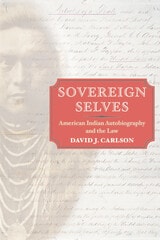
Sovereign Selves
American Indian Autobiography and the LawDavid J. Carlson
University of Illinois Press, 2005
Carlson argues that by drawing on the conventions of early colonial treaty-making, nineteenth- and early twentieth-century Indian autobiographers sought to adapt and redefine the terms of Indian law as a way to assert specific property-based and civil rights. Focusing primarily on the autobiographical careers of two major writers (William Apess and Charles Eastman), Sovereign Selves traces the way that their sustained engagement with colonial legal institutions gradually enabled them to produce a new rhetoric of "Indianness."

Sovereignty
A PlayMary Kathryn Nagle
Northwestern University Press, 2020
A powerful meditation of the echoes of history and the never-ending struggle for sovereignty
Sovereignty unfolds over two parallel timelines. In present-day Oklahoma, a young Cherokee lawyer, Sarah Ridge Polson, and her colleague Jim Ross defend the inherent jurisdiction of Cherokee Nation in the U.S. Supreme Court when a non-Indian defendant challenges the Nation’s authority to prosecute non-Indian perpetrators of domestic violence. Their collaboration is juxtaposed with scenes from 1835, when Cherokee Nation was eight hundred miles to the east in the southern Appalachians. That year, Sarah’s and Jim’s ancestors, historic Cherokee rivals, were bitterly divided over a proposed treaty with the administration of Andrew Jackson, the Treaty of New Echota, which led to the nation’s removal to Oklahoma on the infamous Trail of Tears.
A direct descendant of nineteenth-century Cherokee leaders John Ridge and Major Ridge, Mary Kathryn Nagle has penned a play that twists and turns from violent outbursts to healing monologues, illuminating a provocative double meaning for the sovereignty of both tribal territory and women’s bodies. Taking as its point of departure the story of one lawyer’s passionate defense of the rights of her people to prosecute non-natives who commit crimes on reservations, Sovereignty opens up into an expansive exploration of the circular continuity of history, human memory, and the power of human relationships.

Spatial and Discursive Violence in the US Southwest
Rosaura Sánchez and Beatrice Pita
Duke University Press, 2020
Speak to Me Words
Essays on Contemporary American Indian PoetryEdited by Dean Rader and Janice Gould
University of Arizona Press, 2003
Speak to Me Words is a stimulating blend of classic articles and original pieces that reflect the energy of modern American Indian literary studies. Highlighting various aspects of poetry written by American Indians since the 1960s, it is a wide-ranging collection that balances the insights of Natives and non-Natives, men and women, old and new voices. Included here are such landmark articles as "Answering the Deer" by Paula Gunn Allen, "Herbs of Healing" by Carter Revard, and "Song, Poetry and Language—Expression and Perception" by Simon Ortiz—all pieces that have shaped how we think about Native poetry. Among the contributions appearing for the first time are Elaine Jahner writing on Paula Gunn Allen's use of formal structures; Robert Nelson addressing pan-Indian tropes of emergence, survival, return, and renewal; and Janet McAdams focusing on Carter Revard's "angled mirrors." Although many Native writers may disregard distinctions between genres, together these writings help readers see the difference between American Indian poetry and other forms of Native literature.
These essays are as broad, encompassing, and provocative as Native poetry itself, branching off from and weaving back into one another. In showing how American Indian poetry redefines our social order and articulates how Indian communities think about themselves, these writers establish a new foundation for the study—and enjoyment—of this vital art.
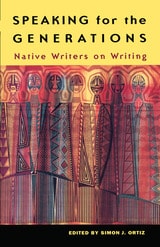
Speaking for the Generations
Native Writers on WritingEdited by Simon J. Ortiz
University of Arizona Press, 1997
Of varied backgrounds, the writers represent Indian heritages and cultures from the Pacific Northwest to the northern plains, from Canada to Guatemala. They are poets, novelists, and playwrights. And although their backgrounds are different and their statements intensely personal, they share common themes of their relationship to the land, to their ancestors, and to future generations of their people. From Gloria Bird's powerful recounting of personal and family history to Esther Belin's vibrant tale of her urban Native homeland in Los Angeles, these writers reveal the importance of place and politics in their lives. Leslie Marmon Silko calls upon the ancient tradition of Native American storytelling and its role in connecting the people to the land. Roberta J. Hill and Elizabeth Woody ponder some of the absurdities of contemporary Native life, while Guatemalan Victor Montejo takes readers to the Mayan world, where a native culture had writing and books long before Europeans came.
Together these pieces offer an inspiring portrait of what it means to be a Native writer in the twentieth century. With passion and urgency, these writers are speaking for themselves, for their land, and for the generations.