Results by title
448 books match the query 'Interviews' and 31 start with s

Safe in a Midwife's Hands
Birthing Traditions from Africa to the American SouthLinda Janet Holmes
The Ohio State University Press, 2023

Sandino's Daughters Revisited
Feminism in NicaraguaRandall, Margaret
Rutgers University Press, 1994
Sandino's Daughters, Margaret Randall's conversations with Nicaraguan women in their struggle against the dictator Somoza in 1979, brought the lives of a group of extraordinary female revolutionaries to the American and world public. The book remains a landmark. Now, a decade later, Randall returns to interview many of the same women and others. In Sandino's Daughters Revisited, they speak of their lives during and since the Sandinista administration, the ways in which the revolution made them strong — and also held them back. Ironically, the 1990 defeat of the Sandinistas at the ballot box has given Sandinista women greater freedom to express their feelings and ideas.
Randall interviewed these outspoken women from all walks of life: working-class Diana Espinoza, head bookkeeper of a employee-owned factory; Daisy Zamora, a vice minister of culture under the Sandinistas; and Vidaluz Meneses, daughter of a Somozan official, who ties her revolutionary ideals to her Catholicism. The voices of these women, along with nine others, lead us to recognize both the failed promises and continuing attraction of the Sandinista movement for women. This is a moving account of the relationship between feminism and revolution as it is expressed in the daily lives of Nicaraguan women.

Sandino's Daughters
Testimonies of Nicaraguan Women in StruggleRandall, Margaret
Rutgers University Press, 1995
"A collection of varied and amazing lives, all bent on shaping history. Together, these experienced, undeterred Nicaraguan women offer powerful clues about a truly revolutionary and democratizing feminism."––Adrienne Rich
"If it were not for writers like Margaret, how would women around the world find each other when there is such an institutional effort to keep us apart and silent? Here Margaret brings us the voice of Sandino's daughters, honoring his hat and wearing their own, wiser now, having been part of political and personal revolution."––Holly Near
"Powerful, moving, and challenging. Everyone interested in decency and justice will want to read Sandino's Daughters Revisited."––Blanche Wiesen Cook
Sandino's Daughters, Margaret Randall's conversations with Nicaraguan women in their struggle against the dictator Somoza in 1979, brought the lives of a group of extraordinary female revolutionaries to the American and world public. The book remains a landmark. Now, a decade later, Randall returns to interview many of the same women and others. In Sandino's Daughters Revisited, they speak of their lives during and since the Sandinista administration, the ways in which the revolution made them strong––and also held them back. Ironically, the 1990 defeat of the Sandinistas at the ballot box has given Sandinista women greater freedom to express their feelings and ideas.
Randall interviewed these outspoken women from all walks of life: working-class Diana Espinoza, head bookkeeper of a employee-owned factory; Daisy Zamora, a vice minister of culture under the Sandinistas; and Vidaluz Meneses, daughter of a Somozan official, who ties her revolutionary ideals to her Catholicism. The voices of these women, along with nine others, lead us to recognize both the failed promises and continuing attraction of the Sandinista movement for women. This is a moving account of the relationship between feminism and revolution as it is expressed in the daily lives of Nicaraguan women.
Set in Motion
Essays, Interviews, and DialoguesA. R. Ammons
University of Michigan Press, 1996
Settlin’
Stories of Madison’s Early African American FamiliesMuriel Simms
Wisconsin Historical Society Press, 2018
Shantytown Protest in Pinochet's Chile
Cathy Lisa Schneider
Temple University Press, 1995
Shelf Life
Essays, Memoirs, and an InterviewThom Gunn
University of Michigan Press, 1993
Gunn’s criticism communicates his own enthusiasm for poetry. He tries to show his readers how to get a first foothold into the work of some of his favorite poets, whether Wyatt or Whitman, Mina Loy or Robert Creeley.
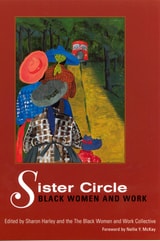
Sister Circle
Black Women and WorkHarley, Sharon
Rutgers University Press, 2002
Although black women’s labor was essential to the development of the United States, studies of these workers have lagged far behind those of working black men and white women. Adding insult to injury, a stream of images in film, television, magazines, and music continues to portray the work of black women in a negative light.
Sister Circle offers an innovative approach to representing work in the lives of black women. Contributors from many fields explore an array of lives and activities, allowing us to see for the first time the importance of black women’s labor in the aftermath of slavery. A brand new light is shed on black women’s roles in the tourism industry, as nineteenth-century social activists, as labor leaders, as working single mothers, as visual artists, as authors and media figures, as church workers, and in many other fields. A unique feature of the book is that each contributor provides an autobiographical statement, connecting her own life history to the subject she surveys.
The first group of essays, “Work It Sista!” identifies the sites of black women’s paid and unpaid work. In “Foremothers: The Shoulders on Which We Stand,” contributors look to the past for the different kinds of work that black women have performed over the last two centuries. Essays in “Women’s Work through the Artist’s Eyes” highlight black women’s work in literature, drama, and the visual arts. The collection concludes with “Detours on the Road to Work: Blessings in Disguise,” writings surveying connections between black women’s personal and professional lives.
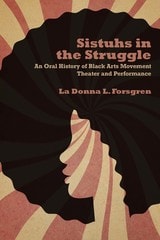
Sistuhs in the Struggle
An Oral History of Black Arts Movement Theater and PerformanceLa Donna L. Forsgren
Northwestern University Press, 2021
Outstanding Academic Title, CHOICE
The first oral history to fully explore the contributions of black women intellectuals to the Black Arts Movement, Sistuhs in the Struggle reclaims a vital yet under-researched chapter in African American, women’s, and theater history. This groundbreaking study documents how black women theater artists and activists—many of whom worked behind the scenes as directors, designers, producers, stage managers, and artistic directors—disseminated the black aesthetic and emboldened their communities.
Drawing on nearly thirty original interviews with well-known artists such as Ntozake Shange and Sonia Sanchez as well as less-studied figures including distinguished lighting designer Shirley Prendergast, dancer and choreographer Halifu Osumare, and three-time Tony-nominated writer and composer Micki Grant, La Donna L. Forsgren centers black women’s cultural work as a crucial component of civil rights and black power activism. Sistuhs in the Struggle is an essential collection for theater scholars, historians, and students interested in learning how black women’s art and activism both advanced and critiqued the ethos of the Black Arts and Black Power movements.

Small Town America in World War II
War Stories from Wrightsville, PennsylvaniaRonald E. Marcello
University of North Texas Press, 2014
So Ask
Essays, Conversations, and InterviewsPhilip Levine
University of Michigan Press, 2002

Social Life in Northwest Alaska
The Structure of Inupiaq Eskimo NationsErnest Burch Jr.
University of Alaska Press, 2006
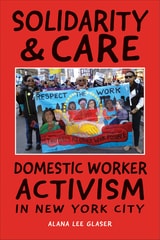
Solidarity & Care
Domestic Worker Activism in New York CityAlana Lee Glaser
Temple University Press, 2023
Solidarity & Care examines the political mobilization of diverse care workers who joined together and supported one another through education, protests, lobbying, and storytelling. Domestic work activists used narrative and emotional appeals to build a coalition of religious communities, employers of domestic workers, labor union members, and politicians to first pass and then to enforce the new law.
Through oral history interviews, as well as ethnographic observation during DWU meetings and protest actions, Glaser chronicles how these women fought (and continue to fight) to improve working conditions. She also illustrates how they endure racism, punitive immigration laws, on-the-job indignities, and unemployment that can result in eviction and food insecurity.
The lessons from Solidarity & Care along with the DWU’s precedent-setting legislative success have applications to workers across industries.
All royalties will go directly to the Domestic Workers United
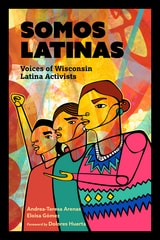
Somos Latinas
Voices of Wisconsin Latina ActivistsAndrea-Teresa Arenas
Wisconsin Historical Society Press, 2018
Celebrated Latina civil rights activist Dolores Huerta once said, “Every moment is an organizing opportunity, every person a potential activist, every minute a chance to change the world.” These are the stories of some of the Latina activists from Wisconsin who have lived Huerta’s words. Somos Latinas shares the powerful narratives of 25 activists—from outspoken demonstrators to collaborative community-builders to determined individuals working for change behind the scenes—providing proof of the long-standing legacy of Latina activism throughout Wisconsin.
Somos Latinas draws on activist interviews conducted as part of the Somos Latinas Digital History Project, housed at the Wisconsin Historical Society, and looks deep into the life and passion of each woman. Though Latinas have a rich history of community activism in the state and throughout the country, their stories often go uncelebrated. Somos Latinas is essential reading for scholars, historians, activists, and anyone curious about how everyday citizens can effect change in their communities.

Song for Uncle Tom, Tonto, and Mr. Moto
Poetry and IdentityDavid Mura
University of Michigan Press, 2002
Mura's writings recently have been at the center of various debates concerning race and literary standards. In this book, he argues the need for a more complicated and diverse set of literary standards than the canon has previously allowed, an opening up to the many voices that are "great within us." He contends that, when placed against a gathering awareness of a world literature, particularly in the so-called Third World, the boundaries of the traditional Anglo-American canon and its present-day proponents like Harold Bloom come to be seen as too narrow and parochial, reenacting the "tribal" label that many throw now at the advocates of multiculturalism.
Beyond its theoretical underpinnings, Song for Uncle Tom, Tonto, and Mr. Moto charts the wayward course of Mura's own development as a poet. In three interviews, Mura provides readings of his own work and discusses various issues of technique and form.
David Mura is a poet, memoirist, essayist, playwright, writer of fiction, performance artist, and literary critic. He is author of The Colors of Desire, After We Lost Our Way, and Turning Japanese: Memoirs of a Sansei.
Southbound
Interviews with Southern PoetsEdited by Ernest Suarez, T. W. Stanford III, & Amy Verner
University of Missouri Press, 1999
"There's a real flowering, I think, of southern poetry right now, . . . assembling at the edges of everything." This observation by Pulitzer Prize-winning poet Charles Wright reflects upon the continuing vibrancy and importance of the southern poetic tradition. Although the death of James Dickey in 1997 left southern poetry without a recognizably dominant voice, an array of other vibrant voices continue to be heard and recognized. Southbound: Interviews with Southern Poets provides detailed discussion of the art and craft of poetry by many writers who promise to keep southern poetry vital into the twenty-first century.
Beginning with an interview with the late literary giant James Dickey, Southbound collects the ideas and insights of both well-known and rising southern poets, including Dave Smith, Charles Wright, Ellen Bryant Voigt, Yusef Komunyakaa, and Rodney Jones. Suarez's guiding principle for conducting and revising the interviews was to let the poets express themselves as clearly and fully as possible. Each interview is ultimately defined by the poet's own personality and voice, yet all explore similar themes—the relationship between technique and subject, the nature of the southern canon and each poet's place in it, and the state of contemporary poetry. As Dave Smith relates, "My sense of appreciation of what life means or could mean, whatever I know about life, stems from a sense of place, a sense of the ghostliness of meaning." It is this sense of place and meaning that Suarez allows each poet to convey truthfully in his interviews.
Including a brief introduction to each interview and a bibliography of primary and secondary sources for each poet, Southbound is a useful tool for scholars and a springboard for casual readers. More important, this collection of interviews makes a significant contribution to the tradition of southern poetry and its most prominent voices.
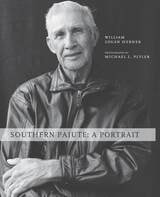
Southern Paiute
A PortraitLogan Hebner
Utah State University Press, 2010
Now little recognized by their neighbors, Southern Paiutes once had homelands that included much of the vast Colorado Plateau, Great Basin, and Mojave Desert. From the Four Corners’ San Juan River to California’s lower Colorado, from Death Valley to Canyonlands, from Capitol Reef to the Grand Canyon, Paiutes lived in many small, widespread communities. They still do, but the communities are fewer, smaller, and mostly deprived of the lands and resources that sustained traditional lives.
To portray a people and the individuals who comprise it, William Logan Hebner and Michael L. Plyler relay Paiute voices and reveal Paiute faces, creating a space for them to tell their stories and stake claim to who they once were and now are.
Speaking for Themselves
Ethnographic Interviews with Adults with Learning DisabilitiesPaul J. Gerber and Henry B. Reiff
University of Michigan Press, 1991
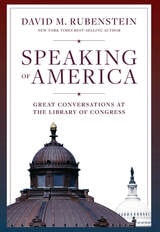
Speaking of America
Great Conversations at the Library of CongressDavid M. Rubenstein
Duke University Press, 2026
Featuring interviews with eminent historians, journalists, and writers, Speaking of America brings together nineteen wide-ranging conversations from philanthropist and financier David M. Rubenstein’s long-running Congressional Dialogues series of interviews at the Library of Congress. Highlights include Ken Burns on documenting American history, Stacy Schiff on Samuel Adams, Manisha Sinha on Reconstruction, and David McCullough on the American frontier.
Published in association with the Library of Congress
Featuring interviews with eminent historians, journalists, and writers, Speaking of America brings together nineteen wide-ranging conversations from philanthropist and financier David M. Rubenstein’s long-running Congressional Dialogues series of interviews at the Library of Congress. Rubenstein and his guests bring to life notable figures, events, and trends drawn from American history and culture and beyond.
Highlights include Ken Burns on bringing American history to life, Stacy Schiff on Samuel Adams, Manisha Sinha on Reconstruction, David McCullough on the American frontier, Beverly Gage on J. Edgar Hoover, Chris Wallace on the presidential election of 1960, Evan Thomas on Justice Sandra Day O’Connor, Eric Schmidt on artificial intelligence, Arthur Brooks on happiness, and David Grann on The Wager, his best-selling story of shipwreck and mutiny. Taken together, the conversations in Speaking of America all build toward the same shared message of dialogue, cooperation, and the importance of knowledge and reflection, highlighting how the study of history can enrich our understanding of current-day challenges in politics and policy.
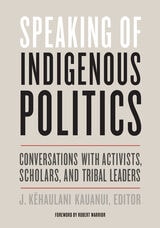
Speaking of Indigenous Politics
Conversations with Activists, Scholars, and Tribal LeadersJ. Kehaulani Kauanui
University of Minnesota Press, 2018
“A lesson in how to practice recognizing the fundamental truth that every inch of the Americas is Indigenous territory” —Robert Warrior, from the Foreword
Many people learn about Indigenous politics only through the most controversial and confrontational news: the Standing Rock Sioux Tribe’s efforts to block the Dakota Access Pipeline, for instance, or the battle to protect Bears Ears National Monument in Utah, a site sacred to Native peoples. But most Indigenous activism remains unseen in the mainstream—and so, of course, does its significance. J. Kēhaulani Kauanui set out to change that with her radio program Indigenous Politics. Issue by issue, she interviewed people who talked candidly and in an engaging way about how settler colonialism depends on erasing Native peoples and about how Native peoples can and do resist. Collected here, these conversations speak with clear and compelling voices about a range of Indigenous politics that shape everyday life.
Land desecration, treaty rights, political status, cultural revitalization: these are among the themes taken up by a broad cross-section of interviewees from across the United States and from Canada, Mexico, Chile, Bolivia, Peru, Australia, and New Zealand. Some speak from the thick of political action, some from a historical perspective, others from the reaches of Indigenous culture near and far. Writers, like Comanche Paul Chaat Smith, author of Everything You Know about Indians Is Wrong, expand on their work—about gaming and sovereignty, for example, or protecting Native graves, the reclamation of land, or the erasure of Indian identity. These conversations both inform and engage at a moment when their messages could not be more urgent.
Contributors: Jessie Little Doe Baird (Mashpee Wampanoag), Omar Barghouti, Lisa Brooks (Abenaki), Kathleen A. Brown-Pérez (Brothertown Indian Nation), Margaret “Marge” Bruchac (Abenaki), Jessica Cattelino, David Cornsilk (Cherokee Nation), Sarah Deer (Muskogee Creek Nation), Philip J. Deloria (Dakota), Tonya Gonnella Frichner (Onondaga Nation), Hone Harawira (Ngapuhi Nui Tonu), Suzan Shown Harjo (Cheyenne and Hodulgee Muscogee), Rashid Khalidi, Winona LaDuke (White Earth Ojibwe), Maria LaHood, James Luna (Luiseño), Aileen Moreton-Robinson (Quandamooka), Chief Mutáwi Mutáhash (Many Hearts) Marilynn “Lynn” Malerba (Mohegan), Steven Newcomb (Shawnee/Lenape), Jean M. O’Brien (White Earth Ojibwe), Jonathan Kamakawiwo‘ole Osorio (Kanaka Maoli), Steven Salaita, Paul Chaat Smith (Comanche), Circe Sturm (Mississippi Choctaw descendant), Margo Taméz (Lipan Apache), Chief Richard Velky (Schaghticoke), Patrick Wolfe.
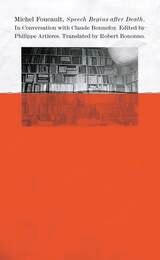
Speech Begins after Death
Michel Foucault
University of Minnesota Press, 2016
In 1968, Michel Foucault agreed to a series of interviews with critic Claude Bonnefoy, which were to be published in book form. Bonnefoy wanted a dialogue with Foucault about his relationship to writing rather than about the content of his books. The project was abandoned, but a transcript of the initial interview survived and is now being published for the first time in English. In this brief and lively exchange, Foucault reflects on how he approached the written word throughout his life, from his school days to his discovery of the pleasure of writing.
Wide ranging, characteristically insightful, and unexpectedly autobiographical, the discussion is revelatory of Foucault’s intellectual development, his aims as a writer, his clinical methodology (“let’s say I’m a diagnostician”), and his interest in other authors, including Raymond Roussel and Antonin Artaud. Foucault discloses, in ways he never had previously, details about his home life, his family history, and the profound sense of obligation he feels to the act of writing. In his Introduction, Philippe Artières investigates Foucault’s engagement in various forms of oral discourse—lectures, speeches, debates, press conferences, and interviews—and their place in his work.
Speech Begins after Death shows Foucault adopting a new language, an innovative autobiographical communication that is neither conversation nor monologue, and is one of his most personal statements about his life and writing.
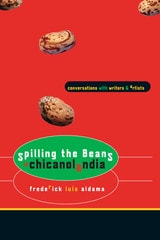
Spilling the Beans in Chicanolandia
Conversations with Writers and ArtistsBy Frederick Luis Aldama
University of Texas Press, 2006
Since the 1980s, a prolific "second wave" of Chicano/a writers and artists has tremendously expanded the range of genres and subject matter in Chicano/a literature and art. Building on the pioneering work of their predecessors, whose artistic creations were often tied to political activism and the civil rights struggle, today's Chicano/a writers and artists feel free to focus as much on the aesthetic quality of their work as on its social content. They use novels, short stories, poetry, drama, documentary films, and comic books to shape the raw materials of life into art objects that cause us to participate empathetically in an increasingly complex Chicano/a identity and experience.
This book presents far-ranging interviews with twenty-one "second wave" Chicano/a poets, fiction writers, dramatists, documentary filmmakers, and playwrights. Some are mainstream, widely recognized creators, while others work from the margins because of their sexual orientations or their controversial positions. Frederick Luis Aldama draws out the artists and authors on both the aesthetic and the sociopolitical concerns that animate their work. Their conversations delve into such areas as how the artists' or writers' life experiences have molded their work, why they choose to work in certain genres and how they have transformed them, what it means to be Chicano/a in today's pluralistic society, and how Chicano/a identity influences and is influenced by contact with ethnic and racial identities from around the world.
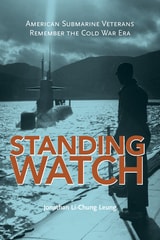
Standing Watch
American Submarine Veterans Remember the Cold War EraJonathan Li-Chung Leung
University of Alabama Press, 2019
Featuring interviews from seventeen veteran submariners, Standing Watch: American Submarine Veterans Remember the Cold War Era offers the perspective of the submariners themselves—lending them a voice and paying homage to their service. Jonathan Li-Chung Leung provides an original glimpse into a world of unique challenges and characters, a life isolated and submerged, and a duty defined by the juxtaposition of monotonous routine and unparalleled excitement.
These personal accounts of life below the surface offer readers a front-row seat to close encounters with Soviet submarines and the naval blockade during the Cuban Missile Crisis, as well as an intimate understanding of daily life onboard the vessels, the culture of military discipline, and the religious-like fervor exercised in honoring traditions big and small. By applying first-hand perspectives to a larger thematic overview, this book uses authentic narratives to deliver a lively and colorful picture of the Silent Service.
Set against the backdrop of sobering geo-political disputes and their own role as the nation’s defenders against a seemingly ambiguous super-enemy, these veterans focus on their responsibilities and reflect on careers built on the simple axioms of pride and service. This invigorating and unalloyed account is an unprecedented addition to the existing literature on naval and military history.
Stegner
Conversations On History And LiteratureWallace Stegner
University of Nevada Press, 1996
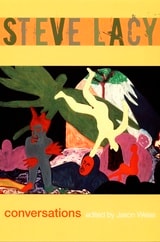
Steve Lacy
ConversationsJason Weiss, ed.
Duke University Press, 2006
This volume brings together interviews that appeared in a variety of magazines between 1959 and 2004. Conducted by writers, critics, musicians, visual artists, a philosopher, and an architect, the interviews indicate the evolution of Lacy’s extraordinary career and thought. Lacy began playing the soprano saxophone at sixteen, and was soon performing with Dixieland musicians much older than he. By nineteen he was playing with the pianist Cecil Taylor, who ignited his interest in the avant-garde. He eventually became the foremost proponent of Thelonious Monk’s music. Lacy played with a broad range of musicians, including Monk and Gil Evans, and led his own bands. A voracious reader and the recipient of a MacArthur “genius” grant, Lacy was particularly known for setting to music literary texts—such as the Tao Te Ching, and the work of poets including Samuel Beckett, Robert Creeley, and Taslima Nasrin—as well as for collaborating with painters and dancers in multimedia projects.
Lacy lived in Paris from 1970 until 2002, and his music and ideas reflect a decades-long cross-pollination of cultures. Half of the interviews in this collection originally appeared in French sources and were translated specifically for this book. Jason Weiss provides a general introduction, as well as short introductions to each of the interviews and to the selection of Lacy’s own brief writings that appears at the end of the book. The volume also includes three song scores, a selected discography of Lacy’s recordings, and many photos from the personal collection of his wife and longtime collaborator, Irene Aebi.
Interviews by: Derek Bailey, Franck Bergerot, Yves Bouliane, Etienne Brunet, Philippe Carles, Brian Case, Garth W. Caylor Jr., John Corbett, Christoph Cox, Alex Dutilh, Lee Friedlander, Maria Friedlander, Isabelle Galloni d'Istria, Christian Gauffre, Raymond Gervais, Paul Gros-Claude, Alain-René Hardy, Ed Hazell, Alain Kirili, Mel Martin, Franck Médioni, Xavier Prévost, Philippe Quinsac, Ben Ratliff, Gérard Rouy, Kirk Silsbee, Roberto Terlizzi, Jason Weiss

Stories as Equipment for Living
Last Talks and Tales of Barbara MyerhoffBarbara Myerhoff
University of Michigan Press, 2007
Barbara Myerhoff's groundbreaking work in reflexivity and narrative ethnography broke with tradition by focusing not on the raw ethnographic data, but on her interaction with those she studied. Myerhoff's unfinished projects, including her final talks on storytelling, ritual, and the "culture of aging and Yiddishkeit," offer a magisterial summary of her life's work.
"The beauty of Stories as Equipment for Living is the quality of being a compilation of rescued fragments, bits and pieces of a great master's writing and thinking that were coming towards synthesis but had never reached a finished form prior to her death. This collection is an examination of the place of narrative in human life, the synthetic nature of culture and the constant search for visibility particularly by those relegated for one reason or another to the margins. A thought-provoking book worthy of extended reflection."
---Jack Kugelmass, Professor of Anthropology and Director of Jewish Studies, University of Florida
"Stories as Equipment for Living achieves a nice balance between preserving Myerhoff's work in its original form and reconstructed contexts, but presenting it in a manner relevant to readers a generation after her death. The book documents Myerhoff's growing involvement with Jewish culture, the actual process of anthropological work through field notes, and the picture of how she always was bouncing the fine details of this combined professional and personal venture off the 'big questions' of anthropology in its broadest sense."
---Harvey E. Goldberg, Professor of Sociology and Anthropology, Hebrew University, Israel
"These essays capture the rhythm of Barbara Myerhoff's words and her vivid and distinctive train of thought, bringing the reader into the classroom of one of anthropology's finest lecturers. As an anthropologist with a poet's gift for language, she utilizes the tools of ethnography and extraordinary powers of observation---a remarkable 'ethnographic eye'---to explore the outward expressions and inner lives of the Fairfax neighborhood of L.A. These stories are not only glorious introductions to the study of culture, but provide in their revelations a reason for studying it. They are required reading for anyone passionate to know what an anthropologist can teach us about communities and ultimately about ourselves."
---Steve Zeitlin, Director, City Lore: The New York Center for Urban Folk Culture
"Master of the third voice, the voice of collaboration, Myerhoff is at once a consummate listener and inspired storyteller. This book offers a rare and luminous opening into the working process and wisdom of one of the great anthropologists of the twentieth century."
---Barbara Kirshenblatt-Gimblett, Professor of Performance Studies at New York University and coauthor of They Called Me Mayer July: Painted Memories of a Jewish Childhood in Poland Before the Holocaust
"Myerhoff and her collaborators have given her 'Hasidim,' her disciples old and new, a final and precious gift."
---Jonathan Boyarin, The Robert M. Beren Distinguished Professor of Modern Jewish Studies at the University of Kansas and author of Thinking in Jewish
Barbara Myerhoff was a renowned anthropologist who did pioneering work in gerontology, Jewish studies, folklore, and narrative anthropology. She is best known for her ethnography of and personal involvement with a community of elderly immigrant Jews in California. Her writings and lectures have had an enormous impact on all of these areas of study, and her books are widely celebrated, especially Number Our Days, whose companion documentary film won an Academy Award.
Marc Kaminsky is a psychotherapist, a poet, a writer, and the former codirector of the Institute on Humanities, Arts and Aging of the Brookdale Center on Aging.
Mark Weiss is a writer, an editor, a translator, and a poet; his books include the widely praised Across the Line/Al Otro Lado.
Deena Metzger is a novelist, a poet, and the founding codirector (with Marc Kaminsky) of the Myerhoff Center.
Thomas R. Cole is the Beth and Toby Grossman Professor and Director of the McGovern Center for Health, Humanities, and the Human Spirit at the University of Texas Health Science Center in Houston, and a Professor of Humanities in the Department of Religious Studies at Rice University; his expertise lies in the history of aging and humanistic gerontology.

Suddenly Jewish
Jews Raised as Gentiles Discover Their Jewish RootsBarbara Kessel
Brandeis University Press, 2007

Sugar's Life in the Hood
The Story of a Former Welfare MotherBy Sugar Turner and Tracy Bachrach Ehlers
University of Texas Press, 2002
All her life, Sugar Turner has had to hustle to survive. An African American woman living in the inner city, she has been a single mother juggling welfare checks, food stamps, boyfriends and husbands, illegal jobs, and home businesses to make ends meet for herself and her five children. Her life's path has also wandered through the wilderness of crack addiction and prostitution, but her strong faith in God and her willingness to work hard for a better life pulled her through. Today, Turner is off welfare and is completing her education. She is computer literate, holds a job in the local school system, has sent three of her children to college, and is happily married.
In this engrossing book, Sugar Turner collaborates with anthropologist Tracy Bachrach Ehlers in telling her story. Through conversations with Ehlers, diary entries, and letters, Turner vividly and openly describes all aspects of her life, including motherhood, relationships with men, welfare and work, and her attachment to her friends, family, and life in the "hood." Ehlers also gives her reactions to Turner's story, discussing not only how it belies the "welfare queen" stereotype, but also how it forced her to confront her own lingering confusions about race, her own bigotry.
What emerges from this book is a fascinating story of two women from radically different backgrounds becoming equal witnesses to each other's lives. By allowing us into the real world of an inner-city African American mother, they replace with compassion and insight the stereotypes, half-truths, and scorn that too often dominate public discourse.
Survival This Way
Interviews with American Indian PoetsJoseph Bruchac
University of Arizona Press, 1987
Systemic Dramaturgy
A Handbook for the Digital AgeMichael Mark Chemers and Mike Sell
Southern Illinois University Press, 2022
Systemic Dramaturgy offers an invigorating, practical look at the daunting cultural problems of the digital age as they relate to performance. Authors Michael Mark Chemers and Mike Sell reject the incompatibility of theatre with robots, digital media, or video games. Instead, they argue that technology is the original problem of theatre: How can we tell this story and move this audience with these tools? And if we have different tools, how can that change the stories we tell?
This volume attunes readers to “systemic dramaturgy”—the recursive elements of signification, innovation, and history that underlie all performance—arguing that theatre must be understood as a system of systems, a concatenation of people, places, things, politics, feelings, and interpretations, ideally working together to entertain and edify an audience. The authors discuss in-depth the application of time-tested dramaturgical skills to extra-theatrical endeavors, including multi-platform performance, installations, and videogames. And they identify the unique interventions that dramaturgs can and must make into these art forms.
More than any other book that has been published in the field, Systemic Dramaturgy places historical dramaturgy in conversation with technologies as old as the deus ex machina and as new as artificial intelligence. Spirited and playful in its approach, this volume collates histories, transcripts, and case studies and applies the concepts of systemic dramaturgy to works both old and avant-garde. Between chapters, Chemers and Sell talk with with some of the most forward-thinking, innovative, and creative people working in live media as they share their diverse approaches to the challenges of making performances, games, and digital media that move both heart and mind. This volume is nothing less than a guide for thinking about the future evolution of performance.
solo/black/woman
scripts, interviews, and essaysEdited by E. Patrick Johnson and Ramón H. Rivera-Servera and with a foreword by D. Soyini Madison
Northwestern University Press, 2013