Results by title
477 books match the query 'Italy' and 28 start with s

Sardinian Chronicles
Bernard Lortat-Jacob
University of Chicago Press, 1995
Through his sensitive portraits of music makers and their families, Lortat-Jacob overcomes some of the epistemological and methodological dilemmas facing his field today, while also giving the general reader a sense of the multiple and idiosyncratic ways that music is involved in everyday life. With a foreword by Michel Leiris and a compact disc containing samples of the music being discussed, this book constitutes a breakthrough in ethnomusicology that will also interest many in Mediterranean studies and European anthropology.
Satyr Square
A Year, a Life in RomeLeonard Barkan
Northwestern University Press, 2008
Part memoir, part literary criticism, part culinary and aesthetic travelogue, this loving reflection is a poignant, funny narrative about an American professor spending a year in Rome. A scarred veteran of academic culture wars retreating to a cradle of culture, Barkan is at first hungry, lonely, and uncertain of his intellectual mission. But soon he is appointed unofficial mascot of an eccentric community of gastronomes, becomes virtually bilingual, and falls in love. As the year progresses, he finds his voice as a writer, loses his lover, and definitively returns to America with heart, mind, and body. His memoir is the celebration of a life lived in the uncanny spaces where art and real people intersect.
Barkan’s reminiscence is not just about the Renaissance and ancient statuary, or Shakespeare and Mozart, Charles Bukowski and Paul de Man, eggplant antipasto and Brunello di Montalcino, foot fetishism and sulfur baths. At the heart of the narrative—beneath that beguiling surface of irony, humor, and misdirection—is a man of genuine ardor, struggling with what it means to be a homosexual and a Jew, trying to rediscover or reinvent his own intellectual passions. Hilarious, erudite, and lusciously rendered, Satyr Square gives us the whole of a life made up from fragments of Italy, art, food, and longing.
Save Venice Inc.
American Philanthropy and Art Conservation in Italy, 1966-2021Christopher Carlsmith
University of Massachusetts Press, 2022
In 1966, the most destructive flood in the history of Venice temporarily submerged the city and threatened its extraordinary art and architecture. Among the organizations that mobilized to protect this fragile heritage was Save Venice Inc. Founded in Boston and now headquartered in New York City, this nonprofit has become the largest and most active committee dedicated to preserving the artistic legacy of Venice.
Christopher Carlsmith tells the fascinating story of Save Venice Inc., from its origins to its fiftieth anniversary. It continues to provide an influential model for philanthropy in the cultural sector, raising substantial funds to conserve and restore paintings, sculptures, books, mosaics, and entire buildings at risk from human and environmental impacts. Employing extensive archival research, oral interviews, and newspaper accounts, Save Venice Inc. explores a range of topics, including leadership, conservation projects, fundraising, and educational outreach. Using a range of methodologies from cultural history and art history, Carlsmith traces the achievements and challenges faced by this and other historic preservation organizations and by this unique city on the sea.

Scandalous Practices
Homosexuality, Male Prostitution, and Sexual Citizenship in Post-Fascist ItalyAlessio Ponzio
Temple University Press, 2027
From the 1940s to the 1970s, homosexual men in Italy began to express themselves authentically after years of silence under Fascist repression. In Scandalous Practices, Alessio Ponzio deftly recounts the socio-cultural shifts that occurred for queer Italians during this period.
In tabloids and other publications, journalists sensationalized same-sex male prostitution, dramatized scandalous homosexual murders, and portrayed homosexuality as devious, dangerous, and threatening to the “new” post-war masculinity. Homosexual Italians responded to this public shaming and these negative stereotypes through resistance. As part of an ongoing struggle for gender and sexual equality, they established networks and created public discussions that engendered pride, rights awareness, and a political commitment to emancipation.
Ponzio meticulously details how Italy as a nation and culture dealt with emerging representation of queer sexuality through a reinvention that fomented self-understanding and self-representations. Instead of marginalizing it, the popular media unintentionally made homosexuality understandable to many who did not know what it was or could not make sense of their own desires. Scandalous Practices illustrates how this new sexual knowledge spread publicly across social classes and fostered the development of positive queer identities and communities.
In the series Sexuality Studies
Science of Naples
Making Knowledge in Italy's Pre-Eminent City, 1500–1800Edited by Lorenza Gianfrancesco and Neil Tarrant
University College London, 2024
Long neglected in the history of Renaissance and early modern Europe, in recent years scholars have revised the received understanding of the political and economic significance of the city of Naples and its rich artistic, musical, and political culture. Its importance in the history of science, however, has remained relatively unknown. The Science of Naples provides the first dedicated study of Neapolitan scientific culture in the English language. Drawing on contributions from leading experts in the field, this volume presents a series of studies that demonstrate Neapolitans’ manifold contributions to European scientific culture in the early modern period and considers the importance of the city, its institutions, and its surrounding territories for the production of new knowledge.
Individual chapters demonstrate the extent to which Neapolitan scholars and academies contributed to debates within the Republic of Letters that continued until deep into the nineteenth century, and how studies of Neapolitan natural disasters yielded unique insights that contributed to the development of fields such as medicine and volcanology. Taken together, these studies resituate the city of Naples as an integral part of a scientific culture that has increasingly globalized and present a rich and engaging portrait of the individuals who lived, worked, and made scientific knowledge there.
Science, Faith and Society
Michael Polanyi
University of Chicago Press, 1964
Polanyi aims to show that science must be understood as a community of inquirers held together by a common faith; science, he argues, is not the use of "scientific method" but rather consists in a discipline imposed by scientists on themselves in the interests of discovering an objective, impersonal truth. That such truth exists and can be found is part of the scientists' faith. Polanyi maintains that both authoritarianism and scepticism, attacking this faith, are attacking science itself.
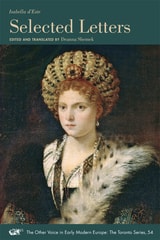
Selected Letters
Isabella d’Este
Iter Press, 2017
Isabella d’Este (1474–1539), daughter of the Este dukes of Ferrara and wife of Marchese Francesco II Gonzaga of Mantua, co-regent of the Gonzaga state, art collector, musician, diplomat, dynastic mother, traveler, reader, gardener, fashion innovator, and consummate politician, was also, as this volume attests, a prolific letter writer with a highly developed epistolary network. Presented here for the first time in any language is a representative selection from over 16,000 letters sent by Isabella to addressees across a wide social spectrum. Together, they paint a nuanced and colorful portrait of a brilliant and influential female protagonist of early modern European society.
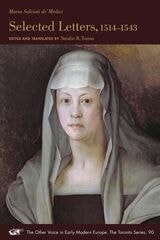
Selected Letters, 1514-1543
Maria Salviati de’ Medici
Iter Press, 2022
In recent years, there has been an upsurge of interest in Maria Salviati de’ Medici, specifically, in her role in Medici governance and her relationships with other members of the Medici court. Maria Salviati’s surviving correspondence documents a life spent close to the centers of Medici power in Florence and Rome, giving witness to its failures, resurrection, and eventual triumph. Presented here for the first time in English, this book is a representative sample of Maria’s surviving letters that document her remarkable life through a tumultuous period of Italian Renaissance history. While she earned the exasperation of some, she gained the respect of many more. Maria ended her life as an influential dowager, powerful intercessor for local Tuscans of all strata, and wise elder in Duke Cosimo I’s court. The first critical, analytical, biographical work on Maria Salviati de’ Medici’s life and letter-writing in English.
Sephardi Family Life in the Early Modern Diaspora
Edited by Julia R. Lieberman
Brandeis University Press, 2010
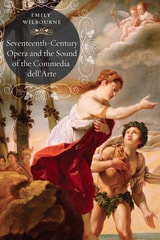
Seventeenth-Century Opera and the Sound of the Commedia dell’Arte
Emily Wilbourne
University of Chicago Press, 2016
Wilbourne considers a series of case studies structured around the most important and widely explored operas of the period: Monteverdi’s lost L’Arianna, as well as his Il Ritorno d’Ulisse and L’incoronazione di Poppea; Mazzochi and Marazzoli’s L’Egisto, ovvero Chi soffre speri; and Cavalli’s L’Ormindo and L’Artemisia. As she demonstrates, the sound-in-performance aspect of commedia dell’arte theater—specifically, the use of dialect and verbal play—produced an audience that was accustomed to listening to sonic content rather than simply the literal meaning of spoken words. This, Wilbourne suggests, shaped the musical vocabularies of early opera and facilitated a musicalization of Italian theater.
Highlighting productive ties between the two worlds, from the audiences and venues to the actors and singers, this work brilliantly shows how the sound of commedia performance ultimately underwrote the success of opera as a genre.
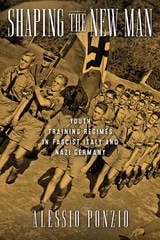
Shaping the New Man
Youth Training Regimes in Fascist Italy and Nazi GermanyAlessio Ponzio
University of Wisconsin Press, 2017
Ponzio shows how the Italian Fascists' pedagogical practices influenced the origin and evolution of the Hitler Youth. He dissects similarities and differences in the training processes of the youth leaders of the Opera Nazionale Balilla, Gioventù Italiana del Littorio, and Hitlerjugend. And, he explores the transnational institutional interactions and mutual cooperation that flourished between Mussolini's and Hitler's youth organizations in the 1930s and 1940s.

Sheer Misery
Soldiers in Battle in WWIIMary Louise Roberts
University of Chicago Press, 2021
Sheer Misery trains a humane and unsparing eye on the corporeal experiences of the soldiers who fought in Belgium, France, and Italy during the last two years of the war. In the horrendously unhygienic and often lethal conditions of the front line, their bodies broke down, stubbornly declaring their needs for warmth, rest, and good nutrition. Feet became too swollen to march, fingers too frozen to pull triggers; stomachs cramped, and diarrhea stained underwear and pants. Turning away from the accounts of high-level military strategy that dominate many WWII chronicles, acclaimed historian Mary Louise Roberts instead relies on diaries and letters to bring to life visceral sense memories like the moans of the “screaming meemies,” the acrid smell of cordite, and the shockingly mundane sight of rotting corpses. As Roberts writes, “For soldiers who fought, the war was above all about their bodies.”
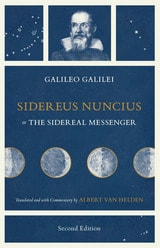
Sidereus Nuncius, or The Sidereal Messenger
Galileo Galilei
University of Chicago Press, 2015
Albert Van Helden’s beautifully rendered and eminently readable translation is based on the Venice 1610 edition’s original Latin text. An introduction, conclusion, and copious notes place the book in its historical and intellectual context, and a new preface, written by Van Helden, highlights recent discoveries in the field, including the detection of a forged copy of Sidereus Nuncius, and new understandings about the political complexities of Galileo’s work.
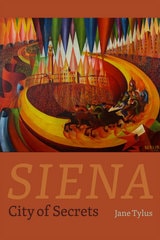
Siena
City of SecretsJane Tylus
University of Chicago Press, 2015
As Tylus leads us through the city, she shares her passion for Siena in novelistic prose, while never losing sight of the historical complexities that have made Siena one of the most fascinating and beautiful towns in Europe. Today, Siena can appear on the surface standoffish and old-fashioned, especially when compared to its larger, flashier cousins Rome and Florence. But first impressions wear away as we learn from Tylus that Siena was an innovator among the cities of Italy: the first to legislate the building and maintenance of its streets, the first to publicly fund its university, the first to institute a municipal bank, and even the first to ban automobile traffic from its city center.
We learn about Siena’s great artistic and architectural past, hidden behind centuries of painting and rebuilding, and about the distinctive characters of its different neighborhoods, exemplified in the Palio, the highly competitive horserace that takes place twice a year in the city’s main piazza and that serves as both a dividing and a uniting force for the Sienese. Throughout we are guided by the assured voice of a seasoned scholar with a gift for spinning a good story and an eye for the telling detail, whether we are traveling Siena’s modern highways, exploring its underground tunnels, tracking the city’s financial history, or celebrating giants of painting like Simone Martini or giants of the arena, Siena’s former Serie A soccer team.
A practical and engaging guide for tourists and armchair travelers alike, Siena is a testament to the powers of community and resilience in a place that is not quite as timeless and serene as it may at first appear.
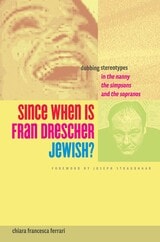
Since When Is Fran Drescher Jewish?
Dubbing Stereotypes in The Nanny, The Simpsons, and The SopranosBy Chiara Francesca Ferrari
University of Texas Press, 2010
"Since when is Fran Drescher Jewish?" This was Chiara Francesca Ferrari's reaction when she learned that Drescher's character on the television sitcom The Nanny was meant to be a portrayal of a stereotypical Jewish-American princess. Ferrari had only seen the Italian version of the show, in which the protagonist was dubbed into an exotic, eccentric Italian-American nanny. Since When Is Fran Drescher Jewish? explores this "ventriloquism" as not only a textual and cultural transfer between languages but also as an industrial practice that helps the media industry foster identification among varying audiences around the globe.
At the heart of this study is an in-depth exploration of three shows that moved from global to local, mapping stereotypes from both sides of the Atlantic in the process. Presented in Italy, for example, Groundskeeper Willie from The Simpsons is no longer a belligerent, alcoholic Scotsman but instead easily becomes a primitive figure from Sardinia. Ironically, The Sopranos—a show built around Italian-Americans—was carefully re-positioned by Italian TV executives, who erased the word "mafia" and all regional references to Sicily. The result of Ferrari's three case studies is evidence that "otherness" transcends translation, as the stereotypes produced by the American entertainment industry are simply replaced by other stereotypes in foreign markets. As American television studios continue to attempt to increase earnings by licensing their shows abroad, Since When Is Fran Drescher Jewish? illuminates the significant issues of identity raised by this ever-growing marketplace, along with the intriguing messages that lie in the larger realm of audiovisual cultural exchange.
Singing Sappho
Improvisation and Authority in Nineteenth-Century Italian OperaMelina Esse
University of Chicago Press, 2021
Sonnets for Michelangelo
A Bilingual EditionVittoria Colonna
University of Chicago Press, 2005
This book presents for the very first time a body of Colonna's verse that reveals much about her poetic aims and outlook, while also casting new light on one of the most famous friendships of the age. Sonnets for Michelangelo, originally presented in manuscript form to her close friend Michelangelo Buonarroti as a personal gift, illustrates the striking beauty and originality of Colonna's mature lyric voice and distinguishes her as a poetic innovator who would be widely imitated by female writers in Italy and Europe in the sixteenth century. After three centuries of relative neglect, this new edition promises to restore Colonna to her rightful place at the forefront of female cultural production in the Renaissance.
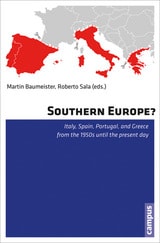
Southern Europe?
Italy, Spain, Portugal, and Greece from the 1950s Until the Present DayEdited by Martin Baumeister and Roberto Sala
Campus Verlag, 2015
Now, old inequalities long believed to be things of the past have resurfaced, and a new debt crisis appears to be splitting the continent apart along historic lines. This book raises the important question of whether studying the geopolitics and social history of southern Europe might be a valuable analytical tool for understanding these contemporary financial catastrophes.

Soviet Signoras
Personal and Collective Transformations in Eastern European MigrationMartina Cvajner
University of Chicago Press, 2019
Cvajner details the personal and collective changes brought about by the experience of migration for these women: from the first hours arriving in a new country with no friends, relatives, or existing support networks, to later remaking themselves for their new environment. In response to their traumatic displacement, the women of Soviet Signoras—nearly all of whom found work in their new Western homes as elder care givers—refashioned themselves in highly sexualized, materialistic, and intentionally conspicuous ways. Cvajner’s focus on overt sexuality and materialism is far from sensationalist, though. By zeroing in on these elements of personal identity, she reveals previously unexplored sides of the social psychology of migration, coloring our contemporary discussion with complex shades of humanity.
Spirituality, Gender, and the Self in Renaissance Italy
Angela Merici and the Company of St. Ursula (1474–1540)Querciolo Mazzonis
Catholic University of America Press, 2007

St. Augustine's Bones
A MicrohistoryHarold Samuel Stone
University of Massachusetts Press, 2002
In 1695, workers in Pavia, Italy, chanced upon a collection of bones in the crypt of the Cathedral of San Pietro in Ciel d'Oro. The workers later testified that they had seen the name of St. Augustine written in charcoal on the surface of the casket they had uncovered. Yet by the time of the official inquest, all traces of the writing had disappeared.
Rich with new insights into urban literacy and conceptions of reading, this book explores the controversy that ensued over the alleged discovery of Augustine's bones. Manuscripts, broadsides, pamphlets—even whole books—were devoted to proving or disproving the authenticity of the remains. Although these works were addressed to members of the clergy, they were also intended for the general reading public in Pavia, Milan, and Venice. Their dissemination helped create a temporary public sphere in which the merits of the case were examined in a spirit of free debate.
A reexamination of the dispute over St. Augustine's bones illuminates aspects of Catholic spirituality in Northern Italy during the late seventeenth and early eighteenth centuries. It also reveals the different ways in which Catholic scholars, local religious leaders, and the papal administration sought to influence and direct local popular religious belief and practices. Although the controversy was officially resolved by the papacy in 1728, the debate over the relics of San Pietro continued into the twentieth century.
By combining methods developed in the burgeoning field of the history of the book with the tools of cultural analysis, Harold Samuel Stone not only recovers the stories surrounding St. Augustine's bones, but also reconstructs the mental world of those who read or heard them.
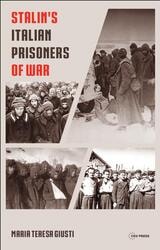
Stalin's Italian Prisoners of War
Maria Teresa Giusti
Central European University Press, 2021

States of Grace
Senegalese in Italy and the New European ImmigrationDonald Martin Carter
University of Minnesota Press, 1997
States of Grace was first published in 1997. Minnesota Archive Editions uses digital technology to make long-unavailable books once again accessible, and are published unaltered from the original University of Minnesota Press editions.
Leaving their depleted fields for better prospects, Senegalese immigrants have made their way to Italy in significant numbers. What this migration means, in the context of both the migratory traditions and conditions of Africa and the history and future of the European nation-state, is the subject of this timely and ambitious book.
Focusing on Turin, the northern Italian point of entry for so many Senegalese, States of Grace chronicles the arrival and formation of a transnational African Islamic community in a largely Catholic Western European country, one that did not have immigrant legislation until 1991. With no colonial relation to Italy, the Senegalese represent the vanguard of population movements expanding outside of the arch of former colonial powers.
Donald Martin Carter locates the Senegalese migration in the context of past African internal and international migration and of present crises in West African agriculture. He also shows how the Senegalese migration, constituting a "phenomenon" and catalyzing new immigration restrictions among European states, calls into question the European interstate system, the future of the nation-state, and the nature of its relationship with non-European states.
Throughout Europe, protectionist immigration policies are often crafted in chauvinist and racist tones in which "migrants" is a euphemism for blacks, Arabs, and Asians. States of Grace uses Senegalese migration to demonstrate that racial conceptions are crucial to understanding the classifications of non-national "outside" and internal "other." The book is a bracing encounter with the ever-increasing cultural and ethnic heterogeneity that is the new and pressing reality of European society.
Donald Martin Carter is visiting assistant professor of anthropology at Johns Hopkins University.

Stories and Histories of Islamic Art in Italy
Supplements to the Memoirs of the American Academy in RomeEdited by Silvia Armando
University of Michigan Press, 2027
In the past decades, scholarship on Islamic art has challenged the parameters of the discipline, but in the process, the Italian context has often been overlooked. Gathering the voices of prominent international specialists, the book fills an important gap by presenting new research on topics ranging from the medieval to modern periods. Contributors investigate how Islamic artifacts were collected, categorized, and studied; examine Orientalism(s) in Italy and beyond; reconstruct the genealogies of scholars who helped found and develop the academic discipline and museum practices; and offer new scholarship on ceramics, textiles, metalwork, rock crystals, numismatics, and archaeology. The volume reveals the interchange between romantic reveries and more “scientific” Islamic art studies. Following the model of counter-Orientalism proposed by Karla Mallette, it raises questions of identity, otherness, and self-representation within a cultural and geographical context where the Islamic “component” was—and is—perceived either as exotic or integral to Italian identity.
With over 100 illustrations, Stories and Histories of Islamic Art in Italy explores how amateurs, artists, and intellectuals perceived of, depicted, and wrote about the Islamic world, offering new ways to examine Italy’s Islamic past.
Storming Heaven
Class Composition and Struggle in Italian Autonomist MarxismSteve Wright
Pluto Press, 2017
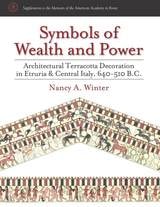
Symbols of Wealth and Power
Architectural Terracotta Decoration in Etruria and Central Italy, 640-510 B.C.Nancy A. Winter
University of Michigan Press, 2009
Although initially intended for the innovative, if prosaic, purpose of providing waterproof and fireproof cover for earlier thatch-roofed homes, fired clay tiles, in seventh- and sixth-century Etruria and Central Italy, combined with Etruscan love of adornment to create exceptional domestic and religious building decoration. Featuring statues and figured friezes of humans, animals, and mythological figures intended to convey the status of the owner or dedicator, the surviving terracotta roofs provide important insights into the architectural history of Etruria. With Symbols of Wealth and Power, Nancy A. Winter has provided a definitive overview of the evidence for these roofing elements that will enhance our knowledge of Etruscan---and more broadly, ancient---architecture.
Nancy A. Winter is an archaeologist and former librarian of the American School of Classical Studies, Athens. She is the author of Greek Architectural Terracottas: From the Prehistoric to the End of the Archaic Period (1993).
Role Models in the Roman World: Identity and Assimilation, edited by Sinclair Bell and Inge Lyse Hansen
The Maritime World of Ancient Rome, edited by Robert L. Hohlfelder
Cosa: The Black-Glaze Pottery 2, by Ann Reynolds Scott
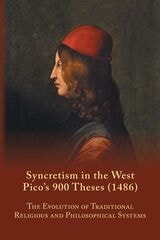
Syncretism in the West
Pico's 900 Theses (1486) With Text, Translation, and CommentaryEdited by S. A. Farmer
Arizona Center for Medieval and Renaissance Studies, 2016
This is the 2016 paperback printing of the 2008 edition of the popular text, translation, and commentary by S. A. Farmer. (The 2008 edition was a revised edition of the 1998 original publication).
Published by ACMRS (Arizona Center for Medieval and Renaissance Studies) in Tempe, Arizona as part of the MRTS (Medieval and Renaissance Texts and Studies) Series, this book -- previously available only in hardcover and otherwise out-of-print since 2014 -- is now available in its entirety in paperback format.
Syracuse
Sicily's City of StoriesJoachim Sartorius
Haus Publishing, 2026
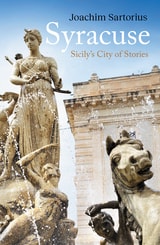
Twenty-five hundred years ago, the city of Syracuse on the eastern coast of Sicily was, for the Ancient Greeks, one of the centers of the classical world. It was in Syracuse that Aeschylus premiered his plays, and to Syracuse that Plato would visit from Athens, where the tyrant Dionysius bought Euripides's lyre at auction, and the languishing nymph Arethusa hid in the papyrus grove.
Living in the city, the poet Joachim Sartorius learned that this history and myth are still present today. At Sartorius's side, we walk with nymphs and cyclops through the old town of Ortigia and meet the people of the city: its notables, police officers, artists, and barbers.
Unraveling the depths of Sicilian history and bringing the juxtaposition, superimposition, and commingling of cultures, styles, and attitudes to life, Sartorius shows a city of ancient luminosity, bringing us, through the baroque, to the contemporary world.