Results by title
301 books match the query 'Knowledge' and 19 start with s
Sacrifice Your Love
Psychoanalysis, Historicism, ChaucerL.O. Aranye Fradenburg
University of Minnesota Press, 2002
A long-awaited reevaluation of Chaucer through the lens of sacrifice by a major figure in medieval studies
Historicism and its discontents have long been central to the work of Louise Fradenburg, one of the world’s most original and provocative literary medievalists. Sacrifice Your Love brings this interest to bear on Chaucer’s writing and his world, rethought in light of a theory of sacrifice and its part in cultural production. Fradenburg writes the "history of the signifier"—a way of reading change in the symbolic order—and its role in making sacrifice enjoyable.
Sacrifice Your Love develops the idea that sacrifice is a mode of enjoyment—that our willingness to sacrifice our desire is actually a way of pursuing it. Fradenburg considers the implications of this idea for various problems important in medieval studies today—how to understand the religiosity of cultural forms, particularly chivalry, in the later Middle Ages and how to understand the ethics of Chaucer’s famously nondidactic poetry—as well as in other fields of inquiry. A major rethinking of Chaucer, Sacrifice Your Love works in depth as well as across a broad range of topics from medievalism to psychoanalysis, advancing both the theory and practice of a new kind of historicist approach.
Sanity Plea
Schizophrenia in the Novels of Kurt VonnegutLawrence R. Broer
University of Alabama Press, 1994
Sardonic Smile
Nonverbal Behavior in Homeric EpicDonald Lateiner
University of Michigan Press, 1998
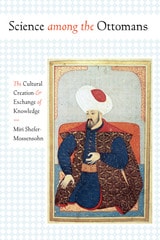
Science among the Ottomans
The Cultural Creation and Exchange of KnowledgeBy Miri Shefer-Mossensohn
University of Texas Press, 2015
Scholars have long thought that, following the Muslim Golden Age of the medieval era, the Ottoman Empire grew culturally and technologically isolated, losing interest in innovation and placing the empire on a path toward stagnation and decline. Science among the Ottomans challenges this widely accepted Western image of the nineteenth- and early twentieth-century Ottomans as backward and impoverished.
In the first book on this topic in English in over sixty years, Miri Shefer-Mossensohn contends that Ottoman society and culture created a fertile environment that fostered diverse scientific activity. She demonstrates that the Ottomans excelled in adapting the inventions of others to their own needs and improving them. For example, in 1877, the Ottoman Empire boasted the seventh-longest electric telegraph system in the world; indeed, the Ottomans were among the era’s most advanced nations with regard to modern communication infrastructure. To substantiate her claims about science in the empire, Shefer-Mossensohn studies patterns of learning; state involvement in technological activities; and Turkish- and Arabic-speaking Ottomans who produced, consumed, and altered scientific practices. The results reveal Ottoman participation in science to have been a dynamic force that helped sustain the six-hundred-year empire.
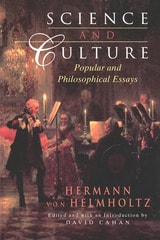
Science and Culture
Popular and Philosophical EssaysHermann von Helmholtz
University of Chicago Press, 1995
From the 1850s to the 1890s, Helmholtz delivered more than two dozen popular lectures, seeking to educate the public and to enlighten the leaders of European society and governments about the potential benefits of science and technology to a developing modern society. David Cahan has selected fifteen of these lectures, which reflect the wide range of topics of crucial importance to Helmholtz and his audiences. Among the subjects discussed are the origins of the planetary system, the relation of natural science to science in general, the aims and progress of the physical sciences, the problems of perception, and academic freedom in German universities. This collection also includes Helmholtz's fascinating lectures on the relation of optics to painting and the physiological causes of harmony in music, which provide insight into the relations between science and aesthetics.
Science and Culture makes available again Helmholtz's eloquent arguments on the usefulness, benefits, and, intellectual pleasures of understanding the natural world. With Cahan's Introduction to set these essays in their broader context, this collection makes an important contribution to the philosophical and intellectual history of Europe at a time when science played an increasingly significant role in social, economic, and cultural life.
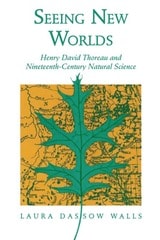
Seeing New Worlds
Henry David Thoreau and Nineteenth-Century Natural ScienceLaura Dassow Walls
University of Wisconsin Press, 1995
Thoreau was a poet, a naturalist, a major American writer. Was he also a scientist? He was, Laura Dassow Walls suggests. Her book, the first to consider Thoreau as a serious and committed scientist, will change the way we understand his accomplishment and the place of science in American culture.
Walls reveals that the scientific texts of Thoreau’s day deeply influenced his best work, from Walden to the Journal to the late natural history essays. Here we see how, just when literature and science were splitting into the “two cultures” we know now, Thoreau attempted to heal the growing rift. Walls shows how his commitment to Alexander von Humboldt’s scientific approach resulted in not only his “marriage” of poetry and science but also his distinctively patterned nature studies. In the first critical study of his “The Dispersion of Seeds” since its publication in 1993, she exposes evidence that Thoreau was using Darwinian modes of reasoning years before the appearance of Origin of Species.
This book offers a powerful argument against the critical tradition that opposes a dry, mechanistic science to a warm, “organic” Romanticism. Instead, Thoreau’s experience reveals the complex interaction between Romanticism and the dynamic, law-seeking science of its day. Drawing on recent work in the theory and philosophy of science as well as literary history and theory, Seeing New Worlds bridges today’s “two cultures” in hopes of stimulating a fuller consideration of representations of nature.
Shakespeare and the Law
A Conversation among Disciplines and ProfessionsEdited by Bradin Cormack, Martha C. Nussbaum, and Richard Strier
University of Chicago Press, 2013
The book’s opening essays offer perspectives on law and literature that emphasize both the continuities and contrasts between the two fields. The second section considers Shakespeare’s awareness of common law thinking and common law practice, while the third inquires into Shakespeare’s general attitudes toward legal systems. The fourth part of the book looks at how law enters into conversation with issues of politics and community, whether in the plays, in Shakespeare’s world, or in our own world. Finally, a colloquy among Supreme Court Justice Stephen Breyer, Judge Richard Posner, Martha C. Nussbaum, and Richard Strier covers everything from the ghost in Hamlet to the nature of judicial discretion.

Shakespeare the Actor and the Purposes of Playing
Meredith Anne Skura
University of Chicago Press, 1993
Despite the obvious differences between our theater and Shakespeare's, sixteenth-century testimony suggests that the experience of acting has not changed much over the centuries. Beginning with a psychoanalytically informed account of acting today, Skura shows how this intense and ambivalent experience appears not only in literal references to acting in Shakespearean drama but also in recurring narrative concerns, details of language, and dramatic strategies used to engage the audience. Looking at the plays in the context of both public and private worlds outside the theater, Skura rereads the canon to identify new configurations in the plays and new ways of understanding theatrical self-consciousness in Renaissance England. Rich in theatrical, psychoanalytic, biographical, and historical insight, this book will be invaluable to students of Shakespeare and instructive to all readers interested in the dynamics of performance.

Shakespeare's Lyric Stage
Myth, Music, and Poetry in the Last PlaysSeth Lerer
University of Chicago Press, 2018
As Seth Lerer shows in this pioneering book, Shakespeare’s late plays invite us to contemplate that very question, offering up lyric as a displaced and sometimes desperate antidote to situations of duress or powerlessness. Lerer argues that the theme of lyric misalignment running throughout The Tempest, The Winter’s Tale, Henry VIII, and Cymbeline serves a political purpose, a last-ditch effort at transformation for characters and audiences who had lived through witch-hunting, plague, regime change, political conspiracies, and public executions.
A deep dive into the relationship between aesthetics and politics, this book also explores what Shakespearean lyric is able to recuperate for these “victims of history” by virtue of its disjointed utterances. To this end, Lerer establishes the concept of mythic lyricism: an estranging use of songs and poetry that functions to recreate the past as present, to empower the mythic dead, and to restore a bit of magic to the commonplaces and commodities of Jacobean England. Reading against the devotion to form and prosody common in Shakespeare scholarship, Lerer’s account of lyric utterance’s vexed role in his late works offers new ways to understand generational distance and cultural change throughout the playwright’s oeuvre.
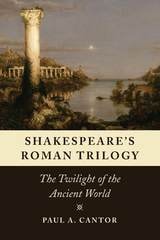
Shakespeare's Roman Trilogy
The Twilight of the Ancient WorldPaul A. Cantor
University of Chicago Press, 2017
Cantor analyzes the way Shakespeare chronicles the rise and fall of the Roman Republic and the emergence of the Roman Empire. The transformation of the ancient city into a cosmopolitan empire marks the end of the era of civic virtue in antiquity, but it also opens up new spiritual possibilities that Shakespeare correlates with the rise of Christianity and thus the first stirrings of the medieval and the modern worlds.
More broadly, Cantor places Shakespeare’s plays in a long tradition of philosophical speculation about Rome, with special emphasis on Machiavelli and Nietzsche, two thinkers who provide important clues on how to read Shakespeare’s works. In a pathbreaking chapter, he undertakes the first systematic comparison of Shakespeare and Nietzsche on Rome, exploring their central point of contention: Did Christianity corrupt the Roman Empire or was the corruption of the Empire the precondition of the rise of Christianity? Bringing Shakespeare into dialogue with other major thinkers about Rome, Shakespeare’s Roman Trilogy reveals the true profundity of the Roman Plays.
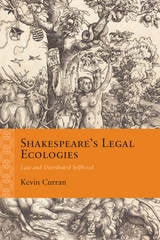
Shakespeare’s Legal Ecologies
Law and Distributed SelfhoodKevin Curran
Northwestern University Press, 2017
At the center of the book is Shakespeare’s fascination with questions that are fundamental to both law and philosophy: What are the sources of agency? What counts as a person? For whom am I responsible, and how far does that responsibility extend? What is truly mine? Curran guides readers through Shakespeare’s responses to these questions, paying careful attention to both historical and intellectual contexts.
The result is a book that advances a new theory of Shakespeare’s imaginative relationship to law and an original account of law’s role in the ethical work of his plays and sonnets. Readers interested in Shakespeare, theater and philosophy, law, and the history of ideas will find Shakespeare’s Legal Ecologies to be an essential resource.
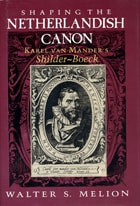
Shaping the Netherlandish Canon
Karel Van Mander's Schilder-BoeckWalter S. Melion
University of Chicago Press, 1992
of Italian art, Karel van Mander's Schilder-Boeck (or
Book on Picturing) has long been recognized for its critical
and historical influence—and yet, until now, no
comprehensive account of the book's conception, aims, and
impact has been available. In this in-depth analysis of the
content and context of Van Mander's work, Walter S. Melion
reveals the Schilder-Boeck's central importance to an
understanding of northern Renaissance and Baroque art.
By interpreting the terminology employed in the
Schilder-Boeck, Melion establishes the text's
relationship to past and contemporary art theory. Van Mander
is seen here developing his critical categories and then
applying them to Ancient, Italian, and Netherlandish artists
in order to mark changes within a culture and to characterize
excellence for each region. Thus Melion demonstrates how Van
Mander revised both the structure and critical language of
Vasari's Lives to refute the Italian's claims for the
superiority of the Tuscan style, and to clarify northern
artistic traditions and the concerns of Netherlandish
artists. A much needed corrective to the view that Dutch art
of the period was lacking in theory, Melion's work offers a
compelling account of a sixteenth- and seventeenth-century
theoretical and critical perspective and shows how this
perspective suggests a rereading of northern art.
Walter S. Melion is assistant professor of art history
at The Johns Hopkins University.
Society and Natural Resources
A Summary of KnowledgeMichael J. Manfredo
University Press of Colorado, 2023
This book is a reprint of the original edited volume first published in 2004. In thirty-one chapters, the edited volume documents the exciting period of the emerging interdisciplinary field of society and natural resource scholarship from 1986 to 2004. It was published in part to commemorate the tenth International Symposium on Society and Resources Management (ISSRM) in Keystone, Colorado. ISSRM has brought together natural resource professionals, social science researchers, non-government agencies, private sector organizations, and students on a biennial basis since 1986. The book presents the most significant contributions to the symposia hosted by Pennsylvania State University, Colorado State University, University of Wisconsin-Madison, Texas A&M University, University of Illinois at Urbana-Champaign, Oregon State University, University of Missouri at Columbia, Western Washington University, and Indiana University. The first International ISSRM was held in Belize, Australia, and Italy and started a fruitful cross-continental exchange on society and natural resources showcased in this book.
Contributors: Jim Absher, Kathleen Andereck, Jill Belsky, John Bergstrom, Carter Betz, Alan Bright, Perry J. Brown, Tommy Brown, Mark Brunson, Rabel Burdge, Fred Buttel, KristinCheek, Chia-Kuen Cheng, Tony Cheng, David Cole, H Ken Cordell, Terry Daniel, Steven Daniels, Dan Decker, Robert Ditton, John Dwyer, Alan Ewert, Don Field, Myron Floyd, R Bruce Gill, Alan Graefe, Gary Green, Doug Jackson-Smith, Rebecca Johnson, Richard Knopf, Rick Krannich, Jessica Leahy, Xinran You Lehto, John Loomas, Al Luloff, Mike Manfredo, Robert Manning, Sarah McCaffrey, Stephen McCool, Yoon-Jung Oh, Joseph O'Leary, Carol Saunders, Steve Selin, Bruce Shindler, George Stankey, Bill Stewart, Vicky Sturtevant, Jonathan Taylor, Suzanne Taylor, Tara Teel, Brijesh Thapa, Gene Theodori, Carla Koons Trentelman, Jerry Vaske, Joanne Vining, Doug Whittaker, Dan Williams

South by Southwest
Katherine Anne Porter and the Burden of Texas HistoryJanis P. Stout
University of Alabama Press, 2013
An interdisciplinary study of Katherine Anne Porter’s troubled relationship to her Texas origins and southern roots, South by Southwest offers a fresh look at this ever-relevant author.
Today, more than thirty years after her death, Katherine Anne Porter remains a fascinating figure. Critics and biographers have portrayed her as a strikingly glamorous woman whose photographs appeared in society magazines. They have emphasized, of course, her writing— particularly the novel Ship of Fools, which was made into an award-winning film, and her collection Pale Horse, Pale Rider, which cemented her role as a significant and original literary modernist. They have highlighted her dramatic, sad, and fragmented personal life. Few, however, have addressed her uneasy relationship to her childhood in rural Texas.
Janis P. Stout argues that throughout Porter’s life she remained preoccupied with the twin conundrums of how she felt about being a woman and how she felt about her Texas origins. Her construction of herself as a beautiful but unhappy southerner sprung from a plantation aristocracy of reduced fortunes meant she construed Texas as the Old South. The Texas Porter knew and re-created in her fiction had been settled by southerners like her grandparents, who brought slaves with them. As she wrote of this Texas, she also enhanced and mythologized it, exaggerating its beauty, fertility, and gracious ways as much as the disaffection that drove her to leave. Her feelings toward Texas ran to both extremes, and she was never able to reconcile them.
Stout examines the author and her works within the historical and cultural context from which she emerged. In particular, Stout emphasizes four main themes in the history of Texas that she believes are of the greatest importance in understanding Porter: its geography and border location (expressed in Porter’s lifelong fascination with marginality, indeterminacy, and escape); its violence (the brutality of her first marriage as well as the lawlessness that pervaded her hometown); its racism (lynchings were prevalent throughout her upbringing); and its marginalization of women (Stout draws a connection between Porter’s references to the burning sun and oppressive heat of Texas and her life with her first husband).
Southern Epistemologies
Knowledge, Wisdom, and Understanding in the Andes and Western AmazonEdited by H. Clark Barrett, Michael L. Cepek, Pablo Quintanilla, Emanuele Fabiano, and Edouard Machery
HAU, 2026
What does it mean to know, and how is knowledge practiced? How can Indigenous perspectives challenge conventional concepts of knowledge in the Global North? Drawing on Indigenous epistemologies from the Andes and Western Amazon, Southern Epistemologies investigates how knowledge, wisdom, and understanding are shaped by local cultures, languages, bodies, and environments.
Bringing together linguists, philosophers, anthropologists, and Indigenous knowledge holders, the volume examines the dynamic interactions between culture, language, and place, showing how the unique linguistic histories and worldviews of Andean and Amazonian societies inform distinct ways of knowing. By interpreting these perspectives on their own terms, the book offers fresh insights into the plurality and diversity of human knowledge.
As the first volume specifically focused on Indigenous South American epistemologies, Southern Epistemologies foregrounds Indigenous knowledge systems and science while fostering dialogue with academic traditions. By opening new interdisciplinary and cross-cultural conversations, this groundbreaking volume challenges conventional notions of knowledge and illuminates how engagement with Indigenous perspectives can expand and enrich our understanding of what it truly means to know.
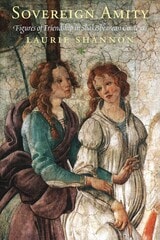
Sovereign Amity
Figures of Friendship in Shakespearean ContextsLaurie Shannon
University of Chicago Press, 2001
Shannon demonstrates that the likeness of sex and station urged in friendship enabled a civic parity not present in other social forms. Early modern friendship was nothing less than a utopian political discourse. It preceded the advent of liberal thought, and it made its case in the terms of gender, eroticism, counsel, and kingship. To show the power of friendship in early modernity, Shannon ranges widely among translations of classical essays; the works of Elizabeth I, Montaigne, Donne, and Bacon; and popular literature, to focus finally on the plays of Shakespeare. Her study will interest scholars of literature, history, gender, sexuality, and political thought, and anyone interested in a general account of the English Renaissance.
Steinbeck and the Environment
Interdisciplinary ApproachesSusan F. Beegel
University of Alabama Press, 2007
This interdisciplinary collection of essays explores in-depth a topic previously neglected by scholars: John Steinbeck's early continuing preoccupation with ecology and marine biology and the effect of that interest on his writings. Written by scholars from various disciplines, the essays offer a dynamic contribution to the study of John Steinbeck by considering his writings from an environmental perspective. They reveal Steinbeck as a prophet that was ahead of his time and supremely relevant to our own.
Strange Science
Investigating the Limits of Knowledge in the Victorian AgeEdited by Lara Karpenko and Shalyn Claggett
University of Michigan Press, 2017
Synthesizing Hope
Matter, Knowledge, and Place in South African Drug DiscoveryAnne Pollock
University of Chicago Press, 2019
Consideration of this case exposes the limitations of global health frameworks that implicitly posit rich countries as the only sites of knowledge production. Analysis of iThemba identifies the problems inherent in global north/south divides at the same time as it highlights what is at stake in who makes knowledge and where. It also provides a concrete example for consideration of the contexts and practices of postcolonial science, its constraints, and its promise.
Synthesizing Hope explores the many legacies that create conditions of possibility for South African drug discovery, especially the specific form of settler colonialism characterized by apartheid and resource extraction. Paying attention to the infrastructures and laboratory processes of drug discovery underscores the materiality of pharmaceuticals from the perspective of their makers, and tracing the intellectual and material infrastructures of South African drug discovery contributes new insights about larger social, political, and economic orders.