Results by title
1993 books match the query 'Latin America' and 136 start with s
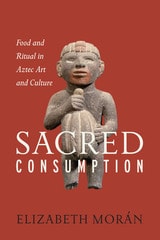
Sacred Consumption
Food and Ritual in Aztec Art and CultureBy Elizabeth Morán
University of Texas Press, 2016
Making a foundational contribution to Mesoamerican studies, this book explores Aztec painted manuscripts and sculptures, as well as indigenous and colonial Spanish texts, to offer the first integrated study of food and ritual in Aztec art.
Aztec painted manuscripts and sculptural works, as well as indigenous and Spanish sixteenth-century texts, were filled with images of foodstuffs and food processing and consumption. Both gods and humans were depicted feasting, and food and eating clearly played a pervasive, integral role in Aztec rituals. Basic foods were transformed into sacred elements within particular rituals, while food in turn gave meaning to the ritual performance.
This pioneering book offers the first integrated study of food and ritual in Aztec art. Elizabeth Morán asserts that while feasting and consumption are often seen as a secondary aspect of ritual performance, a close examination of images of food rites in Aztec ceremonies demonstrates that the presence—or, in some cases, the absence—of food in the rituals gave them significance. She traces the ritual use of food from the beginning of Aztec mythic history through contact with Europeans, demonstrating how food and ritual activity, the everyday and the sacred, blended in ceremonies that ranged from observances of births, marriages, and deaths to sacrificial offerings of human hearts and blood to feed the gods and maintain the cosmic order. Morán also briefly considers continuities in the use of pre-Hispanic foods in the daily life and ritual practices of contemporary Mexico. Bringing together two domains that have previously been studied in isolation, Sacred Consumption promises to be a foundational work in Mesoamerican studies.
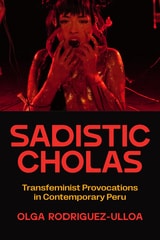
Sadistic Cholas
Transfeminist Provocations in Contemporary PeruOlga Rodriguez-Ulloa
University of Texas Press, 2026
Analyzing how Peruvian feminist art and activism subverts and reclaims the chola stereotype to confront colonial and patriarchal institutions.
Indigenous Andean women have long been derided in Peru, spurned by colonial and then national elites as depraved cholas. Olga Rodriguez-Ulloa shows how contemporary artists and activists not only reclaim this term of abuse but also mobilize the stereotype of the angry and perverted chola to confront the cruelties of patriarchy, capitalism, and white supremacy.
Sadistic Cholas examines music, visual arts, literature, and grassroots organizing by self-identified cholas—in particular, Black women and trans and queer feminists. Under colonial domination, cholas were destined for sexual coercion, labor extraction, and reproductive exploitation. While exhuming historical traces of chola resistance, Rodriguez-Ulloa argues that this condition of oppression persisted through the internal war of the 1980s, when Marxist women at the forefront of the armed campaign were condemned as hypersexual deviants. Inspired by their leftist forebears, today’s artists experiment with an aesthetic of sadistic vengeance, configured as rightful self-defense. Yet, in spite of their violent imagery, activist cholas pursue nonviolent goals, promoting a commons of care incorporating people, animals, and the environment.
Salsa Consciente
Politics, Poetics, and Latinidad in the Meta-BarrioAndrés Espinoza Agurto
Michigan State University Press, 2021
Salt in the Sand
Memory, Violence, and the Nation-State in Chile, 1890 to the PresentLessie Jo Frazier
Duke University Press, 2007
Analyzing multiple memories of state violence, Frazier innovatively shapes social and cultural theory to interpret a range of sources, including local and national government archives, personal papers, popular literature and music, interviews, architectural and ceremonial commemorations, and her ethnographic observations of civic associations, women's and environmental groups, and human rights organizations. A masterful integration of extensive empirical research with sophisticated theoretical analysis, Salt in the Sand is a significant contribution to interdisciplinary scholarship on human rights, democratization, state formation, and national trauma and reconciliation.
Saltillo, 1770-1810
Town and Region in the Mexican NorthLeslie S. Offutt
University of Arizona Press, 2001
Samurai in the Land of the Gaucho
Transpacific Modernity and Nikkei Literature in ArgentinaKoichi Hagimoto
Vanderbilt University Press, 2023
In the early twentieth century, historical imaginings of Japan contributed to the Argentine vision of “transpacific modernity." Intellectuals such as Eduardo Wilde and Manuel Domecq García celebrated Japanese customs and traditions as important values that can be integrated into Argentine society. But a new generation of Nikkei or Japanese Argentines is rewriting this conventional narrative in the twenty-first century. Nikkei writers such as Maximiliano Matayoshi and Alejandra Kamiya are challenging the earlier, unapologetic view of Japan based on their own immigrant experiences.
Compared to the experience of political persecution against Japanese immigrants in Brazil and Peru, the Japanese in Argentina generally lived under a more agreeable sociopolitical climate. In order to understand the "positive" perception of Japan in Argentine history and literature, Samurai in the Land of the Gaucho turns to the current debate on race in Argentina, particularly as it relates to the discourse of whiteness. One of the central arguments is that Argentina's century-old interest in Japan represents a disguised method of (re)claiming its white, Western identity.
Through close readings of diverse genres (travel writing, essay, novel, short story, and film) Samurai in the Land of the Gaucho yields a multi-layered analysis in order to underline the role Japan has played in both defining and defying Argentine modernity from the twentieth century to the present.
San José de Gracia
Mexican Village in TransitionBy Luis González
University of Texas Press, 1974
The village of San José de Gracia is not mentioned in any history of Mexico, nor is it referred to in any of the annals of the state of Michoacán. It is not to be found at all on most maps, and almost none show its correct location. It is an unknown point in space, in time, and in the consciousness of the Mexican republic.
In Luis González's classic history of the world of San José, he turns his attention in every direction: toward what is lasting and what is ephemeral, everyday and unusual, material and spiritual. The story is, to some extent, the story of rural life anywhere, in any age; to some extent it is peculiar to the world of the peasant all through Mexico's history; and to some extent it can be said to be true only of San José.
The history of San José is also the history of the village as victim of the megalopolis, not only in Mexico but everywhere in our time. With the small community will be lost traditions and a sense of continuity that may prove irreplaceable and essential to human wellbeing. While Luis González does not suggest that he knows what the fate of San José will be, one feels that he knows all too well, and that his questions are only "How?" and "How soon?"
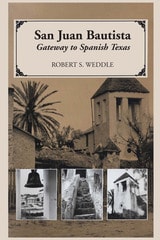
San Juan Bautista
Gateway to Spanish TexasBy Robert S. Weddle
University of Texas Press, 1968
Winner, Presidio La Bahia Award, Sons of the Republic of Texas, 1978
In their efforts to assert dominion over vast reaches of the (now U.S.) Southwest in the seventeenth century, the Spanish built a series of far-flung missions and presidios at strategic locations. One of the most important of these was San Juan Bautista del Río Grande, located at the present-day site of Guerrero in Coahuila, Mexico.
Despite its significance as the main entry point into Spanish Texas during the colonial period, San Juan Bautista was generally forgotten until the first publication of this book in 1968. Weddle's narrative is a fascinating chronicle of the many religious, military, colonial, and commerical expeditions that passed through San Juan and a valuable addition to knowledge of the Spanish borderlands. It won the Texas Institute of Letters Amon G. Carter Award for Best Southwest History in 1969.
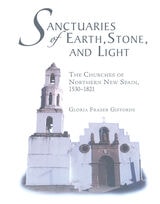
Sanctuaries of Earth, Stone, and Light
The Churches of Northern New Spain, 1530-1821Gloria Fraser Giffords
University of Arizona Press, 2007
Giffords has a remarkable eye for detail and for images both grand and diminutive. Because so many of the buildings she examines have been destroyed, she sleuthed through historical records in several countries, and she discovered that the architecture and material culture of northern New Spain reveal the influences of five continents. As she examines objects as large as churches or as small as ornamental ceramic tile she illuminates the sometimes subtle, sometimes striking influences of the religious, social, and artistic traditions of Europe (from the beginning of the Christian era through the nineteenth century), of the Muslim countries ringing the Mediterranean (from the seventh through the fifteenth centuries), and of Northern New Spain’s indigenous peoples (whose art influenced the designs of occupying Europeans).
Sanctuaries of Earth, Stone, and Light is a pathbreaking book, featuring 200 stunning photographs and over 300 illustrations ranging from ceremonial garments to detailed floor plans of the churches.
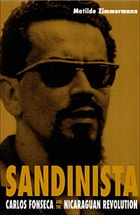
Sandinista
Carlos Fonseca and the Nicaraguan RevolutionMatilde Zimmermann
Duke University Press, 2000
Sandinista is the first English-language biography of Carlos Fonseca Amador, the legendary leader of the Sandinista National Liberation Front of Nicaragua (the FSLN) and the most important and influential figure of the post–1959 revolutionary generation in Latin America. Fonseca, killed in battle in 1976, was the undisputed intellectual and strategic leader of the FSLN. In a groundbreaking and fast-paced narrative that draws on a rich archive of previously unpublished Fonseca writings, Matilde Zimmermann sheds new light on central themes in his ideology as well as on internal disputes, ideological shifts, and personalities of the FSLN.
The first researcher ever to be allowed access to Fonseca’s unpublished writings (collected by the Institute for the Study of Sandinism in the early 1980s and now in the hands of the Nicaraguan Army), Zimmermann also obtained personal interviews with Fonseca’s friends, family members, fellow combatants, and political enemies. Unlike previous scholars, Zimmermann sees the Cuban revolution as the crucial turning point in Fonseca’s political evolution. Furthermore, while others have argued that he rejected Marxism in favor of a more pragmatic nationalism, Zimmermann shows how Fonseca’s political writings remained committed to both socialist revolution and national liberation from U.S. imperialism and followed the ideas of both Che Guevara and the earlier Nicaraguan leader Augusto César Sandino. She further argues that his philosophy embracing the experiences of the nation’s workers and peasants was central to the FSLN’s initial platform and charismatic appeal.
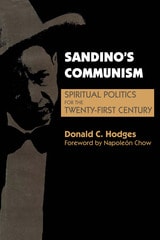
Sandino's Communism
Spiritual Politics for the Twenty-First CenturyBy Donald C. Hodges
University of Texas Press, 1992
Drawing on previously unknown or unassimilated sources, Donald C. Hodges here presents an entirely new interpretation of the politics and philosophy of Augusto C. Sandino, the intellectual progenitor of Nicaragua's Sandinista revolution.
The first part of the book investigates the political sources of Sandino's thought in the works of Babeuf, Buonarroti, Blanqui, Proudhon, Bakunin, Most, Malatesta, Kropotkin, Ricardo Flores Magón, and Lenin—a mixed legacy of pre-Marxist and non-Marxist authoritarian and libertarian communists.
The second half of the study scrutinizes the philosophy of nature and history that Sandino made his own. Hodges delves deeply into this philosophy as the supreme and final expression of Sandino's communism and traces its sources in the Gnostic and millenarian occult undergrounds. This results in a rich study of the ways in which Sandino's revolutionary communism and communist spirituality intersect—a spiritual politics that Hodges presents as more realistic than the communism of Karl Marx.
While accepting the current wisdom that Sandino was a Nicaraguan liberal and social reformer, Hodges also makes a persuasive case that Sandino was first and foremost a communist, although neither of the Marxist nor anarchist variety. He argues that Sandino's eclectic communist spirituality was more of an asset than a liability for understanding the human condition, and that his spiritual politics promises to be more relevant than Marxism-Leninism for the twenty-first century. Indeed, Hodges believes that Sandino's holistic communism embraces both deep ecology and feminist spirituality—a finding that is sure to generate lively and productive debate.

Sandino's Daughters Revisited
Feminism in NicaraguaRandall, Margaret
Rutgers University Press, 1994
Sandino's Daughters, Margaret Randall's conversations with Nicaraguan women in their struggle against the dictator Somoza in 1979, brought the lives of a group of extraordinary female revolutionaries to the American and world public. The book remains a landmark. Now, a decade later, Randall returns to interview many of the same women and others. In Sandino's Daughters Revisited, they speak of their lives during and since the Sandinista administration, the ways in which the revolution made them strong — and also held them back. Ironically, the 1990 defeat of the Sandinistas at the ballot box has given Sandinista women greater freedom to express their feelings and ideas.
Randall interviewed these outspoken women from all walks of life: working-class Diana Espinoza, head bookkeeper of a employee-owned factory; Daisy Zamora, a vice minister of culture under the Sandinistas; and Vidaluz Meneses, daughter of a Somozan official, who ties her revolutionary ideals to her Catholicism. The voices of these women, along with nine others, lead us to recognize both the failed promises and continuing attraction of the Sandinista movement for women. This is a moving account of the relationship between feminism and revolution as it is expressed in the daily lives of Nicaraguan women.
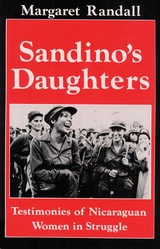
Sandino's Daughters
Testimonies of Nicaraguan Women in StruggleRandall, Margaret
Rutgers University Press, 1995
"A collection of varied and amazing lives, all bent on shaping history. Together, these experienced, undeterred Nicaraguan women offer powerful clues about a truly revolutionary and democratizing feminism."––Adrienne Rich
"If it were not for writers like Margaret, how would women around the world find each other when there is such an institutional effort to keep us apart and silent? Here Margaret brings us the voice of Sandino's daughters, honoring his hat and wearing their own, wiser now, having been part of political and personal revolution."––Holly Near
"Powerful, moving, and challenging. Everyone interested in decency and justice will want to read Sandino's Daughters Revisited."––Blanche Wiesen Cook
Sandino's Daughters, Margaret Randall's conversations with Nicaraguan women in their struggle against the dictator Somoza in 1979, brought the lives of a group of extraordinary female revolutionaries to the American and world public. The book remains a landmark. Now, a decade later, Randall returns to interview many of the same women and others. In Sandino's Daughters Revisited, they speak of their lives during and since the Sandinista administration, the ways in which the revolution made them strong––and also held them back. Ironically, the 1990 defeat of the Sandinistas at the ballot box has given Sandinista women greater freedom to express their feelings and ideas.
Randall interviewed these outspoken women from all walks of life: working-class Diana Espinoza, head bookkeeper of a employee-owned factory; Daisy Zamora, a vice minister of culture under the Sandinistas; and Vidaluz Meneses, daughter of a Somozan official, who ties her revolutionary ideals to her Catholicism. The voices of these women, along with nine others, lead us to recognize both the failed promises and continuing attraction of the Sandinista movement for women. This is a moving account of the relationship between feminism and revolution as it is expressed in the daily lives of Nicaraguan women.

Satan's Playground
Mobsters and Movie Stars at America's Greatest Gaming ResortPaul J. Vanderwood
Duke University Press, 2010
Less than a year after Agua Caliente opened, gangsters held up its money-car in transit to a bank in San Diego, killing the courier and a guard and stealing the company money pouch. Paul J. Vanderwood weaves the story of this heist gone wrong, the search for the killers, and their sensational trial into the overall history of the often-chaotic development of Agua Caliente, Tijuana, and Southern California. Drawing on newspaper accounts, police files, court records, personal memoirs, oral histories, and “true detective” magazines, he presents a fascinating portrait of vice and society in the Jazz Age, and he makes a significant contribution to the history of the U.S.-Mexico border.
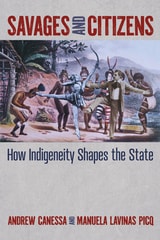
Savages and Citizens
How Indigeneity Shapes the StateAndrew Canessa and Manuela Lavinas Picq; Foreword by Jeff Ganohalidoh Corntassel
University of Arizona Press, 2024
Delving into European political philosophy, comparative politics, and contemporary international law, the book shows how the concept of indigeneity has shaped the development of the modern state. The exclusion of Indigenous people was not a collateral byproduct; it was a political project in its own right. The book argues that indigeneity is a political identity relational to modern nation-states and that Indigenous politics, although marking the boundary of the state, are co-constitutive of colonial processes of state-making. In showing how indigeneity is central to how the international system of states operates, the book forefronts Indigenous peoples as political actors to reject essentializing views that reduce them to cultural “survivors” rooted in the past.
With insights drawn from diverse global contexts and empirical research from Bolivia and Ecuador, this work advocates for the relevance of Indigenous studies within political science and argues for an ethnography of sovereignty in anthropology. Savages and Citizens makes a compelling case for the centrality of Indigenous perspectives to understand the modern state from political theory to international studies.
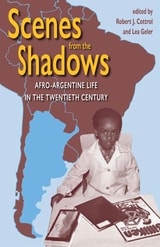
Scenes from the Shadows
Afro-Argentine Life in the Twentieth CenturyRobert J. Cottrol and Lea Geler
Ohio University Press, 2027
Scenes from the Shadows challenges one of the most enduring myths of Argentine history: that Afro-Argentines had disappeared by the twentieth century. Bringing together leading scholars of race, culture, and history, the volume demonstrates that Afro-descendant communities remained a vital part of Argentine society even as official narratives, public institutions, and popular memory rendered them increasingly invisible. Drawing on oral histories, community newspapers, family archives, ethnography, and archival research, the contributors recover the lives, organizations, and cultural worlds that persisted beneath the surface of Argentina’s self-image as a White, European nation.
Focusing on Buenos Aires—home to the country’s largest Afro-descendant population and the epicenter of debates over race and national identity—the book situates Argentina within the broader history of the African diaspora in Latin America and examines how ideologies of Whitening (blanqueamiento), racial classification, urban development, and national identity obscured Afro-descendant presence throughout the twentieth century. The chapters explore Black celebrity and performance culture, tango, Afro-Porteño associational life, community journalism, public employment, migration, gender, and the formation of Afro-descendant social networks, revealing how Afro-Argentines negotiated exclusion while sustaining vibrant traditions of community, creativity, and belonging.
More than a recovery of forgotten histories, Scenes from the Shadows offers a new interpretation of modern Argentina itself. It shows how race continued to shape social life even in a society that denied its importance and how Afro-descendant communities endured despite powerful pressures toward erasure. A major contribution to Afro-Latin American studies, Argentine history, and diaspora scholarship, the volume restores Afro-Argentines to their place in the story of twentieth-century Argentina and provides a powerful framework for understanding the relationship between race, memory, and nationhood.
Contributors
Paulina L. Alberto
Judith M. Anderson
Laura Colabella
Robert J. Cottrol
Alejandra Egido
Alejandro Frigerio
Lea Geler
Lucas Glasman
Miriam Gomes
Chisu Teresa Ko
Eva Lamborghini
Marta Maffia
Carmen Yannone

Science and the Creative Imagination in Latin America
Edited by Evelyn Fishburn and Eduardo L. Ortiz
University of London Press, 2004
Chapters include: Darwin in South America: Geology, Imagination and Encounter Walking Backward to the Future: Time, Travel and Race Natural Parts and Unnatural Others: A reflection on Patrimony at the Turn of the 19th Century On the Transition from Realism to the Fantastic in the Argentina of the 1870s: Holmberg and the Six of Cordoba Literature and Science in Martinez Estrada's Work The Nature Effect in Latin American Science Publications: The Case of the Journal Redes Two Scientific Traditions in Martin Fierro Heisenberg's Uncertainty Principle in Contemporary Spanish American Fiction Constructing Postcoloniality: Scientific Enquiries in Cien Anos de Soledad Holograms and Simulacra: Bioy Casares, Subiela, Piglia The Desert Poetics of Mario Montalbetti: Writing, Knowledge, Topologies
Science in Latin America
A HistoryEdited by Juan José Saldaña
University of Texas Press, 2006
Science in Latin America has roots that reach back to the information gathering and recording practices of the Maya, Aztec, and Inca civilizations. Spanish and Portuguese conquerors and colonists introduced European scientific practices to the continent, where they hybridized with local traditions to form the beginnings of a truly Latin American science. As countries achieved their independence in the nineteenth century, they turned to science as a vehicle for modernizing education and forwarding "progress." In the twentieth century, science and technology became as omnipresent in Latin America as in the United States and Europe. Yet despite a history that stretches across five centuries, science in Latin America has traditionally been viewed as derivative of and peripheral to Euro-American science.
To correct that mistaken view, this book provides the first comprehensive overview of the history of science in Latin America from the sixteenth century to the present. Eleven leading Latin American historians assess the part that science played in Latin American society during the colonial, independence, national, and modern eras, investigating science's role in such areas as natural history, medicine and public health, the eighteenth-century Enlightenment, politics and nation-building, educational reform, and contemporary academic research. The comparative approach of the essays creates a continent-spanning picture of Latin American science that clearly establishes its autonomous history and its right to be studied within a Latin American context.
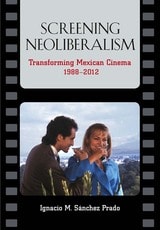
Screening Neoliberalism
Transforming Mexican Cinema, 1988-2012Ignacio M. Sánchez Prado
Vanderbilt University Press, 2014

Sea of Lentils
Hilda Otano Benitez
University of Massachusetts Press, 1990
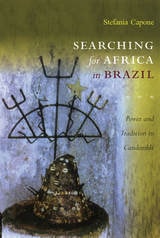
Searching for Africa in Brazil
Power and Tradition in CandombléStefania Capone
Duke University Press, 2010
Challenging the usual interpretations of Afro-Brazilian religions as fixed entities, completely independent of one another, Capone reveals these practices as parts of a unique religious continuum. She does so through an analysis of ritual variations as well as discursive practices. To illuminate the continuum of Afro-Brazilian religious practice and the tensions between exegetic discourses and ritual practices, Capone focuses on the figure of Exu, the sacred African trickster who allows communication between gods and men. Following Exu and his avatars, she discloses the centrality of notions of prestige and power—mystical and religious—in Afro-Brazilian religions. To explain how religious identity is constantly negotiated among social actors, Capone emphasizes the agency of practitioners and their political agendas in the “return to roots,” or re-Africanization, movement, an attempt to recover the original purity of a mythical and legitimizing Africa.
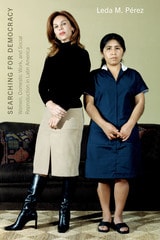
Searching for Democracy
Women, Domestic Work, and Social Reproduction in Latin AmericaLeda M. Pérez
Temple University Press, 2026
How can we achieve lasting social and political equality for women? Leda Pérez tackles this thorny question in Searching for Democracy by interrogating egalitarianism in Latin America, where nearly 20% of women work in domestic service. She examines how women’s participation in society, labor, and politics continues to be conditioned by their relationship to domestic and care work.
Pérez argues that women’s relationship to these spheres of life is indicative of a nation’s development and democracy. She provides a comparative focus on the socio-cultural valuation of this labor and the experiences of women in Bolivia, Chile, Peru, and Uruguay, among other countries. Pérez asserts that it is only by changing sociocultural views on this “women’s work” that nations can create political change, foster equitable legislation, and ensure implementation of effective policies that benefit women.
Searching for Democracy shows why real and lasting equality cannot be achieved without fully enfranchising women in the lowest tiers of employment and closing the equality gap among women. Pérez’s models for gender equality are relevant for women around the world.
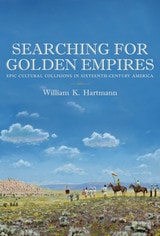
Searching for Golden Empires
Epic Cultural Collisions in Sixteenth-Century AmericaWilliam K. Hartmann
University of Arizona Press, 2014
Recounting eyewitness experiences that the Spaniards recorded in letters and memoirs, Hartmann describes ancient lifeways from Mexico to the western United States; Aztec accounts of the conquest; discussions between Aztec priests and Spanish priests about the nature of the universe; Cortés’s lifelong relationship with his famous Native mistress, Malinche (not to mention the mysterious fate of his wife); lost explorers who wandered from Florida to Arizona; and Marcos de Niza’s controversial reports of the “Seven Cities of Cíbola.”
Searching for Golden Empires describes how, even after the conquest of Mexico, Cortés remained a “wildcat” competitor with Coronado in a race to see who could find the “next golden empire,” believed to lie in the north. It is an exciting history of the shared story of the United States and Mexico, unveiling episodes both tragic and uplifting.
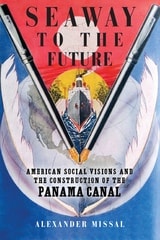
Seaway to the Future
American Social Visions and the Construction of the Panama CanalAlexander Missal
University of Wisconsin Press, 2008
Best Books for Regional Special Interests, selected by the American Association of School Librarians, and Best Books for General Audiences, selected by the Public Library Association
“Provide[s] a useful vantage on the world bequeathed to us by the forces that set out to put America astride the globe nearly a century ago.”—Chris Rasmussen, Bookforum
Securing the City
Neoliberalism, Space, and Insecurity in Postwar GuatemalaKevin Lewis O Neill and Kedron Thomas, eds.
Duke University Press, 2011
Contributors. Peter Benson, Manuela Camus, Avery Dickins de Girón, Edward F. Fischer, Deborah Levenson, Thomas Offit, Kevin Lewis O’Neill, Kedron Thomas, Rodrigo José Véliz
Seeds of Power
Environmental Injustice and Genetically Modified Soybeans in ArgentinaAmalia Leguizamón
Duke University Press, 2020
Seeking Rights from the Left
Gender, Sexuality, and the Latin American Pink TideElisabeth Jay Friedman
Duke University Press, 2018
Contributors: Sonia E. Alvarez, María Constanza Diaz, Rachel Elfenbein, Elisabeth Jay Friedman, Niki Johnson, Victoria Keller, Edurne Larracoechea Bohigas, Amy Lind, Marlise Matos, Shawnna Mullenax, Ana Laura Rodríguez Gustá, Diego Sempol, Constanza Tabbush, Gwynn Thomas, Catalina Trebisacce, Annie Wilkinson
Selecting Women, Electing Women
Political Representation and Candidate Selection in Latin AmericaMagda Hinojosa
Temple University Press, 2012
Selecting Women, Electing Women is a groundbreaking book that examines how the rules for candidate selection affect women’s political representation in Latin America. Focusing particularly on Chile and Mexico, Magda Hinojosa presents counterintuitive assumptions about factors that promote the election of women. She argues that primaries—which are regularly thought of as the most democratic process for choosing candidates—actually produce fewer female nominees than centralized and seemingly exclusionary candidate selection procedures.
Hinojosa astutely points out the role of candidate selection processes in explaining variation in women’s representation that exists both across and within political parties. Selecting Women, Electing Women makes critical inroads to the study of gender and politics, candidate selection, and Latin American politics.
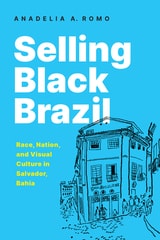
Selling Black Brazil
Race, Nation, and Visual Culture in Salvador, BahiaAnadelia Romo
University of Texas Press, 2022
2023 Honorable Mention, Brazil Section Humanities Book Prize, Latin American Studies Association (LASA)
This book explores visual portrayals of blackness in Brazil to reveal the integral role of visual culture in crafting race and nation across Latin America.
In the early twentieth century, Brazil shifted from a nation intent on whitening its population to one billing itself as a racial democracy. Anadelia Romo shows that this shift centered in Salvador, Bahia, where throughout the 1950s, modernist artists and intellectuals forged critical alliances with Afro-Brazilian religious communities of Candomblé to promote their culture and their city. These efforts combined with a growing promotion of tourism to transform what had been one of the busiest slaving depots in the Americas into a popular tourist enclave celebrated for its rich Afro-Brazilian culture. Vibrant illustrations and texts by the likes of Jorge Amado, Pierre Verger, and others contributed to a distinctive iconography of the city, with Afro-Bahians at its center. But these optimistic visions of inclusion, Romo reveals, concealed deep racial inequalities. Illustrating how these visual archetypes laid the foundation for Salvador’s modern racial landscape, this book unveils the ways ethnic and racial populations have been both included and excluded not only in Brazil but in Latin America as a whole.

Sephardim in the Americas
Studies in Culture and HistoryMartin A. Cohen
University of Alabama Press, 1993
Seri Prehistory
The Archaeology of the Central Coast of Sonora, MexicoThomas Bowen
University of Arizona Press, 1976
Serial Mexico
Storytelling across Media, from Nationhood to NowAmy E. Wright
Vanderbilt University Press, 2023
Honorable Mention, Premio al Mejor Libro en Humanidades, Latin American Studies Association–Mexico Section, 2025
No book until now has tied in two centuries of Mexican serial narratives—tales of glory, of fame, and of epic characters, grounded in oral folklore—with their subsequent retelling in comics, radio, and television soap operas. Wright’s multidisciplinary Serial Mexico delves into this storytelling tradition: examining the nostalgic tales reimagined in novelas, radionovelas, telenovelas and onwards, and examining the foundational figures who have been woven into society.
This panorama shows the Mexican experience of storytelling from the country’s early days until now, showcasing protagonists that mock authority, make light of hierarchy, and embrace the hybridity and mestizaje of Mexico. These tales reflect on and respond to crucial cultural concerns such as family, patriarchy, gender roles, racial mixing, urbanization, modernization, and political idealism. Serial Mexico thus examines how serialized storytelling’s melodrama and sensationalism reveals key political and cultural messaging.
In a detailed yet accessible style, Wright describes how these stories have continued to morph with current times’ concerns and social media. Will tropes and traditions carry on in new and reimagined serial storytelling forms? Only time will tell. Stay tuned for the next episode.
Seriously Funny
Mexican Political Jokes as Social ResistanceSamuel Schmidt, Translated by Adam Schmidt
University of Arizona Press, 2014
Now available in English for the first time, Seriously Funny is a groundbreaking work. Its goal is to examine the ways in which political humor—including nicknames, anagrams, poems, and parodies of religious prayers, in addition to jokes—has developed and operated in one country over more than four centuries. Although political humor thrives in Mexico, it is often cleverly encoded so that it doesn’t appear to be critical of government policies or officials. But, writes Samuel Schmidt, that is precisely its purpose: to question the actions and assumptions of the party in power. Schmidt argues persuasively that political jokes are acts of minor rebellion: their objective is not to overthrow a government but to correct its mistakes.
Seven Interpretive Essays on Peruvian Reality
By José Carlos Mariátegui
University of Texas Press, 1971
"Once again I repeat that I am not an impartial; objective critic. My judgments are nourished by my ideals, my sentiments, my passions. I have an avowed and resolute ambition: to assist in the creation of Peruvian socialism. I am far removed from the academic techniques of the university."—From the Author's Note
Jose Carlos Mariátegui was one of the leading South American social philosophers of the early twentieth century. He identified the future of Peru with the welfare of the Indian at a time when similar ideas were beginning to develop in Middle America and the Andean region. Generations of Peruvian and other Latin American social thinkers have been profoundly influenced by his writings.
Seven Interpretive Essays on Peruvian Reality (Siete ensayos de interpretación de la realidad peruana), first published in 1928, is Mariátegui's major statement of his position and has gone into many editions, not only in Peru but also in other Latin American countries. The topics discussed in the essays—economic evolution, the problem of the Indian, the land problem, public education, the religious factor, regionalism and centralism, and the literary process—are in many respects as relevant today as when the book was written.
Mariátegui's thinking was strongly tinged with Marxism. Because contemporary sociology, anthropology, and economics have been influenced by Marxism much more in Latin America than in North America, it is important that North Americans become more aware of Mariátegui's position and accord it its proper historical significance.
Jorge Basadre, the distinguished Peruvian historian, in an introduction written especially for this translation, provides an account of Mariátegui's life and describes the political and intellectual climate in which these essays were written.
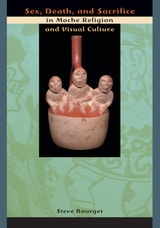
Sex, Death, and Sacrifice in Moche Religion and Visual Culture
By Steve Bourget
University of Texas Press, 2006
The Moche people who inhabited the north coast of Peru between approximately 100 and 800 AD were perhaps the first ancient Andean society to attain state-level social complexity. Although they had no written language, the Moche created the most elaborate system of iconographic representation of any ancient Peruvian culture. Amazingly realistic figures of humans, animals, and beings with supernatural attributes adorn Moche pottery, metal and wooden objects, textiles, and murals. These actors, which may have represented both living individuals and mythological beings, appear in scenes depicting ritual warfare, human sacrifice, the partaking of human blood, funerary rites, and explicit sexual activities.
In this pathfinding book, Steve Bourget raises the analysis of Moche iconography to a new level through an in-depth study of visual representations of rituals involving sex, death, and sacrifice. He begins by drawing connections between the scenes and individuals depicted on Moche pottery and other objects and the archaeological remains of human sacrifice and burial rituals. He then builds a convincing case for Moche iconography recording both actual ritual activities and Moche religious beliefs regarding the worlds of the living, the dead, and the afterlife. Offering a pioneering interpretation of the Moche worldview, Bourget argues that the use of symbolic dualities linking life and death, humans and beings with supernatural attributes, and fertility and social reproduction allowed the Moche to create a complex system of reciprocity between the world of the living and the afterworld. He concludes with an innovative model of how Moche cosmological beliefs played out in the realms of rulership and political authority.
Sexual Encounters/Sexual Collisions
Alternative Sexualities in Colonial Mesoamerica, Volume 54Pete Sigal and John F. Chuchiak IV, eds.
Duke University Press, 0
One contributor considers a criminal case in seventeenth-century Mexico that demonstrates that the negotiation of homosexual identity was much more complex than the model of domination and submission often believed to structure Latin American male homosexual relationships. Another contributor examines how priests in Mayan communities attempted to use the confessional and confessional manuals to promote their own notions of sexual desire and ownership of indigenous women, only to have their efforts turned against them, with Mayan women using the texts to assert strategic dominance over the priests. Yet another essay, focusing on the treatment of a hermaphrodite in late colonial Guatemala, examines how the hermaphrodite’s traits undermined or called into question Enlightenment-era ideas about sex and gender.
Contributors. John F. Chuchiak IV, Martha Few, Kimberly Gauderman, Laura A. Lewis, Caterina Pizzigoni, Pete Sigal, Zeb Tortorici, Neil L. Whitehead
Sexual Textualities
Essays on Queer/ing Latin American WritingBy David William Foster
University of Texas Press, 1997
Since the 1991 publication of his groundbreaking book Gay and Lesbian Themes in Latin American Writing, David William Foster has proposed a series of theoretical and critical principles for the analysis of Latin American culture from the perspectives of the queer. This book continues that project with a queer reading of literary and cultural aspects of Latin American texts.
Moving beyond its predecessor, which provided an initial inventory of Latin American gay and lesbian writing, Sexual Textualities analyzes questions of gender representation in Latin American cultural productions to establish the interrelationships, tensions, and irresolvable conflicts between heterosexism and homoeroticism. The topics that Foster addresses include Eva Peron as a cultural/sexual icon, feminine pornography, Luis Humberto Hermosillo's classic gay film Doña Herlinda y su hijo, homoerotic writing and Chicano authors, Matias Montes Huidobro's Exilio and the representation of gay identity, representation of the body in Alejandra Pizarnik's poetry, and the crisis of masculinity in Argentine fiction from 1940 to 1960.
Shakespearean Cultures
Latin America and the Challenges of Mimesis in Non-Hegemonic CircumstancesJoão Cezar de Castro Rocha
Michigan State University Press, 2019
Shaky Colonialism
The 1746 Earthquake-Tsunami in Lima, Peru, and Its Long AftermathCharles F. Walker
Duke University Press, 2008
Through his ambitious rebuilding plan, the Viceroy sought to assert the power of the colonial state over the Church, the upper classes, and other groups. Agreeing with most inhabitants of the fervently Catholic city that the earthquake-tsunami was a manifestation of God’s wrath for Lima’s decadent ways, he hoped to reign in the city’s baroque excesses and to tame the city’s notoriously independent women. To his great surprise, almost everyone objected to his plan, sparking widespread debate about political power and urbanism. Illuminating the shaky foundations of Spanish control in Lima, Walker describes the latent conflicts—about class, race, gender, religion, and the very definition of an ordered society—brought to the fore by the earthquake-tsunami of 1746.
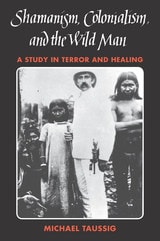
Shamanism, Colonialism, and the Wild Man
A Study in Terror and HealingMichael Taussig
University of Chicago Press, 1987
"This extraordinary book . . . will encourage ever more critical and creative explorations."—Fernando Coronil, [I]American Journal of Sociology[/I]
"Taussig has brought a formidable collection of data from arcane literary, journalistic, and biographical sources to bear on . . . questions of evil, torture, and politically institutionalized hatred and terror. His intent is laudable, and much of the book is brilliant, both in its discovery of how particular people perpetrated evil and others interpreted it."—Stehen G. Bunker, Social Science Quarterly
Shaping Migration between Europe and Latin America
New Perspectives and ChallengesEdited by Ana Margheritis
University of London Press, 2018
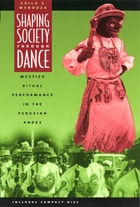
Shaping Society through Dance
Mestizo Ritual Performance in the Peruvian AndesZoila S. Mendoza
University of Chicago Press, 2000
In this fluid world, she argues, racial and ethnic identities are shaped more by notions of what is decent, elegant, and modern rather than by skin color or status. As the different troupes vie for the townspeople's recognition as the most "authentic" group, these notions are challenged and reworked. A fascinating look at a rich tradition, this innovative work is also a compelling example of the critical anthropology of performance.
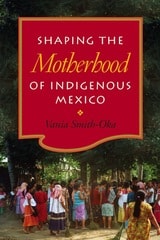
Shaping the Motherhood of Indigenous Mexico
Vania Smith-Oka
Vanderbilt University Press, 2013
The cash transfer program is Oportunidades, which enrolls more than a fifth of Mexico's population. It expects mothers to become involved in their children's lives at three nodes--health, nutrition, and education. If women do not comply with the standards of modern motherhood, they are dropped from the program and lose the bi-monthly cash payments. Smith-Oka explores the everyday implementation of the program and its unintended consequences.
The mothers are often berated by clinicians for having too many children (Smith-Oka provides background on the history of eugenics and population control in Mexico) and for other examples of their "backward" ways. An entire chapter focuses on the humor indigenous women use to cope with disrespectful comments. Ironically, this form of resistance allows the women to accept the situation that controls their behavior.
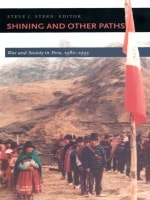
Shining and Other Paths
War and Society in Peru, 1980-1995Steve J. Stern, ed.
Duke University Press, 1998
The contributors—a team of Peruvian and U.S. historians, social scientists, and human rights activists—explore the origins, social dynamics, and long-term consequences of the effort by Shining Path to effect an armed communist revolution. The book begins by interpreting Shining Path’s emergence and decision for war as one logical culmination, among several competing culminations, of trends in oppositional politics and social movements. It then traces the experiences of peasants and refugees to demonstrate how human struggle and resilience came together in grassroots determination to defeat Shining Path, and explores the unsuccessful efforts of urban shantytown dwellers, as well as rural and urban activists, to build a “third path” to social justice. Integral to this discussion is an examination of women’s activism and consciousness during the years of the crisis. Finally, this book analyzes the often paradoxical and unintended legacies of this tumultuous period for social and human rights movements, and for presidential and military leadership in Peru.
Extensive field research, broad historical vision, and strong editorial coordination enable the authors to write a coherent and deeply humanistic account, one that draws out the inner tragedies, ambiguities, and conflicts of the war.
Providing historically grounded explication of the conflicts that reshaped contemporary Peru, Shining and Other Paths will be widely read by Latin Americanists, historians, anthropologists, gender theorists, sociologists, political scientists, and human rights activists.
Contributors. Jo-Marie Burt, Marisol de la Cadena, Isabel Coral Cordero, Carlos Iván Degregori, Iván Hinojosa, Carlos Basombrío Iglesias, Florencia E. Mallon, Nelson Manrique, Hortensia Muñoz, Enrique Obando, Patricia Oliart, Ponciano del Pino H., José Luis Rénique, Orin Starn, Steve J. Stern

Side Dishes
Latina American Women, Sex, and Cultural ProductionFitch, Melissa A
Rutgers University Press, 2009
Side Dishes considers feminist pornography and literary representations of masturbation, bisexuality, lesbianism, and sexual fantasies; the treatment of lust in stand-up comedy and science fiction; critical issues in leading feminist journals; and portrayals of sexuality in four contemporary Latin American films. Melissa A. Fitch concludes with a look at the rise of women's and gender studies programs in Latin America.
Side Dishes
Latina American Women, Sex, and Cultural ProductionFitch, Melissa A
Rutgers University Press, 2009
Side Dishes considers feminist pornography and literary representations of masturbation, bisexuality, lesbianism, and sexual fantasies; the treatment of lust in stand-up comedy and science fiction; critical issues in leading feminist journals; and portrayals of sexuality in four contemporary Latin American films. Melissa A. Fitch concludes with a look at the rise of women's and gender studies programs in Latin America.
Signs of the Americas
A Poetics of Pictography, Hieroglyphs, and KhipuEdgar Garcia
University of Chicago Press, 2020
Garcia tells the story of the present life of these sign-systems, examining the contemporary impact they have had on poetry, prose, visual art, legal philosophy, political activism, and environmental thinking. In doing so, he brings together a wide range of indigenous and non-indigenous authors and artists of the Americas, from Aztec priests and Amazonian shamans to Simon Ortiz, Gerald Vizenor, Jaime de Angulo, Charles Olson, Cy Twombly, Gloria Anzaldúa, William Burroughs, Louise Erdrich, Cecilia Vicuña, and many others. From these sources, Garcia depicts the culture of a modern, interconnected hemisphere, revealing that while these “signs of the Americas” have suffered expropriation, misuse, and mistranslation, they have also created their own systems of knowing and being. These indigenous systems help us to rethink categories of race, gender, nationalism, and history. Producing a new way of thinking about our interconnected hemisphere, this ambitious, energizing book redefines what constitutes a “world” in world literature.
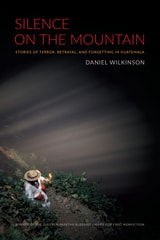
Silence on the Mountain
Stories of Terror, Betrayal, and Forgetting in GuatemalaDaniel Wilkinson
Duke University Press, 2004
Decades of terror-inspired fear have led the Guatemalans to adopt a survival strategy of silence so complete that it verges on collective amnesia. The author’s great triumph is that he finds a way for people to tell their stories, and it is through these stories—dramatic, intimate, heartbreaking—that we are shown the anatomy of a thwarted revolution that has relevance not only to Guatemala but also to countless places around the world where terror has been used as a political tool.
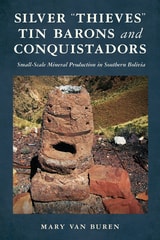
Silver “Thieves," Tin Barons, and Conquistadors
Small-Scale Mineral Production in Southern BoliviaMary Van Buren
University of Arizona Press, 2024
The methods of historian Bertell Ollman, particularly a dialectical approach and “doing history backwards,” are used to examine small-scale mineral production in Porco, Bolivia. The research is based on nine seasons of archaeological fieldwork and historical research, with a particular focus on labor and technology. Van Buren argues that artisanal mineral production must be understood in relation to large-scale mining rather than as a traditional practice and that the Bolivian case is a culturally specific instantiation of a broader economic phenomenon that began under colonial regimes.
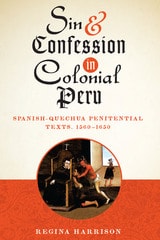
Sin and Confession in Colonial Peru
Spanish-Quechua Penitential Texts, 1560-1650By Regina Harrison
University of Texas Press, 2014
A central tenet of Catholic religious practice, confession relies upon the use of language between the penitent and his or her confessor. In the sixteenth and seventeenth centuries, as Spain colonized the Quechua-speaking Andean world, the communication of religious beliefs and practices—especially the practice of confession—to the native population became a primary concern, and as a result, expansive bodies of Spanish ecclesiastic literature were translated into Quechua. In this fascinating study of the semantic changes evident in translations of Catholic catechisms, sermons, and manuals, Regina Harrison demonstrates how the translated texts often retained traces of ancient Andean modes of thought, despite the didactic lessons they contained.
In Sin and Confession in Colonial Peru, Harrison draws directly from confession manuals to demonstrate how sin was newly defined in Quechua lexemes, how the role of women was circumscribed to fit Old World patterns, and how new monetized perspectives on labor and trade were taught to the subjugated indigenous peoples of the Andes by means of the Ten Commandments. Although outwardly confession appears to be an instrument of oppression, the reformer Bartolomé de Las Casas influenced priests working in the Andes; through their agency, confessional practice ultimately became a political weapon to compel Spanish restitution of Incan lands and wealth. Bringing together an unprecedented study (and translation) of Quechua religious texts with an expansive history of Andean and Spanish transculturation, Harrison uses the lens of confession to understand the vast and telling ways in which language changed at the intersection of culture and religion.