Results by title
1445 books match the query 'Life Sciences' and 70 start with s
Sailing with Noah
Stories from the World of ZoosJeffrey P. Bonner
University of Missouri Press, 2013
Salmon, People, and Place
A Biologist's Search for Salmon RecoveryJim Lichatowich
Oregon State University Press, 2013
In Salmon, People, and Place, acclaimed fisheries biologist Jim Lichatowich eloquently exposes the misconceptions underlying salmon management and recovery programs that have fueled the catastrophic decline in Northwest salmon populations for more than a century. These programs will continue to fail, he suggests, so long as they regard salmon as products and ignore their essential relationship with their habitat.
But Lichatowich offers hope. In Salmon, People, and Place he presents a concrete plan for salmon recovery, one based on the myriad lessons learned from past mistakes. What is needed to successfully restore salmon, Lichatowich states, is an acute commitment to healing the relationships among salmon, people, and place.
A significant contribution to the literature on Pacific salmon, Salmon, People, and Place: A Biologist’s Search for Salmon Recovery is an essential read for anyone concerned about the fate of this Pacific Northwest icon.
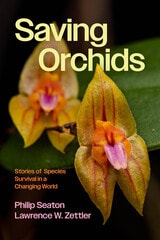
Saving Orchids
Stories of Species Survival in a Changing WorldPhilip Seaton and Lawrence W. Zettler
University of Chicago Press, 2025
A gorgeously illustrated ode to the beauty and significance of orchids—and to those fighting to save these unique plants across the globe.
Until recently, a myriad of lifeforms enriched our lives. In some places, listening to a nighttime chorus of frogs in the neighborhood marsh was an archetypal touchstone of childhood. Children would search for tadpoles, just steps away from native Lady’s Tresses orchids. Year by year, the chorus became quieter. Today, only a few frogs and orchids remain. Is this the world we want our children to inherit? Do we want orchids to slip through our fingers and, eventually, to vanish?
For biologists Philip Seaton and Lawrence W. Zettler, and the intrepid orchid defenders they introduce in this book, the answer is no. Seaton and Zettler have traveled the world over the past three decades, studying orchids—flagship species for plant conservation. Stunningly illustrated, this book is a culmination of stories about the people—young and old alike—dedicated to protecting these remarkable plants from extinction. In the 19th century, collectors removed, shipped, and sold vast numbers of orchids from the wild. Today, scientists strive to reverse this harm—to protect and rebuild remnants of orchids’ original habitats against human disruption, including climate change. Seaton and Zettler reveal these plants’ bizarre pollination partners, risky liaisons with fungi, and adaptation to human domestication to show that learning orchids’ scientific secrets—and finding human helpers—is key to these plants’ survival.
Science 3.0
Real Science, Real KnowledgeFrank Miedema
Amsterdam University Press, 2013
Science as a Process
An Evolutionary Account of the Social and Conceptual Development of ScienceDavid L. Hull
University of Chicago Press, 1990
"In Science as a Process, [David Hull] argues that the tension between cooperation and competition is exactly what makes science so successful. . . . Hull takes an unusual approach to his subject. He applies the rules of evolution in nature to the evolution of science, arguing that the same kinds of forces responsible for shaping the rise and demise of species also act on the development of scientific ideas."—Natalie Angier, New York Times Book Review
"By far the most professional and thorough case in favour of an evolutionary philosophy of science ever to have been made. It contains excellent short histories of evolutionary biology and of systematics (the science of classifying living things); an important and original account of modern systematic controversy; a counter-attack against the philosophical critics of evolutionary philosophy; social-psychological evidence, collected by Hull himself, to show that science does have the character demanded by his philosophy; and a philosophical analysis of evolution which is general enough to apply to both biological and historical change."—Mark Ridley, Times Literary Supplement
"Hull is primarily interested in how social interactions within the scientific community can help or hinder the process by which new theories and techniques get accepted. . . . The claim that science is a process for selecting out the best new ideas is not a new one, but Hull tells us exactly how scientists go about it, and he is prepared to accept that at least to some extent, the social activities of the scientists promoting a new idea can affect its chances of being accepted."—Peter J. Bowler, Archives of Natural History
"I have been doing philosophy of science now for twenty-five years, and whilst I would never have claimed that I knew everything, I felt that I had a really good handle on the nature of science, Again and again, Hull was able to show me just how incomplete my understanding was. . . . Moreover, [Science as a Process] is one of the most compulsively readable books that I have ever encountered."—Michael Ruse, Biology and Philosophy
Science on Ice
Four Polar ExpeditionsChris Linder
University of Chicago Press, 2011
An oceanographer and award-winning photographer, Linder chronicles four polar expeditions in this richly illustrated volume: to a teeming colony of Adélie penguins, through the icy waters of the Bering Sea in spring, beneath the pack ice of the eastern Arctic Ocean, and over the lake-studded surface of the Greenland Ice Sheet. Each trip finds Linder teamed up with a prominent science journalist, and together their words and pictures reveal the day-to-day details of how science actually gets done at the poles. Breathtaking images of the stark polar landscape alternate with gritty, close-up shots of scientists working in the field, braving physical danger and brutal conditions, and working with remarkable technology designed to survive the poles—like robotic vehicles that chart undersea mountain ranges—as they gather crucial information about our planet's distant past, and the risks that climate change poses for its future.
The result is a combination travel book and paean to the hard work and dedication that underlies our knowledge of life on earth. Science on Ice takes readers to the farthest reaches of our planet; science has rarely been more exciting—or inspiring.
Science, Conservation, and National Parks
Edited by Steven R. Beissinger, David D. Ackerly, Holly Doremus, and Gary E. Machlis
University of Chicago Press, 2016
Examining the major challenges of parks and protected areas throughout the world, contributors provide answers to a number of key conservation questions, such as: How should stewardship address climate change, urban encroachment and pollution, and invasive species? How can society, especially youth, become more engaged with nature and parks, and are there models to guide interactions between parks and their neighbors? What are appropriate conservation objectives for parks in the Anthropocene? Charting a course for the parks of the next century, Science, Conservation, and National Parks is certain not only to catalyze the continued evolution of US park conservation policy, but also to be an inspiration for parks, conservation, and management worldwide.
Sea Turtles of the Eastern Pacific
Advances in Research and ConservationEdited by Jeffrey A. Seminoff and Bryan P. Wallace; Foreword by Peter C. H. Pritchard
University of Arizona Press, 2012
Sea turtles are flagship species for the world's oceans. They traverse international boundaries during their migrations, serve as vehicles for marine nutrients to terrestrial habitats, and embody the often tenuous relationship between human action and ecosystem health. The East Pacific Ocean is home to some of the most dynamic marine ecosystems, and the most unique sea turtles. Marine biodiversity within this massive ocean region abounds in mangrove estuaries, seagrass pastures, coral reefs, the open ocean, and many other habitats, with sea turtles often the most conspicuous species present. The distinctive traits of the Eastern Pacific have resulted in the smallest leatherbacks, a singular morph of the green turtle, dark and steeply domed olive ridleys, and the most cryptic hawksbills on the planet. Only now are we beginning to understand how these varieties have evolved.
However, the oceanographic conditions that make this an epicenter of sea turtle activity also promote massive artisanal and industrial fishing efforts that, coupled with illegal harvesting of eggs and turtles, have led to declines of several turtle populations in the region. The essays and stories in Sea Turtles of the Eastern Pacific describe for the first time the history of this exploitation, as well as recent sea turtle conservation initiatives and scientific research in the region. The first third of the book considers the biology of the turtles, focusing on general overviews of current ecological management challenges facing the turtles' survival. The second third treats issues of marine policy related to turtle conservation. In conclusion, the book offers six compelling stories of conservation success. By the end, readers will have gained a in-depth view not only of these magnificent creatures, but also the people involved in research and conservation efforts in one of the most remarkable regions of our planet.
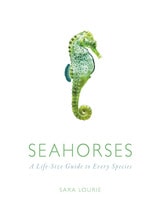
Seahorses
A Life-Size Guide to Every SpeciesSara A. Lourie
University of Chicago Press, 2016
Seahorses celebrates the remarkable variety of seahorse species as well as their exquisiteness. 57 species, including seadragons and pipefish, are presented in lush, life-size photographs alongside descriptive drawings, and each entry includes detailed and up-to-date information on natural history and conservation. Sara Lourie, a foremost expert on seahorse taxonomy, presents captivating stories of species that range from less than an inch to over a foot in height, while highlighting recent discoveries and ecological concerns. Accessibly written, but comprehensive in scope, this book will be a stunning and invaluable reference on seahorse evolution, biology, habitat, and behavior.
Masters of camouflage and rarely seen, seahorses continue to be a fascinating subject of active research. This visually rich and informative book is certain to become the authoritative guide to these charming and unusual wonders of the sea, beloved at aquariums the world over.
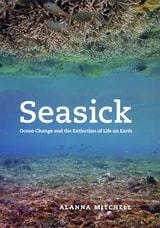
Seasick
Ocean Change and the Extinction of Life on EarthAlanna Mitchell
University of Chicago Press, 2009
We have long lorded over the ocean. But only recently have we become aware of the myriad life-forms beneath its waves. We now know that this delicate ecosystem is our life-support system; it regulates the earth’s temperatures and climate and comprises 99 percent of living space on earth. So when we change the chemistry of the whole ocean system, as we are now, life as we know it is threatened.
In Seasick, veteran science journalist Alanna Mitchell dives beneath the surface of the world’s oceans to give readers a sense of how this watery realm can be managed and preserved, and with it life on earth. Each chapter features a different group of researchers who introduce readers to the importance of ocean currents, the building of coral structures, or the effects of acidification. With Mitchell at the helm, readers submerge 3,000 feet to gather sea sponges that may contribute to cancer care, see firsthand the lava lamp–like dead zone covering 17,000 square kilometers in the Gulf of Mexico, and witness the simultaneous spawning of corals under a full moon in Panama.
The first book to look at the planetary environmental crisis through the lens of the global ocean, Seasick takes the reader on an emotional journey through a hidden realm of the planet and urges conservation and reverence for the fount from which all life on earth sprang.
Seaweeds of the Northwest Atlantic
Arthur C. Mathieson
University of Massachusetts Press, 2017
The introductory chapter provides a historical review of seaweed studies as well as a description of 15 geographical sites designated in the text. Three chapters on the green, brown, and red alga include more than 256 genera, 510 species, 10 subspecies, 21 varieties, and 14 forms. New taxonomic combinations and descriptions of several previously undescribed taxa are also included in the text. The modern classification reviews molecular as well as reproductive, morphological, and biological data. The work represents more than forty years of research on Northwest Atlantic seaweeds and will aid researchers throughout the Northeast and Southwest Atlantic coasts. The authors detail the taxonomy, morphology, cytology, and name derivation of various taxonomic entities, as well as the ecology and distribution patterns of over 555 taxa. The text includes keys to genera and species, a glossary, and sources of further information.
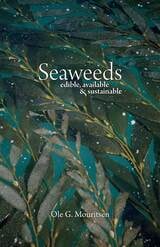
Seaweeds
Edible, Available, and SustainableOle G. Mouritsen
University of Chicago Press, 2013
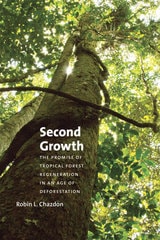
Second Growth
The Promise of Tropical Forest Regeneration in an Age of DeforestationRobin L. Chazdon
University of Chicago Press, 2014
Even as human activities result in extensive fragmentation and deforestation, tropical forests demonstrate a great capacity for natural and human-aided regeneration. Although these damaged landscapes can take centuries to regain the characteristics of old growth, Chazdon shows here that regenerating—or second-growth—forests are vital, dynamic reservoirs of biodiversity and environmental services. What is more, they always have been.
With chapters on the roles these forests play in carbon and nutrient cycling, sustaining biodiversity, providing timber and non-timber products, and integrated agriculture, Second Growth not only offers a thorough and wide-ranging overview of successional and restoration pathways, but also underscores the need to conserve, and further study, regenerating tropical forests in an attempt to inspire a new age of local and global stewardship.
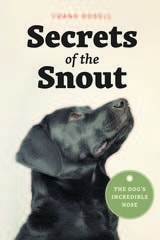
Secrets of the Snout
The Dog’s Incredible NoseFrank Rosell
University of Chicago Press, 2018
With 300 million receptors to our mere 5 million, a dog’s nose is estimated to be between 100,000 and 100 million times more sensitive than a human’s. No wonder, then, that our nasally inferior species has sought to unleash the prodigious power of canine shnozzes. Rosell here takes us for a walk with a pack of superhero sniffers including Tutta, a dog with a fine nose for fine wine; the pet-finder pooch AJ; search-and-rescue dog Barry; the hunting dog Balder; the police dogs Rasko and Trixxi; the warfare dog Lisa; the cancer detection dog Jack; Tucker, who scents floating killer whale feces; and even Elvis, who can smell when you’re ovulating. With each dog, Rosell turns his nose to the evolution of the unique olfactory systems involved, which odors dogs detect, and how they do it.
A celebration of how the canine sense for scents works—and works for us—Secrets of the Snout will have dog lovers, trainers, and researchers alike all howling with delight. Exploring this most pointed of canine wonders, Rosell reveals the often surprising ways in which dogs are bettering our world, one nose at a time.

Sedges
CarexRobert H. Mohlenbrock. Illustrated by Paul Nelson
Southern Illinois University Press, 1999
Unique in several respects, Carex is by far the most numerous genus of plants in Illinois. Because of the vast number of species, the similarity of many of the species, and the relatively small size of the critical reproductive structures, the members of this genus are extremely confusing to identify. This book, with its detailed descriptions, key, and precise illustrations, should aid the interested person in the identification of these plants.
Since more than three-fourths of the species of Carex in Illinois are inhabitants of wetlands, an understanding of the genus is critical for those working in wetlands. Amateur and professional botanists will find the information extremely valuable, as well as environmental and conservation groups, garden clubs, farm bureaus, home extension groups, scout organizations, and school libraries. Persons working in natural areas programs and in rare and endangered species programs and those working on environmental impact assessments and wildlife management projects will also find the information pertinent.
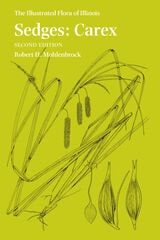
Sedges
CarexRobert H. Mohlenbrock
Southern Illinois University Press, 2011
Since the volume’s original publication in 1999, thirty-four additional species of plants have been recognized in Illinois. Some are discoveries from recent field work, some are from more thorough searches of herbaria, and others are from different taxonomic philosophies.
For each species of Carex in Illinois, there is a full illustration showing the habit of the plant and close-ups of various vegetative and reproductive structures that are crucial for the identification of the individual species. There is also a complete description of each species as well as a detailed discussion of the nomenclature and habitats. Range maps show the county distribution of each species in Illinois. A new and detailed key is provided for identification of the species.
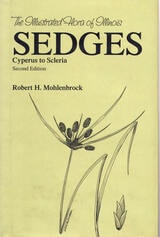
Sedges
Cyperus to ScleriaRobert H. Mohlenbrock
Southern Illinois University Press, 2001
This second edition of Sedges: Cyperus to Scleria brings up to date the identification of species of sedges in Illinois (except Carex) since publication of the first edition in 1976.
During the intervening years, several additions to the sedge flora of Illinois have been made, and many new distributional records have been added. Also, a large number of nomenclatural changes have taken place, resulting in several alterations of scientific names. New illustrations have been provided for all of the additions.
In his introductory material, Robert H. Mohlenbrock discusses the morphology of sedges and the habitats where they can be found. Although the semitechnical keys and descriptions are familiar to experienced botanists, he has simplified them as much as possible to accommodate the novice in sedge identification. He has also included a new key to the sedges and to each genus in which additional species have been added.
For each species, Mohlenbrock has provided a description, statement of habitat and range, Illinois distribution map, discussion, synonymy, and line illustrations showing its diagnostic features. Sedges: Cyperus to Scleria contains 128 illustrations.
Seed Testing
Principles and PracticesSabry G. Elias
Michigan State University Press, 2012
An essential reference for students, seed technologists, researchers, and seed industry personnel, this comprehensive guide outlines the most widely performed modern seed quality tests, explores the principles behind them, the history of seed testing, why seeds are tested and when, and sampling, sub-sampling, seed laboratory management, accreditation, and seed quality assurance programs. The authors describe statistical applications to seed testing and tolerances, and they provide a detailed morphological and structural description of seed formation and development. The book examines the testing of genetic traits and transgenic seeds, including DNA and protein genetic purity tests, and cultivar purity identification for conventional seeds. In addition to the most common seed purity and viability tests, tests for seed and seedling vigor, seed-borne diseases and seed moisture determination are also discussed.
Seeds of Resistance, Seeds of Hope
Place and Agency in the Conservation of BiodiversityEdited by Virginia D. Nazarea, Robert E. Rhoades, and Jenna E. Andrews-Swann
University of Arizona Press, 2013
This broad collection brings to the table a bag full of tools from anthropology, sociology, genetics, plant breeding, education, advocacy, and social activism. By design, multiple voices are included. They cross or straddle disciplinary, generational, national, and political borders. Contributors demonstrate the importance of cultural memory in the persistence of traditional or heirloom crops, as well as the agency exhibited by displaced and persecuted peoples in place-making and reconstructing nostalgic landscapes (including gardens from their homelands). Contributions explore local initiatives to save native and older seeds, the use of modern technologies to conserve heirloom plants, the bioconservation efforts of indigenous people, and how genetically modified organisms (GMOs) have been successfully combated. Together they explore the conservation of biodiversity at different scales, from different perspectives, and with different theoretical and methodological approaches. Collectively, they demonstrate that there is reason for hope.
Seeds
A Natural HistoryCarolyn Fry
University of Chicago Press, 2016
With Seeds, Carolyn Fry offers a celebration of these vital but unassuming packages of life. She begins with a sweeping tour through human history, designed to help us understand why we should appreciate and respect these floral parcels. Wheat, corn, and rice, she reminds us, supply the foundations of meals eaten by people around the world. Countless medicines, oils, clothing materials, and building supplies are available only because of the versatility and variety of seed-bearing plants. Fry then provides a comprehensive history of the evolution of seeds, explaining the myriad ways that they have adapted, survived, and thrived across the globe. Delving deeper into the science of seeds, she reveals the fascinating processes of dormancy, reproduction, germination, and dispersal, and showcases the estimable work conservationists are doing today to gather and bank seeds in order to prevent species from going extinct.
Enriched by a stunning array of full-color images, Seeds offers a comprehensive exploration of some of the most enduring and essential players in the natural world.

Selections from The Distribution and Abundance of Animals
H. G. Andrewartha and L. C. Birch
University of Chicago Press, 1982

Self-Defense
A Myth-Busting Guide to Immune HealthDaniel M. Davis
University of Chicago Press, 2025
A world-renowned scientist offers a much-needed analysis of what it takes to have good immune health—helping readers navigate what can really help, what is a complete myth, and why.
Does orange juice help ward off colds? And how does our age affect our ability to recover from one? When it comes to immunity, are we really what we eat? Or how much we eat? We are surrounded by big questions and big claims about enhancing our immune systems, so how do we tell the fiction from the facts? And, ultimately, what can we do to reduce our chances of getting sick?
World-leading immunologist Daniel M. Davis offers answers in this authoritative, highly accessible, myth-busting guide to the effects of stress, age, exercise, weight, nutrition, sleep, vaccines, and mental health on our immune health. Taking us to the cutting edge of immunology research and explaining both what we know and how we know it, Self-Defense helps readers spot phony claims and make informed choices. Davis shows us that everyone’s immune system is entirely unique, and that’s why we should be wary of one-size-fits-all “cures.” We learn how exercise, for example, has all sorts of different, even opposing, short- and long-term effects on our immune health. And while our gut microbes are vitally important, it’s unlikely that yogurt drinks can really boost your immune system to stop you getting ill.
An eye-opening window into some of the astonishing possibilities for the future, when it comes to distinguishing bogus and beneficial health claims about everything from vitamin D to inflammation and cancer therapies, Davis’s book may be your best self-defense.
Self-Defense
A Myth-Busting Guide to Immune HealthDaniel M. Davis
University of Chicago Press, 2025
A world-renowned scientist offers a much-needed analysis of what it takes to have good immune health—helping readers navigate what can really help, what is a complete myth, and why.
Does orange juice help ward off colds? And how does our age affect our ability to recover from one? When it comes to immunity, are we really what we eat? Or how much we eat? We are surrounded by big questions and big claims about enhancing our immune systems, so how do we tell the fiction from the facts? And, ultimately, what can we do to reduce our chances of getting sick?
World-leading immunologist Daniel M. Davis offers answers in this authoritative, highly accessible, myth-busting guide to the effects of stress, age, exercise, weight, nutrition, sleep, vaccines, and mental health on our immune health. Taking us to the cutting edge of immunology research and explaining both what we know and how we know it, Self-Defense helps readers spot phony claims and make informed choices. Davis shows us that everyone’s immune system is entirely unique, and that’s why we should be wary of one-size-fits-all “cures.” We learn how exercise, for example, has all sorts of different, even opposing, short- and long-term effects on our immune health. And while our gut microbes are vitally important, it’s unlikely that yogurt drinks can really boost your immune system to stop you getting ill.
An eye-opening window into some of the astonishing possibilities for the future, when it comes to distinguishing bogus and beneficial health claims about everything from vitamin D to inflammation and cancer therapies, Davis’s book may be your best self-defense.
Sensing Qualia
Solving the Hard Problem of ConsciousnessPaul G. Skokowski
University of Chicago Press, 2026
Philosophers of mind and neuroscientists often debate what they call the hard problem of consciousness, that is, how we might account for qualia—our subjective experiences of phenomena like color, taste, pain, smell, and more. In Sensing Qualia, Paul G. Skokowski surveys the most influential theories of mind since Descartes in order to establish a new theory he calls sensory naturalism, which recognizes the senses as natural detectors of physical properties in the world.
Drawing on neuroscience, physics, and philosophy, Skokowski provides a naturalistic framework for studying qualia in the physical world and explores the limits of qualia in androids and AI. The result is a compelling explanation of qualia for anyone curious about the nature of conscious experience in humans and AI.
Serengeti II
Dynamics, Management, and Conservation of an EcosystemEdited by A. R. E. Sinclair and Peter Arcese
University of Chicago Press, 1995
Building on the groundwork laid by the classic Serengeti: Dynamics of an Ecosystem, published in 1979 by the University of Chicago Press, this new book integrates studies of the ecosystem at every level—from the plants at the bottom of the visible food chain, to the many species of herbivores and predators, to the system as a whole. Drawing on new data from many long-term studies and from more recent research initiatives, and applying new theory and computer technology, the contributors examine the large-scale processes that have produced the Serengeti's extraordinary biological diversity, as well as the interactions among species and between plants and animals and their environment. They also introduce computer modeling as a tool for exploring these interactions, employing this new technology to test and anticipate the effects of social, political, and economic changes on the entire ecosystem and on particular species, and so to shape future conservation and management strategies.
Serengeti III
Human Impacts on Ecosystem DynamicsEdited by A. R. E. Sinclair, Craig Packer, Simon A. R. Mduma, and John M. Fryxel
University of Chicago Press, 2008
Serengeti IV
Sustaining Biodiversity in a Coupled Human-Natural SystemEdited by Anthony R. E. Sinclair, Kristine L. Metzger, Simon A. R. Mduma, and John M. Fryxell
University of Chicago Press, 2015
Serengeti IV, the latest installment in a long-standing series on the region’s ecology and biodiversity, explores the role of our species as a source of both discord and balance in Serengeti ecosystem dynamics. Through chapters charting the complexities of infectious disease transmission across populations, agricultural expansion, and the many challenges of managing this ecosystem today, this book shows how the people and landscapes surrounding crucial protected areas like Serengeti National Park can and must contribute to Serengeti conservation. In order to succeed, conservation efforts must also focus on the welfare of indigenous peoples, allowing them both to sustain their agricultural practices and to benefit from the natural resources provided by protected areas—an undertaking that will require the strengthening of government and education systems and, as such, will present one of the greatest conservation challenges of the next century.
Serengeti
Dynamics of an EcosystemEdited by A. R. E. Sinclair and M. Norton-Griffiths
University of Chicago Press, 1979

Sewall Wright and Evolutionary Biology
William B. Provine
University of Chicago Press, 1986
"In Sewall Wright and Evolutionary Biology . . . Provine has produced an intellectual biography which serves to chart in considerable detail both the life and work of one man and the history of evolutionary theory in the middle half of this century. Provine is admirably suited to his task. . . . The resulting book is clearly a labour of love which will be of great interest to those who have a mature interest in the history of evolutionary theory."-John Durant, ;ITimes Higher Education Supplement;X

Sex Itself
The Search for Male and Female in the Human GenomeSarah S. Richardson
University of Chicago Press, 2013
Sex and Death
An Introduction to Philosophy of BiologyKim Sterelny and Paul E. Griffiths
University of Chicago Press, 1999
Informed answers to questions like these, critical to our understanding of ourselves and the world around us, require both a knowledge of biology and a philosophical framework within which to make sense of its findings. In this accessible introduction to philosophy of biology, Kim Sterelny and Paul E. Griffiths present both the science and the philosophical context necessary for a critical understanding of the most exciting debates shaping biology today. The authors, both of whom have published extensively in this field, describe the range of competing views—including their own—on these fascinating topics.
With its clear explanations of both biological and philosophical concepts, Sex and Death will appeal not only to undergraduates, but also to the many general readers eager to think critically about the science of life.
Sex on the Kitchen Table
The Romance of Plants and Your FoodNorman C. Ellstrand
University of Chicago Press, 2018
In Sex on the Kitchen Table, Norman C. Ellstrand takes us on a vegetable-laced tour of this entire sexual adventure. Starting with the love apple (otherwise known as the tomato) as a platform for understanding the kaleidoscopic ways that plants can engage in sex, successive chapters explore the sex lives of a range of food crops, including bananas, avocados, and beets, finally ending with genetically engineered squash—a controversial, virus-resistant vegetable created by a process that involves the most ancient form of sex. Peppered throughout are original illustrations and delicious recipes, from sweet and savory tomato pudding to banana puffed pancakes, avocado toast (of course), and both transgenic and non-GMO tacos.
An eye-opening medley of serious science, culinary delights, and humor, Sex on the Kitchen Table offers new insight into fornicating flowers, salacious squash, and what we owe to them. So as we sit down to dine and ready for that first bite, let us say a special grace for our vegetal vittles: let’s thank sex for getting them to our kitchen table.
Sex, Drugs, and Sea Slime
The Oceans' Oddest Creatures and Why They MatterEllen Prager
University of Chicago Press, 2011
When viewed from a quiet beach, the ocean, with its rolling waves and vast expanse, can seem calm, even serene. But hidden beneath the sea’s waves are a staggering abundance and variety of active creatures, engaged in the never-ending struggles of life—to reproduce, to eat, and to avoid being eaten.
With Sex, Drugs, and Sea Slime, marine scientist Ellen Prager takes us deep into the sea to introduce an astonishing cast of fascinating and bizarre creatures that make the salty depths their home. From the tiny but voracious arrow worms whose rapacious ways may lead to death by overeating, to the lobsters that battle rivals or seduce mates with their urine, to the sea’s masters of disguise, the octopuses, Prager not only brings to life the ocean’s strange creatures, but also reveals the ways they interact as predators, prey, or potential mates. And while these animals make for some jaw-dropping stories—witness the sea cucumber, which ejects its own intestines to confuse predators, or the hagfish that ties itself into a knot to keep from suffocating in its own slime—there’s far more to Prager’s account than her ever-entertaining anecdotes: again and again, she illustrates the crucial connections between life in the ocean and humankind, in everything from our food supply to our economy, and in drug discovery, biomedical research, and popular culture.
Written with a diver’s love of the ocean, a novelist’s skill at storytelling, and a scientist’s deep knowledge, Sex, Drugs, and Sea Slime enchants as it educates, enthralling us with the wealth of life in the sea—and reminding us of the need to protect it.
Sexy Orchids Make Lousy Lovers
& Other Unusual RelationshipsMarty Crump
University of Chicago Press, 2009
Vampire bats that regurgitate blood for roosting buddies. Mosquitoes that filch honeydew droplets from ants. Reptiles that enforce chastity on their lovers with copulatory plugs. Capuchin monkeys that use millipede secretions as mosquito repellent. The natural world is full of unusual relationships, and negotiation between life-forms striving to survive is evolution at its most diverse, entertaining, and awe-inspiring.
Picking up where her highly popular Headless Males Make Great Lovers left off, tropical field biologist Marty Crump takes us on another voyage of discovery into the world of unusual natural histories, this time focusing on extraordinary interactions involving animals, plants, fungi, and bacteria. Sexy Orchids Make Lousy Lovers& Other Unusual Relationships illuminates the ceaseless give-and-take between species. Occasionally, both interacting parties benefit, like when hornbills and dwarf mongooses hunt together for food. Other times, like when mites ride in hummingbirds’ nostrils to reach their next meal of nectar, one individual benefits and the other is neither helped nor harmed. But sometimes one individual benefits at the expense of the other; you need only recall your last sinus infection to understand how that works.
Throughout, Crump brings her trademark spunk and zest to these stories of intimate exchange. She introduces readers to penguins that babysit, pseudoscorpions that ride and mate under the wings of giant harlequin beetles, and parasitic fungi that bend insects to their will. A lively companion to Crump’s earlier work, Sexy Orchids Make Lousy Lovers& Other Unusual Relationships captures the bizarre and befuddling aspects of the behavior of animals, plants, and microbes. After this entertaining romp through the world of natural relationships, you’ll never look at an orchid the same way again.
Shaking the Tree
Readings from Nature in the History of LifeEdited by Henry Gee
University of Chicago Press, 2000
Shaking the Tree brings together nineteen review articles written for Nature over the past decade by many of the major figures in paleontology and evolution, from Stephen Jay Gould to Simon Conway Morris. Each article is brief, accessible, and opinionated, providing "shoot from the hip" accounts of the latest news and debates. Topics covered include major extinction events, homeotic genes and body plans, the origin and evolution of the primates, and reconstructions of phylogenetic trees for a wide variety of groups. The editor, Henry Gee, gives new commentary and updated references.
Shaking the Tree is a one-stop resource for engaging overviews of the latest research in the history of life on Earth.
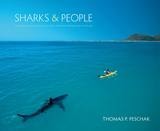
Sharks and People
Exploring Our Relationship with the Most Feared Fish in the SeaThomas P. Peschak
University of Chicago Press, 2008
A contributing photographer to National Geographic, Peschak is best known for his unusual photographs of sharks—his iconic image of a great white shark following a researcher in a small yellow kayak is one of the most recognizable shark photographs in the world. The other images gathered here are no less riveting, bringing us as close as possible to sharks in the wild. Alongside the photographs, Sharks and People tells the compelling story of the natural history of sharks. Sharks have roamed the oceans for more than four hundred million years, and in this time they have never stopped adapting to the ever-changing world—their unique cartilage skeletons and array of super-senses mark them as one of the most evolved groups of animals. Scientists have recently discovered that sharks play an important role in balancing the ocean, including maintaining the health of coral reefs. Yet, tens of millions of sharks are killed every year just to fill the demand for shark fin soup alone. Today more than sixty species of sharks, including hammerhead, mako, and oceanic white-tip sharks, are listed as vulnerable or in danger of extinction.
The need to understand the significant part sharks play in the oceanic ecosystem has never been so urgent, and Peschak’s photographs bear witness to the thrilling strength and unique attraction of sharks. They are certain to enthrall and inspire.
Shattering
Food, Politics, and the Loss of Genetic DiversityCary Fowler and Pat Mooney
University of Arizona Press, 1990
Large-scale agriculture has come to favor uniformity in food crops. More than 7,000 U.S. apple varieties once grew in American orchards; 6,000 of them are no longer available. Every broccoli variety offered through seed catalogs in 1900 has now disappeared. As the international genetics supply industry absorbs seed companies—with nearly one thousand takeovers since 1970—this trend toward uniformity seems likely to continue; and as third world agriculture is brought in line with international business interests, the gene pools of humanity's most basic foods are threatened.
The consequences are more than culinary. Without the genetic diversity from which farmers traditionally breed for resistance to diseases, crops are more susceptible to the spread of pestilence. Tragedies like the Irish Potato Famine may be thought of today as ancient history; yet the U.S. corn blight of 1970 shows that technologically based agribusiness is a breeding ground for disaster.
Shattering reviews the development of genetic diversity over 10,000 years of human agriculture, then exposes its loss in our lifetime at the hands of political and economic forces. The possibility of crisis is real; this book shows that it may not be too late to avert it.
Shepherd
A MemoirRichard Gilbert
Michigan State University Press, 2014

Signal Processing and Machine Learning for Brain-Machine Interfaces
Toshihisa Tanaka
The Institution of Engineering and Technology, 2018
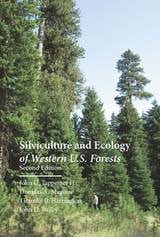
Silviculture and Ecology of Western U.S. Forests
John D. Bailey
Oregon State University Press, 2015
Silviculture and Ecology of Western U.S. Forests, Second Edition, is a text for students, professional forest managers, and scientists that summarizes both early and contemporary research and principles relevant to the silviculture, ecology, and multi-purpose management of western U. S. forests. Based on its authors’ significant experiences and contributions in the field, as well as nearly 1000 additional references, Silviculture and Ecology remains the only text that focuses on silviculture in western U.S. forests—providing background and basis for current biological, ecological, and managerial practices.
Detailed chapters on fire, tree growth, and management of complex stand structures, as well as shrub ecology and an ecosystem framework, are bolstered in the second edition. A new series of case studies illustrates how silvicultural practices are developed and modified as forests grow and new challenges and opportunities occur. Contemporary silvicultural practices, particularly pertaining to fire use, vegetation management, soil fertility, and fertilization have been updated, and modifications that enhance standard practices are demonstrated throughout the text.
In this comprehensive reference, readers entering the field will come to understand the significance of carefully managing forests by conscious design, and experienced silviculturists will benefit from the edition’s up-to-date information, providing forest users with a greater range of ecosystem services and consumable products alike.
Singing with Invisible Worlds
Fermenting Sake on Microbial TimeMaya Hey
University of Minnesota Press, 2026
Rethinking life with microbes through the art of natural fermentation
Within us and around us, microbes are everywhere, constantly reshaping what it means to be human as we interact with them—sometimes knowingly, sometimes not. Singing with Invisible Worlds theorizes human–microbe relationships through a rare ethnographic account of the fermentation process at the 350-year-old Terada Honke, one of only two natural sake breweries in Japan.
Painting a vivid picture of how sake brewers collaborate with bacteria, molds, and yeasts, Maya Hey reveals that ambient microbes are not controlled but courted, cultivated, and deliberately choreographed. As the brewers adapt to shifting microbial dynamics, they engage in what Hey calls an “improvisational ethic”—a way of responding to the unknown with care and attentiveness through each phase of blooming and waning across weeks, months, and even centuries. In documenting these remarkable practices, Singing with Invisible Worlds offers an intimate, situated understanding of how we can come to know and live with microbial life, with implications for feminist theory, science and technology studies, and multispecies ethnography.
Unsettling simplistic notions of “good” or “bad” microbes, this book presents a compelling vision for planetary coexistence—one that starts not with grand solutions but with small, rhythmic acts of microscopic attunement.
Retail e-book files for this title are screen-reader friendly with images accompanied by short alt text and/or extended descriptions.
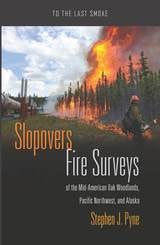
Slopovers
Fire Surveys of the Mid-American Oak Woodlands, Pacific Northwest, and AlaskaStephen J. Pyne
University of Arizona Press, 2019
The Mid-American oak woodlands were the scene of vigorous settlement in the late eighteenth and early nineteenth centuries and thus the scene of changing fire practices. The debate over the origin of the prairies—by climate or fire—foreshadowed the more recent debate about fire in oak and hickory hardwoods. In both cases, today’s thinking points to the critical role of fire.
The Pacific Northwest was the great pivot between laissez-faire logging and state-sponsored conservation and the fires that would accompany each. Then fire faded as an environmental issue. But it has returned over the past decade like an avenging angel, forcing the region to again consider the defining dialectic between axe and flame.
And Alaska—Alaska is different, as everyone says. It came late to wildland fire protection, then managed an extraordinary transfiguration into the most successful American region to restore something like the historic fire regime. But Alaska is also a petrostate, and climate change may be making it the vanguard of what the Anthropocene will mean for American fire overall.
Slopovers collates surveys of these three regions into the national narrative. With a unique mixture of journalism, history, and literary imagination, renowned fire expert Stephen J. Pyne shows how culture and nature, fire from nature and fire from people, interact to shape our world with three case studies in public policy and the challenging questions they pose about the future we will share with fire.
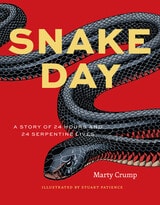
Snake Day
A Story of 24 Hours and 24 Serpentine LivesMarty Crump
University of Chicago Press, 2026
Does a snake crossing your path trigger delight or dread? The answer is clear for celebrated biologist Marty Crump, who shows us that snakes deserve our respect, admiration, and protection. In her short book Snake Day, each chapter introduces a single snake during a single hour, highlighting twenty-four different species from around the globe.
In the dark morning of a Brazilian forest, we avoid stepping on a jararaca, a nocturnal viper. If she bites, her venom will make our blood pressure—and us—drop. A synthetic version of this venom is now a lifesaving drug, used to treat hypertension and heart failure. Later in the morning, in the Zagros Mountains that trace Iran’s northwest border, what appears to be a tiny arachnid wiggles on the ground. When a hungry warbler approaches for a meal, realizes too late that the spider is actually a snake’s tail, and an Iranian spider-tailed viper makes a meal of the bird. In the early afternoon, in a pine forest outside Atlanta, Georgia, an eastern hognose snake strikes at us—a bluff—and then rolls over and plays dead. By the end of our snake day, we’ll have glimpsed the diversity of this unique group of reptiles, met serpentine friends who frighten and fascinate, and learned how humans can protect these amazing species.
For each hour, celebrated artist Stuart Patience has depicted serpentine scenes in stunning pen-and-ink drawings. Working together to narrate and illustrate these unique moments in time, Crump and Patience have created an engaging read that is a perfect way to spend an hour or two—and a true gift for amateur scientists or anyone who recoils at or relishes the sight of a snake.

Snakes, Sunrises, and Shakespeare
How Evolution Shapes Our Loves and FearsGordon H. Orians
University of Chicago Press, 2014
In this ambitious and unusual work, evolutionary biologist Gordon H. Orians explores the role of evolution in human responses to the environment, beginning with why we have emotions and ending with evolutionary approaches to aesthetics. Orians reveals how our emotional lives today are shaped by decisions our ancestors made centuries ago on African savannas as they selected places to live, sought food and safety, and socialized in small hunter-gatherer groups. During this time our likes and dislikes became wired in our brains, as the appropriate responses to the environment meant the difference between survival or death. His rich analysis explains why we mimic the tropical savannas of our ancestors in our parks and gardens, why we are simultaneously attracted to danger and approach it cautiously, and how paying close attention to nature’s sounds has resulted in us being an unusually musical species. We also learn why we have developed discriminating palates for wine, and why we have strong reactions to some odors, and why we enjoy classifying almost everything.
By applying biological perspectives ranging from Darwin to current neuroscience to analyses of our aesthetic preferences for landscapes, sounds, smells, plants, and animals, Snakes, Sunrises, and Shakespeare transforms how we view our experience of the natural world and how we relate to each other.
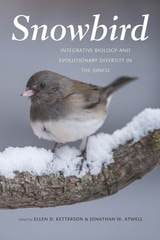
Snowbird
Integrative Biology and Evolutionary Diversity in the JuncoEdited by Ellen D. Ketterson and Jonathan W. Atwell
University of Chicago Press, 2016
Intended for scholars, citizen scientists, and amateur ornithologists, alike, Snowbird synthesizes decades of research from the diverse and talented researchers who study the Junco genus. Though contributors approach their subject from a variety of perspectives, they share a common goal: elucidating the organismal and evolutionary processes by which animals adapt and diversify in response to environmental change. Placing special emphasis on the important role that underlying physiological, hormonal, and behavioral mechanisms play in these processes, Snowbird not only provides a definitive exploration of the junco’s evolutionary history and behavioral and physiological diversity but also underscores the junco’s continued importance as a model organism in a time of rapid global climate change. By merging often disparate biological fields, Snowbird offers biologists across disciplines an integrative framework for further research into adaptation, population divergence, and the formation of new species.

Somatic Selection and Adaptive Evolution
On the Inheritance of Acquired CharactersE. J. Steele
University of Chicago Press, 1981
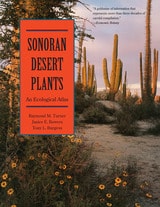
Sonoran Desert Plants
An Ecological AtlasRaymond M. Turner, Janice E. Bowers, and Tony L. Burgess
University of Arizona Press, 1995
An encyclopedia as well as an atlas, this monumental work describes the taxonomy, geographic distribution, and ecology of 339 plants, most of them common and characteristic trees, shrubs, or succulants. Also included is valuable information on natural history and ethnobotanical, commercial, and horticultural uses of these plants. The entry for each species includes a range map, an elevational profile, and a narrative account. The authors also include an extensive bibliography, referring the reader to the latest research and numerous references of historical importance, with a glossary to aid the general reader. Sonoran Desert Plants is a monumental work, unlikely to be superseded in the next generation. As the region continues to attract more people, there will be an increasingly urgent need for basic knowledge of plant species as a guide for creative and sustainable habitation of the area. This book will stand as a landmark resource for many years to come.
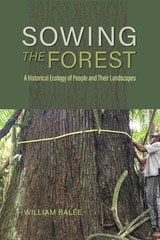
Sowing the Forest
A Historical Ecology of People and Their LandscapesWilliam Balée
University of Alabama Press, 2023
Explores how, over centuries, Amazonian people and their cultures have interacted with rainforests
William Balée is a world-renowned expert on the cultural and historical ecology of the Amazon basin. His new collection, Sowing the Forest, is a companion volume to the award-winning Cultural Forests of the Amazon, published in 2013. Sowing the Forest engages in depth with how, over centuries, Amazonian people and their cultures have interacted with rainforests, making the landscapes of palm forests and other kinds of forests, and how these and related forests have fed back into the vocabulary and behavior of current indigenous occupants of the remotest parts of the vast hinterlands.
The book is divided into two parts. Part 1, “Substrate of Intentionality,” comprises chapters on historical ecology, indigenous palm forests, plant names in Amazonia, the origins of the Amazonian plantain, and the unknown “Dark Earth people” of thousands of years ago and their landscaping. Together these chapters illustrate the phenomenon of feedback between culture and environment.
In Part 2, “Scope of Transformation,” Balée lays out his theory of landscape transformation, which he divides into two rubrics—primary landscape transformation and secondary landscape transformation—and for which he provides examples and various specific effects. One chapter compares environmental and social interrelationships in an Orang Asli group in Malaysia and the Ka’apor people of eastern Amazonian Brazil, and another chapter covers loss of language and culture in the Bolivian Amazon. A final chapter addresses the controversial topic of monumentality in the rainforest. Balée concludes by emphasizing the common thread in Amazonian historical ecology: the long-term phenomenon of encouraging diversity for its own sake, not just for economic reasons.

Soybeans and Their Products
Markets, Models, and PolicyJames P. Houck, Mary E. Ryan, and Abraham Subotnik
University of Minnesota Press, 1972
Soybeans and Their Products was first published in 1972. Minnesota Archive Editions uses digital technology to make long-unavailable books once again accessible, and are published unaltered from the original University of Minnesota Press editions.
This is the report of a comprehensive study designated to identify and measure empirically the forces, interrelationships, and processes which shape the behavior of the total soybean market. The research focused on the years from 1946 to 1967, a period when the soybean economy developed from its small beginnings to its present magnitude. Soybeans are now the leading oilseed in world trade; soybean oil is the most prominent among the many edible oils available in the world; and soybean meal stands first in importance in world markets for high-protein livestock feeds. As a top cash crop in U.S. agriculture soybeans are rivaled only by corn.
Much of the remarkable surge in soybean and related markets in recent years can be explained and analyzed by using the concepts of demand growth and commodity substitution developed in this book. In addition to serving the specific interests of commodity experts, the study will be useful to econometricians and price analysts as an example of empirical investigation of a major agricultural and industrial raw material.
The research was carried out through close cooperation between the University of Minnesota's Department of Agricultura and Applied Economics and the Economic and Statistical Analysis Division of the Economic Research Service, U.S. Department of Agriculture.
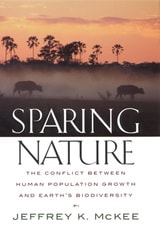
Sparing Nature
The Conflict between Human Population Growth and Earth's BiodiversityMcKee, Jeffrey K.
Rutgers University Press, 2005
Are humans too good at adapting to the earth’s natural environment? Every day, there is a net gain of more than 200,000 people on the planet—that’s 146 a minute. Has our explosive population growth led to the mass extinction of countless species in the earth’s plant and animal communities?
Jeffrey K. McKee contends yes. The more people there are, the more we push aside wild plants and animals. In Sparing Nature, he explores the cause-and-effect relationship between these two trends, demonstrating that nature is too sparing to accommodate both a richly diverse living world and a rapidly expanding number of people. The author probes the past to find that humans and their ancestors have had negative impacts on species biodiversity for nearly two million years, and that extinction rates have accelerated since the origins of agriculture. Today entire ecosystems are in peril due to the relentless growth of the human population. McKee gives a guided tour of the interconnections within the living world to reveal the meaning and value of biodiversity, making the maze of technical research and scientific debates accessible to the general reader. Because it is clear that conservation cannot be left to the whims of changing human priorities, McKee takes the unabashedly neo-Malthusian position that the most effective measure to save earth’s biodiversity is to slow the growth of human populations. By conscientiously becoming more responsible about our reproductive habits and our impact on other living beings, we can ensure that nature’s services will make our lives not only supportable, but also sustainable for this century and beyond.