Results by title
905 books match the query 'Literary' and 51 start with s
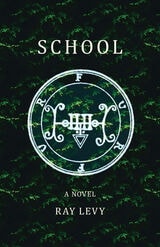
School
A NovelRay Levy
University of Alabama Press, 2023
Both an exorcism of contemporary academia and a comedic portrait of an artist seeking the means to survive.
At once angry and jubilant, Ray Levy’s School is a curse on a dying system and an incantation for transforming pain into a vessel for capacious, creative selfhood.
A dissertation manuscript possessed by the spirit of Marquis de Sade; a lecture on psychoanalysis delivered as stand-up comedy by a dysphoric graduate student; a review of a found-footage horror movie that’s also a YouTube video of a conference presentation on French theory; an interview with an avant-garde filmmaker that’s really an invocation for conjuring your demon brother; oversharing and withholding, chanting and channeling, School is a slapstick roast of Derrida’s corpse and a mystical vision of a life in which you have not lost.
Second Scroll
A.M. Klein
Northwestern University Press, 1985
The Second Scroll, Klein’s only novel, combines the lyric genius of his poetic works with compelling reportage to create one of the most eloquent and original works in Canadian fiction.
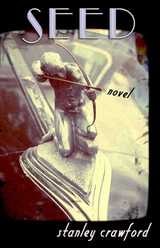
Seed
A NovelStanley Crawford
University of Alabama Press, 2015
What they get instead are Bill’s memories, made vivid by each item from the past, memories that are more exotic and curious than the lives currently lived by his young relatives.
Accompanied by his housekeeper, Ramona, and his young gardener, Jonathan, Bill is a somewhat cantankerous, wildly intelligent, and often forgetful man who recalls and speaks to his passed wife, often thinking that she's not dead. His unwillingness to recognize what has happened to her and to give away his only possession of any value, a 1937 Pierce-Arrow automobile that they bought together, becomes the measure of his grief and of his love in this profoundly funny novel that faces death and love sincerely.
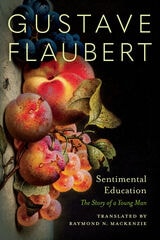
Sentimental Education
The Story of a Young ManGustave Flaubert
University of Minnesota Press, 2024
A fresh and vivid translation of Flaubert’s influential bildungsroman
Gustave Flaubert conceived Sentimental Education, his final complete novel, as the history of his own generation, one that failed to fulfill the promise of the Revolution of 1848. Published a few months before the start of the 1870 Franco–Prussian War, it offers both a sweeping panorama of French society over three decades and an intimate bildungsroman of a young man from a small town who arrives in Paris when protests against the monarchy are increasing.
The novel’s protagonist, Frédéric Moreau, alternates between aimlessness and ambition as he searches for a meaningful life through love affairs and republican politics. Flaubert’s narrative includes scenes of high drama, as scattered protests across Paris swell into revolution, and quiet moments of self-aware romanticism, crafting a story that possesses the sweep and scope of a historical novel combined with deep emotion and scandalous intimacy. Suffused with tragedy and the poignancy of lost chances and wasted lives, Sentimental Education is sharpened by satirical observations of what Flaubert condemned as the Second Empire’s endemic hypocrisy and willful blindness.
This vibrant, new translation by Raymond N. MacKenzie includes an extensive critical introduction and annotations to help the modern reader appreciate Flaubert’s achievement. Sentimental Education intertwines the personal, the intimate, and the subjective with the political, social, and cultural, embedding Frédéric’s story in the larger arc of what Flaubert saw as France’s decline into mediocrity and imbecility in its politics and manners.
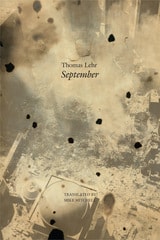
September
MirageThomas Lehr
Seagull Books, 2013
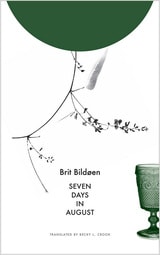
Seven Days in August
Brit Bildøen
Seagull Books, 2016
A few years after the deadly 2011 terror attack in Norway’s Utøya Island, Otto and Sofie are attempting to put the pieces of their life back together without their beloved daughter, who was murdered alongside countless other youths on one of the worst days in Norway’s history. Seven Days in August is the story of Otto and Sofie’s grief, painstakingly narrated over just one week—a window into their attempts to navigate a life together, face to face with their own helplessness and mortality.

Sex for the Millennium
Extreme TalesHarold Jaffe
University of Alabama Press, 2026
An innovative work of experimental prose examining the entanglements of media, authority, and embodied experience.
Sex for the Millennium: Extreme Tales by Harold Jaffe is a provocative collection of experimental narratives that push the boundaries of form, language, and subject matter. Blending fiction, satire, and cultural commentary, the book presents a series of fragmented “extreme” episodes that explore the intersections of desire, power, and media in contemporary society.
Jaffe uses the concept of sex as a central metaphor rather than a literal focus, exploring how desire can be shaped, controlled, and commodified within larger social and political systems. Rather than following a traditional plot, Jaffe constructs a shifting landscape populated by characters caught in systems of control shaped by institutions, technology, and consumer culture. The stories examine how identity and intimacy are mediated by external forces.
Jaffe's work reflects postmodern literary traditions, using disjointed narratives and abrupt tonal shifts to unsettle the reader. His writing challenges social norms and exposes the underlying mechanisms of authority and manipulation at work in everyday life. With dark humor and intentional provocation, Sex for the Millennium: Extreme Tales offers a critique of modern culture, inviting readers to confront questions about autonomy, authenticity, and the influence of media in shaping human experience.
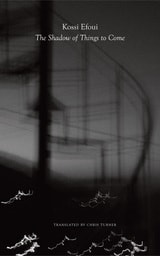
Shadow of Things to Come
Kossi Efoui
Seagull Books, 2013
In an unnamed African nation, the people are subject to a state of perpetual warfare and to an Orwellian abuse of language that strips from language its meaning and renders life senseless. And in a bare room lit only by moonlight, a young man hides, waiting for the mysterious crocodile-men to come and help him escape from the violent tyranny of the state. While he waits, he tells his story.
This is Kossi Efoui’s catastrophic and carnivalesque dreamscape, the dark setting of The Shadow of Things to Come. Here, men and women are taken in the night, spirited away from their families, and sent to plantation penal colonies to be worked to the edge of madness. When they return, they are empty shells, their lost time referred to as the “Time of Annexation.” But though his parents were taken, our protagonist survived, first in the care of a quirky benefactress named Mama Maize, then under the wing of the state itself, as a student at one of its elite schools. When he meets a bookseller named Axis Kemal, however, he has found a surrogate father, an eccentric and wise man who can bring him out of the meaningless confusion and tell him the truth about the society he lives in.
Through his characters, Efoui speaks out against atrocity and the abuse of power, but more, he writes against political rhetoric and the destruction of meaning by government. This novel is a love letter to language and, in Chris Turner’s dazzling translation, it becomes a stunning introduction for English-language readers to an exciting new talent.
Shamara and Other Stories
Svetlana Vasilenko
Northwestern University Press, 1999
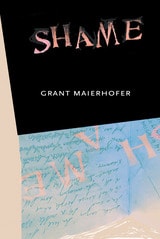
Shame
Grant Maierhofer
University of Alabama Press, 2022
A kaleidoscopic sequence of autofictional narratives about identity, grief, and narrative itself.
Shame is a daring exploration of the potential and limits of memory and self. Here we meet Grant Maierhofer at various points within his life then, now, and in the future as he investigates the sense of shame that haunts the course of his days. The real and unreal, fact and fiction, blur together in a Kaufmanesque sequence of overlapping narratives about who we really are, how we cope with regret, and the repetitions of our behavior.
Through lists, fragments, recollections, and rants, the story of a son’s vexing grief for his father emerges. A sober addict trying to figure out how to navigate pleasure, diversion, and escape. A father trying to figure out marriage, children, maturity, and responsibility. A confused observer in a world constantly torn apart by media, politics, and aggression. A meditation on the nature of art, and art’s place in contemporary life.
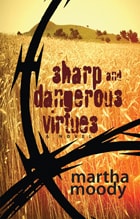
Sharp and Dangerous Virtues
A NovelMartha Moody
Ohio University Press, 2012
It’s 2047 in Dayton, Ohio. In response to food and water shortages, the U.S. government has developed an enormous, and powerfully successful, agricultural area—the “Heartland Grid”—just north of the city. In the meantime, in the wake of declining American power a multinational force has established itself in Cleveland. Behind these quickly shifting alliances lies a troubling yet tantalizing question: what will the American future look like?
Sharp and Dangerous Virtues is the story of ordinary people caught in situations they had never planned for or even imagined. There are Chad and Sharis, a married couple with two sons, holding out for normal life in their decaying suburb; Tuuro, a black church custodian whose false confession of murder is used for political purposes; Lila, Dayton’s aging, lonely Commissioner of Water, who dreams of being part of the “pure” existence of the Grid residents; and Charles and Diana, idealistic lovers trying desperately to preserve the nature center that has become their refuge.
What will these people do? What choices are left for them, and what choices have been taken away? Whom and what can they trust? Novelist Moody—known for her vivid portrayals of complicated characters and relationships in novels such as Best Friends and Sometimes Mine—weaves together cataclysmic events and the most intimate of human emotions to create a future that seems achingly real. Sharp and Dangerous Virtues will change the way you think and feel.
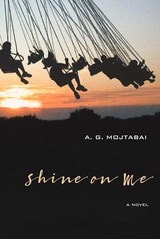
Shine on Me
A NovelA. G. Mojtabai
Northwestern University Press, 2016
The rules are simple enough: “Here’s the deal: Whoever keeps his hands longest on one of the dealer’s brand new pickup trucks owns it and gets to drive it away.” An actual contest hosted by an auto dealership in Texas is the prompt for this fictional exploration, which seeks to probe the depths and shallows of the American soul.
To the players vying for this shiny new prize, competition revs up as the hours wear on, positions harden, sightlines narrow, and sleep-deprivation intensifies. At the center is the reporter Trew Reade, struggling to make sense of the event and his own role in it. Early on, he muses that “surface and substance were rarely the same; transparency could be the most cunning of masks.” So, too, is the author’s transparent prose. Reviewers have sometimes found Mojtabai’s vision akin to that of Marilynne Robinson and Flannery O’Connor, but the characterization from Books & Culture—“not like anyone else”—is perhaps best, inviting readers to discover this provocative writer for themselves.
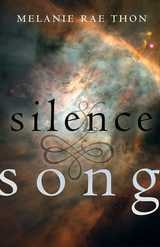
Silence & Song
Melanie Rae Thon
University of Alabama Press, 2015
In “Translations,” the prose poem connecting the two longer fictions, child refugees at a multilingual literacy center in Salt Lake City discover the merciful “translation” of dance and pantomime.
The convergence of two disparate events—a random murder in Seattle and the nuclear accident at Chernobyl—catalyze the startling, eruptive form of the concluding piece,“requiem: home: and the rain, after.” Narrated in first person by the killer’s sister and plural first person by the “liquidators” who come to the Evacuation Zone to bury entire villages poisoned by radioactive fallout, “requiem” navigates the immediate trauma of murder and environmental disaster; personal and global devastation; and the remarkable recovery of the miraculously diverse more-than-human world.
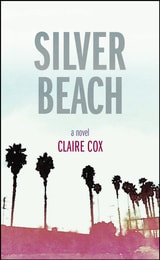
Silver Beach
Claire Cox
University of Massachusetts Press, 2021
After the family tragedy, Mara's father took her to the opposite end of the country, where she made a tidy life for herself in western Massachusetts, with a good education, stable job, and loving girlfriend. Her half-sister, Shannon, was left behind with their mother in San Diego. Surviving on disability checks and handouts from family, Shannon can't remember a time when Linda wasn't drunk.
When a heart attack lands Linda in the hospital, Shannon's first impulse is to skip town—to finally escape her mother's orbit and make her sister step up. While Mara gave up on Linda years ago and couldn't have less in common with her sister, an unemployed stoner, it's time for her to stop running from everything that makes her have feelings. This is a novel about the persistent, mystifying ties of family, the extravagant mess of addiction, and what it means to actually live inside your own life.
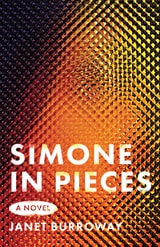
Simone in Pieces
Janet Burroway
University of Wisconsin Press, 2025
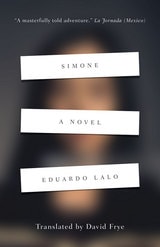
Simone
A NovelEduardo Lalo
University of Chicago Press, 2015
A tale of alienation, love, suspense, imagination, and literature set on the streets of San Juan, Puerto Rico, Simone tells the story of a self-educated Chinese immigrant student courting (and stalking) a disillusioned, unnamed writer who is struggling to make a name for himself in a place that is not exactly a hotbed of literary fame. By turns solipsistic and political, romantic and dark, Simone begins with the writer’s frustrated, satiric observations on his native city and the banal life of the university where he teaches—forces utterly at odds with the sensuality of his writing. But, as mysterious messages and literary clues begin to appear—scrawled on sidewalks and walls, inside volumes set out in bookstores, left on his answering machine and under his windshield wiper—Simone progresses into a cat-and-mouse game between the writer and his mystery stalker. When the eponymous Simone’s identity is at last revealed, the writer finds in the life of this Chinese immigrant a plight not unlike his own. Traumatized and lonely, the pair moves towards bittersweet collaborations in passion, grief, and art.
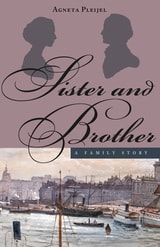
Sister and Brother
A Family StoryAgneta Pleijel
Gallaudet University Press, 2018
Helena showed early musical talent and, trained by her father, was a gifted singer. She lived in Paris for a time and enjoyed popular success. She fell in love with a musician but was plunged into despair when he died from cholera. Her father persuaded her to give up singing and marry a cold industrialist, who was one of the wealthiest men in Sweden, in order to provide financial support for the family. Helena struggled in the loveless marriage and battled depression throughout her life.
Despite their disparate lives, Albert and Helena faced similar struggles with communication, autonomy, and self-determination. Albert’s story traces the development of his own sense of identity as well as the development of Swedish Deaf culture, while Helena’s life reflects the silencing and oppression endured by women. In Sister and Brother, Pleijel’s literary treatment of their lives sheds light on the cultural and social norms that shaped the experiences of deaf people and women in the 19th century.
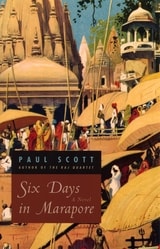
Six Days in Marapore
A NovelPaul Scott
University of Chicago Press, 1953
In this swiftly paced and lyrical novel about British expatriates at the time of Indian independence, Paul Scott grapples with the themes of race, possession, and history that dominate all four novels of his masterpiece, The Raj Quartet, especially The Jewel in the Crown. As always, Scott fills his book with vivid characters: the seductive, bigoted war widow; the sophisticated, wily Hindu politician; and the athletic young American who only gradually begins to understand the legacy of pain and hatred veiling the woman he has come to rescue. Set against the backdrop of a nation in violent transition—a climate of exhilaration and shifting loyalties—Six Days in Marapore unfolds amidst the possibility of reconciliation, freedom, and healing.
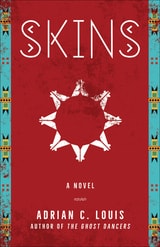
Skins
A NovelAdrian C. Louis
University of Nevada Press, 2022
It’s the early 1990s and Rudy Yellow Shirt and his brother, Mogie, are living on the Pine Ridge Reservation in South Dakota, home of the legendary Oglala Sioux warrior Crazy Horse. Both Vietnam veterans, the men struggle with daily life on the rez. Rudy, a criminal investigator with the Pine Ridge Public Safety Department, must frequently arrest his neighbors and friends, including his brother, who has become a rez wino.
But when Rudy falls and hits his head on a rock while pursuing a suspected murderer, Iktome the trickster enters his brain. Iktome restores Rudy’s youthful sexual vigor—long-lost to years of taking high blood pressure pills—and ignites his desire for political revenge via an alter ego, the “Avenging Warrior.” As the Avenging Warrior, Rudy takes direct action to punish local criminals. In a violent act, he torches the local liquor store, nearly burning Mogie alive while he is hiding on the store’s roof, plotting to steal booze. Although the brothers reconcile before Mogie dies, he leaves the Avenging Warrior with one final mission: go to Mount Rushmore and blow the nose off George Washington’s face.
Louis’s critically acclaimed novel was made into a movie in 2002, directed by Chris Eyre.

Skylark
Dezso Kosztolányi
Central European University Press, 1996
A masterpiece of twentieth-century Hungarian fiction, Kosztolányi's Skylark is a classic portrait of provincial life in the Austro-Hungarian monarchy. Set in the autumn of 1899, it focuses on one extraordinary week in the otherwise uneventful lives of an elderly Hungarian couple. Their ugly spinster daughter, nicknamed Skylark, has left them for an unprecedented holiday with relatives in the country. At first, the couple, whose entire existence revolves around their daughter, are devastated by her absence. Slowly, however, they rediscover the delights and diversions of small-town life, finally reaching the shocking conclusion that their daughter is a burden to them.
In this beautifully written tale Kosztolányi turns family sentiment on its head with an irony that is as telling now as it was nearly seventy years ago.
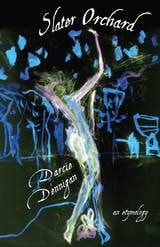
Slater Orchard
An EtymologyDarcie Dennigan
University of Alabama Press, 2019
In Slater Orchard, a cleaning woman navigates a half-imaginary world ravaged by industrial waste and pollution. As she labors to grow pear trees in a dumpster, appearances unravel around and within her, and the orchard becomes a burial ground. We begin to question both the reliability of the narrator and of consensual reality.
With sharp wit and precise diction, Darcie Dennigan calls on and works in the lineage of great modernist women, from Clarice Lispector to Marie Redonnet. Slater Orchard is thoroughly contemporary in its themes, however, evincing dire questions of rampant capitalism and climate change that are rapidly changing our world and the exigencies of living in it.
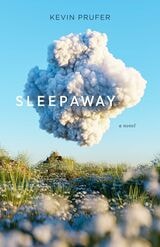
Sleepaway
A NovelKevin Prufer
Acre Books, 2024
It’s 1984, and the invisible mists are falling, mists that cause people to slip into dreamless slumber—sleeps from which most, but not all, awaken. Those who do wake live in fear of the next mist, and the next, each a little longer and more dangerous than the last.
Alternating between the perspectives of a kleptomaniac waitress named Cora and her twelve-year-old friend Glass, Sleepaway depicts a small-town America turned alarming. This is a place where loved ones are lost to a state between life and death; where denial, delusion, and desperation take hold of those remaining; where dealers of the antisleep drug Eight Track disappear into shadows, and a murderous wannabe kingpin hunts for victims.
As civilization is shaved away one sleep storm at a time, people struggle to go on, making and losing allies and discovering new strengths and weaknesses. Cora sets out on an ill-fated road trip hoping to reclaim her sister’s love, only to discover a more powerful bond than blood. Glass, having lost his only parent to one of the first mists, searches for a stability he has never had and may never achieve. All the while, buildings rise outside town to cope with the mounting number of sleepers. Some see them as hospitals, others as repositories, and yet soon the air around them fills with ash.
An allegory for post-pandemic America, Sleepaway grapples with questions concerning friendship, race, and family amid the horror of inexplicable, arbitrary annihilation.
Sleepaway
A NovelKevin Prufer
Acre Books, 2024
It’s 1984, and the invisible mists are falling, mists that cause people to slip into dreamless slumber—sleeps from which most, but not all, awaken. Those who do wake live in fear of the next mist, and the next, each a little longer and more dangerous than the last.
Alternating between the perspectives of a kleptomaniac waitress named Cora and her twelve-year-old friend Glass, Sleepaway depicts a small-town America turned alarming. This is a place where loved ones are lost to a state between life and death; where denial, delusion, and desperation take hold of those remaining; where dealers of the antisleep drug Eight Track disappear into shadows, and a murderous wannabe kingpin hunts for victims.
As civilization is shaved away one sleep storm at a time, people struggle to go on, making and losing allies and discovering new strengths and weaknesses. Cora sets out on an ill-fated road trip hoping to reclaim her sister’s love, only to discover a more powerful bond than blood. Glass, having lost his only parent to one of the first mists, searches for a stability he has never had and may never achieve. All the while, buildings rise outside town to cope with the mounting number of sleepers. Some see them as hospitals, others as repositories, and yet soon the air around them fills with ash.
An allegory for post-pandemic America, Sleepaway grapples with questions concerning friendship, race, and family amid the horror of inexplicable, arbitrary annihilation.
Slime Line
A NovelJake Maynard
West Virginia University Press, 2024
In the wake of his father’s death, Garrett Deaver washes up at a salmon processing plant in his dad’s old stomping grounds of Alaska. There, he renames himself Beaver—because just like a beaver, he’s “an industrious motherfucker”— and vows to become a supervisor at Klak Fancy Salmon, LLC. But moving up within the industry’s seasonal underclass is anything but simple, and soon he finds himself with real, and imagined, enemies at the plant. As amphetamines scramble his sense of reality, and secrets about his father’s life are revealed, the job he’d hoped would bring him salvation threatens to leave him broke, alone, and—maybe even literally—underwater.
Small Rocks Rising
(A Novel)Susan Lang
University of Nevada Press, 2002
Snapshots
Alain Robbe-Grillet
Northwestern University Press, 1995

Sofia Petrovna
Lydia Chukovskaya
Northwestern University Press, 1989
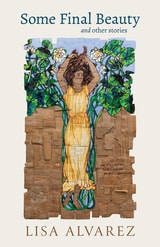
Some Final Beauty and Other Stories
Lisa Alvarez
University of Nevada Press, 2025
From the vibrant streets of Southern California to the arid Nevada Nuclear Test Site, these thematically linked stories explore self-discovery, rebellion, and solidarity as complex personalities and values meet at the intersection of art, love, relationships, activism, and identity. A Mexican American returns from WWII to encounter Paul Robeson. A Spanish Civil War veteran befriends a recovering addict. Young 1980s female activists take to the streets. A big-city Latino mayor discovers the limits of ambition. A grieving aunt confronts her dead niece’s toxic lover.
Both the author and her characters interrogate finality while insisting on the beauty of everyday human engagement, often steeped in Hispanic culture, and stubbornly demanding joyful civic participation. Alvarez constructs more than a sharp, empathetic and funny sociological survey of experiences. She crafts a chronicle of lives lived with purpose, resilience, and the hope of a better future.
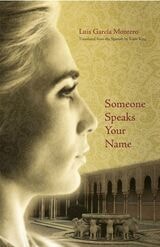
Someone Speaks Your Name
Luis García Montero
Swan Isle Press, 2022
It’s the summer of 1963 and León Egea, a cocky nineteen-year-old student and aspiring author, has just finished his first year studying literature at the University of Granada and is starting a summer job as an encyclopedia salesman. León, infuriated by the injustices in Spanish society under the Franco dictatorship, comes to find that literature can speak the truth when the reality is clouded.
In this coming-of-age novel by renowned Spanish writer Luis García Montero, León discovers that, under the repressive Franco dictatorship, people, places, and events are not always what they seem. But literature, words, and names open paths to discovery, both personal and political. Through lyrical fast-paced narrative, Someone Speaks Your Name explores literature as a foundation for understanding human relationships, national character, discrete differences between right and wrong, and for pursuing the path forward. As León’s professor tells him: “Learning to write is learning to see.”
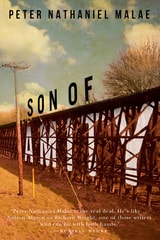
Son of Amity
Peter Nathaniel Malae
Oregon State University Press, 2018
Determined to escape the past, these characters find themselves sharing the same torn-down house, bordering tweaker poverty and bucolic wine country. Violence and penance, family and legacy, recidivism and post-traumatic stress disorder linger with the heavy rain of desperation. At the center of this storm is five-year old Benji, whose wide-eyed energy and openhearted faith could show all of them how to still be saved.
In this unforgettable tale, award-winning author Peter Nathaniel Malae explores the depths of human pain and trauma with genuine cultural authority. Son of Amity is a novel whose voices cry out with truth and vulnerability, never betraying that slight tilt toward hope needed to make the long, hard trek to tomorrow.

South Pole Station
Ashley Shelby
University of Minnesota Press, 2024
A New York TimesBook Review Editors’ Choice
A Shelf Awareness Best Book of the Year
Hudson Booksellers Book of the Year
One of the New York Post’s Best Books of the Summer
One of The Millions’s Most Anticipated Books of the Year
IndieNext Pick
A Time Magazine “What to Read Now” Selection
A wry novel set at the edge of the earth about the courage it takes to band together, even as everything around you falls apart
Unmoored by a recent family tragedy, Cooper Gosling is adrift at thirty and on the verge of ruining her career. So when the opportunity arises to join the National Science Foundation’s Artists & Writers Program in Antarctica, she jumps at the chance—and finds herself in the company of others who are just abnormal enough for Polar life, a group of eccentrics motivated by desires as ambiguous as her own. When they are joined by a fringe scientist who claims climate change is a hoax, the Polies’ already-imbalanced community is rattled, bringing them to the center of a global controversy and threatening the ancient ice chip they call home.

Southern Neogothic
Literary and Cinematic Reckonings from the 1970s to the PresentLee Rozelle
University of Alabama Press, 2026
In Southern Neogothic, Lee Rozelle moves beyond familiar debates that have long dominated studies of the American South, proposing a new framework for understanding how contemporary writers, filmmakers, and artists have transformed the genre’s signature tropes to engage pressing cultural, political, and environmental concerns. Rather than revisiting narratives centered on white grievance, Confederate memory, or Lost Cause mythology, Rozelle examines works that expand Southern Gothic’s reach, connecting regional traditions to global audiences and contemporary struggles over identity, power, and belonging. By demonstrating how contemporary artists have reinvented one of America’s most enduring literary modes, Rozelle offers a fresh and timely account of the genre’s continuing cultural relevance.
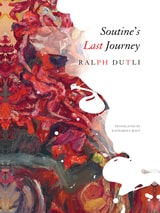
Soutine’s Last Journey
Ralph Dutli
Seagull Books, 2019
August 6, 1943. Chaim Soutine, a Jewish painter from Belorussia and a contemporary of Chagall, Modigliani, and Picasso, is hidden in a hearse that’s traveling from a small town on the Loire towards Nazi-occupied Paris. Suffering from a stomach ulcer, he urgently needs a life-saving operation. But the hearse must avoid the occupiers’ checkpoints, and it becomes increasingly likely that he will not survive the journey.
In a stream of extraordinary images, the morphine-induced artist hallucinates and remembers his life. He dreams of his childhood in Smilovichi near Minsk; his beginnings as a painter in Vilna; his arrival in 1913 in the art capital of the world, Paris, where he befriends Modigliani; and his survival of years of struggle and finding sudden success, only to be persecuted and forced into hiding when the Nazis invade. Back in the present, the painter believes that the power of milk is the only possible remedy for his ulcer. In his mind, he is traveling to a “white paradise”—a strange clinic where a “god in white” declares him healed but forbids him to paint. But for Soutine, neither paradise nor salvation exists if he cannot paint. So, he begins to paint again in secret, willing to pay the price of discovery.
A brilliant biographical novel about childhood, longing, friendship, bodily pain, and the wounds of exile, Ralph Dutli’s Soutine’s Last Journey is ultimately an exploration of language and the power of art.
Sovereign Traces, Volume 1
Not (Just) (An)OtherGordon D. Henry Jr.
Michigan State University Press, 2018
Spanish Perspectives on Chicano Literature
Literary and Cultural EssaysVanessa Fonseca and Jesús Rosales
The Ohio State University Press, 2017
For Chicanos this interest is intriguing, for they see Spain’s vision of the Chicano both with inviting enthusiasm and justifiable reservation—enthusiasm because this interest shows a humanistic concern in understanding their social issues (national identity, bilingualism, immigration, feminism, and so on) in relation to Spain’s own, and reservation because there still prevails an “open wound” from their historical connection with that country. In other words, a lingering Spanish colonial presence still exists in the Chicano psyche. These Spanish perspectives are important to consider as Chicano literature reflects on its place in twenty-first-century America and its transnational and global aspirations.

Special Election
StoriesBrock Clarke
Acre Books, 2025
In Special Election, ingenious fictions target our all-too-familiar preoccupations and vulnerabilities—belonging, (dis)engagement, the struggle for self-worth, the difficulty of loving and being loved, the banality and absurdity of existence. Brock Clarke’s rapier wit, inexhaustible imagination, and brilliant leaps of illogic transform his characters’ desperation and distress into tragicomic delight. In the title story, Lawrence Welk is ousted from heaven to run for governor in present-day North Dakota. In “One Goes Where One Is Needed,” we follow the former Provisional Coalition Administrator of post-liberation Iraq, now a youth ski instructor at Okemo Mountain in Vermont. In “The Slim Jim,” the protagonist finds himself (literally and figuratively) very slowly choking to death on a frozen microwavable burrito.
“There is something wrong with me,” states the narrator of “The Big Book of Useless Saturdays.” This could be said of all the characters in Special Election, and through loopy misdirection and mordant observation, Clarke devotes himself to showing his characters and his readers exactly what is wrong. Yet the sharpness of his attention and lavish ludicrousness of his storylines belie a sneaking affection for this imperfect, disappointing world filled with imperfect, disappointing humans. Though Clarke has been compared to such greats as Barthelme, Bellow, and Saunders, the nine stories in Special Election vibrate at a frequency all his own, showcasing the strengths of one of our most gifted comic writers.
St. Elmo
Or, Saved at LastAugusta Jane Evans
University of Alabama Press, 1992
The nineteenth-century Southern novel that transformed romance, virtue, and redemption into literary legend.
St. Elmo was the most famed and beloved novel by Augusta Jane Evans, a June 2015 inductee into the Alabama Writers Hall of Fame. First published in 1866, Evans’s rich tale of the relationship between the dashing and worldly St. Elmo and Edna Earl, an exemplar of virtuous Southern womanhood, sold over a million copies in four months and became one of the nineteenth century’s most influential novels.
This edition includes an introduction by Evans scholar Diane Roberts about the enduring relevance and legacy of St. Elmo as a work of literature as well as a reflection of gender roles and the seismic societal changes taking place in the United States in the aftermath of the Civil War.
Stardust
Léonora Miano
Seagull Books, 2026
At just twenty-three, Louise finds herself stranded in a Paris shelter with her baby, Bliss, in her arms while battling homelessness, racism, and the struggles that come with being a female immigrant trying to keep her dignity alive. Yet amid the chaos, Louise encounters a fragile network of mothers and survivors from the Maghreb and sub-Saharan Africa, each carrying their own story of violence, addiction, and resilience.
Based on a pivotal moment in author Léonora Miano’s own life, Stardust is a luminous story of the quiet power of choosing life. The novel was first composed over twenty years ago and remained unpublished for years. Now, Miano invites readers into her world, shedding light on the invisible corners of French society and offering a moving meditation on motherhood, dignity, and renewal.
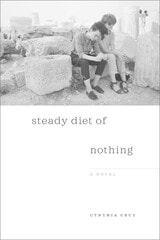
Steady Diet of Nothing
Cynthia Cruz
Four Way Books, 0
Beyond their den’s walls, the market reigns, and the societal structure of infinite calculation and infinite exchange has rendered contemporary life meaningless. As Toby and Candy separately descend into drug addiction and prostitution, they find their efforts to defy the American economic superstructure futile, and Candy, again, is alone. “I’m going to die in here, I say, to no one.” The transcription of a mute prayer, Steady Diet of Nothing is a stark, vital work that requires our attention. “I’m awake or else I’m dreaming,” Candy narrates. “There’s a knock on the door. The phone rings forever but I can’t put the receiver down.” It keeps the line open as long as it can.
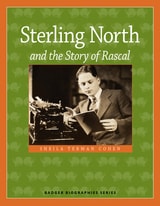
Sterling North and the Story of Rascal
Sheila Terman Cohen
Wisconsin Historical Society Press, 2015
This Badger Bio shares the story of author Sterling North – his adventures and misadventures as a young boy growing up in Edgerton, Wisconsin. Young readers will learn how North’s early experience in Wisconsin influenced him in writing some of his best loved children’s books – such as Rascal and So Dear To My Heart.
The story gives readers a glimpse of early 20th century customs and lifestyles in the rural Midwest. It also includes global issues of the time, including World War I and the Spanish flu pandemic, which greatly affected Sterling’s boyhood. As examples, his admired older brother Hershel served overseas in WWI as Sterling was growing up, bringing world events to the North family’s doorstep. His mother Gladys died when Sterling was only 7 years old because of the lack of medical advances in the early 1900s. And, as a young man, Sterling was hit by polio, a common epidemic scourge that left many children with paralysis.
Readers will learn of Sterling North’s successes, not only as a beloved author of children’s books, but as a columnist for the Chicago Daily News, an editor of North Star children’s history books, and a well-respected critic of other children’s literature.
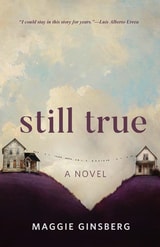
Still True
Maggie Ginsberg
University of Wisconsin Press, 2022
When ten-year-old Charlie Taylor arrives at Jack’s workshop shortly thereafter, he’s not the first kid in town to need help with a flat tire, and Jack gladly makes the repair to his bike. The Taylors are new to Anthem, and Jack soon discovers that Charlie and his mom, Claire, are struggling to fit in, even as Charlie’s dad, Dan, is thriving in his new job. Extending friendship and kindness, as well as introductions around the local café, Jack assumes a grandfatherly role. What he doesn’t see is the drinking that Claire hides from everyone, or the secret son that Lib has allowed to move into her house and the growing attraction between Claire and Matt. When the terrible events of a fateful evening threaten everyone’s carefully crafted lives, Jack, Lib, and their new friends must each determine the value of truth for the ones they love.
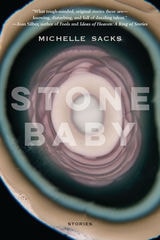
Stone Baby
StoriesMichelle Sacks
Northwestern University Press, 2017
Working on a large canvas that encompasses the extremes of rural Africa and urban London, material poverty and the surfeit of privilege, Sacks writes stories peopled by characters whose lives occasionally crisscross, with a protagonist in one story playing a deceptively small role in another. The stories artfully illuminate the rich interconnections and clashes that occur as her characters strike out boldly, yet find themselves at the mercy of capricious waves of circumstance.
Stone Baby explores movement, loss, and reinvention in the lives of people who are in the wrong place, in the wrong body, perhaps in the wrong life—it encapsulates an engrossing and urgent message in our age of migration and dislocation.
Stormy Isles
An Azorean TaleVitorino Nemésio, Edited and translated by Francisco Cota Fagundes
Tagus Press, 2019
Straight White Male
(A Novel)Gerald W. Haslam
University of Nevada Press, 2000
But life is about to deliver a series of challenges that overturn Leroy’s hard-won serenity and threaten to destroy his marriage and his family. Leroy’s father, Earl, once so wise and invincible, is descending into the empty, helpless depths of senility, while his ill-tempered mother struggles with her own health problems. The marriage of a high school friend ends tragically. And Leroy wrestles with his own bitter secret—his fierce resentment of his beloved wife’s troubled past and of the other men who knew her before he married her.
Summer of Caprice
Vladislav Vancura
Karolinum Press, 2006

Summer of Caprice
Vladislav Vancura
Karolinum Press, 2016
Sunland
A NovelDon Waters
University of Nevada Press, 2013
Sutra Americana
Monona Wali
University of Wisconsin Press, 2026
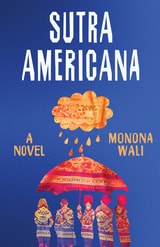
In 1960 S. K. Sharma, a brilliant young astrophysicist at the beginning of his academic career, has finally succeeded in bringing his wife, Sushila, from India to America. Intensely drawn to one another as star university students, the couple pursue an unlikely affair and marriage that crosses caste lines. Their sweeping, decades-long story of love, forgiveness, and coming of age takes place in a country that is both fascinated by and shuns them. The United States, with its exaltation of individualism, offers immense opportunities, but its looser sexual mores threaten to undermine the family’s happiness and devotion to one another.
As their three daughters become young women, they must navigate the tumultuous decades of the Vietnam War, the civil rights movement, and the women’s liberation movement. In their journeys of self-discovery, they upend their parents’ hold on them to craft radically new identities for themselves. As they discover their parents’ faults they grow increasingly puzzled by their devotion to one another, eventually learning how love and forgiveness have the power to overcome the most uncomfortable truths.

Sweet Promised Land, 50th ed.
Robert Laxalt
University of Nevada Press, 2007
Dominique Laxalt was sixteen when he left the French Pyrenees for America. He became a sheepherder in the Nevada desert and nearby hills of the Sierra. Like all his fellow Basque immigrants, Dominique dreamed of someday returning to the land of his beginnings. Most Basques never made the journey back, but Dominique finally did return for a visit with family and friends. Sweet Promised Land is the story of that trip, told by his son Robert, who accompanied him to the pastoral mountain village of Tardets in France. Dominique came home victorious, the adventurer who had conquered the unknown and found his fortune in the New World. He told of his life in America, the hardships and challenges, and began to realize that he had changed since his departure from Tardets. By the end of the visit, he knew with certainty where he belonged.
During the past fifty years, this book has become a classic in Western American literature, still beloved by the Basque-American community. In celebration of the fiftieth anniversary of the book’s publication, western literature scholar Ann Ronald wrote a new foreword, discussing the book in the context of American and Nevada literature.

Sweet Promised Land, 50th ed.
Robert Laxalt
University of Nevada Press, 2007
Dominique Laxalt was sixteen when he left the French Pyrenees for America. He became a sheepherder in the Nevada desert and nearby hills of the Sierra. Like all his fellow Basque immigrants, Dominique dreamed of someday returning to the land of his beginnings. Most Basques never made the journey back, but Dominique finally did return for a visit with family and friends. Sweet Promised Land is the story of that trip, told by his son Robert, who accompanied him to the pastoral mountain village of Tardets in France. Dominique came home victorious, the adventurer who had conquered the unknown and found his fortune in the New World. He told of his life in America, the hardships and challenges, and began to realize that he had changed since his departure from Tardets. By the end of the visit, he knew with certainty where he belonged.
During the past fifty years, this book has become a classic in Western American literature, still beloved by the Basque-American community. In celebration of the fiftieth anniversary of the book’s publication, western literature scholar Ann Ronald wrote a new foreword, discussing the book in the context of American and Nevada literature.