Results by title
534 books match the query 'Making' and 27 start with s
Sanctioning Modernism
Architecture and the Making of Postwar IdentitiesEdited by Vladimir Kulic, Timothy Parker, and Monica Penick
University of Texas Press, 2014
With new research on building programs in political, religious, and domestic settings in the United States and Europe, this collection of essays offers a fresh look at postwar modernism and the role that architecture played in constructing modern identities.
In the decades following World War II, modern architecture spread around the globe alongside increased modernization, urbanization, and postwar reconstruction—and it eventually won widespread acceptance. But as the limitations of conventional conceptions of modernism became apparent, modern architecture has come under increasing criticism. In this collection of essays, experienced and emerging scholars take a fresh look at postwar modern architecture by asking what it meant to be “modern,” what role modern architecture played in constructing modern identities, and who sanctioned (or was sanctioned by) modernism in architecture.
This volume presents focused case studies of modern architecture in three realms—political, religious, and domestic—that address our very essence as human beings. Several essays explore developments in Czechoslovakia, Romania, and Yugoslavia and document a modernist design culture that crossed political barriers, such as the Iron Curtain, more readily than previously imagined. Other essays investigate various efforts to reconcile the concerns of modernist architects with the traditions of the Roman Catholic Church and other Christian institutions. And a final group of essays looks at postwar homebuilding in the United States and demonstrates how malleable and contested the image of the American home was in the mid-twentieth century. These inquiries show the limits of canonical views of modern architecture and reveal instead how civic institutions, ecclesiastical traditions, individual consumers, and others sought to sanction the forms and ideas of modern architecture in the service of their respective claims or desires to be modern.
Sea la Luz
The Making of Mexican Protestantism in the American Southwest, 1829-1900Juan Francisco Martínez
University of North Texas Press, 2006

Seamlessness
Making and (Un)Knowing in Fashion PracticeYeseung Lee
Intellect Books, 2016

Seeing Like a Citizen
Decolonization, Development, and the Making of Kenya, 1945–1980Kara Moskowitz
Ohio University Press, 2019
In Seeing Like a Citizen, Kara Moskowitz approaches Kenya’s late colonial and early postcolonial eras as a single period of political, economic, and social transition. In focusing on rural Kenyans—the vast majority of the populace and the main targets of development interventions—as they actively sought access to aid, she offers new insights into the texture of political life in decolonizing Kenya and the early postcolonial world.
Using multisited archival sources and oral histories focused on the western Rift Valley, Seeing Like a Citizen makes three fundamental contributions to our understanding of African and Kenyan history. First, it challenges the widely accepted idea of the gatekeeper state, revealing that state control remained limited and that the postcolonial state was an internally varied and often dissonant institution. Second, it transforms our understanding of postcolonial citizenship, showing that its balance of rights and duties was neither claimed nor imposed, but negotiated and differentiated. Third, it reorients Kenyan historiography away from central Kenya and elite postcolonial politics. The result is a powerful investigation of experiences of independence, of the meaning and form of development, and of how global political practices were composed and recomposed on the ground in local settings.
Segregation Games
Boston, Busing, and the Making of Red Sox NationDavid Faflik
University of Massachusetts Press, 2026
A cultural history of race, resistance, and representation in a city divided by politics and play
When outfielder Bernie Carbo joined the Red Sox in 1974, he brought with him a toy gorilla named Mighty Joe Young that became the team’s unofficial mascot for several players and many in the local press. This seemingly innocent stuffed animal was introduced within a baseball team notorious for its stubborn discrimination, and during a particularly fraught era of racial discord in Boston. That June, after years of activism from the city’s Black community, Judge W. Arthur Garrity Jr. ruled that Boston must address the segregation of its schools through redistricting and busing. The ensuing racial animus to these policies led some of the city’s white residents to throw bananas and chant monkey sounds at African American students as they integrated the predominantly white South Boston High School. In this agitated atmosphere, cultural symbols like the Red Sox’s Mighty Joe Young mirrored and amplified the heightened racial tensions of Boston’s busing crisis.
Situated at the intersection of US cultural and social history, Segregation Games examines the surprising ties in 1970s Boston between the racial segregation of the city’s schools and the racial controversies expressed on and off the field of “Red Sox Nation.” “I found out in the black community why they don’t come out [to Fenway Park],” explained Black player Reggie Smith of his experiences with the Red Sox and the city during this period. “The team was the last to get Black players, and some of the things I hear out in the stands make me sick.” To understand these connections, Faflik erases the lines between politics and sport, which routinely blurred in a city suffused with an anti-Black racism that was both deceptively subtle and fiercely overt.
Drawing upon deep archival research from sources that have largely been ignored, such as the Black press of the time, Faflik offers a carefully nuanced portrait of Boston’s cultural life at a pivotal moment in the city’s history.

Selling Science Fiction Cinema
Making and Marketing a GenreJ. P. Telotte
University of Texas Press, 2023
How science fiction films in the 1950s were marketed and helped create the broader genre itself.
For Hollywood, the golden age of science fiction was also an age of anxiety. Amid rising competition, fluid audience habits, and increasing government regulation, studios of the 1950s struggled to make and sell the kinds of films that once were surefire winners. These conditions, the leading media scholar J. P. Telotte argues, catalyzed the incredible rise of science fiction.
Though science fiction films had existed since the earliest days of cinema, the SF genre as a whole continued to resist easy definition through the 1950s. In grappling with this developing genre, the industry began to consider new marketing approaches that viewed films as fluid texts and audiences as ever-changing. Drawing on trade reports, film reviews, pressbooks, trailers, and other archival materials, Selling Science Fiction Cinema reconstructs studio efforts to market a promising new genre and, in the process, shows how salesmanship influenced what that genre would become. Telotte uses such films as The Thing from Another World, Forbidden Planet, and The Blob, as well as the influx of Japanese monster movies, to explore the shifting ways in which the industry reframed the SF genre to market to no-longer static audience expectations. Science fiction transformed the way Hollywood does business, just as Hollywood transformed the meaning of science fiction.
Settler Militarism
World War II in Hawai'i and the Making of US EmpireJuliet Nebolon
Duke University Press, 2024
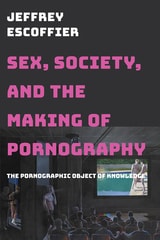
Sex, Society, and the Making of Pornography
The Pornographic Object of KnowledgeJeffrey Escoffier
Rutgers University Press, 2021
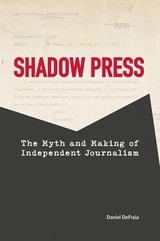
Shadow Press
The Myth and Making of Independent JournalismDaniel DeFraia
University of Missouri Press, 2027
Historians of journalism and mass media have tended to focus on journalism and news – its people and content – while neglecting the field’s broader and interconnected roles in United States history. Shadow Press: The Myth and Making of Independent Journalism explores how the extreme edges of reporting challenged and reshaped American journalism for over a century, from 1890 to 1980.
What a reporter is and does, and does not do, and the integrity of that idea, has always been an unsettled question, interrogated on the borders between journalism and the state. There, from battlefields in Cuba, revolution in Mexico, presidential politics in Washington, D.C., and world wars in Europe, reporters – formally and informally, officially and unofficially, openly and secretly – served the state. This book explains how and why reporters, amidst the allure of patriotism, prestige, and power, came to work for the state, and then stopped, culminating with the historically aberrant ascent of modern independent journalism.
To reclaim that history, Shadow Press spotlights famous, infamous, or previously unknown reporters whose careers reflected the usually submerged question of press-state collaboration and revealed wider changes within journalism. Part I documents how reporters traveled multiple routes into the state, including U.S. empire (the War of 1898), the Mexican Revolution, the presidencies of Theodore Roosevelt and Woodrow Wilson, the domestic reform efforts of First Lady Eleanor Roosevelt, and World War II. Part II documents how, during the Cold War, reporters, embedded within the state, separated to redefine journalism, and lobbied to establish in 1980 the uneasy policies of today that narrowly permit the CIA and FBI to impersonate reporters.
Shadow Press provides accessible plots and character-driven narrative arcs for general readers interested in American history. Moreover, journalism critics will take an interest in how the history provided in Shadow Press informs the debate over how best to do journalism today. During the last two decades, a historical caricature of news objectivity has emerged, a rigid model of amoral methodology and unacknowledged personal subjectivity that still lingers. That caricature has concealed the political activism of the self-declared objective press. Today’s “objectivity war” in journalism is a memory war. As a result, the debate about how best to cover the Republication Party, Donald Trump, and far right movements is based on a broad misunderstanding of how journalism functioned in US democracy. Combining expansive and rigorous archival investigation with the dramatic requirements of a good story, Shadow Press provides a new line of scholarly inquiry to expand the scope of journalism within US political history.
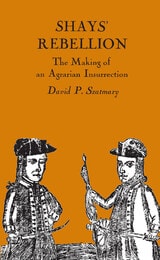
Shays' Rebellion
The Making of an Agrarian InsurrectionDavid P. Szatmary
University of Massachusetts Press, 1980
Shays' Rebellion: The Making of an Agrarian Insurrection is a landmark work of early American social and economic history that offers a comprehensive examination of one of the most consequential, and often misunderstood, uprisings in the history of the early American republic. Between 1786 and 1787, debt-ridden farmers across western Massachusetts, many of them veterans of the Revolutionary War, rose in armed protest against the state government's crushing tax and debt collection policies. Under the informal leadership of Daniel Shays, the rebels sought to prevent court foreclosures on their farms, demand tax relief, and reform a judicial system they saw as serving the interests of wealthy creditors at the expense of ordinary citizens. The uprising—ultimately suppressed by a privately funded state militia—sent shockwaves through the young nation, alarming leading figures including George Washington and James Madison, and powerfully accelerating the movement toward a stronger central government and the drafting of the U.S. Constitution.
Szatmary frames the rebellion not as an isolated outbreak of lawlessness, but as a deeply rooted agrarian insurrection produced by the collision of two fundamentally different economic worlds in post-Revolutionary New England. His analysis begins by establishing the divergent economic realities of the region: on one side, the commercial and mercantile economy of New England's coastal towns, driven by creditors, merchants, and professional elites integrated into transatlantic trade networks; on the other, the subsistence farming communities of the interior, whose inhabitants operated largely outside the cash economy and bore a disproportionate burden of wartime debt and postwar taxation. Drawing on this structural conflict, Szatmary traces the chain of debt that left rural farmers increasingly unable to meet their obligations, the escalating cycle of court actions and property seizures that pushed them toward organized resistance, and the government's responses, ultimately military, to the protests.
The book is also attentive to the rebellion's broader political consequences, examining how Shays' Rebellion transformed the national debate about governance, federal authority, and the relationship between popular democracy and social order in the new republic. Described by one reviewer as a "well-balanced" study that "classifies Shays' Rebellion as the historical watershed it truly is," the book remains a standard reference in the historiography of the Early American Republic, the Articles of Confederation period, and the origins of the Constitutional Convention.
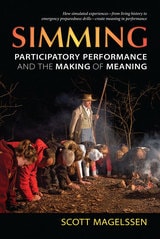
Simming
Participatory Performance and the Making of MeaningScott Magelssen
University of Michigan Press, 2014
At an ecopark in Mexico, tourists pretend to be illegal migrants, braving inhospitable terrain and the U.S. Border Patrol as they attempt to cross the border. At a living history museum in Indiana, daytime visitors return after dark to play fugitive slaves on the Underground Railroad. In the Mojave Desert, the U.S. Army simulates entire provinces of Iraq and Afghanistan, complete with bustling villages, insurgents, and Arabic-speaking townspeople, to train soldiers for deployment to the Middle East. At a nursing home, trainees put on fogged glasses and earplugs, thick bands around their finger joints, and sandbag harnesses to simulate the effects of aging and to gain empathy for their patients.
These immersive environments in which spectator-participants engage in simulations of various kinds—or “simming”—are the subject of Scott Magelssen’s book. His book lays out the ways in which simming can provide efficacy and promote social change through affective, embodied testimony. Using methodology from theater history and performance studies (particularly as these fields intersect with cultural studies, communication, history, popular culture, and American studies), Magelssen explores the ways these representational practices produce, reify, or contest cultural and societal perceptions of identity.
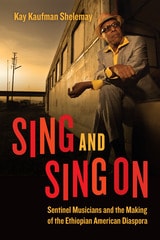
Sing and Sing On
Sentinel Musicians and the Making of the Ethiopian American DiasporaKay Kaufman Shelemay
University of Chicago Press, 2022
Sing and Sing On is the first study of the forced migration of musicians out of the Horn of Africa dating from the 1974 Ethiopian revolution, a political event that overthrew one of the world’s oldest monarchies and installed a brutal military regime. Musicians were among the first to depart the region, their lives shattered by revolutionary violence, curfews, and civil war. Reconstructing the memories of forced migration, Sing and Sing On traces the challenges musicians faced amidst revolutionary violence and the critical role they played in building communities abroad.
Drawing on the recollections of dozens of musicians, Sing and Sing On details personal, cultural, and economic hardships experienced by musicians who have resettled in new locales abroad. Kay Kaufman Shelemay highlights their many artistic and social initiatives and the ways they have offered inspiration and leadership within and beyond a rapidly growing Ethiopian American diaspora. While musicians held this role as sentinels in Ethiopian culture long before the revolution began, it has taken on new meanings and contours in the Ethiopian diaspora. The book details the ongoing creativity of these musicians while exploring the attraction of return to their Ethiopian homeland over the course of decades abroad. Ultimately, Shelemay shows that musicians are uniquely positioned to serve this sentinel role as both guardians and challengers of cultural heritage.
Social Knowledge in the Making
Edited by Charles Camic, Neil Gross, and Michèle Lamont
University of Chicago Press, 2011
Social Science in the Making
Essays on the Russell Sage Foundation, 1907-1972David C. Hammack
Russell Sage Foundation, 1994

Soda Science
Making the World Safe for Coca-ColaSusan Greenhalgh
University of Chicago Press, 2024
The 1990s were tough times for the soda industry. In the United States, obesity rates were exploding. Public health critics pointed to sugary soda as a main culprit and advocated for soda taxes that might decrease the consumption of sweetened beverages—and threaten the revenues of the giant soda companies.
Soda Science tells the story of how industry leader Coca-Cola mobilized allies in academia to create a soda-defense science that would protect profits by advocating exercise, not dietary restraint, as the priority solution to obesity, a view few experts accept. Anthropologist and science studies specialist Susan Greenhalgh discovers a hidden world of science-making—with distinctive organizations, social networks, knowledge-making practices, and ethical claims—dedicated to creating industry-friendly science and keeping it under wraps. By tracing the birth, maturation, death, and afterlife of the science they made, Greenhalgh shows how corporate science has managed to gain such a hold over our lives.
Spanning twenty years, her investigation takes her from the US, where the science was made, to China, a key market for sugary soda. In the US, soda science was a critical force in the making of today’s society of step-counting, fitness-tracking, weight-obsessed citizens. In China, this distorted science has left its mark not just on national obesity policies but on the apparatus for managing chronic disease generally. By following the scientists and their ambitious schemes to make the world safe for Coke, Greenhalgh offers an account that is more global—and yet more human—than the story that dominates public understanding today.
Coke’s research isn’t fake science, Greenhalgh argues; it was real science, conducted by real and eminent scientists, but distorted by its aim. Her gripping book raises crucial questions about conflicts of interest in scientific research, the funding behind familiar messages about health, and the cunning ways giant corporations come to shape our diets, lifestyles, and health to their own needs.
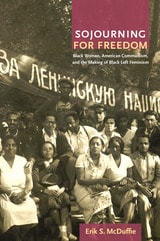
Sojourning for Freedom
Black Women, American Communism, and the Making of Black Left FeminismErik S. McDuffie
Duke University Press, 2011
Soul Power
Culture, Radicalism, and the Making of a U.S. Third World LeftCynthia A. Young
Duke University Press, 2006
Young analyzes a range of U.S. figures and organizations, examining how each deployed Third World discourse toward various cultural and political ends. She considers a trip that LeRoi Jones, Harold Cruse, and Robert F. Williams made to Cuba in 1960; traces key intellectual influences on Angela Y. Davis’s writing; and reveals the early history of the hospital workers’ 1199 union as a model of U.S. Third World activism. She investigates Newsreel, a late 1960s activist documentary film movement, and its successor, Third World Newsreel, which produced a seminal 1972 film on the Attica prison rebellion. She also considers the L.A. Rebellion, a group of African and African American artists who made films about conditions in the Watts neighborhood of Los Angeles. By demonstrating the breadth, vitality, and legacy of the work of U.S. Third World Leftists, Soul Power firmly establishes their crucial place in the history of twentieth-century American struggles for social change.
Southern Exposure
Making the South Safe for DemocracyStetson Kennedy
University of Alabama Press, 2011
Using thorough and stark statistics, Kennedy describes a South emerging from World War II, coming to grips with the racism and feudalism that had held it back for generations. He includes an all-out Who’s Who, based on his own undercover investigations, of the "hate-mongers, race-racketeers, and terrorists who swore that apartheid must go on forever." The first paperback edition brings to a new generation of readers Kennedy’s searing profile of Dixie before the civil rights movement.
Sowing Change
The Making of Havana's Urban AgricultureAdriana Premat
Vanderbilt University Press, 2012
Space of Detention
The Making of a Transnational Gang Crisis between Los Angeles and San SalvadorElana Zilberg
Duke University Press, 2011
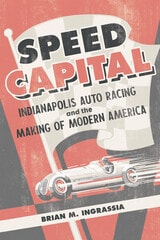
Speed Capital
Indianapolis Auto Racing and the Making of Modern AmericaBrian M. Ingrassia
University of Illinois Press, 2024
The 1909 opening of the Indianapolis Motor Speedway marked a foundational moment in the history of automotive racing. Events at the famed track and others like it also helped launch America’s love affair with cars and an embrace of road systems that transformed cities and shrank perceptions of space.
Brian Ingrassia tells the story of the legendary oval’s early decades. This story revolves around Speedway cofounder and visionary businessman Carl Graham Fisher, whose leadership in the building of the transcontinental Lincoln Highway and the iconic Dixie Highway had an enormous impact on American mobility. Ingrassia looks at the Speedway’s history as a testing ground for cars and airplanes, its multiple close brushes with demolition, and the process by which racing became an essential part of the Golden Age of Sports. At the same time, he explores how the track’s past reveals the potent links between sports capitalism and the selling of nostalgia, tradition, and racing legends.
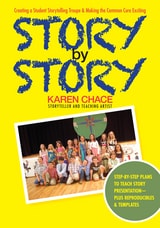
Story By Story
Creating a School Storytelling Troupe & Making the Common Core ExcitingKaren Chace
Parkhurst Brothers, Inc., 2014
Karen Chace’s book, Story by Story, Building a Storytelling Troupe is a must have for anyone even slightly interested in starting a storytelling group with students. I know I am guilty of sometimes skipping over sections, but every word that Karen writes is important and useful distilled (and therefore potent) information. Ms. Chace not only tells you what to do to run a successful troupe, but also WHY you need to do it. This is, to me, very important. Sometimes one is tempted to skip things, but this book explains how important the steps are. Everything from how many hours Karen thought it would take, to ACTUAL hours, where the funding comes from, how and why to lay foundations and expectations (including ‘no teasing policies’ and group dynamics), right the way through presentation skills to advertising the event and getting bums on seats (emphasis important)!
Over the years Karen has and continues to come up with new and inventive ways of teaching the skills of storytelling, and a great many of these exercises and activities are included in the book. When it comes to research and materials as well as technique, Karen adds new meaning to "thorough". There are links to websites for stories, for grants, for microphone techniques, and how storytelling connects to the school curriculum and more. And if you prefer to read books, there is an extensive bibliography, too.
Basically, I believe if you want to succeed in building a storytelling troupe or group, all you need is Karen Chace’s book, Story by Story, Building a Storytelling Troupe and to do everything Karen suggests. I am sure it would be very hard to fail if you follow her words of wisdom between the covers of her goldmine of a book.
Simon Brooks, storyteller, and educator

Strange Cocktail
Translation and the Making of Modern Hebrew PoetryAdriana X. Jacobs
University of Michigan Press, 2018
For centuries, poets have turned to translation for creative inspiration. Through and in translation, poets have introduced new poetic styles, languages, and forms into their own writing, sometimes changing the course of literary history in the process. Strange Cocktail is the first comprehensive study of this phenomenon in modern Hebrew literature of the late nineteenth century to the present day. Its chapters on Esther Raab, Leah Goldberg, Avot Yeshurun, and Harold Schimmel offer close readings that examine the distinct poetics of translation that emerge from reciprocal practices of writing and translating. Working in a minor literary vernacular, the translation strategies that these poets employed allowed them to create and participate in transnational and multilingual poetic networks. Strange Cocktail thereby advances a comparative and multilingual reframing of modern Hebrew literature that considers how canons change and are undone when translation occupies a central position—how lines of influence and affiliation are redrawn and literary historiographies are revised when the work of translation occupies the same status as an original text, when translating and writing go hand in hand.
Street Players
Black Pulp Fiction and the Making of a Literary UndergroundKinohi Nishikawa
University of Chicago Press, 2018
Kinohi Nishikawa contends that black pulp fiction was built on white readers’ fears of the feminization of society—and the appeal of black masculinity as a way to counter it. In essence, it was the original form of blaxploitation: a strategy of mass-marketing race to suit the reactionary fantasies of a white audience. But while chauvinism and misogyny remained troubling yet constitutive aspects of this literature, from 1973 onward, Holloway House moved away from publishing sleaze for a white audience to publishing solely for black readers. The standard account of this literary phenomenon is based almost entirely on where this literature ended up: in the hands of black, male, working-class readers. When it closed, Holloway House was synonymous with genre fiction written by black authors for black readers—a field of cultural production that Nishikawa terms the black literary underground. But as Street Players demonstrates, this cultural authenticity had to be created, promoted, and in some cases made up, and there is a story of exploitation at the heart of black pulp fiction’s origins that cannot be ignored.
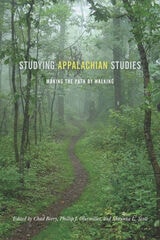
Studying Appalachian Studies
Making the Path by WalkingEdited by Chad Berry, Phillip J. Obermiller, and Shaunna L. Scott
University of Illinois Press, 2015
Essayists argue for Appalachian Studies' integration with kindred fields like African American studies, women's studies, and Southern studies, and they urge those involved in the field to globalize the perspective of Appalachian Studies; to commit to continued applied, participatory action, and community-based research; to embrace more fully the field's capacity for bringing about social justice; to advocate for a more accurate understanding of Appalachia and its people; and to understand and overcome the obstacles interdisciplinary studies face in the social and institutional construction of knowledge.
Contributors: Chris Baker, Chad Berry, Donald Edward Davis, Amanda Fickey, Chris Green, Erica Abrams Locklear, Phillip J. Obermiller, Douglas Reichert Powell, Michael Samers, Shaunna L. Scott, and Barbara Ellen Smith.
Sunbelt Capitalism and the Making of the Carceral State
Kirstine Taylor
University of Chicago Press, 2025
The story of how the American South became the most incarcerated region in the world’s most incarcerated nation.
Sunbelt Capitalism and the Making of the Carceral State examines the evolution of southern criminal punishment from Jim Crow to the dawn of mass incarceration, charting this definitive era of carceral transformation and expansion in the southern United States. The demise of the county chain gang, the professionalization of police, and the construction of large-scale prisons were among the sweeping changes that forever altered the southern landscape and bolstered the region’s capacity to punish. What prompted this southern revolution in criminal punishment?
Kirstine Taylor argues that the crisis in the cotton fields and the arrival of Sunbelt capitalism in the south’s rising metropolises prompted lawmakers to build expansive, modern criminal punishment systems in response to Brown v. Board of Education and the Black freedom movements of the 1960s and ‘70s. Taking us inside industry-hunting expeditions, school desegregation battles, the sit-in movement, prisoners’ labor unions, and policy commissions, Taylor tells the story of how a modernizing south became the most incarcerated region in the globe’s most incarcerated nation.
Sunbelt Capitalism and the Making of the Carceral State
Kirstine Taylor
University of Chicago Press, 2025
This is an auto-narrated audiobook version of this book.
The story of how the American South became the most incarcerated region in the world’s most incarcerated nation.
Sunbelt Capitalism and the Making of the Carceral State examines the evolution of southern criminal punishment from Jim Crow to the dawn of mass incarceration, charting this definitive era of carceral transformation and expansion in the southern United States. The demise of the county chain gang, the professionalization of police, and the construction of large-scale prisons were among the sweeping changes that forever altered the southern landscape and bolstered the region’s capacity to punish. What prompted this southern revolution in criminal punishment?
Kirstine Taylor argues that the crisis in the cotton fields and the arrival of Sunbelt capitalism in the south’s rising metropolises prompted lawmakers to build expansive, modern criminal punishment systems in response to Brown v. Board of Education and the Black freedom movements of the 1960s and ‘70s. Taking us inside industry-hunting expeditions, school desegregation battles, the sit-in movement, prisoners’ labor unions, and policy commissions, Taylor tells the story of how a modernizing south became the most incarcerated region in the globe’s most incarcerated nation.