175 books match the query 'Marriage' and 12 start with s
cover of Satiric Advice on Women and Marriage: From Plautus to Chaucer

Satiric Advice on Women and Marriage

From Plautus to Chaucer

Warren S. Smith, Editor

University of Michigan Press, 2005

Advice on sex and marriage in the literature of antiquity and the middle ages typically stressed the negative: from stereotypes of nagging wives and cheating husbands to nightmarish visions of women empowered through marriage. Satiric Advice on Women and Marriage brings together the leading scholars of this fascinating body of literature. Their essays examine a variety of ancient and early medieval writers' cautionary and often eccentric marital satire beginning with Plautus in the third century B.C.E. through Chaucer (the only non-Latin author studied). The volume demonstrates the continuity in the Latin tradition which taps into the fear of marriage and intimacy shared by ancient ascetics (Lucretius), satirists (Juvenal), comic novelists (Apuleius), and by subsequent Christian writers starting with Tertullian and Jerome, who freely used these ancient sources for their own purposes, including propaganda for recruiting a celibate clergy and the promotion of detachment and asceticism as Christian ideals.

Warren S. Smith is Professor of Classical Languages at the University of New Mexico.

[more]
cover of Sexual Bargaining: Power Politics in the American Marriage

Sexual Bargaining

Power Politics in the American Marriage

John Scanzoni

University of Chicago Press, 1982

Is the institution of marriage in America breaking down? Is marriage as we have known it largely irrelevant? Are the forms of marriage changing? Are the changes in women's roles in society related to the breakdown, irrelevance, and formal alteration of marriage?

In this updated edition of his fundamental study of modern marriage, John Scanzoni challenges the widespread assumption that marriage is a dying institution. By analyzing the "reward seeking" which generates conflicts between males and females, he shows that marriage indeed has a future but that its form will continue to change as sex-role equality emerges both within and outside of marriage.
[more]
cover of Social Change and the Family in Taiwan

Social Change and the Family in Taiwan

Arland Thornton and Hui-Sheng Lin

University of Chicago Press, 1994

Until the 1940s, social life in Taiwan was generally organized through the family—marriages were arranged by parents, for example, and senior males held authority. In the following years, as Taiwan evolved rapidly from an agrarian to an industrialized society, individual decisions became less dependent on the family and more influenced by outside forces. Social Change and the Family in Taiwan provides an in-depth analysis of the complex changes in family relations in a society undergoing revolutionary social and economic transformation.

This interdisciplinary study explores the patterns and causes of change in education, work, income, leisure time, marriage, living arrangements, and interactions among extended kin. Theoretical chapters enunciate a theory of family and social change centered on the life course and modes of social organization. Other chapters look at the shift from arranged marriages toward love matches, as well as changes in dating practices, premarital sex, fertility, and divorce.

Contributions to the book are made by Jui-Shan Chang, Ming-Cheng Chang, Deborah S. Freedman, Ronald Freedman, Thomas E. Fricke, Albert Hermalin, Mei-Lin Lee, Paul K. C. Liu, Hui-Sheng Lin, Te-Hsiung Sun, Arland Thornton, Maxine Weinstein, and Li-Shou Yang.
[more]
cover of Soft Patriarchs, New Men: How Christianity Shapes Fathers and Husbands

Soft Patriarchs, New Men

How Christianity Shapes Fathers and Husbands

W. Bradford Wilcox

University of Chicago Press, 2004

In the wake of dramatic, recent changes in American family life, evangelical and mainline Protestant churches took markedly different positions on family change. This work explains why these two traditions responded so differently to family change and then goes on to explore how the stances of evangelical and mainline Protestant churches toward marriage and parenting influenced the husbands and fathers that fill their pews.

According to W. Bradford Wilcox, the divergent family ideologies of evangelical and mainline churches do not translate into large differences in family behavior between evangelical and mainline Protestant men who are married with children. Mainline Protestant men, he contends, are "new men" who take a more egalitarian approach to the division of household labor than their conservative peers and a more involved approach to parenting than men with no religious affiliation. Evangelical Protestant men, meanwhile, are "soft patriarchs"—not as authoritarian as some would expect, and given to being more emotional and dedicated to their wives and children than both their mainline and secular counterparts. Thus, Wilcox argues that religion domesticates men in ways that make them more responsive to the aspirations and needs of their immediate families.
[more]
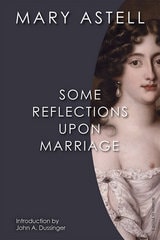
cover of Some Reflections Upon Marriage

Some Reflections Upon Marriage

Mary Astell. Introduction by John A. Dussinger

University of Illinois Press, 2015

Published anonymously in 1700, Some Reflections upon Marriage lamented the inequities of the institution of marriage and reasoned against it with both traditional and innovative arguments. Mary Astell's tract, written in response to an infamous divorce case, forcefully argued against the grim but all-too-common prospect of a marriage of necessity to a man in search of power, money, or a trophy wife. Astell proposed education as the solution to women's second-class status, stating that knowledge alone could lead to a partnership based on friendship and respect. "Let us learn to pride ourselves in something more excellent than the invention of a fashion," she wrote, and her well-reasoned arguments soon won her a wide readership.
 
[more]
cover of Sophia Peabody Hawthorne: A Life, Volume 2, 1848-1871

Sophia Peabody Hawthorne

A Life, Volume 2, 1848-1871

Patricia Dunlavy Valenti

University of Missouri Press, 2015
As is often the case with spouses of celebrities, Sophia Peabody Hawthorne was overshadowed by her husband. While Nathaniel Hawthorne is renowned for numerous publications, including The Scarlet Letter, that staple in high school English curricula, Sophia’s remarkable life and career did not receive the recognition they deserve. She was, however, a source for many of Nathaniel’s stories and responsible for much that he accomplished. Sophia was an artist, one of the first in America to earn income from her painting and decorative arts; she was also a writer and traveler to foreign countries at a time when women typically confined their activities to the home. Patricia Dunlavy Valenti began to tell this story in Sophia Peabody Hawthorne: A Life, Volume 1, 1809-1847 (2004). This biography concludes now in a second volume, which details the less examined and more surprising second half of Sophia’s life.
Valenti’s thorough research culminates in a compelling, revealing account of Sophia’s travels to Britain and Europe and her intense personal relationships outside her marriage with men and women, among them notable figures in American history and literature. As an impoverished widow, Sophia dealt resourcefully with the consequences of her husband’s financial carelessness; as a mother, her liberal practices resulted in unintended, sometimes unfortunate consequences. Throughout every vicissitude, her relentless optimism prevailed.
With the publication of Sophia Peabody Hawthorne: A Life, Volume 2, 1848-1871, Sophia emerges forever from the shadow cast by her husband. Historians and general readers alike will be drawn to this riveting account of an interesting, important woman and what her life reveals about American history and culture at a moment of national conflict, emerging class divisions, and evolving gender roles.
[more]
cover of Sophia Peabody Hawthorne: A Life, Volume I, 1809-1847

Sophia Peabody Hawthorne

A Life, Volume I, 1809-1847

Patricia Dunlavy Valenti

University of Missouri Press, 2004

Sophia Peabody Hawthorne is known almost exclusively in her role as the wife of Nathaniel Hawthorne, who portrayed her as the fragile, ethereal, infirm “Dove.” That image, invented by Nathaniel to serve his needs and affirm his manhood, was passed on by his biographers, who accepted their subject’s perception without question. In fact, the real Sophia was very different from Nathaniel’s construction of her.
 
An independent, sensuous, daring woman, Sophia was an accomplished artist before her marriage to Nathaniel. Moreover, what she brought to their union inspired Nathaniel’s imagination beyond the limits of his previously confined existence. In Sophia Peabody Hawthorne, Patricia Dunlavy Valenti situates the story of Sophia’s life within its own historical, philosophical, and cultural background, as well as within the context of her marriage. Valenti begins with parallel biographies that present Sophia, and then Nathaniel, at comparable periods in their lives.

Sophia was born into an expansive, somewhat chaotic home in which women provided financial as well as emotional sustenance. She was a precocious, eager student whose rigorous education, in her mother’s and her sisters’ schools, began her association with the children of New England’s elite. Sophia aspired to become a professional, self-supporting painter, exhibiting her art and seeking criticism from established mentors. She relished an eighteen-month sojourn in Cuba. Nathaniel’s reclusive family, his reluctant early education, his anonymous pursuit of a career, and his relatively circumscribed life contrast markedly with the experience of the woman who became his wife and the mother of his children. Those differences resulted in a creative abrasion that ignited his fiction during the first years of their marriage.
 
Volume 1 of this biography concludes with Sophia’s negotiation of the Hawthornes’ departure from the Old Manse and the birth of their second child. This period also coincides with the conclusion of Nathaniel’s major phase of short story writing.
 
Sophia Peabody Hawthorne is an engrossing story of a nineteenth-century American life. It analyzes influences upon authorship and questions the boundaries of intellectual property in the domestic sphere. The book also offers fresh interpretations of Nathaniel Hawthorne’s fiction, examining it through the lens of Sophia’s vibrant personality and diverse interests. Students and scholars of American literature, literary theory, feminism, and cultural history will find much to enrich their understanding of this woman and this era.
[more]
cover of Spirit Wives and Church Mothers: Marriage, Survival, and Healing in Central Mozambique

Spirit Wives and Church Mothers

Marriage, Survival, and Healing in Central Mozambique

Christy K. Schuetze

University of Wisconsin Press, 2023

Since the beginning of the twenty-first century, Pentecostal churches have proliferated around the world. Expanding at astonishing rates in Africa, Latin America, and Asia, Pentecostalism has shifted Christianity’s global center of gravity from the West to the global South. In Spirit Wives andChurch Mothers, Christy Schuetze explores how the growth of Pentecostal churches in central Mozambique occurred alongside a striking increase in so-called traditional religious practices such as spirit mediumship and spiritual healing. She follows women—who comprise the majority both of participants in Pentecostal churches and of initiates to new forms of mediumship—through two emergent, rival healing networks.

Drawing on years of field research, Schuetze offers a richly drawn ethnographic analysis of these important religious transformations in the lives of female participants. Illustrating how economic and social context shapes the possibilities for—and forms of—women’s empowerment, Spirit Wives andChurch Mothers intervenes in scholarly debates about the nature of agency and challenges universalist Western feminist assumptions about the form of women’s liberation.
[more]
cover of St. Augustine on Marriage and Sexuality (Selections from the Fathers of the Church, Volume 1)

St. Augustine on Marriage and Sexuality (Selections from the Fathers of the Church, Volume 1)

Saint Augustine

Catholic University of America Press, 1996
[more]
cover of State of Virginity: Gender, Religion, and Politics in an Early Modern Catholic State

State of Virginity

Gender, Religion, and Politics in an Early Modern Catholic State

Ulrike Strasser

University of Michigan Press, 2006

Winner: 2005 Book Award from the Society for the Study of Early Modern Women; Selected by the German Studies Association as one of the top five books of 2004 in early modern history

"A fresh, original study of gender roles and religious ideology in the early modern Catholic state. . . . Using a rich array of archival sources, Strasser explores ways in which an increasingly centralized Bavarian government in Munich inaugurated marriage and convent reforms and a civil religion based on the veneration of the Virgin Mary. Her carefully selected case studies show how church and state collaborated to produce a shared discourse and consistent policies proscribing extramarital sex, and excluding those without property from marriage. "

—Choice

Ulrike Strasser is Associate Professor of History, Affiliate Faculty in Women's Studies, and Core Faculty in Religious Studies at the University of California, Irvine.
[more]
cover of States of Marriage: Gender, Justice, and Rights in Colonial Mali

States of Marriage

Gender, Justice, and Rights in Colonial Mali

Emily S. Burrill

Ohio University Press, 2015
States of Marriage shows how throughout the colonial period in French Sudan (present-day Mali) the institution of marriage played a central role in how the empire defined its colonial subjects as gendered persons with certain attendant rights and privileges. The book is a modern history of the ideological debates surrounding the meaning of marriage, as well as the associated legal and sociopolitical practices in colonial and postcolonial Mali. It is also the first to use declassified court records regarding colonialist attempts to classify and categorize traditional marriage conventions in the southern region of the country. In French Sudan, as elsewhere in colonial Africa, the first stage of marriage reform consisted of efforts to codify African marriages, bridewealth transfers, and divorce proceedings in public records, rendering these social arrangements “legible” to the colonial administration. Once this essential legibility was achieved, other, more forceful interventions to control and reframe marriage became possible. This second stage of marriage reform can be traced through transformations in and by the colonial court system, African engagements with state-making processes, and formations of “gender justice.” The latter refers to gender-based notions of justice and legal rights, typically as defined by governing and administrative bodies as well as by socioxadpolitical communities. Gender justice went through a period of favoring the rights of women, to a period of favoring patriarchs, to a period of emphasizing the power of the individual—but all within the context of a paternalistic and restrictive colonial state.
[more]
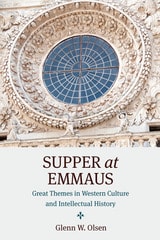
cover of Supper at Emmaus

Supper at Emmaus

Glenn W. Olsen

Catholic University of America Press, 2016

Supper at Emmaus traces various important intellectual topics from the ancient world to the modern period. Generally, as in its treatment of the question of whether the long-standing contrast between cyclical and linear views of history is helpful, it introduces important thinkers who have considered the question. A preoccupation of the book is the appearance and reappearance across the centuries of patterns used to organize temporal and cultural experience. After an opening essay on transcendental truth and cultural relativism, the second chapter traces a distinction, common in historical writings during the past two centuries, between an alleged ancient classical "cyclic" view of time and history, used to describe the claimed repetitiveness of and similarities between historical events ("nothing is new under the sun"), and a contrasting Jewish-Christian linear view, sometimes described as providential in that it moves through a series of unique events to some end intended by God. In the latter, history is "about something," the education of the human race or the redemption of humankind. As in each of the remaining essays, the book then attempts to draw out the limitations of what the current consensus on this topic has become. It does this for such things as our current understanding of religious toleration, humanism, natural law, and teleology. Some of the essays, such as those on debate about Augustine's understanding of marriage or the concluding illustrated essay on the baroque city of Lecce, are published for the first time. Others are based on previously published contributions to the scholarly literature, though generally each of these chapters concludes with a postscript that engages with current scholarly debate on the subject.
[more]