Results by title
241 books match the query 'Marriage & Family' and 7 start with s
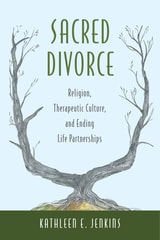
Sacred Divorce
Religion, Therapeutic Culture, and Ending Life PartnershipsJenkins, Kathleen E
Rutgers University Press, 2014
For more than five years, Jenkins observed religious support groups and workshops for the divorced and interviewed religious practitioners in the midst of divorces, along with clergy members who advised them. Her findings appear here in the form of eloquent and revealing stories about individuals managing emotions in ways that make divorce a meaningful, even sacred process. Clergy from mainline Protestant denominations to Baptist churches, Jewish congregations, Unitarian fellowships, and Catholic parishes talk about the concealed nature of divorce in their congregations. Sacred Divorce describes their cautious attempts to overcome such barriers, and to assemble meaningful symbols and practices for members by becoming compassionate listeners, delivering careful sermons, refitting existing practices like Catholic annulments and Jewish divorce documents (gets), and constructing new rituals.
With attention to religious, ethnic, and class variations, covering age groups from early thirties to mid-sixties and separations of only a few months to up to twenty years, Sacred Divorce offers remarkable insight into individual and cultural responses to divorce and the social emotions and spiritual strategies that the clergy and the faithful employ to find meaning in the breach. At once a sociological document, an ethnographic analysis, and testament of personal experience, Sacred Divorce provides guidance, strategies and answers to readers looking for answers and those looking to heal.

Saving Babies?
The Consequences of Newborn Genetic ScreeningStefan Timmermans and Mara Buchbinder
University of Chicago Press, 2012
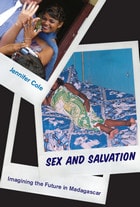
Sex and Salvation
Imagining the Future in MadagascarJennifer Cole
University of Chicago Press, 2010
Sex and Salvation chronicles the coming of age of a generation of women in Tamatave in the years that followed Madagascar’s economic liberalization. Eager to forge a viable future amid poverty and rising consumerism, many young women have entered the sexual economy in hope of finding a European husband. Just as many Westerners believe that young people break with the past as they enter adulthood, Malagasy citizens fear that these women have severed the connection to their history and culture.
Jennifer Cole’s elegant analysis shows how this notion of generational change is both wrong and consequential. It obscures the ways young people draw on long-standing ideas of gender and sexuality, it ignores how urbanites relate to their rural counterparts, and it neglects the relationship between these husband-seeking women and their elders who join Pentecostal churches. And yet, as talk about the women circulates through the city’s neighborhoods, bars, Internet cafes, and churches, it teaches others new ways of being.
Cole’s sophisticated depiction of how a generation’s coming of age contributes to social change eschews a narrow focus on crisis. Instead, she reveals how fantasies of rupture and conceptions of the changing life course shape the everyday ways that people create the future.

Sexual Bargaining
Power Politics in the American MarriageJohn Scanzoni
University of Chicago Press, 1982
In this updated edition of his fundamental study of modern marriage, John Scanzoni challenges the widespread assumption that marriage is a dying institution. By analyzing the "reward seeking" which generates conflicts between males and females, he shows that marriage indeed has a future but that its form will continue to change as sex-role equality emerges both within and outside of marriage.

Sneaking Out
By Prudence Mackintosh
University of Texas Press, 2002
From the endless battles of sibling rivalry to the endless worries about getting indifferent students into—and then graduated from—college, raising boys is the adventure of a lifetime for any mother. Prudence Mackintosh has not only survived the adventure but has also written about it with her signature wit and style. Her essays about life with sons Jack, Drew, and William have entertained the readers of Texas Monthly and other prominent magazines for nearly three decades, offering solace to similarly beleaguered parents and a knowing chuckle to everyone who enjoys watching the real-life sitcom of a fundamentally happy, intact family.
Sneaking Out completes the story that Mackintosh began in her earlier books Thundering Sneakers and Retreads. In this collection of new and previously published essays, she recounts life with her adolescent sons as they race headlong to first jobs, first driver's licenses, first girlfriends, and first flights away from the family nest. She also follows them into the college years, when both parents and sons have to find a new balance in holding on and letting go. Along the way, she offers wise and witty reflections on being a woman at midlife, supporting her sons through the beginning of their adult lives and her parents through the end of theirs.

Social, Economic, and Environmental Justice for All Families
Groves Monographs on Marriage and Family (Volume 1)Lee Ann De Reus
Michigan Publishing Services, 0
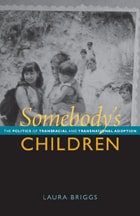
Somebody's Children
The Politics of Transracial and Transnational AdoptionLaura Briggs
Duke University Press, 2012
The dramatic expansion of transracial and transnational adoption since the 1950s, Briggs argues, was the result of specific and profound political and social changes, including the large-scale removal of Native children from their parents, the condemnation of single African American mothers in the context of the civil rights struggle, and the largely invented "crack babies" scare that inaugurated the dramatic withdrawal of benefits to poor mothers in the United States. In Guatemala, El Salvador, and Argentina, governments disappeared children during the Cold War and then imposed neoliberal economic regimes with U.S. support, making the circulation of children across national borders easy and often profitable. Concluding with an assessment of present-day controversies surrounding gay and lesbian adoptions and the struggles of immigrants fearful of losing their children to foster care, Briggs challenges celebratory or otherwise simplistic accounts of transracial and transnational adoption by revealing some of their unacknowledged causes and costs.