Results by title
28 books match the query 'Acculturation'
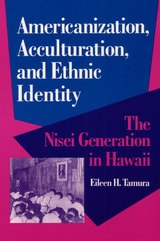
Americanization, Acculturation, and Ethnic Identity
The Nisei Generation in HawaiiEileen H. Tamura
University of Illinois Press, 1994
Wartime hysteria over "foreign" ways fueled a movement for Americanization that swept the United States during and after World War I. Eileen H. Tamura examines the forms that hysteria took in Hawai'i, where the Nisei (children of Japanese immigrants) were targets of widespread discrimination.
Tamura analyzes Hawaii's organized effort to force the Nisei to adopt "American" ways, discussing it within the larger phenomenon of Nisei acculturation. While racism was prevalent in "paradise," the Nisei and their parents also performed as active agents in their own lives, with the older generation attempting to maintain Japanese cultural ways and the younger wishing to become "true Americans." Caucasian "Americanizers," often associated with powerful agricultural interests, wanted labor to remain cheap and manageable; they lobbied for racist laws and territorial policies, portending the treatment of ethnic Japanese on the U.S. mainland during World War II.
Tamura offers a wealth of original source material, using personal accounts as well as statistical data to create an essential resource for students of American ethnic history and U.S. race and class relations.
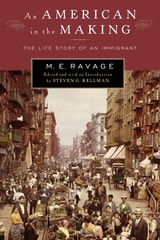
An American in the Making
The Life Story of an ImmigrantKellman, Steven G
Rutgers University Press, 2009
Steven G. Kellman brings Ravage's story to life again in this new edition, providing a brief biography and introduction that place the memoir within historical and literary contexts. An American in the Making contributes to a broader understanding of the global notion of "America" and remains timely, especially in an era when massive immigration, now from Latin America and Asia, challenges ideas of national identity.
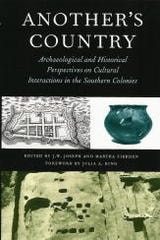
Another's Country
Archaeological and Historical Perspectives on Cultural Interactions in the Southern ColoniesEdited by J.W. Joseph and Martha Zierden
University of Alabama Press, 2001
The 18th-century South was a true melting pot, bringing together colonists from England, France, Germany, Ireland, Switzerland, and other locations, in addition to African slaves—all of whom shared in the experiences of adapting to a new environment and interacting with American Indians. The shared process of immigration, adaptation, and creolization resulted in a rich and diverse historic mosaic of cultures.
The cultural encounters of these groups of settlers would ultimately define the meaning of life in the nineteenth-century South. The much-studied plantation society of that era and the Confederacy that sprang from it have become the enduring identities of the South. A full understanding of southern history is not possible, however, without first understanding the intermingling and interactions of the region’s eighteenth-century settlers. In the essays collected here, some of the South’s leading historical archaeologists examine various aspects of the colonial experience, attempting to understand how cultural identity was expressed, why cultural diversity was eventually replaced by a common identity, and how the various cultures intermeshed.
Written in accessible language, this book will be valuable to archaeologists and non-archaeologists alike. Cultural, architectural, and military historians, cultural anthropologists, geographers, genealogists, and others interested in the cultural legacy of the South will find much of value in this book.
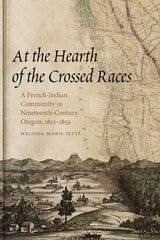
At the Hearth of the Crossed Races
A French-Indian Community in Nineteenth-Century Oregon, 1812-1859Melinda Marie Jetté
Oregon State University Press, 2015
Jetté’s study focuses on the “hearth” of this contact: French Prairie, so named for the French-Indian families who resettled the homeland of the Ahantchuyuk Kalapuyans. Although these families sought a middle course in their relations with their various neighbors, their presence ultimately contributed to the Anglo-American colonization of the region. By establishing farming and husbandry operations in the valley, the French-Indian settlers enhanced the Willamette Valley’s appeal as a destination of choice for the Anglo-Americans who later emigrated to the Pacific Northwest via the Oregon Trail.
Upon these emigrants’ arrival, the social space for the people of the “crossed races” diminished considerably, as the Anglo-Americans instituted a system of settler colonialism based on racial exclusion. Like their Native kin, the French-Indian families pursued various strategies to navigate the changing times and Jetté’s study of French Prairie takes on the relationships among all three: the French-Indian families, the indigenous peoples, and the Anglo-American settlers.
With At the Hearth of the Crossed Races, Jetté delivers a social history that deepens our understanding of the Oregon Country in the nineteenth century. This history of French Prairie provides a window into the multi-racial history of the Pacific Northwest and offers an alternative vision of early Oregon in the lives of the biracial French-Indian families whose community challenged notions of white supremacy, racial separation, and social exclusion.

Colonizing Trick
National Culture And Imperial Citizenship In Early AmericaDavid Kazanjian
University of Minnesota Press, 2003
An illuminating look at the concepts of race, nation, and equality in eighteenth- and nineteenth-century America
The idea that “all men are created equal” is as close to a universal tenet as exists in American history. In this hard-hitting book, David Kazanjian interrogates this tenet, exploring transformative flash points in early America when the belief in equality came into contact with seemingly contrary ideas about race and nation. The Colonizing Trick depicts early America as a white settler colony in the process of becoming an empire-—one deeply integrated with Euro-American political economy, imperial ventures in North America and Africa, and pan-American racial formations.
Kazanjian traces tensions between universal equality and racial or national particularity through theoretically informed critical readings of a wide range of texts: the political writings of David Walker and Maria Stewart, the narratives of black mariners, economic treatises, the personal letters of Thomas Jefferson and Phillis Wheatley, Charles Brockden Brown’s fiction, congressional tariff debates, international treaties, and popular novelettes about the U.S.–Mexico War and the Yucatán’s Caste War. Kazanjian shows how emergent racial and national formations do not contradict universalist egalitarianism; rather, they rearticulate it, making equality at once restricted, formal, abstract, and materially embodied.
Culture, Globalization and the World-System
Contemporary Conditions for the Representation of IdentityAnthony D. King
University of Minnesota Press, 1997
A foundational work in the study of the globalization of culture.
First published in 1991, Culture, Globalization and the World-System is one of the inaugural books discussing the increasing tendency of cultural practices to cross national boundaries. Now widely available in the United States for the first time and updated with a new preface, these influential essays by a distinguished group of scholars and cultural critics lay the groundwork for a vital and exciting new field of inquiry.
Culture, Globalization and the World-System views culture through different prisms and categories—including race, gender, ethnicity, class, and nation. The contributors consider how socially organized systems of meaning are produced and represented. Drawing from sociology, art history, film studies, and anthropology, these essays—many of them representing their authors’ only treatment of globalization—provide paradigms for understanding cultures and the representation of identity in “the world as a single place.” Contributors: Barbara Abou-El-Haj, SUNY, Binghamton; Janet Abu-Lughod, New School for Social Research; Stuart Hall, Open U, UK; Ulf Hannerz, U of Stockholm, Sweden; Roland Robertson, U of Pittsburgh; John Tagg, SUNY, Binghamton; Maureen Turim, U of Florida, Gainesville; Immanuel Wallerstein, SUNY, Binghamton; Janet Wolff, U of Rochester.
Cultures in Contact
World Migrations in the Second MillenniumDirk Hoerder
Duke University Press, 2011
Signaling a major paradigm shift, Cultures in Contact creates an English-language map of human movement that is not Atlantic Ocean-based. Hoerder describes the origins, causes, and extent of migrations around the globe and analyzes the cultural interactions they have triggered. He pays particular attention to the consequences of immigration within the receiving countries. His work sweeps from the eleventh century forward through the end of the twentieth, when migration patterns shifted to include transpacific migration, return migrations from former colonies, refugee migrations, and distinct regional labor migrations in the developing world. Hoerder demonstrates that as we enter the third millennium, regional and intercontinental migration patterns no longer resemble those of previous centuries. They have been transformed by new communications systems and other forces of globalization and transnationalism.
Custom and Confrontation
The Kwaio Struggle for Cultural AutonomyRoger M. Keesing
University of Chicago Press, 1992
"A major contribution to the ethnography and history of Malaita and Melanesia, and to the growing literature on cultural resistance. But above all, his humane and painful analysis of the meeting of peoples living in different worlds and constructing their agendas and moralities on incommensurate—and apparently equally arbitrary—principles, represents a major contribution and challenge to anthropological thought, addressing the basic issue of what it is to be human."—Fredrik Barth
Exchanging the Past
A Rainforest World of Before and AfterBruce M. Knauft
University of Chicago Press, 2002
In this book, Knauft explores the Gebusi's encounter with modern institutions and highlights what their experience tells us more generally about the interaction between local peoples and global forces. As desire for material goods grew among Gebusi, Knauft shows that they became more accepting of and subordinated by Christian churches, community schools,and government officials in their attempt to benefit from them—a process Knauft terms "recessive agency." But the Gebusi also respond actively to modernity, creating new forms of feasting, performance, and music that meld traditional practices with Western ones, all of which Knauft documents in this fascinating study.
From Ancient Rome to Colonial Mexico
Religious Globalization in the Context of EmpireDavid Charles Wright-Carr
University Press of Colorado, 2023
An international team of specialists in classical scholarship and Mesoamerican studies engage in an interdisciplinary discussion involving ideas from history, anthropology, archaeology, art history, iconography, and philology. Key themes include the role of religion in processes of imperial domination; religion’s use as an instrument of resistance or the imposition, appropriation, incorporation, and adaptation of various elements of religious systems by hegemonic groups and subaltern peoples; the creative misunderstandings that can arise on the “middle ground”; and Christianity’s rejection of ritual violence and its use of this rejection as a pretext for inflicting other kinds of violence against peoples classified as “barbarian,” “pagan,” or “diabolical.”
From Ancient Rome to Colonial Mexico presents a sympathetic vantage point for discussing and attempting to decipher past processes of social communication in multicultural contexts of present-day realities. It will be significant for scholars and specialists in the history of religions, ethnohistory, classical antiquity, and Mesoamerican studies.
Publication supported, in part, by Spain’s Ministry of Economy and Competitiveness.
Contributors: Sergio Botta,Maria Celia Fontana Calvo, Martin Devecka, György Németh, Guilhem Olivier, Francisco Marco Simón, Paolo Taviani, Greg Woolf, David Charles Wright-Carr, Lorenzo Pérez Yarza
Translators: Emma Chesterman, Benjamin Adam Jerue, Layla Wright-Contreras
Historical Metaphors and Mythical Realities
Structure in the Early History of the Sandwich Islands KingdomMarshall D. Sahlins
University of Michigan Press, 1981
Hawaiian culture as it met foreign traders and settlers is the context for Sahlins's structuralist methodology of historical interpretation
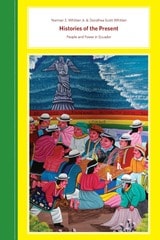
Histories of the Present
People and Power in EcuadorNorman E. Whitten Jr. and Dorothea Scott Whitten
University of Illinois Press, 2011
Hope's Promise
Religion and Acculturation in the Southern BackcountryS. Scott Rohrer
University of Alabama Press, 2013
In Hope's Promise, Scott Rohrer dissects the internal workings of the ecumenical Moravian movement at Wachovia—how this disparate group of pilgrims hailing from many countries (Germany, Ireland, Scandinavia, England) and different denominations (Lutheran, Reformed, Methodist, Anglican) yielded their ethnicities as they became, above all, a people of faith. By examining the "open" farm congregations of Hope, Friedberg, and Friedland, Rohrer offers a sensitive portrayal of their evangelical life and the momentous cultural changes it wrought: the organization of tight-knit congregations bound by "heart religion;" the theology of the new birth; the shape of religious discipline; the sacrament of communion; and the role of music. Drawing on courthouse documents and church records, Rohrer carefully demonstrates how various groups began to take on traits of the others. He also illustrates how evangelical values propelled interaction with the outside world—at the meetinghouse and the frontier store, for example—and fostered even more collective and accelerated change.
As the Moravians became ever more "American" and "southern," the polyglot of ethnicities that was Wachovia would, under the unifying banner of evangelicalism, meld into one of the most sophisticated religious communities in early America.
Humane Development
Participation and Change Among the Sadama of EthiopiaJohn H. Hamer
University of Alabama Press, 1987
Humane Development seeks to show that the Sadama are a people quite adaptable to change on their own terms. According to their narrative history and from what is know from documents in recent times, individuals have often taken risks that have sometimes favored and at other times gone against the enhancement of their lifestyle.
Certainly people can, as the experience of the Sadama shows, effectively participate in change at the local level. They bring a vast experience to the challenge of choosing, and also a knowledge of the relationship between their environment, tools, and organization that has enabled them to survive through the millennia. When people are permitted to draw upon their heritage in making choices, they approach the changing situation with confidence. Moreover, the opportunity to choose among alternatives, rather than being subjected to an externally made choice, maximizes the possibility for innovation.
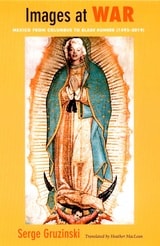
Images at War
Mexico From Columbus to Blade Runner (1492–2019)Serge Gruzinski
Duke University Press, 2001
Although the baroque image played a decisive role in many arenas, especially that of conquest and New World colonization, its powerful resonance in the sphere of religion is a focal point of Gruzinski’s study. In his analysis of how images conveyed meaning across linguistic barriers, he uncovers recurring themes of false images, less-than-perfect replicas, the uprooting of peoples and cultural memories, and the violence of iconoclastic destruction. He shows how various ethnic groups—Indians, blacks, Europeans—left their distinct marks on images of colonialism and religion, coopting them into expressions of identity or instruments of rebellion. As Gruzinski’s story unfolds, he tells of Aztec idols, the cult of the Virgin of Guadalupe, conquistadors, Franciscans, and neoclassical attempts to repress the baroque. In the final chapter he discusses the political and religious implications of contemporary imagery—such as that in Mexican soap operas—and speculates about the future of images in Latin America.
Originally written in French, this work makes available to an English audience a seminal study of Mexico and the role of the image in the New World.
Imagined Globalization
Néstor García Canclini
Duke University Press, 2014
García Canclini contrasts the imaginaries of previous migrants to the Americas with those who live in transnational circuits today. He integrates metaphor and narrative, working through philosophical, anthropological, and socioeconomically grounded interpretations of art, literature, crafts, media, and other forms of expression toward his conclusion that globalization is, in important ways, a collection of heterogeneous narratives. García Canclini advocates global imaginaries that generate new strategies for dealing with contingency and produce new forms of citizenship oriented toward multiple social configurations rather than homogenization. This edition of Imagined Globalization includes a significant new introduction by George Yúdice and an interview in which the cultural theorist Toby Miller and García Canclini touch on events including the Arab Spring and Occupy Wall Street.
Immigrants in the Far West
Historical Identities and ExperiencesJessie L. Embry
University of Utah Press, 2014
Islands at the Crossroads
Migration, Seafaring, and Interaction in the CaribbeanL. Antonio Curet
University of Alabama Press, 2011
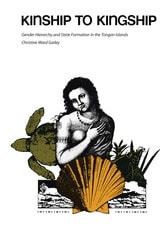
Kinship to Kingship
Gender Hierarchy and State Formation in the Tongan IslandsBy Christine Ward Gailey
University of Texas Press, 1987
Have women always been subordinated? If not, why and how did women’s subordination develop? Kinship to Kingship was the first book to examine in detail how and why gender relations become skewed when classes and the state emerge in a society.
Using a Marxist-feminist approach, Christine Ward Gailey analyzes women’s status in one society over three hundred years, from a period when kinship relations organized property, work, distribution, consumption, and reproduction to a class-based state society. Although this study focuses on one group of islands, Tonga, in the South Pacific, the author discusses processes that can be seen through the neocolonial world.
This ethnohistorical study argues that evolution from a kin-based society to one organized along class lines necessarily entails the subordination of women. And the opposite is also held to be true: state and class formation cannot be understood without analyzing gender and the status of women. Of interest to students of anthropology, political science, sociology, and women’s studies, this work is a major contribution to social history.

La Harpe's Post
Tales of French-Wichita Contact on the Eastern PlainsGeorge H. Odell
University of Alabama Press, 2002
This major contribution to contact period studies points to the Lasley Vore site in modern Oklahoma as the most likely first meeting place of Plains Indians and Europeans more than 300 years ago.
In 1718, Jean-Baptiste Bénard, Sieur de la Harpe, departed St. Malo in Brittany for the New World. La Harpe, a member of the French bourgeoisie, arrived at Dauphin Island on the Gulf coast to take up the entrepreneurial concession provided by the director of the French colony, Jean Baptiste LeMoyne de Bienville. La Harpe's charge was to open a trading post on the Red River just above a Caddoan village not far from present-day Texarkana. Following the establishment of this post, La Harpe ventured farther north to extend his trade market into the region occupied by the Wichita Indians. Here he encountered a Tawakoni village with an estimated 6,000 inhabitants, a number that swelled to 7,000 during the ten-day visit.
Despite years of ethnohistoric and archaeological research, no scholar had successfully established where this important meeting took place. Then in 1988, George Odell and his crew surveyed and excavated an area 13 miles south of Tulsa, along the Arkansas River, that revealed undeniable association of Native American habitation refuse with 18th-century European trade goods.
Odell here presents a full account of the presumed location of the Tawakoni village as revealed through the analysis of excavated materials from nine specialist collaborators. In a strikingly well-written narrative report, employing careful study and innovative analysis supported by appendixes containing the excavation data, Odell combines documentary history and archaeological evidence to pinpoint the probable site of the first European contact with North American Plains Indians.
Monsters and Revolutionaries
Colonial Family Romance and MetissageFrançoise Vergès
Duke University Press, 1999
Originally settled by sugar plantation owners and their Indian and African slaves following a seventeenth-century French colonial decree, Réunion abolished slavery in 1848. Because plantation owners continued to import workers from India, Africa, Asia, and Madagascar, the island was defined as a place based on mixed heritages, or métissage. Vergès reads the relationship between France and the residents of Réunion as a family romance: France is the seemingly protective mother, La Mère-Patrie, while the people of Réunion are seen and see themselves as France’s children. Arguing that the central dynamic in the colonial family romance is that of debt and dependence, Verges explains how the republican ideals of the French Revolution and the Enlightenment are seen as gifts to Réunion that can never be repaid. This dynamic is complicated by the presence of métissage, a source of anxiety to the colonizer in its refutation of the “purity” of racial bloodlines. For Vergès, the island’s history of slavery is the key to understanding métissage, the politics of assimilation, constructions of masculinity, and emancipatory discourses on Réunion.
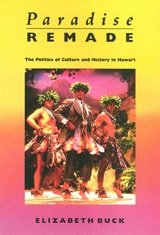
Paradise Remade
The Politics of Culture and History in Hawai'iElizabeth Buck
Temple University Press, 1994
This is a book about the politics of competing cultures and myths in a colonized nation. Elizabeth Buck considers the transformation of Hawaiian culture focusing on the indigenous population rather than on the colonizers. She describes how Hawaii's established religious, social, political, and economic relationships have changed in the past 200 years as a result of Western imperialism. Her account is particularly timely in light of the current Hawaiian demands for sovereignty 100 years after the overthrow of the monarchy in 1893.
Buck examines the social transformation Hawaii from a complex hierarchical, oral society to an American state dominated by corporate tourism and its myths of paradise. She pays particular attention to the ways contemporary Hawaiians are challenging the use of their traditions as the basis for exoticized entertainment.
Buck demonstrates that sacred chants and hula were an integral part of Hawaiian social life; as the repository of the people's historical memory, chants and hula practices played a vital role in maintaining the links between religious, political, and economic relationships. Tracing the ways in which Hawaiian culture has been variously suppressed and constructed by Western explorers, New England missionaries, the tourist industry, ethnomusicologists, and contemporary Hawaiians, Buck offers a fascinating "rereading" of Hawaiian history.
Population, Contact, and Climate in the New Mexican Pueblos
Ezra B. W. Zubrow
University of Arizona Press, 1974

Rain Forest Literatures
Amazonian Texts And Latin American CultureLucia Sa
University of Minnesota Press, 2004
Recaptures native literatures of the Amazonian rain forest
Native texts of the Amazonian rain forest have been viewed as myth or ethnographic matter—the raw material of literature—rather than as significant works in their own right. But in this unprecedented study, Lúcia Sá approaches indigenous texts as creative works rather than source material.
Disclosing the existence and nature of long-standing, rich, and complex Native American literary and intellectual traditions that have typically been neglected or demeaned by literary criticism, Rain Forest Literatures analyzes four indigenous cultural traditions: the Carib, Tupi-Guarani, Upper Rio Negro, and Western Arawak. In each case, Sá considers principal native texts and, where relevant, their publication history. She offers a historical overview of the impact of these texts on mainstream Spanish-American and Brazilian literatures, detailing comparisons with native sources and making close analyses of major instances, such as Mário de Andrade’s classic Macunaima (1928) and Mario Vargas Llosa’s The Storyteller (1986). A redrawing of the lineage of Brazilian and Spanish-American literatures, this book advocates an understanding of the relationships between cultures as a process of “transculturation” rather than “acculturation,” emphasizing the often-ignored impact of the peripheral culture on the one that assumes dominance.
The Culture and Acculturation of the Delaware Indians
William W. Newcomb, Jr.
University of Michigan Press, 1956
The Libertine Colony
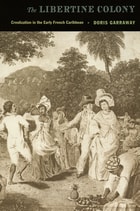
Creolization in the Early French CaribbeanDoris Garraway
Duke University Press, 2005
Among the texts Garraway analyzes are missionary histories by Jean-Baptiste Du Tertre, Raymond Breton, and Jean-Baptiste Labat; narratives of adventure and transgression written by pirates and others outside the official civil and religious power structures; travel accounts; treatises on slavery and colonial administration in Saint-Domingue; the first colonial novel written in French; and the earliest linguistic description of the native Carib language. Garraway also analyzes legislation—including the Code noir—that codified slavery and other racialized power relations. The Libertine Colony is both a rich cultural history of creolization as revealed in Francophone colonial literature and an important contribution to theoretical arguments about how literary critics and historians should approach colonial discourse and cultural representations of slave societies.
Themes of Indigenous Acculturation in Northwest Mexico
Edited by Thomas B. Hinton and Phil C. Weigand
University of Arizona Press, 1981
When Worlds Collide
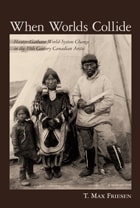
Hunter-Gatherer World-System Change in the 19th Century Canadian ArcticT. Max Friesen
University of Arizona Press, 2013
Max Friesen has adapted and expanded world-system theory in order to develop a model that explains how hunter-gatherer interaction networks, or world-systems, are structured—and why they change. He has utilized this model to better understand the development of Inuvialuit society in the western Canadian Arctic over a 500-year span, from the pre-contact period to the early twentieth century.
As Friesen combines local archaeological data with more extensive ethnographic and archaeological evidence from the surrounding region, a picture emerges of a dynamic Inuvialuit world-system characterized by bounded territories, trade, warfare, and other forms of interaction. This world-system gradually intensified as the impacts of Euroamerican colonial activities increased. This intensification, Friesen suggests, was based on pre-existing Inuvialuit social and economic structures rather than on patterns imposed from outside. Ultimately, this intense interacting network collapsed near the end of the nineteenth century. When Worlds Collide offers a new way to comprehend small-scale world-systems from the point of view of indigenous people. Its approach will prove valuable for understanding hunter-gatherer societies around the globe.