Results by title
175 books match the query 'Mayas' and 9 start with s
Sanctuary
Exclusion, Violence, and Indigenous Migrants in the East BayCruz Medina
The Ohio State University Press, 2024
Taking a Northern California community of migrants from Guatemala as a case study, Medina demonstrates the ways in which immigration policy and educational barriers exclude Indigenous migrant populations. He follows the community at the “Sanctuary”—a Spanish-speaking church in the East Bay Area that serves as a place of worship, English language instruction, and refuge for migrants. Medina assembles participant observations, interviews, surveys, and other data to provide points of entry into intersecting issues of immigration, violence, language, and property and to untangle aspects of citizenship, exclusion, and assumptions about literacy.
Seeking Conflict in Mesoamerica
Operational, Cognitive, and Experiential ApproachesShawn G. Morton
University Press of Colorado, 2019
Many studies have focused on the degree to which the prevalence, nature, and conduct of conflict has varied across time and space. This volume focuses not only on such operational considerations but on cognitive and experiential issues, analyzing how the Maya understood and explained conflict, what they recognized as conflict, how conflict was experienced by various groups, and the circumstances surrounding conflict. By offering an emic (internal and subjective) understanding alongside the more commonly researched etic (external and objective) perspective, contributors clarify insufficiencies and address lapses in data and analysis. They explore how the Maya defined themselves within the realm of warfare and examine the root causes and effects of intergroup conflict.
Using case studies from a wide range of time periods, Seeking Conflict in Mesoamerica provides a basis for understanding hostilities and broadens the archaeological record for the “seeking” of conflict in a way that has been largely untouched by previous scholars. With broad theoretical reach beyond Mesoamerican archaeology, the book will have wide interdisciplinary appeal and will be important to ethnohistorians, art historians, ethnographers, epigraphers, and those interested in human conflict more broadly.
Contributors:
Matthew Abtosway, Karen Bassie-Sweet, George J. Bey III, M. Kathryn Brown, Allen J. Christenson, Tomás Gallareta Negrón, Elizabeth Graham, Helen R. Haines, Christopher L. Hernandez, Harri Kettunen, Rex Koontz, Geoffrey McCafferty, Jesper Nielsen, Joel W. Palka, Kerry L. Sagebiel, Travis W. Stanton, Alexandre Tokovinine
Social Change and the Evolution of Ceramic Production and Distribution in a Maya Community
Dean E. Arnold
University Press of Colorado, 2008
Dean E. Arnold made ten visits to Ticul, Yucatan, Mexico, witnessing the changes in transportation infrastructure, the use of piped water, and the development of tourist resorts. Even in this context of social change and changes in the demand for pottery, most of the potters in 1997 came from the families that had made pottery in 1965. This book traces changes and continuities in that population of potters, in the demand and distribution of pottery, and in the procurement of clay and temper, paste composition, forming, and firing.
In this volume, Arnold bridges the gap between archaeology and ethnography, using his analysis of contemporary ceramic production and distribution to generate new theoretical explanations for archaeologists working with pottery from antiquity. When the descriptions and explanations of Arnold’s findings in Ticul are placed in the context of the literature on craft specialization, a number of insights can be applied to the archaeological record that confirm, contradict, and nuance generalizations concerning the evolution of ceramic specialization. This book will be of special interest to anthropologists, archaeologists, and ethnographers.
Sorcery in Mesoamerica
Jeremy D. Coltman and John M. D. Pohl
University Press of Colorado, 2020
In each chapter, preeminent scholars of ritual and belief ask very different questions about what exactly sorcery is in Mesoamerica. Contributors consider linguistic and visual aspects of sorcery and witchcraft, such as the terminology in Aztec semantics and dictionaries of the Kaqchiquel and K’iche’ Maya. Others explore the practice of sorcery and witchcraft, including the incorporation by indigenous sorcerers in the Mexican highlands of European perspectives and practices into their belief system. Contributors also examine specific deities, entities, and phenomena, such as the pantheistic Nahua spirit entities called forth to assist healers and rain makers, the categorization of Classic Maya Wahy (“co-essence”) beings, the cult of the Aztec goddess Cihuacoatl, and the recurring relationship between female genitalia and the magical conjuring of a centipede throughout Mesoamerica.
Placing the Mesoamerican people in a human context—as engaged in a rational and logical system of behavior—Sorcery inMesoamerica is the first comprehensive study of the subject and an invaluable resource for students and scholars of Mesoamerican culture and religion.
Contributors:
Lilián González Chévez, John F. Chuchiak IV, Jeremy D. Coltman, Roberto Martínez González, Oswaldo Chinchilla Mazariegos, Cecelia F. Klein, Timothy J. Knab, John Monaghan, Jesper Nielsen, John M. D. Pohl, Alan R. Sandstrom, Pamela Effrein Sandstrom, David Stuart
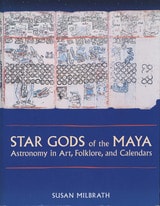
Star Gods of the Maya
Astronomy in Art, Folklore, and CalendarsBy Susan Milbrath
University of Texas Press, 2000
Observations of the sun, moon, planets, and stars played a central role in ancient Maya lifeways, as they do today among contemporary Maya who maintain the traditional ways. This pathfinding book reconstructs ancient Maya astronomy and cosmology through the astronomical information encoded in Precolumbian Maya art and confirmed by the current practices of living Maya peoples.
Susan Milbrath opens the book with a discussion of modern Maya beliefs about astronomy, along with essential information on naked-eye observation. She devotes subsequent chapters to Precolumbian astronomical imagery, which she traces back through time, starting from the Colonial and Postclassic eras. She delves into many aspects of the Maya astronomical images, including the major astronomical gods and their associated glyphs, astronomical almanacs in the Maya codices [painted books], and changes in the imagery of the heavens over time. This investigation yields new data and a new synthesis of information about the specific astronomical events and cycles recorded in Maya art and architecture. Indeed, it constitutes the first major study of the relationship between art and astronomy in ancient Maya culture.
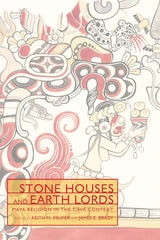
Stone Houses and Earth Lords
Maya Religion in the Cave ContextKeith M. Prufer
University Press of Colorado, 2021
Demonstrating the importance of these subterranean spaces to Maya archaeology, contributors provide interpretations of archaeological remains that yield insights into Maya ritual and cosmology. Compiling the best current scholarship in this fast-growing area of research, Stone Houses and Earth Lords is a vital reference for Mayanists, Mesoamerican specialists, and others interested in the human use of caves in the New World. Contributors include: Juan Luis Bonor, James E. Brady, Robert Burnett, Allan B. Cobb, Pierre Robert Colas, Cesar Espinosa, Sergio Garza, David M. Glassman, Christina T. Halperin, Amalia Kenward, Andrew Kindon, Patricia McAnany, Christopher Morehart, Holley Moyes, Vanessa A. Owen, Shankari Patel, Polly Peterson, Keith M. Prufer, Timothy. W. Pugh, Frank Saul, Julie Saul, Ann M. Scott, Andrea Stone, and Vera Tiesler.
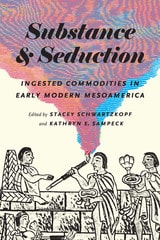
Substance and Seduction
Ingested Commodities in Early Modern MesoamericaEdited by Stacey Schwartzkopf and Kathryn E. Sampeck
University of Texas Press, 2017
Chocolate and sugar, alcohol and tobacco, peyote and hallucinogenic mushrooms—these seductive substances have been a nexus of desire for both pleasure and profit in Mesoamerica since colonial times. But how did these substances seduce? And when and how did they come to be desired and then demanded, even by those who had never encountered them before? The contributors to this volume explore these questions across a range of times, places, and peoples to discover how the individual pleasures of consumption were shaped by social, cultural, economic, and political forces.
Focusing on ingestible substances as a group, which has not been done before in the scholarly literature, the chapters in Substance and Seduction trace three key links between colonization and commodification. First, as substances that were taken into the bodies of both colonizers and colonized, these foods and drugs participated in unexpected connections among sites of production and consumption; racial and ethnic categories; and free, forced, and enslaved labor regimes. Second, as commodities developed in the long transition from mercantile to modern capitalism, each substance in some way drew its enduring power from its ability to seduce: to stimulate bodies; to alter minds; to mark class, social, and ethnic boundaries; and to generate wealth. Finally, as objects of scholarly inquiry, each substance rewards interdisciplinary approaches that balance the considerations of pleasure and profit, materiality and morality, and culture and political economy.
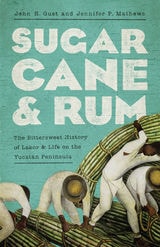
Sugarcane and Rum
The Bittersweet History of Labor and Life on the Yucatán PeninsulaJohn R. Gust and Jennifer P. Mathews
University of Arizona Press, 2020
While the Yucatán Peninsula of Mexico may conjure up images of vacation getaways and cocktails by the sea, these easy stereotypes hide a story filled with sweat and toil. The story of sugarcane and rum production in the Caribbean has been told many times. But few know the bittersweet story of sugar and rum in the jungles of the Yucatán Peninsula during the nineteenth century. This is much more than a history of coveted commodities. The unique story that unfolds in John R. Gust and Jennifer P. Mathews’s new history Sugarcane and Rum is told through the lens of Maya laborers who worked under brutal conditions on small haciendas to harvest sugarcane and produce rum.
Gust and Mathews weave together ethnographic interviews and historical archives with archaeological evidence to bring the daily lives of Maya workers into focus. They lived in a cycle of debt, forced to buy all of their supplies from the company store and take loans from the hacienda owners. And yet they had a certain autonomy because the owners were so dependent on their labor at harvest time. We also see how the rise of cantinas and distilled alcohol in the nineteenth century affected traditional Maya culture and that the economies of Cancún and the Mérida area are predicated on the rum-influenced local social systems of the past. Sugarcane and Rum brings this bittersweet story to the present and explains how rum continues to impact the Yucatán and the people who have lived there for millennia.
Sustainability and Water Management in the Maya World and Beyond
Jean T. Larmon
University Press of Colorado, 2021
The volume focuses primarily on the Precolumbian Maya but offers several analogous case studies outside the ancient Maya world that illustrate the pervasiveness of water’s role in sustainability, including an ethnographic study of the sustainability of small-scale, farmer-managed irrigation systems in contemporary New Mexico and the environmental consequences of Angkor’s growth into the world’s most extensive preindustrial settlement. The archaeological record offers rich data on past politics of climate change, while epigraphic and ethnographic data show how integrated the ideological, political, and environmental worlds of the Maya were.
While Sustainability and Water Management in the Maya World and Beyond stresses how lessons from the past offer invaluable insight into current approaches of adaptation, it also advances our understanding of those adaptations by making the inevitable discrepancies between past and present climate change less daunting and emphasizing the sustainable negotiations between humans and their surroundings that have been mediated by the changing climate for millennia. It will appeal to students and scholars interested in climate change, sustainability, and water management in the archaeological record.
Contributors: Mary Jane Acuña, Wendy Ashmore, Timothy Beach, Jeffrey Brewer, Christopher Carr, Adrian S. Z. Chase, Arlen F. Chase, Diane Z. Chase, Carlos R. Chiriboga, Jennifer Chmilar, Nicholas Dunning, Maurits W. Ertsen, Roland Fletcher, David Friedel, Robert Griffin, Joel D. Gunn, Armando Anaya Hernández, Christian Isendahl, David Lentz, Sheryl Luzzadder-Beach, Dan Penny, Kathryn Reese-Taylor, Michelle Rich, Cynthia Robin, Sylvia Rodríguez, William Saturno, Vernon Scarborough, Payson Sheets, Liwy Grazioso Sierra, Michael Smyth, Sander van der Leeuw, Andrew Wyatt