Results by title
1488 books match the query 'Media Studies' and 106 start with s

Sacred Sisterhoods
A Celebration of Black Women's Friendships on Television and in FilmEdited by Imani M. Cheers
The Ohio State University Press, 2025
Creative visionaries from Debbie Allen to Quinta Brunson, along with shows and films from Living Single to Hidden Figures—and many others—receive their due in these rigorous, lively, and accessible essays. Spotlighting the nuances and normalcy of Black women’s sacred sisterhoods, contributors reveal the indelible mark modern Black consciousness and creative control leave on our popular culture every day in an anthology that will be essential to scholars and students of contemporary media, race, and gender, as well as to general readers.
Contributors:
Imani M. Cheers, Monique A. Gamble, Marquita Gammage, Kandace Harris, Crystal L. Holmes, Makeba Lavan, Rondrea Danielle Mathis, Miriam J. Petty-Adams, De Anna Reese, Randi Richardson, Beretta E. Smith-Shomade, Andrene M. Taylor, Kristen Warner, and Shauntae Brown White

Sad by Design
On Platform NihilismGeert Lovink
Pluto Press, 2019
Sad by Design offers a critical analysis of our social media environment and what it’s doing to us. Geert Lovink analyzes the problems of toxic viral memes, online addiction, and the lure of fake news. He shows how attempts to design sites to solve these problems have, in their studied efforts to be apolitical, been unable to generate either a serious critique or legitimate alternatives. But there is an answer: Lovink calls for us to acknowledge the engineered intimacy of these sites—because boredom, he argues, is the first stage of overcoming “platform nihilism,” which can free us to organize to stop the data harvesting industries that run them.

Safety Orange
Anna Watkins Fisher
University of Minnesota Press, 2021
How fluorescent orange symbolizes the uneven distribution of safety and risk in the neoliberal United States
Safety Orange first emerged in the 1950s as a bureaucratic color standard in technical manuals and federal regulations in the United States. Today it is most visible in the contexts of terror, pandemic, and environmental alarm systems; traffic control; work safety; and mass incarceration. In recent decades, the color has become ubiquitous in American public life—a marker of the extreme poles of state oversight and abandonment, of capitalist excess and dereliction. Its unprecedented saturation encodes the tracking of those bodies, neighborhoods, and infrastructures judged as worthy of care—and those deemed dangerous and expendable.
Here, Anna Watkins Fisher uses Safety Orange as an interpretive key for theorizing the uneven distribution of safety and care in twenty-first-century U.S. public life and for pondering what the color tells us about neoliberalism’s intensifying impact often hiding in plain sight in ordinary and commonplace phenomena.
Forerunners: Ideas First is a thought-in-process series of breakthrough digital publications. Written between fresh ideas and finished books, Forerunners draws on scholarly work initiated in notable blogs, social media, conference plenaries, journal articles, and the synergy of academic exchange. This is gray literature publishing: where intense thinking, change, and speculation take place in scholarship.
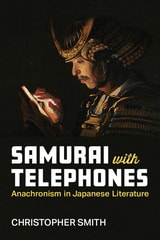
Samurai with Telephones
Anachronism in Japanese LiteratureChristopher Smith
University of Michigan Press, 2024
From the modern period, this volume examines literature by Mori Ōgai and Ōe Kenzaburō, manga by Tezuka Osamu, art by Murakami Takashi, and a variety of other pop cultural works. Turning to the Early Modern period (Edo period, 1600–1868), which produced a literature rich with playful anachronism, he also examines several Kabuki and Bunraku plays, kibyōshi comic books, and gōkan illustrated novels. In analyzing these works, he draws a distinction between anachronisms that attempt to hide their work on history and convincingly rewrite it and those conspicuous anachronisms that highlight and disrupt the construction of historical narratives.
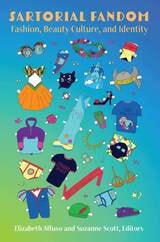
Sartorial Fandom
Fashion, Beauty Culture, and IdentityElizabeth Affuso and Suzanne Scott, Editors
University of Michigan Press, 2023
Sartorial Fandom shines a spotlight on the fashion and beauty cultures that undergird fandoms, considering the retailers, branded products, and fan-made objects that serve as forms of identity expression. This collection is invested in the subcultural and mainstream expression of style and in the spaces where the two intersect. Fan culture is, in many respects, an optimal space to situate a study of style because fandom itself is often situated between the subcultural and the mainstream. Collectively, the chapters in this anthology explore how various axes of lived identity interact with a growing movement to consider fandom as a lifestyle category, ultimately contending that sartorial practices are central to fan expression but also indicative of the primacy of fandom in contemporary taste cultures.
Saturation
An Elemental PoliticsMelody Jue and Rafico Ruiz, editors
Duke University Press, 2021
Contributors. Marija Cetinić, Jeff Diamanti, Bishnupriya Ghosh, Lisa Yin Han, Stefan Helmreich, Mél Hogan, Melody Jue, Rahul Mukherjee, Max Ritts, Rafico Ruiz, Bhaskar Sarkar, John Shiga, Avery Slater, Janet Walker, Joanna Zylinska
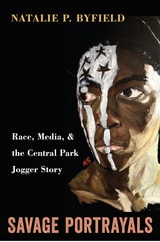
Savage Portrayals
Race, Media and the Central Park Jogger StoryNatalie Byfield
Temple University Press, 2014

Saving New Sounds
Podcast Preservation and HistoriographyJeremy Wade Morris and Eric Hoyt, editors
University of Michigan Press, 2021
Over seventy-five million Americans listen to podcasts every month, and the average weekly listener spends over six hours tuning into podcasts from the more than thirty million podcast episodes currently available. Yet despite the excitement over podcasting, the sounds of podcasting’s nascent history are vulnerable and they remain mystifyingly difficult to research and preserve. Podcast feeds end abruptly, cease to be maintained, or become housed in proprietary databases, which are difficult to search with any rigor. Podcasts might seem to be highly available everywhere, but it’s necessary to preserve and analyze these resources now, or scholars will find themselves writing, researching, and thinking about a past they can’t fully see or hear.
This collection gathers the expertise of leading and emerging scholars in podcasting and digital audio in order to take stock of podcasting’s recent history and imagine future directions for the format. Essays trace some of the less amplified histories of the format and offer discussions of some of the hurdles podcasting faces nearly twenty years into its existence. Using their experiences building and using the PodcastRE database—one of the largest publicly accessible databases for searching and researching podcasts—the volume editors and contributors reflect on how they, as media historians and cultural researchers, can best preserve podcasting’s booming audio cultures and the countless voices and perspectives podcasting adds to our collective soundscape.

School Yearbook
The Untold Story of a Cringey Tradition and Its Digital AfterlifeKate Eichhorn
University of Chicago Press, 2025
We’re all familiar with the embarrassment that washes over us when recalling our high school yearbooks. Questionable fashion choices, gravity-defying hair, a melodramatic quote—what were we thinking? Even as school yearbooks decline in popularity among contemporary teens, they continue to impact our lives in shocking ways. Collected, digitized, aggregated, and recombined in ways that would have been impossible to imagine just a few decades ago, yearbooks are no longer bound personal archives of adolescent memories. In the twenty-first century, they are shaping our lives in surprising and sometimes disturbing ways. And what could be a more fitting afterlife for these cringey books?
In School Yearbook, cultural critic Kate Eichhorn investigates this ubiquitous object. On the surface, school yearbooks are easily dismissed as innocuous collections of embarrassing photographs and cheesy affirmations, but as Eichhorn reveals, there has never been anything innocent about the school yearbook tradition. Since the early twentieth century, yearbooks have circulated as forms of public relations, propaganda, and hate speech. They have been routinely used by police detectives, private investigators, and even the FBI to identify and profile suspects. With over half a million yearbooks now available online, these books have also acquired the power to continue shaping our lives long after graduation. Would-be landlords, employers, and even creditors can now turn to data culled from their embarrassing pages to make judgments about who we are and what we merit.
In a digital era, school yearbooks have acquired the ability to keep judging us in perpetuity. Both timely and insightful, School Yearbook explores how these books have always been used to rank and judge us.

Screen Captures
Film in the Age of EmergencyStephen Lee Naish
Lever Press, 2026

Screen Education
From Film Appreciation to Media StudiesTerry Bolas
Intellect Books, 2009
In Screen education, Terry Bolas provides the first definitive history of the development of film and television studies in Britain, from its origins as a grassroots movement to its current status as serious scholarship. The focus is on the United Kingdom, where the development mirrors that of film education in North America and Australia. Bolas’s account describes the voluntary efforts of activists in the Society for Education in Film and Television and their relationship with British Film Institute’s Education Department. Though much documentary evidence has been lost, Bolas’s work incorporates personal archives and interviews with key figures, making this a critical record of the rise of cinema and television studies.
Screen Traffic
Movies, Multiplexes, and Global CultureCharles R. Acland
Duke University Press, 2003
Integrating film and cultural theory with close analysis of promotional materials, entertainment news, trade publications, and economic reports, Acland presents an array of evidence for the new understanding of movies and moviegoing that has developed within popular culture and the entertainment industry. In particular, he dissects a key development: the rise of the megaplex, characterized by large auditoriums, plentiful screens, and consumer activities other than film viewing. He traces its genesis from the re-entry of studios into the movie exhibition business in 1986 through 1998, when reports of the economic destabilization of exhibition began to surface, just as the rise of so-called e-cinema signaled another wave of change. Documenting the current tendency toward an accelerated cinema culture, one that appears to arrive simultaneously for everyone, everywhere, Screen Traffic unearths and critiques the corporate and cultural forces contributing to the “felt internationalism” of our global era.
Screening Culture, Viewing Politics
An Ethnography of Television, Womanhood, and Nation in Postcolonial IndiaPurnima Mankekar
Duke University Press, 1999
Mankekar examines both “entertainment” narratives and advertisements designed to convey particular ideas about the nation. Organizing her study around the recurring themes in these shows—Indian womanhood, family, community, constructions of historical memory, development, integration, and sometimes violence—Mankekar dissects both the messages televised and her New Delhi subjects’ perceptions of and reactions to these messages. In the process, her ethnographic analysis reveals the texture of these women’s daily lives, social relationships, and everyday practices. Throughout her study, Mankekar remains attentive to the tumultuous historical and political context in the midst of which these programs’ integrationalist messages are transmitted, to the cultural diversity of the viewership, and to her own role as ethnographer. In an enlightening epilogue she describes the effect of satellite television and transnational programming to India in the 1990s.
Through its ethnographic and theoretical richness, Screening Culture, Viewing Politics forces a reexamination of the relationship between mass media, social life, and identity and nation formation in non-Western contexts. As such, it represents a major contribution to a number of fields, including media and communication studies, feminist studies, anthropology, South Asian studies, and cultural studies.
Screening Morocco
Contemporary Film in a Changing SocietyValérie K. Orlando
Ohio University Press, 2011

Screening Precarity
Hindi Cinema and Neoliberal Crisis in Twenty-first Century IndiaMegha Anwer and Anupama Arora
University of Michigan Press, 2025
Screenwriting
Horton, Andrew
Rutgers University Press, 2014
Reaching back to the early days of Hollywood, when moonlighting novelists, playwrights, and journalists were first hired to write scenarios and photoplays, Screenwriting illuminates the profound ways that screenwriters have contributed to the films we love. This book explores the social, political, and economic implications of the changing craft of American screenwriting from the silent screen through the classical Hollywood years, the rise of independent cinema, and on to the contemporary global multi-media marketplace. From The Birth of a Nation (1915), Gone With the Wind (1939), and Gentleman’s Agreement (1947) to Chinatown (1974), American Beauty (1999), and Lost in Translation (2003), each project began as writers with pen and ink, typewriters, or computers captured the hopes and dreams, the nightmares and concerns of the periods in which they were writing.
As the contributors take us behind the silver screen to chronicle the history of screenwriting, they spotlight a range of key screenplays that changed the game in Hollywood and beyond. With original essays from both distinguished film scholars and accomplished screenwriters, Screenwriting is sure to fascinate anyone with an interest in Hollywood, from movie buffs to industry professionals.
Scripted Culture
Digitalization and the Cultural Public SphereEdited by Ruedi Widmer and Ines Kleesattel
Diaphanes, 2018
Seeing Through the Eighties
Television and ReaganismJane Feuer
Duke University Press, 1995
With a cast of characters including Michael, Hope, Elliot, Nancy, Melissa, and Gary; Alexis, Krystle, Blake, and all the other Carringtons; not to mention Maddie and David; even Crockett and Tubbs, Feuer smoothly blends close readings of well-known programs and analysis of television’s commercial apparatus with a thorough-going theoretical perspective engaged with the work of Baudrillard, Fiske, and others. Her comparative look at Yuppie TV, Prime Time Soaps, and made-for-TV-movie Trauma Dramas reveals the contradictions and tensions at work in much prime-time programming and in the frustrations of the American popular consciousness. Seeing Through the Eighties also addresses the increased commodification of both the producers and consumers of television as a result of technological innovations and the introduction of new marketing techniques. Claiming a close relationship between television and the cultures that create and view it, Jane Feuer sees the eighties through televison while seeing through television in every sense of the word.
Seeing by Electricity
The Emergence of Television, 1878-1939Doron Galili
Duke University Press, 2020
Selfie Aesthetics
Seeing Trans Feminist Futures in Self-Representational ArtNicole Erin Morse
Duke University Press, 2022
Selling Fear
Counterterrorism, the Media, and Public OpinionBrigitte L. Nacos, Yaeli Bloch-Elkon, Robert Y. Shapiro
University of Chicago Press, 2011
While we’ve long known that the strategies of terrorism rely heavily on media coverage of attacks, Selling Fear is the first detailed look at the role played by media in counterterrorism—and the ways that, in the wake of 9/11, the Bush administration manipulated coverage to maintain a climate of fear.
Drawing on in-depth analysis of counterterrorism in the years after 9/11—including the issuance of terror alerts and the decision to invade Iraq—the authors present a compelling case that the Bush administration hyped fear, while obscuring civil liberties abuses and concrete issues of preparedness. The media, meanwhile, largely abdicated its watchdog role, choosing to amplify the administration’s message while downplaying issues that might have called the administration’s statements and strategies into question. The book extends through Hurricane Katrina, and the more skeptical coverage that followed, then the first year of the Obama administration, when an increasingly partisan political environment presented the media, and the public, with new problems of reporting and interpretation.
Selling Fear is a hard-hitting analysis of the intertwined failures of government and media—and their costs to our nation.
Selling War
The Role of the Mass Media in Hostile Conflicts from World War I to the "War on Terror"Edited by Josef Seethaler, Matthias Karmasin, Gabriele Melischek, and Romy Wöhlert
Intellect Books, 2013
Sensing Health
Bodies, Data, and Digital Health TechnologiesMikki Kressbach
University of Michigan Press, 2024
To capture and analyze digital health experiences, Kressbach develops a method that combines descriptive practices from Film and Media Studies and Phenomenology. After examining the design and feedback structures of digital health platforms and devices, the author uses her own first-person accounts to analyze the impact of the technology on her body, behaviors, and perception of health. Across five chapters focused on different categories of digital health—menstrual trackers, sexual wellness technologies, fitness trackers, meditation and breathing technologies, and posture and running wearables—Sensing Health demonstrates a method of analysis that acknowledges and critiques the biomedical structures of digital health technology while remaining attentive to the lived experiences of users. Through a focus on the intersection of technological design and experience, this method can be used by researchers, scholars, designers, and developers alike.
Serial Mexico
Storytelling across Media, from Nationhood to NowAmy E. Wright
Vanderbilt University Press, 2023
Honorable Mention, Premio al Mejor Libro en Humanidades, Latin American Studies Association–Mexico Section, 2025
No book until now has tied in two centuries of Mexican serial narratives—tales of glory, of fame, and of epic characters, grounded in oral folklore—with their subsequent retelling in comics, radio, and television soap operas. Wright’s multidisciplinary Serial Mexico delves into this storytelling tradition: examining the nostalgic tales reimagined in novelas, radionovelas, telenovelas and onwards, and examining the foundational figures who have been woven into society.
This panorama shows the Mexican experience of storytelling from the country’s early days until now, showcasing protagonists that mock authority, make light of hierarchy, and embrace the hybridity and mestizaje of Mexico. These tales reflect on and respond to crucial cultural concerns such as family, patriarchy, gender roles, racial mixing, urbanization, modernization, and political idealism. Serial Mexico thus examines how serialized storytelling’s melodrama and sensationalism reveals key political and cultural messaging.
In a detailed yet accessible style, Wright describes how these stories have continued to morph with current times’ concerns and social media. Will tropes and traditions carry on in new and reimagined serial storytelling forms? Only time will tell. Stay tuned for the next episode.

Serial Selves
Identity and Representation in Autobiographical ComicsFrederik Byrn Køhlert
Rutgers University Press, 2019
As the first comparative study of how comics artists from a wide range of backgrounds use the form to write and draw themselves into cultural visibility, Serial Selves will be of interest to anyone interested in the current boom in autobiographical comics, as well as issues of representation in comics and visual culture more broadly.
Sesame Street Revisited
Thomas D. Cook
Russell Sage Foundation, 1975

Severe Storms and Society
Seeking Resilience and Understanding Human Behavior in Meteorology, the Weather Enterprise, and PublicsJack R. Friedman, Daphne S. LaDue, Laura Myers, and Melissa J. Lamkin
American Meteorological Society, 2021
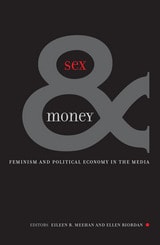
Sex And Money
Feminism and Political Economy in the MediaEileen R. Meehan
University of Minnesota Press, 2001
A revelatory look at the ways that gender, power, and the media are intertwined.
It all comes down to sex and money: how the media are organized, how they work, what they say, who gets to say it and to whom. That is the message this book delivers—and then parses for its meaning to society and culture. Forcefully and persuasively, this groundbreaking volume uses the media to show how questions of gender and economics are inextricably linked to issues of power in Western capitalist societies. Integrating political economy and feminism, it offers a new understanding of communication at the personal, experiential, institutional, and structural levels-and exposes all the subtle and complex ways in which sex and money are sutured into individuals’ daily lives.
Contributors: Robin Andersen, Fordham U; Ellen Balka, Simon Fraser U; Amy Beer; Carolyn M. Byerly, Ithaca College; Ramona Curry, U of Illinois; Fred Fejes, Florida Atlantic U; Nancy Hauserman, U of Iowa; Michèle Martin, Carleton U, Canada; Stana Martin, Central Missouri State U; Lisa McLaughlin, Miami U, Ohio; Roopali Mukherjee, Indiana U; Angela R. Record; Karen Ross, Coventry U; H. Leslie Steeves, U of Oregon; Angharad N. Valdivia, U of Illinois; Janet Wasko, U of Oregon; and Justin Wyatt.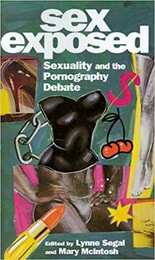
Sex Exposed
Sexuality and the Pornography DebateMcIntosh, Mary
Rutgers University Press, 1993
This provocative collection, by well-known feminists, surveys these arguments, and in particular asks why recent feminist debates about sexuality keep reducing to questions of pornography.
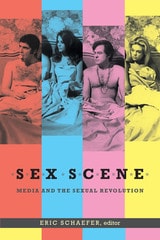
Sex Scene
Media and the Sexual RevolutionEric Schaefer, ed.
Duke University Press, 2014
Contributors. Joseph Lam Duong, Jeffrey Escoffier, Kevin M. Flanagan, Elena Gorfinkel, Raymond J. Haberski Jr., Joan Hawkins, Kevin Heffernan, Eithne Johnson, Arthur Knight, Elana Levine, Christie Milliken, Eric Schaefer, Jeffrey Sconce, Jacob Smith, Leigh Ann Wheeler, Linda Williams
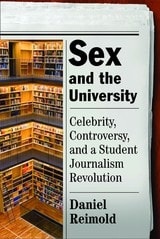
Sex and the University
Celebrity, Controversy, and a Student Journalism RevolutionReimold, Daniel
Rutgers University Press, 2010
Daniel Reimold gives readers of all generations an inside look at this phenomenon. Student sex columnists and sex magazine editors are both celebrities on their home campuses. One columnist, echoing the sentiments of many, said he became an overnight rock star golden child of journalism. But, with celebrity comes controversy. These columns and magazines have sparked contentious and far-reaching legal, religious, and intergenerational debates about sex, the student press, and the place of both within higher education. They are also the most prominent modern student press combatants in the fight for free speech. And they have blurred journalistic boundaries between what is considered public and private, art and pornography, and gossip and news.
Sex and the University explores the celebrity status that student sex columnists and magazine editors have received, the controversies they have caused, and the sexual generation and student journalism revolution they represent. Complete with a sexicon of slang, this book also dives into the columns and magazines themselves, sharing for the first time what modern students are saying about their sex and love lives, in their own words.
Sex, Society, and the Making of Pornography
The Pornographic Object of KnowledgeJeffrey Escoffier
Rutgers University Press, 2021
Sexting Panic
Rethinking Criminalization, Privacy, and ConsentAmy Adele Hasinoff
University of Illinois Press, 2015

Shadow Bodies
Black Women, Ideology, Representation, and PoliticsJordan-Zachery, Julia S.
Rutgers University Press, 2018
Grounded in Black feminist thought, Julia S. Jordan-Zachery looks at the functioning of scripts ascribed to Black women’s bodies in the framing of HIV/AIDS, domestic abuse, and mental illness and how such functioning renders some bodies invisible in Black politics in general and Black women’s politics specifically.
Shadow of the New Deal
The Victory of Public BroadcastingJosh Shepperd
University of Illinois Press, 2023
- Winner of the 2024 BEA Book Award
- Runner-up in the History Division of the Association for Education in Journalism and Mass Communication (AEJMC)
- Runner-up for the AJHA Book of the Year (American Journalism Historians Association).
Despite uncertain beginnings, public broadcasting emerged as a noncommercial media industry that transformed American culture. Josh Shepperd looks at the people, institutions, and influences behind the media reform movement and clearinghouse the National Association of Educational Broadcasters (NAEB) in the drive to create what became the Public Broadcasting Service and National Public Radio.
Founded in 1934, the NAEB began as a disorganized collection of undersupported university broadcasters. Shepperd traces the setbacks, small victories, and trial and error experiments that took place as thousands of advocates built a media coalition premised on the belief that technology could ease social inequality through equal access to education and information. The bottom-up, decentralized network they created implemented a different economy of scale and a vision of a mass media divorced from commercial concerns. At the same time, they transformed advice, criticism, and methods adopted from other sectors into an infrastructure that supported public broadcasting in the 1960s and beyond.
Shadows on the Past
Studies in the Historical Fiction FilmLeger Grindon
Temple University Press, 1994
Studying popular Hollywood films from Gone With the Wind to Reds and such distinguished European films as La Marseillaise and The Rise to Power of Louis XIV, Leger Grindon examines how historical fiction films interpret the present through a representation of the past.
The historical fiction film is characterized by a set of motives and, Grindon argues, deserves to be considered a genre unto itself. Appropriation of historical events can insinuate a film's authority of its subject, veil an intention, provide an escape into nostalgia, or direct a search for knowledge and origins. Utilizing the past as a way of responding to social conflicts in the present, Grindon shows how the genre promotes a political agenda, superseding the influence of scholarship on the public's perception and interpretation of history.
In the series Culture and the Moving Image, edited by Robert Sklar.

Shakespeare at the Cineplex
The Kenneth Branagh EraSamuel Crowl
Ohio University Press, 2005
Samuel Crowl’s Shakespeare at the Cineplex: The Kenneth Branagh Era is the first thorough exploration of the fifteen major Shakespeare films released since the surprising success of Kenneth Branagh’s Henry V (1989). Crowl presents the rich variety of these films in the “long decade: between the fall of the Berlin Wall and the terrorist attacks on September 11, 2001.” The productions range from Hollywood-saturated films such as Franco Zeffirelli’s Hamlet and Michael Hoffman’s A Midsummer Night’s Dream to more modest, experimental offerings, such as Christine Edzard’s As You Like It. Now available in paperback, Shakespeare at the Cineplex will be welcome reading for fans, students, and scholars of Shakespeare in performance.
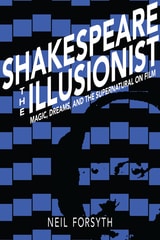
Shakespeare the Illusionist
Magic, Dreams, and the Supernatural on FilmNeil Forsyth
Ohio University Press, 2019
In Shakespeare the Illusionist, Neil Forsyth reviews the history of Shakespeare’s plays on film, using the basic distinction in film tradition between what is owed to Méliès and what to the Lumière brothers. He then tightens his focus on those plays that include some explicit magical or supernatural elements—Puck and the fairies, ghosts and witches, or Prospero’s island, for example—and sets out methodically, but with an easy touch, to review all the films that have adapted those comedies and dramas, into the present day.
Forsyth’s aim is not to offer yet another answer as to whether Shakespeare would have written for the screen if he were alive today, but rather to assess what various filmmakers and TV directors have in fact made of the spells, haunts, and apparitions in his plays. From analyzing early camera tricks to assessing contemporary handling of the supernatural, Forsyth reads Shakespeare films for how they use the techniques of moviemaking to address questions of illusion and dramatic influence. In doing so, he presents a bold step forward in Shakespeare and film studies, and his fresh take is presented in lively, accessible language that makes the book ideal for classroom use.
Shaping Citizenship through Talk Radio
Listening to the 2024 UK ElectionStephen Coleman
Intellect Books, 2026
Can the mass media contribute to meaningful public debate in the run-up to an election?
Talk radio in the United States is said to have contributed to a political atmosphere in which the loudest, crudest, and simplest arguments prevail. Is there a different model of public talk that can contribute to a kinder, wiser, more empathetic democracy? In the run-up to the 2024 UK general election, Stephen Coleman listened to callers to the BBC’s daily phone-in show in the hope of finding answers to these questions. In this year-long study, we see the public expressing its mood, telling its stories, and testing its arguments.
Shaping Citizenship through Talk Radio argues that even in a time of democratic anxiety and rising division, people are still finding ways to talk, listen, and act together. It explains why democracies need reliable public spaces that help citizens connect and communicate across their differences. Reporting on what he found, Coleman also proposes a way forward for a more empathetic democratic discourse.
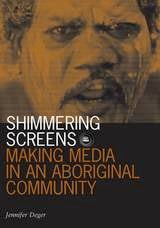
Shimmering Screens
Making Media in an Aboriginal CommunityJennifer Deger
University of Minnesota Press, 2006
Shooting a Revolution
Visual Media and Warfare in SyriaDonatella Della Ratta
Pluto Press, 2018
Drawing on a decade of ethnographic research conducted in Syria and neighboring countries, Donatella Della Ratta examines here how the networked age shapes contemporary warfare, from conflict on the ground to the performance of violence on the screen. Her findings present a stark parallel to the digital democracy offered by techno-utopians, delving into the dark side of web 2.0 practices, where visual regimes of representation and media production are put in service of modes of destruction.
A vivid account of the politics of Syria’s visual media, from commercial television to citizen journalism and Daesh propaganda, Shooting a Revolution offers fascinating insight into the media’s role in transforming conflict zones in the digital age.

Shot on Location
Postwar American Cinema and the Exploration of Real PlacePalmer, R. Barton
Rutgers University Press, 2016
Renowned film scholar R. Barton Palmer answers this question in Shot on Location by exploring the historical, ideological, economic, and technological developments that led Hollywood to head back outside in order to capture footage of real places. His groundbreaking research reveals that wartime newsreels had a massive influence on postwar Hollywood film, although there are key distinctions to be made between these movies and their closest contemporaries, Italian neorealist films. Considering how these practices were used in everything from war movies like Twelve O’Clock High to westerns like The Searchers, Palmer explores how the blurring of the formal boundaries between cinematic journalism and fiction lent a “reality effect” to otherwise implausible stories.
Shot on Location describes how the period’s greatest directors, from Alfred Hitchcock to Billy Wilder, increasingly moved beyond the confines of the studio. At the same time, the book acknowledges the collaborative nature of moviemaking, identifying key roles that screenwriters, art designers, location scouts, and editors played in incorporating actual geographical locales and social milieus within a fictional framework. Palmer thus offers a fascinating behind-the-scenes look at how Hollywood transformed the way we view real spaces.

Side Dishes
Latina American Women, Sex, and Cultural ProductionFitch, Melissa A
Rutgers University Press, 2009
Side Dishes considers feminist pornography and literary representations of masturbation, bisexuality, lesbianism, and sexual fantasies; the treatment of lust in stand-up comedy and science fiction; critical issues in leading feminist journals; and portrayals of sexuality in four contemporary Latin American films. Melissa A. Fitch concludes with a look at the rise of women's and gender studies programs in Latin America.
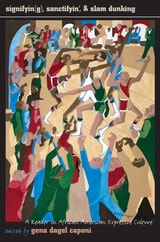
Signifyin(g), Sanctifyin', and Slam Dunking
A Reader in African American Expressive CultureGena Tabery
University of Massachusetts Press, 1999
Observers of American society have long noted the distinctive contribution of African Americans to the nation's cultural life. We find references to African American music and dance, black forms of oral expression, even a black style of playing basketball. But what do such terms really mean? Is it legitimate to talk about a distinct African American aesthetic, or is this simply a vestige of an outmoded racial essentialism? What makes a particular form of cultural expression “black” other than the fact that some African Americans may practice it? These are some of the questions addressed in the readings gathered in this volume by Gena Dagel Caponi. The essays, some previously published and others new, spring from a variety of disciplines and cover a broad range of topics, from the communal ritual of the ring shout to the evolution of rap to the improvisational genius of Michael Jordan. While each piece focuses on a different aspect of African American expressive culture, together they reveal a set of creative principles, techniques, and practices—a cultural aesthetic—that is remarkably consistent and resilient.
Signifying Europe
Johan Fornäs
Intellect Books, 2012
Signifying Europe provides a systematic overview of the wide range of symbols used to represent Europe and Europeanness, both by the political elite and the broader public. Through a critical interpretation of the meanings of the various symbols—and their often contradictory or ambiguous dimensions—Johan Fornäs uncovers illuminating insights into how Europe currently identifies itself and is identified by others outside its borders. While the focus is on the European Union’s symbols, those symbols are also interpreted in relation to other symbols of Europe. Offering insight into the cultural dimensions of European unification, this volume will appeal to students, scholars, and politicians interested in European policy issues, cultural studies, and postnational cultural identity.
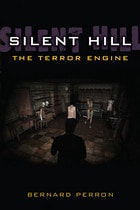
Silent Hill
The Terror EngineBernard Perron
University of Michigan Press, 2012
Silent Hill: The Terror Engine, the second of the two inaugural studies in the Landmark Video Games series from series editors Mark J. P. Wolf and Bernard Perron, is both a close analysis of the first three Silent Hill games and a general look at the whole series. Silent Hill, with its first title released in 1999, is one of the most influential of the horror video game series. Perron situates the games within the survival horror genre, both by looking at the history of the genre and by comparing Silent Hill with such important forerunners as Alone in the Dark and Resident Evil. Taking a transmedia approach and underlining the designer's cinematic and literary influences, he uses the narrative structure; the techniques of imagery, sound, and music employed; the game mechanics; and the fiction, artifact, and gameplay emotions elicited by the games to explore the specific fears survival horror games are designed to provoke and how the experience as a whole has made the Silent Hill series one of the major landmarks of video game history.
Simulating Good and Evil
The Morality and Politics of VideogamesMarcus Schulzke
Rutgers University Press, 2020
Singularity
Politics and PoeticsSamuel Weber
University of Minnesota Press, 2021
An influential thinker on the concept of singularity and its implications on politics, theology, economics, psychoanalysis, and literature
For readers versed in critical theory, German and comparative literature, or media studies, a new book by Samuel Weber is essential reading. Singularity is no exception. Bringing together two decades of his essays, it hones in on the surprising implications of the singular and its historical relation to the individual in politics, theology, economics, psychoanalysis, and literature. Although singularity has long been a keyword in literary studies and philosophy, never has it been explored as in this book, which distinguishes singularity as an “aporetic” notion from individuality, with which it remains historically closely tied.
To speak or write of the singular is problematic, Weber argues, since once it is spoken of it is no longer strictly singular. Walter Benjamin observed that singularity and repetition imply each other. This approach informs the essays in Singularity. Weber notes that what distinguishes the singular from the individual is that it cannot be perceived directly, but rather experienced through feelings that depend on but also exceed cognition. This interdependence of cognition and affect plays itself out in politics, economics, and theology as well as in poetics. Political practice as well as its theory have been dominated by the attempt to domesticate singularity by subordinating it to the notion of individuality. Weber suggests that this political tendency draws support from what he calls “the monotheological identity paradigm” deriving from the idea of a unique and exclusive Creator-God.
Despite the “secular” tendencies usually associated with Western modernity, this paradigm continues today to inform and influence political and economic practices, often displaying self-destructive tendencies. By contrast, Weber reads the literary writings of Hölderlin, Nietzsche, and Kafka as exemplary practices that put singularity into play, not as fiction but as friction, exposing the self-evidence of established conventions to be responses to challenges and problems that they often prefer to obscure or ignore.
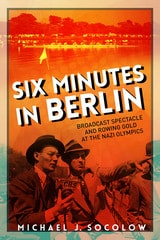
Six Minutes in Berlin
Broadcast Spectacle and Rowing Gold at the Nazi OlympicsMichael J Socolow
University of Illinois Press, 2016
The Berlin Games matched cutting-edge communication technology with compelling sports narrative to draw the blueprint for all future sports broadcasting. A global audience--the largest cohort of humanity ever assembled--enjoyed the spectacle via radio. This still-novel medium offered a "liveness," a thrilling immediacy no other technology had ever matched. Michael J. Socolow's account moves from the era's technological innovations to the human drama of how the race changed the lives of nine young men. As he shows, the origins of global sports broadcasting can be found in this single, forgotten contest. In those origins we see the ways the presentation, consumption, and uses of sport changed forever.

Skate Life
Re-Imagining White MasculinityEmily Chivers Yochim
University of Michigan Press, 2009
"Intellectually deft and lively to read, Skate Life is an important addition to the literature on youth cultures, contemporary masculinity, and the role of media in identity formation."
---Janice A. Radway, Northwestern University, author of Reading the Romance: Women, Patriarchy, and Popular Literature
"With her elegant research design and sophisticated array of anthropological and media studies approaches, Emily Chivers Yochim has produced one of the best books about race, gender, and class that I have read in the last ten years. In a moment where celebratory studies of youth, youth subcultures, and their relationship to media abound, this book stands as a brilliantly argued analysis of the limitations of youth subcultures and their ambiguous relationship to mainstream commercial culture."
---Ellen Seiter, University of Southern California
"Yochim has made a valuable contribution to media and cultural studies as well as youth and American studies by conducting this research and by coining the phrase 'corresponding cultures,' which conceptualizes the complex and dynamic processes skateboarders employ to negotiate their identities as part of both mainstream and counter-cultures."
---JoEllen Fisherkeller, New York University
Skate Life examines how young male skateboarders use skate culture media in the production of their identities. Emily Chivers Yochim offers a comprehensive ethnographic analysis of an Ann Arbor, Michigan, skateboarding community, situating it within a larger historical examination of skateboarding's portrayal in mainstream media and a critique of mainstream, niche, and locally produced media texts (such as, for example, Jackass, Viva La Bam, and Dogtown and Z-Boys). The book uses these elements to argue that adolescent boys can both critique dominant norms of masculinity and maintain the power that white heterosexual masculinity offers. Additionally, Yochim uses these analyses to introduce the notion of "corresponding cultures," conceptualizing the ways in which media audiences both argue with and incorporate mediated images into their own ideas about identity. In a strong combination of anthropological and media studies approaches, Skate Life asks important questions of the literature on youth and provides new ways of assessing how young people create their identities.
Emily Chivers Yochim is Assistant Professor in the Department of Communication Arts, Allegheny College.
Cover design by Brian V. Smith