Results by title
237 books match the query 'Medicine' and 15 start with s
Sacred Leaves of Candomblé
African Magic, Medicine, and Religion in BrazilBy Robert A. Voeks
University of Texas Press, 1997
Winner, Hubert Herring Book Award, Pacific Coast Council on Latin American Studies
Candomblé, an African religious and healing tradition that spread to Brazil during the slave trade, relies heavily on the use of plants in its spiritual and medicinal practices. When its African adherents were forcibly transplanted to the New World, they faced the challenge not only of maintaining their culture and beliefs in the face of European domination but also of finding plants with similar properties to the ones they had used in Africa.
This book traces the origin, diffusion, medicinal use, and meaning of Candomblé's healing pharmacopoeia—the sacred leaves. Robert Voeks examines such topics as the biogeography of Africa and Brazil, the transference—and transformation—of Candomblé as its adherents encountered both native South American belief systems and European Christianity, and the African system of medicinal plant classification that allowed Candomblé to survive and even thrive in the New World. This research casts new light on topics ranging from the creation of African American cultures to tropical rain forest healing floras.

Science Periodicals in Nineteenth-Century Britain
Constructing Scientific CommunitiesEdited by Gowan Dawson, Bernard Lightman, Sally Shuttleworth, and Jonathan R. Topham
University of Chicago Press, 2020
The essays in this volume set the historical exploration of the scientific and medical periodicals of the era on a new footing, examining their precise function and role in the making of nineteenth-century science and enhancing our vision of the shifting communities and practices of science in the period. This radical rethinking of the scientific journal offers a new approach to the reconfiguration of the sciences in nineteenth-century Britain and sheds instructive light on contemporary debates about the purpose, practices, and price of scientific journals.
Science and Medicine in Twentieth-Century China
Research and EducationJohn Z. Bowers, J. William Hess, and Nathan Sivin, Editors
University of Michigan Press, 1988
Sex, Sickness, and Slavery
Illness in the Antebellum SouthMarli F. Weiner with Mazie Hough
University of Illinois Press, 2014
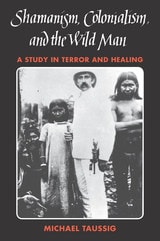
Shamanism, Colonialism, and the Wild Man
A Study in Terror and HealingMichael Taussig
University of Chicago Press, 1987
"This extraordinary book . . . will encourage ever more critical and creative explorations."—Fernando Coronil, [I]American Journal of Sociology[/I]
"Taussig has brought a formidable collection of data from arcane literary, journalistic, and biographical sources to bear on . . . questions of evil, torture, and politically institutionalized hatred and terror. His intent is laudable, and much of the book is brilliant, both in its discovery of how particular people perpetrated evil and others interpreted it."—Stehen G. Bunker, Social Science Quarterly

Sick Planet
Corporate Food and MedicineStan Cox
Pluto Press, 2008
Neoliberals often point to improvements in public health and nutrition as examples of globalisation's success, but this book argues that the corporate food and medicine industries are destroying environments and ruining living conditions across the world.
Scientist Stan Cox expertly draws out the strong link between Western big business and environmental destruction. This is a shocking account of the huge damage that drug manufacturers and large food corporations are inflicting on the health of people and crops worldwide. Companies discussed include Wal-Mart, GlaxoSmithKline, Tyson Foods and Monsanto. On issues ranging from the poisoning of water supplies in South Asia to natural gas depletion and how it threatens global food supplies, Cox shows how the demand for profits is always put above the public interest.
While individual efforts to "shop for a better world" and conserve energy are laudable, Cox explains that they need to be accompanied by an economic system that is grounded in ecological sustainability if we are to find a cure for our Sick Planet.
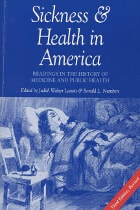
Sickness and Health in America
Readings in the History of Medicine and Public HealthEdited by Judith W. Leavitt and Ronald L. Numbers
University of Wisconsin Press, 1997
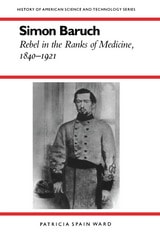
Simon Baruch
Rebel in the Ranks of Medicine, 1840-1921Patricia Spain Ward
University of Alabama Press, 1994
Recounts the remarkable life of a Prussian/Polish Jew who immigrated to the United States as a teenager in the 1850s and became one of the nation’s best-known physicians by the turn of the century
After medical study in South Carolina and Virginia on the eve of the Civil War, Simon Baruch served the Confederacy as a surgeon for three years, twice undergoing capture and internment. Despite economic hardships while practicing in South Carolina during Reconstruction, he helped to reactivate the State Medical Association and served as president of the State Board of Health.
In 1881 he joined the exodus of southern physicians and scientists of that period, taking up residence in New York City, where he rose to prominence through his advocacy of surgery in one of the early operations for appendicitis and through is role as the protective physician in a widely publicized “child cruelty” case involving the musical prodigy, Josef Hofmann. Baruch became a leader in the nationwide movement to establish free public baths for tenement dwellers and in the development of expert medical journalism. Although his advocacy of such natural remedies as water, fresh air, and diet often made him appear unaccountably iconoclastic to his contemporaries, he has gained posthumous recognition as a pioneer in physical medicine.
Bernard N. Baruch, one of his four sons, has memorialized this work through endowments for research and instruction in physical medicine and rehabilitation. Ward reconstructs the life of a medical student in the South at the opening of the Civil War, the adventures of a Confederate surgeon, and the difficulties of a practitioner in Reconstruction South Carolina. Simon Baruch’s physician’s registers and his correspondence with colleagues afford the reader an immediate sense of the therapeutic dilemmas facing physicians and patients of his era. Baruch’s experiences while establishing himself in New York City after 1881 reflect the challenges facing those trying to break into what was then the nation’s medical capital—as well as that city’s rich opportunities and heady intellectual atmosphere. His energetic campaign for free public baths illustrates one of the most colorful chapters of American social history, as immigrants flooded the cities at the turn of the century. As medical editor of the New York Sun from 1912 to 1918, Baruch touched on most of the health concerns of that period and a few—such as handgun control—that persist to this day.
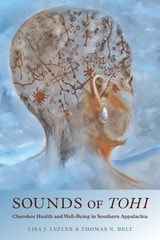
Sounds of Tohi
Cherokee Health and Well-Being in Southern AppalachiaLisa J. Lefler and Thomas N. Belt
University of Alabama Press, 2022
Dialogue between a medical anthropologist and a Cherokee linguist about health, well-being, and environmental issues
Sounds of Tohi: Cherokee Health and Well-Being in Southern Appalachia is the result of almost two decades of work by medical anthropologist Lisa J. Lefler and Cherokee elder and traditionalist Thomas N. Belt. The narrative consists of a dialogue between them that displays traditional Indigenous knowledge as well as the importance of place for two people from cultures and histories that intersect in the mountains of Southern Appalachia. Together, Lefler and Belt decolonize thinking about health, well-being, and environmental issues through the language and experiences of people whose identity is inextricably linked to the mountains and landscape of western North Carolina.
Lefler and Belt discuss several critical cultural concepts that explain the science of relationships with this world, with the spirit world, and with people. They explore tohi, the Cherokee concept of health, which offers a more pervasive understanding of relationships in life as balanced and moving forward in a good way. They converse about the importance of matrilineality, particularly in light of community healing, the epistemologies of Cherokee cosmography, and decolonizing counseling approaches.
The discussions here offer a different way of approaching the issues that face Americans in this difficult time of division. Lefler and Belt share their urgency to take action against the wholesale exploitation of public lands and the shared environment, to work to perpetuate tribal languages, to preserve the science that can make a difference in how people treat one another, and to create more forums that are inclusive of Native and marginalized voices and that promote respect and appreciation of one another and the protection of sacred places. Throughout, they rely on the preservation of traditional knowledge, or Native science, via Native language to provide insight as to why people should recognize a connection to the land.
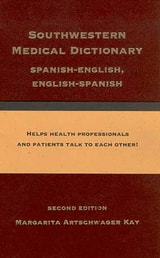
Southwestern Medical Dictionary
Spanish-English, English-SpanishMargarita Artschwager Kay
University of Arizona Press, 2001
A staple of southwestern health care for more than twenty years, this dictionary can make a difference in patient care. Now available in a revised edition, it focuses on vocabulary used in health contexts by Spanish-speaking people in order to help patients tell their stories and medical practitioners to understand them. Unlike other bilingual dictionaries that emphasize scientific terms, this one focuses on standard Spanish terms as well as regional expressions peculiar to Mexican Spanish—language encountered in Chicago as easily as in Phoenix.
In the Spanish-to-English section, Spanish terms are followed by English translations and sample sentences to help health care practitioners understand how a patient might use them:
acedías, heartburn, pain in lower esophagus perceived as in the heart. Uno tiene la tendencia a sufrir de acedías después de comer chile. One has a tendency to suffer heartburn after eating chile. (syn: acidez, agruras del estómago)
In the English-to-Spanish section, English words are translated into simple Spanish terms along with English synonyms.
Now available in a revised edition, this handy reference features:
• more than 3,000 entries
• new entries that reflect current health problems and treatments
• inclusion of cognates
• Spanish definitions of English words
• anatomical drawings with bilingual labels
• more material on medicinal plants, including an appendix of poisonous and non-poisonous plants
• lists of food items and kinship terms
This book is an indispensable reference for all health care professionals who see patients of Mexican origin. Combining idiomatic precision with technical accuracy, it can help break down language barriers on either side of the border.

Spiritual Caregiving
Healthcare As A MinistryVerna Benner Carson
Templeton Press, 2004
With today's cumbersome insurance procedures, government regulations, endless paperwork, and concerns about malpractice rates, many health care professionals are asking: "Why am I doing this? Am I making a difference to my patients? Is there a better way—and if so, what is it?" In this book, Carson and Koenig examine the state of the health care system with the goal of providing healthcare professionals and caregivers the inspiration and practical tools to reclaim their sense of purpose.
The book begins with an evaluation of the current system from the perspective of the spiritual vision that initially motivated and nourished many caregivers. The authors then pose a vision of a health care system that supports and nurtures the spirituality of patients and their families, of which some elements already exist.
An overview is provided on the preparation necessary for health care professionals to offer spiritual care when there are major implications—for people with chronic illnesses, psychiatric issues, devastating injuries, and those preparing for surgery, facing death, and those living with chronic pain. Also explored are ways that health professionals and caregivers can maintain their own spiritual health even as they work to bring about healing, comfort, and solace to others.
Woven throughout the book are the personal narratives of physicians, nurses, chaplains, health care educators, community resource workers, administrators, therapists, and psychologists—all from a wide range of religious traditions. Their examples inspire and assist professionals in renewing the spiritual focus of health care.
Spirituality and Health Research
Methods, Measurements, Statistics, and ResourcesHarold G Koenig
Templeton Press, 2011
In Spirituality and Health Research: Methods, Measurement, Statistics, and Resources, Dr. Harold G. Koenig leads a comprehensive overview of this complex subject. Dr. Koenig is one of the world’s leading authorities on the relationship between spirituality and health, and a leading researcher on the topic. As such, he is distinctively qualified to author such a book.

Symmetry
Marc Straus
Northwestern University Press, 2000
Symptoms of Unknown Origin
A Medical OdysseyClifton K. Meador
Vanderbilt University Press, 2005
Recounting a series of fascinating case studies, Meador shows in this book how he came to reject a strict adherence to the prevailing biomolecular model of disease and its separation of mind and body. He studied other theories and approaches—George Engel's biopsychosocial model of disease, Michael Balint's study of physicians as pharmacological agents—and adjusted his practice accordingly to treat what he called "nondisease." He had to retool, learn new and more in-depth interviewing and listening techniques, and undergo what Balint termed a "slight but significant change in personality."
In chapters like "The Woman Who Believed She Was a Man" and "The Diarrhea of Agnes," Meador reveals both the considerable harm that can result from wrong diagnoses of nonexistent diseases and the methods he developed to help patients with chronic symptoms not defined by a medical disease. Throughout the book, he recommends subsequent studies to test his observations, and he urges full application of the scientific method to the doctor-patient relationship, pointing out that few objective studies of these all-important interactions have ever been done.
Syphilis
Medicine, Metaphor, and Religious Conflict in Early Modern FranceDeborah N. Losse
The Ohio State University Press, 2015
Losse provides close readings of a range of genres, moving between polemical poetry, satirical narratives, dialogical colloquies, travel literature, and the personal essay. With chapters featuring Erasmus, Rabelais, Montaigne, Léry, and Agrippa d’Aubigné, this study compares literary descriptions of syphilis with medical descriptions. In the first full-length study of Renaissance writers’ engagement with syphilis, Deborah Losse charts a history from the most vehement rhetoric of the pox to a tenuous resolution of France’s conflicts, when both sides called for a return to order.